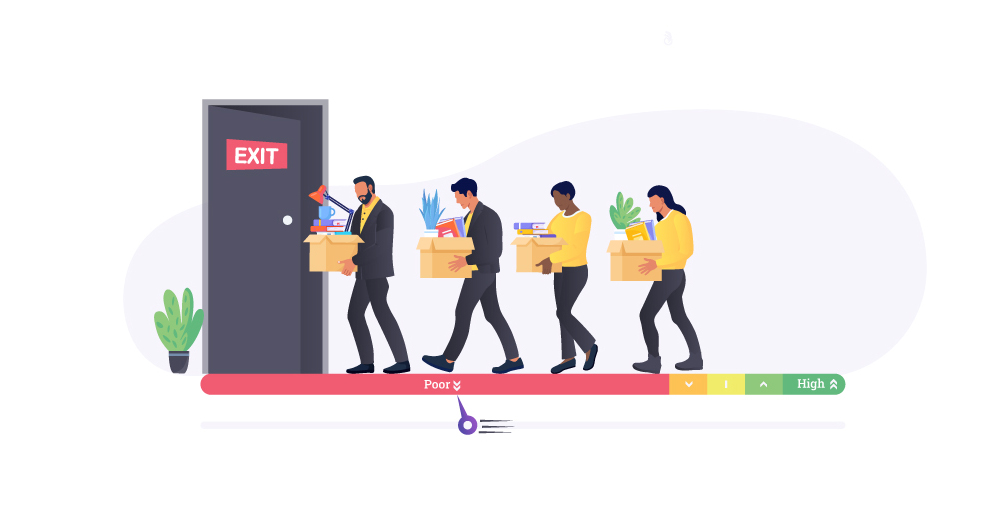
In a modern competitive market landscape it is crucial that a business fully leverage the true potential of its workforce. The HR is responsible for ensuring every employee is working at its full potential while being happy and satisfied with their work. The employee engagement is a crucial function because it can impact each and every aspect of the business such as operational efficiency, technical capabilities, product and service quality, customer experience, employee satisfaction, profitability, etc. A performance management system provides a comprehensive framework, which help businesses in performance management process and it can greatly increase employee engagements. The performance management systems are designed to align individual employee performance with the high-level organizational goals and strategic objectives.
The performance management system seamlessly integrates various processes such as performance evaluation, feedbacks, reviews, appraisals, goal setting, etc. The performance management system is a modern software based solution which offers various tools and features which aid in performance management tasks. The performance management system is equipped with advance data collection tools, analytical reporting tools, and various other features which can help in performance management activities. In this blog we will discuss the role of performance management in employee engagement.
The Role of Performance Management in Employee Engagement
What is Employee Engagements?
Employee engagement is not just a single measurable substance, it is an entire spectrum of emotions and feelings an employee could have towards their organization, individual job role, daily work, co-workers, or team. The employee engagement is absolutely essential for the success, here is why:
Passion: Enthusiastic and passionate employees tend to work harder, as their work is very important for them and these types of employees are always read to meet new challenges.
Dedication: The engaged employees are more dedicated towards their work and goals, they believe in organizational goals and understand the value of their contribution to it.
Higher Purpose: Engaged employees believe in higher purpose, they feel their job role and work has a higher purpose which contributes to something higher-than themselves.
Growth: The engaged employees tend to be more eager towards growth and development, they tend to outperform the poorly engaged employees and tend to be more productive and skillful.
Recognition: The recognition and acknowledgement are the key factors, when employees feel valued they become more energetic, enthusiastic and dedicated towards their work.
The business leaders and HR utilizes various methods and techniques to enhance employee performances. The performance management is one of the most widely used methods to increase employee engagement, productivity and efficiency. However, the traditional performance management methods are losing their impact, now a days, a modern software based performance management system is taking over. The modern performance management system provides a comprehensive framework coupled with modern performance management methods and practices. Businesses all around the UAE are adopting to modern performance management systems for higher employee engagements.
What is Employee Engagements?
How Performance Management System Enhance Employee Engagements?
A modern day digital performance management system is a structured solution offering a comprehensive framework to implement modern and advanced performance management methods and strategies. The performance management system offers advanced monitoring and analytical tools, helping analyzing various aspects of individual and team performance. Furthermore the performance management system helps implementing policies to increase employee engagements and overall employee satisfaction.
A well-implemented performance management system can greatly increase employee engagements:
Goal Setting: The performance management system streamline goal setting process with in-built features for objective key results (OKRs), SMART goals, and customized KPIs. The performance management system also help communicating goals to individual employees.
Alignment: When the employee goals are clear and communicated effectively, they knows what is expected from them, this also help them understanding how their efforts align with the high-level strategic goals and objectives.
Advanced Feedback: The performance management system provides a systematic and structured approach to streamline communication and feedback, encouraging continuous feedback and more frequent interaction help boosting employee engagements.
Employee Development: The performance management system not only monitor employee performance but it also help identifying strengths and weaknesses of the employees, highlighting the development opportunities and boosting employee competencies.
Reward and Recognitions: Appraisals, rewards and acknowledgements are essential for boosting employee morale and when the employees are admired, valued and have a sense of importance they tend to be more engaged and perform well.
How Performance Management System Enhance Employee Engagements?
Furthermore the performance management system offers a variety of features and tools which can be very helpful for the management to keep employees more engaged and productive. Businesses can also customize these tools and digital features of the system to enhance its impact and adoptability. Here are a few more features that can be integrated in a performance management system to boost employee engagements and satisfaction:
Regular Feedback: A performance management system can help implementing a more frequent, regular, and continuous and even real-time feedbacks. The feedback is crucial in engaging the employees, it also keeps them motivated and help management course correct.
Customized Software: The modern performance management system relies on a software application, the performance management system software should be customized as per unique business needs to amplify its impact and to boost employee engagements.
Collaborative Culture: The performance management system can provide essential tools and features to enhance collaboration, communication and peer-to-peer feedbacks. Streamlined communication and peer recognitions help engaging and employees.
Mentorship Program: The mentorship program can greatly increase employee engagements. Managers and senior employees can be appointed as mentors to guide and coach the new or inexperienced employees and help boosting collaborations.
Training Program: When businesses invest in employees they tend to become more motivated and perform well. Personalized training programs, workshops, and learning opportunities can help boosting employee morale and increase their engagements.
With the advanced features of a performance management system businesses can conveniently foster a culture of highly engaged employees. Engaged employees tend to be more active, innovative, creative and confident. Employee engagements are crucial for higher performance and high-performing employees are crucial for long-term sustainable success.
The Performance Management System Offers a Variety Of Features and Tools
Conclusion
Employee engagement is a powerful catalyst to boosting the entire organization’s performance, productivity and profitability. A modern performance management system is not just an appraisal tool used to evaluate the employees, but it is a highly structured and systematic approach to elevate the entire organizational culture. A digital performance management system comes with a customizable software application that can greatly enhance the impact of performance management.
The performance management system empowers employees, encourage communications, and provides a structured approach for regular and continuous feedback fostering a highly collaborative and connected organizational culture boosting employee engagements. In this blog we have discussed the role of performance management in employee engagement. If you want to learn more about the subject or if you want to our help to design and implement a bespoke performance management system for your organization, please feel free to contact us through our Contact Us page or leave a comment in the comment box below and we will get in touch with you soon.
In the modern day customer service centers, a queue management system is not just about solving waiting line problem. In fact it is a full-fledge branch transformation solution which can help enhancing customer experience and boosting operational efficiency. Incorporating actionable data and insights into decision making processes convert your traditional queue management into a most effective customer-centric strategy. The actionable data produced in a queue management system is used to analyze and improve various customer journey steps and internal processes as well as employee performance.
By accurately monitoring several KPIs (key performance indicators) and collecting analytical data will help management understand customer behavior, peak hours, service time and much more. This information help businesses to take actions and make improvements which results in better customer experience and higher operational efficiency. In this blog we will discuss the key benefits of a queue management system and how businesses can leverage the actionable data insights to achieve better operational efficiency and higher customer satisfaction.
The Importance of Actionable Data in Queue Management System
What is a Queue Management System?
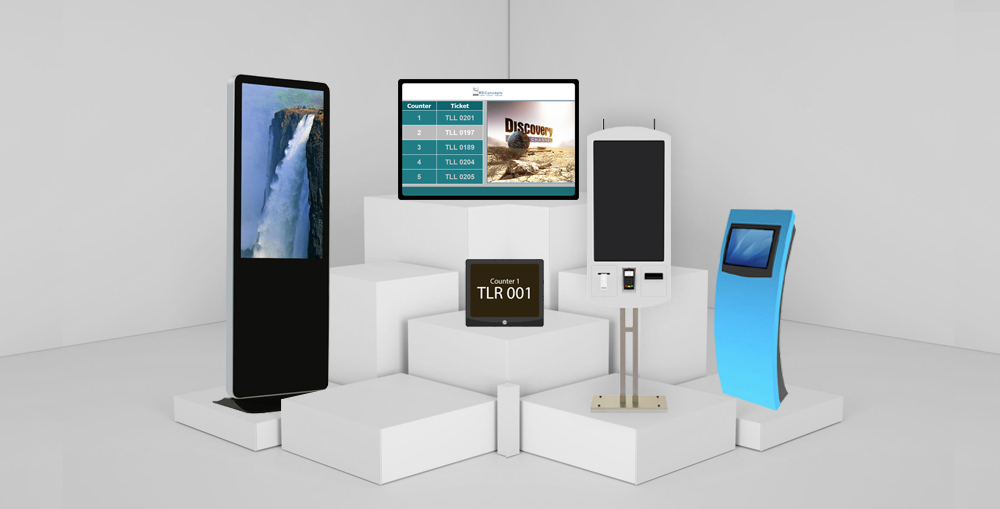
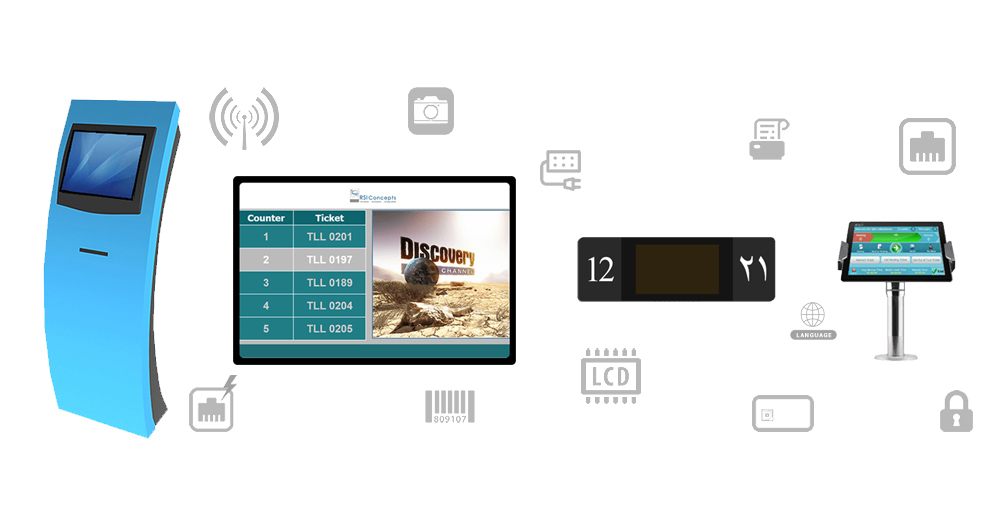
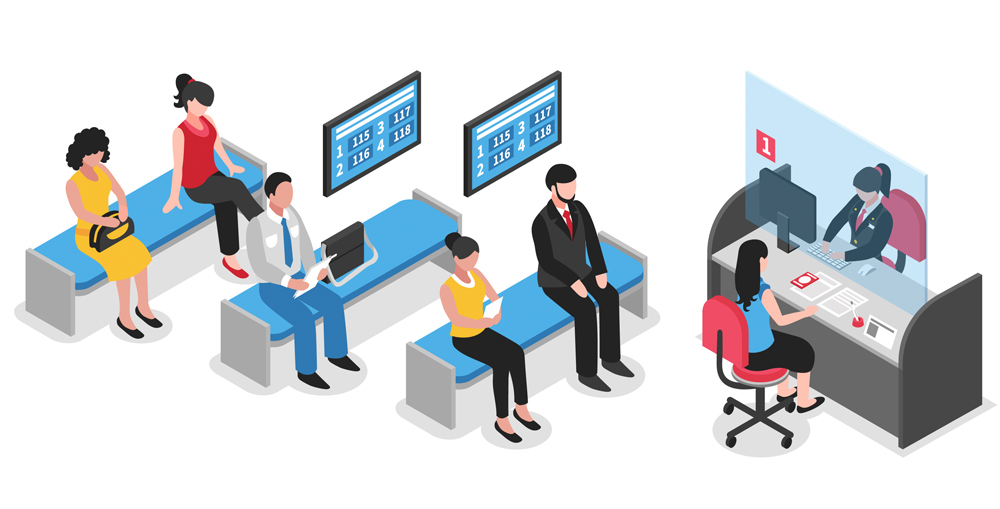
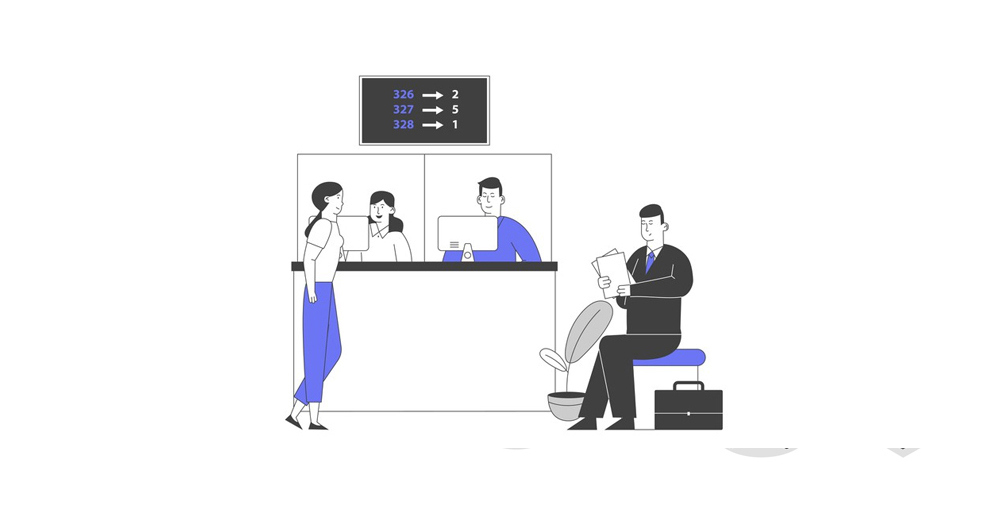
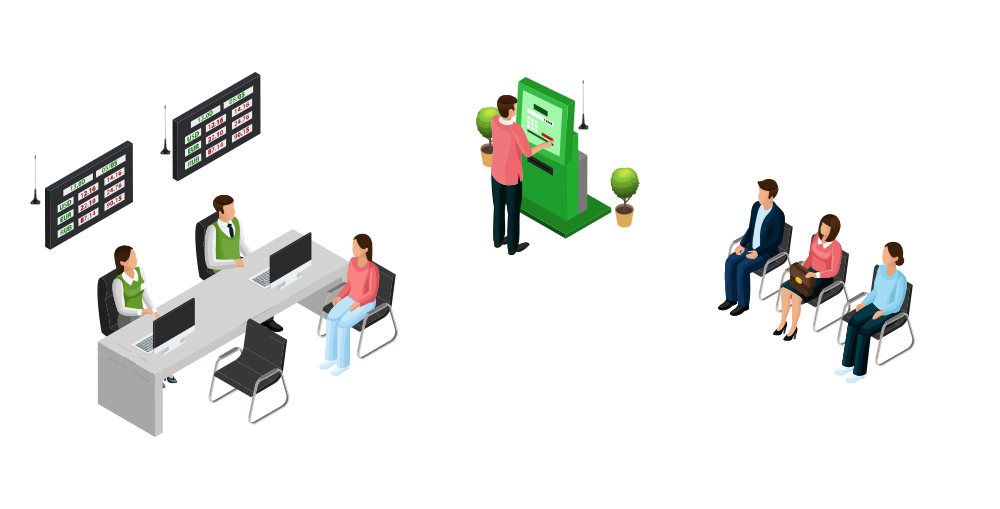
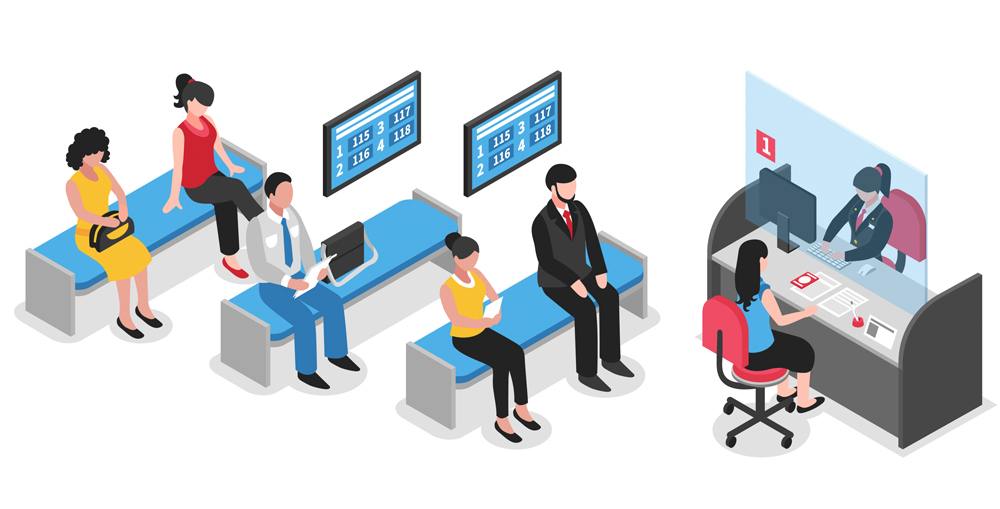
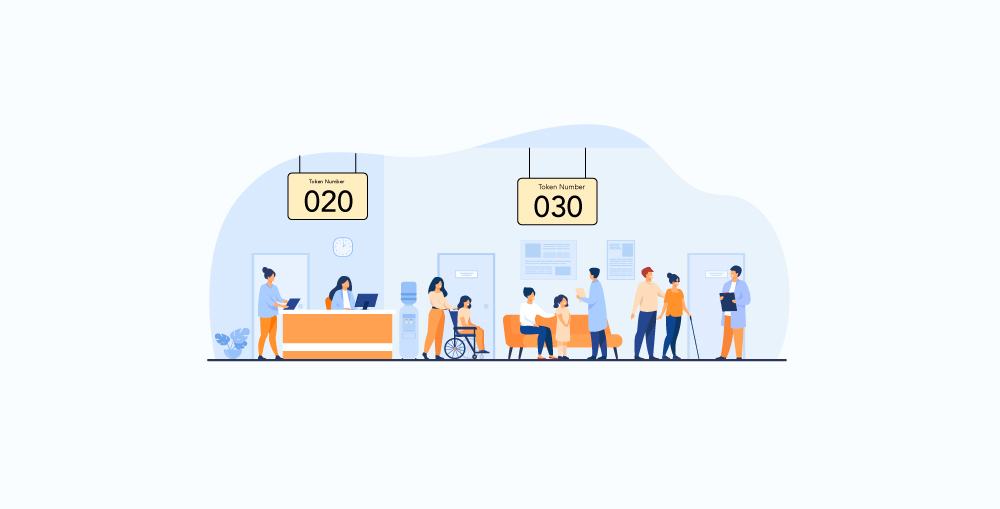
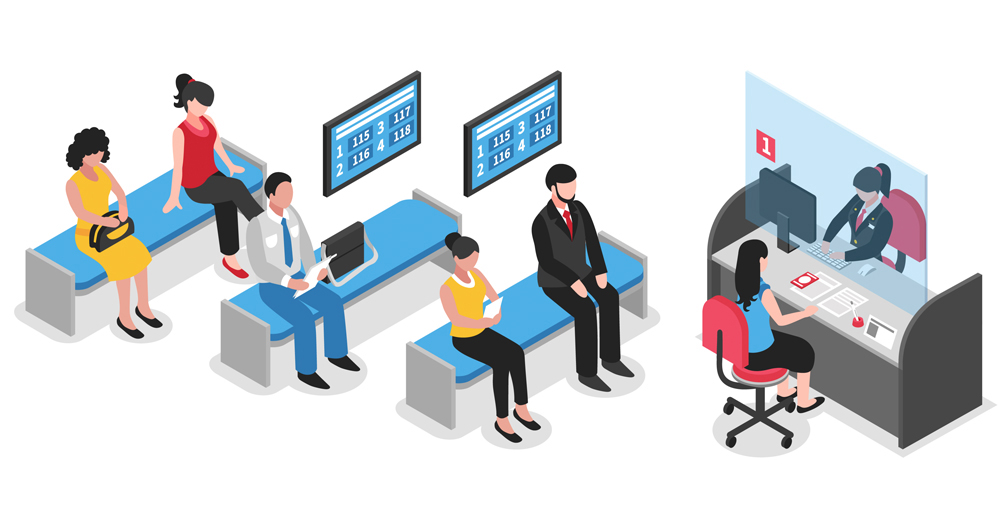
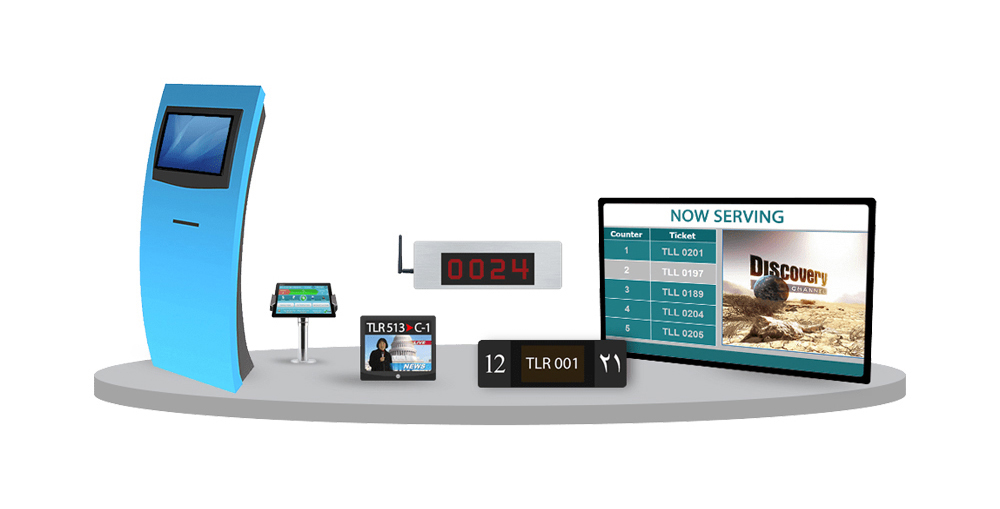
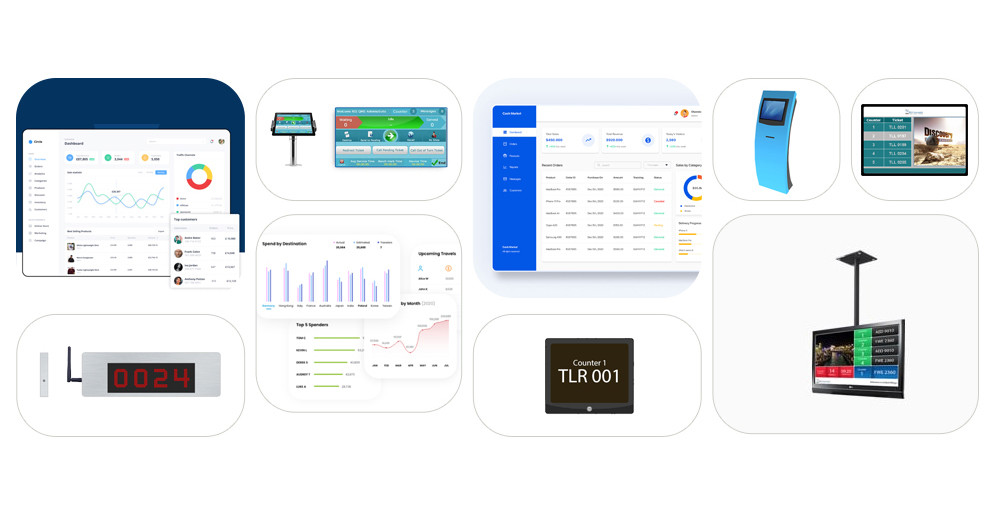
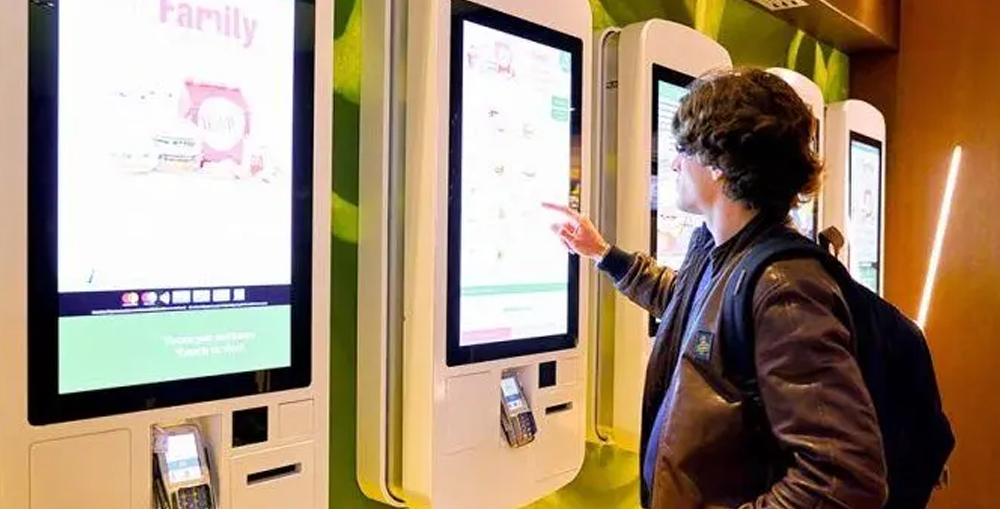
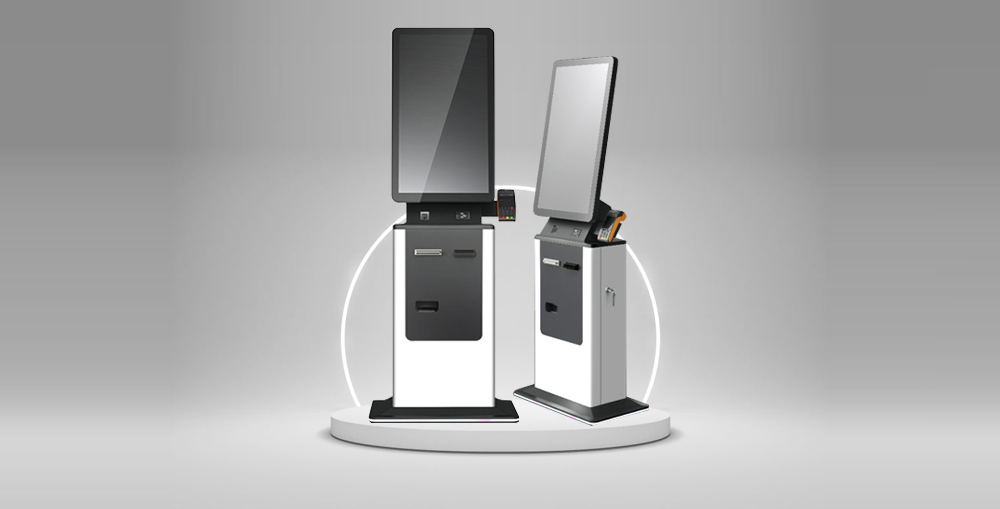
A queue management system is a digital solution consisting of both software and hardware tools, which are used to manage customer flow, customer waiting experience and queuing efficiency. A queue management system is typically used to organize the customer waiting lines with efficiency and higher control over customer flow. An effective queue management system offers various tools such as self-service ticket dispensing kiosk, virtual queuing features, digital signage, announcement system, real-time monitoring tools, and service agent dashboards, etc.
These tools help effectively managing customer flow while enhancing customer experience and driving productivity at service center. Higher performing teams also tend to deliver better experience and high-quality customer service. Therefore businesses in Dubai, Sharjah, Abu Dhabi and all around the UAE are rapidly adopting to different queue management technologies and solutions. A queue management system have profound impact over a business success, its application extends beyond managing waiting line, but also shaping customer perceptions and driving performance resulting in higher profitability and greater success.
What is a Queue Management System?
What is Actionable Data in Queue Management?
Actionable data in queue management refers to the insightful information gathered by a queue management system monitoring tools and analytical software. This data is collected from all touch points and it also include various statistical information which are gathered in real-time. This insight is often referred to as actionable data and is used to raise customer satisfaction and achieve higher operational performance.
The actionable data includes various analytical and statistical information such as average wait time, service delivery duration, customer flow patterns, peak hours, slow/fast services, employee performance KPIs and much more which can be used by the management to make informed decisions such as allocation of resources, employee training and adjustments in customer journey to ensure higher customer satisfaction.
The actionable data insights are very helpful in providing predictive analytics and help management plan for bottlenecks. An online or cloud-based queue management system offers flexibility to monitor and analyze this data remotely which enables branch managers and head office to take informed decisions in timely manners while ensuring higher customer satisfaction and optimum branch performance.
What is Actionable Data in Queue Management?
What are the Benefits of Actionable Data in Queue Management?
It is extremely important for a business to acquire a deeper and better understanding of the customer journey and customer experience as customer satisfaction could greatly influence your brand’s perception and reputation. Having incomplete or inaccurate data or no data at all could put your success in jeopardy. Have you ever wondered?
How many customers are waiting at your service center?
How long they might have to wait to get served?
What is an average service delivery time? Or is it increasing or decreasing?
Are your customer happy and satisfied?
How extended wait time is impacting your customer experience?
Is your operational efficiency and performance adequately optimized?
All these are crucial questions and queue management system can answer them all with its actionable data and analytical insights. An efficient queue management system take this to the next step by offering in-built analytical and customized reporting tools which can be even more effective and impactful.
What are the Benefits of Actionable Data in Queue Management?
Here are three key benefits of collecting, analyzing an implementing actionable data from a queue management system:
Actionable Data from a Queue Management System Help Improving Service Quality
With comprehensive reports and actionable data insights, a manager is better positioned to effectively manage customer flow and staff allocation which results in higher service quality and better customer experience. Businesses can understand various aspects of customer journey, such as:
Which services are most required?
How much time is required to deliver the service?
How much is average wait time for each service?
Which employees are better trained to deliver high-demand services?
What is the expected footfall at any given day or time?
These questions are very important to answer in order to drive efficiency and performance. An effective queue management system provides actionable data insights which answers all those and various other such questions providing a better, deeper and accurate understanding of the entire queuing process. Furthermore a digital queue management system is equipped with smart algorithms which can also analyze this data and automatically manage customer flow in real-time by distributing the workload evenly and ensuring fastest route for each customer and improving service quality.
Actionable Data from a Queue Management System Help Improving Service Quality
Actionable Data from a Queue Management System Help Boosting Operational Efficiency
A modern queue management system comes with a centralized management structure which means that a centralized branch/head office or location is collecting data and insights in real-time from all connected service centers. Real-time data updates and comprehensive reporting enable administration to take timely decisions and preemptive actions to avoid crowd formation and bottlenecks. Identifying and resolving service bottlenecks in real-time ensures the service center operates at maximum operational efficiency all the time.
A queue management system is also capable of analyzing historical data with comparison to real-time queuing data which enables it to predict footfall and service delays, providing management enough time to take actions. Businesses can also put alerts such as email and SMS alerts to notify managers, decisions makers and relevant authorities if the wait time, customer flow, or service delivery time reaches to a pre-set thresholds. All these information are very helpful in resolving queuing problems instantly and even before they occur while ensuring maximum operational efficiency.
Actionable Data from a Queue Management System Help Boosting Operational Efficiency
Actionable Data from a Queue Management System Help Enhancing Customer Experience
A business can greatly improve customer experience by eliminating bottlenecks, optimizing service delivery processes, minimizing wait time and by improving communication. A modern queue management system not only offers valuable data insights but it also offers various useful features such as virtual sign-in, self-service ticket dispensing kiosks, ability to wait comfortably in waiting areas instead of standing in physical queues, sending information on customer cell phone, providing them accurate estimation of wait time and updating queuing information on digital signage and much more. All these features can greatly improve customer experience.
Furthermore businesses can get a deeper insight to customer behavior and their preferences which help them improve customer journey and also help them offering personalized experience. A queue management system can also identify customers with different priority level and are able to automatically adjust their service route as per their priority and needs. All these features help lifting up customer experience and raise customer satisfaction.
Actionable Data from a Queue Management System Help Enhancing Customer Experience
Advantages of Queue Management System in Different Industries
A digital queue management system provides valuable data insights which can positively affect the entire service center operations. Different industries use slightly different types of queue management systems however, the overall goals and objectives remain the same. Here is a quick overview of the advantages of a queue management system in popular industries:
Banks and Financial Institutions: Banks and financial institutions are among the busiest customer service centers. They can greatly reduce customer wait time and improve operational efficiency. Offering virtual queuing features, smartphone apps, and online portal integration can greatly lift up customer experience.
Government and Public-Service Centers: The government offices and public-service centers often offer a variety of different services which can be confusing for the visitors and customers. A queue management system help them chose the right service and also help improving customer flow and service quality.
Healthcare Facilities and Hospitals: Patient often are very impatient at healthcare facilities and hospitals, seamless patient flow and less wait time can greatly improve the patient experience and service quality. Actionable data can help management improve their policies and staff performance to ensure higher patient flow and satisfaction
Retail Sector: Retail sector often deal with crowded service counter, cart abandonment and inefficiency human resource management. A queue management system can provide actionable data which help management to overcome all these problems with better and quicker service delivery and higher customer satisfaction.
Educational Institutions: The educational institutions often undermine the importance of an effective queue management system. However, it is important to have an efficient queuing process to ensure students doesn’t have to waste their time or skip their classes, especially during the registration and enrollment drives.
It is extremely important to choose a right queue management system for your business considering its features, compatibility with existing IT infrastructure, customization, scalability, and adoptability to emerging business needs. Furthermore businesses should also consider the ability to collect and provide actionable data insights and reporting to ensure maximum impact of a digital queue management system.
Advantages of Queue Management System in Different Industries
Conclusion
The role of actionable data in queue management system is vital for the modern customer-centric businesses aiming for high-performance customer service centers. Higher quality service, better customer experience and well-organized customer journey results in higher customer satisfaction. Customer happiness and satisfaction is a key to customer loyalty and long term business success. The actionable data and insights from a queue management system has ability to completely transform traditional queue management and turning it into a most impactful customer-centric strategy.
With a deeper and accurate understanding of customer behavior, preference and service demands, businesses can make informed decisions and drive their strategy to align it with emerging service needs. Whether it is a banking or financial service, a healthcare facility or educational institute the importance of a modern queue management system and actionable data is paramount. In this blog we have briefly discussed queue management system, the actionable data businesses can harness from these systems and the benefits and advantages of integrating the actionable data into decision making process.
If you want to learn more about the subject or if you want our help to deploy a highly cost-effective and bespoke queue management system for your business please feel free to contact us through our Contact Us page or leave a comment in the comment box below and we will get in touch with you soon.
With the rise of technology, ever increasing competition and rising customer demands businesses started relying on technological solutions so much so that such tools become an absolute essential. The software, tools and solutions which support various operational processes have gained huge momentum over the past two decades and transformed into a huge industry over the time. A queue management system is one of such solution. Especially when it comes to service sector the customer facing environments require an effective and efficient customer flow management system. Banks operating in Dubai, Sharjah, Abu Dhabi and all around the UAE are considered to be pioneer of various innovative technological solutions in the region. A bank branch is typically a very busy service center, during peak hours the crowd formation and slow customer flow and unhappy customers are a common sighting.
A queue management system is a sophisticated high-tech solution which is designed to optimize customer flow, monitor and manage customer journey and boost branch efficiency. A queue management system not only benefits customers but it also enhance branch efficiency by significantly improving staff performance. It offers several features which digitalize several customer journey process, the digitalization and automation help boosting performance. In this blog we will discuss how a queue management system can greatly enhance customer experience while optimizing staff performance and boosting bank branch’s efficiency.
Queue Management in Banking: Enhancing Customer Experience
Why Customer Experience is So Important in Banking Sector?
The customer experience is the perception a customer made during and after interacting with a business. Banking sector is one of the most competitive markets, the competition is tougher and the customer demands keep getting higher and higher. Along with that, new trends, emerging technologies and customer preferences are also driving factors for innovation and integration of technology in the banking sector. In such circumstances, a good customer experience help elevating customer loyalty and brand advocacy, which help banks maintaining a steady and sustainable growth. The customer experience and customer satisfaction is crucial for banks. As here in Dubai, Sharjah, Abu Dhabi and other regions of the UAE, there are several banks, and it is relatively easier to switch, a bad experience can compel your customers to switch to a competitors immediately.
A queue management system is a sophisticated technological solution which help banks in streamlining customer flow, minimizing customer wait time, and boosting branch efficiency. A queue management system provides a complete framework to enhance and manage entire customer journey, which makes it ideal as a branch transformation tool. Banks can greatly enhance customer experience by providing them digital queuing, interactive experience and less wait time. It makes customer journey frictionless and also offer various administrative and management features. Banks can easily setup a centralized queue management system where they can connect all the branches and get real-time data from all of them. These features and several other queue management system benefits can be a game-changer for the banking sector.
Why Customer Experience is So Important in Banking Sector?
Why Queue Management System is Essential for Banking Sector?
A queue management system has become an essential tool for modern day banking sector. The customer flow is always challenging in banking setups. The customer footfall is large, and during peak hours it could become huge, resulting is slow moving queues, congestion and even crowd formation at the branches. There are several other challenges such as unpredictable customer influx, different service complexities, and most of the times the bank branches have limited physical space as well. All these factors can worsen the customer flow and result in unhappy customers. According to several researches and market studies on an average a customer can wait for 9 to 12 minutes maximum, depends on the industry, any more time longer than that could hinder their experience. Therefore the banks need a digital queue management system to streamline customer flow and to prevent crowd formation.
A queue management system manages customer flow with autonomous tools, it digitalize and automate several processes and make queuing more efficient and effective. Furthermore the queue management systems automatically manages customer flow for several different sets of customers with different queuing polices and priority levels. It can record and analyze the customer flow, and provide predictive analysis which help bank branch managers to prepare beforehand and efficiently deploy resources. The queue management system keeps customers engage during the waiting and enhance waiting experience. It also provides queuing updates and keep customers engaged to minimize the perceived wait time. The queue management system can greatly reduce the staff workload, enabling them to focus on their primary and more productive tasks, resulting in high quality service and great operational efficiency, all these features makes queue management system an essential tool for banking sector.
Why Queue Management System is Essential for Banking Sector?
How Queue Management System Enhance Customer Experience in Banking Sector?
A queue management system is a digital solution which consists of modern technology including both software and hardware components. The queue management system software is based on powerful smart algorithms and AI (artificial intelligence) which not only enable automation but also enable queue management system to collect and analyze queuing data in real-time and take decisions to optimize the customer flow and efficiency. Here are the most common components of a queue management system for a bank branch:
Virtual Ticketing System: Virtual ticketing system is a modern form of digital ticketing system, it enable customers to remotely sign-up for the queues without even physically being present at the bank. Multiple communication methods such as SMS, Email, Online Portals, Mobile Apps, WhatsApp, etc. can be integrated to facilitate customer sign-up process.
Self-Service Kiosk: An interactive self-service kiosk is one of the most widely used component of a queue management system. It welcomes customers and allow them to sign-in to the queues. The self-service ticket dispensing kiosk can also collect required information from the customers to put them in the right virtual queue.
Appoint Booking Module: The appointment booking module is an integrated tool, it provides customers features to schedule their appointment. They can chose the service they need and the system can provide them relevant information such as the available time slots, the average expected wait time and footfall, etc. All such information facilitate appointment booking process.
Digital Signage Screens: The digital signage screens are large displays carefully installed at strategic locations within the bank branch. These signage displays show live queuing data which helps keeping customer engaged and can also be used for customer calling. Furthermore banks can also use these signage to play promotional and marketing content.
Audio Announcement System: The speakers are also placed at strategic places, the in-built sound system is used to make announcements and for customer calling. A pleasant music alert/tone is followed by a multi-lingual announcement, calling customers to approach to the designated counter. It is a great tool to increase customer engagement.
Queue Management System Software: A queue management system software is a server-side application which is hosted on an online server, at cloud or on-premises server. It is connected with all the branches and various user interfaces. There are personalized UIs for customers, service agents and management dashboards with exclusive features.
These are the basic components of a modern queue management system for the banks. Furthermore every business has its own unique needs and workflows that is why the queue management system also offers customization. The customization enable banks and other businesses to have a tailor-made queue management system that suits their requirements better.
How Queue Management System Enhance Customer Experience in Banking Sector?
A queue management system offers several advantages which can be very beneficial for banks. Especially when it comes to customer experience management, a queue management system is an ideal solution. Here are some key benefits of a queue management system that enhance customer experience, raise customer satisfaction and boost bank branch operational performance:
Queue Management in Banking: Reduce Customer Wait Time
The customer wait time has profound impact on customer experience, no matter how good your services are or how well-trained your service agents are, if your customers have to wait longer, they will leave unhappy. A queue management system digitalize the sign-up process, it reduce the friction by eliminating all manual queuing problems and optimize service quality. Automated customer flow management help reducing the wait time, it automatically route customers to the right counter with least wait time. Furthermore a queue management system can also automatically optimize customer journey by understanding customer service complexity, current customer flow, and service time at each counter. The smart queue management system software helps optimizing the entire customer journey, raising customer satisfaction and happiness.
Queue Management in Banking: Reduce Customer Wait Time
Queue Management in Banking: Improve Customer Flow
A queue management system automates several customer journey processes which elevate customer experience. A queue management system also allow banks and businesses to implement their queuing polices more effectively. It can identify customers, refer to their right service counter. And during the time customers and waiting in the waiting area, the queue management system can automatically reroute the customer to fast moving tracks to ensure optimum customer flow. Since everything is automatically controlled, the customer flow is efficient and it also help reducing the wait time.
Queue Management in Banking: Improve Customer Flow
Queue Management in Banking: Personalized Customer Experience
Personalized customer interaction helps banks getting connected with their customers and also elevate customer experience. A queue management system can be integrated with customer database, it can identify customer, and offer them personalized options, that align with their preference and previous service history. Furthermore the queue management system also enhance communication, by using various means and mediums to provide updated queuing information. The smartphone apps, and online portals can also be used to enable one-on-one communication with the service agent. All such features help elevating customer experience and add raise customer satisfaction.
Queue Management in Banking: Personalized Customer Experience
Queue Management in Banking: Boost Staff Performance
High-performing staff at any bank branch can result is higher customer satisfaction and better operational efficiency. With traditional or manual queuing methods, the staff has to engage a lot with waiting customers solving several problems, which hinder their performance. With a digital queue management system in place, all such tasks are digitalized and automated, which reduce a lot of workload of the staff. On top of that a queue management system can also help service agents with pre and post-service tasks and it can also monitor several staff performance KPIs. All these features help boosting staff performance and result in higher operational efficiency.
Queue Management in Banking: Boost Staff Performance
Queue Management in Banking: Business Intelligence Data
One of the great advantage of implementing a queue management system is that it can collect and provide a wide variety of business intelligence data. This data provides deep insight to customer behavior, trends, and customer footfall. Banks can collect analytical and statistical data from every touch point of the customer journey, along with data on customer wait time, customer flow, and service agents’ performance. The bank branch managers and the head office can integrate this data in their decision making process to make more informed decisions and they can also utilize this data for predictive analysis and better manage their human resource for higher efficiency. Furthermore the queue management system can also collect customer feedback data which is also very helpful.
Queue Management in Banking: Business Intelligence Data
Queue Management in Banking: Third-Party System Integration
The queue management system is a very advanced solution it can be integrated with third-party tools, software, applications, customer databases, and central information system of the bank. This provides several advantages and also enable organizations to incorporate innovative features. The third-party system integration also help banks to connect their queue management system with their ERP, CRM, Feedback System, Online Customer Portals, and various other tools. The queue management system’s data can also be integrated and provided in a main application or organization’s operating system to help management get the real-time insights and updates which help them with several administrative tasks. The queue management system can also be integrated with SMS and email gateway along with several other systems to streamline the communication.
Queue Management in Banking: Third-Party System Integration
All these features of a queue management system help banks and other businesses to enhance customer experience and optimize branch performance.
Conclusion
The queue management systems are evolving rapidly, over the past few years the queue management system has become an essential tool for customer facing environments. Similarly for banks, an effective and efficient queue management system is essential. As the customer expectations and the competition continues to increase, the banks need a highly effective and flexible queuing solution which can not only streamline their operations but also help them with emerging needs. Banks can leverage the digitalization and automation to boost the performance of several internal processes which help them enhance customer flow. With the ability to get real-time updates, analytical data, and third-party system integration banks can gather valuable insight which can be integrated in decision making processes to ensure sound and informed strategic decisions are made which elevate customer experience.
Banks can analyze the customer behavior, the service pattern, staff performance and various other data to make adjustments and to identify areas of improvements which eventually results in improved customer experience and higher customer satisfaction. A queue management system is a very flexible tool which offers tons of customizations and tailor-made solutions that perfectly match with your business needs further amplifying the impact of the system and resulting in better efficiency. In this blog we discussed how a queue management system can elevate customer experience for banking sector, if you want to implement a customized queue management system or if you want to learn more about the subject, please feel free to contact us through our Contact Us page or leave a comment in the comment box below and we will get in touch with you soon.
A high-performing workforce is not a desirable asset but it is an absolutely essential in today’s highly dynamic and competitive market landscape. Businesses need highest possible operational efficiency and performance in order to effectively achieve their strategic goals and long-term objectives. High-performing workforce is the strongest catapult that can help businesses and organizations to achieve long-term and sustainable success. Businesses invest huge sums of money and efforts in implementing top-notch technologies, innovative solutions and information infrastructure, however, all these efforts will only work if you have a capable and productive workforce.
A performance management system is a digital solution which helps businesses enhance collaboration and communication between all business functions, which is vital for success. That is not all, in order to ensure success and progress, a business must also align its performance management processes with its strategy and business outcomes. This is what can make a huge difference. Businesses in Dubai, Sharjah, Abu Dhabi and all around the UAE do have their performance management systems, however, most often businesses and organizations doesn’t emphasize much and consider it as a “nice to do” kind of activity.
However, things are changing rapidly, with the rising competition and skyrocketed customer demands, businesses are now compelled to seriously consider their performance management practices. In this blog we will discuss how a digital performance management system can help businesses linking performance management to business outcomes and objectives which can greatly enhance efficiency, performance and profitability.
Linking Performance Management to Business Outcomes
Performance Management System Helps Aligning Performance Management to Business Outcomes
By implementing a modern performance management system businesses and organizations can effectively link performance management processes and strategy with the business outcomes which will help them effectively monitor, measure, and improve both individual employee performance and the team performance, which resultantly help driving the growth and success. In today’s dynamic and fast-paced business landscape the performance management is an ongoing process. It continuously keep improving the productivity and operational efficiency which lead to a long-term sustainable success.
A performance management system helps setting up SMART goals, key performance indicators (KPIs) and a comprehensive tracking framework which effectively aligns high-level organizational goals and strategic objectives with individual goals. Here are some key advantages of implementing a modern performance management system which help businesses and organizations to link performance management with their crucial business outcomes – to enhance performance and productivity of the entire organization:
Align Performance with Strategic Objectives
The primary and most crucial part of a performance management system is to aligning the individual and team goals with the broader and high-level organizational goals. One of the biggest obstacle in this process is the communication and the performance management system offers tools and mechanisms to greatly boost the communication and increase employee engagement which help businesses effectively aligning individual employee goals with the high-level organizational goals. Another great feature of a modern performance management system is that it cascades high-level organizational goals down to individual.
Furthermore the managers can reinforce this connection by conducting regular goal-setting sessions, performance review, and regular feedback sessions. The performance management system provides a systematic approach to manage, track and record those interactions which driving transparency as well and help gaining employee’s trust. All these features help employees understand their goals and objectives and their contribution in shared goals and strategic objectives.
Align Performance with Strategic Objectives
Set Clear Expectations and Define Success
The effectiveness of any performance management system depends on its ability to provide effective mechanisms, tools and system to establishing clear expectations and defining the success to the individual employees. Setting up clear expectations for the individual employees can greatly raise their morale, it tells them what business is expecting from them and give them a better understanding of what success will look like. Hence the employees have a very clear understanding of their goal and contribution.
All modern performance management system support SMART framework for goal setting, here the SMART means Specific, Measurable, Achievable, Relevant and time-bound. Businesses and organizations can provide employees a complete roadmap to success by clearly defining their job roles, responsibilities, expectations, goals and success. This clarity driven by the modern digital performance management system not only helps employee to understand their goals and business’s expectations from them, but it also help managers in appraisal reviews and performance feedbacks, elevating and enhancing the entire performance management system.
Set Clear Expectations and Define Success
Streamline Regular Feedback and Coaching
Regular feedback and coaching are imperative for fostering growth and a productive organizational culture. The regular feedback is crucial for boosting performance, it helps understanding the areas of improvement and which is crucial for course-correction. Furthermore regular coaching and guidance boost employee’s morale and results in higher productivity. When the employees and managers communicate and interact regularly, the employee engagement increased, which is crucial for a high-performance workforce.
The regular feedbacks not only help identifying the areas of improvements but it also help understanding the challenges and obstacles employees are facing which could be rectified to increase productivity and efficiency. A modern performance management system provides structured mechanisms and tools to improve the feedback and coaching processes. It helps documenting and communicating the feedback and recording each and every interaction. Furthermore the performance management system also incorporate the coaching, training and development opportunities which can be greatly enhance employee performance in the long-term.
Streamline Regular Feedback and Coaching
Monitoring Performance and Progress
A modern performance management system offers advanced monitoring tools including AI tools, smart algorithms, integrated data collection tools, intuitive monitoring dashboards and customized reporting tools. The performance monitoring includes a systematic framework of tracking and evaluating the individual employee, teams, departments, and entire organization’s performance and progress towards preset goals, objectives, benchmarks, KPIs (key performance indications) and industry standards. A real-time data collection and monitoring mechanisms help management keep a close eye on ongoing progress and make course correction or take action in time to maximize the efficiency and productivity.
Through regular and continuous monitoring and evaluations businesses and organizations can effectively track the progress towards the set goals and objectives. This gives management an opportunity and capability to intervene quickly to minimize and rectify the performance issues and help them achieve their performance goals and strategic objectives. Furthermore it also help businesses and organizations to uncover the underlying factors which are impacting the performance and it also help them in taking preemptive measures to keep progress on track.
Monitoring Performance and Progress
Rewards and Recognitions Program
The recognition and reward for the high-achiever could be the most effective and impactful catalyst in driving the performance, employee engagements, motivation and productivity. The rewards and recognitions are not just to praise the high-performer, but it is a system to enforcing the desired behavior and outcomes. A systematic approach towards the reward and recognition program help businesses and organizations to foster a highly productive culture of accountability, transparency, and appreciation for the hard work.
A modern performance management system provides tools and mechanisms to make reward and recognition programs more justified, transparent and impactful. A good reward and recognition program help businesses to develop their workforce as per their emerging needs, and it help them compete and thrive in the market. Appreciation of the hard work motivates employees, encourage them to perform well and inspire low-performer to make improvements. An excellent reward and recognition program is essential for performance management, it also help attracting and retaining talent.
Rewards and Recognitions Program
Identifying Performance Gaps and Employee Development Needs
Most of the business leaders and HR doesn’t realize that the performance management is not only about evaluation the past performances, but it is a full package that also includes defining the future trajectory of the individual employees as well as the entire organization. Most of the times employees failed to achieve their expected goals, despite putting their best efforts. However, this problem can easily turned into power, by effectively identifying the performance gaps and employee development needs. Identifying the areas of improvements and growth opportunities can help businesses and organizations to unlock the true potential of their workforce.
A digital performance management system provides a comprehensive framework to deal with such matters. With in-built monitoring and feedback tools, managers can easily identify the areas of improvements through constructive feedback, constant monitoring, regular coaching and evaluation. This will help them identifying the opportunities for training and development which will eventually help enhancing the employee performance and success. The performance improvement plans are crucial for elevating the both technical and behavioral competencies of the employees.
Identifying Performance Gaps and Employee Development Needs
What is a Digital Performance Management System?
Traditional performance management systems rely on periodic reviews, assessments and feedback and often include a lot of manual work. A digital performance management system on the other hand is a robust solution comprising of tailored digital tools, software integration and real-time monitoring and analysis tools which make performance management more agile and impactful. The digital performance management system provides tools and methods that facilitate both traditional and modern performance management practices along with advanced analytics to monitor, evaluate and optimize the performance in real-time.
A modern digital performance management system provides continuous feedback, highly transparent assessments, and advanced tools to enhance communication and collaboration between the employees and the managers. It helps aligning the high-level organizational goals and objectives with individual employee goals and team goals and it also provide tool and mechanisms to helps businesses linking performance management to business outcomes.
Here are the key components of a modern digital performance management system:
Continuous Performance Monitoring: With in-built advanced analytical tools and intuitive dashboards the managers can continuously monitor performance metrics, quality of work, goal and task attainments, and much more having higher visibility and control.
360 Degree Feedbacks: Businesses can incorporate 360 degree feedbacks within their performance management process. Digital performance management system provide tools to gather feedback data from various sources and consolidate them seamlessly in the insights.
Goal Setting and Alignment: With in-built advanced tools, managers and HR leaders can implement SMART framework or customized approach to set up goals and then scale them down to establish individual employee goals to ensure higher alignment and better performance.
Effective Development Plans: A performance management system provides a wealth of performance data with in-built analytical tools and reports which help HRs to create effective employee development plans by identifying their skill gaps, aspirations, career path and interests.
Performance Insights and Analytics: A digital performance management system comes with customizable dashboards powered by smart analytical software engine. This empowers both managers and employees with analytical tools, reporting dashboards and insights.
A digital performance management system is a customizable tools which help businesses implement a tailored solution which aligns with their unique goals and help enhancing their organizational culture for higher productivity, performance, profitability and growth.
What is a Digital Performance Management System?
Conclusion
Linking performance management with the business outcome is not about conducting annual reviews, or biannual reviews and appraisals, in fact it is an era of a modern performance management approach that appreciates data driven decisions, continuous feedback and help fostering a collaborative and productive organizational culture. Implementation of a digital performance management system that supports modern performance management methodologies is not optional, but a necessity to survive and thrive in competitive markets like in Dubai, Sharjah, Abu Dhabi and in broader UAE. In this fast-paced business landscape, where the customer demands keeps changing, the market trends could shift in days, the employees have more opportunities and the competition is rising day by day, a business needs a highly effective performance management system that not only elevate their operational capabilities and performance but also help fostering a culture of performance and productivity.
Higher employee engagements help driving performance, employee satisfaction and raise employee retention. The employee retention is crucial for a long-term success. The performance management system helps aligning the individual goals with the high-level organizational goals and strategic objective boosting the outcomes. In this blog we have discussed how crucial it is to link performance management to business outcomes and how this can be achieved with a modern digital performance management system. If you want to learn more about the subject or if you want us to help you implementing a tailored performance management system for your business or organizations, please feel free to contact us through our Contact Us page or leave a comment in the comment box below and we will get in touch with you soon.
Businesses often struggle choosing between custom software development and commercial off-the-shelf software solutions. The off-the-shelf software are slightly cost effective and are much easier and quicker to implement. However, the commercial off-the-shelf software solutions or COTS doesn’t offer any out-of-the-box functionality and are not designed for exclusive and individual business needs. The COTS are designed for masses and are usually aligned with the industrial standards and benchmarks. The custom software on contrary are fully aligned with internal workflows and business processes. The custom software development offers automation of sophisticated and repetitive tasks, and offer intuitive interfaces which help boosting business efficiency.
In the highly dynamic and competitive business markets such as in Dubai, Sharjah, Abu Dhabi and other regions of UAE where the competition is rapidly increasing, the customer demands are always high and the new trends are reshaping the entire industries, custom software development is the only way forward. It will help businesses gaining groundbreaking edge over their competitors by accounting all minute details, incorporating features that empower existing processes and workflows and offering user-friendly tools and interfaces to employees to boost their productivity. In this blog we will discuss how custom software can greatly improve business efficiency and growth.
Custom Software for Improved Business Efficiency
What is Custom Software Development?
Before we discuss how custom software can extraordinarily enhance business efficiency, first let us understand what is custom software development? Traditionally the commercial off-the-shelf software solutions are designed for masses, with a one-size-fits-all approach in mind. However, the custom software are built from ground up to perfectly align with unique business needs, objectives and internal workflows and processes. This gives custom software a great advantage over the commercial off-the-shelf (COTS) software solutions. While implementing a commercial off-the-shelf software solution businesses might have to adjust according to the software structure and in some cases businesses might have to modify their important workflows and internal processes.
However, the custom software development is a process where the entire existing business structure, workflows, processes and culture is analyzed critically and then the custom software is constructed to align with everything including existing IT infrastructure. This make adoption easier and it enhance and empower existing processes, workflows and structure, ensuring minimum to no disruption at all. The custom software development offers excellent flexibility, scalability and customization, enhancing operational efficiency and performance, which could be a great competitive advantage. That is why businesses in Dubai, Sharjah, Abu Dhabi and all around the UAE are turning towards custom software development.
What is Custom Software Development?
What are the Advantages of Custom Software Development?
Custom software offer great many advantages, and that is the reason the global market volume of custom software development industry is steadily growing every year. The market trends are shifting towards more customer-centric business models, businesses are also realizing the importance of customer satisfaction. The challenges are rising day by day, hence the business efficiency is a key to long-term and sustainable success. In order to achieve higher operational efficiency businesses rely on various software applications. Every business have unique goals, unique challenges, and completely unique sets of strengths and weaknesses.
A customized software can offer 100% solution to all challenges, addressing all pain points, and has capabilities to turn weaknesses into strengths while driving operational excellence. Here are some key advantages of custom software development which are crucial to optimizing and greatly enhancing the business efficiency, productivity and performance.
Tailored Solutions Enhance Efficiency and Productivity
One of the most impactful advantage of custom software development is that it deliver exclusive and tailored solutions to address the specific pain points and unique challenges individual business and its employees are facing. The commercial off-the-shelf software solutions might offer a wider range of features however, they fell short on addressing to the challenges that are unique for an individual business. Every business has its own unique organizational culture, customs, and long-term goals. Every business take a unique path to achieve their goals, this is what differentiate it from others and this is something that is very positive and healthy for competitiveness.
The unique business needs cannot met with a standard software solution that is not designed to address those needs, in fact a custom software is built from the scratch keeping those needs in mind. Hence a custom software solution is very capable of delivering exclusive solutions, optimizing and empowering internal workflows. Businesses can seamlessly implement a customized software solution and integrate it within their existing business process without causing any disruption and without requiring any modification to their existing practices. This is crucial as this eliminates the need of additional training, it reduces repetitive work and it empowers individual employees and teams. Consequently the business efficiency get raised drastically.
Tailored Solutions Enhance Efficiency and Productivity
Higher Scalability and Flexibility
In today’s fast-paced and dynamic business landscape, the scalability and flexibility are the most essential features of any software solution. The commercial off-the-shelf software solutions fell short on adopting to emerging market trends, since these types of applications are developed for masses, they have slower response towards market changes. It is this aspect of the commercial off-the-shelf software which result in inefficiencies and limitations down the road. However, the custom software development keep emerging trends and needs in mind, hence the custom software offer quicker and reliable solutions to emerging needs, growth and customization without causing any disruption.
Furthermore the custom software development offers more control and authority over your software application which enable businesses to quickly adopt to emerging needs and enable them to respond quickly to changing market trends and customer behavior. The custom software can be customized deal with new challenges, whether it is adding new features and tools, third-party system integration with a new solution, any change in compliance or regulatory requirements, or scaling up for rapid business growth, businesses can deal with such challenges with very less friction and disruption.
Higher Scalability and Flexibility
Personalized Experience and User-Friendly UIs
The user adoption and user experience are the most crucial factors to the success of any software application. Businesses often implement expensive and top-of-the-line commercial off-the-shelf software solutions but these applications fail to deliver the desired value. Despite having remarkable feature a software could still fail if it doesn’t have user-friendly experience and intuitive UIs. The UIs or user interfaces plays crucial role in user adoption. Using the familiar feature names, color schemes, information structure and navigation plays crucial role in user adoption. The custom software development provides ability to design user-centric applications, which are not only functionally superior but also easy-to-use and intuitive.
The custom software development allow businesses to involve end-users in the software designing and development process, enabling them to share their feedback at every stage and which help incorporating features and experience as per users’ needs. This minimizes the resistance to change and raises the adoption rate, which itself is very effective in raising business efficiency. The custom software development offers personalized experience and workflows along with user-friendly design and UIs which empower your employees and enable them to work more effectively and efficiently.
Personalized Experience and User-Friendly UIs
Enhanced Security and Better Compliance
With the rise of internet access the negative actors and cyber security threats are increasing concern of not only businesses but also customers. Businesses of all sizes and types are taking extra measures to ensure the security of their customers and valuable business data. A small security breach could drastically harm business reputation. The off-the-shelf software may poses a bigger security threat as most of the time these applications are hosted on cloud and another big disadvantage is that the application structure is well-known, which also makes it easier to exploited. The commercial off-the-shelf software are used by thousands of businesses which means they are more exposed.
The custom software on the contrary are not available for masses, their information structure and security layers are hidden and only known to the management team which makes them more secure and well-protected. The custom software development enable businesses to implement advanced encryption technologies, robust security and network protocols tailored to their needs and regulatory requirements. On top of that the application structure is hidden, which makes it very difficult for malicious actors to exploit or breach. Furthermore the data is also stored in your custody which also help enhancing the security of customized software application.
Enhanced Security and Better Compliance
Easy Integration with Existing Systems
The modern day businesses rely upon several software application which forms the digital ecosystem and IT infrastructure of the entire organization. Finding a new software for the needs in a big challenge, however, integrating it with the existing software, databases, central information system and IT infrastructure could be even bigger challenge. This is something the commercial off-the-shelf software solutions are not very good at. The ready-made software have strict integration requirements and doesn’t always offer the required flexibility and compatibility required for a seamless integration. Eventually businesses end-up wasting time, paying additional costs for middleware and inefficient manual work.
However, building a software from ground up provides a chance to consider all possible integration scenarios along with considering all existing software, databases, IT infrastructure and integration requirements. This makes integration completely seamless and frictionless. This also enable customized software to consolidate information and data from different sources into a unified platform which greatly enhances efficiency and productivity. Integration help minimizing latencies, redundancies, and repetitive work driving higher business efficiency across entire operations.
Easy Integration with Existing Systems
Conclusion
Custom software development is a way forward in a very dynamic and fast-paced business landscape where the market trends are changing swiftly, the customer demands are increasing, the new technologies are emerging every day and the competition is rising exponentially. The commercial off-the-shelf software solutions (COST) might seem a cost-effective option at first, but in long term they are more costly, costing businesses in terms of efforts, money and inefficient business processes. The custom software development on the contrary seem expensive at first, but in long-term it is much more cost-efficient and reliable. The custom software development help businesses built tailored solutions that precisely address each and every pain point and are fully aligned with unique and exclusive business needs.
Furthermore the customized software offered tailored solutions through highly personalized user-friendly experience. With ability to integrate seamlessly with existing IT infrastructure, third-party software tools, databases and central information system, the customized software solutions are ideal for the present day’s needs and have potential to greatly enhance and improve business efficiency. In this blog we have discussed how custom software can improve business efficiency, if you want to learn more about the subject or if you want our help to develop a highly cost-effective tailored software solution for your business, please feel free to get in touch with us through our Contact Us page or leave a comment in the comment box below and we will get in touch with you soon.
Businesses in service sector always struggle with large daily footfall, where the customer wait time is one of the most crucial aspect of the service. Longer wait times, undermines customer experience and results in poor customer satisfaction. The customer satisfaction help businesses gain customer trust and loyalty, which is an essential component of long-term sustainable business growth. Businesses operating in Dubai, Sharjah, Abu Dhabi and all around the UAE are well aware of the importance of the waiting experience, a digital queue management system is a common sighting in customer facing environments. However, when it comes to a queue management system there are a variety of different solutions available for businesses.
A queue management system is technology-based solution which combines both hardware and software components and provide a systematic approach to manage daily footfall. It is capable of automating several internal processes and enhances customer journey. However, even if you have an effective queue management system in place your customers still require to wait for some time. A virtual queuing system on the other hand is the most modern form of digital queue management system, it offers extraordinary features which can deliver extraordinary results setting up new benchmarks for the industry. In this blog we will discuss how virtual queuing systems are redefining the waiting experience.
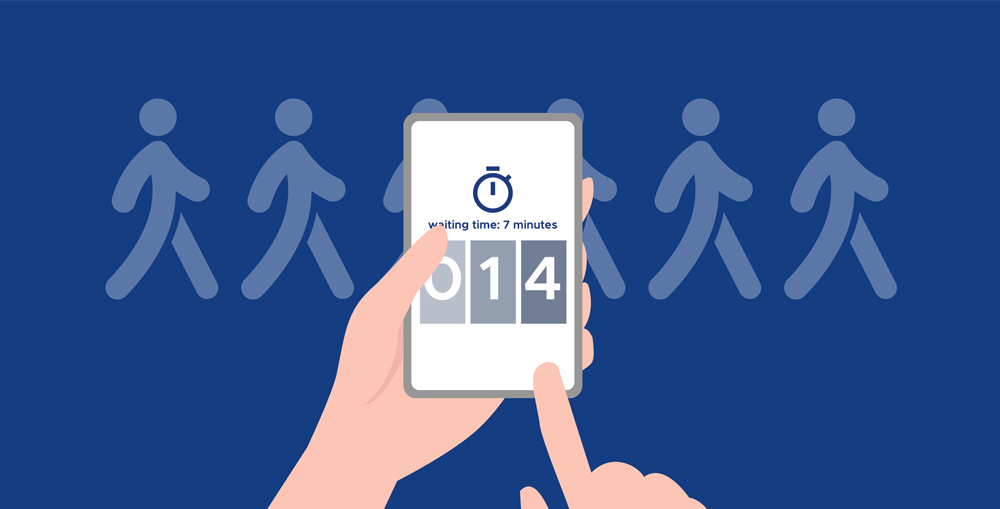
A virtual queuing system or commonly known as virtual queue management system is a modern form of digital queue management. It is equipped with advanced technologies and the primary difference between virtual queuing system and a traditional digital queue management system is that it completely eliminates the need of physical queues, and it can greatly reduce customer wait time. The waiting experience was a big challenge for businesses, with a virtual queuing system this can be managed seamlessly. The virtual queue management system is integrated with latest communication technologies, enhances customer experience by offering them more freedom and control over their waiting experience, this also enable customers to engage in other activities while anticipating their turn.
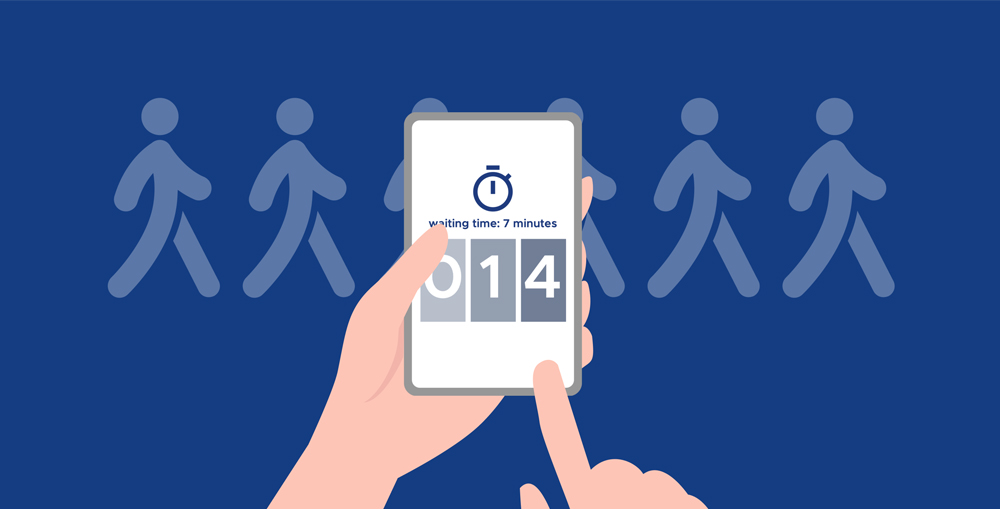
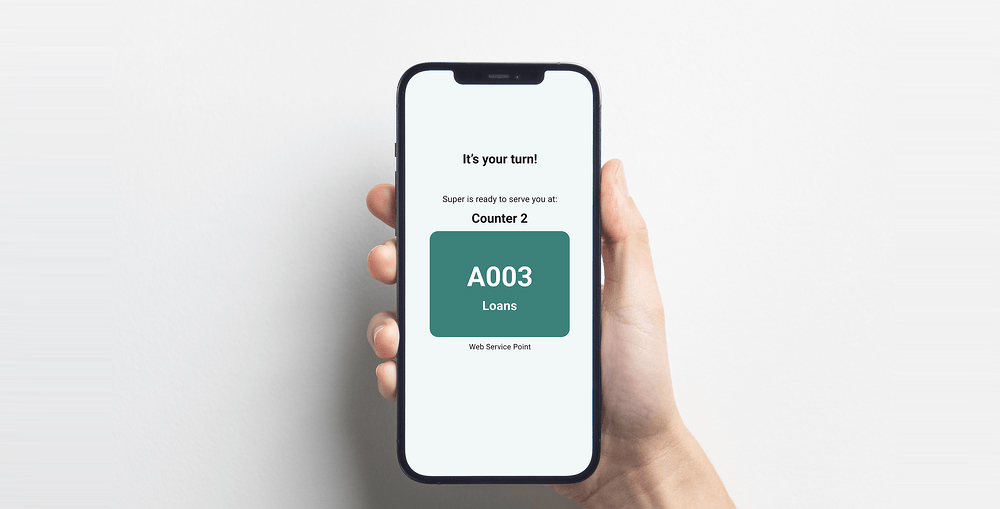
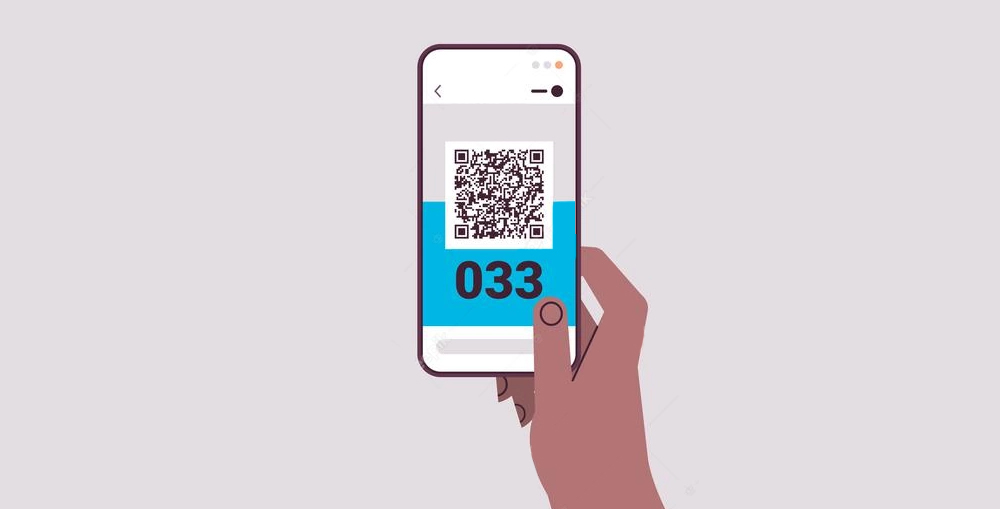
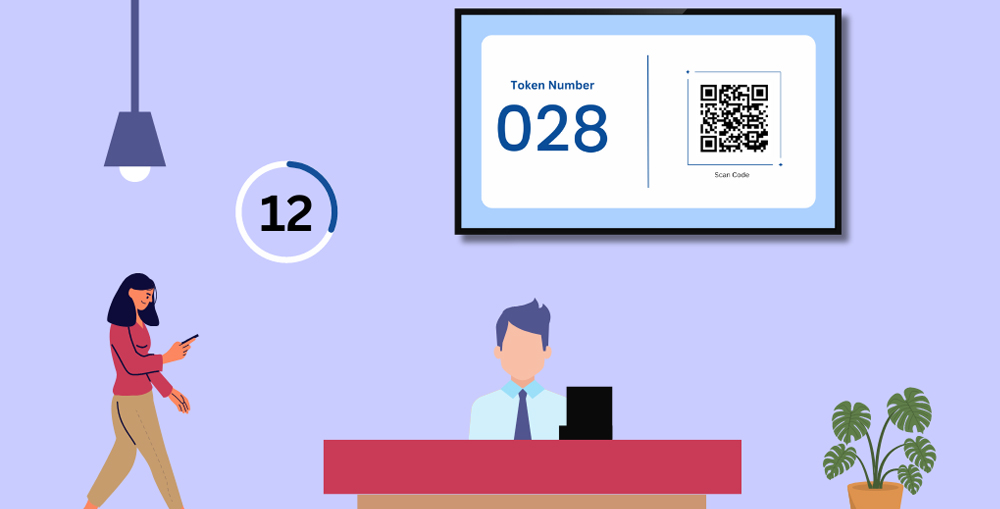
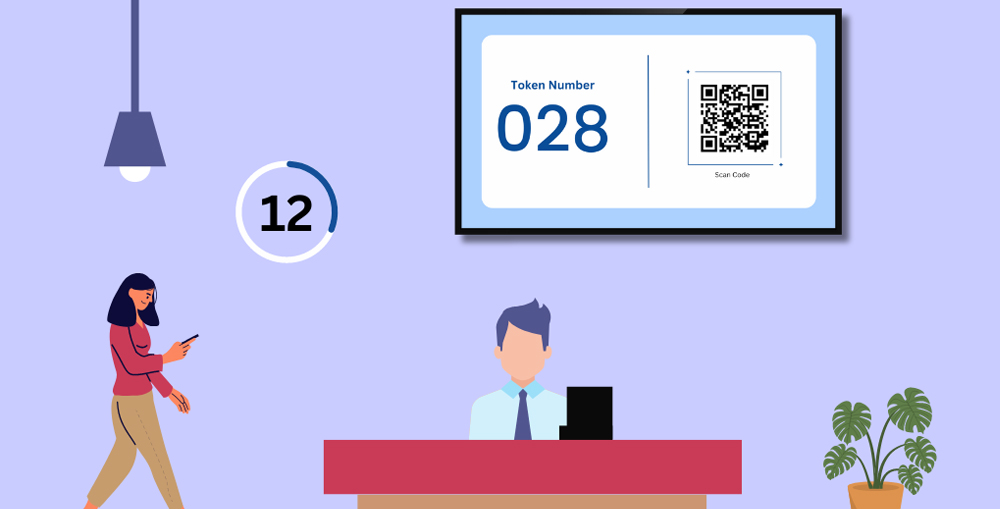
It is this freedom and control that delivers more satisfactory customer experience. The virtual queuing system enable customers to sign-up remotely using their smartphones, web portals, mobile apps, SMS, QR Code or even using WhatsApp. The digital token is issued to the customers and all the queuing details are relayed to them via real-time communication channels. Customers can view all the details on their smartphone apps, online customer portals, and WhatsApp chats and even through SMS, enabling them to plan their visit accordingly. Most of the time customers arrive precisely when their turn comes, it means there is literally no wait time and the customers can get serve immediately as they arrive.
What is a Virtual Queuing System?
What Makes Virtual Queuing System Ideal for Customer-Centric Businesses?
The virtual queuing system is ideal for customer-centric businesses as they leverage the most-modern cutting-edge technology to streamline customer wait time. The customers are provided with digital virtual queues, hence they are not required to wait in physical lines. Furthermore in traditional queue management the customer flow is slow, the physical lines have their own challenges, which are frustrating for the customers at the same time such activities keep staff engages, which further have toll on the customer wait time. The virtual queuing system also offers digital tickets, which are issues through modern communication platforms. The customer’s spot is served through many channels, and the customers are not bound to physically be at the business premises. They can book their spot remotely and get served at their turn accordingly. The virtual queuing system offers:
Enhanced Customer Experience
Better Resource Management and Higher Staff Performance
More Visibility and Control over Customer Flow and Queuing Process
Advanced Administrative Features for Agents and Managers
Customer Journey Automation Tools
Better Communication and Real-time Information
Advanced Business Intelligence Data and Analytics
The virtual queuing system also utilize digital channels to provide live queuing data such as how many customers are to serve before your turn, how many customers are waiting behind you, what counters are active, and how much estimated time is remaining to your turn. All these information allow customers to engage in other activities while their spot is moving forward in the virtual queues. This freedom and control can greatly minimize the wait time and enhance customer experience while boosting employee performance and preventing crowd formation.
What Makes Virtual Queuing System Ideal for Customer-Centric Businesses?
What are the Key Features of Virtual Queuing System?
From technical stand point the virtual queuing systems are way to advance than the traditional digital queue management systems. The virtual queue management systems are one of the most transformative technology revolutionizing how businesses in Dubai, Sharjah, Abu Dhabi and all around the UAE are managing their customer flow, and queuing experience. Here are the key features of a modern virtual queuing system which make them ideal for customer-centric businesses and organizations:
Seamless Integration: The virtual queuing system can integrate seamlessly with existing IT infrastructure and third-party software. Whether it is integration with communication channel, online web portals, smartphones apps, customer database, POS, appointment booking management systems, or central information system the virtual queuing systems can be integrated with them all using a simple API-based integration method.
Real-time Updates: The integration with several channels and apps, enable virtual queuing systems to provide real-time updates and information about their position in the queues, current queuing stats, counter details, estimated wait time and any change in their spot. The real-time updates are also provided for the agents and the management which give them upper-hand in managing the customer flow and optimizing the efficiency.
Flexible Sign-In: The customers are given several mediums to sign-in, they can use web portals, smartphone apps, and appointment booking modules, customer portals, websites, email, SMS, WhatsApp and many more. That is not all, the customers can also schedule their visit as per their comfort. The virtual queuing system provides them historical data, expected foot fall at a particular time, and available slots to let customers setup their schedule easily.
Elevated Customer Experience: The intuitive and interactive features of a virtual queuing system along with its ability to seamlessly manage customer journey can greatly raise customer satisfaction. Less wait time, flexibility and control over their interaction, congestion and crowd prevention mechanisms, real-time information and alerts can greatly enhance customer experience and help businesses manage customer flow with higher efficiency.
Personalized Alerts and Notifications: The virtual queuing system is already integrated with customer databases, it can identify customers, and it can keep record of all interactions, which helps it to understand customer preference and past interaction. This enable virtual queuing system to personalize alerts, notifications and messages towards customers and through their preferred communication channel, adding value to customer happiness and satisfaction.
Customer Journey Automation: The virtual queuing system comes with a powerful software application which is built on smart algorithms and AI (artificial intelligence). The virtual queue management system software can automatically manage customer journey from issuing them a digital ticket to allocating them to a service counter, managing communication, sending alerts, and even taking feedback at the end is a fully automated manner.
What are the Key Features of Virtual Queuing System?
A virtual queuing system is a great tool to enhancing customer experience, managing customer flow and customer journey and elevating service quality. Where it offers several features that directly impact customer experience it also offer several benefits for the business from administration stand point:
Enhanced Operational Efficiency: The virtual queuing system can greatly enhance operational efficiency. It has ability to completely automate the customer journey and customer flow management processes which eliminate human intervention in relevant processes enabling better resource management. The digitalization and automation drive productivity and can greatly enhance operational efficiency.
Enhanced Employee Performance: Where the digital solutions can boost performance by introducing automation and digitalization, the human factor still impacts the operations. The virtual queuing system can greatly enhance employee performance by streamlining customer flow, automating several processes and reducing employee workload. This also allow service agents and employee to focus on their primary and more productive tasks.
Scalability and Customization: The virtual queuing systems are built on advance technologies which hare very friendly toward supporting emerging needs, and enabling businesses to scale and grow at a rapid pace. As each business is different, have different goals, and preferences, the customization is which enable virtual queuing systems to align perfectly with the unique and exclusive business needs. Which also makes them more effective and efficient queuing solution.
Easy System Integration: The virtual queuing systems are designed to support business’s integration needs. In the most modern business IT infrastructure where all software, tools and solutions are expected to work as a part of a bigger body, serving the high-level organizational goals, the third-party system integration is an essential component. The virtual queuing systems offer flexible and easy system integration through APIs and Secure Web Services.
Centralized Management Mechanism: The virtual queuing system comes with a central server-side application which is typically connected with all branches. The centralized management and administrative tools enable real-time queuing data with historical data and predictive analysis. All these tools aid management with administrative tasks and also help them immediately rectify bottlenecks and enable them to take preventive actions to ensure smooth customer flow.
Business Intelligence Data: The business intelligence data is a crucial part of modern business operations. A virtual queuing system can produce a great amount of valuable business intelligence data including statistical and analytical data collected form all touch points throughout the customer journey along with employee performance KPIs, and customer feedback. Businesses can also generate customized reports and use in-built analytical tools to incorporate this data into their decision making processes.
A virtual queuing system is a very powerful tool for modern day businesses. It can greatly improve customer experience and satisfaction. The virtual queuing systems also help businesses effectively manage their employees and customer service centers with highest level of control and visibility.
Benefits for the Business from Administration Stand Point.
Conclusion
The virtual queuing systems are completely redefining the waiting experience. The customer wait time is always one of the biggest challenge for both businesses and customers. Businesses in Dubai, Sharjah, Abu Dhabi and all around the UAE are utilizing digital queue management systems for more than two decades now, however, the virtual queuing system has completely revolutionized. Enabling customers to sign-in to virtual queuing by utilizing any easy-access remote medium offers more freedom and control. Businesses can also integrate virtual queuing system with existing web portals, smartphones, smartphone apps, SMS, email, WhatsApp and various other channels which can be used for sign-in as well as acquiring latest real-time queuing updates. The virtual queuing system also provides direct communication between the service agents and the customers along with automated personalized alerts and notifications. These features offer utmost control and freedom over customer interaction and it completely eliminates the need of being physically present at the business premises.
The virtual queuing systems are not only good at reducing customer wait time and delivery excellent customer experience but they also offer many benefits for the staff and management too. The employee performance and service quality can be greatly enhanced by implementing a virtual queuing system. In this blog we gave a briefed introduction to virtual queuing systems and the key features and benefits business can leverage to deliver a satisfactory customer experience. If you want to learn more about the subject or if you want our help to design a bespoke virtual queuing system for your business or organization, please feel free to contact us through our Contact Us page or leave a comment in the comment box below and we will get in touch with you soon.
Longer wait time at healthcare facilities always add to anxiety and discomfort for the patient and it also have toll on the staff performance. Every healthcare facility, hospital, clinic or testing lab requires a highly efficient patient flow management system. Long are gone the days of paper pencil based ticketing system, even first-come first-serve queue management system also proven to become inefficient, now is the time of digital queue management system. Healthcare facilities are typically slightly different from other service sectors, as there are different levels of priorities hence a comprehensive and very effective patient flow management policy is essential. It is typical to have long waiting lines and crowded lobbies at hospitals, clinics and other healthcare facilities, above all you never know how much more you will have to wait. This could be very frustrating for patient and it can completely ruin patient experience.
In this blog we will discuss how healthcare facilities implement a modern digital queue management system to enhance patient flow and optimize patient wait time. The queue management system doesn’t only streamline patient flow but it can greatly enhance the staff performance as well. A queue management system is a digital tool integrated with several hardware and other IT infrastructure which enables digitalization and automation at several steps of customer journey, driving exceptionally greater efficiency and performance. In this blog we will go through several aspects of a queue management system which can be a game-changer for healthcare facilities in Dubai, Sharjah, Abu Dhabi and anywhere else in UAE.
Queue Management Solutions for Healthcare: Improving Patient Flow
What is a Patient Flow Management System?
A patient flow management system is a specialized queue management system which is exclusively designed for healthcare sector. The patient flow management or queue management system is a software-based solution which is designed to enhance the customer flow and customer experience. Healthcare facilities can implement a modern queue management system to prevent crowd formation while significantly reducing the patient wait time. When the patient doesn’t have to wait much and their entire journey is managed by an efficiency software-based system the staff’s workload is also reduced, this helps them to offer better services and focus more on important and crucial tasks, which elevate operational efficiency and service quality.
A typical patient flow management system or queue management system consists of a ticketing mechanisms, it could be either on-site interactive self-service ticket dispensing kiosk or it could be through remote channels such as email, SMS, patient portals, smartphone apps, WhatsApp, QR Code, etc. Further comes the digital signage displays which are used to display live queuing information on large signage screens. The queuing information can also be relayed to several connected channels, such as dedicated web pages, queuing apps, customer portals, and via SMS as well. The customer calling system have audio announcements as well as integration with SMS, WhatsApp and smartphone applications which send alerts and notification to the patients.
What is a Patient Flow Management System?
The backend of the queue management system is a server-side application which is hosted on a server and it can be hosted online, at a cloud or at on-premises data centers. It is this application which is the actual brain of the system equipped with smart algorithms, AI (artificial intelligence) advance data collection and analytical tools and it is connected to all customer facing UIs, whether it is interactive self-service ticket dispensing kiosk, smartphone app, online customer portal, website or any other channel. Furthermore the queue management system server app also stores data and it is linked with other databases, business solutions, software and central information center of the organization.
The backend queue management system software applications also provide administrative dashboards and control panels. The service agent or staff dashboard is designed to facilitate the work of the on-site staff who is responsible for managing the queues, waiting and reception areas. The management or branch managers also have dedicated dashboard or admin panel which provide them real-time queuing updates and reporting data. The head-office staff or higher management have their dedicated dashboards which provide monitoring and control tools for all connected facilities. The IT and system administration team also have their dashboards which are used for regular monitoring and remote maintenance.
The backend queue management system software applications also provide administrative dashboards and control panels.
How Queue Management System Improves Patient Flow and Operational Efficiency?
Hospitals, clinics, testing labs, doctors’ offices and other healthcare facilities are typically very busy places. Patient coming for appointments, test samples, walk-ins, emergencies, and even doctors, nurses and other staff is always rushing around, which can make the entire facility very chaotic. A digital queue management system streamline patient flows, organize everything and bring stability and order to this chaos helping everyone and making everyone’s experience less stressful. Here are some key advantages of a patient flow management system or queue management system which can ensure a satisfactory patient experience and higher operational efficiency.
Queue Management System Shortens the Wait Time
One of the biggest advantage of a queue management system is that it can remarkably shorten the patient wait time. A queue management system comes with a smart software, which is capable of monitoring and storing statistical and analytical data and on the bases of that data along with the live queuing data it can autonomously take queuing decisions, minimizing the friction and reducing the overall wait time. Furthermore the patients are offered self-signups which gives them freedom and also eliminate human intervention, expediting the signup process. The queue management system also improves patient flow by automatically managing the entire patient journey.
Further it enhances patient’s waiting experience by providing them the live queuing data and information. When a patient is waiting in queues, the worst thing is that they don’t know how much more time is remaining, a queue management system has in-built smart algorithms which can analyze the current patient flow and also relate it with the historical data to accurately estimate the wait time. The patients are also provided with regular and continuous updates about the ongoing queues, and are being updated to the second. These features not only minimize patient’s wait time but also reduce the stress of waiting and enhance patient experience.
Queue Management System Shortens the Wait Time
Queue Management System Offers Remote Sign-in
One of the biggest advantage of a queue management system is the feature to enable patients to sign-up remotely for the queues and this is what makes it ideal for the patient flow management. Patients are provided with several integrated channels, such as mobile apps, appointment booking tools, patient portals, website, WhatsApp, SMS, QR Code, etc. and all these channels allow patients to sign-in without even being physically present at the healthcare facility. It gives them freedom to spend their time at home, or plan their trip in a way to arrive at hospital at the time of their turn. This reduce the crowd and help making everyone’s experience better.
The remote sign-in or virtual queuing is a crucial part of the customer flow management, it helps reducing the stress and it also offers more freedom to patients and more control to the staff. Furthermore it minimizes the paper work required for check-in which in itself is a big relief for the patients. The automation of signing-in also minimize human related errors and improve accuracy. While booking appointments patient can view the available slots and expected wait time, furthermore when the patients sign-in the queue management system keep sending them alerts, notifications and updated queuing information in real-time which greatly enhance patient experience.
Queue Management System Offers Remote Sign-in
Queue Management System Improve Staff Performance and Operational Efficiency
In a typical healthcare establishment, the staff is usually engaged in several manual tasks, the patient sign-in and the queue management is a difficult task, it keep the staff busy. Furthermore when there is no foresight of the expected footfall, the staff could easily get overwhelmed during the peak hours. When the staff is too much busy in managing arriving patients, and signing them in, they can’t fully focus on service which deteriorate the service quality as well. However, with the queue management system most of these tasks can be managed automatically without any staff intervention.
A queue management system effectively and efficiently sign-in patients, it can minimize and in some cases completely eliminate the paper work form the sign-in process, it manages customer flow efficiently and took a lot of workload off from the healthcare staff. This help the staff to focus on important tasks to improve patient experience and service quality. When the staff works under a balanced workload, their productivity also improves. With historical and analytical data the management can perform predictive analysis easily, which help them managing human resource more effective. A queue management system doesn’t only enhance patient experience but it can also greatly improve operational efficiency.
Queue Management System Improve Staff Performance and Operational Efficiency
Queue Management System Provides Business Intelligence Data
A queue management system is a digital tool which comes with a very sophisticated backend software application. The queue management system software is built on latest and highly advanced technology which enables it to offer several features that can be very helpful for the management. A queue management system is capable of collecting the statistical and analytical data in real-time and it also provides real-time reports and updates to the management. It has capability to collect data from each and every touch point, which makes it a valuable asset. The business intelligence data collected by a queue management system can be incorporated in strategic decision making process to increase success. A queue management system keeps full record of each and every patient’s wait time, their service delivery time, and it can also monitor the staff performance.
Furthermore the historical data help in predictive analysis and make human resource management more efficient and effective. A patient flow management system of queue management system is capable of collecting patient information in advance and relying it to the service counter, optimizing the service delivery process and it can also collect patient feedback with in-built or integrated feedback management module. The management can utilize the in-built analytical tools to extract insight and prepare reports or they can integrate the data to another management tool via integration. The business intelligence data is essential for making sound and informed decisions which help improving patient experience and several business processes in the long term.
Queue Management System Provides Business Intelligence Data
Queue Management System Offers Flexible Third-Party Integration
The operational efficiency is a key to success, it enables businesses and organizations to produce more outcome with less resources, which drive productivity and performance. Especially at hospitals, clinics, testing labs and other healthcare facilities where efficiency and time is even more crucial, the operational efficiency is achieved by using several IT solutions, software applications and information management systems. The success lies in interconnectivity of all these different system hence the entire IT infrastructure works in an absolute harmony to enable healthcare facilities to leverage the full potential of their entire digital eco-system. This is achieved with third-party integration, also known as IoT integration which enables two or more systems to communicate with each other in real-time.
A queue management system is built on advanced technology platforms, which enables it to offer simple, easy and very flexible third-party system integration. At any healthcare facility there could be several systems operating simultaneously, such as online channels, websites, smartphone apps, ERP system, CRM or Patient Relationship Management system, patient database, and a central information management system which could also be linked to several external systems and relevant governing bodies. A queue management system can fit in seamlessly with its ability to offer simple and easy third-party system integration via secure and easy-to-use web services or APIs. This enables queue management system to get data from other integrated system and databases and it also enables it to push data to other systems. The ability to seamlessly integrate with other systems also help healthcare facilities to offer innovative and intuitive features which can greatly enhance patient experience.
Queue Management System Offers Flexible Third-Party Integration
Conclusion
A patient flow management system or a queue management system is truly a very transformative and revolutionary solution for healthcare sector. It can greatly improve patient flow with superior patient experience and enhanced operational efficiency. A hospital, clinic, testing lab, doctor’s office or any healthcare facility can greatly boost their operational performance by implementing a modern queue management system. It greatly enhance patient experience by minimize patient wait time, automating several business processes and streamlining patient flow. A queue management system also enhance staff performance by offering advanced monitoring and management tools. The remote sign-in, administrative dashboards, integration with appointment booking mechanisms, and advanced business intelligence data collection tools can completely transform the entire operations.
The healthcare facilities can also customize a queue management system as per their unique business needs to further amplify its impact on patient experience and operational efficiency. In this blog we have covered several aspects of a queue management system which makes it an ideal solution to streamline patient flow and to optimize operational performance. If you want to learn more about the subject or if you want our help to implement a bespoke and cost-effective patient flow management system/queue management system for your healthcare facility, please feel free to contact us through our Contact Us page or leave a comment in the comment box below and we will get in touch with you soon.
The technology have completely revolutionized the ways how businesses and customers are interacting. A queue management system is a sophisticated tool build with smart algorithms and analytical tools which help businesses monitor and improve customers’ queuing experience while improving efficiency and several business processes. A modern queue management system is a combination of sophisticated software and various hardware components which all works in harmony to streamline customer flow.
In customer facing environments, crowd formation and long wait time are the two most critical pain point for the customers. Implementing a modern queue management system not only facilitate customers, but it also help service staff and management and improve the entire operation of the business/branch. According to studies a customer can only wait for around 8 to 9 minutes, any time longer than that will add to their frustration and lengthy waiting time are one of the major cause of customer churn.
Streamlining Customer Service: The Power of a Modern Queue Management System
In today’s fast-paced world, no customer wants to wait in long queues, the customers want quick and quality service. If the customer feel they are inadequately served, it will harm your brand reputation and the customers are most likely to switch to other businesses. In this blog we will discuss how you can prevent that by implementing a modern queue management system how your business can easily achieve their goals while maintaining greater service quality, operational performance and higher customer satisfaction.
How Modern Queue Management System Works?
A modern queue management system is more than a humble line management tool, in fact it is based on AI (artificial intelligence) based powerful software solution and smart data-driven analytical data management tool which not only help improving customer flow but it also helps management in optimizing the entire service delivery. A modern queue management system comes with a wide range of features which help management with digitalization, automation and business process optimization.
Where a queue management system improve customer experience it also greatly improve service quality and staff performance. Features like virtual queuing, smart automations, real-time monitoring and interactive tools for customers and service agents, businesses can greatly enhance the overall efficiency and performance which help them retain customers. The modern queue management systems can also be integrated with other third-party systems and databases. All these modern features makes a modern queue management system an ultimate branch optimization tool.
How Modern Queue Management System Works?
What are the Key Advantages of a Modern Queue Management System?
Unlike traditional queue management systems a modern queue management system is a very capable tool, it can offer great many benefits, here are a few key advantages of a modern queue management system:
Enhanced Customer Experience: For any business customer experience is one of the most important metric to improve. In fact the entire business growth depends on their success in customer experience. A modern queue management system greatly reduce customer wait time and help businesses improve service quality. A better well-managed and organized customer journey ensures a better experience. Enhanced customer experience help attaining customer loyalty and support business growth.
Enhanced Staff Efficiency: For any business it is absolutely essential to be able to leverage the full potential of their staff. A modern queue management system helps businesses improve staff efficiency by lifting up the unnecessary work load via digitalization and automation. This help staff focus on their primary and more productive tasks and consequently enhance their efficiency.
Business Intelligence and Insights: A modern queue management system help businesses collect valuable business intelligence data on customer flow, customer journey, interaction and staff performance along with high quality statistical and analytical data. Businesses can get highly accurate and deeper insight from this data and based their decision upon data which help them to make improvements and business processes.
Third-party System Integration: A modern queue management system has ability to integrate with third-party systems, databases, and central information center which help businesses incorporate innovative features. The integration can be very helpful for enhancing customer experience and it also help improving the overall performance and efficiency of customer service process.
There are several advantages of a modern queue management system. Businesses can also have a customized queue management system which can be very helpful to fulfil their unique and exclusive business needs.
What are the Key Advantages of a Modern Queue Management System?
What are the Key Features of a Modern Queue Management System?
A modern queue management system is equipped with cutting-edge technology and modern features which makes it more effective and impactful.
Here are a few key features of a modern queue management system:
Virtual Queuing: The virtual queuing have completely revolutionized the customer experience and customer flow management process. The virtual queuing enable customers to join remotely for virtual queues which allow them to effectively manage their time and arrive when their ticket number is called, this also help reducing the wait time to literally none. It also provide more control over customer flow and prevent crowd formation and congestion.
Real-time Monitoring: The real-time monitoring and ability to view live queuing status could be a game-changer for the business. The modern queue management system enable businesses to make quick adjustments based on real-time queuing status and proactively manage customer service experience. Businesses can also provide real-time updates to customers via remote channels.
Third-party System Integration: The third-party system integration allow modern queue management systems to access data from other systems, such as CRM, ERP platforms and it also enable access to various communication channels such as SMS, Email, WhatsApp, etc. The third-party system integration empowers both customers and agents and also help management to monitor and control queuing process in single and multi-branch setups.
Businesses can include a variety of customized features as per their needs. A modern queue management system offer flexible customization and have longer life-cycle ensuring higher ROI.
What are the Key Features of a Modern Queue Management System?
How to Implement a Modern Queue Management System?
A modern queue management system is a very sophisticated and complex tool. It doesn’t mean it is difficult to operate, in fact it is a very user-friendly tools and businesses can also customize the UI/UX to make it more intuitive for customers and staff. However, implementing a modern queue management system requires careful planning and strategic project execution.
Here is a step-by-step guide to implement a modern queue management system:
Requirement Gathering: It is important to clarify your requirements before selecting a queue management system. A through assessment of your business needs, customer flow and existing problems has to be conducted and a requirement document should be prepared at this stage.
Vendor Selection: Selecting a right vendor is the most crucial part. You should search reputed queue management system providers in Dubai, Sharjah, Abu Dhabi or anywhere in UAE. Make sure they are offering, virtual queuing, system integration, customized reporting, interactive self-service solutions and other required features and chose the vendor with best price and portfolio.
System Commissioning: Commissioning the queue management system includes, system deployment at your premises and integration with required systems and existing IT infrastructure. This could involve multiple vendors or teams hence require close collaboration and intensive management to overcome technical challenges and obstacles.
Staff Training: Once the queue management system is commissioned, now is the time to train your staff. You can held comprehensive training workshops and provide relevant manuals to make your staff familiar with the operation and useful features of the system.
Testing and Optimization: Once the queue management system is fully operational it is time to closely monitor the system performance and its impact on both customers and the staff. You can collect feedback and suggestions from customers, service staff, other system users and stakeholders. Based on these feedbacks modifications can be done to make your queue management system more effective and impactful.
If you follow the above steps you can successfully implement a modern queue management system.
How to Implement a Modern Queue Management System?
How Modern Queue Management System is Impacting Businesses: Case Studies
Different industries are implementing modern queue management systems to achieve their goals. Different industry sectors have slightly different requirements hence most of the time businesses prefer to customize the queue management system as per their specific needs.
Here is a quick overview of how modern queue management systems are impacting businesses in different industries:
Retail Sector: The retail sector in UAE is adopting to modern queue management system and according to market studies a retail business can have up to 30% reduction in average customer wait time, which results in up to 20% higher customer satisfaction and almost 15% better staff performance.
Healthcare: The healthcare sector is one of the most sensitive sector where the patient wait time could have most impact on both business/clinic/hospital and the patient. Healthcare sector is witnessing almost 40% reduction in average patient wait time and great improvement in staff performance and resource management.
Banking Sector: The market studies are showing that the banks all over the UAE are witnessing great improvements in customer experience and wait time after implementing a modern queue management system. The virtual queuing can reduce the wait time by 50% and help enhancing the staff performance by up to 30%.
Government Sector: The government offices, service centers and other government organizations can greatly reduce customer wait time. According to market research an average government service center can reduce customer wait time by up to 60% by implementing a modern queue management system.
Part and Entertainment: The theme parks and entertainment sector can greatly optimize customer wait time by implementing a modern queue management system which can reduce average wait time to up to 40% and help enhancing customer experience and raise satisfaction.
Different industry sectors are using queue management systems differently, based on their industry specific needs and other factors. Apart from that businesses who are implementing a custom queue management system are witnessing even more positive impact of it.
How Modern Queue Management System is Impacting Businesses: Case Studies
Conclusion
A modern queue management system is not just having a bunch of technologically advanced features, in fact it is a complete framework to systematically manage and improve customers’ service center experience while maintaining optimum performance and operational efficiency. This means that when a business implements a modern queue management system, it not only elevate customer experience, but at the same time it also optimize efficiency and productivity, which means a significant increase in profitability and growth.
Businesses can gain a great competitive advantage by achieving and exceeding the industry benchmarks. Delivering a great customer experience and higher service quality ensures higher customer loyalty and help businesses achieve their goals. A modern queue management system is a very cost-effective tool with requiring very little to no maintenance and can stay relevant for years which can greatly improve the ROI.
In this blog we have discussed what a modern queue management system is and how businesses can leverage it to achieve higher customer satisfaction and better operational performance and strength. If you want to learn more about the modern queue management systems or if you want our help to implement a tailor-made queue management system in your business, please feel free to contact us through our Contact Us page or leave a comment in the comment box below and we will get in touch with you soon.
Frequently Asked Questions (FAQs)
Q: What are the Key Components of a Modern Queue Management System?
A: A modern queue management system components include a server side software application, different user interfaces for service agents, higher management and the customers. An interactive self-service ticket dispensing kiosk with intuitive multi-lingual UIs helps customer to sign-up. Counter displays and audio announcement system along with a digital signage to display queuing information are also common.
Q: How Virtual Queuing Works?
A: A virtual queuing is a set of advanced and integrated features which allow customers to sign-up remote without being physically present in the premises or without requiring them to wait in physical waiting lines. Customers can use QR Code, Online Portal, Mobile Apps, WhatsApp, SMS or any other channel to sign-up for virtual queues.
Q: What analytical data a Modern Queue Management System Collects?
A: A modern queue management system can provide a wealth of business intelligence and analytical data which includes, customer behavior, customer interaction at different touch points, customer flow stats, peak-hours insight, staff performance data and much more. It helps businesses taking data-driven decisions to make improvements in their service centers.
Q: What is Third-party System Integration?
A: The third-party system integration is a process of connecting to independent system and enabling a communication channel between them. It can be used to provide access to data from a system and it can also be used to synchronize the data between two systems to prevent manual data updates and duplications. It make systems more dynamic, innovative and effective. The third-party system integration is done via secure web services or APIs.
Q: Can a Queue Management System work for a Multi-branch Business?
A: Yes. A modern queue management system can effectively manage multiple branches. Typically a queue management system has a server-side application which his hosted on a server and that server is linked to all hardware devices across all branches and the users can access respective user dashboards from all branches while the head office or main branch can monitor and manage the entire system and get reports and data from all branches in real-time.
Q: What is the Role of Real-time Reporting in Queue Management System?
A: A modern queue management system offers real-time reporting. It enables businesses and all system users to get real-time and up-to-date data in their respective dashboards and it also allow businesses to set alerts and trigger for any change in customer flow, wait time, or service performance. The real-time reporting allow management to take instant decisions, prevent congestion and help them effectively manage resources.
Q: Can We Customize a Modern Queue Management to Accommodate our Unique Business Needs?
A: Yes, a modern queue management system is built on very flexible and advanced technology platforms which support customization and help businesses build a tailor-made queue management system to accommodate their unique business needs. It can also be customized to overcome integration challenges. The user interfaces and user experience can also be customized as per business needs.
Can a Modern Queue Management System Send Alerts and Notifications to Customers?
A: Yes. A modern queue management system comes with in-built alerts and notification module which allow businesses to set triggers, and accommodate customized workflows for automated alerts and notifications. Alerts and notifications can be sent using SMS, Email, WhatsApp, In-App Notifications, and any other integrated communication channel to provide them information about their ticket status, queuing information and any change in customer flow.
How a Modern Queue Management System Handles Peak-Hours and Unexpected Surge in Footfall?
A: A modern queue management system is built around a powerful smart software and AI (Artificial Intelligence) technology. The smart algorithms can monitor customer flow in real-time and they can also analyze the historical data along with predictive queuing algorithms which can automatically reroute customers to less-busy counters, and can also effectively manage resources to accommodate peak-hours or unexpected surge in footfall. Furthermore the modern queue management system can also alert branch manager or head-office with adequate information to help them take instant decisions to prevent crowd formation and congestions.
Does Queue Management System comes with Security Measures to Protect User Data?
A: Yes, a queue management system comes with in-built security measures to ensure highest level of user data protection. The in-built data encryption and secure network communication help protecting user data. A user management module allow implementing customizable user access and authentication mechanisms to prevent unauthorized access to user data stored in the system. Typically a queue management system doesn’t store much of customers’ personal information within the system, it is usually accessed from the main customer database or central information system. Even if any such data is stored, it is hosted on secure server or cloud to ensure highest level of security and data protection.
The bill payment kiosks are revolutionizing the financial market and traditional methods of transactions between businesses and customers. A bill payment kiosk is a specialized type of interactive self-service kiosk which includes features and functionalities to collect payments from the customers. The bill payment kiosks offer seamless transaction with an intuitive self-service experience which is why businesses and organizations in Dubai, Sharjah, Abu Dhabi and all around the UAE are rapidly adopting the technology.
The bill payment kiosk are not exclusive to banking and financial sector, in fact various industries are showing great ROIs, making it one of the most popular emerging technology in UAE. A bill payment kiosk not only help streamlining the payment process, but it also ensures a higher customer satisfaction. Features like multiple payment methods, multilingual intuitive UIs, countless hardware features, customizable software, easy adoptability and automation makes bill payment kiosk a perfect companion to deal with diverse customer demand, managing operational performance and building a strong brand perception.
In this blog we will explore several key aspects of the bill payment kiosks and how businesses can leverage them to enhance customer experience and boost operational efficiency.
What is a Bill Payment Kiosk: Everything You Need to Know
What is a Bill Payment Kiosk?
A bill payment kiosk is an interactive touchscreen kiosk which accept payments from customers via multiple modes such as cash payment via currency bills and coins, credit/debit cards, digital payments, NFC payments, integrated payment gateways, vouchers and many. A bill payment kiosk is a one-stop-shop where customers are offered multiple different services and information.
The bill payment kiosks are excellent at enhancing customer experience while offering them easy 24/7 access to business services such as paying bills, service charges, subscription fees, or checking out at retail stores and restaurants. In the fast-paced markets like Dubai, Sharjah, Abu Dhabi and other regions in UAE where the importance of time is paramount, customers and businesses both admire solutions which optimize service delivery process and minimize customer wait time.
A bill payment kiosk is designed to offer a multitude of services through intuitive user interfaces. It comes with a powerful backend software or management tool which enable businesses to control and manage data and information on the kiosk in real-time. The bill payment kiosk software offers great features such as customization, easy scalability, adoptability, and flexible integration which enable business to offer innovative features and help them improve customer experience.
What is a Bill Payment Kiosk?
What are the Types of Bill Payment Kiosk?
There are several types of bill payment kiosks based on their technical specification, usage, or industry-specific application. In general a bill payment kiosk has a touchscreen interface, cash acceptor and authenticator, however, coin-base payment, cash recycler for change return and POS integration for credit/debit card payments is also common. However, there are three major types of the bill payment kiosk on the bases of its physical design:
Indoor Bill Payment Kiosk: As the name suggests the indoor bill payment kiosks are designed to deploy in indoor setups, it could be an office, shopping mall, community center, transportation hubs, airports, libraries, healthcare, government service centers, etc. These types of kiosk are cost efficient and can offer multiple advanced features.
Outdoor Bill Payment Kiosk: The outdoor bill payment kiosks are deployed in outdoors – fully exposed to the harsh environment. These kiosks are built using specialized components with advanced temperature control and weather proofing features. The outdoor bill payment kiosks are slightly expensive and can have limited features due to the outdoor compatibility of the physical components and parts.
Customized Bill Payment Kiosks: The customized bill payment kiosks are tailored solutions as per the specific and unique business needs. Businesses usually go for customized bill payment kiosks in order to develop innovative features adding value to customer experience as well as helping then gain the competitive advantage. Furthermore businesses also require customized solutions in order to include additional hardware and software features which accommodate and strengthen their existing business processes without compelling them to make disruptive changes to their internal workflows.
What are the Types of Bill Payment Kiosk?
Furthermore there are many more types of bill payment kiosks on the bases of application and usage. Here are a few commonly used bill payment kiosks that are gaining popularity in Dubai, Sharjah, Abu Dhabi and all across the UAE.
Bill Payment Kiosk Machine: These are some of the most common bill payment kiosks in UAE. The bill payment kiosk machines are versatile with cash and debit/credit card based payment methods. These kiosks support transactions for a multitude of services such as electricity and water supply bills, telecom services, remittances, international payments, fees and charges for government services and much more. These kiosk machines are common in public areas, markets, shopping malls, and residential areas, etc. offering a quick way to manage payments.
Cash Payment Kiosk: These kiosks are usually offered by utility service providers, retail businesses, facility management companies, and organizations who are usually dealing with small amounts ranging from AED 5/10 Dirham to up to AED 200 Dirhams. Usually these kiosk doesn’t offer change and return but in certain cases these facilities are added too. These kiosks are usually found in busy service centers offering a quick alternate service channel to optimize efficiency.
Utility Payment Kiosk: The utility payment kiosks are usually utilized by utility service providers and installed at their attended and unattended service areas. The utility bill payment kiosks are also common in shopping malls, residential areas and high footfall public areas. These kiosks offer intuitive payment processes with additional features exclusively designed to simplify the customer journey.
Self-Ordering Kiosks: These self-ordering kiosks are utilized by small and medium sized businesses offering multiple services. Furthermore the food-ordering kiosks are also a type of self-ordering kiosk and are very common all across the UAE. Many popular food and restaurant chains, retail stores, and service providers are using self-ordering kiosks to enhance customer experience and to offer an alternate service channel for quick service delivery.
Self-Service Payment Kiosk: These types of kiosks are usually used at high footfall areas, public places for a multitude of different services, for example, the kiosk that you are using at metro stations to top up your NOL card or any other card or the kiosk you use to purchase bus tickets, cinema tickets, and even at entertainment venues are all different example of self-service payment kiosks.
Cash Payment Kiosk: The cash payment kiosks are usually designed to take and hold large quantity of currency bills, it usually offer a more flexible payment method such as ability to get payment in coins as well along with facility to return change in cash and coins. The cash payment kiosks are used by retail businesses, service providers, government and public offices, charities, libraries and various other sectors.
Money Transfer Kiosk: The money transfer kiosks are used by money exchanges, banks and remittance service providers. As in UAE a large number of expats is living who are regularly sending remittances to their home countries, this is why the money transfer kiosks are gaining huge popularity. These kiosks are equipped with specialized KYC tools and security features to comply with government policies and can hold large amount of cash inside them, ensuring a smooth and seamless customer experience.
Government Service Payment Kiosk: The government service payment kiosks are gaining popularity in Dubai, Sharjah, Abu Dhabi and all across the UAE. Different government departments are utilizing these kiosks. These kiosks not just take payments, but has ability to fully integrate in the workflow with additional integrated tools such as Emirates ID scanner, Passport Scanner, Document Scanner/Printer, Barcode/QR Code Scanners, Biometrics and much more. These kiosks are usually custom designed in order to seamlessly integrate with existing government services, workflows and business processes and can offer a multiple different payment methods along with cash payment.
Apart from above all, all different types of vending machines, parking ticket payment machines, and even the ATMs are also the types of cash or bill payment kiosks.
Advantages of a Bill Payment Kiosk
What are the Key Benefits of a Bill Payment Kiosk?
Different industries utilizes bill payment kiosk differently for example, a government of public-office might be using a bill payment kiosk which have additional features such as Emirates ID scanner, biometrics, document scanners and printers and multiple payment methods, however, a retail store might be using barcode/QR code scanner, RFID reader, and in some cases digital weighting scale and such features.
However, no matter what industry you belongs to, there are certain benefits which are similarly applicable across all industries and applications. Here are some key benefits of a bill payment kiosk, regardless of business’ industry or size.
Easy Accessibility: One of the biggest advantage of bill payment kiosk is that it offers 24/7 access to business services. Easy access and reachability enhance customer experience and raise their satisfaction.
Reduced Wait Time: Whether used in attended service centers or unattended setups, the bill payment kiosks has ability to process payments much quickly, optimizing service delivery process, and reducing customer wait time.
Intuitive User Interface (UI): The bill payment kiosks usually offer multi-lingual and very user-friendly user interface (UI) which can greatly enhance customer experience. On-screen instructions and other intuitive features raise customer satisfaction.
Raise Operational Efficiency: A bill payment kiosk digitalize several processes and make transactions seamless. Which greatly improve operational efficiency and also help reducing the employee workload which lead to better resource management.
Multiple Payment Methods: A bill payment kiosk is a digital system which has ability to integrate multiple payment methods such as cash, coins, credit/debit cards, and digital payment modes, offering more ease, convenience and freedom to customers.
Real-time Processing: A bill payment kiosk software can be integrated with third-party software, tools, databases and central information center of the business. This enables it to process payments in real-time and update all relevant systems automatically, giving instant confirmation.
Privacy and Security: A bill payment kiosk complies with highest industry standards to ensure high level security and privacy. It offer self-service experience and encrypted data communication which raise protection levels and help gaining customer trust.
Business Intelligence Data: The powerful software of bill payment kiosk can provide a wealth of high-value actionable analytical data on customer behavior, market trends, service preference and much more which help business taking informed decisions.
Instant service delivery, easy access, intuitive features and secure transactions make bill payment kiosk an ideal solution for growing business. A bill payment kiosk can offer alternate service channel which can greatly improve the capability to serve more customers, hence reduce the staff requirements. All these features enhance customer experience as well as boot operational efficiency and help businesses scale for growth by maximizing their profitability.
What are the Key Benefits of a Bill Payment Kiosk?
How Bill Payment Kiosk can Elevate Customer Experience?
In the highly dynamic and fast-paced business landscape of UAE businesses located in Dubai, Sharjah, Abu Dhabi and all across the country are very inclined towards adopting modern practices and methodologies and implementing cutting-edge technology to elevate customer experience. The customer experience is one of the most important aspect of the business, as the entire business success heavily depends on customer satisfaction.
The bill payment kiosks or self-service payment kiosks are also a step toward elevated customer experience and satisfied customer journey. The payment kiosk machines offer a super user-friendly customer experience and also help businesses enhancing operational performance. Here are some key advantages of bill payment kiosk which help elevating customer experience:
Easy Access and Convenience: The biggest appeal of an interactive self-service bill payment kiosk lies in its ability to offer easy access and convenience. These kiosk machines operates 24/7 offering more freedom and letting customer access the services any time they want. Furthermore there is no need to stand in long waiting lines, which usually undermine customer experience.
Intuitive and User-Friendly: The bill payment kiosks are built on a smart kiosk management software which has ability to offer intuitive multi-lingual user interfaces (UIs). Furthermore on-screen instruction, access to updated information and direct customer support access offer excellent customer experience and make them more user-friendly.
Customer Satisfaction and Loyalty: By offering a friction less and optimized service delivery mechanisms through bill payment kiosks businesses can greatly boost customer satisfaction. Freedom, control and personalization with an intuitive and user-friendly service delivery process the customer happiness can be raised which is a key to customer loyalty and long term success.
Enhanced Customer Service: The bill payment kiosks are very reliable, offering most accurate services and information by avoiding almost all different types of human errors. Furthermore the bill payment kiosks also help boosting the performance of the service centers. By serving as an alternate service channel, the staff workload is reduced resulting in improved service quality.
Multi-Functionality: The bill payment kiosks are versatile, they comes up with multiple software and hardware based features which are all designed to enhance customer experience by simplifying customer journey. Such as specialized features to instantly scan documents, or access to information, or connecting with support, etc. All these features elevate customer experience.
With the advancements in technology the bill payment kiosk machines are becoming more user-friendly day by day. Businesses are rapidly adopting to self-service bill payment kiosks to streamline their service delivery processes which is completely transforming how businesses and customers are conducting financial transactions.
How Bill Payment Kiosk can Elevate Customer Experience?
Why the Placement of the Bill Payment Kiosk is Crucial for Success?
The success of the bill payment kiosk depends on the users, if not many users will use it, you won’t be able to leverage its full potential. But most of the businesses doesn’t realized that how crucial it is to place the bill payment kiosk on carefully selected strategic locations. For example, if you place a bill payment kiosk in a resting area at a highway, what do you expect how many people will going to use it? Not many, because despite having large footfall at those areas, the people who are stopping there are just there for refreshment or rest and doesn’t have any attention to make quick payment while traveling between Dubai and Abu Dhabi.
However, if you place your bill payment kiosk at the entrance or exit of a shopping mall, the chances are almost everyone will notice them. Hence you should chose the placement of these kiosk machines very carefully. The shopping malls, bus and metro stations, markets, community centers and places with large footfall are ideal to place a bill payment kiosk. If you are placing it in your existing service center, even then the placement matters a lot. For example, if you are placing it at a corner, where it is not as that visible, then the chances are most of the people will end up in queues instead of going for the self-service bill payment kiosk. Ensuring the bill payment kiosk is placed at a well-lit, secure, easily accessible place could greatly increase the chances of success.
Why the Placement of the Bill Payment Kiosk is Crucial for Success?
Why “Pay and Go” Bill Payment Kiosks are the Future?
The Pay and Go kiosks is a type of self-service bill payment kiosks, very popular among retail and service sector in UAE. The Pay and Go kiosk not just only offers convenience but it is a great leap towards more customer-centric and efficient customer service. The ease-of-access, intuitiveness, personalized experience, multi-functionality and optimized service delivery not just ensure customer satisfaction but also boost operational performance.
The digitalization and automation plays a crucial role along with additional features such as remote management, real-time data updates and flexible integration and countless many more benefits of a customized self-service Pay and Go kiosk. Another reason of the popularity of the Pay and Go kiosks is the fast-paced lifestyle of the country. Quicker access to service, freedom of choice, full control over financial transactions and simplicity offered by Pay and Go bill payment kiosks make them and ideal solution for customer-centric businesses.
Businesses can leverage the cost-effectiveness and easier adaptation of the Pay and Go bill payment kiosks to expand their market reach and offer their services for a broader audience base. All the valuable features and advantages offered by Pay and Go kiosk machines are encouraging more businesses to adopt to these solutions to gain great competitive advantage.
Why “Pay and Go” Bill Payment Kiosks are the Future?
Conclusion
The bill payment kiosks are becoming an indispensable need of modern customer-centric businesses. The versatility, multi-functionality, quicker adaptation, and higher customer satisfaction are the major factor contributing to completely reshaping the business landscape of Dubai, Sharjah, Abu Dhabi and broader UAE. Various industries are witnessing huge rise in customer satisfaction and operational performance by implementing Pay and Go bill payment kiosk solutions. Above all these kiosk machines are very cost-efficient with relatively longer lifecycle, low maintenance needs, less operational cost and convenience are making them ideal for many industries. Offering a quicker and more user-friendly service channel can greatly reduce the workload of the service staff, which lead to better and improved staff performance and higher service quality.
However, when you are considering to implement a Pay and Go bill payment kiosk, there are certain things that you should consider, such as the features you want to offer, the customer journey optimization, the bill payment kiosks software, the integration and even the placement of the kiosk, all these factors are the main contributes in the success.
In this blog we have covered many aspects of bill payment kiosks and designed this guide to be more understandable for a vast majority of the audience. If you want to learn more about the bill payment kiosks or if you want our help to design and deploy a highly cost-effective tailor-made Pay and Go bill payment kiosk for your business, please feel free to contact us through our Contact Us page or leave a comment in the comment box below and we will get in touch with you soon.
Businesses are facing a lot many challenges, especially in rapidly growing markets like Dubai, Sharjah, Abu Dhabi and all across UAE where the competition is rising and the customer demands are also skyrocketing. In such conditions businesses need innovative solutions, efficient business processes, and out-of-the box approach to stay ahead of competition. The integration of software applications in business processes and workflows is not new, businesses all over the world are utilizing such tools and solutions and in fact most of the businesses are heavily relying on such tools for efficient operations and seamless process.
However, there is one most important thing to understand, whether you are a business owner, manager or technology enthusiast, when it comes to software there are always tons of options available in the market. Some software are industry specific, some are tailored and some are general purpose. On this bases, we can classify the software in two categories, one is commercial off-the-shelf software solution and the other is custom software development.
Emerging Trends in Custom Software Development
What Made Custom Software Development Superior than the COTS?
There are two major types of software implementation, one is acquiring a ready-made commercial off-the-shelf software solution and the other is custom software development for tailored solutions. Furthermore these software can be classified in many sub-categories on the bases of platform, technology stack, and various other factors. The commercial off-the-shelf software solutions or COTS are the ready-made software applications that are designed for a particular industry or a particular business function.
For example, the HRMS or Human Resource Management System is designed for HR department and team, however, the Patient Management System is designed for Hospitals, Clinics and healthcare facilities. However, the custom software development on the other hand is a different approach to software implementation, it offers tailored solutions, that can perfectly align with business need and this is what made them superior.
The COTS are designed for masses, which make them general purpose. Every business and organization at its core is unique and it is this uniqueness that distinguishes businesses from others. Over the time the internal processes evolve too, the organizational culture, high-level goals and strategic objectives are what set the path for an organization. Therefore generic software solutions that are developed on the bases on industry standards are not sufficient enough to align with the unique business needs.
Hence businesses need a tailored solution that fully aligns with their unique work-flows, processes and organizational culture to enable them achieve their unique business goals and objectives. This is where the COTS fell short and paved way for the custom software development. The custom software development begins with intensive requirement gathering, which ensures the final outcome 100% meets business’s expectations. These are some key factors that make custom software development superior.
What Made Custom Software Development Superior than the COTS?
What are the Future Trends in Custom Software Development?
The custom software development industry is rapidly growing in the country and not only in UAE but all around the GCC. However, most of the businesses failed to fully leverage the true potential of custom software development because of lack of knowledge and understanding of the future trends. The technology moves or a rapid pace, it quickly evolves with new technologies emerging every year. Therefore it is extremely important to have an eye on emerging trends in custom software development if you are planning a project soon.
In this blog we will discuss the top custom software development future trends which are rapidly gaining popularity and as per our understanding these technologies will going to lead the custom software development for many coming years in future.
Here are the top future trends in custom software development industry:
Custom Software Development Trends: 1. Progressive Web Apps (PWA)
Progressive web apps are basically a kind of hybrid application which leverages the full potential of modern web technologies and is known for their ability to deliver an app-like experience. Unlike traditional web-apps the progressive web apps or PWA are much more efficient, engaging, and reliable and can successfully deliver sophisticated and innovative functionalities. The progressive web apps can be installed at the home-screen like a native app, but with its advance technology it can deliver a seamless and unified experience across all compatible devices and platforms.
The progressive web apps (PWA) are also great at offering sophisticated functionalities such as exploiting the hardware or native features and you can also have push notifications, alerts and offline functionality, which is not available in traditional web-apps. Another great advantage of the progressive web apps is their cost-effectiveness, these apps require much less resources to develop, and are very easy to maintain and scale. These are some of the main advantages which are making progressive web-apps exceptionally popular.
Custom Software Development Trends: 1. Progressive Web Apps (PWA)
Custom Software Development Trends: 2. Internet of Behavior (IoB)
The internet of behavior or IoB has gained huge traction over past few years. With the advancement of analytical and data collection tools and the availability of modern technology frameworks, the internet of behavior has emerged as one of the most popular and effective technology. The internet of behavior or IoB is referred to very specific tools which enable collection of large-scale data with advanced analytical tools to extract insight which help businesses understand, predict and influence the human behavior.
We have witnessed in past few years the internet of things or IoT has emerged as a very solid and futuristic technology, the internet of behavior (IoB) is also built on the foundation of IoT, where the data has been collected from various software and hardware sources such as applications, UIs, cameras, sensors, and integrated data-gathering technologies. Based on various data sources, the IoB provides tools to assess and analyze human behavior which help gathering behavioral insights which are essential for strategic decisions and catering personalized customer experience.
Custom Software Development Trends: 2. Internet of Behavior (IoB)
Custom Software Development Trends: 3. Web 3.0
The Web 3.0 is the next generation of the internet, or you can say it is the next version of the internet. The Web 1.0 was all about the static websites, the Web 2.0 was and is dominated by the social aspects, and the Web 3.0 is all about decentralization, integration and interoperability, and superior user control. The Web 3.0 is aimed to empower user with more user-friendly data ownership protocols and policies and above all, it boost security and enhance connectivity. It enable different technologies and platform to seamlessly integrate and communicate with each other while offering superior control and security which is something that is not present in the current Web 2.0.
You must have heard of Crypto Currencies or Bitcoin, these are all based on blockchain technology which is a part of Web 3.0 and it is designed to streamline the transactions and to reduce the friction from various business processes. One of the biggest advantages of Web 3.0 is its ability to give ownership and control to the users. It offers excellent and very flexible scalability which means the businesses doesn’t have to worry about the systems going down or chocked networks. The Web 3.0 would revolutionized the internet for both consumers and businesses.
Custom Software Development Trends: 3. Web 3.0
Custom Software Development Trends: 4. DevSecOps
The DevSecOps is basically a new trend which focuses only on the importance of security of a software application, rather than putting security as an afterthought, the DevSecOps dictates that the security should be integrated at each and every step of the development process. Rather than a new technology type or platform the DevSecOps is more like a movement. With the internet piracy rising and the security breaches and cyber-attacks on personal and businesses are soaring, the need of security is paramount. Furthermore the security breach doesn’t only compromise a certain business function or its data, but it can completely ruin the business’s reputation.
Therefore businesses are investing more and more in security and protective measures to ensure data security and privacy. This is what led to DevSecOps trend, and it has become increasingly popular in custom software development. The DevSecOps emphasize on incorporating the security and data protection in all stages of custom software development especially in earlier stages such as planning and designing. By incorporating security features in the design and enabling testing at every step, the software development process become more effective and agile.
Custom Software Development Trends: 4. DevSecOps
Custom Software Development Trends: 5. Big Data
In the today’s digital world, where the internet and digital solutions are dominating our both personal and work lives. For any business to become more customer-centric the data has emerged as one of the most crucial asset, it provides deeper insights to customer behavior, market trends and much more which help businesses making informed and effective decisions. The Bid Data is a term referred to both structured and unstructured data but in very large quantity.
The Big Data is basically a compilation of data coming from various touch points and sources such as customer portals, online or websites, social media, customer service center, interactive solutions, and various different types of hardware sensors and much more. This data is coming in different forms and types which makes it difficult to analyze it and to extract actionable insight from it. The Big Data is a collection of tools and methodologies which help businesses analyze a large quantity of data coming from a large number of touch points and help them extract conclusive insight and actionable reports which help businesses to effectively incorporate data into their decision making processes.
Custom Software Development Trends: 5. Big Data
Conclusion
In today’s modern and digital market landscape where the customer demands are skyrocketing, the competition is rising and the technology is rapidly evolving, businesses need highly effective and efficient software solutions to ensure highest operational efficiency and quality of work. The customer satisfaction is crucial which is tied to the operational excellence, and the operational efficiency depends on the software solutions, tools and IT infrastructure that you have in place. Every business is different from others, even if two businesses are operating in a similar industry, they would still be different in a lot many ways. It is this uniqueness that developed over the year by the natural evolution of the organization.
In this fast-paced market landscape the commercial off-the-shelf solutions with their limited capabilities and slow growth are not enough. Businesses need a more robust solution which not only fully aligns with the unique and exclusive business needs, but also have capability to scale and evolve as the business grows. The custom software development offers an opportunity to tailor-made software applications for businesses which not only strengthen their internal operations and business processes, but also address all unique and exclusive challenges a business might be facing.
In this blog we have discussed some emerging trends in custom software development industry. It is important for a business to be familiar with latest trends and technology updates in order to leverage the full potential of the custom software development. If you want to learn more about the subject or if you want our help with your next custom software development project, please feel free to contact us through our Contact Us page or leave a comment in the comment box below and we will get in touch with you soon.