BLOG OF RSI CONCEPTS

world map

How Self-Payment Kiosks Are Transforming Customer Experience and Business Efficiency

Businesses today operate in a highly competitive environment where customer expectations continue to rise. Customers expect convenience, speed, flexibility, and accessibility whenever they interact with a business. Whether it is paying utility bills, processing service fees, purchasing tickets, or making retail transactions, customers prefer solutions that allow them to complete their tasks quickly and without unnecessary delays.

Traditional payment counters and manual payment processing methods often create bottlenecks. Long waiting lines, increased workload on employees, and operational inefficiencies can negatively impact the overall customer experience. In many cases, businesses struggle to balance customer satisfaction with operational costs.

This is where self-payment kiosks are changing the landscape.

Modern self-payment kiosks provide businesses with a powerful self-service solution that allows customers to complete transactions independently. Equipped with advanced hardware, multiple payment methods, secure transaction processing, and intuitive user interfaces, these kiosks are helping organizations improve customer service while enhancing operational efficiency.
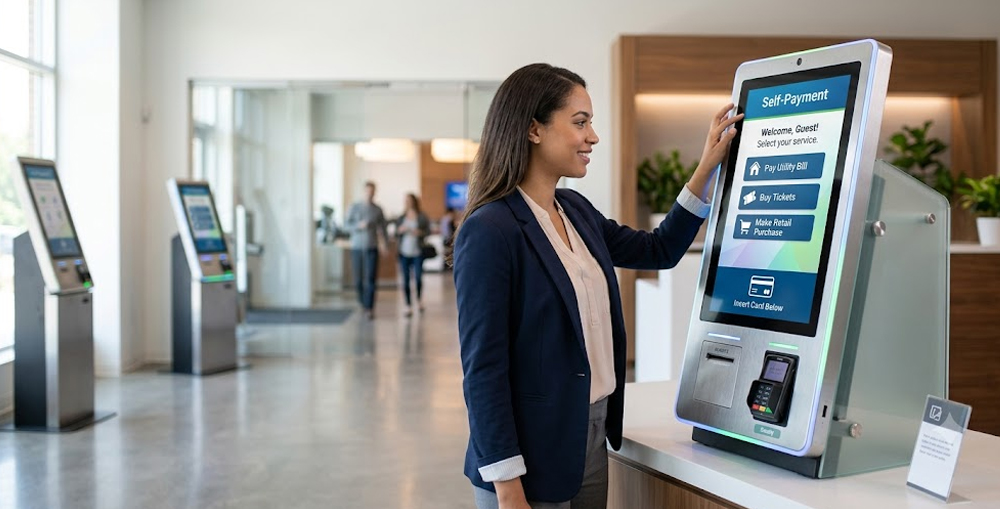
How Self-Payment Kiosks Are Transforming Customer Experience and Business Efficiency

Understanding Self-Payment Kiosks

A self-payment kiosk is an interactive self-service terminal that allows customers to make payments without requiring direct assistance from service staff. Modern kiosks support a wide range of payment options including cash, debit cards, credit cards, contactless payments, digital wallets, and online payment integrations.

Unlike traditional payment counters, self-payment kiosks enable customers to control the transaction process themselves. The system guides users through each step using a simple touchscreen interface, ensuring a fast and convenient experience.

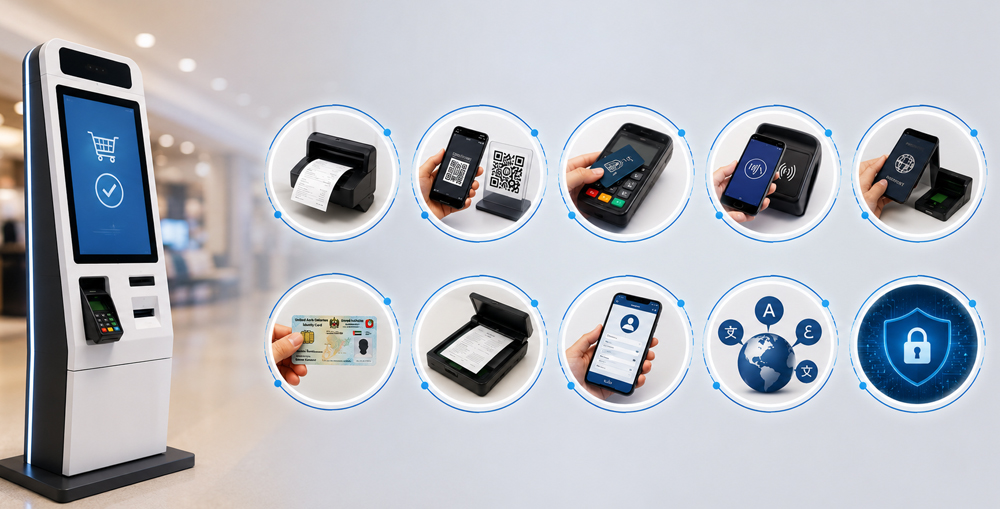
Modern self-payment kiosks can also incorporate additional features such as:

  • Receipt printing
  • QR code scanning
  • Emirates ID verification
  • Passport scanning
  • RFID integration
  • Document scanning
  • Customer registration
  • Multi-language support
  • Secure authentication mechanisms

These capabilities allow businesses to offer a comprehensive self-service experience while maintaining security and operational control.

See Also: The Impact of Self-Service Kiosks on Business Efficiency
Understanding Self-Payment Kiosks

Why Customer Expectations Are Driving Self-Service Adoption

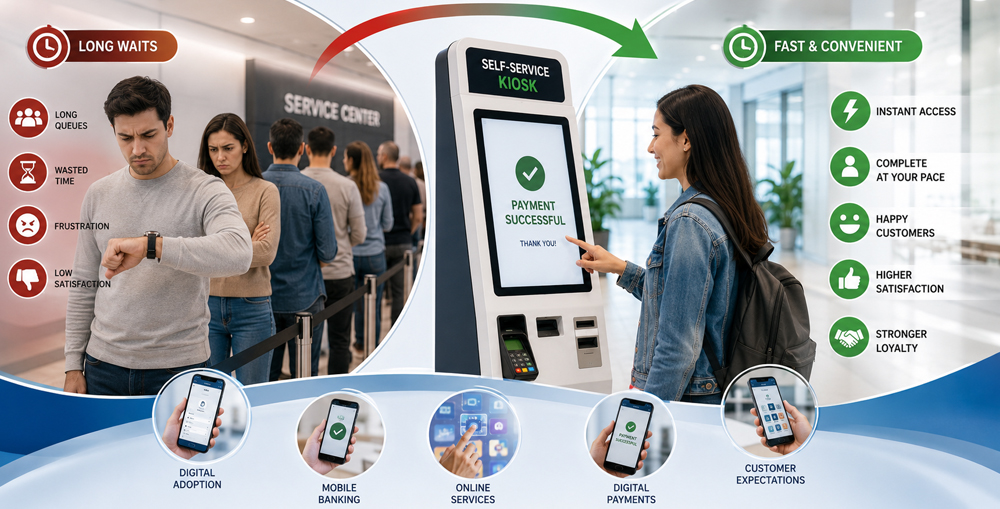
Customer behavior has changed significantly over the past decade. The widespread use of smartphones, online banking, mobile applications, and digital services has increased customer familiarity with technology.

Today’s customers value convenience more than ever before. They want immediate access to services and expect businesses to provide flexible service channels that fit their needs.

Long waiting times remain one of the most common causes of customer dissatisfaction. Customers often perceive waiting as wasted time, especially when performing simple transactions such as bill payments or account top-ups.

Self-payment kiosks help eliminate these frustrations by providing an alternative service channel. Customers can complete transactions at their own pace while reducing dependency on service representatives.

The result is a smoother customer journey, improved satisfaction levels, and stronger customer loyalty.

See Also: The Role of Self-Service Kiosks in Enhancing Customer Experience
Why Customer Expectations Are Driving Self-Service Adoption

Improving Operational Efficiency

While customer convenience is important, businesses are equally focused on improving operational efficiency.

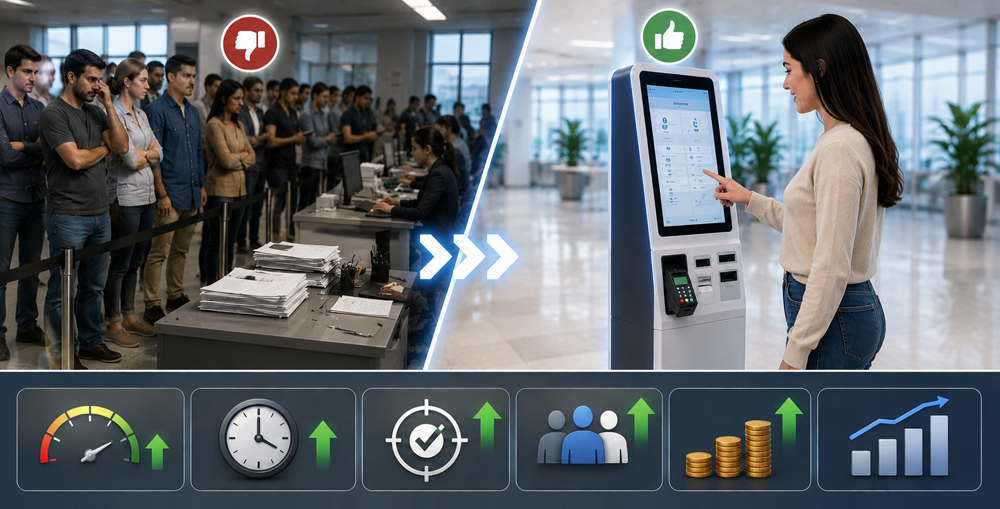
Manual payment processing often requires dedicated staff, physical counters, administrative resources, and continuous supervision. As customer volumes increase, organizations frequently need to hire additional employees to maintain service standards.

Self-payment kiosks help address these challenges by automating repetitive payment-related tasks.

Instead of assigning employees to routine transactions, businesses can redirect human resources toward higher-value activities such as customer support, problem resolution, and relationship management.

This creates several operational advantages:

Reduced Workload

Employees spend less time processing routine payments and more time assisting customers with complex requirements.

Faster Service Delivery

Transactions can be completed more quickly, reducing customer waiting times and increasing overall service capacity.

Improved Accuracy

Automation reduces human errors associated with manual payment processing and data entry.

Better Resource Utilization

Businesses can optimize staffing requirements without compromising service quality.

See Also: Integrating AI Agents into Core Business Applications for Operational Excellence
Improving Operational Efficiency

Multiple Payment Methods Enhance Convenience

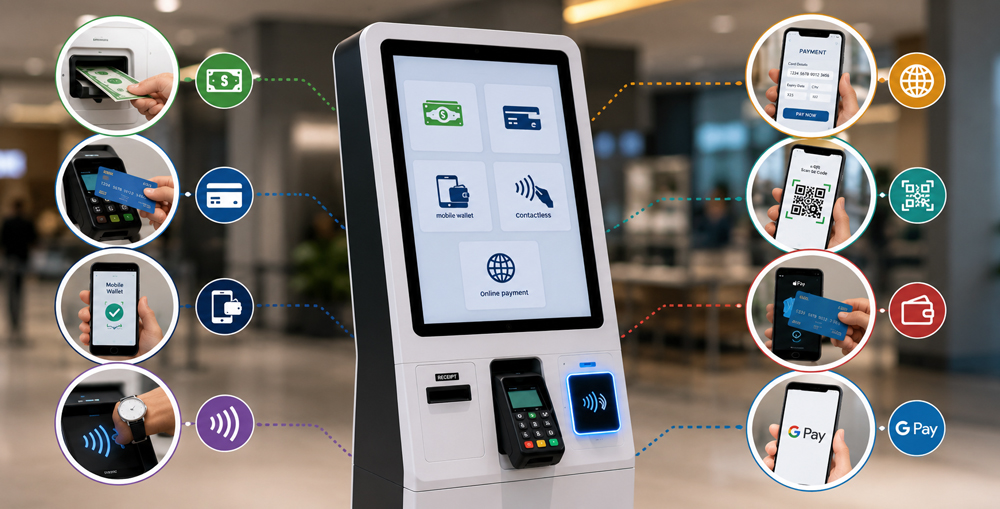
One of the key strengths of modern self-payment kiosks is their ability to support multiple payment methods.

Different customers have different preferences. Some prefer cash payments, while others rely on debit cards, credit cards, mobile wallets, or contactless payment solutions.

Providing multiple payment options increases accessibility and ensures that customers can complete transactions using their preferred method.

This flexibility significantly improves customer satisfaction and helps businesses serve a broader customer base.

See Also: What is a Bill Payment Kiosk: Everything You Need to Know
Multiple Payment Methods Enhance Convenience

Advanced Security Features

Security remains one of the most important considerations for any payment solution.

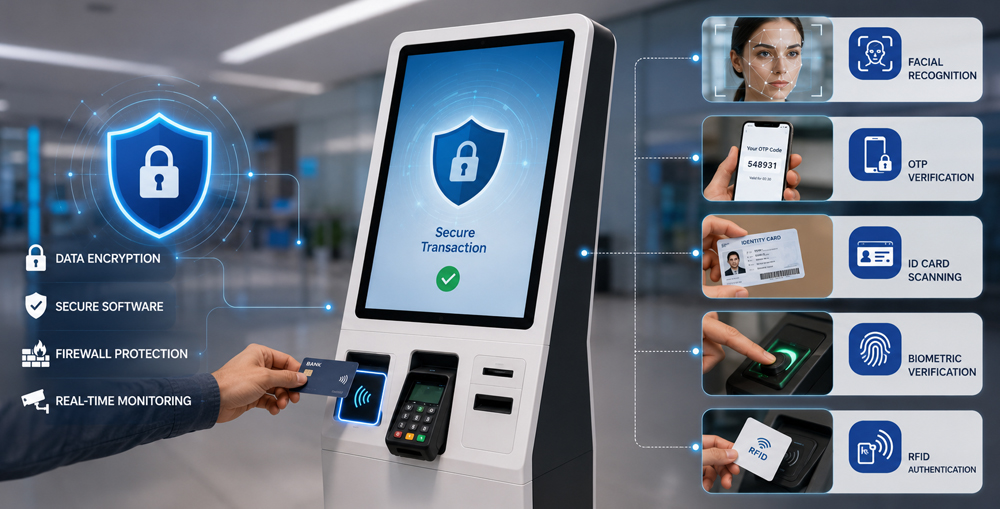
Modern self-payment kiosks are designed with both physical and digital security measures. Advanced encryption technologies help protect transaction data, while secure software environments reduce vulnerability to cyber threats.

Many kiosks also incorporate authentication technologies such as:

  • Biometric verification
  • Facial recognition
  • OTP verification
  • ID card scanning
  • RFID authentication

These security measures help organizations maintain compliance while protecting customer information.

See Also: Security Challenges and Solutions in Payment Kiosk Systems
Advanced Security Features

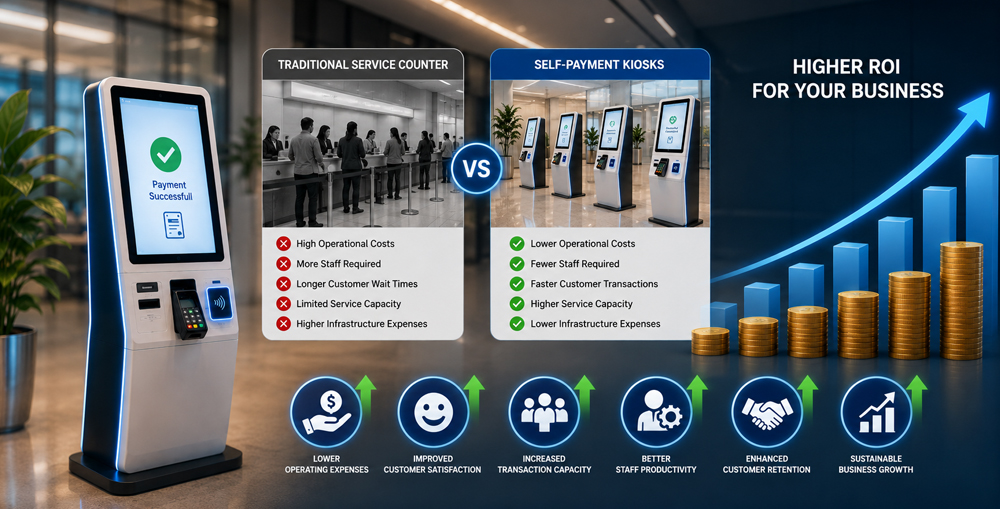
Delivering Higher Return on Investment

Businesses often evaluate technology investments based on long-term value and return on investment.

Self-payment kiosks offer significant ROI by reducing operational costs while improving service efficiency.

Compared to opening new service counters or expanding physical branches, deploying self-payment kiosks requires a substantially lower investment. Once implemented, the kiosks can operate continuously while handling large transaction volumes.

This combination of reduced operational costs and increased service capacity creates measurable business value over time.

Organizations can achieve:

  • Lower operating expenses
  • Improved customer satisfaction
  • Increased transaction capacity
  • Better staff productivity
  • Enhanced customer retention
  • Sustainable business growth

See Also: How to Achieve the High ROI using Queue Management System
Delivering Higher Return on Investment

The Future of Customer Service

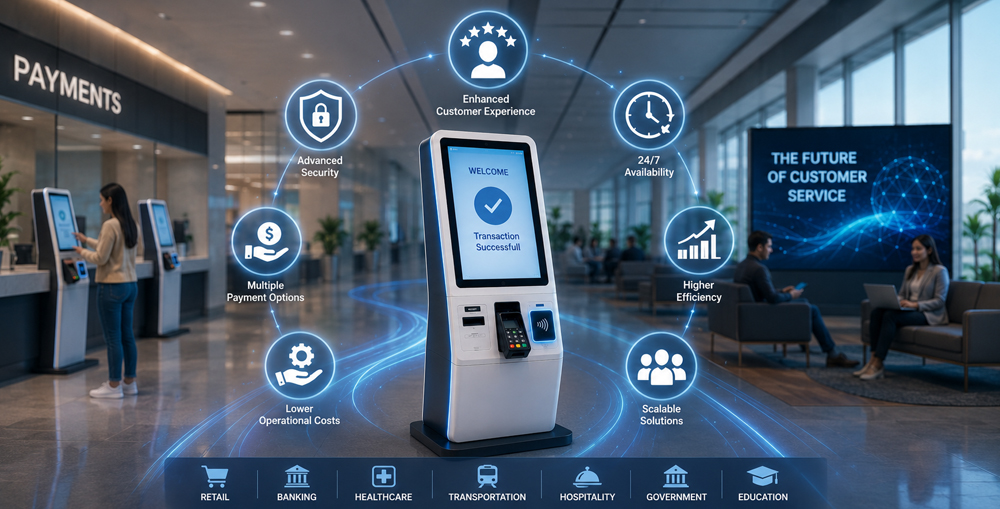
The shift toward self-service technologies is no longer a temporary trend. Across industries, businesses are adopting digital solutions that empower customers while improving operational performance.

Self-payment kiosks represent a key component of this transformation. They combine convenience, efficiency, security, and scalability into a single solution that benefits both customers and organizations.

As customer expectations continue to evolve, businesses that embrace self-service technologies will be better positioned to deliver exceptional experiences while maintaining operational excellence.

See Also: Beyond First-Come, First-Serve: Innovative Strategies for Queue Management
The Future of Customer Service

Conclusion

Self-payment kiosks are redefining how businesses interact with their customers. By reducing waiting times, supporting multiple payment methods, enhancing security, and improving operational efficiency, these solutions create value for both organizations and their customers.

As digital transformation continues to shape the future of customer service, self-payment kiosks are becoming an essential tool for businesses seeking to improve customer satisfaction, reduce costs, and achieve sustainable growth.

Organizations that invest in self-service technologies today are building the foundation for a more efficient, customer-centric future.
See Also: Why You Need a Customer Flow Management Software?


Integrating Customer Feedback Systems with CRM for Enhanced Customer Relationships

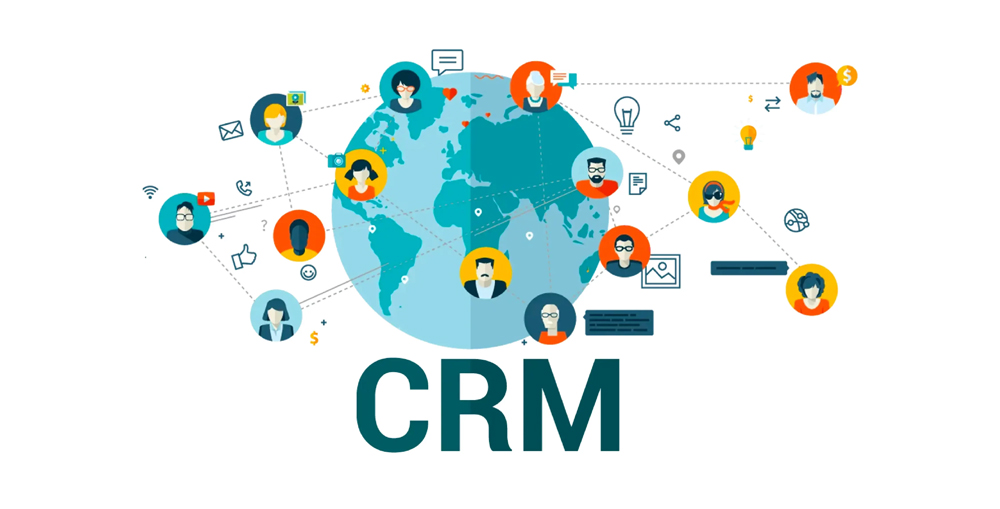
The customer relationship management is a strategic process businesses utilize to manage and analyze the customer interaction throughout the customer lifecycle. The customer feedback is a source of highly valuable insight which help businesses align themselves with customer needs and expectations. These two are most important and vital component of any business’s growth strategy. Without nurturing customer relationship business can never achieve their long-term goals and without understanding customer needs and expectations, businesses can never strengthen their relationship with customers. The customer relationship management system or CRM is a technological framework which help businesses to automate and synchronize various crucial business processes such as sales, marketing, customer service and support.

These four are the fundamental components of customer relationship, no matter what industry you operates in, you need these processes to build long-term customer relationships. Businesses operating in Dubai, Sharjah, Abu Dhabi and broader UAE knows how competitive the markets are and how diverse and dynamic the market landscape is. Such market conditions require a strong, loyal and dedicated customer base, which requires proactive customer relationship management. Same like any other relationship the communication is the key to success.

The customer feedback system provides a crucial source of direct communication, where the customers can freely express themselves and share their suggestions. In this blog we will discuss how businesses can leverage a customer feedback or survey system along with a customer relationship management system to strengthen the customer relationships.

See Also: What is CXM (Customer Experience Management)?

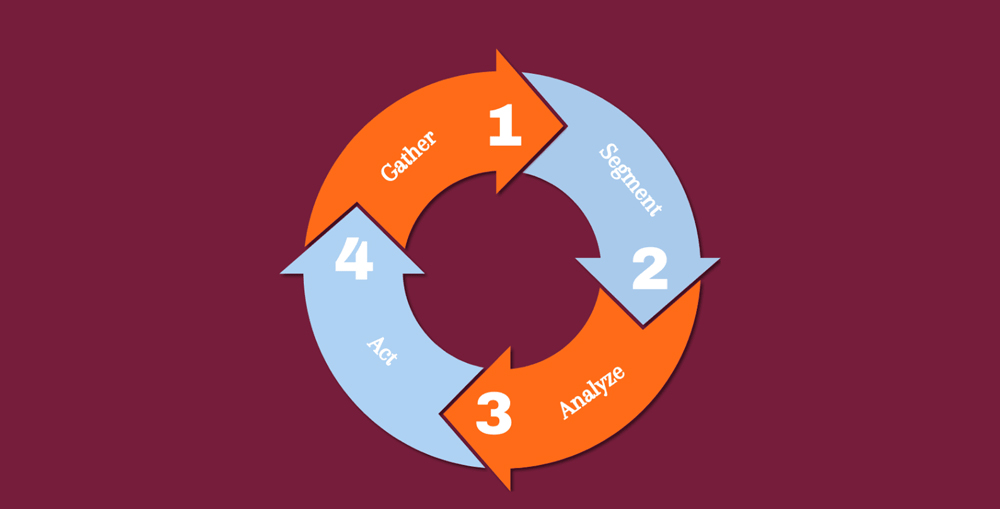
Integrating Customer Feedback Systems with CRM for Enhanced Customer Relationships

Understanding the Basics of CRM (Customer Relationship Management System)

CRM or Customer Relationship Management is an integral part of the modern businesses, it is a strategic process, usually managed by a dedicated software application which provide management and analytical tools. It provides a centralized system which host the customer data, providing an in-depth and intuitive understanding of every customer journey from first interaction to ongoing support. The modern CRM solutions also include tools to manage the leads and potential customers. The customer relationship management software (CRM) is used to streamline processes between various front-facing business functions. For example, when a salesman closed a deal, the customer service and support team is notified, the CRM do this in fully or semi-automated way, it records the interaction, conveyed the required information to the relevant team informing them of customer’s needs and expectations.

The biggest advantage of CRM solution is that it reduce errors, provides more wholesome data to the relevant teams and personals, eliminate the need of manual work, and it can manage large number of customers with extremely high efficiency. These features not only enhance operational efficiency, but also drive productivity which results in better quality services and satisfactory customer experience. The CRMs are excellent at enhancing communication and information flow within the organization and these tools can also automate communication with customer, which help businesses save a lot of resources, while instead of compromising quality or performance, boost both of them. That is why businesses tend to rely on customer relationship management (CRM) software to manage and nurture customer relationships. The CRM also keeps everything organized, well-tracked and recorded without any delay.

See Also: Why customized CRM Software is better than Off-the-shelf Solution?

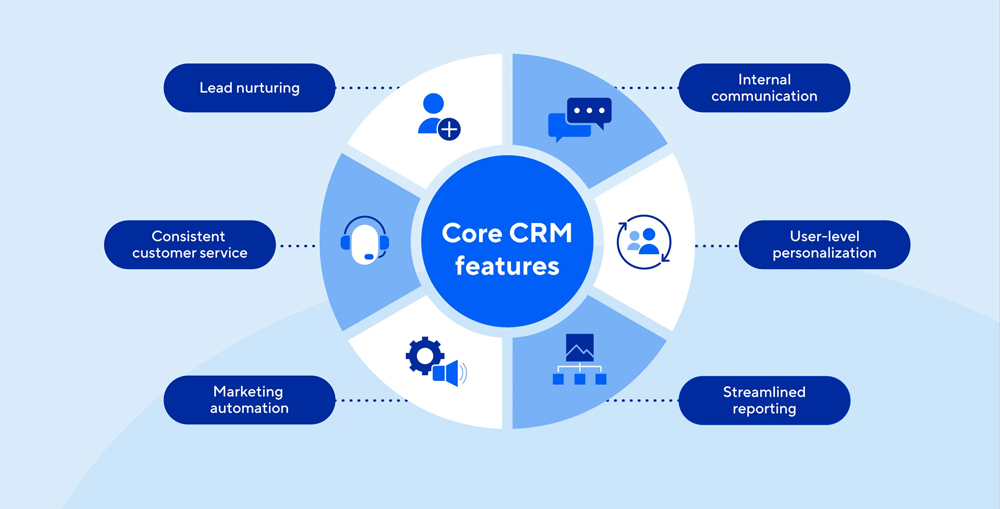
Understanding the Basics of CRM (Customer Relationship Management System)

Understanding the Basics of Customer Feedback System

The modern market landscape has become very customer-centric, businesses who failed to align themselves with customer needs, expectations and preference couldn’t compete. Dubai, Sharjah, Abu Dhabi and broader UAE has a very diverse and highly competitive market landscape. Customers have multiple choices, a single bad interaction could led them to switch to your competitor. That is why it is crucial to understand what is in your customer’s mind and heart. The customer feedback system provides a window into customer’s mind and heart. The customer feedback data help businesses acquire a deeper insight to customer’s needs, challenges, issues, expectations and preferences. The customer feedback system provides a systematic framework which streamline customer feedback management, provide advanced data collection and analytical tools, which help producing actionable insights.

The customer feedback system is a digital tool based on a very powerful software application. This tools help streamlining multiple channels to collect feedback data from broader audience. Furthermore the customer feedback system has capabilities to automate the feedback management process. It also offers real-time feedback and automation which greatly improve business efficiency and reduce the human resource. The feedback data helps management understand the customer needs, identify trends, and identify the areas of improvement. Furthermore businesses can also leverage the customer feedback system to assess and evaluate the changes implemented. The customer feedback system plays crucial role in improving service quality and product development. Businesses can make informed and highly effective data-driven decisions leveraging the customer feedback data for higher success and growth.

See Also: Understanding Customer Sentiments by Implementing a Modern Customer Feedback System

Understanding the Basics of Customer Feedback System

Why We Need to Integrate the Customer Feedback System with CRM?

Both the customer feedback system and CRM or customer relationship management system plays a crucial role in managing and improving customer relationship. Integrating both can exponentially raise their efficacy and efficiency. Integrating customer feedback system and customer relationship management system (CRM) can provide a unified platform where the customer voice meets the actionable insights. This integration has another great benefits, it provides a more in-depth understanding of customer feedback in context to their history and help personalizing customer service and experience. Personalizing customer experience and services can greatly improve customer satisfaction and help businesses increase customer loyalty. The loyal customers tend to be good brand advocate not only giving repeated businesses, but also helping businesses in establishing good reputation.

Here are some key benefits of integrating customer feedback system and customer relationship management system (CRM):

  1. Enhanced Insight: Combining CRM and customer feedback system provides a 360 degree view of customer preferences, choices, pain points, complaints, service history, customer persona, demographics, and much more.
  2. Better Customer Retention: Requesting feedbacks after every interaction, closing the feedback loop, and regular feedbacks help building trust and strengthening customer relationship which improve customer loyalty and increase customer retention.
  3. Personalized Customer Experience: Combining customer relationship management data and customer feedback data help identifying patterns, preference and customer expectation which help businesses personalized their offering for elevated customer experience.
  4. Streamlined Communications: Businesses can leverage the combined data from customer feedback system and customer relationship management system (CRM) to establish a fast and automated communication framework.
  5. Proactive Problem Solving: The customer feedback data and CRM data help businesses identify reoccurring problems, issues, complaints and customer suggestions which help businesses proactively solve problem and even identify issues which can later become a problem.
  6. Data-Driven Decision Making: In the modern business landscape where the technology is infused deeply into our personal and work lives. It is extremely important for businesses to have correct insights to take data-driven decision which can ensure long-term success and growth.
  7. Build Customer Trust: One of the most overlooked features of a modern customer feedback system is the closed-loop feedback, where customers’ response/feedback is acknowledged and they are informed of actions taken against their suggestions, this help building trust.
  8. Improve Product Development Process: The CRM data combined with customer feedback data help businesses perform in-depth analysis of their products and services, with this insight in hand businesses can develop the products that can perfectly align with customer needs.
  9. Quick Issue Resolution: The real-time customer feedback can be provided to all relevant teams such as customer service agents, technical support team, etc. This will help them quickly resolve issues, take timely actions and escalate problems that are reported regularly.
  10. Increased Sales and Cross-Selling Opportunities: The customer feedback data and CRM data combined can unlock various up-selling and cross-selling opportunities. The inbuilt AI algorithms and analytical tools help identifying such customers.
  11. Strengthening Customer Relationship: The advanced analytical tools provide in-depth insight, the automation help enhancing communication. Acknowledging customer feedback gives them a sense of importance, by valuing customer businesses can strengthen the customer relationships.
  12. Smart Resource Allocation: Every business has limited resources, in order to maximize the efficiency and outcome, businesses need smart resource allocation. The feedback and CRM data suggest the areas where the efforts can be most impactful.
  13. Enhanced Marketing and Communication: For every business the marketing and communication is a key to success. The integration of CRM and customer feedback system help projecting the communication and marketing campaigns in right direction yielding higher profits and sales.
  14. Comprehensive Reporting: For any business actionable insights are crucial, the AI powered analytical tools can combine both feedback and CRM data to produce highly effective actionable reports, the reports can also be automated for swift action and decision making.

These are some of the key benefits of integrating customer feedback system and customer relationship management system (CRM). Businesses can leverage this integration for long-term improvements as well as leveraging it for proactive problem solving. This can greatly improve customer relationship and you gain more loyalty and build customer trust. These features can help businesses gain a great competitive advantage which can be a game-changing in such a dynamic and highly competitive market landscape.

See Also: Key Features of an Enterprise Application Software (EAS)

Why We Need to Integrate the Customer Feedback System with CRM?

Conclusion

Integrating customer feedback system and customer relationship management system (CRM) could be a great strategic move. Especially if you are operating in Dubai, Sharjah, Abu Dhabi and elsewhere in UAE where the business landscape is highly competitive. These markets are subjected to change at a very rapid pace, the customer trends keep on changing frequently. In such business landscapes it is vital to have a deeper and most accurate understanding of customer behavior. Businesses should know what their customers like/dislike, what they need, what bothers them and what do they expect form their favorite brand? Businesses tend to rely on multiple digital tools, business solutions and software applications. Most of the time, these different solutions have different user group, the information and data gathered could remain in silos, which cause latency and lag. The integration empower these solutions, eliminate lags, and streamline information and data flow.

The customer feedback system is a modern software-based solution which help collecting multi-channel feedback and enable businesses to implement modern feedback strategies such as continuous and real-time feedback, closed-loop feedback, etc. Similarly the customer relationship management system (CRM) is also a digital tool which is used to streamline various operations at sales, communication, customer service, and technical support, etc. Combining both the valuable insight form a customer feedback system and extraordinary data-driven capabilities of modern customer relationship management system (CRM), businesses can streamline various internal and operational tasks, drive efficiency and productivity and take most effective decisions for higher success and growth.

The integration help fostering a culture of personalized customer experience, improved efficiency, higher productivity, proactive problem solving, improved decision making, and greater customer satisfaction. The market trends, customer preferences and expectations keep on changing, integrating customer feedback system and customer relationship management system (CRM) ensures that the business remains agile, informed, proactive, more adaptive and responsive towards such changes.

In this blog we have briefly discussed how this integration can help businesses. If you want to learn more about the subject or if you need our help to integrate customer feedback system with CRM or built a completely integrated bespoke solution for you, please feel free to contact us through our Contact Us page or leave a comment in the comment box below and we will get in touch with you soon.

See Also: 5 Techniques to Integrate Customer Satisfaction Survey with Queue Management System