






Cost Of Services
By providing customer service agents with time-saving tools and giving managers better control and planning tools


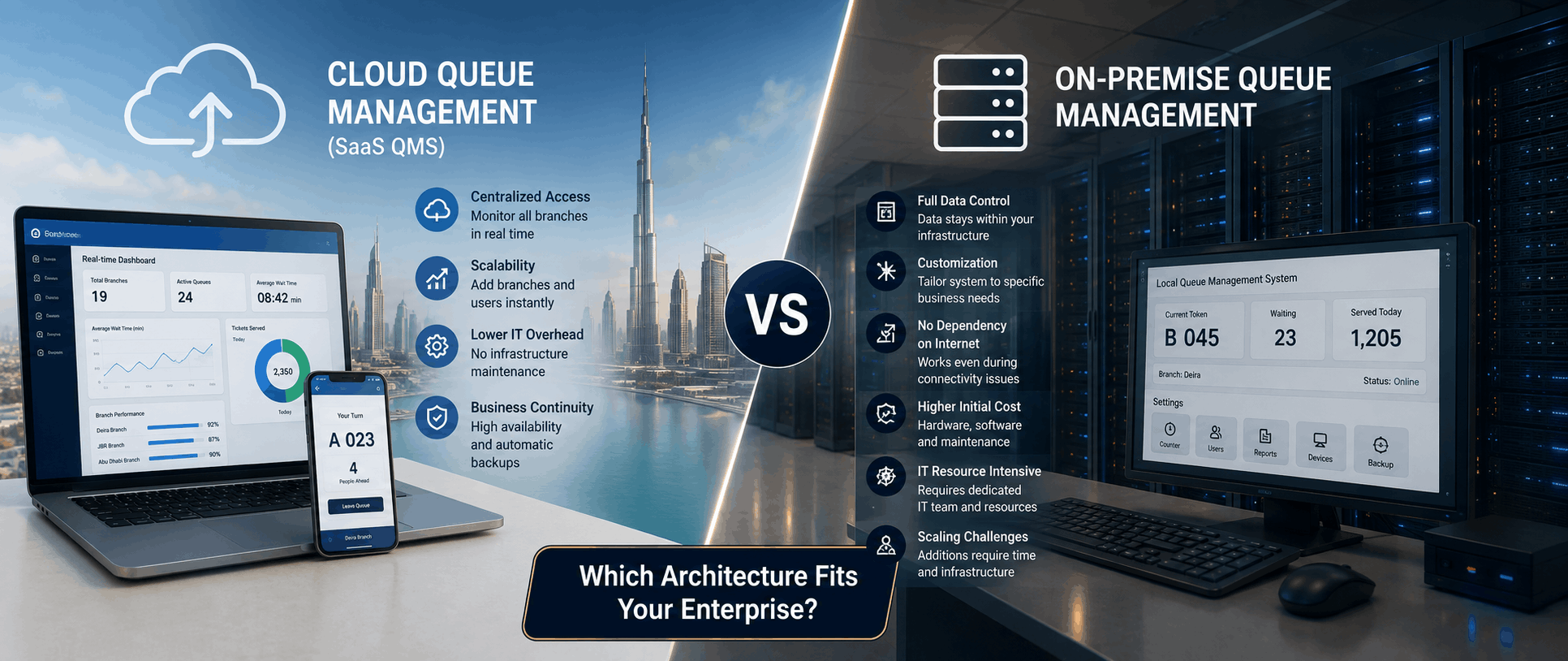
A queue management system (QMS) organizes customer flow with digital ticketing, so visitors are served in order without waiting in a physical line. At RSI Concepts we provide organizations with state-of-the art Queue Management Systems, deployed across 1,500+ sites in the UAE and MENA region. Our Enterprise QMS offers agnostic integration with Hospital Information Systems (HIS), Government CRMs, and Banking ERPs. Choose between secure on-premise installation for data compliance or scalable cloud-hosted architecture, all with native bilingual (Arabic and English) interfaces across kiosks, digital signage, and mobile ticketing.
QMS Implementations Worldwide
MENA Deployments
UAE Market Experience
Typical ROI









By providing customer service agents with time-saving tools and giving managers better control and planning tools
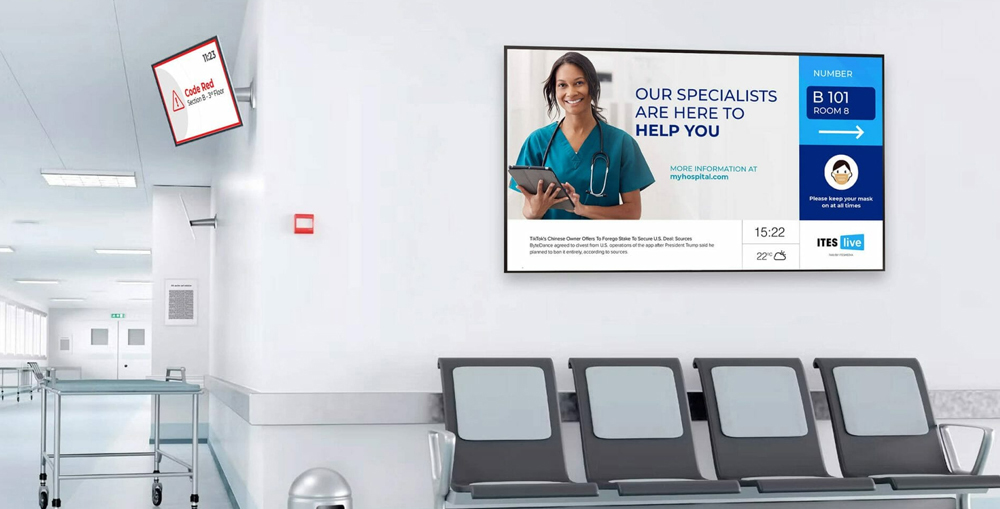
By providing dynamic, customer-focused promotional or informative messages to arriving and waiting customers
By keeping order in the waiting areas, providing waiting customers with clear info, and enabling better service
Agents having access to fast and efficient mechanism of calling customers, serving them within no time and spark the sense of competition within employees.
Sales by providing dynamic, customer-focused promotional or informative messages to arriving and waiting customers.
By automatically managing customer flow, offering better waiting area experience, reduced wait time, efficient customer journey and quicker service delivery.
The oldest types of queuing, based on first come first serve/out or FIFO. A queue management system can save a lot of time and manage multiple parallel waiting lines by segmenting customers in different queues, based on their service type and time. The segmentation and automation helps streamlining the customer flow and reduce average wait time along with customer journey management tools.

All other queuing types which includes, single or multiple servers, and multiple queues and also multi-step service delivery which includes multiple counters. A queue management system resolve queuing problems, automates the customer journey management and help improving internal processes to reduce the customer wait time and enhance their experience in any non-linear queuing setup.

The Virtual Queue Management System allow customers to sign-up remotely using different channels without being physically present or waiting in physical queues. The virtual queuing can significantly reduce customer wait time, it offer better control and monitoring, and it offers advanced customer journey management tools with superior and personalized customer experience to boost customer satisfactions.

The Mobile Queuing allow customers & visitors to sign-up form their smartphones and mobile devices and they can get real-time updates on their smartphone. The mobile queuing can greatly improve customer experience and it can greatly reduce the wait time. Additional features such as branch locator, live queuing status and interaction with service agents adds value to customer experience.

The QR Code based Queuing is in fact an extension of Mobile & Virtual Queuing. The customers can sign-up very quickly by scanning a QR code, which issues them an e-Ticket and also take them to the information page, where they can see real-time queuing updates. The QR Queue System can greatly reduce wait time, prevent crowd formation, and also improve the branch productivity and service quality.

The queuing system provides an online appointment booking portal either via website, customer portals, or mobile apps. Customers can book their visit or plan it on the bases of queuing information. The online appointment booking module provide full queuing information such as booked slots, expected footfall and past history with suggestions and guidance which can greatly enhance customer experience.

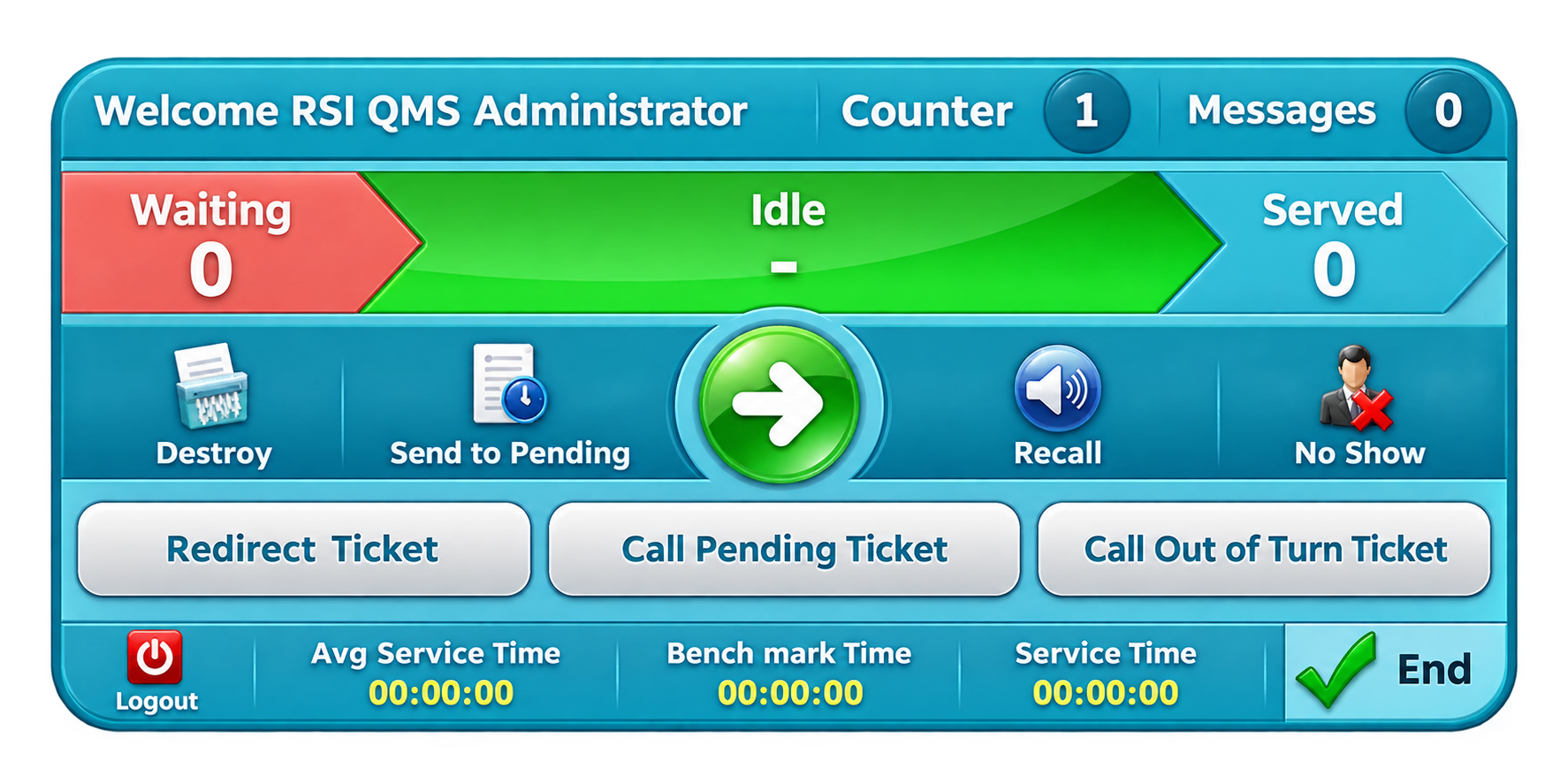
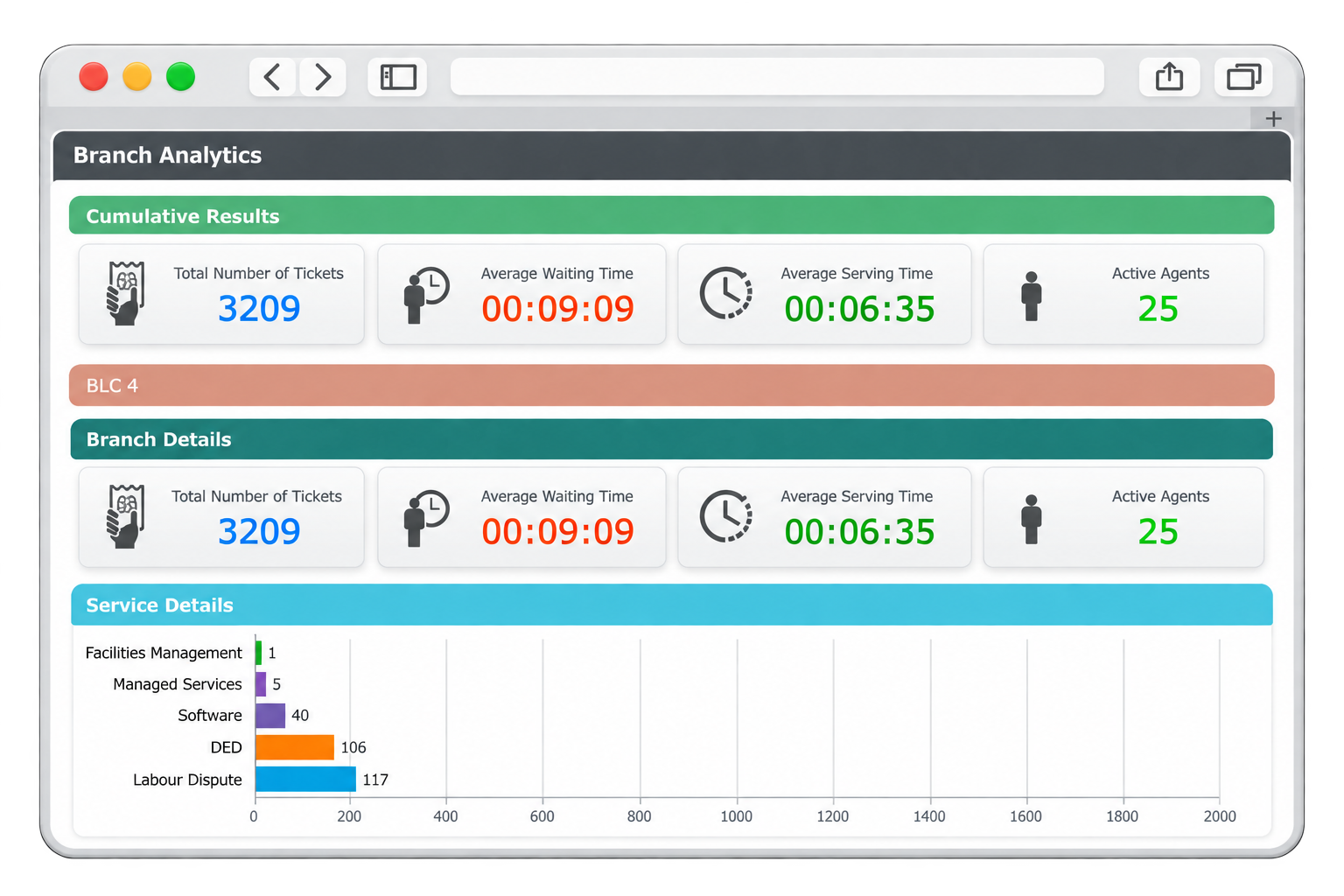
The software of a queue management system is the basic foundation of the system. The software consists of three parts, the QMS Server, the QMS Terminal and the Agent Dashboard. The server application is installed on a server or cloud or online and is the command and control center of everything. The terminal side application is the application that is installed in the Kiosk and is the interaction of the system with the customers and visitors. A smartphone application or online portal and appointment booking modules can also be provided. The agent dashboard is for the servers/agents who can monitor and control the queues as per their role.
One of the biggest advantage of RSI Queue Management System is that it collects valuable business intelligence and provide monitoring, KPIs and comprehensive reporting modules. The business can easily collect statistical data, customer interaction stats, customer feedback, and monitor employee performance and other valuable KPIs to gather business intelligence. The reporting module provide a brief insight of the entire operation and customer experience. These reports can be downloaded and utilized for decision making and strategy building which helps businesses to improve customer journey, reduce operational costs by resource optimization and employee performance monitoring. The QMS software allows easy integration with other corporate tools and enterprise solutions for data synchronizations which significantly boost the utility and effectiveness of our queue management system and ensures great ROIs.
There is a variety of peripherals that can be installed in an interactive kiosk. We are specialized in customized solutions so we can offer any combination of the following to meet the individualized needs of our customer.
Pricing depends on deployment size, hardware selection, and whether you choose cloud or on-premise hosting. RSI Concepts offers tiered packages from single-branch setups to enterprise multi-site government deployments.
Yes. RSI QMS offers full native bilingual Arabic and English interfaces with right-to-left (RTL) support across kiosks, digital signage, and mobile ticketing.
Yes. RSI QMS is built for agnostic integration with Government CRMs, Banking ERPs, and Hospital Information Systems (HIS).
Most enterprise QMS deployments with RSI Concepts achieve return on investment in under 12 months, driven by reduced wait times, improved staff productivity, and higher customer retention.
On-premise deployment suits organizations with strict data residency or compliance requirements, common in government and banking. Cloud deployment offers faster rollout and easier scaling across multiple branches. RSI Concepts supports both.