BLOG OF RSI CONCEPTS

world map

Maximizing Efficiency: The Benefits of Implementing a Queue Management System

Every business wants efficient operation, whether it is some internal process or a customer facing environment, the efficiency is essential. When a business has efficient work flows, processes and even the teams, they tend to produce more and better outcome with whatever resources they have in hand. That is the reason in order to generate value and drive profits a business needs efficiency in every aspect of the operations. Now when we talk about the customer facing environments, the biggest challenge is to adopt and implement modern queue management system to make customer flow efficient and improve customer experience.

Whether you are operating in Dubai, Sharjah, Abu Dhabi or any other part of UAE you must be aware of the fact that every customer have too many choices, you one mistake and you can lose them to your competitor. Furthermore the customers are also very demanding and they tend to switch service provider very quickly. Even just a single bad experience is enough to make customer the switch. Studies and market research have revealed that it is 9 to 25 times more expensive to acquire a new customer comparing to selling to an existing customer. That is why customer experience and customer satisfaction is crucial for a business success.

See Also: What are the Different Types of Queue Management System?
Maximizing Efficiency: The Benefits of Implementing a Queue Management System

What is a Queue Management System?

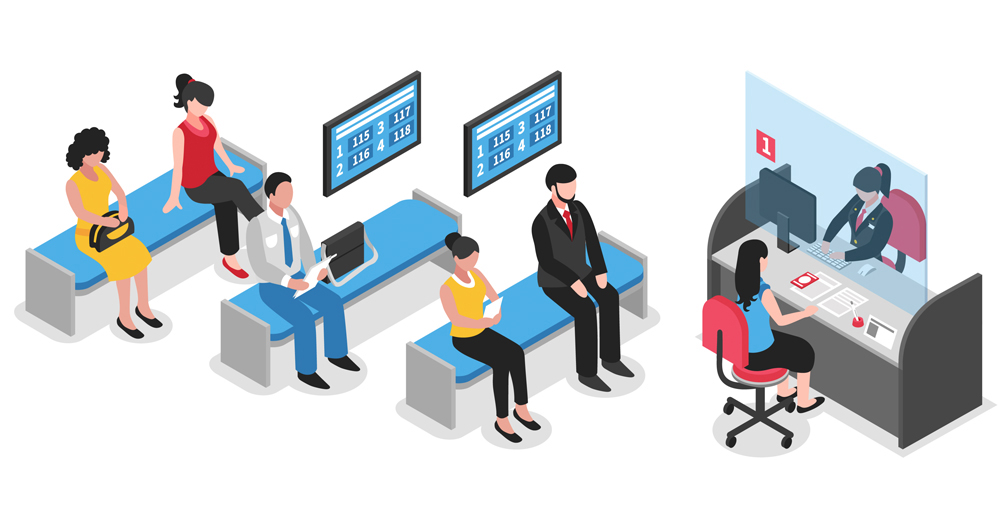
A queue management system is a tool which consists of software and hardware parts and it is used to manage the customer flow and customer experience. The queue management software is a server application which is connected to an interactive self-service ticket dispensing kiosk or queuing kiosk. It is also connected to digital signage screens and audio announcement system. Some businesses also use dynamic counter plates which can also be managed through the queue management system.

Furthermore the hardware part of the queue management system includes a ticket dispensing kiosk which allow your customers and visitors to interact with the system and issue them token numbers. There is a digital signage screen, which displays live queuing details and keep your guests informed about the current activities on each service counter. A business can have multiple signage depends on the premises size. Similarly the audio announcement system is also hardware part powered by in-built multi-lingual audio announcements module.

The counter plates are also connected to the queue management system via network and can display the counter number/name along with the current ticket number. These components form a standard queue management system with basic configurations. Businesses can add more software and hardware components to enhance the features of the queue management system.

See Also: From Chaos to Control: How Queue Management Systems Can Improve Your Business

What is a Queue Management System?

What are the Drawbacks of Poorly Organized Customer Flow?

A poorly organized customer flow have many drawbacks, it doesn’t only affect your customers but it will also have a negative impact on your employees and their performance. Which will translate to low productivity, poor growth, bad business reputation, higher customer churn rate, lower conversion rate and in the long run it will damage your brand image. When the queues or waiting lines are not managed properly the very first effect is extended wait time. When the customers will have to wait for longer period of time, they will be frustrated and annoyed.

This will cause many other problems such as line jumping, customer complaints and more fraction in customer journey. When the waiting lines are not managed efficiently they employees also suffer, they will have to deal with customer complaints, they will have to manage the queues by themselves and they will have more workload, it will also distract them from their primary tasks which will undermine their performance. The customers will reach to the counter in stress and they will be unhappy, this will result in poor interaction with the service agents, and it will also make it difficult for the service agents to satisfy the customer.

Long waiting lines, and extended wait time will result in higher customer churn. When employees will fail to improve their performance despite putting all efforts, they will leave too. Higher employee turnover will cause several other problems, higher customer churn rate will damage your business’s reputation.

See Also: The Concept of Queue Management and Crowd Control

What are the Drawbacks of Poorly Organized Customer Flow?

What are The Benefits of Implementing a Queue Management System?

There are several benefits of implementing a queue management system, but it is important to understand that there are different types of queue management systems available in the market. You must have to choose the right solution that suits your needs and business type. However, one of the best way is to hire a well-reputed queue management system provider such as RSI Concepts and ask them to build a bespoke tailor-made customized queue management system according to your needs. Here are some of the benefits of implementing a queue management system:

Reduction in Customer Waiting Time

When the customer flow is well-organized, they queuing process is automated the customer wait time will automatically reduce. By implementing a queue management system businesses can automate several queuing process. The ticket dispensing is automated, the customer flow is managed by the smart algorithms of the queue management software, and the employee performance is also improved. A queue management system can automatically take decisions, and set customer route according to the historical data and the live queuing data, which is why the customer wait time is optimized.

Furthermore the queue management system also help improving customers’ waiting experience by reducing the perceived wait time. It keep customers engaged and distracted from the waiting by frequently making audio-visual announcements and updating the digital signage. Furthermore the queue management system can also play multimedia content, adverts, promotional and marketing content on the digital signage which also help increasing customer engagement and help optimizing the perceived wait time.

See Also: How Queue Management System can Boost Productivity and Profitability?

Reduction in Customer Waiting Time

Improved Employee Performance

When a business implements a queue management system the employee efficiency and performance is significantly improved. Without a queue management system the employees will have to adhere to several other tasks, most of which are not productive. Manually managing customer flow, especially during the peak-hours can greatly undermine the employee performance and it also have toll on service quality. However, with a proper queue management system in place the employees don’t have to worry about many things and they are free to focus on their primary and more productive tasks.

This not only boost employee performance but also greatly reduce their workload. When the employees work under a balanced workload their satisfaction increases and they tend to perform better. The queue management system automate several queuing processes, and it also offers dedicated service agent dashboards, which can also lift up a lot of workload and help service agents in many tasks. Businesses can significantly improve employee performance and service quality by implementing a queue management system.

See Also: Top 8 Benefits of Using Queue Management System

Improved Employee Performance

Enhanced Customer Experience

The customer satisfaction depends on customer experience and service quality, better experience results in higher customer satisfaction index. When a business implements a queue management system it automates several queuing processes. When the customers know that their tokens are issued by computer operated system, they have more trust over the system, and it assured them there will no favoritisms, no line-jumping, no intervention from the staff, whatever token is issued to them they will be served accordingly.

Furthermore the queue management system keeps customers and visitors engaged and help diluting the effects of waiting and reduce their stress. This will improve their waiting experience. As the service staff is also aided by the queue management system, they are also more welcoming, fresh and prepared for the customers. This all results in a better customer interaction with the service agent and also tend to improve the service quality.

Implementing a queue management system greatly improves customer experience and results in higher customer satisfaction which help your business building a strong brand image and reputation.

See Also: Queue Management System for Trucks and Logistic Centers

Enhanced Customer Experience

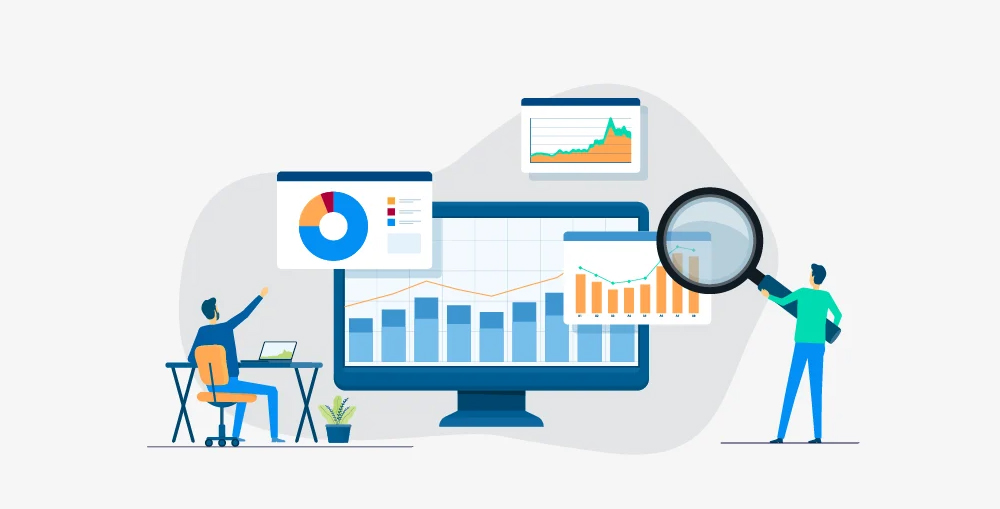
Real-time Monitoring and Remote Management

One of the best advantage of implementing a queue management system is that it offers real-time monitoring and remote management features. Businesses often have multiple branches where they deploy a queue management system, and even in case of only one office the real-time monitoring dashboard and capabilities to manage the system remotely are some of the most productive features.

Usually there is a central location or head office where the top management resides, they want to monitor the queuing activities and stats to take timely decisions. The queue management system is a centralized software system which connects all branches and parts and enable real-time monitoring. The branch manager, or the senior manager at the head office or any other user with adequate access can monitor the live real-time queuing data and stats.

Furthermore it is very easy to implement the queuing polices and strategies across the entire business, remotely from the head office. Businesses can also set automated alerts and notifications for the managers and supervisors to enable them to be more reactive towards the customer footfall and help them improve the customer flow by keeping them up-to-date all the time.

See Also: Qualities of a Good Mobile App for Queue Management System
Real-time Monitoring and Remote Management

Collect Business Intelligence Data

The data is the backbone of modern fast-paced markets. Every business who wants to succeed should be able to collect, analyze and utilize the business intelligence data in order to generate value and productive outcomes. A queue management system can provide a wealth of highly accurate and valuable business intelligence data. The queue management system can collect queuing data, system usage stats, waiting time trends, customer footfall trends, employee performance and KPI metrics, and it can also collect direct customer feedback which can be incorporated in several internal decision making process to improve strategies and overall performance of the business.

The queue management system can also be integrated with third-party tools and central information center which enables it to collect data from various sources, and it also allow the queue management system to provide business intelligence data for other systems and tools. Businesses can analyze the queue management system data and customer feedback using in-built analytical tools, or they can extract it in form of various intuitive report formats such as summary reports, trend reports and much more which help them utilize the business intelligence data at its full potential and maximize the overall efficiency and performance of the business.

See Also: Efficient Queue Management System Qualities

Collect Business Intelligence Data

Conclusion

In modern fast-paced markets where the markets are subjected to subtle and rapid changes, a business needs a proactive approach to deal with up-coming challenges. Managing customer facing environments and maintain a satisfactory customer experience is one of the most challenging task a service-based business ever faces. Poorly organized waiting lines and long queues can have devastating effects on a business. Pool queuing strategy and manual queue management can results in poor employee performance, low service quality, and unhappy customers.

However when a business implements q modern queue management system, they can greatly improve employee performance, customer experience and consequently customer satisfaction. A queue management system offers many features which can help improving the customer flow and minimizing the customer churn rate. In this blog we have discussed what a queue management system is and how businesses can benefits from it.

If you want to learn more about the subject or if you want our help to build you a tailor-made queue management system for your business, please feel free to contact us through our Contact Us page or leave a comment in the comment box below and we will get in touch with you soon.



Why Custom Performance Management System is more Effective?

In the fast-paced business landscape it is extremely important for a business to utilize its resources at fullest potential. Businesses operating in Dubai, Sharjah, Abu Dhabi and anywhere else in UAE are well aware of the fact that the markets in this country tend to change very quickly, the customer demands are also increasing endlessly. That is why businesses all around the UAE give a lot of attention to performance management system. The performance management is one of the primary task of the HR department and that is the reason HR leaders and businesses are ready to invest a lot in performance management systems and programs.

There is another strong reason for investing in performance management system which is the adaptation of agile processes and methods. When businesses adopt agility, a gap is formed naturally between the managers and the employees. Most of the time the business leaders and managers failed to implement proper people management practices which results in dissatisfaction and distrust among the employees and undermine their performance and productivity.

Why Custom Performance Management System is more Effective?

The modern day employees are also more concerned about their personal development and growth, they want more frequent feedback from their managers which help them improve their skills and productivity. There has been several surveys and studies all around the world which suggested more than 80% of the business leaders lost faith on the traditional performance management practices and annual appraisal processes. Almost similar percentage of employees also express their distrust on traditional performance management methods. Therefore a modern, digitalized and technology based performance management system is needed.

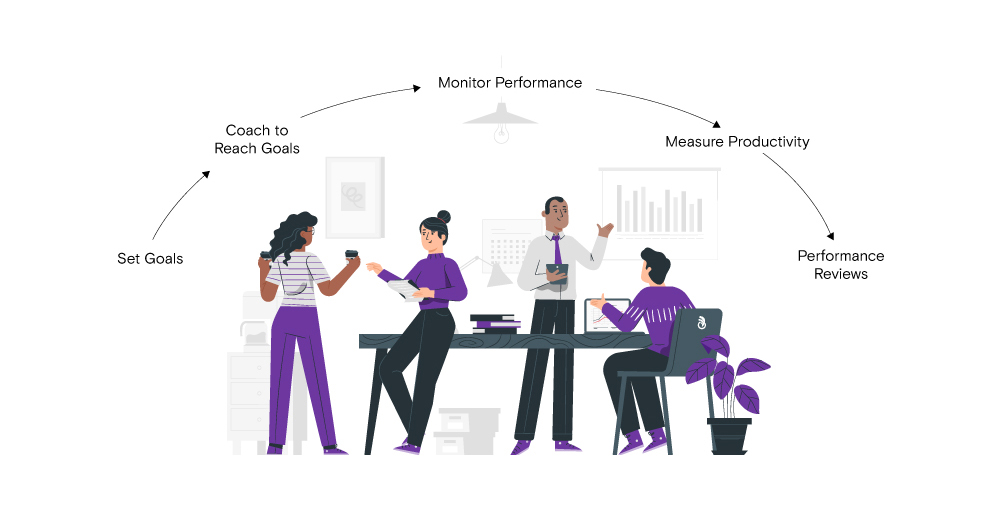
Basically a performance management system is a software tool, which can provide a continuous performance monitoring tools and analytical data and allow both managers and employees to access valuable performance management data in a very intuitive and interactive manner. Only a modern digital performance management system solution can fulfill the needs of the modern businesses. In this blog we will discuss why a custom performance management system is more effective for your business.

See Also: Customizing Performance Management Systems for Diverse Workforces

Only a modern digital performance management system solution can fulfill the needs of the modern businesses.
Only a modern digital performance management system solution can fulfill the needs of the modern businesses

What is the Difference between a COTS and Custom Performance Management System?

Before we discuss what is the difference between a custom and COTS performance management system it is important to understand that a performance management system is a software which is used to streamline and improve the performance management processes such as one-on-one meetings, acquiring feedback, appraisal, developing personal development and training programs and other such tasks. For any HR department it is their prime goal to retain and sustain a skilled workforce and ensure other business functions can get the required talent and skillset. The performance management system is built on a powerful analytical and statistical engine, along with smart algorithms and AI software tools which makes it more efficient, impactful and effective.

When it comes to acquire a new software tool there are two options, one is hiring a professional software development agency like RSI Concepts and have a tailor-made solution which matches 100% of your business needs. The second option is to quickly implement a cloud-based solution or acquire a ready-made performance management software. Both the ready-made and cloud-based solutions are COTS software, it means Commercial Off-the-shelf Software. The COTS are not designed for a single business or a specific set of users, in fact they are general purpose tools which are designed and available to a mass audience ranging from a few hundred to millions of users.

See Also: Choosing a Performance Management System A Buyer’s Guide

What is the Difference between a COTSand Custom Performance Management System?
What is the Difference between a COTS and Custom Performance Management System?

What made Custom Performance Management System Superior and a Better Match to your Needs?

Whenever a business needs a software solution and they decide to go with a commercial off-the-shelf software or COTS they usually seek to match as much of their needs as possible, on an average a good COTS solution will meet your 80% of needs. That means you will have to make compromise for the rest of the 20% of your needs. That is one of the major reason business prefer to have a tailor-made custom software solution because a custom software solution is capable of meeting 100% of your needs as it will be exclusively designed for your needs.

Another great advantage of a custom performance management system is that it can provide a great competitive advantage. Furthermore the custom performance management system is exclusively designed for your business, so you also hold the ownership rights for the product. This will free your business from vendor-dependency. Businesses can manage, customize and upgrade custom performance management system in-house as well as they can choose any vendor to do so, as the entire software tool and its resources such as source code, databases and integration tools are handed over to the business who will be using it.

See Also: Performance Management System: Best Practices

What made Custom Performance Management System Superior and a Better Match to your Needs?

Here are some key advantages of choosing a custom performance management system over a COTS solution:

Custom Performance Management System: Effectively Implement Strategy

It is important to understand that the performance management is a very flexible concept. Every business has a unique organizational culture so does the strategy to implement different performance methods. It is due to the preference which every business have different from the other. These preferences are based on the business goals, strategic objectives and their desire to improve certain aspects of the performance. For example, some businesses might prioritize the technical competencies and some might want to focus on behavioral competencies and so on.

See Also: The Role of Performance Management in Employee Engagement

Along with that for a different set of employees the KPIs are different the desired outcome is different, hence the strategy and focused performance aspects would be different. Furthermore there are different performance management methods and every business would have different choice, on top of that most business leader prefer to use a combination of two or more methods to implement their own unique performance management strategy. That is the reason the commercial off-the-shelf software solutions can never fulfill all of your needs. Furthermore the COTS are built as per industry standards and offers more rigid framework.

However, a custom performance management system can offer you more control, flexibility, freedom and customization which enable you to effectively implement your own unique performance management strategy. You can utilize in-built templates and configurations wizards to setup your own customized KPIs, OKRs and performance metrics as per your needs. This allow you to laser focus on your prioritized aspects of the performance management which can greatly improve the impact and outcome.

See Also: The Risk of Poor Performance Management and How to identify it?

There are different performance management methods and every business would have different choice

Custom Performance Management System: Easy Integration with Data and Third-party Systems

The entire performance management system depends on collecting, flow and analysis of the data. It is extremely important to understand that if data collection would be easier, the outcome would be more accurate. That is why most modern performance management systems have ability to automatically collect data. Businesses can manually upload data too or they can use dedicated dashboards to input the data but it is important that uploading data or integration and automated-data collection is as per the needs of the business. The IT infrastructure of any organization is a very complex eco-system, it develops gradually and evolve as per the needs and changes within the organization or due to the impact of external factors.

See Also: Performance Management Trends in the Digital Era

This means there would be a lot of different system some of which might be integrated already with the central information system. There could be a lot technology platforms and different vendors that a business is using to form their IT infrastructure. When a new software application is deployed in such environment the biggest challenge is integration and communication between different third-party systems and tools. Since the commercial off-the-shelf software are usually standardized tools, hence integration could be a big challenge, it could be very expensive and in some cases it could be impossible.

However, the customized performance management system is exclusively built for your needs, so all these problems are already accounted for. All these challenges can be dealt effectively and with convenience when you have full control over the structure of the software that you are building. That is why the customized performance management system are more effective in integrating with third-party tools and databases, which allow them to easily attain automation and built innovative features to minimize the effort and workload of the users. Even in case of manual uploads or dedicated dashboard to input data the customized performance management system is much more effective and far superior to any COTS solution in the market.

See Also: Which one is better Standalone VS Integrated Software?

Easy Integration with Data and Third-party Systems

Custom Performance Management System: Get Customized Features and UI

Similar to performance strategy implementation, the features of the performance management system also require customization if you want to align the system with your needs. The biggest problem with the commercial off-the-shelf performance management software is that they are built according to the industry standards and only follow standardized procedures and processes. Which is helpful but sometimes it could be a hurdle instead of support. The custom performance management system software is exclusively designed as per your requirements hence there is no such barrier or limitation. You can customize each and every feature, process, SOP, protocol and even the reporting formats and designs.

See Also: Linking Performance Management to Business Outcomes

For any performance management system the ultimate goal is to collect performance data, drive reports from the data and then take informed decisions to maximize the probability of the success. There is another most important aspect which is the user interface (UI). Most of the businesses doesn’t focus much on it, however, it is extremely important aspect of any software application. With the custom performance management system you can customize the GUI or UI as per your requirements, you can have your customized branding, and even functionalities can be customized and labeled as per your needs which can greatly enhance the efficiency and efficacy of the performance management system. The stock or off-the-shelf solutions doesn’t offer such customizations.

See Also: How to Customize Performance Management System

Get Customized Features and UI

Custom Performance Management System: High Scalability and Easy Upgrade

Whenever businesses are acquiring any software solution, the scalability and ability to upgrade it in future are the two most important aspects to consider. The commercial off-the-shelf software comes with several restrictions and limitations. Similarly the commercial off-the-shelf performance management system could be easier and quicker to deploy but down the road it will pose more challenges. Furthermore these software are usually cloud-based and comes in different tiers and plans which are designed to target a specific size or industry. Hence if you need some features which are not available in your plan you might have to subscribe for additional plan, which will be more expensive and at the end of the day most of the features comes with expensive plan might not be useful for your business.

See Also: The Future of Performance Appraisals: 6 Innovations and Changes [Quick Guide]

The markets evolve very fast, the customer demands could change over the night, and business need to be very vigilant and responsive towards such changes, which is usually not possible with the commercial off-the-shelf solutions. Furthermore these applications take ages to develop and build new features, there are several challenges for the vendor to upgrade them. Businesses keep growing and after sometime scaling up these software would cost you a lot. The custom performance management system is completely free from all those limitations and restrictions. You can customize it whenever you want, you can scale it up or downsize it whenever you need and without paying even a single dime.

Furthermore you can also customize your custom performance management system to add new features or to make changes at a nominal cost unlike the COTS which incurs hefty fees and charges for such requirements.

See Also: 5 Challenges in implementing Performance Management System

High Scalability and Easy Upgrade

Custom Performance Management System: Cost-effective and High ROI

When we compare the initial cost of the commercial off-the-shelf solutions and the customized software applications, the COTS apparently looks more cost-effective. However, that is not true at all. The COTS can be deployed quickly but won’t be able to fully match your 100% of the requirements, however, the custom performance management systems have higher initial cost but can fully aligned with your requirements and fulfill your 100% of the needs. In order to compare the cost we will have to look at the ROI over a longer period of the time. The stock or commercial off-the-shelf solutions have regular subscription charges which you will have to pay on monthly, quarterly or yearly bases as per your plan. You will have no control over the software vendor, the vendor will own the application and in some cases your data is also stored at vendor’s server which is not as that secure.

However, the custom performance management system is exclusively designed for your business, the vendor doesn’t have the ownership of the application, instead you will own the ownership rights of the software and you will also own all the software code, resources and the entire application which will be handed over to you. You can have full control over your custom performance management system, there is no vendor dependency, you can chose any vendor or even in-house team to maintain and upgrade your software. Your data will be hosted with you or at the server/cloud of your choice which offers better security. There will be no subscription fee or hidden charges, the customization will be very cost-efficient and if you calculate the ROI over an extended period of time the custom performance management system will cost you less than half of a reputed commercial off-the-shelf performance management system.

The custom performance management system have longer life-cycle which can be further extended by making few changes and iterations, but in case of COTS you might have to acquire a completely new software after a few years.

See Also: The Impact of Performance Management on Organizational Culture

Cost-effective and High ROI

Conclusion

Businesses operating in Dubai, Sharjah, Abu Dhabi or any other emirate of UAE knows that very well that the markets here are very competitive. The overall government policies and environment is very investor-friendly hence the competition will keep rising in future too. Furthermore the customer demands are also skyrocketing and the market is subjected to rapid changes. In such environment if a business want to maintain a steady growth it is extremely important for them to have a proactive performance management strategy.

The modern day employees need higher engagements and the business leaders also want more productive and effective tools to maximize the performance and productivity of their organization. That is why businesses deploy performance management systems which are mainly a dedicated software application designed to streamline the performance management processes and aid management in performing performance management tasks.

When it comes to acquire a performance management system software, businesses have two way, one is finding a suitable commercial off-the-shelf solution and quickly implement it and the other is slightly longer path, which is to develop a tailor-made and fully customized performance management system which is exclusively designed for the business by keeping in mind all the needs, requirements, and existing IT infrastructure.

In this blog we have discussed several aspects of performance management system and tried to highlight the aspects which make custom performance management system more superior, effective and impactful then its counterpart, the commercial off-the-shelf performance management software. If you want to learn more about the subject or if you want our help to develop an exclusive tailor-made custom performance management system for your business, please feel free to contact us through our Contact Us page or leave a comment in the comment box below and we will get in touch with you soon.
See Also: How to Develop Custom Performance Appraisal System in UAE?


Why Laravel Framework is gaining popularity in Software Development?

The digital eco-system is evolving at a rapid pace, businesses will have to keep up with the changing trends, customer demands and competition in order to ensure growth and stability. A modern day business needs a variety of software tools and applications in order to maintain required productivity and performance. Business management software and tools not only help improving operations, but they also help minimizing the cost and help businesses drive innovation which gets them a great competitive advantage.

Here in Dubai and anywhere else in UAE businesses knows very well that how competitive the markets are and how demanding customers could be. In order to maintain a steady growth in such environment businesses need to level up their game which is impossible without implementing right software tools and digital solutions. This need gives rise to software development industry in the country, especially the customer software development.

The customized software are exclusively designed for businesses to fully align with their business needs and vision. Furthermore the upgrading and customization is a fundamental need of any custom software application.

See Also: 5 Advantages of Custom Software Development

Why Laravel Framework is gaining popularity in Software Development

What is Laravel Framework and Why is it So Popular?

When we talk about custom software development it is extremely important to choose the right development tools and frameworks. These days with the rise of cloud and in-depth integration of smartphones, the web-based software applications are gaining huge popularity, as they are cost-effective, require less time to develop and offer better customization and scalability. The PHP (general purpose scripting language) is one of the most commonly used programming language.

We have witnessed the emergence of hundreds of different PHP frameworks over the period of last two decades. The Laravel Framework is one of the most popular framework of PHP programming language. The Laravel Framework gained this popularity due to its modular development approach, easy scalability, high efficiency and innovative functionalities. The major architectural pattern of the Laravel Framework are based on Symfony, which is an open-source PHP library featuring reusable components.

The Laravel Framework is also open-source and free to use which made it best alternate to CodeIgniter, which is another rapid development framework used for web-based software development. The Laravel Framework offers more convenience, easy-to-use tools and components which makes it the most popular PHP Framework.

See Also: Developing Secure Custom Software in a Cyber Threat Landscape

What is Laravel Framework and Why is it so Popular

What makes Laravel a Perfect fit for Modern Software Development Needs?

The modern software development industry requires more robust, efficient and scalable applications which extend the lifecycle of the software and enable businesses to keep improving their applications over the time. Here are some key features which makes Laravel Framework a perfect fit for the modern software development needs:

  1. Process Automation with Packaging System: Laravel Framework enable packaging multiple support tools and software along with ability to add pre-built libraries which help developers achieve process automation in their web-based and custom software applications. Laravel uses an advance dependency manager, a composer which manages all the packages and information needed to manage these packages and allow developers to automate processes.
  2. Object-Oriented Approach and MVC Architecture: One of the best advantage of using Laravel Framework is that it uses MVC or model, view and controller architecture along with exceptionally easy object-oriented syntax.
  3. Advance File System and Distributed Environment Support: The Laravel Framework have in-built support for multiple file system and it can support local storage, cloud storage and rack-space storage. On top of that the Laravel Framework offers easy-to-use APIs which remain same for all the systems and also enable developers to use all three file systems as a distributed environment.
  4. In-built Authentication and Authorization System: The Laravel Framework offers in-built configurations for the authentication and authorization system. The developers can implement authentication and authorization to their custom software application by using only a few simple commands which saves time and is very simple-to-use.
  5. Enable Real-time Data with Broadcasting Feature: The modern-day software applications requires a lot of real-time data broadcasting between the server-side and client-side. The Laravel Framework offer an in-built Events and Broadcasting features which enables software developer to implement real-time data and live feeds in their customized applications.
  6. In-built Command Line Interface (Artisans Console): The Laravel Framework offers an exclusive in-built command line interface, named Artisans Console. The Artisans Console allow developers to easily publish packaged assets, migrate databases, seed and generate boilerplate code for controllers and models. The Artisans Console also support custom command which gives developer more control.
  7. Advanced Task Scheduler: The Task Scheduler was introduced along with in-built command line interface, Artisans Console. The Scheduler utilizes Cron Daemon to execute a single Artisans Console job which executes the configured tasks. This enable developers to easily do programmatic scheduling of the periodically executed tasks.
  8. In-built Object Relation Mapper (Eloquent ORM): The Laravel Framework offers one of the best object relation mapper, known as Eloquent ORM and it comes as an in-built utility. The Eloquent ORM allow developers to use expressive syntax to manage database relationships and to interact with database objects.
  9. Blade Template Engine: The Laravel Framework comes with highly effective in-built templating engine, known as Blade Template Engine. Blade Template Engine also offers internally mapped control structure for PHP counterparts such as conditional statements and loops, etc. It also enable combining one or more template to produce resulting views with a data model which can greatly improve the performance of the software application.
  10. Multiple Testing Modes: The Laravel Framework offers in-built unit testing functionality featuring multiple tests to prevent and detect regressions in the framework along with ability to integrate PHP unit testing framework. The Artisans Console, command-line utility can also be used to run unit tests on the application.

Above are some of the most commonly-used features of the Laravel Framework which make it superior to other open-source PHP Frameworks.

See Also: Software Development: In-house vs Outsourcing

What makes Laravel a Perfect fit for Modern Software Development Needs?

Highly Advanced Out-of-the-box Official Laravel Packages

Here is a list of official Laravel Packages which can make integration of different features super-easy with the application built on Laravel Framework:

  • Laravel Passport: The Laravel Passport allow user authentication via API while utilizing the OAuth Server. The API uses token and the Laravel Passport enables full OAuth Server implantation with simple steps which takes only a few minutes.
  • Laravel Socialite: The Laravel Socialite is an excellent package to easily implement login and authentication mechanisms via social media sites such as Google, Facebook, Twitter, GitHub, etc. for your customer software application.
  • Laravel Horizon: The Laravel Horizon is a highly effective intuitive monitoring tool which enables both dashboard and code-driven configurations. It is used to monitor the output of a job along with time required to execute the job and it also tracks job failures.
  • Laravel Cashier: The Laravel Cashier is a great in-built package which is used for e-Commerce and payment-based software applications. The Cashier is used to manage coupons and invoices and offer a full toolkit for managing subscription billing services.
  • Laravel Envoy: The Laravel Envoy simplified the automating the common tasks using minimal and simple syntax. The Envoy utilizes a similar syntax as Blade template and it makes it easier to setup tasks and utilize Artisans Console commands.
  • Laravel Scout: The Laravel Scout is a full-text search engine which utilizes the Eloquent ORM model along with Angola as its default driver which offers excellent service. The Scout also support custom drivers to enable improving the full-text search functionality.

The features and out-of-the-box packages offered by the Laravel Framework are better than any other available open-source PHP framework which is the main reason of its popularity in software development.

See Also: Step-by-step Guide to Develop Custom Enterprise Software

Highly Advanced Out-of-the-box Official Laravel Packages

Top Software Development Trends which will Increase the Demand of Laravel Framework in Coming Years

The Laravel Framework is trusted by millions of businesses and developers all around the world and it is known for developing high-performing and featured-rich custom web-based software applications. Here are the top software development trends which will definitely increase the demand of the Laravel Framework in the coming years:

  • Rising Demand for Multi-device Integration
  • Emerging Trend of IoT Implementation and Integration
  • Rising Demand of Intuitive User Interface (UI) and User Experience (UI)
  • Emerging Trend of Blockchain, Digital Payment and Crypto Currency
  • Security, Encryption and Password Protection
  • AI Enabled Customer Service Chatbots
  • Rapid App Development and Cost-optimization
  • Increasing Popularity of Cloud-based Software Applications

These top trends of software development industry are indicating even higher demand for the Laravel Framework in the coming future which is also sensed by the software development industry and that is why the popularity of the Laravel Framework is rapidly increasing.

See Also: Trends in Custom Software Development

Top Software Development Trends which will Increase the Demand of Laravel Framework in Coming Years

Conclusion

It is important to understand that whenever a business decides to develop a customized software application they have certain goals that they want to achieve with it. However, there are certain things which every business wants in their software applications such as the software application should be fast, feature-rich, intuitive, have high compatibility, integrates with existing infrastructure, have low cost, develops quickly, require less maintenance and easy to operate. These are some fundamental requirements every business have in mind when they are planning to develop a custom software application.

Here in Dubai and all around the UAE you can find tens of hundreds of software development agencies who can build your customized software applications with the desired features and functionalities. However, it is important to understand that your software application should be have certain capabilities such as easy-integration, low-cost scalability, simple upgrade and customization and should be able to stay relevant for coming years. The Laravel Framework is the excellent if not only choice to achieve the same.

The Laravel Framework is open-source, the skilled developers are available easily, and it packs a tons of modern and highly advanced features which makes it the perfect choice for the customized web-based software application development and that is the reason why the Laravel Framework is rapidly gaining popularity not only in Dubai, Sharjah, Abu Dhabi and other parts of UAE but all over the world.

If you are interested in learning more about the subject or if you want our custom software development service for your next game-changing software application development, please feel free to contact us through our Contact Us page or leave a comment in the comment box below and we will get in touch with you soon.
See Also: Why Custom Software is More Cost Efficient in UAE?


Characteristics of a Good Employee Appraisal System

The employee appraisal is the most important aspect of performance management. Every business wants to increase its performance, with the limited resources in hand every business wants to generate more outcome with limited inputs. That is why business adopt various workforce optimization methods and implement performance management strategies to improve the outcome and minimize the operational cost. This can provide businesses with a great competitive advantage and help them grow and achieve its goals.

The employee appraisals are extremely important as it will help businesses identifying any areas of improvement by evaluating employee performance and measuring the effectiveness of the employee. The employee appraisal system is a great tool for workforce optimization and performance management it help businesses implement their performance management strategy and align employees with the mission of the business by leveraging the employee performance data and various techniques that are designed to evaluate employee performance.

Characteristics of a Good Employee Appraisal System

What is Employee Appraisal System?

The employee appraisal system is a combination of tools, strategies and methodologies which are used to measure the employee performance against a pre-set goal, and employee appraisal help setting up the goals for future and provide guidance for employee development and training programs. The employee performance appraisal provides a framework for the mangers to identify the areas of improvement, highlight the causes of failure and success and from future performance strategy.

Businesses and organizations in Dubai, Sharjah, Abu Dhabi and everywhere in UAE are investing heavily in employee performance management solutions such as employee appraisal systems. We have witnessed this trend increasing since past five years. The actual reason of deploying an employee performance appraisal system is to unlock the true potential of the employees, enable them to perform at their best and achieve the highest organizational efficiency which drive growth and long term success.

See Also: The Future of Performance Appraisals: 6 Innovations and Changes [Quick Guide]

See Also: Why Organizations need Performance Appraisal System

What is Employee Appraisal System
What is Employee Appraisal System?

Here are the characteristics of a good employee appraisal system:

Employee Appraisal System: Objectives

For any employee performance management strategy the most important point is to clearly define and communicate the objectives to the employees. An employee performance appraisal system does the same. It help management clearly define objectives which aligns with the organizational high-level goals and objectives. The employee performance appraisal system provide specialized tools which help management create objectives that are well-defined, aligned with mission, easy-to-understand, achievable in timely manner, and can be communicated to the employees.

The employee can easily understand what success will look like, it help them understand what business/employer is expecting from them and what has to be done from their side to create valuable outcome. The employee appraisal system not only help making objectives quantifiable but also help managers to correlate the objectives with the employee’s skills, experience, capabilities, and resources they have along with a complete historic background of past performances which is a great way to set goals and expectations for future. The systematic approach and specialized tools of employee appraisal system increase the success rate.

See Also: Performance Appraisal System for the HR Department

See Also: 5 Challenges to face if Performance Appraisal is not customized as per Organization’s Policies

Employee Appraisal System: Objectives

Employee Appraisal System: Reliability

The trust and fairness is the main driver of the performance, if the employees think that the appraisal process is not fair or if the think the employee appraisal system is not reliable they will lose morale which can kill the performance and productivity. The employee appraisal system ensures transparency and fairness in the process and help gaining employees’ trust. The reliability is the key component to introduce transparency and gain employees’ trust. The employee appraisal system is a digital tool which offer intuitive features and empower both employees and the managers.

It ensures that the performance metrics and data used for appraisal are valid, reliable and accurate. Usually the data is related to the employee’s progress toward the assigned goal, how much time it took them to accomplish the goal, and the status of the goal, all this data is stored in the system along with complete historic accomplishments of the questioned employee. The employee appraisal system can also provide contextual data which also help managers understand employees’ certain behavior and decisions they take during the performance cycle. Employees and managers trust the system when they have access to accurate and reliable data.

See Also: Modern Methods of Performance Appraisal

See Also: Employee Performance Appraisal System for Small Businesses

Employee Appraisal System: Reliability

Employee Appraisal System: Standardization

Standardization is one of the most important characteristic of employee appraisal system. Obviously every business and organization is different from each other, even two businesses who operate in same domain, have same products and services and same targeted audience could have greatly different internal processes, procedures, strategies and methodologies. However, when it comes to employee appraisal the main difference occurs when the managers took two different employees to assess who belongs to a same employee set/class or category.

For example if the assessment is required for two computer programmers who work on Native Application Development within the team, the assessment process, methods and criteria should be exactly the same for both of them. In manual practices and traditional appraisal methods, the managers have too much influence on the process hence the personal bias or emotions can hamper the quality of the assessments made by the same manager. The employee appraisal system completely remove this from equation, it standardize the evaluation criteria, performance metrics.

Furthermore it provides a comprehensive framework which make employee fully aware of appraisal standards, process, and decisions hence everyone knows how their success is being evaluated. The standardization can greatly increase employee trust on the appraisal process.

See Also: Beginners’ Guide to Appraisal System

See Also: The Impact of Performance Management on Organizational Culture

Employee Appraisal System: Standardization

Employee Appraisal System: Communication

The communication is the backbone of any performance optimization or workforce optimization campaign. For the employee appraisal the communication is most crucial component of the process. The employee appraisal system help businesses and organizations to enhance communication between the employees and managers using specialized tools and unconventional methods. The managers must communicate the goals, objectives, mission and vision and the criteria of appraisal to each and every individual employee. If the employee doesn’t know about the system or doesn’t have clear information about any process or step, they will lose trust form the appraisal process which can easily kill productivity.

The employee appraisal system help integrating employee feedback at various stages, especially in goal setting process. When the employee and managers have shared vision about a particular goal the employees tend to perform well and their motivations and morale raises. The employee appraisal system strengthen the communication between the managers and the employees with more frequent feedbacks, discussions and interactions which help identifying and rectifying problems that employee might be facing and also help managers to correct course in order to ensure success by the end of the appraisal cycle.

See Also: Employee Evaluation and KPIs for Better Employee Performance

Employee Appraisal System: Communication

Employee Appraisal System: Development

The employee development is most important aspect of any employee appraisal system. Businesses and organization always want to minimize the employee turnover rate. This is essential in order to develop a highly skilled and experienced workforce. But if your employee keep leaving the organization, then you must have to bear the additional training costs, onboarding costs, time wasted in integrating a new employee and obviously the delay in the work, sometimes when the employees from key position left they could hinder the performance of the entire team or department, especially in startups, SMEs and very specific businesses.

Every employee wants to grow, everyone wants to improve their professional skills and every single employee wants to learn new things which add value and increase their worth as an employee. However, most of the time the employees are confused about selecting a right career path and the managers too rely on guessing while selecting a career path for an employee or designing a personal development plan .However, the employee appraisal system provides in-depth understanding of the employee performance, their capabilities, skills and ability to grow.

That is why with the employee appraisal system managers can design more effective and attractive employee development plans which help them raise employee satisfaction and reduce the employee turnover.

See Also: The Role of Performance Management in Employee Engagement

Employee Appraisal System: Development

Employee Appraisal System: Training

When it comes to training, businesses often focus on the employee training. However, the managers’ or evaluators’ training is also very important. The evaluator and managers who are conducting the appraisal should also be well-trained in principles and processes of the appraisal along with the employee appraisal system tools. The evaluators and managers should be trained and provided with sufficient knowledge which enable them to effectively design and conduct appraisals. Conducting appraisal interview is a very crucial part of employee appraisal process, the evaluator or manager must have proper training to be able to conduct those interviews. Apart from that the employee training is the core of the employee appraisal process.

Every business or organization have such employees who just need a little training or polishing in order to unlock their true potential. But the question is how to identify those employees and how to design the training programs for them. The employee appraisal system provide insight to employee behavior, it provide highly accurate employee performance data and provide a greater understanding of employee’s skills and capabilities which are essential to design effective training programs. Effective training will help businesses achieve higher productivity and it also help gaining employee trust and loyalty.

See Also: Appraisal Methods in Performance Management System

Employee Appraisal System: Training

Conclusion

Performance management, workforce optimization, employee appraisals, training programs and various such activities are a part of any growing organization. Every business wants to generate as much outcome as possible with the limited resources and inputs. High performing teams and employees are a great asset of a business and can provide a much needed competitive advantage as well as help boosting performance, profitability and growth of the business. That is why businesses conduct employee performance appraisals. However, when it comes to employee appraisals, it is a very sophisticated and crucial process. That is why businesses in Dubai, Sharjah, Abu Dhabi and all around the UAE uses specialized tools such as employee appraisal system in order to make the appraisal process more effective and efficient.

The employee appraisal system helps setting and communicating goals and objectives, it improves communication, it increases transparency and help businesses gain employee trust and satisfaction. In this blog we have listed some key characteristics of employee appraisal system, if you want to learn more about the subject or if you want our help to design and implement and customized employee appraisal system for your business, please feel free to contact us through our Contact Us page or leave a comment in the comment box below and we will get in touch with you soon.

See Also: Employee Performance Management Process with PMS


Custom Software Development Progressive Web Apps – Beginner’s Guide

The technology is transforming our lives, whether it is personal or work, the technology is integrated to everything. For example, the laptop or smartphone you are using right now to read this article is a technology. The software is the epicenter of all modern days’ technologies, whether it is for personal use or for business use. There are two types of software, commercial off-the-shelf software (COTS) and custom software development. Businesses in Dubai, Sharjah, Abu Dhabi, or any other part of UAE knows the importance of technology and digital solutions, this is the reason why businesses are investing big time in technological solutions and resources.

When it comes to software there are two major types, some of the software are installed locally and some are online, for example, you install Microsoft Office in your computer, and you use your ERP or Intranet system via online with help of a web browser. We have also witnessed huge increase in the use of internet over the past decade, and according to studies there are 6.8 Billion people around the globe who have access to the internet and out of that 4.32 Billion people are preferring to use their smartphones to accessing the internet. Those figures are staggering, and that is what compelled businesses to focus on the mobile technologies and solutions even more.

See Also: Software vs Web Development – what is the difference?

See Also: Why Off-the-Shelf Solutions Fall Short: Advantages of Custom Software Development

Custom Software Development Progressive Web Apps 1
Custom Software Development Progressive Web Apps

It is this trend of using smartphone for accessing the internet and deeper integration of smartphones in our daily life which results in the rise of progressive web apps (PWAs). The smartphones are getting more powerful and offering more features than ever before. Above all they are more convenient to use and wit the rise of social media and communication apps, the smartphone usage is significantly increased. In UAE almost 99% of population have access to the internet and also uses mobile phones, which is evident of the much deeper penetration of smartphone in our society than one can even imagine. That is why businesses started focusing on building smartphone apps and leveraging them to grow their revenue.

Google is a key player in the internet and also in smartphones with its operating system Android used by majority of smartphone manufacturers. Google introduced Progressive Web Apps (PWAs) in 2015 with an aim to combine the features of a webpage and a mobile application to offer a better user experience with more accessibility, user-friendliness and technological superiority. According to Google the progressive web apps (PWAs) are more reliable, engaging and fast than traditional mobile applications. In this blog we will discuss what a progressive web app is and how businesses can leverage its advantages to grow their revenue and improve their customer experience.

See Also: React Native Apps and Cross Platform Software Development

Custom Software Development Progressive Web Apps

What is a Progressive Web App (PWA)?

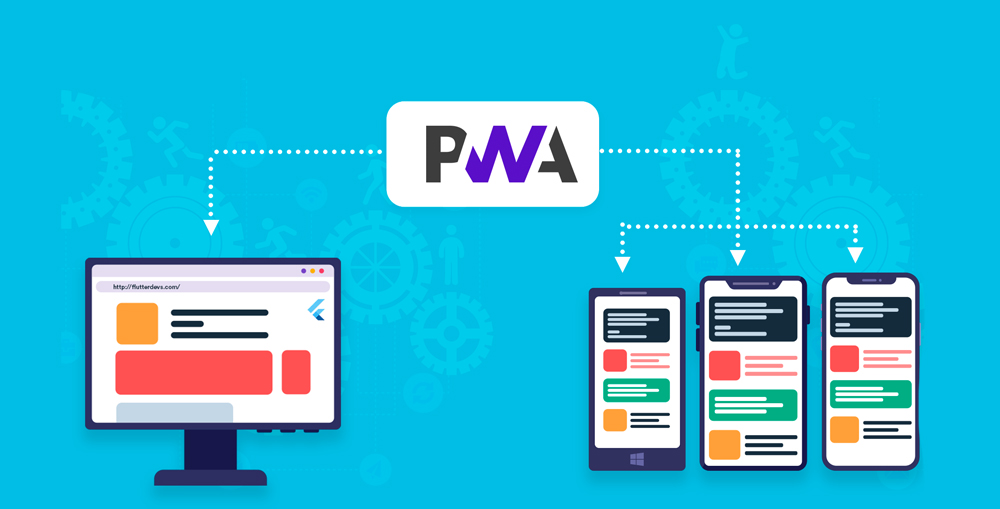
By definition a progressive web app or PWA is a software application which is built using traditional web technologies and platforms such as CSS, HTML, and JavaScript but it offers a user experience similar to a native mobile application. The greatest advantage of a progressive web app or PWA is that it is not confined to a specific platform, it means a single codebase can be used for multiple platforms and the custom software or application will behave like the native application for that platform.

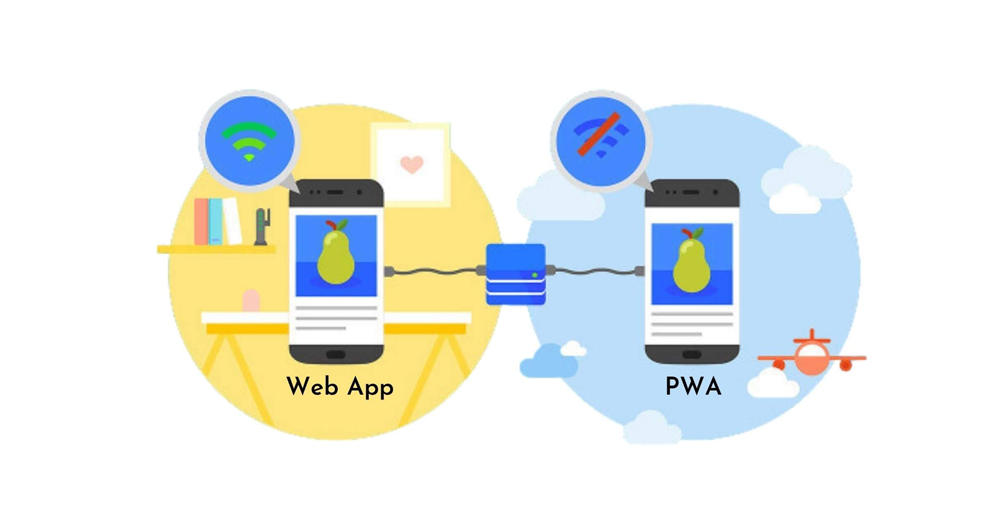
Similarly like the websites the progressive web apps (PWAs) are compatible with multiple platforms but offers additional features such as it can be installed on local storage, it can run in the background, it works offline and it can be integrated with the software and hardware features of the device as well. In this context it truly surpassed both websites and the native mobile applications and that is also one of the major reason of their popularity all around the world.

Furthermore the progressive web apps (PWAs) help empowering businesses and enable them to accelerate their technological adaptation processes and the custom software development using progressive web apps is much more cost effective and scalable than any other traditional application building method.

See Also: What Is Cross-Platform App Development?

What is a Progressive Web App
What is a Progressive Web App?

How Progressive Web Apps (WPAs) are Different?

With the rise of internet and digital marketing businesses started investing in their websites. Later on the digital experience and digital services are introduced to offer convenience, freedom and easy accessibility for the customers. This was the time when the websites have started evolving into highly functional web apps offering a wide range of features and functionalities. With the introduction of JavaScript, Ajax and continuous progress in web development technologies and platforms the web apps have become very useful for both customers and businesses. However, in parallel the smartphones and mobile application development platforms were also improving. A stage came when the native mobile applications have proved their superiority over the web apps.

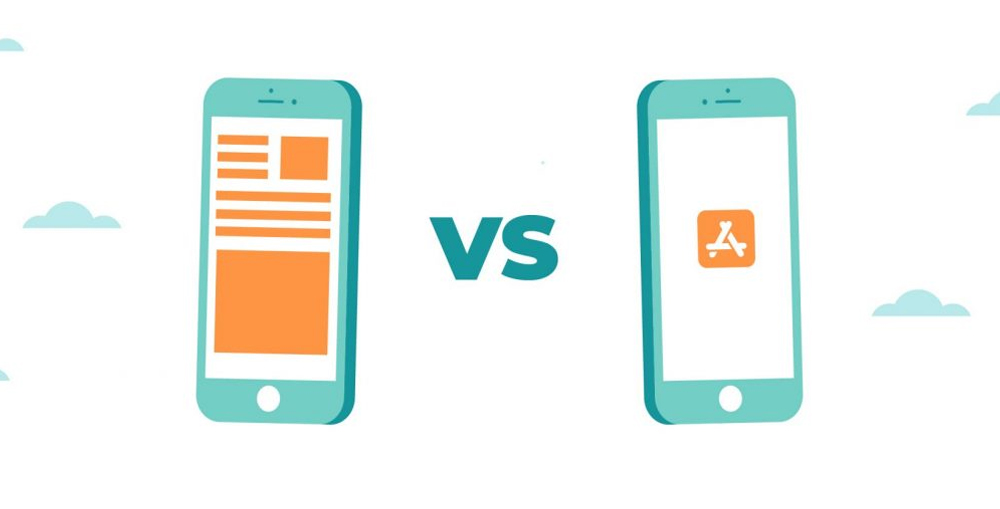
Moreover, both the native mobile applications and web apps have certain limitations and there were features that were exclusive to both platforms and were not available at the counterpart. Therefore a new technology have emerged as progressive web apps (PWAs) which enable businesses to leverage the best out of both native and web apps. With the development of advanced web building tools and platforms and progress of mobile web browsers combined with ever increasing power of smartphones paved the way for the progressive web apps. The progressive web apps are websites who behave and work like a mobile apps and that is what made them different.

See Also: Advantages of Hybrid Mobile Applications

How Progressive Web Apps (WPAs) are Different
How Progressive Web Apps (WPAs) are Different?

Why Progressive Web Apps are Better than Web Apps and Native Mobile Apps?

The first thing that made progressive web apps (PWAs) better than websites/web apps and native mobile apps are the development method, tools and techniques. For example, here are the Programming Languages that are used to build these customized software, apps or web pages:

  1. Websites/Web Apps: HTML, CSS and JavaScript
  2. Native Apps – Apple iOS: Objective-C and Swift
  3. Native Apps – Google Android: JavaScript
  4. Progressive Web Apps or PWAs: HTML, CSS and JavaScript

That is a major difference between these. Furthermore the development approach is also different. The Websites and Web Apps are intended for web browsers, the Native Apps are developed to run on their exclusive platform. For example the native app which is developed for Apple iOS will not run on Google Android and vice versa. However, the progressive web apps (PWAs) are developed to be run in a browser and doesn’t depend on the platform. In case of native apps you will have to develop two different apps using different programing tools and languages, hence you will develop one app for Android and one for iOS.

The biggest advantage of progressive web apps is that only one codebase can effectively run on both iOS and Android and you will have to develop just one application. Furthermore a progressive web app is responsive and it can work on any screen size/form factor without requiring any change or modification in its source code. These are some key advantages which make progressive web apps (PWAs) better than a traditional website/web app or native mobile applications.

See Also: Custom Software for Improved Business Efficiency

Why Progressive Web Apps are Better than Web Apps and Native Mobile Apps
Why Progressive Web Apps are Better than Web Apps and Native Mobile Apps?

Why Businesses Should Chose Progressive Web Apps for Custom Software Development?

Businesses in Dubai and all around the UAE knows the importance of digital customer experience, hence businesses keep investing in software solutions and digital experience to ensure they remain ahead of their competition and obtain maximum customer loyalty. The custom software development is far superior than opting for a stock or off-the-shelf software solution. It offers exclusivity, which means your competitors can never have what you have. Custom software development offers high security and totally aligned solutions for your needs which make them more effective. However, when a business needs to offer a digital service or digital interaction via website/web app or mobile app, they tend to prefer native mobile application development. This is majorly due to the fact that the web experience and mobile app experience are two different things.

See Also: Custom Software Development for Enhanced User Experience

What businesses want to accomplish is a seamless customer experience while offering them great features. The progressive web app development is the ideal solution, it offer the best of both web apps and native mobile apps which make them superior. Here are some key advantages of building a progressive web app:

  1. Fast and Responsive: The progressive web apps are considered very light weight, hence they are fast and react quickly when a user interacts. Furthermore the PWAs are responsive and automatically adjust according to the device, hence the user can use them on any screen size and form factor without compromising on user experience.
  2. Engaging: The progressive web apps are very engaging and for an ordinary user it is hard to tell difference between a native app and PWA. The progressive web apps offer similar experience as that of a native mobile application.
  3. Offer Great Features: A progressive web app not just offer similar user experience but it can also offer similar features which are offered through native apps. Such as adding icon on the home screen, sending push notifications, running in the background, working offline, integration with other systems, etc.
  4. Offer Better Security: In the modern day and age the data protection and security are among the most desired features of any software solution or application. The progressive web apps use HTTPS and SSL protection to ensure high-level data protection and user security.
  5. Very Lightweight: Another great feature of progressive web apps is that they are very lightweight. If we build a progressive web app of a native mobile app with similar design, features and everything it would still be very smaller than the native, in some cases it could be 90% smaller than its native counterpart. This also help boosting the performance and speed by many times.
  6. Easy Management: The progressive web apps are much easier to manage, as they are very lightweight, and need less programming the management and maintenance is relatively easier. The upgrades and updates are also much easier, as the developer will only have to upgrade one codebase.
  7. Better Connectivity: The progressive web apps offer better connectivity than the native mobile apps. PWAs can also work perfectly in low-connectivity areas and with slower networks, as they communicate with the server in a different way which also enables them to work offline.
  8. Uses URI/Linkable: The progressive web apps have another great feature of using URIs to track the current state of the application. It means that when a user close the app and reopen it the app allow them to continue from where they had left.
  9. SEO Friendly: Building native mobile apps and marketing them in itself is a very time and resource consuming task. However, a progressive web app is very SEO friendly and the search engine can easily read their content and index them which help simplifying the digital marketing for it.
  10. Low Cost/Better ROI: The custom software development process is very simple with progressive web apps, the developer will have to work only on one codebase, which reduce their work and cost too. The PWAs can be updated/upgraded easily which also help minimizing the cost. They are progressive in nature hence doesn’t require compatibility/update whenever a new platform arrives, which also lowers the operational cost and increase the lifecycle. These features make progressive web apps one of the best ROI offering custom software development method.

See Also: A Complete Guide to Responsive Web Development

Why Businesses Should Chose Progressive Web Apps for Custom Software Development
Why Businesses Should Chose Progressive Web Apps for Custom Software Development?

These features and advantages of a progressive web app or PWA make them the ideal custom software development method for the modern days’ needs. It is a lot easier to build and launch them, the operational and upgrade cost is also low, which results in better ROI over the long term.

Conclusion

This blog is designed to provide a basic understanding of Progressive Web Apps, with the intent of making it accessible and understandable for beginners. I tried to keep my language simple and avoid complex technical concepts and terminologies. This beginner’s guide can help you understand the difference between PWAs, traditional web apps, and native mobile apps. Custom software development is a very important process for any business, because businesses only goes for customized software solutions when they need to solve a very unique problem or they are trying to gain superiority over their competition.

The rapid rise of progressive web apps is indicating that it is the future of custom software development. The progressive web apps are gaining more momentum in MENA, Asia and North American regions as they offer superior functionality, great user experience and excellent ROI. If you want to learn more about the subject or if you need our help in your custom software development project or if you need a progressive web app solution for your business, please feel free to contact us through our Contact Us page or leave a comment in the comment box below and we will get in touch with you soon.
See Also: The Cost of Custom Software Development: Factors to Consider

See Also: Leveraging Big Data in Custom Software Development

See Also: Step-by-Step Guide to Planning Your Custom Software Development Project


Customer Software Development: Why React JS is The Future of Frontend Development

Customer Software Development Why React JS is The Future of Frontend Development

The React JS is a JavaScript library which is used to build user interfaces (UIs) and it has emerged as one of the most popular platform in past few years. The React JS is an open-source library which is another great reason for using it in the frontend for custom software development. It is majorly used in website and mobile application development. The React JS basically offer reusable code snippets which is much make UI and frontend development much easier. When the developers use React JS they require much less code comparing to other JavaScript frameworks such as Vanilla JavaScript.

The React JS behave like Lego blocks, and allow programmers to use and reuse independent individual code blocks and elements which are the part of the final UI (user interface). The React JS offers a revolutionary approach of allowing developers to use individual elements to build an entire UI rather treating the full UI as one element or single unit. The frontend developer can easily split complex UIs into several elements which is a much easier approach than the conventional methods. That is why the React JS has emerged as one of the most popular frontend development framework not only in Dubai, UAE but it is equally popular all around the world.

See Also: Why Off-the-Shelf Solutions Fall Short: Advantages of Custom Software Development

Customer Software Development Why React JS is The Future of Frontend Development

The custom software development is also gaining huge appreciation from all around the world, businesses are opting for custom software solutions rather than acquiring a commercial off-the-shelf solution. The React JS not only improves the development process but it is much more stable and efficient which is what makes it ideal for custom software development, websites and mobile applications. Businesses in Dubai, Sharjah, Abu Dhabi and other parts of UAE are investing huge chunk of their hard-earned profits in digital experience. The websites and mobile applications have also become very complex day by day.

Traditionally when the developers and programmers use a framework they will have to write a lot of code, which is time-consuming and it also make troubleshooting difficult. However, with the React JS the developers can easily break the complex UIs into individual components and they can use code from pre-build library which saves a lot of time and efforts. In this blog we will discuss the benefits and advantages of React JS which makes it ideal for frontend development in custom software development, website building and smartphone application development.

See Also: The Role of AI in Custom Software Solutions

React JS is The Future of Frontend Development

React JS is Easy to Use and Learn

If you are a professional frontend developer then using and learning the React JS is very easy. It is built on JavaScript which is essential for every frontend developer so while you already knows JavaScript working with the React JS is very easy. When you have understanding of variable, array, functions, conditional statements and loops it is very easy to learn and use the core concepts of the React JS such as props, stats, JSX, components and lifecycle methods. For example a component in the React JS is a small chunk of UI which can be reused anywhere. There is a root component which contains more components and the overall structure is a tree like hierarchal structure which is easier to use and understand.

React JS Offers High Performance and Efficiency

The React JS uses the state and render method, in which the state part take care of the data that has to be displayed and the render method is taking care of the design and how the data should be presented on the screen. The output represents a JavaScript object which is mapped with the DOM (document object model) element. Instead of DOM the React JS uses another innovative method and it creates virtual DOMs. The virtual DOM is also a JavaScript object but it is a light and it an in-memory representation of a real DOM and when the state of an element get changed, the UI renders itself again in the virtual DOM instead of real DOM. This is the reason the custom software, websites and web apps made using React JS are much faster and efficient.

See Also: Custom Software for Improved Business Efficiency

React JS Offers High Performance and Efficiency

React JS Offers Declarative Programing Style

Another great reason why custom software developer, website and mobile application developer likes React JS is its declarative programing style. The programmers can tell what to do (express the logic of computation) without any need to tell how to do it (control flow). Custom software development teams and website/mobile app developer love this because it reduces the possibilities for errors and mistakes by simplifying and shortening the source code. The declarative programing style is simpler than the imperative programing and it also reduce the time and efforts of the developer.

React JS Offers Stability and Simplify Debugging

The React JS was developed by Facebook and they have designed a very impressive debugging mechanism in this framework. It enable the React JS to keep the bugs separate and enable the browser to isolate such errors which makes it easier to trace and rectify them. Furthermore the component creation mechanism also ensures that the unit testing can be executed effectively which minimize the chances of system crash and also results in better efficiency. The reusability of elements and components also reduce the need of frequent testing, save times and brings stability to the system.

See Also: Custom Software Development for Enhanced User Experience

React JS Offers Stability and Simplify Debugging

React JS Offers Cross-Platform Compatibility

Another remarkable feature of React JS is that it offer excellent cross-platform compatibility. Businesses also prefer cross-platform compatible solutions as they are cost-efficient and also offer consistent experience across all compatible platforms such as web, desktop and mobile apps. That also benefits software developers and app developers as their single supplication can offer a seamless user experience across all platforms and they doesn’t have to build different applications for different platforms which also saves a lot of time and efforts. Furthermore the React Native is a specialized component used to build native mobile applications.

React JS Offers Better Migration and Adoptability for Future

For any customized software, website or mobile application the ability to migrate it to an updated technology or platform in future is very important. React JS offers great feature to migrate it to other platforms and technologies. It is very convenient to migrate data, configurations and settings of custom software, websites and mobile apps build using React JS. That is another reason why developer prefer React JS because it requires very less effort and work to migrate it to other platforms. Furthermore the React JS is adopted by large businesses and rapidly adopted by small and medium sized organizations which is why the innovation, creativity and new features are very frequent in React JS.

See Also: The Cost of Custom Software Development: Factors to Consider

React JS Offers Better Migration and Adoptability for Future

Conclusion

The information technology evolves at a very fast pace, new technologies, platforms, ideas and creativity is greater than any other industry. Especially the software development industry witnessed a lot of development and progress over the past few years. Furthermore the software development industry is subjected to rapid advancements and monumental changes, which is why new technologies and platforms are appearing every other month. The React JS is one of the best tool for custom software development, website and mobile application building. The easy usability, simple learning curve, less coding, easy troubleshooting, and better adoptability makes it the best tool for frontend development.

Large businesses in Dubai, Sharjah, Abu Dhabi and other parts of UAE are adopting React JS which is why its popularity is increasing rapidly and it is safer to say that the React JS is the future of frontend development. In this blog we have discussed the key advantages of using React JS for custom software development, website development and mobile apps. If you want to learn more about the subject or if you want our help for your next project, please feel free to contact us through our Contact Us page or leave a comment in the comment box below and we will get in touch with you soon.

See Also: How Web Development can Help Enhancing Customer Experience in 2023?

See Also: Leveraging Big Data in Custom Software Development

See Also: Custom Software Development Progressive Web Apps – Beginner’s Guide


Advantages of a Custom ERP Software Development

Advantages of a Custom ERP Software Development

The ERP or Enterprise Resource Planning Software is an application which streamlines the entire operation and help both employees and the management in effectively performing their day to day tasks. The ERP software can greatly maximize the outcome of the business by enabling them to effectively manage their resources. We have witnessed that most of the businesses in Dubai and all around the UAE thinks that an ERP solution is for large enterprises and production industry, however that is not true at all. In the modern fast-paced digital era the businesses need to effectively manage their resources to maximize their efficiency, which can provide them with the much needed competitive advantage and help them grow over the time.

Another strong argument that most of the business leader has is that they are already utilizing a bunch of business tools and software solution, their manual processes and excel spread sheets based management methods or their small size or industry they operates in doesn’t require a sophisticated and advanced ERP software solution. It is true that the implementation of an ERP software solution requires a lot of research, efforts, and also have a cost associated to it, but the benefits and value it offers in unmatched.

See Also: What are the Key Features of an Enterprise Resource Planning Software (ERP)?

Advantages of a Custom ERP Software Development

Why Businesses Need an ERP Software?

The ERP Software is offers a central information management framework which links will all other third-party tools and systems and have ability to provide real-time updates, analysis, reports, performance, stats and much more. The enterprise resource planning software drives efficiency and productivity with automation and innovation which help businesses enhance the quality and quantity of the outcome of their resources and maximize their operational capabilities. Here are the key reasons why business need an ERP Software solution:

  1. Greatly increase performance and efficiency
  2. Reduce operational cost and eliminate waste
  3. Eliminate the inadequacy of the existing digital ecosystem
  4. Get rid of time-taking manual data processing via spreadsheets
  5. Significantly enhance functionality and help employees in day to day tasks
  6. Eliminate errors and problems associated with manual processes
  7. Get real-time updates, centralized information management system
  8. Enable real-time data synchronization and sharing with all internal systems
  9. Enhance and improve management by gaining more visibility into processes
  10. Maximize the growth rate and increase overall profitability

The benefits and advantages of the ERP or enterprise resource planning software solution far outweighs the implementation efforts and cost. However, when it comes to implementing an ERP software solution, businesses leaders often find themselves confused between the off-the-shelf ERP and custom ERP software development.

See Also: Top Trends in Custom Software Development: What’s Shaping the Industry?

Why Businesses Need an ERP Software?

What is the Difference between Off-the-shelf ERP and Custom ERP Software Development?

The COTS or commercial off-the-shelf software solution is ready-made software application designed for a larger targeted audience often for masses and it is used to solve complex business problem(s). Every software serves a purpose, the business need a software to perform certain tasks or to support certain processes. The custom software development on the other hand is designed exclusively for a particular business or user group at a business who wants to solve their very unique and exclusive problems or to aid very specific business processes. That doesn’t limit the scope of the custom software development, in fact in terms of efficiency and impact the custom software development is the more beneficial method for businesses.

It is the ability to cater to very specific business needs of various business processes or even the entire business which makes custom ERP software development more effective and highly efficient. The COTS ERP have limited adoptability and often require businesses to make changes to their workflows and processes, it is due to the design of the COTS ERPs as they are designed to meet the generic needs of a specific industry. However, the custom ERP software are far superior as they are exclusively designed by keeping in mind the needs, existing workflows and processes of the business.

See Also: Step-by-step Guide to Develop Custom Enterprise Software

What is the Difference between Off-the-shelf ERP and Custom ERP Software Development?

What are the Advantages of a Custom ERP Software?

The custom ERP software meets the needs more effectively and are designed to solve the very specific and unique business problems. That is what makes them superior and more effective in the long term. Here are the key benefits of the custom ERP software:

Business Have Full Control over the ERP Features and Functionalities

In case of ERP software the one-fits-all is not applicable at all. The enterprise resource planning software is a core application which can have direct or indirect impact on each and everything a business does. Businesses over the time evolves differently, every business culture is unique and different form the others, even the businesses who operates in similar industries could have completely different organizational culture and business practices. This is why the generic off-the-shelf ERP solution is not enough and businesses need a very specific set of features and functionalities which can meet their exclusive needs.

The custom ERP software development gives businesses full control over all features and functionalities, they can design the system according to their internal workflows and business processes which means the system will do exactly what the business needs. Aligning the features and functionalities of a custom ERP software can greatly enhance the productivity and efficiency and also improve the adoptability and integration of the system.

See Also: Step-by-Step Guide to Planning Your Custom Software Development Project

Business Have Full Control over the ERP Features and Functionalities

Businesses can Significantly Improve their Management Processes

Although the management structure and framework could be similar but every business leader have different preferences, priorities and management methodologies. This is why the custom ERP software development is great to improve and enhance the management processes. As it offers exactly what the management and managers needs and help them with their tasks to improve their efficiency. The COTS or commercial off-the-shelf ERP software are designed for generic use that is why they missed this flavor of personalization and couldn’t meet all the needs of the management.

The custom ERP software development on the contrary allow management to customize their administration dashboards and everything else. They can have customized features, customized data dashboards, and real-time updates according to their preference and priorities which significantly increase the visibility of the management and provide them a better framework to accomplish their desired objectives through the ERP system. Thus the businesses can apply their personalized methodologies and management structure which enhance their performance and improve the overall management process.

See Also: Benefits of Investing in Custom Software Development for Your Business in Dubai

Businesses can Significantly Improve their Management Processes

Flexible Scalability, Updates and Changes According to the Needs of the Business

For any software solution the scalability, future updates and upgrades and on-demand changes are the most important aspects to consider. The commercial off-the-shelf ERP software are designed for masses, there are always fees and charges attributed to scaling and customization. If a business needs some changes, they will have to bear hefty charges and even then the scope of the changes is very limited, as the structural changes, or customization in the application core are never possible, they COTS ERP software provider always limit such changes and customization. The custom ERP software development on the other hand offers more flexibility and control.

Businesses can scale up or down whenever they want, they don’t have bear additional fees and in case they want to customize a feature or even the entire ERP software, they can do that. There is no restriction associated to changes and customization. Businesses can also update and upgrade the system whenever they need. That flexibility and control is extremely important for businesses growth and competitiveness.

See Also: The Cost of Custom Software Development: Factors to Consider

Flexible Scalability, Updates and Changes According to the Needs of the Business

Businesses will own their Customized ERP Software

The COTS or commercial off-the-shelf ERP software are always designed and developed by a vendor or service provider who holds the ownership rights to the software application. The businesses/users are always bound to an agreement, which in most cases favor the service provider. The service provider can change their policy anytime they want, they can increase the cost, they can drop certain features which you might be using and they might not introduce the features that you may need. This is what limits your control over your ERP system and have various other drawbacks. The custom ERP software development doesn’t have any such limitation or problem, the custom ERP software are exclusively designed for the business, either by an outsourcing partner, vendor or internal software development team.

The business/user holds the full ownership rights to the final product, the vendor or outsourcing partner doesn’t own anything, they will have to deliver all the source codes, resources and everything utilized in the software. This also eliminate the dependency on a particular service provider, business can acquire custom software development services and then they can maintain the software in-house or they can acquire another business partner to do that for them. This also have cost benefits and help minimizing the operational and maintenance cost.

See Also: Custom Software Development Progressive Web Apps – Beginner’s Guide

Businesses will own their Customized ERP Software

Custom ERP Software Development Offers Better Data Privacy and Protection

The commercial off-the-shelf ERP software are owned by the vendor or service provider hence they have more control over the data storage, protection, privacy, and recovery polices and the business who is using their software must have to comply with those policies. More importantly in case of an off-the-shelf or ready-made ERP software the business’s data will be stored in vendor’s data centers. The data that is stored in an ERP software is of great importance, any data breach or such compromise could permanently damage the business’s reputation and can have dire consequence. The custom ERP software development allow businesses more control over these policies and help them protect their data.

Businesses can store their data in their local data centers or they can acquire a trusted cloud service to host their data from them. There is another important factor to consider is that the commercial off-the-shelf ERP software are available to tens of thousands of users all around the world, which means their structure and a lot of other aspects are well-known and this is what makes them more vulnerable. However, a customized ERP software is only available to the one user which means no one else is familiar with its structure which makes it more protected against common internet threats.

See Also: Key Features of an Enterprise Application Software (EAS)

Custom ERP Software Development Offers Better Data Privacy and Protection

Custom ERP Software Development Provides a Great Competitive Advantage

As the commercial off-the-shelf ERP software solutions are available for masses and if you are using a popular ERP system the chances are your competitor might also be using the same. If all the tools and features that you are utilizing are available to your competitors too then you can never gain any competitive advantage. For any business the business tools, methodologies, practices and processes determines the outcome, performance and quality of the work. If you are your competitor are using same tools, then the chances are you can never gain a significant competitive advantage over them.

There is another important thing to consider is that the commercial off-the-shelf ERP software solutions can never fulfill the 100% needs of a business, in fact when acquiring an off-the-shelf solution businesses often seek 80% compatibility, this means they compromise on the 20% or slightly less of the functionalities and features. However, the custom ERP software development fully aligns with the business needs and offer 100% solution of all you problems. On top of that the features and functionalities you will be using are exclusive to you, no other competitor will have access to those features and tools, which will give you a great competitive advantage.

See Also: What is Enterprise Performance Management (EPM)?

Custom ERP Software Development Provides a Great Competitive Advantage

Conclusion

The ERP software solutions are a great tool for modern businesses, no matter who large or small you are or which industry you belongs too, every business needs to streamline their processes and workflows. The modern businesses will have to ready to adopt to the highly dynamic market and customer trends and abrupt changes. Businesses need to optimize their productivity, performance and efficiency in order to optimize resources and minimize the expensive without compromising on the outcome and quality of the work. When businesses need to implement an ERP software they have two possibilities, either they can go with a commercial off-the-shelf ERP software or they can take the route of custom ERP software development.

The packaged off-the-shelf software are easy and quicker to implement but have limited compatibility which not only prevent businesses to reach to their full potential but could also cause problems down the road. The custom ERP solutions are exclusively designed for the needs and specifications of the business and help businesses achieve the maximum efficiency, performance and productivity.

The custom ERP software development offer great competitive advantage, superior performance, better adoptability, more future readiness, and increase adoptability. In this blog we have listed the key advantages of the custom ERP software solution, if you want to learn more about the subject or if you want our help to design a customized ERP solution as per your needs, please feel free to contact us through our Contact Us or leave a comment in the comment box below and we will get in touch with you soon.

See Also: How Customer Experience Help Boosting Website Conversions?


Why the Custom Software Development is Good for Your Business?

The software, information technology and digital tools have become an integral part of a modern day workplace. These days’ businesses can’t function without the help of modern technology. Think of a smartphone, before them everything was going fine, but now a days, one can’t even imagine their life without their mobile phone. The same happens with the businesses as well, the modern marketplaces are very competitive. Especially in Dubai and all around the UAE where the customers are very demanding and they have tons of choices, the businesses had to compete a lot in order to stay out of the crowd.

Businesses need software solutions to deliver their services to the customers, to improve their internal processed for production and supply chain management, for customer relationship management, for internal processes management and for almost each and every task the employee perform on day-to-day bases. That is why without software solutions and information technology is the lifeblood of the present day workplace.

See Also: Why Off-the-Shelf Solutions Fall Short: Advantages of Custom Software Development

Why the Custom Software Development is Good for Your Business

There are two major classifications of the software solutions, one is the commercial off-the-shelf software solutions or COTS and the other is bespoke or custom software solutions. The COTS are designed for masses and hundreds or even thousands of businesses can use the same software solution. This means that the software is a generic application designed as per the industry standards and popular trends. When a business decide to acquire a commercial off-the-shelf software solutions they prefer a software which satisfy their maximum needs, usually it is 80/20 ratio where 80% of needs are met the software is considered to be a good choice.

There are two drawbacks, one the software can never meet the 100% of the needs and its structure, workflow and mechanisms are usually less customizable, hence businesses will have to adjust their operation, processes and workflows to integrate the software. The second disadvantage is that most of the time the chances are your competitors would also be using the same application hence you will get no competitive advantage. However the custom software development solve all these problems and it fully aligns with your need and offer a great competitive advantage.

See Also: What is custom software development?

See Also: Step-by-step Guide to Develop Custom Enterprise Software

See Also: Common Mistakes to Avoid in Custom Software Development Projects

Why the Custom Software Development is Good for Your Business

What is Custom Software Development?

The custom software development is a process of developing an exclusive software for a particular business or set of users. This means that the custom software development offers a 100% compliance with business’s needs. The businesses who are designing the custom software doesn’t have to make any changes in their existing processes or business practices as the custom software will offer great flexibility and control over the application you are developing. Hence businesses can have a software which not only meet their 100% needs, but also help them boost the efficiency of the relevant processes and the employees.

Businesses in Dubai and all around the UAE usually outsource custom software development project to a vendor who starts the process with an intense requirement gathering phase, which helps them align the software with the business needs. As the software is designed according to the needs, hence the business doesn’t have to make changes in their processes or practices, and business get the full ownership rights to the application, hence there is no recurring or rental cost.

See Also: Custom Software Development for Enhanced User Experience

What is Custom Software Development?

Why Custom Software Development is Better than COTS?

The COTS or commercial off-the-shelf software solutions are better in many ways, but have many drawbacks, the biggest problem is that they will never be able to meet your 100% requirements you will always have to make compromises over price or features. The scalability and operational cost is also high with several recurring fees and charges, the customization is limited and expensive. Moreover the adoption is difficult and integration is also limited. All these problems might not seem much at the start but as time passes, eventually businesses will have to switch to the customized software solutions.

Every business is unique, over the time this uniqueness grows, and it is this uniqueness that help businesses establish a brand identity in the market. A custom software development provides more flexibility and easy scalability which help businesses support their growth and enhance their uniqueness. There are several benefits of custom software development which makes it superior from COTS, in this blog we will list the key advantages of the custom software development which are crucial for performance and growth.

See Also: Custom Software for Improved Business Efficiency

Why Custom Software Development is Better than COTS?

Custom Software Development Advantages: 1. Exclusivity

One of the biggest advantage of the custom software development is the 100% fulfillment of your business needs. The COTS solutions are designed for the masses, they are designed to be generic and according to the popular industry trends. However, each business is unique and different form the other, even if they operate in the same industry sector and doing the same stuff, their internal culture and environment would be developed differently. This is what makes a business unique and give them a much needed competitive advantage.

However, the commercial off-the-shelf software solutions deprive a business from it. The custom software development on the other hand allow businesses to retain their uniqueness and it help them to further drive innovation to enhance their performance, productivity and unique business identity. The custom software development offers exclusivity, complete ownership rights and it fully complies with your unique needs which increase your business’s strength and support your growth.

See Also: Leveraging Big Data in Custom Software Development

Exclusivity

Custom Software Development Advantages: 2. Personalization

Personalization is something that is always associated with good outcome, whether you offer a personalized experience to your customers or employees you will always get a positive outcome. The commercial off-the-shelf software solutions doesn’t offer any personalization at all. In case if you want some personalization you will have to pay additional cost for that and even then the level and scope of personalization would be very limited. However, the custom software development is very flexible and offers full personalization. Whether it is the features of the software you want to design in your own way, whether the workflows, or even the UI (user interface), you can personalize each and every bit of the software application with the custom software development process.

You can personalize even the minute level of functions and even the title or color of the buttons on your customized software. Furthermore you can define the software behavior and align it according to your internal processes, business practices and the ways your employees are familiar with. The personalization make adoption and integration more convenient and it maximizes the efficiency of the customized software.

See Also: The Impact of Cloud Computing on Custom Software Development [Full Guide]

Personalization

Custom Software Development Advantages: 3. Cost-Effective

The commercial off-the-shelf software (COTS) solutions have less initial cost, they can be deployed very quickly, in fact within days, however, they have recurring cost, rental or subscription charges, then there is scalability, customization and integration cost which is separate from all that. All these different expenses make the commercial off-the-shelf software solutions much more expensive in the long run and above all the business doesn’t even have the ownership rights, in case if the vendor doesn’t allow them, they can’t even migrate their data to other applications, and there are several other drawbacks.

However, the custom software development might seem expensive and more time taking at first, but it is mostly a one-time cost, the business completely owns the software application and they don’t have any dependency on the vendor. Since the software is fully owned by the business it is designed for, so the customization, integration and scalability is also not a problem. Business can customize the software whenever they want, same is application for the upgrades, updates and up-scaling. This is what makes custom software development much more cost-effective than COTS.

See Also: Step-by-Step Guide to Planning Your Custom Software Development Project

Cost-Effective

Custom Software Development Advantages: 4. Security and Privacy

The data security and privacy protection is not a technical matter, in fact we have witnessed in past years that a well-established business can go bankrupt within months after a data breach or security problem. Customers are very concerned about their data privacy and protection. Businesses who failed to secure the data of their customers and for the matter of fact their internal data will loss reputation and public’s trust on them. The commercial off-the-shelf software are always owned by the vendor or service provider and your data is stored on the servers which are not managed or maintained by you.

This is what make it’s a bigger security risk. Furthermore the structure of the COTS is very familiar to the internet pirates, as they are globally available for millions of users. However, the custom software development on the contrary can offer the best security measures. Your data is hosted with you, and your trusted team have full control over the data server and the security of the environment. Furthermore you can also make your customized software aligned with your existing digital ecosystem which makes it more secure and offer great reliability.

See Also: Software Development: In-house vs Outsourcing

See Also: The Cost of Custom Software Development: Factors to Consider

Security and Privacy

Custom Software Development Advantages: 5. Scalability

Scalability is one of the most overlooked aspect of software development. Businesses usually doesn’t consider it a big issue at first. This is the case with the commercial off-the-shelf software solutions, they can align with your present day needs, but you don’t know in future whether they will still remain compatible or not. A business keep evolving and growing which means its needs keep changing and growing, and on top of that the IT technology and digital world is subjected to rapid changes unexpected situations. The custom software development is the solution to all those problems.

During the custom software development process, businesses and vendor does intensive research and they also consider multiple expected scenarios during the prototyping stage. This will make them more ready for future and scalability. Furthermore the customized software are fully owned by the businesses hence adding new features or upgrading them or adding more users is not a problem. In fact most of the time there is very less or literally no cost associated with up-scaling. That is why the custom software development is more flexible towards scalability and increase the future readiness of your applications.

See Also: Emerging Trends in Custom Software Development

Scalability

Custom Software Development Advantages: 6. Adoptability

The adaptation and integration are some of the most crucial aspects of implementing a new software solution. The commercial off-the-shelf software solutions have already established UI (user interface), internal information structure, workflows and development framework. Which limits their ability to harmonize with your existing digital ecosystem and also with the employees who will be using the application. Most of the time the integration cause serious troubles and the businesses also have to arrange training programs for their employees to make them able to efficiently use the new application.

A business always have to rely on multiple enterprise tools and software solutions and system. In order to maximize the efficiency the information sharing and integration is a necessity. The custom software development ensures that the software will be fully compatible with the existing digital ecosystem. It offer more flexibility and control which maximizes its ability to integrate with other software, tools and databases. Moreover the UI (user interface) and workflows are fully personalized as per the users’ requirements, hence the adoptability is quicker and convenient.

See Also: Benefits of Investing in Custom Software Development for Your Business in Dubai

Adoptability

Conclusion

Any modern business in Dubai or anywhere else in UAE knows the importance of IT, digital tools and software solutions. No business in the present time can properly function without adopting to various different types of business tools and software solutions. In order to compete in the market and establish a unique brand identity a business needs excellent quality information network and digital ecosystem. That is why the software needs keep coming and business are on a continuous quest to achieve higher efficiency in their internal and external endeavors. When it comes to implement a new software solution a manager or business leader can easily get confused and overwhelmed due to sheer number and multitude of software solutions available in the market.

That is why we discussed custom software development in this blog and listed some key advantages of customized software solution which will help our audience to choose the best solution for their needs. If you want to learn more about the subject or if you want our help to design and develop a highly cost-effective customized software solution for your business, please feel free to contact us through our Contact Us page or leave a comment in the comment box below and we will get in touch with you soon.
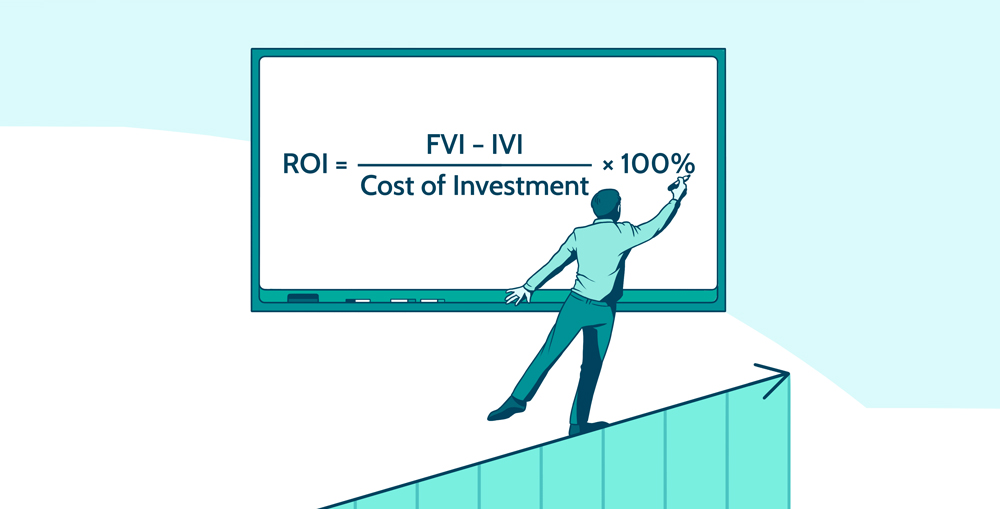
See Also: A Complete Guide to High-Converting Web Development

See Also: Custom Software Development Progressive Web Apps – Beginner’s Guide


What Is Cross-Platform App Development?

The cross-platform app development is a process of developing mobile applications and software that can run on multiple platforms/operating systems (OS). The native app building approach requires businesses to develop separate applications for separate platforms/OS. Which not only cost a lot but sometimes it is also not good for customer experience. The mobile apps have become essential for the modern businesses, studies have shown that the mobile phone users spends their 86% of the time on different mobile apps while on their smartphones.

Another staggering statistic is that almost 83.3% of the world population have a smartphone in year 2022 which translates to almost 6.64 Billion smartphones worldwide. There has been a huge growth rate starting from past five years with the year 2017 with the largest increase in the global smartphone users according to a study published in OBERLO. With the rise of mobile commerce and an over-increasing trend of governments offering e-services via mobile apps, the smartphones experience have become even more important for an average consumer.

See Also: React Native Apps and Cross Platform Software Development

What Is Cross-Platform App Development

These all trends and development in the field of smartphone industry led to a worldwide adaptation of smartphone apps. Businesses in Dubai and all around the UAE have also started investing in smartphone applications. As now a days the 98% of the smartphones runs on Android and Apple iOS, so these two are the major platform that you should focus on. Businesses are well aware of the importance of the mobile apps and they are also very active in this domain. However, when it comes to mobile app development the businesses followed several approaches, majorly businesses prefer native apps.

The native apps are excellent at several aspects, however, for an average mobile app, the native app development could become too expensive. That is why the cross-platform app development is gaining so much popularity not only in UAE but all around the world. In this blog we will discuss what is cross-platform app development and how is it so valuable and important for the businesses in Dubai and all around the UAE.

See Also: Customer Software Development: Why React JS is The Future of Frontend Development

What Is Cross-Platform App Development

Cross-Platform App Development

By definition the cross-platform app development is software or mobile app development method which enable the software or app to run on multiple platforms, operating systems or software environment. However, commonly the cross-platform app development is referred to as cross-platform mobile app development. We have witnessed the smartphone evolving from very basic one to highly sophisticated and powerful devices. The smartphone revolution begins with Nokia launching Symbian OS, then other manufacturers also followed and start building their own OS. However, sooner the Android took over the market.

In the beginning the blackberry was a good competition but it also faded away soon, due to its exclusivity, lack of app repository and few other problems. Then the Apple gained huge popularity all across the world. Hence the famous competition and rivalry begins between iOS and Android OS. Now in 2022, almost 71% of the smartphone runs at Android OS and 28% smartphones are from Apple which runs on Apple iOS.

See Also: 5 Pros of Hybrid Mobile App Development

Cross-Platform App Development

When it comes to smartphone apps or mobile apps businesses usually offer Android and Apple apps. The mobile app development have also evolved a lot, the companies have invested a great deal of resources and time in research and development to improve the mobile app development technologies. In fact there are some platforms that significantly increase the reach to mobile app development by offering no-code development platforms. There are also low-code development platforms which are for technical people, who have enough knowledge and experience of programming and source codes.

However, the Android OS and the Apple OS is entirely different from each other. The Android operating system is based on Linux and the Apple iOS operating system is based on UNIX. These two are fundamentally different from each other hence the apps developed for these two platforms tend to follow completely different approaches, methods, techniques and programming languages/tools.

See Also: Leveraging Big Data in Custom Software Development

Cross-Platform App Development

Earlier when a business wanted to develop a mobile app for these two smartphone categories they will have to hire two different teams who have skills for these two platforms. For example the Android app developers usually don’t work on iOS apps, and the iOS app developers also not work on Android apps. This results in a lot more problems than a typical software development project. The project manager usually have to manage two different teams, or two different outsourcing partners. This also means the cost of the two apps will also rise. This app development approach is called native app development.

There are major differences between the native and cross-platform mobile apps but we will come to that later. Furthermore the Android and iOS mobile apps also tend to behave differently, hence offer slightly different user experience. Businesses always want to offer a universal user experience across all their communication channel, that help strengthening their brand identity too and they also want to minimize the cost of the mobile app development. This is what results in cross-platform app development.

See Also: Common Mistakes to Avoid in Custom Software Development Projects

Cross-Platform App Development

Types of Cross-Platform App Development

With the passage of time the application and software development tools and programming languages also got improved. Now a days there are several software programming languages and platform that allow software developers to easily develop cross-platform apps. The cross-platform app development is not only limited to the mobile application in fact the cross-platform software are very common on other platforms too. Any business would want to reach out to maximum audience, whether they use Android or iOS or any other platform. Your audience would always be divided, if we take the examples of mobile apps, the audience would be always divided in two significantly larger groups, the Android and the Apple.

Developing separate apps means additional cost, slightly different user experience at each platform, sometimes even the design could differ too, and there are several other problems. Managing two different teams or vendors is also hectic and increase the operational cost. Due to these reasons businesses love the idea of building a universal mobile app that can run on both platforms, Android and iOS.

See Also: The Cost of Custom Software Development: Factors to Consider

Types of Cross-Platform App Development

Here are some examples of different cross-platform app development methods:

  1. Hybrid Mobile App Development: The hybrid mobile apps are developed using web technology such as HTML5 or JavaScript. The apps are built on a development platform which puts native wrapper around the app to make it compatible with supported platforms.
  2. Progressive Web App (PWA) Development: The PWA or progressive web apps are built as a website but behave like a mobile app. The PWA are exclusively built to take advantage of the native features without requiring the user to download the app locally.
  3. Rapid Mobile App Development (RMAD): The RMAD or rapid mobile app development is done via no-code mobile app development platforms. Usually used for internal or small mobile apps with limited functionalities.
  4. Universal Apps: The universal apps are build using a universal codebase for multiple platform to make an app or software able to run on all required operating system/devices and platforms. The Windows Universal Apps are the example of universal app development method.

Businesses in Dubai and all around the UAE are eager to enhance their offerings to the customers for the sake of better experience and higher productivity. For that businesses offer multiple self-service solutions and enable their customers to communicate via multiple different channels. For example, instead of visiting a real estate office, you can upload the document through the smartphone apps via in-built scanning feature that can utilize the device camera to scan a document.

There are hundreds of different features that businesses in UAE are utilizing to enhance the customers’ mobile experience. That is what fueled the cross-platform app development trend in past few years and we are witnessing a rapid growth in this trend which might remain growing for many more coming years in future.

See Also: Benefits of Investing in Custom Software Development for Your Business in Dubai

Types of Cross-Platform App Development

Benefits of Cross-Platform App Development

The cross-platform app development can literally cut your efforts to half, the businesses don’t have to deal with different teams and they don’t have to pay twice for the same app for different platforms. This not only reduce the initial cost but it also help reducing the operational, maintenance and upgrading cost as well. It makes management simpler and more convenient. Here are some key benefits of cross-platform app development which distinguishes it from traditional app development methods:

  • Reusable Source Code: The cross-platform app development allow using a single codebase which eliminates the need of writing different codes for different platforms. Using a single codebase reduce time, efforts, bugs, and simplify the app development process.
  • Quick Development Time: Due to reusable code and single codebase the development work is already cut short, furthermore the designing process also become simpler as there is only one UI design which significantly reduce time required to develop cross-platform apps.
  • Cost-effective: As there is no need to develop separate apps for separate platforms, the develop cost is very less for cross-platform app development. Furthermore the maintenance and upgrade cost is also very low as business will have to manage only one team/vendor for all platforms.
  • Wider Reach: The cross-platform app development allow businesses to reach out to a wider audience who is using multiple platforms. Thanks to the single codebase the cost of reaching out to multi-platform based audience is also very less comparing to native app development.
  • Easy Marketing: Since there is only one app that has to be tested and launched, the businesses need very less efforts and time to test and launch the apps. Collecting analytical data and customer feedback to measure the success is easier and relatively simple.
  • Consistency: Since the cross-platform apps are developed once the UI (user interface) and UX (user experience) is also designed once. It means the cross-platform app development offers uniform and consistent customer experience on all supported platforms.
  • Quicker Upgrades and Customization: Since the cross-platform apps are developed on a single code base and then wrapped in the native framework to support multiple native platforms, all the upgrades and customization has to be done once and it will reflect on all platforms.

The cross-platform app development allow businesses to build mobile apps for both Android OS and Apple iOS fairly quickly and with less cost and efforts. Quicker updates and customization also ensures businesses remain up to date and competitive. These are some of the major benefits of the cross-platform app development. The business needs varies so does the solutions, however most of the times the cross-platform app development is the smartest approach to develop reliable apps and software.

See Also: Software Development: In-house vs Outsourcing

Benefits of Cross-Platform App Development

Conclusion

The technology is evolving and improving on a rapid pace, which give rise to new trends and sometime a complete transformation in a particular industry. The mobile app and software development has become an integral and essential part of the modern day businesses. Businesses in Dubai and all around the UAE are putting tremendous efforts to maximize the customer satisfaction and to achieve the higher productivity and performance. When it comes to software development or mobile app development, there are several approaches which can fulfil the needs of the business.

However, in order to maximize the ROI of a project the business will have to take the right route. The cross-platform app development have become very popular in past few years. It is due to the shift in market trends, growth in the business needs and significant improvement in the app development and software development technologies, platforms and programming techniques. The cross-platform app development is gaining huge momentum and we are witnessing the same growth for a few more coming years.

In this blog we have discussed the basics of the cross-platform app development. If you want to learn more about the subject or if you are looking for a cross-platform app development, feel free to contact us through our Contact Us page or leave a comment in the comment box below and we will get in touch with you soon.
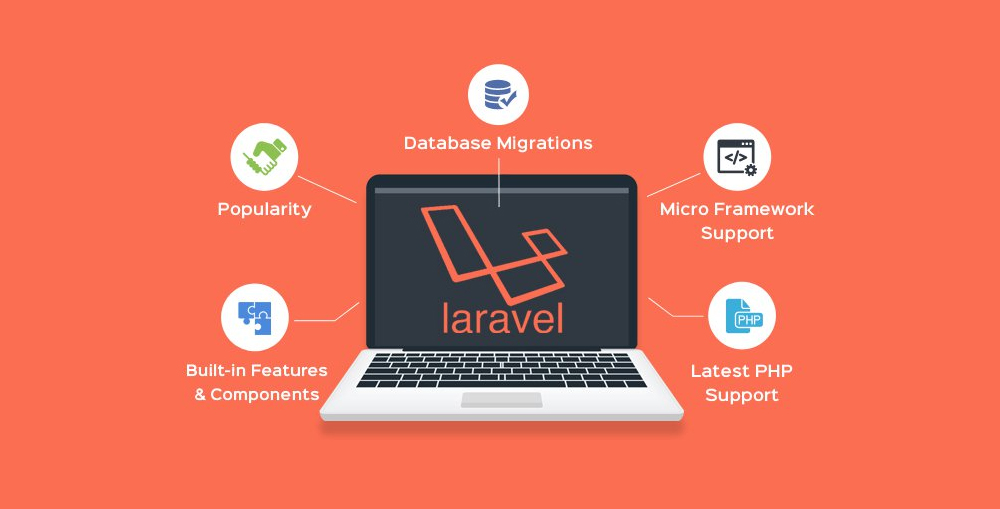
See Also: Why customized CRM Software is better than Off-the-shelf Solution?


Advantages of Hybrid Mobile Applications

Advantages of Hybrid Mobile Applications

Mobile applications are very common these days. Especially since the past few years we have witnessed a huge rise in smartphone apps. The smartphones and mobile devices are becoming more powerful day by day, the technology itself is improving a lot and the people are spending more time on their mobile phones than ever before. All these factors along with the changing customer behavior and market trend have compelled businesses to offer mobile applications to their customers.

Here in Dubai and all around the UAE the 99% of the population have access to high-speed internet and almost the same percentage of population owns a mobile phone. This means the mobile apps can offer a great brand visibility. Businesses can offer more personalized customer experience via mobile applications which help them increase customer engagement too. The mobile apps are also a great source of valuable business intelligence data which help businesses gathering deeper insight to customers’ minds.

Advantages of Hybrid Mobile Applications

The mobile apps are not just helpful in enhancing customer experience, but they can also support a business in generating more revenue. Businesses can utilize mobile applications to offer e-Commerce features to allow their customers to make purchases directly from the smartphone apps. Businesses who are not selling online, or can’t sell online, can offer a variety of services via mobile applications. That not only help businesses gain customer loyalty but also help them to improve their internal processes and operational capabilities.

The digital services or mobile applications help businesses digitalize several internal processes and the digitalization drives autonomy and efficiency. That is why mobile applications are extremely crucial for a businesses.

What is Hybrid Mobile Application Development?

Hybrid mobile application development is building a single application which can run on multiple platforms/OS such as Android, Apple iOS, and Windows. The native mobile application development is building a tailor-made application only for a specific platform/OS. If a native app is developed for Android it won’t be able to run on Windows or iOS and vice versa. The hybrid apps are developed using web-based technologies such as JavaScript, HTML and CSS then the application is integrated or wrapped in a framework such as React, Xamarin or Iconic which makes it a hybrid mobile application.

The application developer will have to write a single code, which works in all supportive platforms or operating systems. The hybrid mobile applications utilizes the embedded browser of each platform instead of the regular web browser, which enables users to install them on any supportive platform, same like the native mobile applications. The hybrid mobile applications can offer great functionalities and user experience by leveraging the advantages of web apps and the native apps.

See Also: What Is Cross-Platform App Development?

What is Hybrid Mobile Application Development?

The hybrid mobile applications can also utilize the device’s hardware such as camera, GPS, storage or any other available/compatible hardware component. The application developers can also use the framework to build the native UIs to further enhance the user experience. This means that the hybrid mobile applications can have the appearance and look and feel of a native application. Differentiating between hybrid mobile application and the native mobile apps is very difficult for a common user, so mostly they won’t notice it at all.

Only in a certain cases when the business wants to utilize the very unique hardware and software features of a platform, they tend to build native apps such as Google Maps, Tesla, Spotify, WhatsApp, etc. Most of the time businesses prefer building hybrid mobile apps. The hybrid mobile applications can also be submitted to native application stores such as Google App Store or Apple App Store. From a user’s perspective there is no noticeable difference between the native apps and hybrid mobile applications.

See Also: Custom Software Development Progressive Web Apps – Beginner’s Guide

What is Hybrid Mobile Application Development?

Advantages of Hybrid Mobile Applications

The ability to combine the features of web apps with the native apps’ features offers a multitude of advantages. The native application development is slowly fading away, sooner the hybrid mobile applications will dominate the mobile apps market. The gap between the native apps and hybrid apps is squeezing day by day and the technology is also evolving on a very rapid pace. Which means sooner or later we might not need native applications at all, or even if we need that would be for a very limited scope. Here are some key advantages of the hybrid mobile applications:

Hybrid Mobile Applications offer a Great UI/UX

The hybrid mobile applications are good at offering intuitive user interfaces (UI) and exceptional user experience (UX).The hybrid mobile applications can leverage the features from both native apps and web apps which provide them this superiority. Another great advantage of hybrid mobile applications is that they offer universal UI and UX on all supportive platforms. No matter if the user switch the platform the experience and interface will remain consistent. The hybrid mobile application can also easily adopt different screen sizes and offer a smooth experience at all supported devices. The usage of web based technologies make UI light and super-fast to load which is another great advantage of hybrid mobile applications.

Hybrid Mobile Applications offer a Great UI/UX

Hybrid Mobile Applications Work Offline

One of the greatest problem with the mobile apps is the capability to work offline. The hybrid mobile applications provide offline support. It means that the app data is stored on the local device, all the necessary resources are also stored in the local device. This allow the users to access the app data while offline. The businesses who offer services in ruler areas or with the limited connectivity must require this feature. Almost 70% of the users ditch an application if it showed glitches or limit their access due to limited connectivity. The capability to offer accessibility offline help businesses overcome this problem and ensures the users will get a smooth uninterrupted customer experience even when they are offline.

Hybrid Mobile Applications Work Offline

Hybrid Mobile Applications offer Wider Audience Reach

Since the hybrid mobile applications can be launched on multiple platforms, they can offer a wider audience reach. Some of your customers might be using Google Android or some might be using Apple iOS based smartphones and mobile devices. Once a hybrid mobile application is built for a platform, let say, iOS it is easier to import it to other platforms such as Android and Windows. It is also a lot easier to publish your hybrid mobile applications at the Google and Apple app stores. This provide a great advantage and enable businesses to reaching out to a larger audience across various platforms.

Hybrid Mobile Applications offer Wider Audience Reach

Hybrid Mobile Applications are Easy and Quick to Develop

For the hybrid mobile application development the software developers will have to write only one codebase which works on all required platforms. However, for the native mobile apps the developers will have to write separate codes for all required platforms. Each platform also require coding in a particular (supportive) programming language which make it more time consuming. But with the hybrid mobile application development the businesses can even utilize their existing web tools, to build the mobile application on them. For example, a website CMS can be used to publish the content on the hybrid mobile application which makes the development process way too shorter than the native app building.

Hybrid Mobile Applications are Easy and Quick to Develop

Hybrid Mobile Applications are Easy to Maintain

As the hybrid mobile applications are built using web-based technologies, so it is a lot easier to maintain and update them. There is only one codebase which is working on all platforms which makes it easier for the businesses to retain less resources to maintain it. For the native apps usually there are separate teams maintaining the separate platforms. The hybrid mobile applications are as easier to update as a website, there is no versioning involved, and most of the updates are controlled from the backend or a CMS software. Which makes it even more convenient for the businesses to maintain them. This also reduce the need of the technical staff or outsourcing to manage and maintain the hybrid mobile applications.

Hybrid Mobile Applications are Easy to Maintain

Hybrid Mobile Applications are Cost-effective

The cost of a mobile application depends on multiple factors, however, if we assume that we need a certain number and nature of features we can easily compare it with the native app development. As for the native app development the business will have to have separate teams and experts for each platform, hence the cost arises a lot. Furthermore there is a lot of back and forth in approvals from Google and Apple which take time and a lot of amendments in the code. However, for the hybrid mobile application development the business only needs one team who can program the app once and then optimize it according to each supported platform.

See Also: Step-by-Step Guide to Planning Your Custom Software Development Project

Hybrid Mobile Applications are Cost-effective

The hybrid mobile applications are also built on open-source platforms which reduce the amount of coding that is required to build a certain functionality in the app. It is a lot easier to publish a hybrid mobile application on Google and Apple stores than the native app. Hence the overall cost is way too low than the native mobile apps. For example, if a native mobile app costs you around AED 100,000/- the hybrid mobile app with similar features and user experience would cost you around AED 25,000/- only. That is why the hybrid application development is very cost-effective.

Hybrid Mobile Applications are Cost-effective

Hybrid Mobile Applications can Offer Better Performance

Traditionally the native apps are considered to be faster than the hybrid mobile applications. However, this barrier is fading away. By leveraging the web components and advanced frameworks, mostly the hybrid mobile applications match the performance of a native app, and sometimes even surpass it. The hybrid mobile applications are much faster than the progressive web apps and the responsive apps. On top of that they hybrid mobile applications also support offline operation which also make them faster. If we consider the numbers of users the hybrid mobile applications tend to perform much better with huge amount of users comparing to the native mobile apps.

See Also: Custom Software Development vs. Off-the-Shelf Solutions: Which is Right for You?

Hybrid Mobile Applications can Offer Better Performance

Hybrid Mobile Applications are the Future

The markets are getting very competitive. The user experience is one of the most impactful factor in the present day. The hybrid mobile application development is a much faster, efficient and less expensive approach to develop mobile applications and they also have much lower maintenance and operational cost. The upgrade and scalability is also much more convenient and cost-efficient. Large-scale retail businesses such as Amazon, Nike, Etsy and Target are using hybrid mobile applications with exceptional performance and great user experience. Due to the rapid advancements in the frameworks and platforms used to build hybrid mobile applications the gap between the hybrid and native apps is quickly fading away.

Hybrid Mobile Applications are the Future

The SMEs and startups are more inclined towards the hybrid mobile applications due to their cost-effectiveness. Large-scale businesses adopt them to avoid managing separate infrastructures for their websites/web apps and the mobile apps. Since the hybrid mobile applications are largely using web components, so the developers and coders are easily available which also impact the cost and help bringing innovation and stability to the project. The scalability, upgrades and the performance is also excellent. All these advantages make hybrid mobile applications more future ready then the native mobile apps. The rapid adaptation all around the world is an evidence that the hybrid mobile applications will soon dominate the mobile app market.

See Also: Benefits of Using Modern Queue Management Software

Hybrid Mobile Applications are the Future

Conclusion

The mobile apps have become a completely new frontier for the businesses. Whether you are a startup or SME or a large-scale enterprise, you must have to offer a great customer experience. The mobile apps are a great tool to offer a personalized and pleasing experience to your customers. Here in UAE the governments are also offering a variety of e-services through the smartphone applications. It makes it much easier to interact with the customers. When it comes to develop a mobile app the question arises whether you should go for native apps or hybrid mobile applications. The native apps require much more time, efforts along with higher expenses and cost. However, the hybrid mobile applications are considerably cost-efficient, require much less resources to build and maintain. Furthermore the hybrid mobile applications now a days can offer almost all the features that any native mobile app can offer. Which also make them a better choice.

The hybrid mobile applications offer more consistent and exceptional user experience on all supportive platforms and also tend to perform well under heavy user load as well. The hybrid mobile applications will cost you even less than the 1/3 of the native app and can be completed in less than half of the time required to build a native mobile app. Which make them superior from the native mobile apps. If you want to learn more about the subject or if you want us to help you build a bespoke cost-effective hybrid mobile app, please feel free to contact us through our Contact Us page or leave a comment in the comment box below and we will get in touch with you soon.
See Also: How Custom Software can Help Digital Transformation in Educational Sector