BLOG OF RSI CONCEPTS

world map

Leveraging AI and Machine Learning in Queue Management Systems

The long waiting lines are always a significant bottleneck in operational performance and it greatly frustrate your customers too. Businesses in Dubai, Abu Dhabi, Sharjah and all around the UAE are eager to acquire an intelligent queue management system to streamline their customer flow and to boost their operational efficiency. Unlike any other marketplace, UAE is among the most competitive market landscape in the world. Hence the demand is continuously growing which lead businesses to think of combining the revolutionary AI (artificial intelligence) and Machine Learning technologies with traditional software-based queue management systems. This lead to the rise of AI-powered queue management solutions with in-built AI features and machine learning algorithms.

With the rapidly evolving market landscape both the customer demands and the business needs are rising, rendering ordinary queue management systems inefficient and outdated. Businesses these days heavily rely on data-driven decisions. This means businesses need to build more data collection tools and should be able to utilize this data to achieve their higher goals and objectives. An AI-powered queue management system just does that, it has far superior capabilities to collect analytical data and actionable insights and it can help businesses in taking more informed decisions. In this blog we will discuss how infusing the AI and Machine Learning in queue management system can offer superior performance, automation, control and overall higher ROIs.

See Also: Innovations in Queue Management: The Future of Customer Service
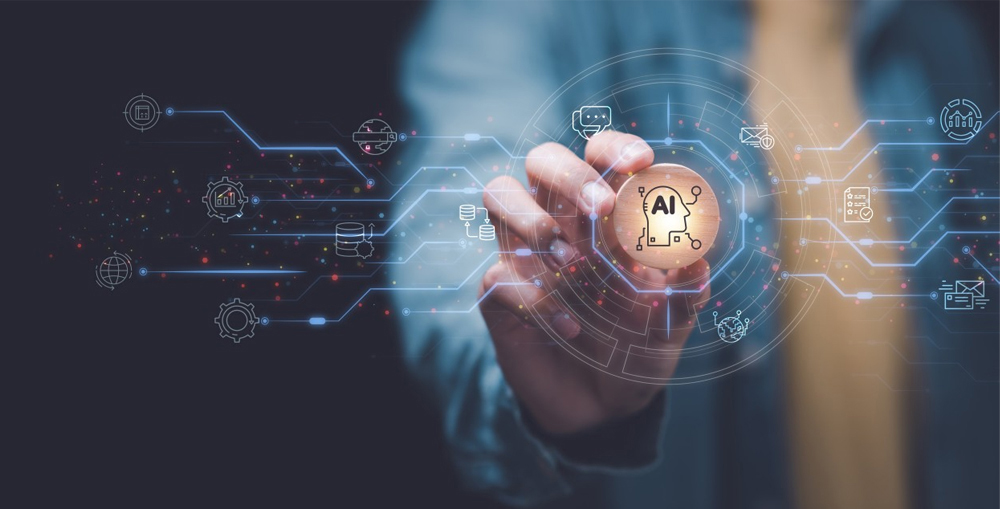
Leveraging AI and Machine Learning in Queue Management Systems

What is a Queue Management System?

Technically a queue management system is a set of tools (both software and hardware) which help businesses manage waiting lines or queues of customers/visitors, tasks, call requests or even data requests. But in our context we will take queue management system as a solution which help businesses managing the waiting lines of their customers and visitors at their premises. The primary goal of implementing a queue management system is to make waiting efficient, enhance customer experience, make queuing fairer and improve operational efficiency. Traditionally a queue management system issues tickets, display estimated wait time and other queuing information and call customers to the counters. Additional the queuing process become automated and it also offer real-time monitoring.

Traditionally the queue management systems streamline customer flow by following first-come-first-served bases and they might follow a few other fixed logics to implement priority queuing. This might not sound much advance, but this simple automation can convert a chaos into an orderly streamlined customer flow. Since the customer flow is automated, it eliminates several manual queuing problems such as line-jumping, favoritism, and communication gaps. However a traditional queue management system has many limitations. These queuing solution struggle with unexpected surge in footfall, uneven staff, multi-step services, or unexpected bottlenecks. These solution rely on historical data and lack adoptability. This is where the AI and Machine Learning steps in.

See Also: The Concept of Queue Management and Crowd Control

What is a Queue Management System?

What is AI and Machine Learning?

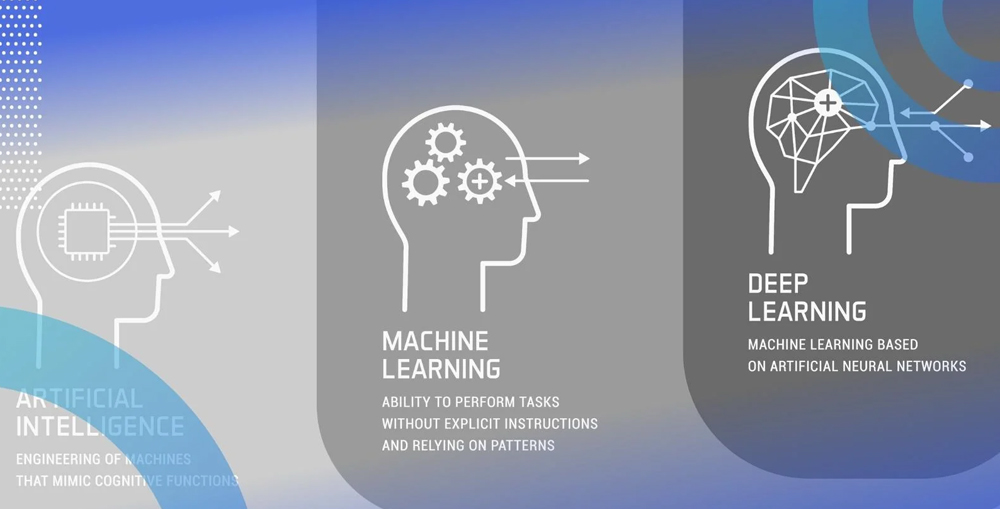
The AI or Artificial Intelligence and Machine Learning have gained huge popularity in last few years. Before we dive into our subject, it is important to learn and understand what we mean by AI and Machine Learning. The AI in simple world is a software program that can performance tasks that normally require human intelligence. Processes that involve reasoning, planning, learning, contextual understanding and perception, understanding language, identifying patterns and interactions with other software, solutions or systems. Without AI all these processes can only be managed by the human staff, but the AI has superior intelligence, far beyond fix logics and ruled-based operations. This is what makes AI special and enable AI-powered software and solutions to outperform the conventional counterparts.

The Machine Learning itself is in fact a subset or advanced component of AI. As name suggest, the software solutions or AI equipped with Machine Learning algorithms can learn from the data, interactions and experience, rather relying on fixed logics and rules-based process execution for fixed scenarios. The AI solutions equipped with Machine Learning algorithms can learn from the data, adopt to changes or new data, identify patterns in large data sets to make predictions or take decisions from what these systems have learned without reprograming them or requiring any human supervision. This means the AI is a broader concept that involves building intelligent software or computer machines, and Machine Learning is simply a way to build this intelligence by learning from the available data.

See Also: The Role of AI in Enhancing Queue Management Systems
What is AI and Machine Learning?

Why Do We Need AI and Machine Learning in Queue Management Systems?

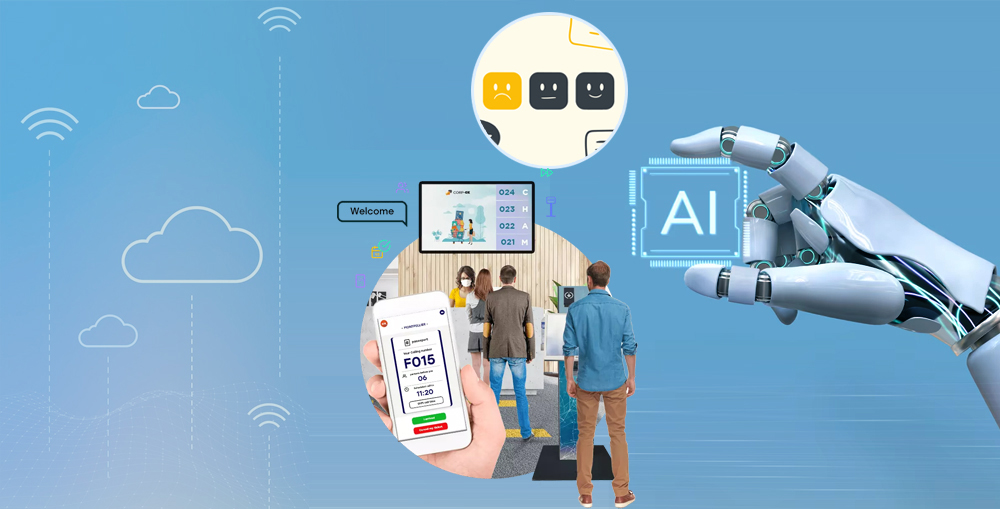
Why should business leaders and decision-makers care about infusing these two technologies? The simple answer is to harness the remarkable advances of modern artificial intelligence technology and to elevate queue-management systems beyond the limitations of traditional software. This help driving greater operational efficiency and superior customer experience in service industry. Here are some key aspects of a queue management system which can be enhanced by integrating AI and Machine Learning:

  • Superior Customer Experience: The AI and Machine Learning help gathering in-depth insights and it can take autonomous decisions to proactively streamline the customer flow and minimize the effects of peak hours which lead to better customer experience and raise customer satisfaction.
  • Enhanced Operational Efficiency: The AI-powered queue management system can dynamically allocate staff and counters based on its predictive analysis, real-time data and current demands. This raise staff productivity and boost operational efficiency.
  • Improve Customer Loyalty: When the customers are treated right at a business they tend to come back. A queue management system simply does that, it eliminates the traditional inefficiencies from the system, empower customers, drive transparency, and increase customer loyalty.
  • Reduce Operational Cost: The AI and Machine Learning in queue management system help businesses increase the efficiency and productivity of the customer service centers. This prevent over-staffing, and enable serving more customers which significantly reduce operational cost.
  • Empower Data-Driven Decisions: The AI and Machine learning open up new avenues of data points in the queue management system. Which help gathering deeper insights and actionable reports. The data help managers and decision makers to take accurate and effective decisions.
  • Scalability and Automation: The AI and Machine Learning convert a simple ruled-based solution into a highly dynamic intelligent queuing solution. The AI can scale up easily to support growth and enable the system to handle complex tasks in a fully autonomous way.

Overall the queue-management system oversees critical stages of the customer journey and integrating modern technologies can enhance various components of the system and help improve customer experience.

See Also: How Customized AI Agents Can Streamline Business Operations

From a technical standpoint, AI and Machine Learning have driven significant advances in core software and greatly improve multiple functionalities, such as:

  • Data Collection Capabilities: The AI and Machine Learning enhance conventional data collection tools and offer additional features such as computer vision, sensory data, camera feeds, and so on. These tools help understanding the pattern in footfall and customer arrival, average service time, and even businesses can analyze the staff performance through in-built employee KPIs.
  • Forecasting and Predictive Analysis: The AI is very helpful in improving the forecasting and predictive analysis. The queue management system accurately predict how many customers will arrive today, what would be the most busy hours, considering the available staff, and service request types, how much would be average wait time, etc. to improve decision making.
  • Data-Driven Decision Making: The in-built predictive analysis algorithms machine learning help AI-powered queue management system to take autonomous decision without requiring any human assistance. This help queue management system to automatically route customers, organize queues, allocate staff and manage counters for maximum efficiency and productivity.
  • Control and Administration: The AI and Machine Learning in queue management systems drive automation but still the human intervention is critical. The queue management systems can automatically alert managers and staff to intervene whenever required. Moreover the managers can converse with data, and prepare customized reports for strategic decision making.
  • Feedback Loop and Learning: The AI is as good as the data fed to it. That is why these systems comes with in-built feedback loops, which continuously gather information and evaluate the decisions taken by the AI. The Machine Learning in queue management system strengthen the AI components to continuously improve their decisions, which keep optimizing the performance.

All these components help businesses increase transparency and efficiency of the system. Businesses can also have more control on these different modules to keep improving the system. Furthermore businesses can easily retrain the AI and align it with their emerging needs.

See Also: Why Virtual Queuing is the Next Big Thing in Queue Management
Why Do We Need AI and Machine Learning in Queue Management Systems?

Implementation Best Practices and Roadmap

The AI and Machine learning is a completely new technology, hence businesses are mostly not as that familiar with it. When it comes to implement AI there are several important things to consider. For example, there are two way to adopt to AI and Machine learning, one is to implement the AI as an additional layer with the existing queue management system software, that requires integration and in some cases it might require customization for the existing queuing solution. The other way is to acquire a queue management system which is built with integrated AI and Machine Learning algorithms. The software applications that are built considering the AI components and application in mind, have better performance and fewer problem in the implementation.

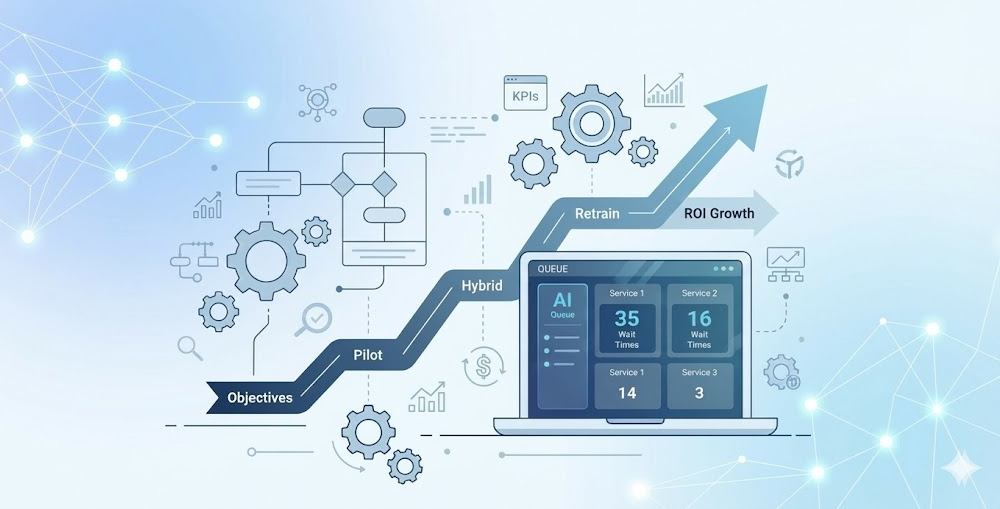
No matter what approach you take the AI can offer incredible functionality and automation. Following are a few key points that business should consider to ensure maximum outcome and ROI of an AI-powered queue management system:

  • Define Clear Objectives: For any AI application, the most important point is to have full clarity of your objectives and goals. Your objectives will dictate the roadmap to the development of your AI system.
  • Consider Existing Infrastructure & Data: Whatever features you want to incorporate in your AI-powered queue management system, you should consider all available infrastructure and available data sources.
  • Start with Pilot Implementation: It is always good to start with the pilot implementation, for example, you can start implementing in one branch, or even a few counters, and then keep tuning up the system till it reach your standards.
  • Begin with Hybrid System: By hybrid system we mean instead of giving AI full autonomy, it is better to have some rules and leave some for the AI decisions. This will help refining and training the AI algorithms.
  • Monitoring and Retraining: During the pilot project duration or even after the full-scale implementation, it is crucial to keep monitoring the AI and its outcomes and then fine tune it or retrain it with new data for better performance.
  • Measure ROI and KPIs: For any new solution or business tool it is crucial to measure its impact. Hence business leader should keep monitoring the KPIs to ensure course correction and better ROI in long term.

The AI based solutions are very dynamic, the AI itself is a very fluent and adoptive technology. An AI-powered queue management system offers much more flexibility and very high adoptability. The Machine Learning enables the system to keep improving its decisions to achieve the performance KPIs. This is what distinguishes AI-powered systems from traditional queue management systems. Moreover advanced features like Computer Vision or advanced IoT integration further increase the potency and impact of the system and results in higher customer satisfaction and lower operational cost.

See Also: A Complete Guide to a Multi-Branch Queue Management System
Implementation Best Practices and Roadmap

Conclusion

The integration of AI and Machine Learning in a queue management system is completely transforming the way businesses were managing the customer flow at their premises. The conventional queue management systems based on a powerful software application and various hardware tools which seems quite okay just a few years ago. But given the circumstances of today’s market landscape, these features are not enough. The major cause is that the conventional queue management systems is the lack of intelligence, flexibility, advanced analytical data and adoptability. This results in businesses continuously struggling and investing in queue management system every time they face a new challenge.

Because the conventional queue management systems lack the level of adoptability required for modern day’s challenges, businesses were compelled to think out of the box. The AI or Artificial Intelligence offers solution to almost all those problems. A queue management system equipped with AI and Machine Learning offer more flexibility, adoptability and incredible data collection, forecasting and analysis tools which position them as an ideal solution for modern customer service centers’ needs. In Dubai, Sharjah, Abu Dhabi and broader UAE businesses are rapidly embracing AI in almost all business functions.

The queue management systems are no exception, leveraging AI and Machine Learning offers great many benefits, businesses can improve predictive time analysis, they can manage their staff beforehand if they got a prediction of increased footfall and so on. The AI not only offers a few additional features, but it elevate the entire system with accurate insights and automation. In this blog we have discussed briefly about the role of AI and Machine Learning in queue management systems, if you want to learn more or if you want our help to design and implement a bespoke AI solution for your queuing needs, please feel free to get in touch with us through Contact Us page or write a comment in the comment below and some from our team will contact you soon.

See Also: The Role of Customized AI Agents in Modern Customer Service Strategies

See Also: Future Trends in Performance Management Systems: What to Expect in 2026


The Impact of Queue Management Systems on Government Services

The government entities, offices and service centers plays a crucial role in delivering public services, and their performance directly impact the public’s perception of the government. The UAE has a large number of foreign companies and businesses and the country is also a tourist hotspot in the entire region. In such diverse and vibrant market landscape the government’s image is crucial in both attracting foreign investments as well as the tourists. Therefore adhering to the highest standards of customer service is critical for the government entities, offices and service centers.

If you are living in Dubai, Sharjah, Abu Dhabi or any other part of UAE you would have at least once interacted with a government service. This also indicates the huge traffic at government service centers. Hence the government services need a digital and efficient queue management system to ensure higher customer satisfaction.

The customer happiness is one of the most critical KPI for any government entity in UAE, whether it is federal government or regional government, all government entities focus a lot on customer satisfaction. A good government perception not only build trust but also attract more investments and tourism. Moreover as the private sector is rapidly advancing and becoming more customer-centric the customer demands and expectation from government services are also rising.

This demand a highly efficient and effective solution that can help government entities, offices and service centers to proactively streamline their customer flow, minimize customer wait time, and make their services more efficient. In this blog we will discuss the impact of a digital queue management system and how it can benefit both the citizens as well as the government service centers.

See Also: What are the Different Types of Queue Management System?

The Impact of Queue Management Systems on Government Services

What is a Digital Queue Management System?

A digital queue management system is a technological solution which is designed to efficiently manage and streamline customer flow. Whether the customers are in physical queues or virtual queues a digital queue management system guides them, while effectively reducing the wait time, and elevating the overall customer journey and experience. The digital queuing is common in banks, healthcare, telecom, retail, government service centers and various other industries. The government entities, agencies and offices can effectively reduce the congestion, streamline customer flow, expedite the service delivery process and increase customer happiness by implementing a digital queue management system.

The queue management system also help improving the staff performance and overall quality of the service. The queue management system can automatically implement the queuing policy with utmost efficiency. A queue management system consists of two parts, one is the software and the other is the hardware. The queue management software is the brain of the system, it monitor queuing, help implementing queuing policy, manages customer as per their priority level and it also collects in-depth analytical data. The hardware of a standard queue management system consists of an interactive self-service ticket dispensing kiosk, digital signage screens, counter plates, announcement system and in some cases physical queuing management instruments.

Whether it is stepped service, or single-counter-delivery, the queue management system can effectively manages all. It can further be customized as per the business needs. Hence if you want to integrate more IoTs or hardware devices, or if you want to build more creative and innovative features, you can tailor-made a queue management system as per your needs.

See Also: From Chaos to Control: How Queue Management Systems Can Improve Your Business

What is a Digital Queue Management System?

Why Government Services Need a Digital Queue Management System?

One of the most crucial aspect of all government services is to ensure the happiness and satisfaction of the citizens. Long wait time, disorganized queues, crowded service centers and poor communication can lead to dissatisfaction of the citizens. The long waiting lines and overcrowded waiting areas can lead to slower service delivery, which also prevent organizations to leverage the full potential of its human resource. That is why the government entities, agencies, offices and service centers need a digital queue management system.

A digital queue management system not only help addressing customer pain points but it also empower management and service agent which results in better performance and efficiency. Here are some key advantages of implementing a digital queue management system at a government office, entity, agency or service center:

See Also: Queue Management System Problems and Solutions in Dubai, UAE

Reduce Customer Wait Time

One of the biggest challenge at government service centers is the management of customer wait time. Customer often complaint about wait time and this cause discomfort and dissatisfaction. A queue management system is a great tool to reduce and optimize the customer wait time. The queue management system monitors customer flow in real-time, take real-time decision, direct citizens to the right counter, and it provides real-time queuing updates which expedite customer flow and help reducing wait time. The queue management system also help service agent in various aspects, effectively reducing the service delivery time, which also reduce customer wait time.

The queue management system also have smart algorithms which enables it to calculate the estimated time to turn, this help minimizing the negative wait time perception. Hence the queue management system not only help reducing the wait time but it also help improving customer experience and happiness.

See Also: Importance of Queue Management System for Government and Public Offices

Reduce Customer Wait Time

Elevating Reputation and Fostering Public Trust

When citizens went to a government entity, agency or public office they expect the highest level of transparency and equal treatment for all. Poorly managed queues, crowded waiting areas, limited staff, and slow service delivery can cause serious dissatisfaction which overall undermine the reputation of any government entity. Especially when the customer lines are managed manually, the line jumping, confusion and customer complaints are common. All these factors not only annoy your customers but also damage your reputation as a government entity.

However, when a digital queue management system is deployed, everyone knows the tokens and customer flow is managed by a computerized system. This means everyone is treated equally, moreover the customers have clear view of what is happening. The customer flow and entire journey is well-organized and smooth, this help fostering customer trust. The customer happiness and trust help government entities elevate their reputation and public perception.

See Also: What Is Virtual Queuing? A Guide to Virtual Queues

See Also: Queue Management System Features you Need for Modern Queuing

Elevating Reputation and Fostering Public Trust

Boost Employee Performance and Productivity

At government entities and offices, the front-desk staff is always overloaded because of large footfall. When the staff has higher workload, they tend to perform poorly and their work quality could also decline. This has become a serious problem in various service sectors. A queue management system greatly improve the customer flow, it manages most of the queuing tasks and it also help optimizing customer journey. When the queue management system divide the workload of the staff, the staff can focus more on high-priority and more productive tasks.

Furthermore the queue management system provides real-time queuing data and analytical data which help managers take swift actions and help them in effective human resource management. This also help management and service staff to address issues and avoid bottlenecks before escalation. The queue management system also capture various employee KPIs which further help refining and boosting staff performance and productivity.

See Also: Paperless Queue Management System

See Also: Queue Management in Banking: Enhancing Customer Experience

Boost Employee Performance and Productivity

Increase Accessibility and Inclusivity for All Citizens

The government is responsible to serve all citizens, this means the government services and service channels should be accessible for people from all walks of life. The government service centers should be able to meet the needs of diverse customer base, it could include, elderly people, people with special needs, and citizens from diverse cultural backgrounds. The digital queue management system has interactive self-service ticket dispensing kiosk, which can offer adjustable screen, touchscreen-optimized UIs, multilingual interfaces, voice-activated support and various such features which help people with special needs to utilize the system with ease and comfort.

The queue management systems also have digital signage displays with live queuing details and audio announcement system. These system can have multilingual support to cater to the needs of diverse customer base. Special service counters and channels can be leveraged effectively to increase accessibility and inclusivity.

See Also: How a Queue Management System Can Transform Your Business Operations

Increase Accessibility and Inclusivity for All Citizens

Virtual Queuing for Elevated Citizen Experience

The advanced queue management systems also support virtual queuing. The virtual queuing offers digital channels which enable citizens to sign-in remotely without requiring to be physically present at the branch. The digital queue management system can integrate with online appointment booking channels, citizen portals, Email, SMS, WhatsApp, and even with mobile applications. This enable citizens to sign-in to a virtual queue even without arriving at the service center. Furthermore the virtual queue management system provides live queuing updates, notifications, and alerts through integrated communication channels.

The virtual queuing help citizens to spend their wait time anywhere they want, even they can plan their visit and arrive when their turn comes. This can literally reduce the wait time to none, elevating customer experience, giving them more freedom and comfort. The virtual queue management system also collects valuable insights which help management elevate citizen experience.

See Also: What are the Basic Components of Queue Management System?

Virtual Queuing for Elevated Citizen Experience

Business Intelligence Data for Improved Service and Efficiency

That queue management software not only capable of collecting a wealth of valuable business intelligence data but it can be integrated with various other government services and digital channels. The government offices and agencies can even integrate the citizen identification system and payment solutions within their queue management system to streamline the payment process. The queue management system collects various types of statistical and analytical data from each and every touch point.

For example, the management can effectively track the service trends, individual and average wait time, peak hours, customer flow, staff KPIs and even citizen’s feedback. The queue management system also offer in-built analytical and reporting tools which help generating actionable reports. The insight and reports can also be relayed to a central system via integration to incorporate it in the decision making process which lead to elevated customer experience and better staff efficiency.

See Also: Pros and Cons of Queue Management System

Business Intelligence Data for Improved Service and Efficiency

Conclusion

The UAE has large expat populations in Dubai, Sharjah, Abu Dhabi and other emirates. The country is a very attractive business and tourist hub. This results in huge burden on government services and the government is very focused and serious in ensuring great service experience at all its service centers. A queue management system at government service center can have profound impact on the citizen’s experience, service delivery efficiency and overall operational performance. The government agencies, entities, service centers, offices and entities are always keen on fostering citizen’s trust for better reputation and public perception. This is also crucial for overall public perception of the entire government.

With the rapid advancement in self-service channels, and digital technologies the entire world is facing increased demand in efficiency, accuracy, and transparency. A digital queue management system is the ideal solution to deal with these challenges as it can greatly reduce customer wait time while significantly boosting staff performance and service delivery processes. This lead to higher customer happiness and satisfaction which is essential for fostering public trust and building positive government perception. Long waiting lines, disorganized queues, and crowded lobbies can greatly undermine the customer experience, resulting in unhappy and unsatisfied customers.

A modern digital queue management system offer innovative features such as virtual queuing, automated customer routing, and real-time queuing data which help improving the entire queuing process. The queue management system also offer features which help management in improving the performance and also help reducing the workload of the service agents. The integration allow government entities, agencies and service centers to integrate multiple channels, services and databases with their queue management system to streamline various workflows and internal processes.

In this blog we have discussed the impact of queue management system on government services, if you want to learn more about the subject or if you want our help to develop a bespoke queue management system for your organization, please feel free to contact us through our Contact Us page or leave a comment in the comment box below and we will get in touch with you soon.

See Also: Queue Management System and Predictive Waiting Time

See Also: How to Implement a Queue Management System at an Airport?

See Also: How Queue Management System can Boost Productivity and Profitability?


Data-Driven Decision Making in Performance Management

For any growing business the biggest challenge is to optimize the cost and performance while ensuring maximum customer satisfaction. Although that might seem a very simple concept, but that is way more complex and sophisticated. When it comes to manage human resource and optimization of operational efficiency, the HR department plays a crucial role. The HR is basically responsible for hiring and retaining right talent, ensuring the required skillset is always available for the organization and the HR is also responsible for leveraging the true potential of the workforce.

For that the HR and business leaders adopt various practices and solutions. The performance management system or employee performance appraisal system is a digital solution which collects and analyze performance data and produce actionable insights. This performance insights help businesses optimize employee performance, align them with strategic goals and objectives, and increase employee loyalty.

Data-Driven Decision Making in Performance Management

What is a Performance Management System?

A modern performance management system or employee performance appraisal system is a structured framework and combination of processes and techniques aided by a specialized software application. Typically the HR team and business leaders have to go through a lengthy and difficult manual process to perform performance appraisals at the end of the term. This involves multiple processes and human efforts and cost. Therefore businesses and organizations who follow traditional performance management practices tend to have annual review process or biannual at maximum.

However, the market landscape is changing rapidly, and businesses need a robust, efficient and cost-effective way to evaluate performance. Moreover the performance management itself has evolved a lot, the annual reviews and appraisal practices are no longer effective, and both the employees, managers and most of the business leaders lost their faith on annual evaluations or reviews.

See Also: The Impact of Performance Management on Organizational Culture

What is a Performance Management System?

The present day performance management system and practices are focused more on continuous performance management, instead of taking it as an annual exercise. The modern performance management systems are also focusing a lot on employee engagements and well-beings. The modern performance management system heavily rely on AI-driven performance management software. This software is a key tool to collect large volume of performance data. The performance management system software comes with in-built data collection tools, KPI setup mechanisms, communication management tools and countless other features which empower management and also help automating various processes and workflows of performance management.

The performance management system not only make the process efficiency and effective, but it also offers innovative tools for both individual employees, and managers. All these features help aligning employees with organizational objectives and boost staff performance.

See Also: The Risk of Poor Performance Management and How to identify it?

The performance management system software comes with in-built data collection tools.

What is the Role of Data-Driven Decisions in the Modern Performance Management?

The traditional performance management processes heavily rely on personal opinion and subjective reviews. This approach not only allow personal bias but also degrade the transparency of the entire system. Another biggest flaw with the traditional performance management system was the discontinuity. The performance appraisals and reviews were taken as an annual exercise such as accounts audit. This makes traditional performance management more ineffective.

Furthermore the overall market landscape is becoming more competitive and businesses are transitioning into a new customer-centric business era where the customer demands and expectations are placed at top or every strategy. This businesses need to respond to changes quickly and efficiently, they need to be more innovative and effective to gain competitive edge and so on. All this requires a highly effective and efficient decision making process and the data-driven decisions are considered to be the lifeline for the growth and progress in present times.

See Also: Performance Management System: Best Practices

See Also: How to Set Goals for your Employees in Performance Management System?

What is the Role of Data-Driven Decisions in the Modern Performance Management?

Performance management is all about aligning the staff with the high-level organizational objectives and goals. This is done by continuously monitoring performance, altering strategies, course correction, and strong decision making process. The data-driven decision making is a universal process where all the decisions are based on the data, facts, insights, and accurate information gathered through various channels, and sources. When it comes to performance management the performance data is crucial for decision making.

Business leaders, management and/or HR needs precise and in-depth data to ensure successful decisions. Without accurate performance data businesses can’t identify areas of improvement, employee’s pain points, training needs and various other aspects which are essential for performance management. That is why the data-driven decision are absolutely essential in performance management and overall success and progress of a business.

See Also: What are the Features of a Best Performance Management System?

See Also: 6 Performance Management Problems and How to Solve Them?

Business leaders, management and/or HR needs precise and in-depth data to ensure successful decisions.

Key Advantages of Data-Driven Decision Making in Performance Management

The performance management is all about taking accurate and timely decision to make sure your workforce and all available resources are always aligned with the high-level organizational goals and objectives. In the modern business landscape the traditional business processes, practices and approaches have greatly transformed. Now a day’s businesses are facing many challenges one of the most critical is to deal with rapid changes in the market landscape. The customer demands, the market trends, and competitors are evolving rapidly.

This demands a highly proactive approach and superior responsiveness. And the performance management system plays a crucial role in making businesses efficient, robust, proactive and profitable. A digital performance management system provides a full-fledge framework to manage performance and first and foremost advantage of data-driven decisions is the highly accurate evaluation and performance insights.

See Also: How to Customize Performance Management System

See Also: Unlocking Business Potential with AI-Powered Advanced Analytics

Key Advantages of Data-Driven Decision Making in Performance Management

Moreover the data-driven decisions help businesses to continuously improve their operations and employee performance. The data-driven decision making plays crucial role in improving and elevating individual performance as well as the overall performance of the organizations and operational excellence which lead to better products/services and enhanced customer experience. Here are some key advantages of data-driven decision making in performance management system:

  • Objective Performance Evaluation:

    The data-driven decisions eliminate bias and subjectivity from the performance reviews and it also have positive impact on communication and engagements. The HR decisions are based on employee KPIs, OKRs, accurate measure of their productivity, contribution, goal alignment and achievements. The performance data also ensures that the performance benchmarks are tracked accurately and aligned with organization’s standards.

  • Personalized Employee Development Programs:

    For any performance management system the employee development and enhancing their competencies is the most important part. The performance data provides in-depth insight to individual employee’s strengths, weaknesses, behavioral and professional competencies. This help HR to design and execute personalized employee development programs which also help increasing employee engagements.

  • Elevated Efficiency and Productivity:

    One of the biggest obstacle in the employee performance is short sighting on how employees are spending their time. However, with the performance data the managers and HR can easily understand this and the inefficiencies of workflows, tools, and business processes. This can greatly elevate employee productivity and efficiency. This also help setting up SMART goals which keep employees more focused and productive.

  • Better Employee Engagements:

    The employee engagements are the pillar of modern performance management systems. Businesses leaders and HR are eagerly seeking ways and approaches to maximize employee engagements. The engaged employees feel more valued, connected with organizational success, and have a strong professional and emotional bond with the organization. The performance data helps to set up clear career paths and fair reward programs which increase employee engagements and loyalty.

  • Higher Alignment with Organizational Goals:

    The primary purpose of any performance management system is to align the employees and resources with the high-level organizational goals and objectives. The performance data help businesses link individual employee performance with organization-wide metrics, this highlights the individual contribution and impact on the overall performance. It also help aligning the individual employee goals and objectives with the high-level organizational goals and objectives.

  • Proactive Performance Management:

    The proactive performance management is one of the most effective approach for modern day performance management. That is only possible with highly accurate and in-depth performance data. The performance data help managers to identify the obstacles and problems at early stage and even in some cases before they start impacting the performance. This way managers can prevent any impact on productivity and efficiency. The continuous feedbacks and reviews are a great tool to prevent issues even before they arise.

  • Higher Employee Satisfaction and Retention:

    When the employees realize and see that their performance is measures with utmost fairness and accuracy solely based on the data, they tend to trust the process. This trust drives satisfaction and employee happiness. The data-driven decisions help businesses design and execute employee development-focused training and development programs which further increase employee loyalty and help increasing employee retention. The data-driven decisions eliminate bias and favoritism form review processes.

  • HR Empowerment:

    The performance data help HR to make informed and accurate decision related to staffing, resource allocation, employee transfers, hiring/firing, promotions, etc. Data-driven decisions help HR to allocate resources where they are needed the most and help them enhance the outcome of the entire workforce. The performance data also help HR to adopt to the changing needs and enable them to ensure the required talent and skillsets are always available.

See Also: Best Performance Management Tools and Techniques to Boost Efficiency

See Also: 5 Challenges in implementing Performance Management System

The data-driven decisions help businesses to continuously improve their operations and employee performance.

Although the data-driven performance management is proven to be the most effective approach however, it comes with some challenges. First and foremost challenge is to develop the data collection mechanisms and then the biggest challenge it to manage and analyze the large volume of data. It sometimes get difficult to determine which data is relevant or not. Therefore most of the modern performance management systems come with AI integrated solutions.

The AI (artificial intelligence) has advanced capabilities to process large volume to structured and unstructured data coming from multiple sources and channels. This enable AI-integrated performance management systems to provide advanced analytical tools with automated reports and actionable insights. The AI-powered data collection and analytical tools can efficiently identify even the minutest patterns and can unlock hidden insights which help empowering the HR and management.

See Also: Top 5 Performance Management Trends in 2022 – 2023

AI Powered Performance Management System

Conclusion

As the technology is evolving, the customer behavior, market conditions, and the businesses themselves are rapidly evolving. We are entering into a new era of technology where our reliance on technology is increasing day by day. The modern performance management systems are one of the modernized application of a very old performance management practice. The performance management is a continuous process as every business and organization wants to leverage the full potential of their resources to ensure highest possible efficiency, and productivity. Businesses operating in Dubai, Abu Dhabi, Sharjah and broader UAE are well aware of the toughest market completion, increasing customer demands and rapidly advancing technologies.

Therefore adopting to latest solutions, methodologies and practices is very common. Over past two decades the performance management has emerged as one of the most essential business function. Since then the technology integration in performance management practices and strategies is continuously rising. The similar impact has been witnessed at the decision making practices. Now a days’ businesses tend to be more successful if they prioritize data-driven decisions over conventional decision and strategy making approaches.

In this blog we have discussed the role of data-driven decisions in performance management and their impact on overall organizational performance and success. We have also discussed briefly about modern performance management systems and data-driven decision making process. If you want to learn more about the subject or if you want our help to develop a bespoke performance management system for your organization, please feel free to contact us through our Contact Us page or leave a comment in the comment box below and we will get in touch with you soon.

See Also: The Future of Performance Appraisals: 6 Innovations and Changes [Quick Guide]

See Also: How the HR should select a Performance Management System?

See Also: Performance Management System Trends in 2023