BLOG OF RSI CONCEPTS

world map

AI Agents in Logistics: Customized Solutions for Supply Chain Optimization

Supply chain management is a very critical and complex business function involving countless moving parts and sophisticated workflows. Especially in UAE, which is a global trade hub, hence the market is vast, complex, and competitive. The biggest flaw in traditional supply chain management methodologies, is the slow moving workflows and complicated business processes. Another most important aspect is the flow of information, the delay in sharing information over-complicate the processes. This is why the world is turning towards the customized AI Agent to optimize the supply chain management.

A customized AI Agent is an advanced technological solution, powered by AI (artificial intelligence) which has ability to scan the information from the warehouse, track the shipments and monitor the transportation and then take real-time decisions on the spot. A customized AI Agent is trained on your own company’s data, it align with your business goals, and have incredible ability to process vast amount of information. A customized AI Agent which is trained for supply chain management is like a digital helper, who is aware of its environment, who can sense changing conditions, who can take decisions, who can make most efficient plans and execute them with utmost accuracy to achieve a pre-set goal.

The supply chain management team is under constant pressure of dealing with unprecedented hiccups, ensuring the demands are met and at the same time eagerly struggling to reduce the cost. The customized AI Supply Chain Agent can monitor changing prices, inventory status, and it can automatically place order when the material runs low without requiring step-by-step instructions. This ability makes them an ideal solution to optimize the supply chain.

See Also: Integrating AI Agents into Core Business Applications for Operational Excellence
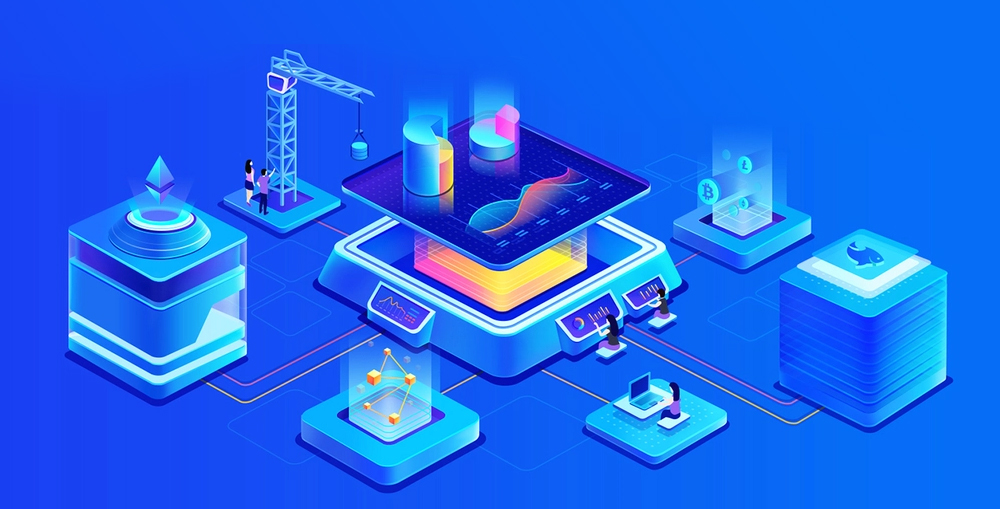
Supply Chain Management (SCM)

How Customized AI Agents Work in Supply Chain?

An AI Agent can be customized to seamlessly adopt to each business’s unique supply chain needs. Every business has its own unique way of executing different processes, performing tasks and managing different business functions. A customized AI Agent can be trained on these all, which makes it a well-trained digital helping agent or even we can say a digital employee who knows every ins and outs of the business. That is why a customized AI Agent seamlessly integrates within the business environment. Above all the customized AI Agent has access to historical data and can sense the ordering pattern and problems which are nearly impossible for a human staff.

The customized AI Agent can also monitor market pattern and pricing fluctuations, which enable it to make smart decisions. Moreover it can perform advanced analytics, produce actionable insights, and forecast and place orders fully autonomously. The ability to align with the assigned business goal and taking actions distinguishes AI Agents from traditional supply chain management solutions. It follows rules, adopt to changes and it can make smart data-driven decisions. This means the customized AI Agents doesn’t require full-time monitoring and doesn’t require a human staffer to tell them their next move.

These incredible abilities enable customized AI Agents to instantly take informed decisions, make adjustments, and take effective actions instantly as a change in the conditions or environment is registered. Moreover the customized AI Agents are seamlessly integrated with all relevant systems, solutions and data sources which empower their decisions and help optimizing the operational cost. Purchase at ideal time, never face inventory shortage and autonomy results in superior efficiency and reduction in cost.

See Also: How Customized AI Agents are Revolutionizing Business Automation
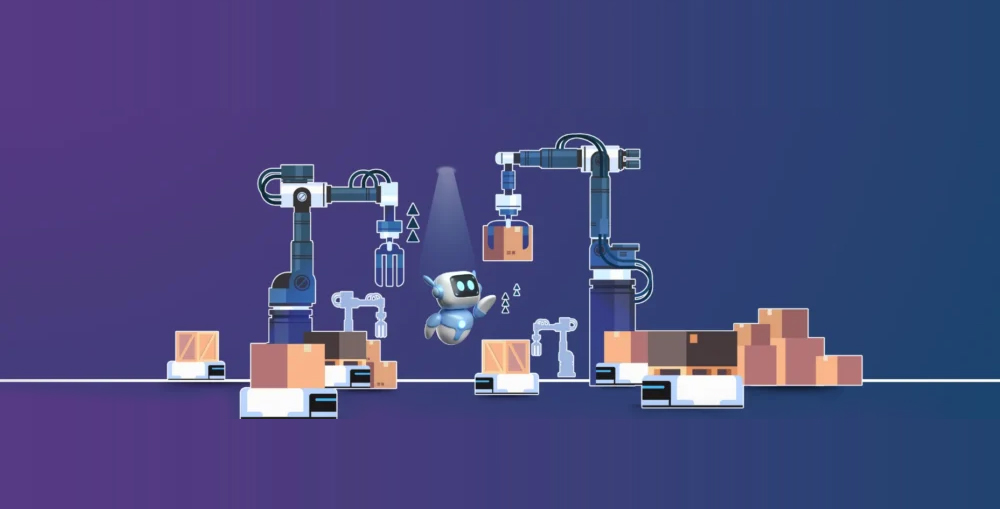
Transforming Supply Chain Management with AI Agents

Why Customized AI Agents are Ideal for the Supply Chain?

Usually businesses rely upon off-the-shelf supply chain management solutions. However, every business has different needs, some business might be dealing with temperature-sensitive raw materials, some deals with materials whose cost fluctuates, and some deals with electronics components whose availability is not constant throughout the year. Every business has different needs, different priorities and totally different challenges. The generic smart solutions lacks the potency to deliver required efficiency.

The customized AI Agents on the other hand are fine-tuned to your business’s unique needs and have additional abilities like ML (machine learning), NLP/NLU (natural language processing/understanding), LLM (large language models), and computer visions technology which enable them to interact with people using conversational mediums and monitor the warehouses.

Moreover the customized AI Agents can understand and account your suppliers’ behavior, logistics challenges, and demand patterns and align with your strategic goals. This enable them to prioritize what matters the most and what have more impact on their high-level goal.

In short, the customized AI Supply Chain Agents solve the right problem in the right way, ensuring maximum efficiency and avoiding disruption in operation due to supply chain problems which is very fruitful for businesses in both short and long-terms.

See Also: The Future of ERP: Leveraging AI for Smarter Enterprise Management

Here are the key benefits of implementing a customized AI Agent in the supply chain:

  • Boosting Efficiency: The customized AI Agents have incredible ability to process and analyze data, which enables them to take smart decisions in core supply chain processes such as logistics & routing, inventory control, vendor selection, etc. with fewer to none errors. The customized AI Agents are fully autonomous which mitigate major challenges and eliminate most common inefficiencies from the supply chain. Boosting efficiency not only empower the human staff but also help businesses reduce the cost and eliminate the shortage of the raw materials/inventory, crucial for business operations.
  • Improve Decisions: The customized AI Agents are excellent at identifying the small anomalies and hidden patterns in large data sets. Regardless of the volume and type of data, the AI can detect patterns and extract actionable insights. The customized AI Agents can fetch data form multiple data-streams in real-time along with historical data. Above all these agents are fully aligned with the strategic goals which enable them to take most informed, effective and accurate decisions. This also help reducing errors and increase readiness for the continuously changing environment and conditions.
  • Streamline Operations: The customized AI Agents can incredibly reduce the staff overhead, empowering staff and automating various routine tasks. For example, instead of a manager or staff planning daily schedules for logistics, the customized AI Agents automatically take care of it. Moreover the customized AI Agents can automate routing, and monitor everything in real-time, if any change happens they have capability to take actions to minimize the delays or reroute without requiring any help from the human staff. Similarly the inventory can be monitored, orders can be placed and prices can be monitored and appropriate actions are taken.
  • Cutting Operational Cost: The customized AI Agents boost operational efficiency, improve decision making, and streamline business operations which resultantly reduce the operational cost. Moreover the customized AI Agents can anticipate problems before they become costly. Whether it is vehicle tracking, monitoring of conveyer belts or refrigerators, the customized AI Agents does all in parallel. They can even schedule maintenance and repair at right time to minimize the impact and reduce the disruption in the operation. Combining all these benefits results in great operational cost cutting and reduce waste.
  • Forecasting & Planning: The customized AI Agents can greatly improve the forecast and supply chain planning strategies. Traditionally businesses usually rely on the spreadsheets and mostly manual data analysis and sometime just guess work. However, the customized AI Agents on the other hand can perform advanced data analysis on various aspects, such as past order history, inventory status, vendor/supplier behavioral patterns, weather and even social media to make accurate forecasts and strengthen the supply chain planning. The ability to analyze large datasets and include multiple data sources can drastically reduce errors in forecasting.
  • Enhance Procurement: The customized AI Agents have incredible ability to organize the vendors by automating various routine tasks and enhancing vendor management process. These agents can understand vendor’s behavior, pattern, and also account preferred vendors, order sizes, etc. along with forecasting, unplanned demands, and warehousing. It can alert if any delay occurs, and automatically prioritize vendors on the bases of their performance, lead time and cost. It can even initiate negotiation, and automate correspondence. All these features help supply chain managers to take accurate and effective decisions while optimizing cost and efficiency.

The customized AI Agents tend to be super-efficient at driving automation and boosting efficiency. Behind this involves the ability to integrate or plugin into all relevant systems and data repositories. A customized AI Agents offer flexible third-party system integration which eliminates information silos, instead of copying data from one system to another, the AI Agents seamlessly fetch all the required data sets from all connected systems.

This enables customized AI Agent to operate as a well-trained and highly efficient digital or virtual worker, who can work round-the-clock, never get tired, never repeat mistakes and can handle multiple tasks in parallel. An AI Supply Chain Agent monitor warehouse, track inventory, place orders, organize vendors, update records instantly, manage and organize routes, and instantly adjust to unprecedented conditions or disruption.

See Also: The Role of AI Agents in Transforming Core Business Application Functions
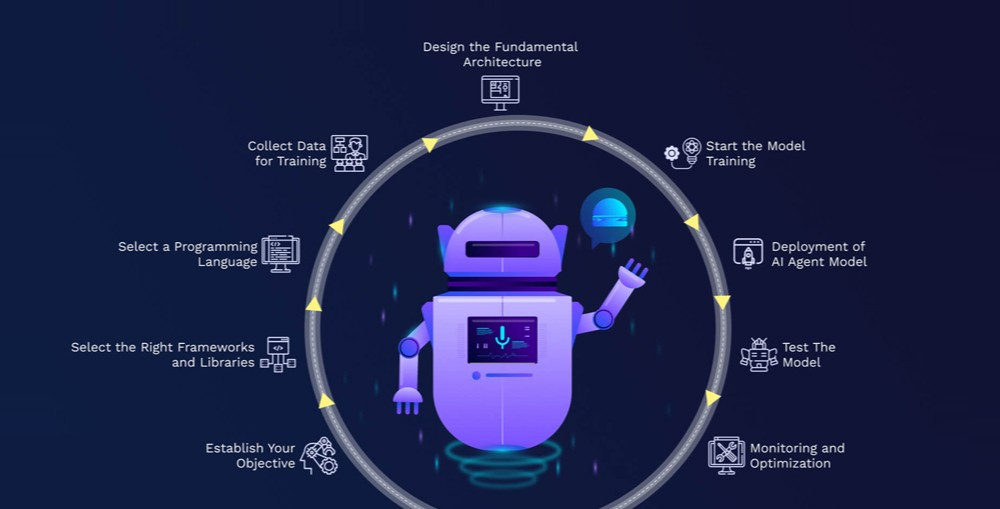
Integrating Customized AI Agents into Core Business Applications

Conclusion

The future of supply chain is increasingly technology driven. The AI dominates the modern technological revolution, especially the agentic AI, which has ability to operate independently, take up to the tasks which were previously only done by the humans, it leverages the existing IT infrastructure and digital solutions like any human staff does, and these agents can also interact and coordinate with other AI Agents. Presently businesses are using single AI Agent for a particular role or function, but in coming future we will see the multi-agent solutions where multiple customized AI Agents will work in harmony and cooperation to solve complex problems.

There are several organization who are proactive working on developing agent-to-agent protocols which will serve as the foundation for the multi-agent systems. This will enable businesses to integrate multiple customized AI Agents in hierarchal orders and clusters. In this blog we have discussed how the customized AI Agents can operate in supply chain management. A customized AI Supply Chain Agent not only automates supply chain management tasks, but it drives efficiency and accuracy by integrating multiple information management systems.

Moreover with inherent ability to analyze large volume of both real-time and historical data enhance their ability to take accurate decisions and make effective plans. Customized AI Agents have huge impact on staff’s performance, but it doesn’t mean it can replace the human staff, in fact these agents are more like a helper who take care of the tedious tasks for humans. If you want to learn more about customized AI Agents or if you want our help in designing and implementing a customized AI Agent for your business, please feel free to contact us through our Contact Us page or leave a comment.

See Also: What is Queue Management? Beginner’s Guide to Queuing Systems

How to Develop Customized Supply Chain Software?

How to Develop Customized Supply Chain Software?

The efficient supply chain management is absolutely necessary for any business’s success. Businesses in Dubai and all around the UAE are using fully digitalized or partially digitalized software tools to manage their supply chain. Mostly businesses are adopting to a one-stop-solution for all their supply chain needs. Using multiple tools and manual management has become less efficient over the time and as much as the manual work is involved the risk of errors and miscalculations are higher. That is why businesses are proactively improving their supply chain management techniques and methodologies.

Another most important aspect of supply chain management is that it streamlines the production process, from idea generation to creating or developing an actual product/service there are too many variables and moving parts. These all also impact the overall cost, quality and resultantly the profitability and revenue of the business. That is why it is extremely crucial that a business have an efficient supply chain software and tools to manage each and everything in their supply chain.

How to Develop Customized Supply Chain Software

The supply chain management is a very complex and sophisticated process. It involves managing business processes from the idea generation to acquiring raw materials, producing the products, storing them and then tracking where they are going to drive the future strategies and sales. Similarly for the businesses who offers services the supply chain may involve different ingredients but it is still relevant and crucial for a long term success and sustainable growth.

See Also: The Future of ERP: Leveraging AI for Smarter Enterprise Management

The supply chain software manages and track all relevant business processes, purchasing, acquiring services, outsourcing, internal manufacturing or development, information technology, suppliers, finance, dealers, wholesalers, resellers, and consumers or customers and all other relevant business processes. The purpose is to boost the operational efficiency of the business and reduce unnecessary resource consumption to increase profit and performance.

Why Businesses Need to Develop a Customized Supply Chain Software?

The supply chain management is a very crucial task, it involves several variables and the business’ success is heavily dependent on its supply chain management. When businesses are opting for an off-the-shelf or a ready-made supply chain software, it could pose a lot of limitation and it will also require making adjustments and iteration in existing business processes as well as the business tools which a business is currently using.

The ready-made or off-the-shelf solution doesn’t offer much flexibility to let businesses configure it as per their existing business processes, and eventually businesses end up using multiple tools for several processes and mostly require synchronization either automatic or manual to be able to perform certain tasks. This complicates a lot of business processes and also put more strain on the employees and the management which reduce their performance.

See Also: The Role of AI Agents in Transforming Core Business Application Functions

Why Businesses Need to Develop a Customized Supply Chain Software?

However, a customized supply chain software doesn’t put any limitation and doesn’t require businesses to make any adjustment or changes to their existing business processes and practices. In fact it help them to boost the productivity and performance with least efforts made to alter any existing business process or methodology. The customized supply chain software doesn’t put any additional work load on the employees or the management instead it help them with their tasks and also enhance their performance by reducing their work load and streamlining all business processes. That is why a business needs to develop a customized supply chain software instead of going for an off-the-shelf solution.

Key Steps to Follow While Developing a Customized Supply Chain Software

Obviously going for a ready-made supply chain software is very easy and quick. Whereas developing a customized supply chain management software is lengthy process. That is one of the main reason why business go with an off-the-shelf supply chain software instead of a customized solution. However, when we compare the perks and the features of both solutions, the customized supply chain software is the best and it can prevent a lot of hustle and mismanagement or waste of resources in the longer run. That is why we are writing this blog to provide our readers with a step by step guideline to make the customization process simpler and easier. The very first step of any project should be planning and setting up goals.

See Also: Custom Software Development vs. Off-the-Shelf Solutions: Which is Right for You?

Start with Setting Up Goals and Identify Needs

Setting up goals and identifying needs for any customized system is critical. The business should start with analyzing the current supply chain tools and associated business process. Consulting with the employees who manages different supply chains and their relevant operations can provide a deeper insight to the current business processes. At this stage businesses should also engage the customized supply chain software development firm and ask them to assist them in gathering requirements and setting up goals and objectives for the project.

The discovery stage of any project is very important, for supply chain software the discovery stage should involve all the concerned personals and departments along with the additional help from the software development firm. Also prepare a list of all the tools or features that you need in your supply chain software. If you are using multiple tools then it is a better idea to customize a single solution to have all those features, this could also save a lot of cost too.

Start with Settingup Goals and Identify Needs

The supply chain management heavily relies on the data collection from various steps and inputs of the supply chain. Sometimes it require integration with other systems and sometimes it require manual data. The automation is a best and very efficient method, but the customized supply chain software should be able to handle both the automated digital data synchronization via APIs or system integration and manual data inputs as well.

See Also: Revolutionizing Customer Service with AI Agents: Personalized Support Solutions

Similarly there would be a lot many other very specific functionalities and business processes that you will be needing, enlist them all. After finalizing the list of features and functionalities, compare it with the goals, will you be able to achieve those goals or not? Add all missing features that could be helpful in achieving those goals. The consultancy or the software development firm can be a great help at this stage.

Requirement Gathering Stage

Once the needs are identified and new goals are set the next stage is to gather requirements. At requirement gathering stage usually the software development firm pull the strings and you need to be cooperative with them by providing them all the information they need. It will require a business to communicate with its existing partners and the vendors who are supplying or managing their existing IT infrastructure.

The success of any IT project such as a software or business tools is very much dependent on its capabilities to absorb and distribute information. That is a very critical part and it require highly technical and experienced personals to make it right. Choosing a well reputed software development company such as RSI Concepts will save you a lot of hustle during the customized software development project and afterwards as well.

See Also: Integrating Performance Management Systems with HR Tech Stack

Requirement Gathering Stage

This stage involves meeting and discussions between the IT stakeholders and management teams with the supply chain software development firm. As all the needs are already identified and the goals are set so all stakeholders can contribute to find a solution for any problem. At this stage a detailed project plan can be prepared as well. A supply chain software is not just used to manage the suppliers, but it is used to manage the entire operation, from managing the suppliers, vendors, distributers, consumers and also help managing the customer relationship. So, it will cover pretty much everything. Here are some key features that a supply chain software can offer:

  1. Procurement Management Tools
    1. Digital Supplier Portals
    2. Supplier Assessment and Qualification Matrices
    3. Contracts and Agreements Creation Tools
    4. Supplier Communication Tools
    5. Supplier Performance and Rating Management
    6. Purchasing Tools

Procurement Management Tools

  1. Inventory Management Tools
    1. Integrated and Automated Inventory Management
    2. Retail and Bulk Inventory Management
    3. Raw Materials Management
    4. Products and Materials Identification Tools
    5. Integration and APIs (Production Tools, Accounts, etc.)
    6. Stock Updates, Reorder and Management Tools

Inventory Management Tools

  1. Warehouse and Storage Facility Management Tools
    1. Storage and Capacity Management
    2. Orders Management (Dedicated Dashboard)
    3. Shipment and Returns Management (Dedicated Dashboard)
    4. Multi-locations Management
    5. Real-time Data Synchronization and Remote Administration
    6. Logistics and Transportation Management
    7. Fleet Management

Warehouse and Storage Facility Management Tools

  1. Data Gathering, Analytical and Reporting Tools
    1. Automatically Collecting Business Intelligence Data
    2. System Usage Stats, History and Logs
    3. Activity Logs for each User and entire Work Flow
    4. Customizable Reporting and Trend Reports
    5. System and Employee KPIs
    6. In-built Statistical and Advanced Analytical Tools

See Also: Customized AI Agents in Real Estate: Enhancing Property Management and Client Engagement

Data Gathering, Analytical and Reporting Tools

Having all-in-one solution saves cost, time and it is also one of the best method to boost efficiency, rather asking your employees to maintain separate dashboards for separate tasks, provide them a single dashboard which allow them to perform all tasks could save time and hustle and will also improve user experience which is a key component for improving quality of work.

Select Technologies and Understand Limitations

Technology have evolved a lot. However, we are still far away from the perfection. The one and most common limitation a business always face is the usage of different technologies. As a business keep growing they keep updating their IT and technology arsenals. That is why a business could be using several different technological platforms and several different IT tools. When it comes to developing a supply chain software or any other software there are certain technologies that we used. These technologies are built on different platforms with certain frameworks. This means there are certain limitations and protocols that we have to consider while developing a customized software application.

As we have already set our goals and accordingly the features are determined, the selection of technology is relatively very easy. Majorly there are three basic technologies that are used for that kind of software applications. The most common is a web-based application which have a server and a web-based user interface. The second type is a desktop application which also have a server and the dashboard comes as a desktop app that can be installed on the computers. The third and relatively modern type is the cloud-based software solutions. The cloud-based software allows the user to access the dashboard via a web-based application and the software or server is managed by the service provider.

See Also: The Future of Custom Software Development: Trends to Watch in 2025

Select Technologies and Understand Limitations

For customized application the most cost-effective way is to go for a web-based application with a server which can be hosted online or in the local data center of the business. These days we can also host that server to cloud as well. The user dashboard is where the users interact with the system and the server or cloud is where all the logics are performed and algorithms are executed. Each technology has its own limitations. The most important thing to consider is the data integration and synchronization. It is better to engage the software development firm and ask them for their opinion and suggestion as well, then chose the best technology as per the cost and technical specifications.

Wireframe and Project Plan

The wireframe is a term of making the drafts or plan for the software application. At this stage the software development firm design simple drawings and flow charts to define the actual work flow of the entire supply chain software. All screens and functionalities will be defined at this stage and all steps and work flow is also defined. Pay special attentions to the wireframes and analyze them critically. At this stage the business should understand how each functionality will happen at the final supply chain software and how things will be working.

At this stage the business should try to simplify their business processes and work flow to avoid unnecessary strain on the employees/users who will be using the system. If anything looks difficult or is not as the business wants it to be, it can be changed at this stage. Once the wireframes are finalized then the software development will move to the graphics and UI (user interface) designing phase.

See Also: Step-by-Step Guide to Planning Your Custom Software Development Project

Wireframe and Project Plan

Graphic Designing and Project Development

The graphic designing is basically the UI (user interface) designing. The businesses can have their own branding for the UI. The UI will be the actual layout or look and feel of the supply chain software. When the UI is prepared make sure it looks good, the readability and accessibility of the features, buttons, menus, tabs and links is easy. The fonts and the color scheme should help increasing the readability of the elements and texts. The UI designs will be the final look and feel of the software so it is important that it has good quality from both aesthetic and usability prospective.

Once the designs are finalized the customized supply chain software project will enter into the development phase. Some software development companies only provide the complete software at the end of this stage. But it is better to ask them to divide the software development phase into smaller chunks and set milestones.

Graphic Designing and Project Development

In this way the business can have a chance to analyze the features on the early stages and when they are completed so if any improvement or change is required it can be communicated with the development team. Smaller changes can be done without effecting the overall deadline however, bigger changes are not suggested at this stage.

See Also: Step-by-step Guide to Develop Custom Enterprise Software

The project development stage is basically the programming and building the software. In the development phase all the integration and APIs configurations is also done. All the features, specifications, functionalities, and work flow are programmed and developed. At the end of this phase the customized supply chain software is completed only testing and launch is left.

Quality Assurance, Security and UAT

For any software the quality assurance and UAT (user acceptance test) is a very important part. With the designing and development phase the actual software development is done already. The testing is the final stage before going live or launch of the software. Since it is a customized supply chain software so the quality assurance and testing is a must. Mostly the quality assurance test is done by the software development company but at this stage the IT team from the business can also take part in the testing.

The UAT or user acceptance test is done in the live environment. The UAT server is identical to the actual or primary server however it is not live and can only be accessed by limited users. The business can form teams from both technical and non-technical sides to do the testing of each and everything. The UAT is done by a sample of people taken from the actual user pool. So, they will be the end-users of the customized supply chain software hence they can provide the best feedback and suggestion about the functionalities and features of the software.

See Also: Security Best Practices in Custom Software Development

Quality Assurance, Security and UAT

The security testing or penetration testing is also performed before going live. The security or penetration testing is usually done by the IT team at the business and a third-party security firm. This testing is very important as the customized supply chain software will going to hold the most critical and confidential data for the business so it is extremely important that the security of the data and the software itself is ensured. Once all these testing are done and the changes or iterations are made as per the results and feedbacks the customized supply chain software is ready to go live.

Training, Launch and Post-Launch Activities

Once the UAT and security testing is done and everything is complete. Now is the time for the soft-launch. In the soft-launch stage the software is made available for the users but is not operational yet. At this stage all the data has been uploaded and synchronized with the customized supply chain software. The software development company held training sessions for different users and departments. The user manuals, support and training material is handed over to the respective users. And the Service and Support mechanisms are developed. After that the launch is done and the software is made fully operational. All the users start operating the customized supply chain software at this point.

See Also: The Benefits of Custom Software Development for Growing Businesses

Training, Launch and Post-Launch Activities

Usually for most of the businesses the post-launched activities are the training and support, however another most important part of post-launch activities is the user feedback and suggestions. The business should conduct internal surveys and feedback programs to learn more about user’s perception of the customized supply chain software and its features. The user feedback can be utilized to further improve the software or to customize its features and work flows in the coming future to ensure maximum efficiency and user satisfaction which leads to better performance.

Conclusion

Supply chain management is an extremely critical process. Businesses always try to improve their supply chain management and operational efficiency. For that supply chain software are used. Businesses in Dubai and all around the UAE often don’t go for the customized supply chain software due to the difficulty of the development process. That is why we compiled this step by step guide to let businesses understand the custom supply chain software development process and help them in managing the project.

The customized supply chain software development can significantly boost the operational efficiency of the business by automation and improvements in various business processes. It also cover several processes from concept and acquiring raw materials to production and then distribution of the products/services. The customized supply chain software can also aid customer relationship processes and help businesses drive future growth and sales.

RSI Concepts is a leading name in customized software development in Dubai, if you want to learn more about our customized supply chain software or if you have an enquiry, please feel free to reach us through our Contact Us page or leave a comment in the comment box below and we will get in touch with you soon.

See Also: Innovations in Queue Management: The Future of Customer Service