

In this modern day and age, the data and information is the bloodline of the operations. Every business regardless of size or industry, they are utilizing some kind of digital tools. The ERP solutions, CRMs, modern production plants, and even social media is part of digital eco system. There are tons of other business tools and solutions that businesses rely upon for their day-to-day operations. This make data management even more crucial. When it comes to data management, in any business or organization, the data is scattered across different teams, tools and business functions. This creates information siloes, and further complicate data management.
Furthermore the data is generated from various sources, and comes in various forms and this is an on-going challenge, like a continuous struggle. However, the customized AI Agents have incredible ability to mitigate all these challenges and on top of that, they are equipped with machine learning (ML) which enables them to adopt to changes in data and business needs.
The information technology and digital tools are evolving and growing rapidly, this means the data is continuously evolving and expanding, which poses a continuous and apparently never-ending struggle to get the data management and analysis right. When it comes to business intelligence data management and analysis the AI and specifically the customized AI Agents are a perfect match for these needs. The AI is fundamentally different form the legacy software applications. It is far more complex, capable and efficiency.
The customized AI Agents are a specialized AI tools, which are exclusively designed for a specific role and functions. It is aware of its situation, it can register changes in condition and environments and it can respond to these, it can collect, process, and analyze data at a much larger scale than any conventional or traditional software. In this blog we will majorly focus on its analytical abilities and how businesses can unlock the true potential of business intelligence data for operational excellence.
See Also: The Future of ERP: Leveraging AI for Smarter Enterprise Management

What are Customized AI Agents?
As the name suggests, a customized AI Agent is an AI-powered technological solutions. It is a fully or semi-autonomous software application that has capabilities to perceive, analyze, understand, make decisions on its own, take actions, and customized workflows to achieve very specific goals. These goals are pre-assigned and a customized AI Agent aligns its actions with these goals. This is what makes them more effective, efficient and impactful. The customized AI Agents are excellent at gathering and processing large-volume of multiple data streams.
Although this is inherent characteristics of AI (artificial intelligence) technology, but the customized AI Agents are trained on your business’s data, which make them speak your organization’s language and adopt to your organization’s culture. The off-the-shelf software solutions are designed for masses, hence lack personalization. Even the custom software development is also felling short in addressing the modern data management and analysis needs.
Businesses often think adopting to AI technologies is expensive, however, that is not true. Especially due to cloud, the adopting to modern AI technologies has become much more cost-efficient and if we consider their long-term ROI, solutions like customized AI Agents become a very valuable tool. The customized AI Agents are built on smart AI algorithms and can leverage ML (machine learning), LLM (large language models), NLP (natural language processing) and seamless third-party system integration.
These traits make them the most effective, accurate and efficient tools, above all a customized AI Agent is trained on your own business data, rules and it is aligned with your organizational goals. This enable customized AI Agents to mimic human-like behavior, you can converse with them, give them voice commands, chat with them like another person. Eventually a customized AI Agent become expert and can further fine-tuned to remain efficient, effective and aligned with your own goals and strategic objectives.
See Also: How Customized AI Agents are Revolutionizing Business Automation
The Role of Customized AI Agents in Advanced Analytics
First of all it is important to understand what advanced analytics is and why do businesses needs it? The advanced analysis is a highly sophisticated combination to data collection, data management tools and strategies to extract meaningful and actionable insight from the data which can empower data-driven decisions and help businesses achieve their objectives and goals. When it comes to the technology, the advanced analytics today majorly rely on AI, tools like machine learning, predictive modeling, prospective modeling, contextual analysis, natural language processing and statistical analysis are all part of advanced data analytics. The advanced analytics is a far superior approach than conventional business intelligence data, here is a quick comparison of both approaches:
| Traditional Business Intelligence | Advanced Analytics (AI-Powered) | |
| Purpose | What happened? And Why? (Summary) | What will happen? And What actions should we take? |
| Data Scope | Structured and Historical only | Structured, Semi-Structured, and Unstructured Data (Big Data Included) |
| Technique/Method | Reporting, Basic Stats and Dashboards | ML (Machine Learning), Text/Data Mining, Forecasting, Predictive Analysis, NLP (Natural Language Processing), Conversational Insights, and Scenario Testing or Simulation |
| Outcomes | Descriptive Insights | Descriptive Insights, Predictive Insights, Contextual Awareness, Prospective Insights and Prescriptive Actions |
When businesses move from traditional business intelligence to AI-powered advanced analytics:
- Forecasting & Risk Reduction: By leveraging your business’s own data a customized AI Agents can offer exceptionally accurate predictions and help making timely and informed decisions.
- Operational Efficiency: The customized AI Agents offer unprecedented level of automation which reduce the staff overhead and improve operational efficiency.
- New Opportunities: A customized AI Agent can detect the smallest anomalies and hidden patterns, enabling businesses to explore new opportunities.
In simple words, adopting to customized AI Agents and advanced analytics businesses can transform form being reactive to highly proactive. This help businesses minimizing risks, mitigating emerging issues even before they can become a serious problem, and help them deal with modern data management challenges. The customized AI Agents are incredibly efficient and much more capable than conventional software applications. Which enables them to convert a complex and huge volume of raw data into actionable insights, empowering data-driven decisions and driving efficiency through automation.
See Also: The Role of AI Agents in Transforming Core Business Application Functions
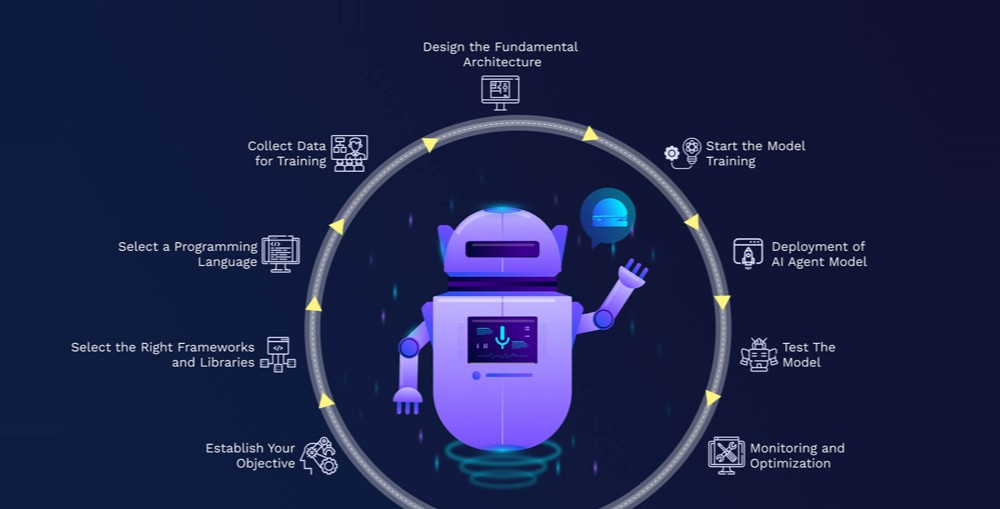
The Impact of adopting customized AI Agents in businesses is huge. Especially when it comes to data management, processing and analysis, the AI inherently have great advantage over the legacy or conventional business intelligence systems. However, when customized as per your unique business needs and objectives, the customized AI Agents can be a game changer. The customized AI Agents can continuously analyze data streams from multiple sources and immediately take actions as per their mandate or alert human staff to take actions.
The customized AI Agents can autonomously generate reports and let managers even generate on-demand reports within seconds, regardless of the complexity and magnitude of the data. These levels of efficiency and accuracy are not possible with any traditional business intelligence data analysis tool or conventional analysis methods. A customized AI Agent greatly increase the reaction time, and minimize the impact of inconsistencies and problems.
Businesses are rapidly seeking AI solutions to improve their conventional business process and enterprise management tools. According to a study published in McKinsey, the adoption of AI increased significantly, from 55% in 2023 to 78% by the end of the year 2024. Majority of these AI integrations are done to enhance the advanced analytics and data management. Businesses and organization all around the world are considering the customized AI Agents as a key part of their data management and analytics strategy.
The biggest advantage of a customized AI Agent in advanced analytics is their ability to learn and adopt which enable businesses to implement multiple customized AI Agents into different business functions such as marketing, HR, operations, production, supply chain management, customer service sector and much more. These customized AI Agents enhance data-driven decisions, provide real-time and up-to-date data which amplify accuracy and empower management.
See Also: How Customized AI Agents Can Streamline Business Operations

The Integration of Customized AI Agents Across Business Functions and Systems
Whenever businesses adopt a new technology or solutions, the biggest challenge is to seamlessly integrate it with their existing eco-system. That is not the case with the AI Agents. A customized AI Agent can easily be integrated with any third-party tool, database, information management system, core business application, department-specific tools, or even online channels. Thanks to their extremely flexible and customizable APIs (Application Programing Interfaces), these AI Agents can easily adopt to the organizational eco-system and speak the same digital language as your existing systems and solutions.
This integration not only help customized AI Agents to embed in your existing digital eco-system but it also enhances other solutions. For example, if a business is using a legacy inventory management system, and a modern CRM, the integration between these two can be a headache. But the customized AI Agents integrate with both and enhance the data synchronization delivering higher efficiency and productivity.
The AI Agents possess a great ability to enhance advanced analytics through their ability to efficiently perform dynamic, real-time, predictive and even perspective analysis at a much larger scale comparing to the legacy business intelligence tools. Whereas the traditional or legacy software solution only rely on static and rule-based analysis with far inferior capabilities to handle large volume of data. These incredible abilities of AI agents enable them to even improve the existing integrations.
For example, if a production unit is running on old sensors and data base, a customized AI Agent can seamlessly relay this data to a modern and advanced dashboard. The customized AI agents not only empower the management, but also ensures that every business function can leverage the advanced analytics. For example, the purchase team can easily get predictive analysis and pattern as per their needs, the HR team can get hiring patterns or employee performance, and customer service can forecast needs instantly.
See Also: The Future of CRM: Leveraging AI Agents for Enhanced Customer Engagement

Best Practices of Implementation of Customized AI Agents for Advanced Analytics
As the AI (artificial intelligence) is a relatively new technology, businesses must have to be careful while acquiring, implementing and adopting a new technology. In order to unlock the true potential and impact of advanced analytics, acquiring an AI Agent is not enough. But in fact it requires integrating and embedding these agents thoughtfully and strategically into existing business processes and technologies. Here are some best practices and strategies you should consider while implementing a customized AI Agent to enhance and empower your advanced analytics and data management:
- Define Clear Goals and Objectives: Defining goals and objectives for every customized AI Agent is crucial. Start with asking what you want this AI Agent to achieve? For example, if you want to increase customer satisfaction, reduce operational cost, optimize human resource, etc. A clear and realistic goal will help you identify the data your agent will be needing and how this customized AI Agent should be trained.
- Use High Quality Data: Any customized AI Agent rely on the data used to train it. Make sure you gather all relevant historical and real-time data form your specific business function where you are going to deploy this AI Agent. Then run multiple tests to further refine the data to improve the outcome of your customized AI Agent. It is extremely important to ensure direct data integration (via API) between the customized AI Agent and the data source.
- Pilot and Iterate: Just one problem at a time, is the ideal formula for adopting and implementing the customized AI Agents. Don’t rush on solving everything at once. Train your customized AI Agent for one specific area or aspect of business function. For example, in case of production facility, implement it to only a single production line and in case of customer service only chose one channel at first and so on. Then gather the feedback and fine tune your AI Agent to expand.
- Cross-Functional Collaboration: For the success of any digital solution the close collaboration of IT and business unit is absolutely necessary. For any customized AI Agent to succeed, close-collaboration of IT for the technical integration and the business unit for understanding how these agents operate. This collaboration eliminate any gaps between the function and needs, and enable businesses to implement a successful and highly efficient customized AI Agent.
- APIs and Secure Integration: From the implementation stand point, the customized AI Agents are usually implemented on a separate server, it can be on-premises or cloud depends on the needs. It is important that all the integrations between the legacy software, databases and even modern systems with your customized AI Agents are secure as per industry benchmarks.
- Adoption and User Training: User training is the most crucial part of any customized AI agent implementation. No matter how much efforts and resources you put in making your customized AI Agent perfect. If the users are not properly trained, the set goals will never be achieved. Adequate training is essential to build users trust on agent’s outputs and analysis.
These are some of the best practices and great strategies to design, customize and implement an AI Agent. If you follow these tips, you can seamlessly roll out your customized AI Agent. Remember your customized AI Agent is not just another value addition to your existing IT infrastructure but it is a very powerful and impactful strategic tool which can be a game changer for your business. The above mentioned approach is ideal to design effective AI Agents and to minimize the disruption minimal for quick adoption.
See Also: The Future of Personalized Customer Services with Bespoke AI Agents
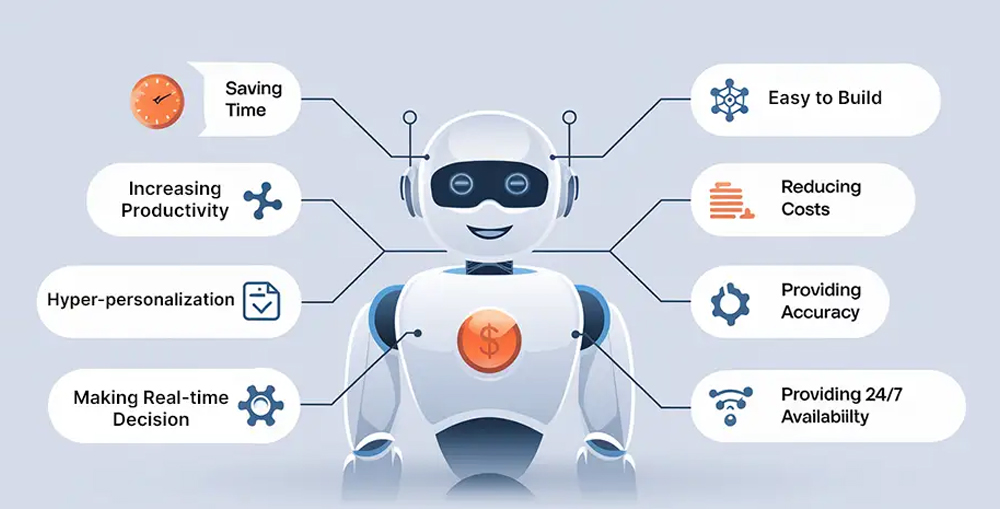
Overcoming Common Challenges in Adoption of Customized AI Agents
As AI (artificial intelligence) is a relatively new technology, especially when it comes to the customized AI Agents and their role in advanced analytics, it is a novel technology. Most of the businesses are not well-versed with the AI Agents, LLM, ML, NLP or any other such technology. Hence, there could be some challenges too, but these challenges can easily be addressed by acquiring sufficient understanding. Here are the most common challenges businesses face while implementing customized AI Agents:
- Data Quality and Access: The advanced analytics is only as good as the data fed into it. The customized AI agents rely on the data sources to perform different analysis. This businesses need to establish proper data streams and pipelines to eliminate the impact of scattered and inconsistent data which is common in legacy software. A centralized data repository can be very effective to clean data from multiple both old and new data sources.
- Integration Complexity: Connecting a customized AI Agent to a legacy software could be tricky during the integration, especially when the AI agents connect with multiple in some cases almost all software, systems and databases. In order to translate the data often API integration is used, in some cases businesses also has to build middleware and in some cases both to ensure seamless data flow between all connected software and solutions, both AI and non-AI alike.
- Trust and Authentication: The most common challenge businesses face while implanting a new AI Agent is the skepticism of the users. Users are often skeptical and hesitant to trust the outcome of your customized AI Agent. Having a proper training, looping human in critical decisions, and continuously monitoring the outputs of the AI agent is crucial to for accuracy and to transparency. This makes your customized AI Agent a powerful supportive tool, rather an inefficient black box.
- Careful and Stepped Scaling: A customized AI Agent that works well in a particular role or business function doesn’t necessarily work well in others. Hence, a careful and stepped approach is advised. Businesses should roll out AI Agents one by one in different functions. Each implementation will highlight the needs of tweaks and in some cases retraining. This will not only ensure a smooth implementation and adoption but also help achieving highest efficiency.
- Privacy and Compliance: Different industry sectors have different security and data privacy compliance. Hence it is crucial to adhere to all compliances followed in the industry and above all it is important to adopt to secure development practices to ensure a well-protected application. Furthermore, secure APIs and encryption techniques along with restricted access and user authentication mechanisms help ensuring the utmost security and data privacy.
These are some of the most common challenges businesses face while implementing a new customized AI Agent. However, by proactively managing these challenges, businesses can convert them into actionable and manageable steps in the implementation. Moreover addressing all these challenges will help you building most efficiency and impactful customized AI Agents for advanced analytics in any kind of business regardless of the complexity of the data or industry sector.
See Also: Customized AI Agents in Real Estate: Enhancing Property Management and Client Engagement

Conclusion
The present day businesses and enterprises rely heavily on different software solutions, modern IT and digital electronics to streamline their operations. These technological solutions help businesses expedite their internal processes, reduce employee overhead, optimize expenses and increase overall profitability. However, every business faces different types of challenges, especially businesses in operating in Dubai, Sharjah, Abu Dhabi and anywhere else in UAE knows the tough market competition and rising customer needs.
Surviving and thriving in a tough market landscape requires smart business management and great decision making abilities. That is why businesses rely on digital solutions, data analytics and modern practices to achieve operational excellence. The AI (artificial intelligence) is a relatively new technology and proven to be extremely efficient with its inherent abilities to handle and analyze large volumes of data coming in multiple forms and shapes and from different data sources.
A customized AI Agent is a goal-specific AI-powered software application. It works and operates in a way that it can mimic a human-like behavior. A customized AI Agent can collect historic and real-time data, it can perform critical analysis, and it can take decisions on its own without require any human intervention. Moreover these AI Agents can take actions, restructure workflows and processes to achieve a very specific goal with unmatched efficiency and accuracy. The AI Agents have incredible ability to sniff through humongous volumes of data and can identify the smallest anomaly, discrepancy or pattern in it.
See Also: Revolutionizing Customer Service with AI Agents: Personalized Support Solutions
This is what made them ideal for advanced analytics. The advanced analytics is a key to successful data-driven decision making. In this blog we have briefly discussed how customized AI agents can be leveraged to perform advanced analytics and how these AI Agents can be embedded across entire business operations to enable access of advanced analytics to each and every decision maker and employee.
The one of the biggest advantage of customized AI Agents in advanced analytics is their ability to seamlessly integrate with each and every other system, software, digital solution, databases or core business application. This integration enable them to access to the critical data and information which traditionally lies in isolated siloes, or scattered across multiple business functions. The customized AI Agents can integrate with any business function or legacy software through secure APIs. Which not only enable them to read data from these sources, but it also enable them to update relevant information management systems to ensure availability of up-to-date information for every employee.
In this blog we have discussed the best practices and strategies to implement the customized AI Agents for advanced analytics and how to deal with common challenges during this implementation. If you want to learn more about the subject or if you want our help to design and implement a customized AI Agent for your organization, please feel free to contact us through our Contact Us page or leave a comment in the comment box below and we will get in touch with you soon.
See Also: The Future of Custom Software Development: Trends to Watch in 2025