BLOG OF RSI CONCEPTS

world map

Implementing AI Agents for Seamless Customer Service Automation

The AI (artificial intelligence) is one of the most modern and revolutionary technology. An AI Agent is an ideal solution to drive efficiency and accuracy in modern customer service landscape. A customized AI Agent is a specialized form of AI, which is powered by LLM (Large Language Model), NLP (Natural Language Processing), ML (Machine Learning), and advanced analytical capabilities. Moreover business can further customize these AI Agents as per their needs. As it trains on your company’s data, customized AI Agent is extremely efficient and much more effective than any other software solution or generative AIs.

This enables AI Agents to adopt to your organizational culture and brand language. Furthermore the customized AI Agents not just follow rules, but their actions are driven by a pre-set goal. Every AI Agent has a goal, same like individual employees, they understand this goal well and always take actions to achieve that goal. The AI Agents not only operate on historical data, but are very much capable of analyzing and understanding real-time data and have awareness of their environment and current conditions.

These capabilities and features of an AI Agents make them ideal solution for modern day’s customer service needs. In today’s digitally dominate world, the customers seek and expect instant gratification. Fast service delivery, quick response and personalized interactions are essential component for modern customer satisfaction strategy. The customized AI Agents are trained on your own company’s data, hence have full knowledge of your products/services, workflows and business processes. Above all, these digital agents are fully aligned with high-level organizational goals and strategic objectives.

A customized AI Agent can seamlessly integrate with existing systems, digital solutions and databases such as ERP (Enterprise Resource Planning System), CRM (Customer Relationship Management System), PMS (Property Management System), HRMS (Human Resource Management System), QMS (Queue Management System), VOC (Voice of Customer or Feedback System), CMS (Content Management System), Performance Management System and any other third-party tool your business might uses. These feature help automating several customer service related and administrative tasks.

This automation enhances operational efficiency, help businesses elevating customer experience and boost employee performance. In this blog we will discuss how businesses can leverage customized AI Agents for seamless customer service automation to achieve higher operational efficiency and exceptional customer service.

See Also: How Customized AI Agents are Revolutionizing Business Automation
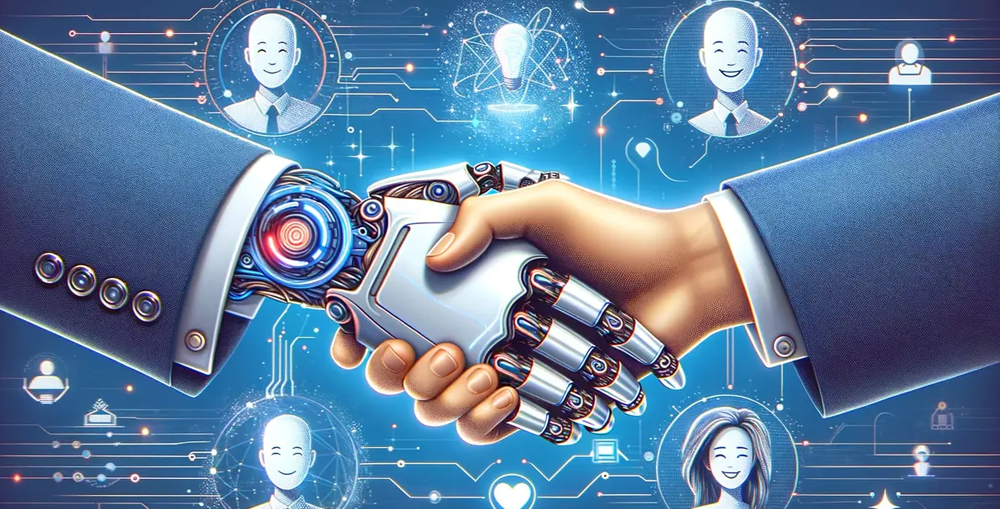
Implementing AI Agents for Seamless Customer Service Automation

How Customized AI Agents Operate?

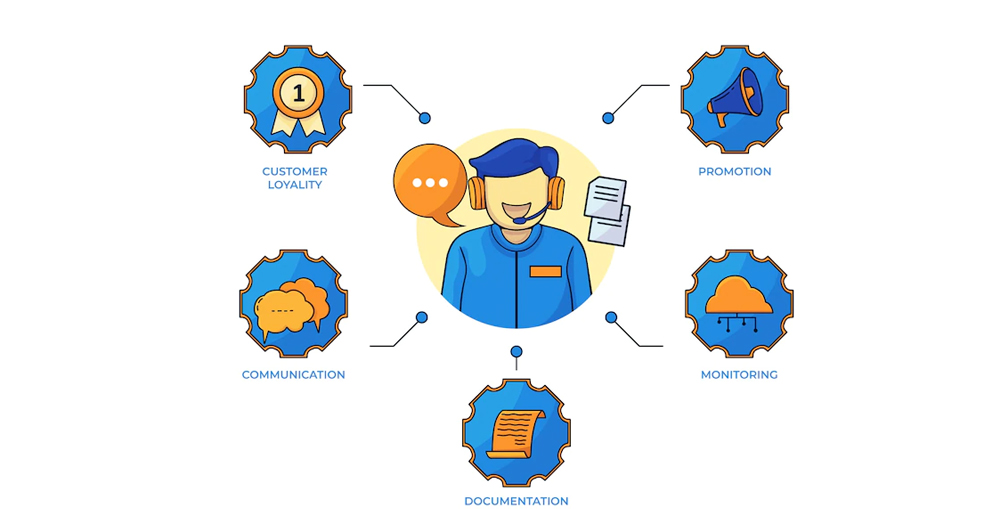
A customized AI Agent is just like any other software application. It is hosted on a server or cloud, as it requires computing power. It is integrated with all required systems and databases, and it can converse with people, both customer and employees alike. A customized AI Agent has very effective capabilities of solving problems, taking actions and utilizing all connected digital eco-system. The customized AI Agents operate like a friendly digital version of a human service agent, they talk to you customers, instantly respond to their enquiries, remain available 24/7, have full knowledge of your products/services solve customer’s problems, answer to their questions, provide them relevant information, file complaints on their behalf, escalate issues to higher/human staff, and speak your brand’s language.

Moreover the customized AI Agents are integrated with other software solutions and tools, which enable them to update customer database and share information instantly across the entire organization. A customized AI Agent converse with customers through text or voice, interpret and understand their query, think about the best answer and then respond, same like any ordinary human service agent does. The biggest advantage of customization is that the AI Agent will get access to your FAQs, product/service details, knowledgebase, common support scripts, internal workflows, business processes and all escalation mechanisms.

This enables a customized AI Agents to speak into your company’s language, and meet customers’ expectations. Think of a customized AI Agent as a virtual support agent, who is capable of mimicking human behavior, who can take actions, facilitate transactions and perform complex tasks as any human service agent does. The minor difference is that your customized AI Agent doesn’t sleep, or require breaks, or take days off. In fact a customized AI Agent can operate 24/7, it can handle many customers in parallel, and deliver consistent experience all the time.

See Also: The Role of AI Agents in Transforming Core Business Application Functions

How Customized AI Agents Operate?

Why Customer Service Automation is So Important?

Customers these days need fast response, quick resolution to their problem and accurate information. Happy and satisfied customers are a key to long-term business success. Especially businesses operating in Dubai, Sharjah, Abu Dhabi and other regions of UAE know how competitive the market is and how demanding customers are. Such market conditions require extra focus on nurturing and establishing long-term customer relationship. The customer happiness drive customer loyalty, which is a key to long-term growth and success. That is why elevating customer service is crucial and the automation is an ideal solution for that.

The automation streamlines customer service, expedites the service delivery and empower the service staff. A customized AI Agent can instantly respond to customers, they can handle almost all routine enquiries. For any complex enquiry, they can engage human staff. Instant response and 24/7 availability elevate customer experience and raise satisfaction. Imagine a customer has a simple question at the weekend or at the midnight, they have to wait for the morning or next working day. But with customized AI Agents they can instantly get answer to their question.

Moreover the customized AI Agents can chat or talk over phone or can be used as internal virtual worker who can autonomously manages internal workflows and processes without requiring any human staff assistance. These features speed up service delivery, increase accuracy in the interaction and ensure a seamless data and information flow. Moreover businesses who implemented customized AI Agents in their customer service are reporting huge cost cuts, up to 25% to 30%. It is not just the cost, the operational efficiency is improved a lot too. Since the routine enquiries are autonomously managed, the staff has more time to focus on complex tasks, or attend to unhappy customers. When the overhead is reduced, businesses can improve human resource planning and labor cost.

See Also: Revolutionizing Customer Service with AI Agents: Personalized Support Solutions
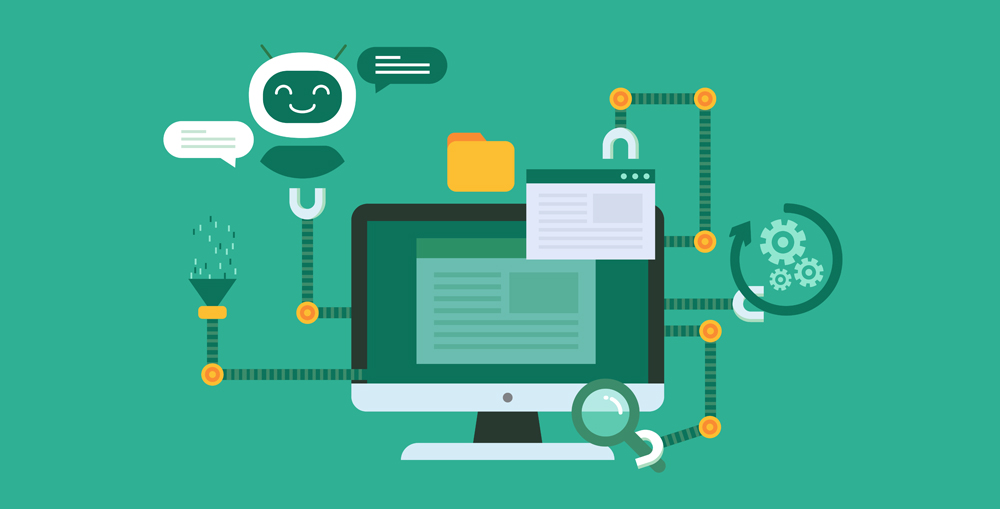
Why Customer Service Automation is So Important?

Key Features of a Customized AI Agent That are Crucial for Customer Service Automation

A customized AI Agent is a very flexible technology platform with ability to customize to align with your unique business needs. It offers great many features which are crucial for customer service automation. For example, ability to converse with customers and solve their problems fully autonomously. The customized AI Agents can access and relay information seamlessly across various business functions and provide real-time updates. Here are some key features which distinguish customized AI Agents from any legacy customer service software solution:

  • NLP / NLU: The Natural Language Processing (NLP) or Natural Language Understanding (NLU) is one of the most remarkable feature of a customized AI Agent. This enable them to converse and understand in any language, English, Arabic, Chinese, Russian, German, Urdu, Hindi, etc. Instead of choosing from pre-set menus, the customers are free to talk or ask in plain English or any other language of their choice. The AI Agent will not only be able to understand it but it can interpret the meaning as well, no matter how the customer say it, it will understand the actual meaning.
  • Multi-Channel Support: In preset day an average consumer would have multiple channels which businesses can leverage such as online chat, customer call center, websites, mobile apps, online customer portals, emails, SMS, WhatsApp, and various social media platforms. The customized AI Agents can seamlessly integrate with multiple channels and are very capable of delivering consistent customer experience across multiple touch points. This further enhance their efficiency and efficacy and enable them to serve more customers in parallel (across multiple channels).
  • Company’s Data and Knowledgebase: An AI Agent requires intensive training to be able to operate in a desired framework and scope. For that businesses need to train them on datasets. The customized AI Agent can train on your company’s data and knowledgebase. It can be provided your FAQs, support scripts, products data and manuals, CRM data, inventory, financial data, information about internal workflows and business processes. Moreover an AI Agent can plug in the real-time data from multiple sources and have full understanding of changing conditions.
  • Contextual Data and Memory: A customized AI Agent is a very intelligent solution and can remember everything. They never forget, have in-built large database where they keep the historical data and record of all past conversations. Whenever a customer returns, they can recall their previous interaction and keep the context going smoothly. Even if the customer change topics, or ask for a completely new thing, the customized AI Agents has ability to keep the conversation going very smoothly and adopt to new topic or need without breaking the flow.
  • Personalization: Every business has different level of support and customer categorization. For example, some are premium or VIP customers, some customers are with special needs, and the customer base is also classified on several demographic factors such as geo-location, gender, age-group and even nationality. A customized AI Agent has understanding of all these factors, and along with that it can remember past interactions as well. This enable customized AI Agent to personalize every interaction as per customers’ persona and preferences for higher satisfaction.
  • Machine Learning (ML): The AI Agents comes with in-built machine learning (ML) technology. The machine learning algorithms enable customized AI Agents to keep on learning new things and learn and adopt for accurate outcomes and better results. This enable customized AI Agents to quickly and seamlessly adopt the emerging needs. Moreover businesses can easily retrain them or add additional information for new products, updated business processes and workflows, etc. This greatly improve the functionality of these agents and boost their productivity.
  • Escalation to Human Staff: The AI Agents are very smart and intelligent, they can understand when the question is too tricky, and then they politely escalate it to the human agent. Moreover the customized AI Agents are trained on particular data sets, if the answer is not available in their database they immediately pass it to the human staff, avoiding any wrong answer or incorrect information. The customized AI Agents can also pass the customer to another agent, for example, from customer support to IT or Accounts or any other department.

The biggest advantage of a customized AI Agent is their ability to align with unique and specific business needs. This help businesses deal with their unique challenges and seamlessly embed these AI agents into their internal workflows and business processes. The natural friendly conversation help improving customer interaction and leave a good impression. The multi-channel support improve availability and let customers chose the most convenient channel. Every customer is unique and different, but these customized AI Agents are designed to learn and adopt to customer preference and persona, enabling them to deliver highly personalized experience and raise customer satisfaction. The automation help improving operational efficiency and reduce staff’s overhead. Further empowering them and raising their efficiency too.

See Also: Leveraging Tailored AI Agents to Elevate Customer Support Experiences
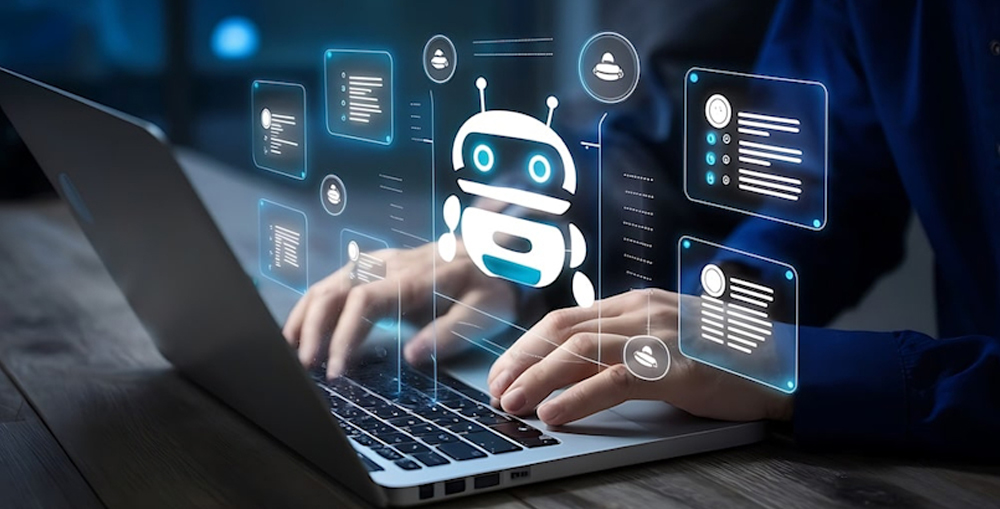
Key Features of a Customized AI Agent That are Crucial for Customer Service Automation

Integration and Implementation of Customized AI Agents in Customer Service

A customized AI Agent is a very complex yet very useful tool. When businesses plan to implement a customized AI Agent apart from training they might face other challenges. Hence it is important to carefully plan every step. Here are some important aspects that you should keep in mind while integrating and implementing a customized AI Agent in your customer service:

  • Multi-channel Integration: Integrating customized AI Agents with all channels is a key to streamline customer services. These agents can be easily integrated with websites, mobile apps, customer portals, WhatsApp, emails and even with a call center. This enable your AI Agents to maintain the context, no matter which channel customer use.
  • CRM and Ticketing System: Integrating your customized AI Agents with CRM and ticketing system can be very useful. It enable AI Agents to pull customer data from CRM, refer their previous orders in discussion and update customer support tickets accordingly. The human staff can also read the transcript of conversation between AI Agent and customer to further improve their response.
  • Human Handoff Workflow: This is the most important aspect and it can have huge impact on customer satisfaction. Businesses should clearly define the protocols of handing-off the customer to a human agent. This will help avoiding customer frustration, because when the AI Agent doesn’t find answer by information and data it has, it fails to satisfy and it also reduce accuracy.
  • Quality of Training Data: Any customized AI Agent can be as good as the data you feed it in. If the information, data, FAQs or knowledgebase is outdated, the AI Agent’s responses will be outdated too. Regular updates to knowledgebase, adding new products, answers to new questions, and updated polices will ensure your customized AI Agent returns more accurate and precise answers.
  • Language and Tone: A customized AI Agent is a software application powered by artificial intelligence (AI). If it’s NLP and LLM models are not fine-tuned to adopt to a friendly tone, it might sound like a machine. Programming your customized AI Agent to adopt to the language tone is critical to ensure consistency in customer experience which increase satisfaction.
  • User Trust and Privacy: The customized AI Agents are machines, so it is essential to always notify your customers to whom they are talking to. Moreover these agents typically have access to customers’ private data and purchase history, which is why it is extremely important to adopt to modern security practices and implement highest privacy protocols to avoid unwanted disclosure.
  • Staff Training: Businesses should properly train their staff for customized AI Agents. The staff should know how to see the transcripts, even if the customer is not handed-off to the staff, they should be able to view the transcript. This will help you identifying mistakes or improving the responses. A customized AI Agent is companion of your staff, not a replacement.

Businesses often neglect many things considering they are insignificant, which often undermine the efficiency and efficacy of your customized AI Agents. An AI Agent is not a set-and-forget kind of technology, it requires continuous monitoring and improvement. Adding latest information, new products details, updated workflows and processes is important to sustain optimum performance and productivity.

See Also: Customized AI Agents in Real Estate: Enhancing Property Management and Client Engagement

Integration and Implementation of Customized AI Agents in Customer Service

Conclusion

In competitive markets such as in Dubai, Sharjah, Abu Dhabi and broader UAE, where the customer satisfaction is crucial for success and survival, the customer service has become one of the most important business function. Regardless of your industry, happy and satisfied customers ensure long-term success. That is why businesses eager seek ways to improve and enhance their customer service. When it comes to automation the AI (artificial intelligence) is the most potent and efficient technology.

Unlike any traditional digital technology the AI is capable of processing information at a much larger scale. Moreover the AI is intelligent and smart, which enables it to mimic human-like behavior. This is what makes customized AI Agent an ideal solution for the customer service automation. The AI Agents can process multiple data-streams in real-time, while analyzing and understanding the historical and analytical data and taking decisions in real-time.

See Also: The Future of Custom Software Development: Trends to Watch in 2025

Businesses can train customized AI Agents on their own company data and style which ensures a consistent customer experience and swift support. A customized AI Agent can handle hundreds of customers in parallel, it can operate 24/7, and it can support virtually any language it is programmed for. Moreover a customized AI Agent is integrated with existing business solutions, such as CRM, ERP, or Ticketing system, which enables them to offer more personalized support for customers.

When the routine enquiries are handled by the customized AI Agents, the staff gets more time to focus on more productive, strategically important tasks and complex customer demands. In this blog we have covered what a customized AI Agent is, how do they operate and what features they offer for the customer service automation. If you want to learn more about the subject or if you want our help to design and implement a customized AI Agent for your business, please feel free to contact us through our Contact Us page or leave a comment in the comment box below and we will get in touch with you soon.
Unlocking Business Potential with AI-Powered Advanced Analytics

In this modern day and age, the data and information is the bloodline of the operations. Every business regardless of size or industry, they are utilizing some kind of digital tools. The ERP solutions, CRMs, modern production plants, and even social media is part of digital eco system. There are tons of other business tools and solutions that businesses rely upon for their day-to-day operations. This make data management even more crucial. When it comes to data management, in any business or organization, the data is scattered across different teams, tools and business functions. This creates information siloes, and further complicate data management.

Furthermore the data is generated from various sources, and comes in various forms and this is an on-going challenge, like a continuous struggle. However, the customized AI Agents have incredible ability to mitigate all these challenges and on top of that, they are equipped with machine learning (ML) which enables them to adopt to changes in data and business needs.

The information technology and digital tools are evolving and growing rapidly, this means the data is continuously evolving and expanding, which poses a continuous and apparently never-ending struggle to get the data management and analysis right. When it comes to business intelligence data management and analysis the AI and specifically the customized AI Agents are a perfect match for these needs. The AI is fundamentally different form the legacy software applications. It is far more complex, capable and efficiency.

The customized AI Agents are a specialized AI tools, which are exclusively designed for a specific role and functions. It is aware of its situation, it can register changes in condition and environments and it can respond to these, it can collect, process, and analyze data at a much larger scale than any conventional or traditional software. In this blog we will majorly focus on its analytical abilities and how businesses can unlock the true potential of business intelligence data for operational excellence.

See Also: The Future of ERP: Leveraging AI for Smarter Enterprise Management

Unlocking Business Potential with AI-Powered Advanced Analytics

What are Customized AI Agents?

As the name suggests, a customized AI Agent is an AI-powered technological solutions. It is a fully or semi-autonomous software application that has capabilities to perceive, analyze, understand, make decisions on its own, take actions, and customized workflows to achieve very specific goals. These goals are pre-assigned and a customized AI Agent aligns its actions with these goals. This is what makes them more effective, efficient and impactful. The customized AI Agents are excellent at gathering and processing large-volume of multiple data streams.

Although this is inherent characteristics of AI (artificial intelligence) technology, but the customized AI Agents are trained on your business’s data, which make them speak your organization’s language and adopt to your organization’s culture. The off-the-shelf software solutions are designed for masses, hence lack personalization. Even the custom software development is also felling short in addressing the modern data management and analysis needs.

Businesses often think adopting to AI technologies is expensive, however, that is not true. Especially due to cloud, the adopting to modern AI technologies has become much more cost-efficient and if we consider their long-term ROI, solutions like customized AI Agents become a very valuable tool. The customized AI Agents are built on smart AI algorithms and can leverage ML (machine learning), LLM (large language models), NLP (natural language processing) and seamless third-party system integration.

These traits make them the most effective, accurate and efficient tools, above all a customized AI Agent is trained on your own business data, rules and it is aligned with your organizational goals. This enable customized AI Agents to mimic human-like behavior, you can converse with them, give them voice commands, chat with them like another person. Eventually a customized AI Agent become expert and can further fine-tuned to remain efficient, effective and aligned with your own goals and strategic objectives.

See Also: How Customized AI Agents are Revolutionizing Business Automation

What are Customized AI Agents?

The Role of Customized AI Agents in Advanced Analytics

First of all it is important to understand what advanced analytics is and why do businesses needs it? The advanced analysis is a highly sophisticated combination to data collection, data management tools and strategies to extract meaningful and actionable insight from the data which can empower data-driven decisions and help businesses achieve their objectives and goals. When it comes to the technology, the advanced analytics today majorly rely on AI, tools like machine learning, predictive modeling, prospective modeling, contextual analysis, natural language processing and statistical analysis are all part of advanced data analytics. The advanced analytics is a far superior approach than conventional business intelligence data, here is a quick comparison of both approaches:

Traditional Business IntelligenceAdvanced Analytics (AI-Powered)
PurposeWhat happened? And Why? (Summary)What will happen? And What actions should we take?
Data ScopeStructured and Historical onlyStructured, Semi-Structured, and Unstructured Data (Big Data Included)
Technique/MethodReporting, Basic Stats and DashboardsML (Machine Learning), Text/Data Mining, Forecasting, Predictive Analysis, NLP (Natural Language Processing), Conversational Insights, and Scenario Testing or Simulation
OutcomesDescriptive InsightsDescriptive Insights, Predictive Insights, Contextual Awareness, Prospective Insights and Prescriptive Actions


When businesses move from traditional business intelligence to AI-powered advanced analytics:

  • Forecasting & Risk Reduction: By leveraging your business’s own data a customized AI Agents can offer exceptionally accurate predictions and help making timely and informed decisions.
  • Operational Efficiency: The customized AI Agents offer unprecedented level of automation which reduce the staff overhead and improve operational efficiency.
  • New Opportunities: A customized AI Agent can detect the smallest anomalies and hidden patterns, enabling businesses to explore new opportunities.

In simple words, adopting to customized AI Agents and advanced analytics businesses can transform form being reactive to highly proactive. This help businesses minimizing risks, mitigating emerging issues even before they can become a serious problem, and help them deal with modern data management challenges. The customized AI Agents are incredibly efficient and much more capable than conventional software applications. Which enables them to convert a complex and huge volume of raw data into actionable insights, empowering data-driven decisions and driving efficiency through automation.

See Also: The Role of AI Agents in Transforming Core Business Application Functions

The Role of Customized AI Agents in Advanced Analytics

The Impact of adopting customized AI Agents in businesses is huge. Especially when it comes to data management, processing and analysis, the AI inherently have great advantage over the legacy or conventional business intelligence systems. However, when customized as per your unique business needs and objectives, the customized AI Agents can be a game changer. The customized AI Agents can continuously analyze data streams from multiple sources and immediately take actions as per their mandate or alert human staff to take actions.

The customized AI Agents can autonomously generate reports and let managers even generate on-demand reports within seconds, regardless of the complexity and magnitude of the data. These levels of efficiency and accuracy are not possible with any traditional business intelligence data analysis tool or conventional analysis methods. A customized AI Agent greatly increase the reaction time, and minimize the impact of inconsistencies and problems.

Businesses are rapidly seeking AI solutions to improve their conventional business process and enterprise management tools. According to a study published in McKinsey, the adoption of AI increased significantly, from 55% in 2023 to 78% by the end of the year 2024. Majority of these AI integrations are done to enhance the advanced analytics and data management. Businesses and organization all around the world are considering the customized AI Agents as a key part of their data management and analytics strategy.

The biggest advantage of a customized AI Agent in advanced analytics is their ability to learn and adopt which enable businesses to implement multiple customized AI Agents into different business functions such as marketing, HR, operations, production, supply chain management, customer service sector and much more. These customized AI Agents enhance data-driven decisions, provide real-time and up-to-date data which amplify accuracy and empower management.

See Also: How Customized AI Agents Can Streamline Business Operations

The adoption of AI increased significantly, from 55% in 2023 to 78% by the end of the year 2024

The Integration of Customized AI Agents Across Business Functions and Systems

Whenever businesses adopt a new technology or solutions, the biggest challenge is to seamlessly integrate it with their existing eco-system. That is not the case with the AI Agents. A customized AI Agent can easily be integrated with any third-party tool, database, information management system, core business application, department-specific tools, or even online channels. Thanks to their extremely flexible and customizable APIs (Application Programing Interfaces), these AI Agents can easily adopt to the organizational eco-system and speak the same digital language as your existing systems and solutions.

This integration not only help customized AI Agents to embed in your existing digital eco-system but it also enhances other solutions. For example, if a business is using a legacy inventory management system, and a modern CRM, the integration between these two can be a headache. But the customized AI Agents integrate with both and enhance the data synchronization delivering higher efficiency and productivity.

The AI Agents possess a great ability to enhance advanced analytics through their ability to efficiently perform dynamic, real-time, predictive and even perspective analysis at a much larger scale comparing to the legacy business intelligence tools. Whereas the traditional or legacy software solution only rely on static and rule-based analysis with far inferior capabilities to handle large volume of data. These incredible abilities of AI agents enable them to even improve the existing integrations.

For example, if a production unit is running on old sensors and data base, a customized AI Agent can seamlessly relay this data to a modern and advanced dashboard. The customized AI agents not only empower the management, but also ensures that every business function can leverage the advanced analytics. For example, the purchase team can easily get predictive analysis and pattern as per their needs, the HR team can get hiring patterns or employee performance, and customer service can forecast needs instantly.

See Also: The Future of CRM: Leveraging AI Agents for Enhanced Customer Engagement

The Integration of Customized AI Agents Across Business Functions and Systems

Best Practices of Implementation of Customized AI Agents for Advanced Analytics

As the AI (artificial intelligence) is a relatively new technology, businesses must have to be careful while acquiring, implementing and adopting a new technology. In order to unlock the true potential and impact of advanced analytics, acquiring an AI Agent is not enough. But in fact it requires integrating and embedding these agents thoughtfully and strategically into existing business processes and technologies. Here are some best practices and strategies you should consider while implementing a customized AI Agent to enhance and empower your advanced analytics and data management:

  1. Define Clear Goals and Objectives: Defining goals and objectives for every customized AI Agent is crucial. Start with asking what you want this AI Agent to achieve? For example, if you want to increase customer satisfaction, reduce operational cost, optimize human resource, etc. A clear and realistic goal will help you identify the data your agent will be needing and how this customized AI Agent should be trained.
  2. Use High Quality Data: Any customized AI Agent rely on the data used to train it. Make sure you gather all relevant historical and real-time data form your specific business function where you are going to deploy this AI Agent. Then run multiple tests to further refine the data to improve the outcome of your customized AI Agent. It is extremely important to ensure direct data integration (via API) between the customized AI Agent and the data source.
  3. Pilot and Iterate: Just one problem at a time, is the ideal formula for adopting and implementing the customized AI Agents. Don’t rush on solving everything at once. Train your customized AI Agent for one specific area or aspect of business function. For example, in case of production facility, implement it to only a single production line and in case of customer service only chose one channel at first and so on. Then gather the feedback and fine tune your AI Agent to expand.
  4. Cross-Functional Collaboration: For the success of any digital solution the close collaboration of IT and business unit is absolutely necessary. For any customized AI Agent to succeed, close-collaboration of IT for the technical integration and the business unit for understanding how these agents operate. This collaboration eliminate any gaps between the function and needs, and enable businesses to implement a successful and highly efficient customized AI Agent.
  5. APIs and Secure Integration: From the implementation stand point, the customized AI Agents are usually implemented on a separate server, it can be on-premises or cloud depends on the needs. It is important that all the integrations between the legacy software, databases and even modern systems with your customized AI Agents are secure as per industry benchmarks.
  6. Adoption and User Training: User training is the most crucial part of any customized AI agent implementation. No matter how much efforts and resources you put in making your customized AI Agent perfect. If the users are not properly trained, the set goals will never be achieved. Adequate training is essential to build users trust on agent’s outputs and analysis.

These are some of the best practices and great strategies to design, customize and implement an AI Agent. If you follow these tips, you can seamlessly roll out your customized AI Agent. Remember your customized AI Agent is not just another value addition to your existing IT infrastructure but it is a very powerful and impactful strategic tool which can be a game changer for your business. The above mentioned approach is ideal to design effective AI Agents and to minimize the disruption minimal for quick adoption.

See Also: The Future of Personalized Customer Services with Bespoke AI Agents

Best Practices of Implementation of Customized AI Agents for Advanced Analytics

Overcoming Common Challenges in Adoption of Customized AI Agents

As AI (artificial intelligence) is a relatively new technology, especially when it comes to the customized AI Agents and their role in advanced analytics, it is a novel technology. Most of the businesses are not well-versed with the AI Agents, LLM, ML, NLP or any other such technology. Hence, there could be some challenges too, but these challenges can easily be addressed by acquiring sufficient understanding. Here are the most common challenges businesses face while implementing customized AI Agents:

  1. Data Quality and Access: The advanced analytics is only as good as the data fed into it. The customized AI agents rely on the data sources to perform different analysis. This businesses need to establish proper data streams and pipelines to eliminate the impact of scattered and inconsistent data which is common in legacy software. A centralized data repository can be very effective to clean data from multiple both old and new data sources.
  2. Integration Complexity: Connecting a customized AI Agent to a legacy software could be tricky during the integration, especially when the AI agents connect with multiple in some cases almost all software, systems and databases. In order to translate the data often API integration is used, in some cases businesses also has to build middleware and in some cases both to ensure seamless data flow between all connected software and solutions, both AI and non-AI alike.
  3. Trust and Authentication: The most common challenge businesses face while implanting a new AI Agent is the skepticism of the users. Users are often skeptical and hesitant to trust the outcome of your customized AI Agent. Having a proper training, looping human in critical decisions, and continuously monitoring the outputs of the AI agent is crucial to for accuracy and to transparency. This makes your customized AI Agent a powerful supportive tool, rather an inefficient black box.
  4. Careful and Stepped Scaling: A customized AI Agent that works well in a particular role or business function doesn’t necessarily work well in others. Hence, a careful and stepped approach is advised. Businesses should roll out AI Agents one by one in different functions. Each implementation will highlight the needs of tweaks and in some cases retraining. This will not only ensure a smooth implementation and adoption but also help achieving highest efficiency.
  5. Privacy and Compliance: Different industry sectors have different security and data privacy compliance. Hence it is crucial to adhere to all compliances followed in the industry and above all it is important to adopt to secure development practices to ensure a well-protected application. Furthermore, secure APIs and encryption techniques along with restricted access and user authentication mechanisms help ensuring the utmost security and data privacy.

These are some of the most common challenges businesses face while implementing a new customized AI Agent. However, by proactively managing these challenges, businesses can convert them into actionable and manageable steps in the implementation. Moreover addressing all these challenges will help you building most efficiency and impactful customized AI Agents for advanced analytics in any kind of business regardless of the complexity of the data or industry sector.

See Also: Customized AI Agents in Real Estate: Enhancing Property Management and Client Engagement

Overcoming Common Challenges in Adoption of Customized AI Agents

Conclusion

The present day businesses and enterprises rely heavily on different software solutions, modern IT and digital electronics to streamline their operations. These technological solutions help businesses expedite their internal processes, reduce employee overhead, optimize expenses and increase overall profitability. However, every business faces different types of challenges, especially businesses in operating in Dubai, Sharjah, Abu Dhabi and anywhere else in UAE knows the tough market competition and rising customer needs.

Surviving and thriving in a tough market landscape requires smart business management and great decision making abilities. That is why businesses rely on digital solutions, data analytics and modern practices to achieve operational excellence. The AI (artificial intelligence) is a relatively new technology and proven to be extremely efficient with its inherent abilities to handle and analyze large volumes of data coming in multiple forms and shapes and from different data sources.

A customized AI Agent is a goal-specific AI-powered software application. It works and operates in a way that it can mimic a human-like behavior. A customized AI Agent can collect historic and real-time data, it can perform critical analysis, and it can take decisions on its own without require any human intervention. Moreover these AI Agents can take actions, restructure workflows and processes to achieve a very specific goal with unmatched efficiency and accuracy. The AI Agents have incredible ability to sniff through humongous volumes of data and can identify the smallest anomaly, discrepancy or pattern in it.

See Also: Revolutionizing Customer Service with AI Agents: Personalized Support Solutions

This is what made them ideal for advanced analytics. The advanced analytics is a key to successful data-driven decision making. In this blog we have briefly discussed how customized AI agents can be leveraged to perform advanced analytics and how these AI Agents can be embedded across entire business operations to enable access of advanced analytics to each and every decision maker and employee.

The one of the biggest advantage of customized AI Agents in advanced analytics is their ability to seamlessly integrate with each and every other system, software, digital solution, databases or core business application. This integration enable them to access to the critical data and information which traditionally lies in isolated siloes, or scattered across multiple business functions. The customized AI Agents can integrate with any business function or legacy software through secure APIs. Which not only enable them to read data from these sources, but it also enable them to update relevant information management systems to ensure availability of up-to-date information for every employee.

In this blog we have discussed the best practices and strategies to implement the customized AI Agents for advanced analytics and how to deal with common challenges during this implementation. If you want to learn more about the subject or if you want our help to design and implement a customized AI Agent for your organization, please feel free to contact us through our Contact Us page or leave a comment in the comment box below and we will get in touch with you soon.
See Also: The Future of Custom Software Development: Trends to Watch in 2025


The Future of ERP: Leveraging AI for Smarter Enterprise Management

An ERP or Enterprise Resource Planning system is a very powerful software-based solution that help businesses streamline operational processes and administration, reduce overhead and help making informed decisions. The ERPs are considered to be the backbone of almost all major industries. However, in the recent few years we have noticed an unprecedented growth, advancement and innovation in technology. An ERP system is a very advanced and sophisticated solution which can unified the entire organization’s operation into a single system. Even then the legacy ERP are facing difficulties in keeping up with pace of modern data and business needs.

The ERP solutions are present since 1990 and have become highly sophisticated, complex and comprehensive solution, but their complexity, rigid and monolithic structure often can’t adapt to rapidly changing needs. A report published in Gartner highlights that by 2027, almost 70% of the ERPs will eventually fail to fully meet their business case goals. Fortunately the AI has the answer to this problem, customized AI Agents integrated or built into ERPs. A recent report published by IBM shows that the businesses and organizations who have integrated generative AI to their SAP ERP solutions are already recording higher profitability. Similarly the customized AI Agents that are exclusively designed for your business needs can make your legacy ERP smart, effective, accurate and more agile.

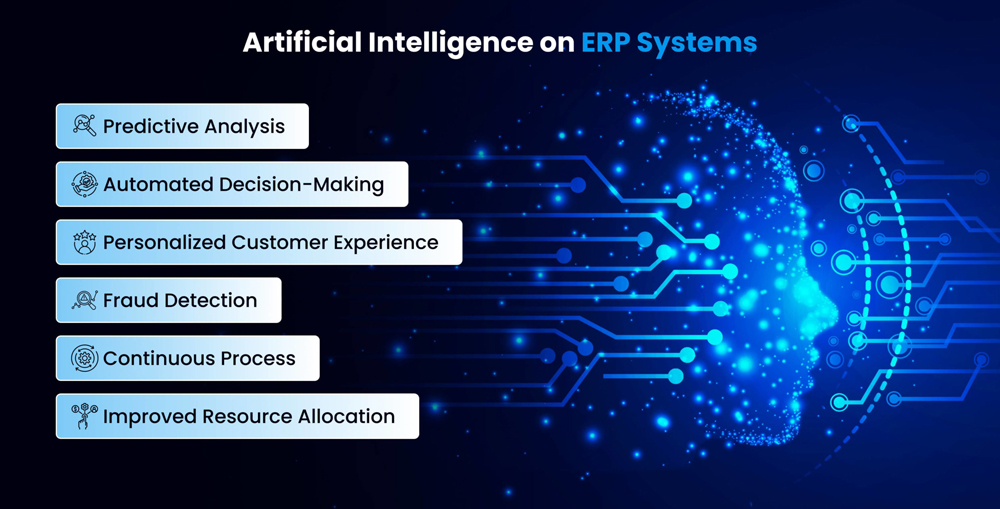
In this blog we will discuss how businesses can leverage customized AI Agents to lift up their ERPs and to mitigate the traditional challenges and short falls for higher performance and profitability. The inherent benefits of customized AI Agents such as capability to process and analyze large volume of data, AI-powered automation, predictive analysis, and personalization can greatly improve the decision-making and it can completely transform the core business applications. The customized AI Agents are the new frontier for ERP development and innovation.

The Future of ERP: Leveraging AI for Smarter Enterprise Management

Challenges of Legacy/Traditional ERP Systems

In this modern day and age, the ERP is a one of the most important software solution for any business and organization. However, one of the biggest problem with traditional ERP solutions is their complexity, rigidity, and longer development time. In fact most of the ERP projects, almost 70% of them turn out to be not fully aligned with the technical scope, project timelines and cost. That is the reason businesses often hesitate to rebuild, replace or even upgrade/customize their ERPs. Instead businesses try to bypass or develop middleware tools, to supplement the deficiencies. However, this results in many inefficiencies and difficulties in functionalities and collection of business intelligence data.

Studies revealed that most of the ERP projects take longer time to complete, cost more than anticipated, and deliver fewer benefits than planned. Furthermore the complex integration also adds up to the cost and undermine efficiency. The high implementation cost and other technical obstacles prevent businesses to customize, upgrade or replace their ERP solutions. Eventually this results in different teams of functions having separate tools and information silos, which can greatly undermine the data-driven decision making. Despite the technical bottlenecks and high implementation cost, the ERPs also face other problems and over the time tend to lag behind.

The market trends and customer demands change rapidly, businesses have to improve their workflows, internal processes and methodologies more frequently. However, the ERP solutions are not capable of keeping up with this pace, which render them outdated, inefficient and expensive. The revolution of AI (artificial intelligence) and emergence of customized AI Agents turn out to be the ideal solution for such problems and are very capable, flexible and future proof.

See Also: How Customized AI Agents Can Streamline Business Operations

Challenges of Legacy/Traditional ERP Systems

The Rise of Smart AI-Powered ERP Solutions

We have recently witnessed an explosive growth in AI (artificial intelligence). It looks like the AI is conquering everything, from online tools, search engines, smartphone apps to complex AI-driven factories, humanoid robotics and what not. However, the AI is not a new concept to the software development. In fact the ERP solutions have been equipped with smart analytical tools and AI algorithms since more than a decade. But the latest advancements in AI and wide availability of cloud is what have fueled a completely new kind of AI such as generative AI, NLPs, LLMs, and ML, etc. Earlier the AI in ERPs was limited to small automations such as data entry, basic forecasts and predictive analytics, basic automated bots, etc.

However, now a days the modern AI such as AI Agents are capable of handling the entire business function such as supply chain management or personalized customer support, etc. The customized AI Agents are simply AI but designed for a specific purpose and heavily customized to align with your ERP’s needs, challenges, workflows, business processes, and operations in mind. Unlike traditional AI algorithms or simple chatbots, the AI Agents can effectively, efficiently and accurately analyze, plan and act in real-time based on the real-time data.

This ability enables AI Agent to execute multi-steps workflows, handle complex operational tasks, fetch and push data to other systems and due to their inherent ML (machine learning) they can learn from their past actions and interactions. Above all the customized AI Agents have extraordinary capability to align their actions with the high-level organizational and individual goals. These features are truly remarkable and can completely transform the ERP solutions and help businesses mitigate the traditional challenges and short comings of legacy ERPs.

See Also: Revolutionizing Customer Service with AI Agents: Personalized Support Solutions

The Rise of Smart AI-Powered ERP Solutions

Task Automation in ERP Solutions with the Customized AI Agents

One of the best feature AI Agents offer for ERP Solutions is their ability to drive automation. Almost all types of repetitive, rules-based tasks and even multi-level workflows can be automated seamlessly with a customized AI Agent. Where the automation reduce the overhead of the employees, it also eliminate many errors and prevent the consequences of these errors. When employees have a balanced workload, they tend to perform well. By reducing the workload of the employees businesses can focus more on strategically important and productive tasks.

A customized AI Agent not only infused with ERPs, but it can independently integrate with other solutions, effectively eliminating information silos and ensuring a smooth and seamless flow of information. The automation drive efficiency, help enhancing employee performance, and help businesses optimize operational cost. By autonomously managing these tasks on behalf of employees, these customized AI Agents dramatically reduce the manual work for the employees. For example, a customized AI Agent for accounts-payable, can automatically enter data for invoice, prepare and even send them to respective customers, and it can automatically check for duplicate payments.

Furthermore, the customized AI Agents can also alert human staff in case of pre-set trigger, such as if it detects duplicate payments, it can immediately notify the accountant. It can also track due dates, and if a project is completed and as per terms the invoice should be raised after 2 weeks, it will automatically prepare the invoice and then it will send it to the customer. Similarly a customized AI agent for HR can screen applicants, coordinate interviews, and even help in on-boarding process. All these automation save tons of efforts and expense and also raise accuracy and efficiency.

See Also: How Customized AI Agents are Revolutionizing Business Automation

Task Automation in ERP Solutions with the Customized AI Agents

Customized AI Agents Level Up Predictive Analysis and Forecasting

Along with automation the customized AI Agents are extremely good at predictive analysis and forecasting. Whether it is monitoring inventory levels, forecasting cash inflows, predicting seasonal impact, and above all considering external conditions to further fine tune the analysis, a customized AI agent can do that with extreme efficiency and accuracy. In fact the customized AI Agents completely transform the predictive analysis and forecasting in ERP solutions. Here are a few key features of customized AI Agents which make them an essential for an ERP solution:

  • Advanced Data Processing: A customized AI Agent offer in-depth analysis, and can analyze, understand, interpret and correlate large volumes of data coming from multiple different sources. Which is not doable with legacy ERP solutions or traditional analytical tools.
  • Anomaly Detection: A customized AI Agent can effectively and accurately detects even the smallest change or anomaly in the data. Which might missed out by the traditional analytical tools. This help identifying potential issues or mitigating a problem before it escalate.
  • Real-Time Analysis: A customized AI Agent comes with in-built ML (machine learning) algorithms which enable it to provide real-time forecast and predictions with utmost accuracy. This enables businesses to take timely actions and make adjustments in before any major problem arise.
  • Seamless Integration: A customized AI Agent for ERP doesn’t only linked to ERP, but it also offer seamless integration with other systems, solutions, business tools, databases and any other core application to ensure a unified information repository for data-driven decision making.

As the AI in general is advancing at a rapid pace, we will soon witnessed a large-scale adaptation across all industry verticals. However, with the rapidly evolving market landscape and IT infrastructure the legacy or traditional ERP solutions will eventually loss their impact. That is why instead of replacing the entire ERP solutions, a customized AI Agent can be implemented to breathe a new life in your dying ERP. The predictive analysis and in-depth insights help businesses and organizations to stay ahead of the trends and their competitors. In case of ERP solutions, accurate prediction, and smart forecasting directly translate into cost saving and revenue generation.

See Also: The Future of CRM: Leveraging AI Agents for Enhanced Customer Engagement

Customized AI Agents Level Up Predictive Analysis and Forecasting

Enhancing Decision Making in ERP with Customized AI Agents

In this modern market landscape businesses operating in Dubai, Sharjah, Abu Dhabi and other regions of UAE knows very well the importance of timely decisions. For any business taking a right decision at a right time can be a game-changer. Businesses heavily rely on data to make decisions and to adjust their strategies, a customized AI Agent can sift through vast amount of data, multiple ERP datasets, historical and real-time data to provide up-to-the-minute predictions, analysis and highlights the information that matter the most.

Moreover a customized AI Agent can account past behavior and analysis to help management understand the data. This also increase accuracy of the predictive analysis and help management make informed and timely decisions. Furthermore the customized AI Agents can immediately spot anomalies or unusual patterns, alerting managers before a problem even emerges.

Moreover the customized AI Agents can leverage the NLP (natural language processing) algorithms to allow users to directly communicate with ERP systems through plain English or Arabic. Instead to digging through complex menus, downloading reports and performing analysis, the managers can simply ask the ERP about anything. For example:

  • What was the top selling product in last month?
  • What are the most common complaints we are receiving in past 3 months?
  • Which customer service channels has the least customer satisfaction?

The customized AI Agents not only answer these questions but they also suggest actions. For example:

  • The top selling product last month was XYZ, which was at number 3 in previous month. The cost of the raw material used to produce this product is projected to increase (based on past year’s behavior), do you want to double the supply for this month?
  • The most common complaint is about the product XYZ, particularly about its feature ABC. The feature ABC was added to this product around 3 years ago. Do you want to see customer suggestions about this product or this particular feature?
  • The call center is having least customer satisfaction. The customers who purchased products ABC, XYZ, etc. got the most unhappy feedback. Do you want to share this data to CX and call center manager? A new training program could rectify this issues (based on past behavior).

That is not all, it takes instructions in plain language and then take actions as well. The customized AI Agents can also utilize the other available systems and tools to execute actions, which further simplify the work of managers. On top of that, the customized AI Agents can monitor the impact and outcome of these actions and help understanding the efficacy and accuracy of these actions for future references. All these tools help improving the data-driven decisions and ensures highest possible operational efficiency.

See Also: The Future of Personalized Customer Services with Bespoke AI Agents

Enhancing Decision Making in ERP with Customized AI Agents

Personalized User Experience with Customized AI Agents

One of the biggest challenge for any ERP is the user adoption and satisfaction. The key impact of customized AI Agents is their ability to customize user experiences. The AI Agents can understand the role of each users and offer customized dashboards to enhance user efficiency and experience. For example, an account manager would be more interested in aging receivables, cash flows, account statements, and closing schedules. Similarly the purchase or supply chain manager would be more interested in vendor/supplier performance, inventory alerts, price forecasts and upcoming requirements, etc. This means that every team has their own preferences and needs.

The customized AI Agents can customize the user dashboards allowing them to skip through tons of irrelevant information or complex layers of menu and navigation. This simplify user experience and greatly improve user performance. This personalization and tailored experiences help minimizing the user efforts, and greatly improve the efficiency. This approach reduce the information overload and help users reach to the data and information very quickly.

Moreover the customized AI Agents are equipped with the voice commands, NLP and ML (machine learning). These features further enhance user experience. The users can communicate with insights, give voice commands, and leverage other intuitive features that make ERP systems more intuitive and user-friendly. For example, the production manager can ask their customized AI Agent, What is the production backlog? And the agent instantly prepare the report.

All such features drive efficiency and help automating several internal workflows and tasks. The customized AI Agents can learn and adopt to changing conditions which enable them learn and improve their outcomes.

See Also: Customized AI Agents in Real Estate: Enhancing Property Management and Client Engagement

Personalized User Experience with Customized AI Agents

Overcoming Traditional Limitations of ERP with Customized AI Agents

Customized AI Agents directly address many challenges and short comings of a legacy ERP solution. Instead of one-size-fits-all, the customized AI Agents promote personalization, flexibility and intuitiveness. In simple words, the ERP solutions equipped or integrated with customized AI Agents are more responsive towards changes and can easily adopt to new processes, workflows and polices. Unlike traditional legacy ERP solutions, which can take months to update internal workflows and obviously a hefty customized price tag.

For example, if the production process changes, or the customer onboarding process changes overnight, the customized AI Agents can instantly adopt to these changes. An AI Agent has its own unique goals and objectives, which enable them to quickly alter the workflows and internal processes. In fact a customized AI agent for ERP can turn fixed processes into continuous workflows.

Furthermore the legacy ERP solutions lack the customization and personalization which has become an essential of the modern day business operations. The customized AI Agents for the ERP solutions offer in-depth insights, predictive analysis and conversational interaction with the system. All these features help identifying even the tiniest anomalies, changes and ability to process a large volumes of data from all connected sources.

These features help mitigating the traditional pain points, such as siloed information, manual work, hidden bottlenecks, lack of customization and poor automation, etc. The automation and user-friendliness reduce the efforts, time and overload of the employees, resulting in boosting their performance and productivity. According to a research by AI Multiple, the Mitsubishi Electrics witnessed multiple improvements after adopting customized AI Agents in ERP.

See Also: The Future of Custom Software Development: Trends to Watch in 2025

Overcoming Traditional Limitations of ERP with Customized AI Agents

Conclusion

The ERP is the backbone of modern businesses and enterprises. However, the technology is advancing rapidly and the ERP systems are lagging behind. A customized AI Agent has the solution to almost all problems and short comings of the traditional legacy ERP systems. A customized AI Agent forms a dynamic layer over the static ERP solutions, effectively raising their efficiency, accuracy and impact. The key areas a customized AI agent improve in ERPs are in-depth analysis, improved predictions and forecast, better user experience, advanced automation and smart algorithms empowering data-driven decision making.

Customized AI agents offer seamless integration with the ERP solutions and other business tools, which makes them the ideal solution for proactive and agile enterprise management. The studies have revealed that a customized AI agents can greatly improve productivity and reduce operational costs. This is the reason industry leaders such as Microsoft, SAP, and oracle have already started integrating AI in their enterprise management tools and ERP solutions. Studies have revealed that in coming few years the legacy ERP solutions will eventually lose their edge. That is why it is crucial to adopt to modern technologies such as customized AI Agents, cloud-solutions and modern software development practices to ensure your ERP solution doesn’t fails you.

In this blog we have briefly discussed the ERP solutions, their limitations, and how customized AI agents can be the answer to all problems and challenges a traditional legacy ERP has. If you want to learn more about the subject or if you want our help to design and implement customized AI Agents within your legacy ERP solution, please feel free to contact us through our Contact Us page or leave a comment and we will get in touch with you soon.


The Future of Custom Software Development: Trends to Watch in 2025

Businesses tend to adopt to various software solutions and tools to digitalize manual processes for superior efficiency and quality of outcome. Any software that is used by any type of business is designed to streamline business processes and to empower communication mechanisms. For modern businesses the data is the bloodline, the efficient flow of data between relevant teams, personals and managers ensures effective strategies and impactful decisions.

However, when it comes to software, businesses has to decide whether they need a custom software development or a commercial off-the-shelf software (COTS) solution. Both approaches are different and have their own unique benefits, however, the COTS has a few inherent shortcomings which are not there in custom software development. In this blog we will discuss the future trends of custom software development to offer a better understanding of tailor-made solutions and the benefits businesses can reap from this approach.

Custom Software Development vs. Commercial Off-the-Shelf Software (COTS) Solutions

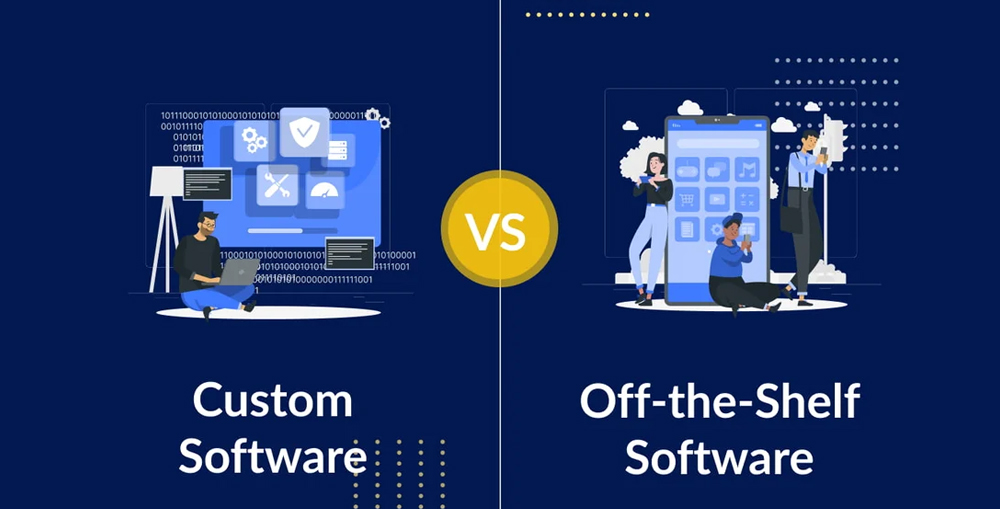
Before we discuss the emerging trends in custom software development, it is important to have a quick comparison of commercial off-the-shelf software solutions vs. custom software development. The biggest difference between COTS and custom software is that the COTS are standardized and built for a particular industry or a large number of audience. The custom software development on the other hand is tailor-made to fully align with your unique business needs and is typically meant for only a single business, team or small sets of users.

Custom Software Development vs. Commercial Off-the-Shelf Software (COTS) Solutions

Here is a quick comparison of COTS and custom software development:

Custom Software Development

Commercial Off-the-Shelf Software (COTS)

Customization & Flexibility

Fully aligned with business needsRarely fits all requirements

Competitive Advantage

Help addressing unique challenges and rapid adaptation for new featuresStandardized solutions, slow development and innovation, expensive & limited features

Scalability & Flexibility

Very flexible, easy to scale and adopt to changes as your business growsLimited flexibility, limited customization and expensive to scale and adopt to changes

System Integration

Highly flexible and cost-effective with third-party system integrationCostly and very limited scope of third-party system integration, often incompatible

Cost & ROI

High upfront cost, but superb ROI due to elimination of inefficiencies and high performanceLow upfront cost, but very expensive in terms of customization, integration and upgrades

Maintenance & Control

Easy & low-cost maintenance, in-house management, full ownership and control over data and applicationRelies only on vendor support and updates, the vendor owns the application and have full or partial control over data

Security

Enable businesses to embed advanced security features, well-protected structure and full complianceExposed architecture of the application, fully rely on vendor for security, have limited compatibility with compliance

That is just a quick comparison, obviously there are many aspects that I haven’t accounted for. For example, the commercial off-the-shelf software (COTS) solutions are quicker to deploy, in fact can be deployed within hours. However, the custom software development had to go through a comprehensive and lengthy development cycle. It majorly depends on your business needs, if you need instant solution then the COTS is the only way, but if you want to develop a long term and more reliable solution, then the custom software development is the right way to do it.

See Also: The Benefits of Custom Software Development for Growing Businesses

The Future of Custom Software Development Trends to Watch in 2025

Stay Ahead of the Competition by Early Adoption to Emerging Custom Software Development Trends

Customized software and applications come long way from being a luxury for large corporation and industries to be reachable for even startups. The evolution in software development technology and the large number of computer programmers and software developers completely revolutionize this industry. The custom software development is not only reachable but is advanced to an extent that it emerged as the ideal option for small businesses and startups.

However, it is crucial for businesses to keep an eye on emerging trends and new advancements in the software development industry. Familiarity with latest market trend position you in a great advantage form all of your competitors. Adopting to innovative solutions tends to be a game-changer for early adopters. Here are a few emerging trends, that you should keep an eye on in 2025 and coming years:

  • Enhanced User Experience: The demand for intuitive user experience is raising rapidly leading to personalized user interface and digital experience. Increasing competition requires maximum efficiency, and satisfactory user experience is a key to higher efficiency and productivity. That is why businesses started focusing more on enhancing user experience and making their software more intuitive and accessible leading to incredible efficiency and higher productivity.
  • Increasing Role of AI and ML: The AI or artificial intelligence and ML or machine learning are among the two most transformative technologies ever developed. Both technologies and super-charge the efficiency and productivity of any software application. The AI and ML enable advanced software tools to processes large volumes of data, learn and adopt to changes, and maximize automation to reduce human efforts while ensuring maximum performance and efficiency.
  • Cyber-Security and Privacy: The cyber-security and data privacy has emerged as the top concern for both businesses and customers alike. A minor data breach could completely ruin the reputation of the business. The cyber-criminals are known for their notorious approaches to commit harm, this requires an out-of-the box approach to mitigate the risk. Therefore adopting to security best practices such as advanced encryption, authentication and access control features, secure programing, etc. in your software is crucial.
  • Cloud-Native Development: The demand for cloud-native software application is rapidly rising due to the fact that cloud is very cost-effective, offers advanced security and resource management and tons of other benefits. The cloud-native development is also a modern form of custom software development, where software are exclusively developed for cloud environment such as AWS, MS Azure, Google Cloud, etc. offering unmatched scalability, security and flexibility.
  • DevOps and CI/CD: The DevOps and CI/CD or continuous integration/continuous development is not only a new trend but an emerging need. The modern business landscape is subjected to rapid changes, technological advancement, digital transformation, innovation and emerging business needs. The DevOps ensure continuous collaboration between the development and operations teams ensuring the software are developed and deployed with utmost quality and unmatched efficiency.
  • Progressive Web Apps (PWAs): The progressive web apps or PWAs are software applications that are designed to deliver a native app-like user experience but are not native apps. Instead the PWAs are developed suing modern web-technologies such as HTML5, CSS3, and JavaScript. These apps are easy to develop, customize and deploy offering cost-saving and better efficiency. These apps are super-efficient and can quickly modify or update to align with changing needs.
  • Blockchain Technology: The blockchain is an emerging technology, we all know the Bitcoin (BTC) and crypto, but the blockchain has a lot more to offer. Especially in customer software development the blockchain technology can greatly enhance cyber-security, transparency, and traceability, ideal for healthcare, supply chain, finance and many other industries. The transparency and accountability are the key components to elevate user trust and satisfaction.
  • IoT Integration: The IoT or internet of things is another modern technology that essentially connect different devices to achieve superior efficiency, management, monitoring and control mechanisms. These smart devices are simplifying operations whether it is a connecting thousands of sensors and motors at a production plant or connecting smart home devices. The IoT integration will surely going to dominate the software development industry in coming years.
  • AR/VR and XR: The AR or Augmented Reality, the VR or Virtual Reality and the XR or Extended Reality are the most modern and very sophisticated technologies. Businesses can leverage these technologies via custom software development to enhance the user experience. Whether you are building a software for your employees or for your customers, whoever the user is the AR/VR and XR have potential to super-charge the efficiency, convenience and productivity.
  • Advanced Data Analysis Tools: The data-driven decisions can make or break a business. Businesses need data for not only decision making but to drive efficiency in operations and resource optimization which directly impact operational cost. Leveraging big data and integrating advanced data analysis tools has emerged as an essential need, especially AI-powered predictive analysis, data collection tools, and actionable insights would be the focus for custom software development in future.
  • Remote Work and Collaboration: The remote work has become a new reality, many businesses rely heavily on remote workforce for their day-to-day operations, especially small companies and startups. This will increase in coming future, requiring businesses to develop the advanced collaboration tools to support virtual workforce. Hence integrating remote-compatible features such as data and communication tools in custom software development will be a great strategic move in coming years.

The custom software development is evolving rapidly. Businesses seeking future-proof solutions must be familiar with the emerging trends. In this modern day and age the business operations is impossible without relying on software applications. These software where save time and cost, also offer efficiency, productivity and performance needed to compete in the competitive markets such as in Dubai, Sharjah, Abu Dhabi and other regions of UAE. The UAE is a very competitive market, businesses who wants to stay ahead of competition must chose the software solutions that not only align with their business needs, but also help them mitigate the unique challenges they are facing.

See Also: The Cost of Custom Software Development: Factors to Consider

Stay Ahead of the Competition by Early Adoption to Emerging Custom Software Development Trends

Conclusion

As we look ahead to 2025, it is crystal clear that the custom software development has emerged as a strategic necessity for businesses who want to remain competitive. Especially in highly competitive markets such as Dubai, Sharjah, Abu Dhabi and other regions of UAE where the competition is very high, businesses need flawless operation and high-performing workforce to sustain growth. The custom software development is proven to be more effective and beneficial for businesses. Although the commercial off-the-shelf software (COTS) solutions offer great many benefits but when it comes to fulfill your unique and exclusive business needs, the custom software development is the ideal solution. Furthermore the custom software development offers superior flexibility, adoptability, integration, security, personalization and alignment with business needs.

See Also: Step-by-Step Guide to Planning Your Custom Software Development Project

Businesses who are planning to implement a new solution or replace an existing software must be aware of emerging trends such as AI, ML, customized User Experience, Advanced Cyber Security, Cloud Computing, Personalized User Experience, Progressive Web Apps (PWAs), Blockchain and many more. In this blog we have listed emerging software development trends which have gained popularity over past years and are expected to grow in coming years. It is crucial for a business to future-proof their software application by adopting up-to-date technologies, features and software development techniques. If you want to learn more about the subject or if you want to avail our cost-effective custom software development services, please feel free to contact us through our Contact Us page or leave a comment in the comment box below and we will get in touch with you soon.

Integrating Queue Management with CRM Systems

In a dynamic and vibrant market landscape, where competition is fierce and customer expectations are soaring, businesses must prioritize efficient customer flow management. A high-performance queue management system is essential to streamline operations and deliver exceptional customer experiences. For any customer service center, the customer flow is a critical factor in determining overall customer satisfaction and happiness, two key elements for sustainable business growth. In the UAE, particularly in Dubai, Sharjah, and Abu Dhabi, businesses are increasingly turning to digital solutions to optimize their queue management processes. A modern queue management system is more than just a ticketing system, it’s a comprehensive tool for enhancing the customer journey and managing the overall experience. It also help empowering the service staff and has ability to effectively improve operational efficiency.

A queue management system is a digital solution comprised of software and hardware components designed to streamline and enhance queuing processes and customer experience management. As a centralized solution, it can connect multiple branches or locations, making it ideal for multi-branch businesses. By monitoring and managing customer flow and experience across all branches in real-time, a digital queue management system empowers branch managers, senior management, and head offices to gain a comprehensive view of customer service and staff performance. Same is applicable for medium and small businesses, they can leverage queue management system for superior performance and fast growth. This enables efficient resource management and proactive measures to prevent congestion and crowd formation, which can significantly impact customer satisfaction. In this blog we will discuss how the integration with CRM System can greatly improve the overall efficiency and impact of a digital queue management system (QMS).

See Also: What are the Different Types of Queue Management System?

Integrating Queue Management with CRM Systems

Why Integrating CRM Solution with a Queue Management System is Important?

A Customer Relationship Management (CRM) system is an indispensable tool for modern businesses. It empowers organizations to analyze, manage, and enhance customer experiences throughout the entire customer lifecycle. The primary goal of a CRM is to foster strong and enduring relationships with customers. By storing and analyzing valuable customer data, CRMs provide a comprehensive view of each customer, including demographics, purchase history, and it can also capture the entire customer interaction. Modern CRMs are designed to seamlessly integrate with various channels, effectively managing both physical and digital customer interactions. This versatility makes CRMs invaluable business assets. Management teams and business leaders rely heavily on CRMs for actionable insights and business intelligence data, which are essential for data-driven decision-making.

A queue management system is fundamentally a customer experience management tool. It streamlines customer flow and enhances the overall customer journey. By capturing valuable business intelligence and analytical data from every customer interaction, the system can also be used to optimize customer relationship management processes. Integrating a customer relationship management (CRM) system with a queue management system (QMS) can significantly enhance the capabilities of both solutions. By combining CRM and QMS, businesses can streamline internal processes and workflows, ultimately leading to improved and elevated customer experiences. The integration means that both CRM and QMS will be able to access the data from one another. This data sharing or synchronization lead to advanced automation and help businesses build innovative features to enhance customer experience.

See Also: Touch Less Customer Experience, Use the RSI Queue Management System

Why Integrating CRM Solution with a Queue Management System is Important?

Key Advantages of Integrating Queue Management System (QMS) with Customer Relationship Management System (CRM)

The integration of the queue management system (QMS) and the customer relationship management system (CRM) involves connecting various data points from both platforms. This means that a certain type of data from both systems will be available to utilize by various features and components of both systems. The integration help improving and personalizing customer experience and service. The queue management system can authenticate the customer or identify them and pull all the relevant information from the CRM and from its own data repository. This enables a queue management system to personalized customer experience and journey based on their previous interactions, preferences, demographics and broader customer profile and customer groups. All these features are very helpful in improving the customer experience.

The queue management system comes with a powerful software with smart algorithms and AI. The queue management system software application offers UI for the customers which are available at interactive self-service ticket dispensing kiosks, online portals or mobile applications. Then there is a dedicated dashboard for the service staff which help them to manage and control the queues. Apart from that the queue management system also offers a dedicated administrative dashboard for the back office which can be customize as per the needs. The branch managers, site supervisors, senior management, head office staff and IT team have their own customized administrative dashboards with different levels of access and control features. These dashboard help respective staff users and empower them with control and information. When the queue management system (QMS) is integrated with the customer relationship management system (CRM) all those features can be improved and additional features can be added for better performance and efficiency.

See Also: How a Queue Management System Can Transform Your Business Operations

Key Advantages of Integrating Queue Management System (QMS) with Customer Relationship Management System (CRM)

CRM Integration with Queue Management System Helps Elevating Customer Experience

In a queue management system customers normally sign-in from an interactive ticket dispensing kiosk. These kiosks also ask some basic questions such as preferred language, required service or purpose of visit, etc. However, in modern queue management systems various digital channels are also integrated such as online portals, mobile applications, appointment booking system, visitor management system, SMS and WhatsApp based system, and QR Code based sign-ins. All these channels and interactive self-service ticket dispensing kiosk can be leveraged to collect valuable insights and to empower various internal business processes and workflows which resultantly enhance and elevate customer experience. For example, these kiosks can comes with facial recognition, Emirates ID Scanner and other biometric technologies which can instantly identify the customer, this help businesses personalize the customer experience and cater to their needs and expectations.

The queue management system not only able to identify the customers’ ID but it can also tally it with the customer data base stored in the customer relationship management system (CRM). A queue management system provides a comprehensive control panel for the service agents. This dedicated agent dashboard offers excellent features to control the customer flow and perform queuing process related several tasks. This dashboard also offer features that empower service agents and help them in pre-service and post-service tasks. This also help service agent to review the past interactions and help them serving customer with better service and experience. Whether it is an existing customer (a deal) or a new customer (a lead) the queue management system can pull data from CRM or push data to CRM which triggers relevant functionalities and enable service agents to enhance service quality. All these features are only possible when a queue management system is effectively integrated with your CRM.

See Also: What are the Basic Components of Queue Management System?

CRM Integration with Queue Management System Helps Elevating Customer Experience

CRM Integration with Queue Management System Boosts Efficiency

The customer relationship management system (CRM) integration with queue management system (QMS) can bring several advantages which not only help elevating customer experience but also help boosting efficiency. The integrating between customer relationship management system (CRM) and queue management system (QMS) help improving several internal processes. The biggest and most fundamental advantage of this integration is to share customer data which includes details of past interaction, purchase patterns, and detailed insights about customer behavior. This information can be a game changer if utilized effectively. The queue management system leverage this information to personalize and optimize customer journey. This information is also very helpful in improving staff performance and efficiency as it helps them in expediting and enhancing customer service. This insight also help improving customer flow and effectively managing different customer segments.

The queue management system is also capable of monitoring and measuring performance and various KPIs of service staff. This information is vital to improve customer flow management. The queue management system has ability to understand which service agent is good or more efficient at what services, which service agent is more efficient with what customer segment and various other such insights. These insights when coupled with the customer details fetched from the CRM, enable queue management system to effectively route customers for better experience and efficient customer flow. This also help management improve their resource allocation and various HR related processes. Furthermore integrating the queue management system (QMS) and the customer relationship management system (CRM) automates the data entry and the customer check-ins which eliminate the human related errors and improve accuracy.

See Also: The Role of AI in Enhancing Queue Management Systems

CRM Integration with Queue Management System Boosts Efficiency

The Future or Queue Management System Integration with Other Business Solutions

We discussed the integration of customer relationship management system (CRM) with queue management system (QMS) brings a multitude of advantages which collectively result in better customer experience and enhanced operational efficiency. As the technologies are advancing rapidly, the market landscape is becoming increasingly competitive and the customer demands are subjected to evolve quickly. The integration of queue management system with other business solution is inevitable to meet the growing business needs. For example, the queue management system can be integrated with the financial system to aid transactional interactions. For businesses who require payments for their services, the interactive self-service ticket dispensing kiosk or any other digital channel can be equipped with payment features. The interactive self-service ticket dispensing kiosks can receive cash payments, and also support various digital payments and contactless payments.

The queue management system also support ability to directly integrate the appointment booking portals, mobile applications, online portals and various digital communication channels such as WhatsApp and SMS, etc. Businesses can also integrate the queue management system with Email Gateways to trigger automated emails such as acknowledgment messages or online surveys, etc. The queue management system can be integrated with central information system, ERPs, and other business solutions. Businesses can also enable customers and visitors to submit and scan various documents which are required for any particular service. The queue management system can also be integrated with various IoTs such as printers, scanners, passport scanners, QR Code and Barcode readers, Facial Recognition cameras, POS, cash payment devices, RFIDs, and various other peripherals which enhance its capabilities and help businesses elevate customer experience via innovative features. These integrations can also greatly improve internal processes and workflows effectively driving operational efficiency.

See Also: How to Implement a Queue Management System at an Airport?

Customized CRM Software Offers Better Adoptability and Future Readiness

Conclusion

In a modern and highly competitive market landscape such as in Dubai, Sharjah, Abu Dhabi and broader UAE integrating customer relationship management system or CRM with a queue management system (QMS) is not just a technology upgrade but a great strategic move. This integration will bring a multitude of advantages which can help businesses gain competitive advantage. This integration create a powerful solution which help businesses dealing with many challenges and enhancing overall efficiency and empower businesses with data-driven decision making. By leveraging the combined strength of these two incredible solutions businesses can personalize customer experience, optimize customer journey and expedite their service delivery mechanisms. By streamlining customer flow, minimizing customer wait time, and elevating overall customer experience businesses can gain customer loyalty and achieve higher customer satisfaction. These two are the key factors for a long-term and sustainable business success.

See Also: Queue Management in Banking: Enhancing Customer Experience

The technology and digital business solutions are evolving at a rapid pace, this also open up various possibilities to integrate the queue management system with various other business solutions. Businesses can leverage the power of custom software development and integration to build innovative features which help them elevate customer experience and operational efficiency. For any business the operational efficiency is crucial it helps them minimize the operational cost while simultaneously boosting operational efficiency. The ability to leverage the combined potential of a queue management system and a customer relationship management system can put you ahead of your competition and help you strengthen your relationship with customers. In this blog we have briefly discussed the importance and key advantages of this integration. If you want to learn more about the subject or if you want our help to design a bespoke queue management system for your business or organization, please feel free to contact us through our Contact Us page or leave a comment in the comment box below and we will get in touch with you soon.
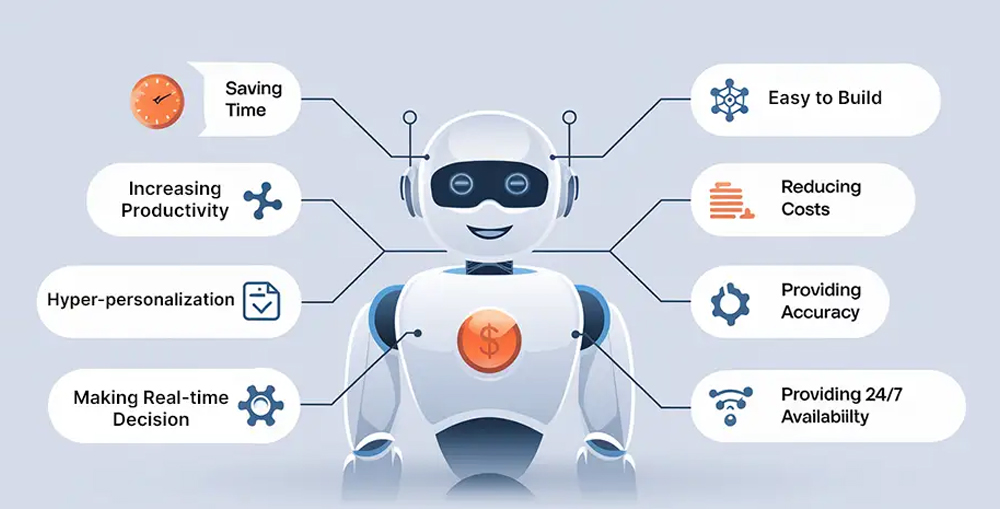
See Also: Importance of Queue Management System for Government and Public Offices


The Role of AI in Custom Software Solutions

In today’s modern and technology-driven market landscape businesses rely on various software solutions in order to maintain maximum operational performance. When it comes to software solutions there are two distinct types of solutions, the commercial off-the-shelf solutions (COTS) and customized software solutions. The COTS are ready-made applications designed for masses, however the customized software are tailored to cater to specific business needs. This is why businesses are shifting their focus towards customized software solutions. The AI (artificial intelligence) is a very powerful technology which is far superior then conventional software applications. That is why businesses are rapidly adopting modern AI (artificial intelligence) based solutions.

When it comes to custom software development, the AI (artificial intelligence) has a lot of potential. The AI is a most modern form of application which is usually implemented where traditional software applications fell short and require human intelligence. There are two major types of AI, the narrow AI which is used to enhance certain tasks. The other type is general AI which is often used in language models, customer services, and it has a wider spectrum of applications. The AI (artificial intelligence) integration in custom software development help automating various sophisticated and complex processes which help driving efficiency and performance. In this blog we will discuss briefly how AI can elevate the impact and efficiency of the custom software solutions.

The Role of AI in Custom Software Solutions

How AI is enhancing the Custom Software Solutions?

Before we discuss the role of AI in customer software solutions, let us first understand the customer software development. In today’s modern and digitally transformed market landscape, businesses tend to utilize multiple software applications and IT infrastructure in order to optimize their operations. There are two major categories of software, one is the COTS or commercial off-the-shelf solution and the other is custom software development. The biggest difference between a custom software application and a COT solution is that the COTS are designed for masses and are usually industry specific. Whereas the custom software development is a process to designing and developing bespoke software solutions that resonate with the business needs.

Both custom software development and the COTS have their own advantages and disadvantages, the customer software development stands out because of its ability to fully align with the business needs. The custom software solutions are designed exclusively for businesses and have a particular user group. The custom software solutions are exclusive, hence has ability to offer a better competitive advantages. Furthermore the custom software address even the smallest challenge or problem a business. On top of that the custom software solutions offer easy customization and flexible third-party integration capabilities. Because of all these features businesses tend to rely more on custom software development which is also making the role of AI more crucial and important for software industry. Here is how AI is enhancing the custom software solutions.

See Also: Why Off-the-Shelf Solutions Fall Short: Advantages of Custom Software Development

How AI is enhancing the Custom Software Solutions?

Benefits of Integrating AI in Custom Software Development Lifecycle

The AI or Artificial Intelligence is rapidly reshaping the IT industry, which is not only impacting our work lives but also personal lives. The AI plays crucial role in custom software solutions, even at software development lifecycle. When AI aided tools and analysis techniques are used during custom software development, it can potentially be the great catalyst to innovation and exceptional efficiency. The AI at software development lifecycle empowers software developers and help them design more efficient, impactful and user-centric applications. The role of AI is not limited to software development lifecycle, it also plays crucial role in custom software designs. When AI-powered algorithms integrated within the customized software applications, it help making them more efficient and effective.

  • AI Enhance User Experience: The AI has capabilities to analyze large volume of data which help understanding user behavior. Understanding user behavior is extremely crucial for designing software applications which can deliver exceptional user experience.
  • AI’s Predictive Analysis: The AI or Artificial intelligence is capable of performing exceptional predictive analysis which help software developers predict future trends and customer demands. This analysis help designing customer-centric software applications.
  • Boosting Efficiency: The AI-powered tools help software development teams to avoid repetitive tasks, it also help them streamlining and expediting the software development process. The AI-powered frameworks and development tools accelerate the development processes.
  • AI Enhance Performance: The AI powered tools help software development team overcome many challenges that are associated with traditional development techniques. It enhance communication, avoid repetitive work, and help the team to efficiency allocate resources.
  • AI-Powered Code Assistants: Now a day’s AI-powered code assistants and programming tools are redefining the software development. These tools empowers developers, boost their skills, enable accelerated programing methods, perform debugging, and ensure highest coding standards.
  • Testing and Maintenance: The role of AI is not limited in designing and coding, but it effectively does testing, and also help development team in maintenance with its remarkable predictive algorithms, it empowers preventive maintenance and enhance scaling of the applications.

AI-powered tools and integration of various AI applications drive innovation and make customized software more customer-centric, intuitive and efficient.

See Also: Leveraging Big Data in Custom Software Development

Benefits of Integrating AI in Custom Software Development Lifecycle

The AI’s Natural Language Processing (NLP) and Machine Learning (ML) Tools

We all know well about Siri, Alexa, ChatGPT and Google Assistant, these all are AI-powered applications. And these all applications heavily rely on Natural Language Process (NLP) and Machine Learning (ML) algorithms. There are so many open source AI platforms such as Meta’s (Facebook) Llama, Keras, Rasa, Amazone Sagemaker, and ApacheMXNet are most popular and widely used platform which makes it a lot easier to integrate customized AI models and wider array of use-cases in your custom software solutions. These tools help businesses build innovative and intuitive features which enhance user experience efficiency. By leveraging the true potential of AI in managing custom software applications, collecting and analyzing analytical data businesses can build exceptional software applications.

  • Increase User Engagements: The AI’s Natural Language Processing (NLP) help creating Chabots and virtual Assistants in your customized software solutions. These tools help engaging users and customers and make your software application more automated and efficient.
  • Sentiment Analysis: Another remarkable feature of NLPs is that their unparalleled capability to understand and identified customer sentiments in user-generated content and customer feedback which help businesses improve features of their custom software solutions.
  • AI-Powered Data Mining: The AI’s ability to collect, process and analyze large volume of data from multiple different channels is remarkable. The AI with its NLP and ML can accurately identify hidden insights, patters and correlations which help improving customer experience.
  • Machine Learning (ML): The Machine Learning (ML) is a subset of AI, which help businesses build predictive models, identify fraud, rectify errors, and learn about user behavior to fuel continuous improvements in custom software solutions which is essential for customer satisfaction.
  • AI Strengthens Cyber Security: The AI plays a crucial role in cyber security, it has ability to improve the software management tools. The AI-powered custom software solutions can integrate additional security and monitoring layers powered by AI algorithms to mitigate cyber threats.

When AI-powered algorithms and tools are integrated in the custom software solutions, it can offer a spectrum of benefits. The user engagements can be increased effectively, while making the application experience seamless and more user-friendly. The data mining and analysis tools help identifying the strengths and weaknesses of your customized software applications and help you make continuous improvements and enhancements for elevated user experience and efficiency.

See Also: Custom Software Development for Enhanced User Experience

The AI’s Natural Language Processing (NLP) and Machine Learning (ML) Tools

The AI Provides Business Intelligence Data and Help Making Informed Decisions

For any business whenever they are planning to implement a new software solution, they have certain objectives in mind. For example, for an ERP businesses aim to effectively manage resources to drive superior performance. In case of a CRM businesses aim to deliver satisfactory customer service and experience to achieve higher customer satisfaction. However, these all decisions require a lot of insights, technical knowledge along with professional skills. For any business making informed decision could be a game changer, because every strategic decision could have long-term impact on business growth. Therefore businesses rely on business intelligence data to empower their decision making process.

The business intelligence data consists of customer feedbacks, internal data, statistical and analytical data collected from all available or most relevant channels and data sources. This help businesses identify the need of new features or solutions. It basically help identifying the flaws in existing business processes and workflows which help improving them.

  • Business Intelligence: Whether the AI is implemented at a single software solution or at the organizational level it help collecting and analyzing business intelligence data. The AI powered algorithms precisely identify patterns, trends, and are capable of uncovering hidden insights, correlations, and it produces actionable reports. These actionable reports not only help making informed decisions but also help analyzing the impact of those decisions.
  • Scenario Analysis: Businesses often failed to utilize the scenario analysis methodologies or even if they do it they do it incorrectly. The AI has tremendous potential, with its abilities to understand historical data, collect user generated data, statistical and analytical data mining, and its ability to converge all data sources from a variety of channels to a single repository makes scenario analysis much more precise, effective, impactful and cost-efficient.

For any business informed decisions are the key to success. The data-driven decision making is becoming mainstream. It is due to the rapid changes in the market, dynamic competitive landscape and every increasing customer demands. Businesses need to be more proactive, responsive and informed in order to meet all those challenges. The AI can play a crucial role in improving operational performance and can provide a great edge over competition.

See Also: Custom Software for Improved Business Efficiency

The AI Provides Business Intelligence Data and Help Making Informed Decisions

The Role of AI in Improving Key Business Functions

The AI or Artificial Intelligence will play a crucial role in future in software development industry. In today’s digitally dominate world, businesses rely on various different types of software applications to effectively and efficiently operate different business functions. The AI has huge potential to improve each and every business function which makes it an essential tool for long-term business success. Here are some key business functions and the role of AI in improving them:

  • Customer Relationship Management (CRM): The customer relationship management (CRM) is one of the most crucial business function. The AI can enhance customer relationship management methods and CRM software. The AI can help improving customer interaction and customer service. It can effectively analyze customer data to help building targeted marketing campaigns and communication material for better brand perception. The AI-powered Chatbots and Virtual Assistants can offer instant service and assistance to elevate customer satisfaction.
  • Enterprise Resource Planning (ERP): The ERP or Enterprise Resource Planning software is a centralized information center and a framework for business operating software. The AI can empower management by reducing the efforts, maximizing the efficiency, eliminating repetitive tasks and offering highly accurate predictive analysis. The AI can effectively automate several internal process and workflows which help managers focus on more productive and crucial tasks. AI-powered predictive analysis and forecast eliminate human errors and empower decisions.
  • Cyber Security: The data is like the bloodline in modern enterprises and businesses, hence the cyber security is the top priority. Business value cyber security not only to protect the data but also to safeguard their brand image and reputation. AI-powered management frameworks and tools have capabilities to respond to cyber threats in real-time. The AI algorithms can detect the fraudulent activities and suspicious user behavior with high accuracy. These features level up cyber security and help mitigating cyber threats with a proactive and preventive approach.
  • Human Resource (HR): The Human Resource (HR) is responsible for hunting right talent and retaining the productive staff. It is also responsible for ensuring elevated performance and optimized operational efficiency. The AI-powered HR tools can effectively screen resumes and help finding the right talent. Furthermore the AI have huge application in employee performance management and appraisal processes. The AI can effectively identify the obstacles and factors hindering staff performance and effectively elevate HR team’s efficiency.
  • Marketing and Communication: The marketing and communication are main catalyst in driving revenue and growth. For marketing and communication businesses must have right customer personas and segmentation. This is a very complex and sophisticated process. The AI can effectively analyze historical data, customer preference, past interactions, and demographics to create most effective user groups for marketing and communication. This not only reduce efforts and save costs but also make these campaigns much more profitable.

The role of AI is not only limited to above mentioned business functions,  but it also have wider application in almost every business function such as manufacturing, warehouse & facility management, financial services, other vital internal business processes. That is why businesses are eager to explore the potential of AI in various business functions. No matter how and where you implement AI-powered solutions, the AI is proven to drive superior efficiency, performance and accuracy.

See Also: The Cost of Custom Software Development: Factors to Consider

The Role of AI in Improving Key Business Functions

Conclusion

In the technology-driven market landscape the AI or Artificial Intelligence is not a futuristic concept anymore, but it has emerged as a reality and absolute necessity to meet with the present day challenges businesses are facing. A modern business or enterprise rely on various software solutions for their daily operations. Hence businesses are on a regular demand to upgrade, improve, and enhance their software and IT infrastructure. The need of implementing a brand new software application is very common, businesses tend to revamp and upgrade their tools every year. This is crucial to stay competitive and to maintain maximum operational performance. When it comes to implement a new software application businesses have two ways to move forward. They can either chose the commercial off-the-shelf solution (COTS) or they can go for a custom software solutions.

The custom software solutions tend to be more effective, impactful and high-performing comparing to COTS or commercial off-the-shelf solutions. The custom software development enable businesses to effectively design applications which accurately meet their needs and fits-in seamlessly in their existing IT infrastructure and environment. The application of AI (Artificial Intelligence), Natural Language Processing (NLP) and Machine Learning (ML) is huge in custom software solutions. The AI elevate custom software solutions from the software development lifecycle to implementation, maintenance, security and even during the improvement processes. The AI has remarkable ability to process large volume of data, above that it has capabilities to collect and analyze data form various resources and channels with absolute accuracy and remarkable efficiency. This is what makes AI an essential component of present day custom software development.

The role of AI in custom software solutions is set to grow even further in coming future. As we all are becoming more accustomed to various AI tools and applications in our daily lives, it is expected to have the similar pattern in the work as well. People are getting more used to of such applications, the software developers, the end-users and decision makers, everyone is getting more familiar with the AI tools. In this blog we have discussed briefly the role of AI in custom software solutions and its benefits along with its impact on key business functions. If you want to learn more about the subject or if you want our help with your next AI-powered custom software development project, please feel free to contact us through our Contact Us page or leave a comment in the comment box below and we will get in touch with you soon.
See Also: Unlocking Business Potential with AI-Powered Advanced Analytics

See Also: Step-by-Step Guide to Planning Your Custom Software Development Project


Impact of Queue Management on Customer Satisfaction in Retail

For every retail business managing higher customer influx or long waiting lines at cash counters is one of the most challenging task. Long waiting lines not only results in unpleasant customer experience but also have toll on your staff performance which eventually further undermine the customer satisfaction. As UAE is a very diverse and vibrant country and retail businesses operating in Dubai, Sharjah, Abu Dhabi and other regions of country knows their customers comes from all around the world, which demands a highest possible standard of customer service to ensure customer satisfaction. The UAE is also home to multiple retail chains, with thousands of small, medium and large retail businesses operating all across the country.

Why Retail Businesses Need a Modern Queue Management System?

The competition has risen to the sky and due to this competition and higher customer demands the queue management at retail businesses have become more challenging than ever before. The traditional queuing techniques have become ineffective and retail businesses are needing modern digital queue management systems to overcome such challenges. A modern queue management system is not just a token machine but it is a highly sophisticated and smart software-based solution which synchronize various software and hardware components and provide more control over customer flow which help businesses in delivering a satisfactory customer experience.

The importance of customer satisfaction is paramount in retail industry as the customers usually have multiple options in their easy reach and the long waiting time is one of the biggest cause of the customer churn. Furthermore the operational efficiency is another big concern at retail businesses which is hindering customer experience and costing businesses a lot in precious sales. This also have negative impact on businesses image and reputation. The customers who felt poorly at any retail store tend to avoid it in future which can have devastating effects on overall business’s success and long term growth. In this blog we will discuss how a modern queue management system can help retail businesses transform their customer journey and help them achieve higher customer satisfaction.

See Also: From Chaos to Control: How Queue Management Systems Can Improve Your Business

Why Retail Businesses Need a Modern Queue Management System?

What is the Role of AI in Modern Retail Queue Management Systems?

The modern queue management systems heavily rely on smart algorithms and sophisticated AI (artificial intelligence) which help collecting and analyzing valuable analytical data in real-time. Before we discuss the technology it is also important to understand the waiting psychology. When customers are waiting in the long queues, they got confused and frustrated, one of the biggest confusion is the perception of waiting time. The perceived wait time is always higher than the actual wait time. It is due to the natural psychological reaction our brain has when we are waiting without having much control on wait time. This frustrates us and it feels like we have spent more time than what we actually did. This is the wait time perception and this have huge impact on customer satisfaction.

The modern queue management system helps retail businesses to streamline queues, with the help of physical stanchions, belts, and digital signage, the customer can get distracted from waiting, while without any worrying of line jumpers or getting any sense of confusion. Furthermore the retail queue management system is equipped with modern AI (artificial intelligence) which gets live feeds from CCTV Security and specialized surveillance cameras. This camera feed is relayed to an AI (artificial intelligence) engine which analyzes the video in real-time and provides feedbacks on estimated wait time and even it is capable enough to analyze the staff performance in real-time and alert branch manager if any interruption occurs. These features greatly enhance the decision making abilities of the management and help them elevate the customer satisfaction.

See Also: The Concept of Queue Management and Crowd Control

What is the Role of AI in Modern Retail Queue Management Systems?

The Queue Management System Drives Automation

One of the biggest advantage of a modern queue management system is its ability to drive automation and digitalize various internal workflows. Several workflows and human resource management tasks can be digitalized and automate using the queue management system. The queue management system comes with a server-side software application. The queue management software provides advanced administrative controls which empower the management and help them take quick and accurate decisions which help streamlining the customer flow and help minimizing the customer wait time especially during the peak hours. Here are a few features which help retail businesses to enhance customer satisfaction:

  • Virtual Queuing: The queue management system offers interactive kiosks and integrated smartphone applications. The customers can use these to sign-in to the virtual queues, which gives them freedom to roam around the store while waiting in a virtual queue. This minimize the stress of waiting and help improving the customer experience.
  • Integration of Self-Checkout: The self-checkout retail kiosks are a great tool to enhance customer experience and elevate satisfaction. The queue management systems are very flexible towards integration and help businesses integrate self-service checkout kiosks which enable customers to checkout without requiring any help from staff resulting is expediting the service delivery.
  • Dynamic Lane Control: The queue management system infused with the people counting technologies and AI (artificial intelligence) can automatically monitor and count the volume of customers in real-time. This allow the queue management system to automatically open or shut service lanes as per the needs. The staff can also be notified if a new lane or service counter had to be open to ensure a smooth customer flow.

The modern queue management system not only help minimizing the customer wait time but it also help improving the decision making and overall operational efficiency. The queue management system at retail businesses are effectively improving the staff performance but empowering management with more advanced data collection and analytical tools which help them in improving their decision making.

See Also: How Queue Management System can Boost Productivity and Profitability?

The Queue Management System Drives Automation

The Queue Management System Boosts Operational Efficiency

The queue management system is a very smart application it has various sources and tools which enables it to collect valuable analytical and system usage data. The modern queue management software are infused with AI (Artificial intelligence) and ML (machine learning) which makes it even more effective and impactful. The queue management system also helps management implement their queuing polices with more precision and accuracy. It offers valuable features for self-service while enabling accessibility for enhanced customer experience. The modern queue management system can be integrated with various sensors that physically track the volume of customer flow and when infused with AI integrated people counting and tracking tools it can even track the movement of the customers within the premises of your business and help you understand the customer flow.

These insights are valuable and help management understand the customer flow which highlights the areas of improvements. The ability to offer virtual queues and automated lane controls further empower the management in their human resource planning. The queue management system not only collects data in real-time but it also keeps the data repository helping management track various patterns with at most accuracy and help them understand the customer flow at any given day or time of the day. Furthermore during busy occasions or any festivity or during the seasonal sales the management can accurately understand the customer influx and customer flow which help them effectively and productivity utilize the human resource in hand to achieve the higher operational efficiency.

See Also: What are the Different Types of Queue Management System?

The Queue Management System Boosts Operational Efficiency

Conclusion

The queue management have evolved tremendously over the past two decades, from humble paper pencil to the modern day queue management systems which are empowered by the most modern and sophisticated AI (artificial intelligence) and ML (machine learning) technologies. The modern day queue management systems offer flexible customization which makes them ideal for various industries and applications. Especially in the retail industry where the customer demands are high, the markets are extremely competitive and the customer wait time is one of the biggest concern for businesses, a modern queue management system has become absolutely essential.

The queue management systems that are designed and customized for the retail industry are equipped with specialized software and hardware components that ensure smoother customer flow, optimum staff performance and elevated customer experience. Features like advanced analytical data collection, virtual queues, dynamic lane control, AI-based customer flow tracking tools and advanced administrative controls help management not only enhance customer satisfaction but it also help them boost the operational efficiency. The management can effectively utilize the human resource in hand with better productivity which directly impact operational performance and results in elevated customer experience.

In this blog we have discussed how a modern queue management system can be leveraged to enhance customer waiting experience while effectively boosting productivity and overall operational performance. If you want to learn more about the subject or if you want our help to implement a bespoke queue management system for your retail business, please feel free to contact us through our Contact Us page or leave a comment in the comment box below and we will get in touch with you soon.
See Also: What are the Basic Components of Queue Management System?


The Future of Performance Appraisals: 6 Innovations and Changes [Quick Guide]

The performance appraisal is a crucial aspect of performance management, businesses are proactively seeking ways to maximize their performance. Traditionally the performance appraisal is a once in a year exercise associated with a lot of paper work, yearly meetings, and little bit of frustration. Both the managers and employees felt the pressure during the appraisal process. However, things have changed rapidly, businesses have started adopting more modern and advanced performance appraisals systems to boost the performance and employee engagements. Since past decade we have witnessed a wide-scale adoption of modern performance appraisal methods and systems all around the world.

Businesses in UAE are also rapidly adopting to modern performance management trends. In this blog we will discuss how a modern performance management system can greatly elevate your performance management process. The modern software-based performance management systems digitalize the process, offer advanced data collection tools, and boost employee engagements and satisfaction. The modern workforce have different priorities and require a completely different performance management approach. This is why the traditional annual reviews and performance appraisal systems are failing, compelling businesses to embrace the innovation and automation.

The Future of Performance Appraisals Innovations and Changes

The Evolution of the Performance Appraisal System

The traditional performance appraisal system focuses on annual reviews majorly focused on hierarchal feedbacks, which proven to be ineffective for the modern workforce. The major reasons of its failure are the revolutionary change in the workforce behavior alongside rapid and sudden changes in the business landscape. Businesses started realizing that they need a more frequent and continuous performance assessment framework which is very responsive and it aligns with the modern workforce mindset. Now a days businesses are more focused on continuous feedback and real-time assessments which led to real-time development and improvements.

See Also: Why Organizations need Performance Appraisal System in UAE

Moreover the one-size-fits-all approach also faded away, as businesses have realized that this method is no longer fruitful. Instead of that businesses started adopting personalized and robust assessment methodologies that are flexible and harmonious with individual employee needs and goals. Instead of appraisals being an annual event the modern performance appraisal system offers a bi-weekly or monthly assessments and a continuous feedback framework which keeps employee engaged and promote a highly collaborative and highly efficiency development system. The regular check-ins are a great way to discuss ongoing progress, give constructive feedback and align employees with organizational goals and objectives.

The Evolution of the Performance Appraisal System

1. The Blend of Modern Strategies and Technology

The technology is the backbone of the modern performance appraisal system, it completely revamped the entire process making it more efficiency and effective. A technology infused performance appraisal system is built around a performance appraisal software or performance management software (PMS). From integration of AI (artificial intelligence) and smart analytical algorithms to advanced real-time data collection tools, businesses are embracing the power of technology to elevate performance appraisal process which ensures highest levels of efficiency and accuracy. The modern performance appraisal systems offer intuitive online platform where the both managers and employees can access to the relevant performance data in real-time enabling them to take actions, when and wherever needed.

See Also: Characteristics of a Good Employee Appraisal System

These tools can greatly enhance the efficiency and eliminate the tedious paperwork from the process. Businesses can not only automate several administrative tasks but they can also get real-time updated data to understand various employee performance trends and deeper insight. This insight helps them identifying the area of improvements and taking timely actions to keep everyone on track towards achieving high-level organizational goals and objectives. Furthermore the modern performance appraisal system software are super-accessible, employees and managers both can access the system from online or even via their mobile phones. The self-assessment tools, advanced skill development modules and accurate KPIs can significantly improve the accuracy, efficiency and impact of the system.

The Blend of Modern Strategies and Technology

2. Shift towards Continuous Feedback and Focus on Employee Alignment

The traditional performance appraisal system lacks two major and most crucial factors, one is frequency of the feedbacks, in fact it only has once a year feedback and assessment system and the other most important aspect is the inefficient and ineffective approach towards employee alignment with their individual goals and in long term towards the high level organizational goals and objectives. The traditional annual reviews and feedbacks are prone to develop a gap and disconnect between the employees and the managers which results in delays in feedbacks and actions. Once a year feedback couldn’t course correct and align employees with their goals, however, the course correction and addressing to performance hindering issues is required in real-time.

See Also: How to Develop Custom Performance Appraisal System in UAE?

The bloodline of performance management and main objective of appraisal process is to align individual employee’s goals with high-level organizational strategic objectives. The annual appraisal reviews and feedback lacks this connection which results in disengagement of employees from the high-level strategic goals and objectives. This requires intense communication and a strong bond between the managers and the employees. A modern performance management system promotes communication, continuous feedback and give ownership to employees boosting engagements and cultivating a culture of collaboration, communication and collective growth. The modern performance appraisal system ensures every employees clearly understand their goals, success parameters, and how their goals and work will contributes to the higher-level organizational goals and strategic objectives.

Shift towards Continuous Feedback and Focus on Employee Alignment

3. Shift from Fixing the Weakness towards Focusing on Strength and Development

The primary focus of the modern day performance appraisal system is not focusing only on the past performance but it also has to be a catalyst for the growth, development and improvements in the future. Now a day’s businesses are more focused on employee development and retention. This help businesses gradually grow their workforce and skillset to build strength which drive performance and efficiency. Another most important and impactful advantage of the resent day employee appraisal system is to give ownership to the employees and empower them to shape their development journey. This system gives employee power, resources, support and tools to build strength, identify their weaknesses and focus on learning and continuous development.

See Also: Modern Methods of Performance Appraisal

Businesses need to build and retain a skillful workforce that can improve operational efficiency and help businesses achieve their goals and drive long-term sustainable success. The managers can leverage the inbuilt advanced tools to identify the strengths and weaknesses of the individual employees with contextual performance insights. This insight is crucial in further enhancing the employee’s skills to make them more productive and fruitful for the organization. This also help businesses and HR leaders to take informed investment decisions in development programs which help businesses build a resilient workforce which ensures high-quality products/services and satisfactory customer experience.

Shift from Fixing the Weakness towards Focusing on Strength and Development

4. Flexibility and Data-Driven Insights

In today’s modern market landscape businesses have to be very vigilant and proactive towards the rapid market changes emerging needs. This demand agile performance appraisal and data collection system which is flexible enough to enable businesses to make instant adjustments. This helps businesses align with the emerging needs and help them to be more responsive towards rapidly changing market trends. This is only possible when the business leaders and managers have highly accurate performance data and critical insights which help management identify trends, correlations and patterns which help making more accurate and informed strategic decision to improve the performance.

See Also: 5 Challenges to face if Performance Appraisal is not customized as per Organization’s Policies

Furthermore the performance appraisal system is a software based solution which enable businesses to customize their performance management system to accommodate their unique business needs and to deal with unique challenges they face. The ability to customize the performance parameters, goals, KPIs, and even the entire framework help management proactively take actions to respond to the rapidly evolving trends, customer demands, and needs. This also prepare businesses to deal with unprecedented and unexpected situation while minimizing or eliminating the disruptions. Whether it is adjusting to the goals, assessment criteria, feedback and review process or integration of the new technologies, the inherent flexibility and customization of the performance appraisal system helps businesses deal with challenges with no or minimum disruption in progress.

Flexibility and Data-Driven Insights

5. Performance Beyond Numbers – Accountability with Transparency

Traditionally the performance appraisal was focused on KPIs and achievements, lacking contextual analysis and behavioral competencies. However, the modern performance appraisal system is measuring performance beyond numbers, and recognizing the importance of accountability with highest transparency. Businesses have realized that achieving goals is important but there are several other personality traits and qualities which also plays a crucial role in overall performance as well as fostering a high-performing and engaging organizational culture. Here are a few most important qualities:

  • Teamwork and Collaboration: Today’s work environment demand higher collaboration and teamwork in order to effectively achieve the strategic objectives.
  • Adoptability: Today’s market landscape is driven by technology and the technology evolves rapidly furthermore the customer demands and market trends are also subjected to change quickly, therefore it is crucial for an employee to be able to adopt to emerging changes.
  • Ethics and Responsibility: A modern day employees should have to be ethically strong and they should exhibit exceptional ability to take ownership, responsibility and initiatives. This will make them a valuable asset for the organization.
  • Creativity and Innovation: Businesses are always facing challenges either with emerging needs, or rapid advancement in the industry, therefore an employee with higher level of problem solving skills and a creative and innovative mindset to bring new ideas to the table.

See Also: How to Design a Modern Performance Management System?

The KPIs, OKRs, and the evaluation based on above qualities and other such qualities will help businesses and organizations to build a performance appraisal framework which can precisely evaluate the true potential and abilities of an employee.

The accountability and transparency is the soul of an employee performance appraisal system. This is also one of the biggest reason why business leaders and organizations are adopting to modern performance appraisal system and methodologies. The traditional performance appraisal system lacks transparency and is prone to biased evaluation furthermore the insufficient performance data also hinder the transparency and cause lack of trust on the system. The employees are more concerned about transparency, fair evaluation, clear evaluation criteria, performance expectations and clarity in goal and objectives. This is only possible with modern performance appraisal system, continuous feedback, 360 degree feedbacks, customizable performance dashboards, and various other advanced analytical and data collection tools to promote fair accountability and transparency in the system.

See Also: The Role of Performance Management in Employee Engagement

Performance Beyond Numbers – Accountability with Transparency

6. More Focus on Reward and Recognition

The employee motivation is one of the most crucial factor contributing to the entire performance of the organization. If the employees are rewarded for their performance and their achievements are adequately recognized and well-appreciated, they tend to perform better. A regular annual raise or bonuses are not enough, businesses are finding more creative ways to reward and recognize their employees such as:

  • Public Recognition: Public recognition is one of the best way adopted by modern organizations to appreciate their employees. When employees are appreciated publicly either in marketing, social media, newsletter or internal meetings, it will not only boost their morale but it will also result in inspiring and motivating others.
  • Development Opportunities: The learning and development opportunities are a great way to raise employee retention and to boost employee skills which eventually contributes to improving performance. Employees who doesn’t found enough learning and development opportunities they feel their growth is limited and are tend to leave the organization.
  • Fair Reward Process: Fairness in the reward process is crucial, the employee who is rewarded must know on what criteria he or she is rewarded and the other employees must also know what he or she did exceptionally which make them eligible for this particular reward. The fairness and transparency is crucial for keeping everyone’s morale high.

See Also: What are the Features of a Best Performance Management System?

The fair and transparent reward and recognition program can greatly benefit both employees and the business by fostering a culture of appreciation and encouragement. Furthermore the modern employee performance appraisal system provides a systematic framework for communication which helps employees understanding their goals, business’s expectations, performance criteria and it is also very helpful in strengthening the relationship between the managers and employees which itself is a great way to increase employee engagements and boost the organizational performance.

More Focus on Reward and Recognition

Conclusion

Traditionally the employee performance appraisal process comes with a lot of paperwork, efforts, and some frustration as well. Furthermore the traditional performance appraisal system also fell short of meeting the modern need of performance management and the accuracy of the process is also questionable. Therefore businesses are now adopting to modern performance management and appraisal practices alongside software aided solutions. The modern performance appraisal system comes with a comprehensive software application which not only digitalize the process but also help automating it and offer many additional benefits which enable businesses to conduct more frequent evaluations, even project-based evaluation and bi-weekly assessments are also effectively done through it.

The modern performance appraisal system offer continuous feedback loop, communication framework, goals and objective setting facility, highly accurate KPIs monitoring tools, real-time performance data collection, personalized assessment methodologies, and specialized tools to focus on reward and recognition while boosting transparency, accuracy and efficiency. Furthermore the modern performance appraisal system also focus on higher employee alignment with organizational goals and strategic objectives. This helps businesses achieve their long-term goals and sustainable success.

Furthermore the modern performance appraisal system also focus on fostering highly collaborative organizational culture which not only boost communication but also help businesses keep employees more engaged and proactive. Businesses also want to achieve higher employee retention which is only possible when the organizations are able to identify the areas of improvements, employee problems, their needs and expectations. In this blog we have discussed how the future of performance appraisal will look like in the coming years. If you want to learn more about the subject or if you want our help to design and deploy a modern and customized employee performance appraisal system exclusively designed to meet your unique business need, please feel free to contact us through our Contact Us page or leave a comment in the comment box below and we will get in touch with you soon.
See Also: How Performance Management Impact on Organization’s Culture?

See Also: Unlocking Business Potential with AI-Powered Advanced Analytics


Top Trends in Custom Software Development: What’s Shaping the Industry?

Any modern day business runs on a variety of different software and digital solutions. The software and digital ecosystem is considered to be the backbone of modern business landscape. Every business’s day-to-day operation depends on different kinds of software tools. That is true in some industries the software are more important than the others, but in modern day and age, no business can effectively and efficiently operate without leveraging any software tool, even the emails that you use daily are also through a software tool. That is why business invest a huge chunk of their profits in modernizing and digitalizing their various operational processes.

When it comes to acquiring a new software solutions there are two ways, either businesses can go for a commercial off-the-shelf software solution or they can go for custom software development. The questions arises which one is better? Well, in short the custom software development is much better than the commercial off-the-shelf solutions (COTS) as it can fulfill your 100% of needs, it offers excellent ROI and enable businesses to mold their software and applications as per their emerging needs. In this blog we will discuss the top trends that are reshaping the custom software development industry.

Top Trends in Custom Software Development: What's Shaping the Industry?
Top Trends in Custom Software Development: What’s Shaping the Industry?

What makes Custom Software Development the Ideal Solution for your Business?

The custom software development offers many benefits and advantages over commercial off-the-shelf software (COTS) solutions. The COTS are ready-made software which are designed for masses, the custom software development is dedicated to cater to the needs of a single business. The initial cost of COTS is low, it can be deployed even within in a day. The custom software development on the other hand is a lengthy process. However, the custom software are exclusively designed for the business after doing rigorous research on the business needs, and are fully aligned with the business requirements. The COTS are designed as per industry standards, and mostly failed to fulfill all needs.

The custom software development allow businesses endless customization. Whereas the COTS doesn’t offer a flexible customization, in fact the COTS allow very limited but very expensive customization. Which is why businesses either end up using multiple software or they have to replace a software which is not ideal. The customized software are keep on evolving with emerging business needs and doesn’t have any restriction which makes them ideal for businesses. Similarly the customized software are more flexible with integration, upgrades and can evolve according to emerging business needs which make them much superior to the commercial off-the-shelf software (COTS) solutions.

See Also: Why the Custom Software Development is Good for Your Business?

What makes Custom Software Development the Ideal Solution for your Business?

Top Custom Software Development Trends that are Reshaping the Industry

In today’s fast-paced markets businesses heavily rely on data and information flow, in fact the information and data is considered to be the lifeblood of the modern technology-oriented business operations. Therefore most of the time when a business needs a new software or application it has to be integrated within their existing digital and IT infrastructure, just like a jigsaw puzzle, every piece should align with each other to form the perfect picture. Businesses utilize a multitude of software, tools, and technologies to drive efficiency and performance in their operations, day-to-day work, and data management. This further complicates the digital ecosystem as multiple technologies, platforms and software types are work collaboratively and in harmony to ensure the desired performance.

For example, businesses tend to have ERP systems, performance management system, customer feedback systems, CRL or customer relationship management system, facility management system, inventory management system, accounting system and HRMS or human resource management systems are the few most commonly used software tools. Furthermore businesses use websites, mobile apps, and other digital channels for communication and even to deliver service and support.

See Also: Trends in custom software development in 2022

Top Custom Software Development Trends that are Reshaping the Industry

All different software types, tools, technologies and platforms evolve and transform on a different pace. For example, the ERP systems may evolve quickly comparing to asset management system, and so on. All different software and tools are built on different technologies, different programming tools and with different platforms. Although this might not sound a big problem, but for large enterprises and organizations this could be a very challenging task, however, startups and small businesses who might not have as much diverse digital eco-system doesn’t face much problems with their IT needs. That is why when it comes to a custom software development, businesses must have to seriously consider the technology barriers and integration limitations.

Therefore businesses who are planning to implement a new software solution or a business tools must have to consider these facts, or else they should be aware of the latest market trends. Because all top custom software development trends are influenced by all these technological advancements and all external factors which is why if you follow the top trends, you will get a perfect application which not only aligns with your business needs but also with the industry standards and your existing digital ecosystem and this will enable you to leverage your custom software at its full potential and maximize its ROI (return over investments). Here are some top trends in custom software development which dominated the year 2023 and are going to dominate the software development market for many coming years.

See Also: Step-by-step Guide to Develop Custom Enterprise Software

Businesses utilize a multitude of software, tools, and technologies to drive efficiency and performance in their operations

Top Custom Software Development Trends: Progressive Web Apps (PWA)

A progressive web apps or PWAs are developed using modern web platforms in a way that user can have a user experience like a native or platform-specific apps. Another great advantage of progressive web apps is that a PWA can run seamlessly on multiple platforms/devices, same like a modern websites while having only a single codebase. Thus the progressive web apps or PWAs enables the developers to utilize the native features and security of multiple compatible platforms while having only one codebase. Traditionally the software and apps are developed exclusively for the platform or are platform-specific.

This means that if a business have users who are utilizing multiple platforms then they have to develop it separately for all these platforms, each platform will have its native codebase which is not usable on other platforms. This results in developing a similar app for multiple time which undermine the user experience, as each platform could have slightly different user experience, furthermore the business will have to pay for each individual platform which increase the cost too. With the progressive web app (PWA) the users can have a similar experience on all platforms, the business can get them in very less cost, the maintenance, upgrades, customization and updates are very easy and cost-efficient. That is why more and more businesses in Dubai and all around the UAE are embracing PWAs.

See Also: Custom Software Development Progressive Web Apps – Beginner’s Guide

Top Custom Software Development Trends: Progressive Web Apps (PWA)

Top Custom Software Development Trends: Web 3.0 and Blockchain

The Web 3.0 or Web 3 is the third era of internet, it could be as disruptive as the first-age internet was and it could have great potential to completely transform the internet, software and web industry. The Blockchain is a Web 3.0 or Web 3 technology and it is currently in its infancy but businesses all around the world are exploring different ways to integrate it within their existing digital ecosystem. The primary different between the Web 3.0 and the Web 2.0 or what form of internet we are currently using is that the Web 3.0/Web 3 would be open-source, decentralized, and would offer highest level of network security.

This means that the fraud and theft would be closer to none, as all the transactions, information and data will be distributed and open to all. The Blockchain is the perfect example of Web 3.0, although it may take it a few more years or a decade to gain significant market share, but it is evolving rapidly and tech giants like Google, Microsoft, Meta and other key players are already involved in it. The Web 3.0 not only have potential to integrate smart technologies, but it will streamline data flow and communication between people, devices and services which will help developers to overcome several security related problems and will also help businesses to boost automation and efficiency.

See Also: Common Mistakes to Avoid in Custom Software Development Projects

Top Custom Software Development Trends: Web 3.0 and Blockchain

Top Custom Software Development Trends: IoB and IoT

The IoB is the internet of behavior and the IoT is the internet of things. The IoB or internet of behavior is the technology to connect physical objects/devices to the internet and monitor human behavior or how human interact with the environment around them. The IoB is majorly based on behavioral science, IoT or internet of things and edge analytics. The IoB platforms are designed to gather huge amount of statistical and analytical data from multiple sources and leveraging this data to enhance customer experience. The IoT or internet of things connect digital devices via internet and let them interact with each other and based on this interaction or human intervention, the connected devices behaves according to pre-programmed instructions or direct instructions from the human user.

This is why it is very useful in IoB as the internet of behavior platforms utilize the data from digital devices, wearable tech, and user behavior on internet via mobile phones or laptop and then utilize this data to enhance user experience and help businesses to improve their communication and solutions according to customers’ needs. The major application of IoB is in customer experience management, e-Commerce, communication, self-service solutions, and SEO (search engine optimization).

See Also: Why Laravel Framework is gaining popularity in Software Development?

Top Custom Software Development Trends: IoB and IoT

Top Custom Software Development Trends: Microservices Architecture

The Microservices Architecture is a custom software development methodology where an application is developed in smaller modules or a collection of multiple smaller services. The Microservices Architecture is also referred as only Microservices. A Microservices software application can call on multiple microservices to perform the task as per user’s instructions. Another important thing to understand is that all the microservices that are used in a single software application are usually loosely coupled and can independently deployed too. This means that these services can be developed by different teams as well.

The Microservices Architecture is very popular in custom software development as it allow developers and software engineers to utilize many pre-built or ready-made services and build their software application above these microservices, which speed up the development and delivery process and also allow businesses to get innovative features at a comparatively less cost. Another great advantage of microservices architecture over monolithic software is that businesses can independently upgrade or customize individual component of the software or individual microservice which also help optimizing the maintenance and customization cost and results in more stable product.

See Also: Which Software Development Trends Yield Success in 2023?

Top Custom Software Development Trends: Microservices Architecture

Top Custom Software Development Trends: DevSecOps

The DevSecOps is a short form of Development, Security and Operations. This method is majorly adopted in custom software development to improve security and performance of the customized applications. The DevSecOps is a method of custom software development where the security features are introduced and implemented at all phases throughout the software development lifecycle. Traditionally the security features are implemented at the end of the software development and usually by a different team who is specialized in software security. However, with the DevSecOps method, the security features are implemented from designing up till software delivery phase including from designing, development, integration and testing phases of the software development lifecycle.

This method enables multiple security layers in your custom software applications while prioritizing the security as the primary goal of custom software development. The DevSecOps help businesses leverage the security features of the application and infrastructure while ensuring maximum performance and seamless operation of their custom software application. The DevSecOps method not only ensures ultimate performance but also ensures highest level of security while keeping the cost at the minimum and instead of slowing down the development process, it tends to speed it up.

See Also: How to Develop a Custom Software in Dubai?

Top Custom Software Development Trends: DevSecOps

Top Custom Software Development Trends: Artificial Intelligence (AI)

The Artificial Intelligence or AI is the buzz word in today’s world where the ChatGPT, Microsoft Bing Chat, Google Bard, Proplexity, MidJourney and countless others have become internet sensation over the night. Everyone is talking about these tools, especially the ChatGPT have taken the world like a storm. But what does this means for the businesses and how does businesses can leverage the power of artificial intelligence to boost their productivity, performance and quality of the work? Normally the artificial intelligence or AI is referred to a software tool or application which can perform tasks which are normally not performed by ordinary computer programs or which are normally performed by humans.

Just imagine you can have a computer software which is capable of analyzing data and information, monitoring a situation and taking decision like a human in real-time, working non-stop and 24/7 with extraordinary ability of processing huge data and numbers which no human can does! This is what artificial intelligence is capable of, it is not just limited to chat bots or automated customer call center, the artificial intelligence or AI can do much more than we can imagine. Although it is still in its infancy, but sooner it will be everywhere, it will become an integral part of software development and its scope and ability to operate will be greatly enhanced.

See Also: Why custom software is more cost efficient in UAE?

Top Custom Software Development Trends: Artificial Intelligence (AI)

How Top Trends in Custom Software Development can Help your Business Grow?

Businesses often are not familiar with the custom software development trends, which results in using technologies and platforms that are fading away or losing the edge they might have had a few years back. That is why it is important to know the latest software development trends as well as emerging trends so your bespoke software remains relevant for many coming years and yield you the best ROI. Mostly software trends comes and goes, but only a few stay, for example, the world is slowly adopting to AI and moving toward cloud computing, and it seems that in coming years these two technologies will grow exponentially, that is the reason major giant technology companies are investing huge in these two sectors and for the matter of fact many more such trends are here to stay for long.

All the technological advancements in custom software development and enterprise solutions are aimed to streamline data and communication, drive automation and to boost performance. Businesses can gain a great competitive advantage by leveraging the latest trends and technologies in software development. Therefore it is important to follow the right trend and develop such applications which can evolve with your emerging and upcoming needs. Choosing technologies and trends that are fading away will limit your software’s ability down the road and will compel you to a point where you will have to replace it with more modern and efficient technology. That is why it is crucial for businesses to follow the popular trends in custom software development.

See Also: Importance of Custom Software Development in Dubai

How Top Trends in Custom Software Development can Help your Business Grow?

Conclusion

Businesses need customized software tools to boost their operational performance and capabilities. A good software tool can provide a great competitive advantage, however, it is important to understand that deploying a software is not the only part, in fact you should consider the future needs, customization and the technology you are using. It is important that the software you are implementing will remain relevant for coming years too, the technology and platform it is based on should also grow so it can support your future needs and it can support your growth.

For that businesses should follow the latest custom software development trends. A custom software development requires a lot of time and resources, which means repeating the same after a year or two is not good at all. Therefore if the software you will develop based on latest and emerging trends can remain relevant for many years and offers you a great ROI over a longer period of time. In this blog we have listed top emerging custom software development trends which are not only emerging but gaining huge popularity and are meant to stay for many coming years.

If you want to learn more about the top trends in custom software development or if you need any help with your upcoming custom software development project, please feel free to contact us through our Contact Us page or leave a comment in the comment box below and we will get in touch with you soon.
See Also: Guide to Custom Software Development