BLOG OF RSI CONCEPTS

world map

AI Agents in Logistics: Customized Solutions for Supply Chain Optimization

Supply chain management is a very critical and complex business function involving countless moving parts and sophisticated workflows. Especially in UAE, which is a global trade hub, hence the market is vast, complex, and competitive. The biggest flaw in traditional supply chain management methodologies, is the slow moving workflows and complicated business processes. Another most important aspect is the flow of information, the delay in sharing information over-complicate the processes. This is why the world is turning towards the customized AI Agent to optimize the supply chain management.

A customized AI Agent is an advanced technological solution, powered by AI (artificial intelligence) which has ability to scan the information from the warehouse, track the shipments and monitor the transportation and then take real-time decisions on the spot. A customized AI Agent is trained on your own company’s data, it align with your business goals, and have incredible ability to process vast amount of information. A customized AI Agent which is trained for supply chain management is like a digital helper, who is aware of its environment, who can sense changing conditions, who can take decisions, who can make most efficient plans and execute them with utmost accuracy to achieve a pre-set goal.

The supply chain management team is under constant pressure of dealing with unprecedented hiccups, ensuring the demands are met and at the same time eagerly struggling to reduce the cost. The customized AI Supply Chain Agent can monitor changing prices, inventory status, and it can automatically place order when the material runs low without requiring step-by-step instructions. This ability makes them an ideal solution to optimize the supply chain.

See Also: Integrating AI Agents into Core Business Applications for Operational Excellence
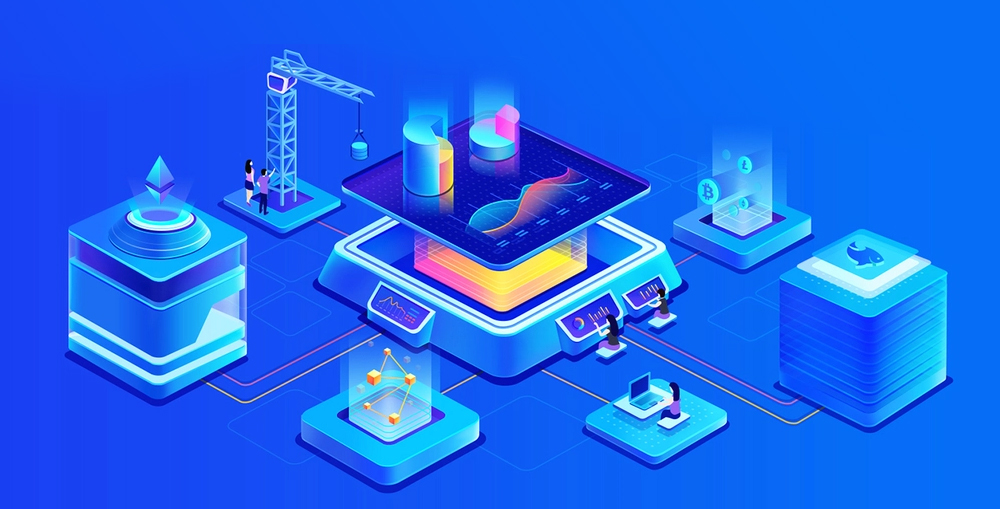
Supply Chain Management (SCM)

How Customized AI Agents Work in Supply Chain?

An AI Agent can be customized to seamlessly adopt to each business’s unique supply chain needs. Every business has its own unique way of executing different processes, performing tasks and managing different business functions. A customized AI Agent can be trained on these all, which makes it a well-trained digital helping agent or even we can say a digital employee who knows every ins and outs of the business. That is why a customized AI Agent seamlessly integrates within the business environment. Above all the customized AI Agent has access to historical data and can sense the ordering pattern and problems which are nearly impossible for a human staff.

The customized AI Agent can also monitor market pattern and pricing fluctuations, which enable it to make smart decisions. Moreover it can perform advanced analytics, produce actionable insights, and forecast and place orders fully autonomously. The ability to align with the assigned business goal and taking actions distinguishes AI Agents from traditional supply chain management solutions. It follows rules, adopt to changes and it can make smart data-driven decisions. This means the customized AI Agents doesn’t require full-time monitoring and doesn’t require a human staffer to tell them their next move.

These incredible abilities enable customized AI Agents to instantly take informed decisions, make adjustments, and take effective actions instantly as a change in the conditions or environment is registered. Moreover the customized AI Agents are seamlessly integrated with all relevant systems, solutions and data sources which empower their decisions and help optimizing the operational cost. Purchase at ideal time, never face inventory shortage and autonomy results in superior efficiency and reduction in cost.

See Also: How Customized AI Agents are Revolutionizing Business Automation
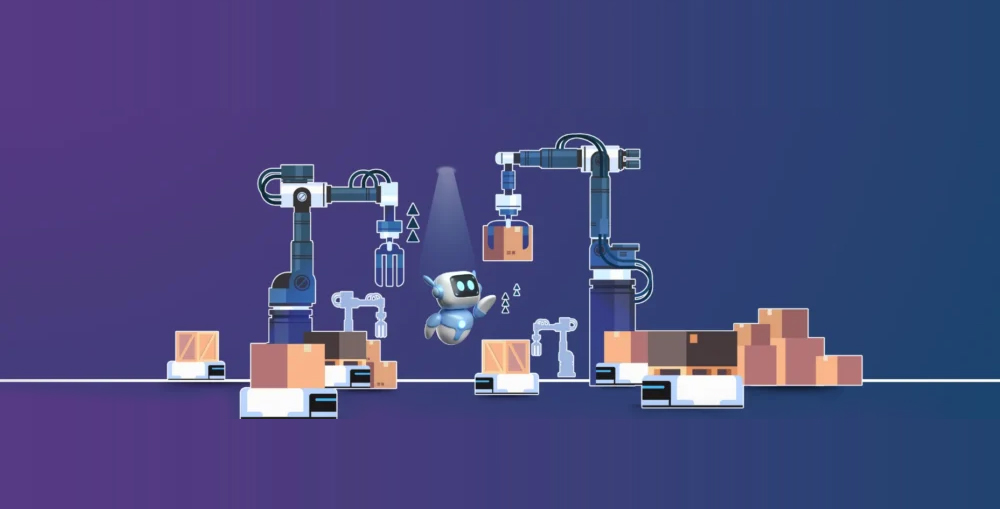
Transforming Supply Chain Management with AI Agents

Why Customized AI Agents are Ideal for the Supply Chain?

Usually businesses rely upon off-the-shelf supply chain management solutions. However, every business has different needs, some business might be dealing with temperature-sensitive raw materials, some deals with materials whose cost fluctuates, and some deals with electronics components whose availability is not constant throughout the year. Every business has different needs, different priorities and totally different challenges. The generic smart solutions lacks the potency to deliver required efficiency.

The customized AI Agents on the other hand are fine-tuned to your business’s unique needs and have additional abilities like ML (machine learning), NLP/NLU (natural language processing/understanding), LLM (large language models), and computer visions technology which enable them to interact with people using conversational mediums and monitor the warehouses.

Moreover the customized AI Agents can understand and account your suppliers’ behavior, logistics challenges, and demand patterns and align with your strategic goals. This enable them to prioritize what matters the most and what have more impact on their high-level goal.

In short, the customized AI Supply Chain Agents solve the right problem in the right way, ensuring maximum efficiency and avoiding disruption in operation due to supply chain problems which is very fruitful for businesses in both short and long-terms.

See Also: The Future of ERP: Leveraging AI for Smarter Enterprise Management

Here are the key benefits of implementing a customized AI Agent in the supply chain:

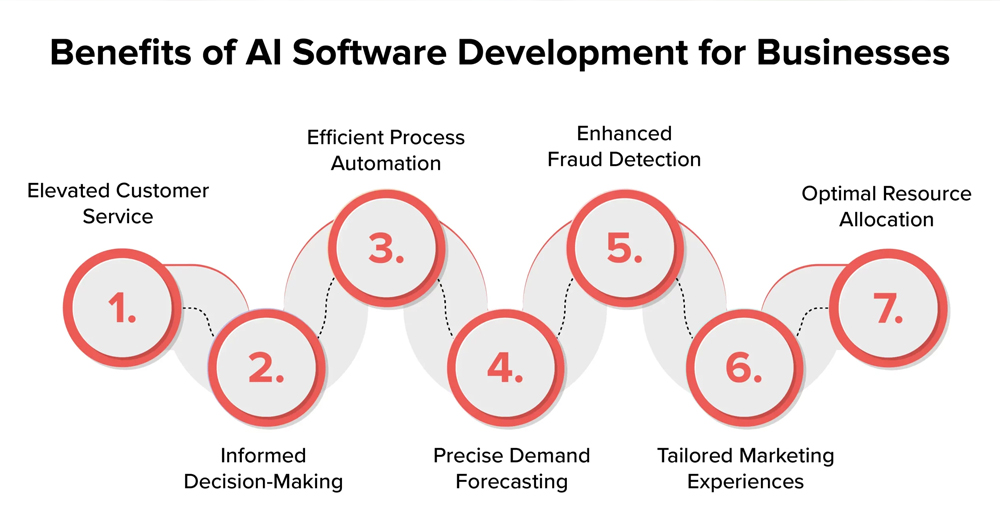
  • Boosting Efficiency: The customized AI Agents have incredible ability to process and analyze data, which enables them to take smart decisions in core supply chain processes such as logistics & routing, inventory control, vendor selection, etc. with fewer to none errors. The customized AI Agents are fully autonomous which mitigate major challenges and eliminate most common inefficiencies from the supply chain. Boosting efficiency not only empower the human staff but also help businesses reduce the cost and eliminate the shortage of the raw materials/inventory, crucial for business operations.
  • Improve Decisions: The customized AI Agents are excellent at identifying the small anomalies and hidden patterns in large data sets. Regardless of the volume and type of data, the AI can detect patterns and extract actionable insights. The customized AI Agents can fetch data form multiple data-streams in real-time along with historical data. Above all these agents are fully aligned with the strategic goals which enable them to take most informed, effective and accurate decisions. This also help reducing errors and increase readiness for the continuously changing environment and conditions.
  • Streamline Operations: The customized AI Agents can incredibly reduce the staff overhead, empowering staff and automating various routine tasks. For example, instead of a manager or staff planning daily schedules for logistics, the customized AI Agents automatically take care of it. Moreover the customized AI Agents can automate routing, and monitor everything in real-time, if any change happens they have capability to take actions to minimize the delays or reroute without requiring any help from the human staff. Similarly the inventory can be monitored, orders can be placed and prices can be monitored and appropriate actions are taken.
  • Cutting Operational Cost: The customized AI Agents boost operational efficiency, improve decision making, and streamline business operations which resultantly reduce the operational cost. Moreover the customized AI Agents can anticipate problems before they become costly. Whether it is vehicle tracking, monitoring of conveyer belts or refrigerators, the customized AI Agents does all in parallel. They can even schedule maintenance and repair at right time to minimize the impact and reduce the disruption in the operation. Combining all these benefits results in great operational cost cutting and reduce waste.
  • Forecasting & Planning: The customized AI Agents can greatly improve the forecast and supply chain planning strategies. Traditionally businesses usually rely on the spreadsheets and mostly manual data analysis and sometime just guess work. However, the customized AI Agents on the other hand can perform advanced data analysis on various aspects, such as past order history, inventory status, vendor/supplier behavioral patterns, weather and even social media to make accurate forecasts and strengthen the supply chain planning. The ability to analyze large datasets and include multiple data sources can drastically reduce errors in forecasting.
  • Enhance Procurement: The customized AI Agents have incredible ability to organize the vendors by automating various routine tasks and enhancing vendor management process. These agents can understand vendor’s behavior, pattern, and also account preferred vendors, order sizes, etc. along with forecasting, unplanned demands, and warehousing. It can alert if any delay occurs, and automatically prioritize vendors on the bases of their performance, lead time and cost. It can even initiate negotiation, and automate correspondence. All these features help supply chain managers to take accurate and effective decisions while optimizing cost and efficiency.

The customized AI Agents tend to be super-efficient at driving automation and boosting efficiency. Behind this involves the ability to integrate or plugin into all relevant systems and data repositories. A customized AI Agents offer flexible third-party system integration which eliminates information silos, instead of copying data from one system to another, the AI Agents seamlessly fetch all the required data sets from all connected systems.

This enables customized AI Agent to operate as a well-trained and highly efficient digital or virtual worker, who can work round-the-clock, never get tired, never repeat mistakes and can handle multiple tasks in parallel. An AI Supply Chain Agent monitor warehouse, track inventory, place orders, organize vendors, update records instantly, manage and organize routes, and instantly adjust to unprecedented conditions or disruption.

See Also: The Role of AI Agents in Transforming Core Business Application Functions
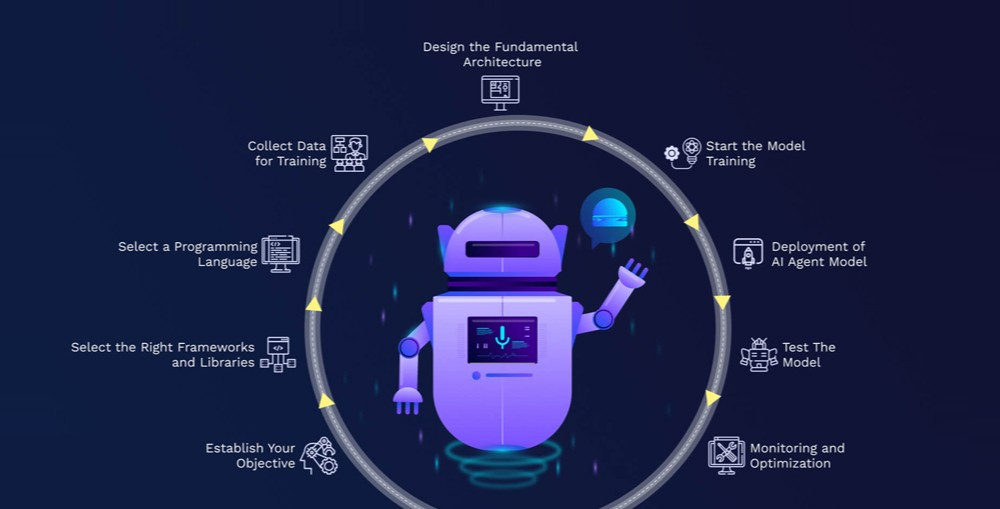
Integrating Customized AI Agents into Core Business Applications

Conclusion

The future of supply chain is increasingly technology driven. The AI dominates the modern technological revolution, especially the agentic AI, which has ability to operate independently, take up to the tasks which were previously only done by the humans, it leverages the existing IT infrastructure and digital solutions like any human staff does, and these agents can also interact and coordinate with other AI Agents. Presently businesses are using single AI Agent for a particular role or function, but in coming future we will see the multi-agent solutions where multiple customized AI Agents will work in harmony and cooperation to solve complex problems.

There are several organization who are proactive working on developing agent-to-agent protocols which will serve as the foundation for the multi-agent systems. This will enable businesses to integrate multiple customized AI Agents in hierarchal orders and clusters. In this blog we have discussed how the customized AI Agents can operate in supply chain management. A customized AI Supply Chain Agent not only automates supply chain management tasks, but it drives efficiency and accuracy by integrating multiple information management systems.

Moreover with inherent ability to analyze large volume of both real-time and historical data enhance their ability to take accurate decisions and make effective plans. Customized AI Agents have huge impact on staff’s performance, but it doesn’t mean it can replace the human staff, in fact these agents are more like a helper who take care of the tedious tasks for humans. If you want to learn more about customized AI Agents or if you want our help in designing and implementing a customized AI Agent for your business, please feel free to contact us through our Contact Us page or leave a comment.

See Also: What is Queue Management? Beginner’s Guide to Queuing Systems

The Role of AI in Custom Software Solutions

In today’s modern and technology-driven market landscape businesses rely on various software solutions in order to maintain maximum operational performance. When it comes to software solutions there are two distinct types of solutions, the commercial off-the-shelf solutions (COTS) and customized software solutions. The COTS are ready-made applications designed for masses, however the customized software are tailored to cater to specific business needs. This is why businesses are shifting their focus towards customized software solutions. The AI (artificial intelligence) is a very powerful technology which is far superior then conventional software applications. That is why businesses are rapidly adopting modern AI (artificial intelligence) based solutions.

When it comes to custom software development, the AI (artificial intelligence) has a lot of potential. The AI is a most modern form of application which is usually implemented where traditional software applications fell short and require human intelligence. There are two major types of AI, the narrow AI which is used to enhance certain tasks. The other type is general AI which is often used in language models, customer services, and it has a wider spectrum of applications. The AI (artificial intelligence) integration in custom software development help automating various sophisticated and complex processes which help driving efficiency and performance. In this blog we will discuss briefly how AI can elevate the impact and efficiency of the custom software solutions.

The Role of AI in Custom Software Solutions

How AI is enhancing the Custom Software Solutions?

Before we discuss the role of AI in customer software solutions, let us first understand the customer software development. In today’s modern and digitally transformed market landscape, businesses tend to utilize multiple software applications and IT infrastructure in order to optimize their operations. There are two major categories of software, one is the COTS or commercial off-the-shelf solution and the other is custom software development. The biggest difference between a custom software application and a COT solution is that the COTS are designed for masses and are usually industry specific. Whereas the custom software development is a process to designing and developing bespoke software solutions that resonate with the business needs.

Both custom software development and the COTS have their own advantages and disadvantages, the customer software development stands out because of its ability to fully align with the business needs. The custom software solutions are designed exclusively for businesses and have a particular user group. The custom software solutions are exclusive, hence has ability to offer a better competitive advantages. Furthermore the custom software address even the smallest challenge or problem a business. On top of that the custom software solutions offer easy customization and flexible third-party integration capabilities. Because of all these features businesses tend to rely more on custom software development which is also making the role of AI more crucial and important for software industry. Here is how AI is enhancing the custom software solutions.

See Also: Why Off-the-Shelf Solutions Fall Short: Advantages of Custom Software Development

How AI is enhancing the Custom Software Solutions?

Benefits of Integrating AI in Custom Software Development Lifecycle

The AI or Artificial Intelligence is rapidly reshaping the IT industry, which is not only impacting our work lives but also personal lives. The AI plays crucial role in custom software solutions, even at software development lifecycle. When AI aided tools and analysis techniques are used during custom software development, it can potentially be the great catalyst to innovation and exceptional efficiency. The AI at software development lifecycle empowers software developers and help them design more efficient, impactful and user-centric applications. The role of AI is not limited to software development lifecycle, it also plays crucial role in custom software designs. When AI-powered algorithms integrated within the customized software applications, it help making them more efficient and effective.

  • AI Enhance User Experience: The AI has capabilities to analyze large volume of data which help understanding user behavior. Understanding user behavior is extremely crucial for designing software applications which can deliver exceptional user experience.
  • AI’s Predictive Analysis: The AI or Artificial intelligence is capable of performing exceptional predictive analysis which help software developers predict future trends and customer demands. This analysis help designing customer-centric software applications.
  • Boosting Efficiency: The AI-powered tools help software development teams to avoid repetitive tasks, it also help them streamlining and expediting the software development process. The AI-powered frameworks and development tools accelerate the development processes.
  • AI Enhance Performance: The AI powered tools help software development team overcome many challenges that are associated with traditional development techniques. It enhance communication, avoid repetitive work, and help the team to efficiency allocate resources.
  • AI-Powered Code Assistants: Now a day’s AI-powered code assistants and programming tools are redefining the software development. These tools empowers developers, boost their skills, enable accelerated programing methods, perform debugging, and ensure highest coding standards.
  • Testing and Maintenance: The role of AI is not limited in designing and coding, but it effectively does testing, and also help development team in maintenance with its remarkable predictive algorithms, it empowers preventive maintenance and enhance scaling of the applications.

AI-powered tools and integration of various AI applications drive innovation and make customized software more customer-centric, intuitive and efficient.

See Also: Leveraging Big Data in Custom Software Development

Benefits of Integrating AI in Custom Software Development Lifecycle

The AI’s Natural Language Processing (NLP) and Machine Learning (ML) Tools

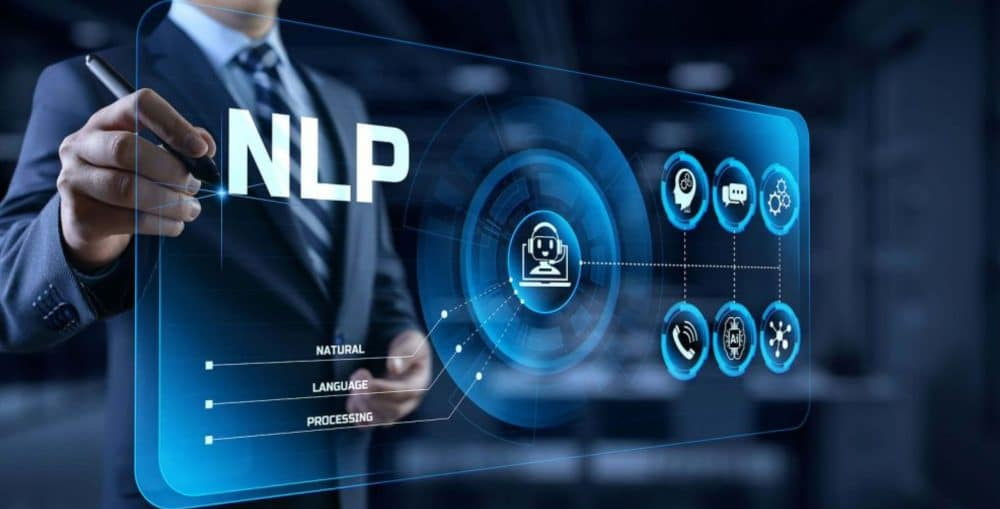
We all know well about Siri, Alexa, ChatGPT and Google Assistant, these all are AI-powered applications. And these all applications heavily rely on Natural Language Process (NLP) and Machine Learning (ML) algorithms. There are so many open source AI platforms such as Meta’s (Facebook) Llama, Keras, Rasa, Amazone Sagemaker, and ApacheMXNet are most popular and widely used platform which makes it a lot easier to integrate customized AI models and wider array of use-cases in your custom software solutions. These tools help businesses build innovative and intuitive features which enhance user experience efficiency. By leveraging the true potential of AI in managing custom software applications, collecting and analyzing analytical data businesses can build exceptional software applications.

  • Increase User Engagements: The AI’s Natural Language Processing (NLP) help creating Chabots and virtual Assistants in your customized software solutions. These tools help engaging users and customers and make your software application more automated and efficient.
  • Sentiment Analysis: Another remarkable feature of NLPs is that their unparalleled capability to understand and identified customer sentiments in user-generated content and customer feedback which help businesses improve features of their custom software solutions.
  • AI-Powered Data Mining: The AI’s ability to collect, process and analyze large volume of data from multiple different channels is remarkable. The AI with its NLP and ML can accurately identify hidden insights, patters and correlations which help improving customer experience.
  • Machine Learning (ML): The Machine Learning (ML) is a subset of AI, which help businesses build predictive models, identify fraud, rectify errors, and learn about user behavior to fuel continuous improvements in custom software solutions which is essential for customer satisfaction.
  • AI Strengthens Cyber Security: The AI plays a crucial role in cyber security, it has ability to improve the software management tools. The AI-powered custom software solutions can integrate additional security and monitoring layers powered by AI algorithms to mitigate cyber threats.

When AI-powered algorithms and tools are integrated in the custom software solutions, it can offer a spectrum of benefits. The user engagements can be increased effectively, while making the application experience seamless and more user-friendly. The data mining and analysis tools help identifying the strengths and weaknesses of your customized software applications and help you make continuous improvements and enhancements for elevated user experience and efficiency.

See Also: Custom Software Development for Enhanced User Experience

The AI’s Natural Language Processing (NLP) and Machine Learning (ML) Tools

The AI Provides Business Intelligence Data and Help Making Informed Decisions

For any business whenever they are planning to implement a new software solution, they have certain objectives in mind. For example, for an ERP businesses aim to effectively manage resources to drive superior performance. In case of a CRM businesses aim to deliver satisfactory customer service and experience to achieve higher customer satisfaction. However, these all decisions require a lot of insights, technical knowledge along with professional skills. For any business making informed decision could be a game changer, because every strategic decision could have long-term impact on business growth. Therefore businesses rely on business intelligence data to empower their decision making process.

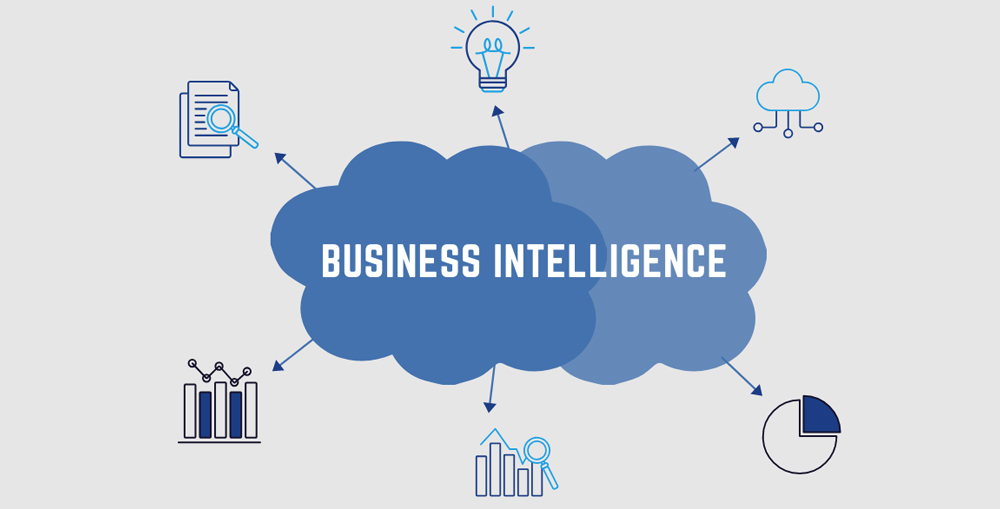
The business intelligence data consists of customer feedbacks, internal data, statistical and analytical data collected from all available or most relevant channels and data sources. This help businesses identify the need of new features or solutions. It basically help identifying the flaws in existing business processes and workflows which help improving them.

  • Business Intelligence: Whether the AI is implemented at a single software solution or at the organizational level it help collecting and analyzing business intelligence data. The AI powered algorithms precisely identify patterns, trends, and are capable of uncovering hidden insights, correlations, and it produces actionable reports. These actionable reports not only help making informed decisions but also help analyzing the impact of those decisions.
  • Scenario Analysis: Businesses often failed to utilize the scenario analysis methodologies or even if they do it they do it incorrectly. The AI has tremendous potential, with its abilities to understand historical data, collect user generated data, statistical and analytical data mining, and its ability to converge all data sources from a variety of channels to a single repository makes scenario analysis much more precise, effective, impactful and cost-efficient.

For any business informed decisions are the key to success. The data-driven decision making is becoming mainstream. It is due to the rapid changes in the market, dynamic competitive landscape and every increasing customer demands. Businesses need to be more proactive, responsive and informed in order to meet all those challenges. The AI can play a crucial role in improving operational performance and can provide a great edge over competition.

See Also: Custom Software for Improved Business Efficiency

The AI Provides Business Intelligence Data and Help Making Informed Decisions

The Role of AI in Improving Key Business Functions

The AI or Artificial Intelligence will play a crucial role in future in software development industry. In today’s digitally dominate world, businesses rely on various different types of software applications to effectively and efficiently operate different business functions. The AI has huge potential to improve each and every business function which makes it an essential tool for long-term business success. Here are some key business functions and the role of AI in improving them:

  • Customer Relationship Management (CRM): The customer relationship management (CRM) is one of the most crucial business function. The AI can enhance customer relationship management methods and CRM software. The AI can help improving customer interaction and customer service. It can effectively analyze customer data to help building targeted marketing campaigns and communication material for better brand perception. The AI-powered Chatbots and Virtual Assistants can offer instant service and assistance to elevate customer satisfaction.
  • Enterprise Resource Planning (ERP): The ERP or Enterprise Resource Planning software is a centralized information center and a framework for business operating software. The AI can empower management by reducing the efforts, maximizing the efficiency, eliminating repetitive tasks and offering highly accurate predictive analysis. The AI can effectively automate several internal process and workflows which help managers focus on more productive and crucial tasks. AI-powered predictive analysis and forecast eliminate human errors and empower decisions.
  • Cyber Security: The data is like the bloodline in modern enterprises and businesses, hence the cyber security is the top priority. Business value cyber security not only to protect the data but also to safeguard their brand image and reputation. AI-powered management frameworks and tools have capabilities to respond to cyber threats in real-time. The AI algorithms can detect the fraudulent activities and suspicious user behavior with high accuracy. These features level up cyber security and help mitigating cyber threats with a proactive and preventive approach.
  • Human Resource (HR): The Human Resource (HR) is responsible for hunting right talent and retaining the productive staff. It is also responsible for ensuring elevated performance and optimized operational efficiency. The AI-powered HR tools can effectively screen resumes and help finding the right talent. Furthermore the AI have huge application in employee performance management and appraisal processes. The AI can effectively identify the obstacles and factors hindering staff performance and effectively elevate HR team’s efficiency.
  • Marketing and Communication: The marketing and communication are main catalyst in driving revenue and growth. For marketing and communication businesses must have right customer personas and segmentation. This is a very complex and sophisticated process. The AI can effectively analyze historical data, customer preference, past interactions, and demographics to create most effective user groups for marketing and communication. This not only reduce efforts and save costs but also make these campaigns much more profitable.

The role of AI is not only limited to above mentioned business functions,  but it also have wider application in almost every business function such as manufacturing, warehouse & facility management, financial services, other vital internal business processes. That is why businesses are eager to explore the potential of AI in various business functions. No matter how and where you implement AI-powered solutions, the AI is proven to drive superior efficiency, performance and accuracy.

See Also: The Cost of Custom Software Development: Factors to Consider

The Role of AI in Improving Key Business Functions

Conclusion

In the technology-driven market landscape the AI or Artificial Intelligence is not a futuristic concept anymore, but it has emerged as a reality and absolute necessity to meet with the present day challenges businesses are facing. A modern business or enterprise rely on various software solutions for their daily operations. Hence businesses are on a regular demand to upgrade, improve, and enhance their software and IT infrastructure. The need of implementing a brand new software application is very common, businesses tend to revamp and upgrade their tools every year. This is crucial to stay competitive and to maintain maximum operational performance. When it comes to implement a new software application businesses have two ways to move forward. They can either chose the commercial off-the-shelf solution (COTS) or they can go for a custom software solutions.

The custom software solutions tend to be more effective, impactful and high-performing comparing to COTS or commercial off-the-shelf solutions. The custom software development enable businesses to effectively design applications which accurately meet their needs and fits-in seamlessly in their existing IT infrastructure and environment. The application of AI (Artificial Intelligence), Natural Language Processing (NLP) and Machine Learning (ML) is huge in custom software solutions. The AI elevate custom software solutions from the software development lifecycle to implementation, maintenance, security and even during the improvement processes. The AI has remarkable ability to process large volume of data, above that it has capabilities to collect and analyze data form various resources and channels with absolute accuracy and remarkable efficiency. This is what makes AI an essential component of present day custom software development.

The role of AI in custom software solutions is set to grow even further in coming future. As we all are becoming more accustomed to various AI tools and applications in our daily lives, it is expected to have the similar pattern in the work as well. People are getting more used to of such applications, the software developers, the end-users and decision makers, everyone is getting more familiar with the AI tools. In this blog we have discussed briefly the role of AI in custom software solutions and its benefits along with its impact on key business functions. If you want to learn more about the subject or if you want our help with your next AI-powered custom software development project, please feel free to contact us through our Contact Us page or leave a comment in the comment box below and we will get in touch with you soon.

See Also: Unlocking Business Potential with AI-Powered Advanced Analytics

See Also: Step-by-Step Guide to Planning Your Custom Software Development Project