BLOG OF RSI CONCEPTS

world map

Importance of Queue Management Software

The year 2021 is bringing us completely changed trends and new innovative ideas to counter those unprecedented changes in the trends and customers’ behavior. The queue management software is also getting modernized to meet the present day’s needs. Customer happiness is extremely important for a business. If your customers are not happy, no matter how great your products are or how competitive your prices are, eventually you will going to lose it. It is crucial that your customers remain happy and loyal to your brand. Customer happiness is the only indicator that shows everything is in place, it really doesn’t matter how hard you worked around the operational details, or IT infrastructure or training for the employees, or marketing or whatsoever.

If your customer is not happy, nothing will pay off. This is what the business has realized in Dubai and all around the UAE and in the past few years business, enterprises, banks, the retail sector, healthcare, and all other industries are investing heavily in customer happiness solutions and systems. The queue management software is one of the most important components of customer happiness solutions. Basically, the queue management software provides great control and helps in managing customer experience throughout the entire customer journey. With the new features and latest advancements in queue management software and technology a more personalized and digitalized experience is easily possible.

In the year 2021 everyone is hoping to get a bit more contact-less and digitalized experience from their brands. That is why the queue management system’s software has to be improved to meet the demands and trends of 2021. The queue management system hardware is usually the same as all available queuing solutions in Dubai, UAE. However, the software of each vendor is different and that is where you can distinguish them.

See Also: The Future of Queue Management Systems: Trends to Watch in 2025

Here are some reasons why queue management software is critically important when making a decision of installing a queuing solution:

Queue Management Software Help Improving Brand Identity by Improving Customer Experience and Customer Journey

Queue Management Software Help Improving Brand Identity by Improving Customer Experience and Customer Journey

The most important factor that contributes to customer happiness is the wait time. If your customers will have to wait for a long time to get their service done, they will get repelled or they will start seeking other options. The wait time is the single most negative factor that can completely ruin a business and its reputation. Reputation and brand image are everything, if a brand has a positive reputation and a great brand identity, it will not only help it to score more leads, but it will also help the brand to improve customer loyalty and customer retention. Which is the basic necessity for growth. The positive brand identity also attracts more customers and visitors. It is also very helpful in improving conversion rates for the other marketing efforts.

Automatic customer flow management and queue management significantly reduce the wait time. It automates the process hence there is no human intervention, which prevents a lot many complaints and problems that businesses have to deal with without a queue management system. The queue management software is also capable of automatically handling the customer journey, it can effectively direct the customers to their designated counters, for example, there are multiple services and for each service, there are designated counters, the customers or visitors might get confused and try to join the queue which has the least number of people in it, however, with a queue management software when a customer opts for the queue the system automatically assign them the queue as per their required service.

See Also: What are the Different Types of Queue Management System?

The same is also applicable in complex scenarios such as in the case of stepped service delivery, where a full-service delivery is done through multiple counters. The queue management software is also capable of identifying the priority customers and lead them to the priority counters for example the premium customers, or VIP customers, or customers with special needs, etc. All can be automatically directed to their designated counters. The queue management software also automatically manages the customer flow by directing the next customer to the vacant counters. Other features such as counter forwarding or routing customers to the counters who are completely vacant also save a lot of time and improve customer experience.

The queue management software also comes with an in-built announcement system and digital signage. This module enables audio-visual announcements and customer calls. Along with that it also helps to improve the customer waiting time experience as well by playing multimedia and engaging content on the digital signage. A queue management software is an excellent tool to improve customer experience and customer journey in the year 2021 when the entire market trends are changed and businesses are facing new challenges day by day. Improved customer experience results in a very positive brand image and brand identity which help businesses in customer retention and increase customer loyalty which is a basic necessity for growth and profitability.

See Also: Mobile Queue Management: The Rise of App-Based Solutions

Virtual Queuing Improves Customer Experience
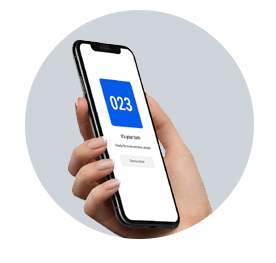
Virtual Queuing Improves Customer ExperienceThe year 2021 is the year of going contactless and digital. Virtual queuing is a very effective feature of queue management software. It allows both, the digitalized experience and the contactless features as well. Virtual queuing is gaining popularity these days. There are certain reasons for that, one of the biggest advantages of virtual queuing is that the queue management software enables the visitors to sign-up remotely. Or we can put it this way that the customers and visitors are able to sign-up for the physical queue without even being physically present at the branch. There are multiple mediums that are used to allow remote sign-up for virtual queuing. For example, the customers and visitors can sign-up remotely via the website, customer portals, smartphone applications, phone calls, email, or SMS.

The remote sign-up not only facilitates the customers but also helps the staff and administration. Customer flow management becomes easier as there are not too many people in the waiting room. The social distancing measures are easy to implement. Businesses and organizations can easily control the number of active queues to limit the number of customers and visitors inside the branch to prevent crowd forming and other related problems. Virtual queuing significantly improves the customer experience and customer journey as well. As the customer is not required to physically stand in the lines or stay in the waiting areas, so the service delivery is quicker comparing to traditional queuing methods.

See Also: The Role of AI in Enhancing Queue Management Systems

Smartphone Applications to Increase Customer Engagements
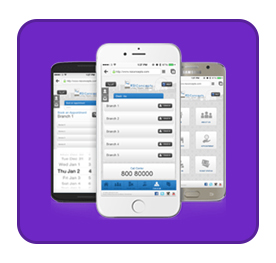
Smartphone Applications to Increase Customer EngagementsThese days in Dubai and all across the UAE the smartphone applications are very popular. In the past few years, smartphones have gotten very smart and powerful too. Customers love personalized experience and business too, as personalized experience increases customer engagements and improves customer satisfaction. The UAE is the most modernized nation in the MENA region and also in Asia. The government’s policies and initiatives to promote digitalization played an important role in the market trend. There are tons of government services that are just a few taps on your smartphone screen away. The general public is very adoptive and friendly towards smartphone applications. This immediately caught the attention of the marketers and businesses immediately start offering smartphone-based interactions and services to improve customer happiness and satisfaction.

The smartphone application linked to the queue management system enables the business and organizations to offer a great customer experience. The smartphone apps with queue management software allow the user to enjoy simpler and easier virtual queuing. The smartphone apps also provide a direct communication channel to provide an even more improved and personalized experience. The users can also avail themselves of so many services using smartphone applications, such as virtual queuing, customer feedback, complaints, appointments, etc. Smartphone applications when integrated with a queue management system software can do wonders in terms of customer experience and customer happiness.

See Also: How to Choose the Best Queue Management Software?

Online Appointment Module to Improve Customer Journey

Online Appointment Module to Improve Customer JourneyThe modern-day queue management system software comes with an integrated online appointment booking module too. The appointment booking module is linked with multiple internal systems to build the customer experience. For example, the customer portals are linked with the online appointment booking modules, the online booking portal can be provided within the customer portals as well as on the website via a dedicated page or link. Usually, the appointment booking module is offered as a stand-alone tool via a website link, to allow the customers and visitors to book an appointment without logging in to their respective portals. In Dubai, UAE mostly we used open links, that don’t require login or sign in, instead, the visitors or customers can fill in basic information to book an appointment. Whether signed in or not both methods are equally effective.

Another great advantage of the online appointment booking module is that it provides all the details and information that are required by a customer or visitor to book an appointment, for example, the busiest days, hours, or least busy hours or days, etc. The appointment booking module of queue management software also provides real-time queuing information and data from several branches. It can also suggest the best option which ensures the quickest service delivery and so on and so forth. The queue management software with an appointment booking module is very helpful in maintaining social distancing and customer flow to further improve the customer journey.

See Also: Queue Management System Features you Need for Modern Queuing

Customer Feedback and Surveys Help Understanding Customer’s Needs

Customer Feedback and Surveys Help Understanding Customer’s NeedsThe year 2021 has completely different challenges and required a completely new approach to meet the demand and expectations of the customers. Another remarkable feature of a queue management system software is the ability to understand customer’s needs, demands, expectations, and ongoing market trends via customer feedback and survey module. These days in Dubai and all around the UAE most of the queue management systems provide in-built customer survey and feedback modules. The purpose of this module is to understand how customers and visitors are perceiving your brand’s efforts to improve their experience and journey. The customer feedback and survey module can provide direct feedback from the customers and visitors.

There are several ways to utilize this module, the best method is on-sight customer feedback and surveys and online or follow-up surveys. Usually business has placed touch screens or tablets and kiosk to collect customer feedback, as the queue management software is already linked to the internal information center so identifying the customer who is submitting feedback is very easy, the system can map the information of the customer who has been served on the counter along with their ticket number and then it also identifies the service and compile the feedback report.

Such information is vital for a business to make future policies and strategies and to take vital actions to improve customer experience and customer journey, it also provides businesses a direct measurement of the efficiency of their current strategy and business practices. Such business intelligence is very helpful in keeping up with the needs, expectations, and demands of your customers to improve customer happiness and loyalty.

See Also: Innovations in Queue Management: The Future of Customer Service

Increase Employee Performance and Profitability

Increase Employee Performance and ProfitabilityA queue management software is very helpful in improving employee’s performance and overall productivity which results in greater profitability and improved resource management. Without a queue management system, most of the employee’s efforts are wasted on managing the customers and visitors manually, but with a queue management system and software, all tasks are managed automatically. The employees don’t have to worry about the queues or managing crowd or any such problem. The customers will not go to have many complaints as they will know that the queue is managed by an automatic system and the system treats everyone equally.

Now when all those time-consuming tasks will be managed by intelligent queue management software, the employees will have less stress, they will be happy and satisfied, they will be able to serve more customers in a single shift and their performance will increase automatically. Another great advantage of queue management software is that it has the capability to fully automate or partially automate various customer journey steps and processes which also reduces the workload of the employees. The automation allows the employees to focus more on their primary tasks which improve the service quality as well.

When various business processes and customer journeys will be automatic then the businesses will require very little human resources to manage the operations. The dedicated employee dashboard or agent interface will boost the employee performance as well, which means fewer agents/servers will be required to manage the same number of customers and visitors, so the businesses can either serve more customers in a day or can reduce the number of staff if the number of customers or visitors remains same, in both cases the cost is reduced and the profit is increased. A queue management system software is also very effective in improving customer retention, employee performance, and overall profitability.

See Also: How a Queue Management System Can Transform Your Business Operations

Reporting, Integration with Other Systems and Centralized Management

Reporting, Integration with Other Systems and Centralized ManagementA queue management software is critically important for growth as it provides a great source of very vital business intelligence. The business intelligence includes direct customer feedbacks, KPIs or key performance indicators, system usage stats, and various other information. This information is stored in the queue management software database, which is being processed by the in-built analytical engine and then compiled up in actionable reports which are available for the management. All the data is captured and updated in real-time and is processed immediately. This boosts the performance of the system as well. The reporting module and business intelligence data are very important for businesses to understand the customer’s behavior, employee’s performance, the effectiveness of their methods and policies, and much more.

This data also helps businesses to make strategies for the future and do improvements in their methodologies, processes, and the quality of the service. The queue management software is also very important as it can act as a bridge between multiple business and enterprise solutions and tools. It can easily be linked with various other data pools via secure web services or APIs. This system integration enables businesses to easily share data and information between various systems and it also makes the administration very simpler and easier.

Another very important feature of the queue management software is centralized management or remote management, which enables the head office to manage all connected branches remotely from the head office. The head office can have full access to everything and they can also assign local, regional, or branch managers to provide them limited access to the branch or branches and areas under their supervision. This is a great feature for the corporate management to easily manage and monitor their entire operation from the head office.

See Also: How to Implement a Queue Management System at an Airport?

Conclusion

A queue management software is critically important for a business in 2021 that is operating in Dubai or any other region of UAE. As we all know the year 2020 has completely transformed the landscape of the service-based industries so businesses and organizations are anxiously seeking ways to improve their customer experience and customer journey. The customer experience and customer journey help businesses to improve customer loyalty and customer retention. Which results in a good brand reputation and a positive brand image. The brand identity helps businesses to attract more customers and visitors, and it is also very helpful in increasing the conversion rates of all the marketing activities.

A queue management software is at the foundation of all this, in fact, it is the foundation. Your entire future depends on how you are treating your customers today. A queue management software is the only tool that can help you improving your customer’s experience and the customer journey to improve customer happiness and customer satisfaction. The queue management software also automates various business processes. It is capable of integrating with other enterprise tools and solutions which further enables the businesses to create innovative ways to improve their customer’s journey and experience. An efficient queue management software can provide you a great competitive edge which will ensure better customer retention and customer loyalty.

Loyal customers are the most precious asset of a business. Especially in the year 2021 when the demands and the behavior of the customers are changing very quickly and the competition is getting tougher day by day a queue management system and software can be your strongest arsenal. RSI Concepts is a leading queue management system provider in Dubai, UAE. If you want to install a new queue management system or want to replace your outdated queue management software, feel free to reach us out through our Contact Us page. Or leave a comment in the comment box below and we will get in touch with you soon.

See Also: 7 Features of Queue Management Software

7 Features of Queue Management Software
A queue management system (QMS) consists of two major parts, a hardware section, and a software section. Both the queue management system software and hardware have different components and accessories. These components, accessories, and modules are used to build certain features in the system. These days in Dubai and all around the UAE the more modernized and customized queue management systems are being used. The primary objectives of the queuing solution are to manage the customer flow, improve customer experience and increase productivity. There are so many different types of queue management systems available in Dubai, UAE which could be very confusing for the business. This begs the question of which queue management system will suit you or how to distinguish between a good or bad or an average quality system? There are certain markers or features that a good queue management system software should have in general, if all those features are there then you can easily decide if it will suit you or not.

You must be thinking that there is hardware involved too so why we are only talking about the software, the only reason is that the hardware itself is nothing without the software, if the software is offering a certain feature then by default the hardware will come along. That is why we are focusing only on the software features. There are certain queue management systems that are purpose-built or dedicated to a certain industry or application only, even for those types of queuing solutions the queue management system software must have certain traits which will determine the effectiveness and productivity of the queuing solution.

See Also: Maximizing Efficiency: The Benefits of Implementing a Queue Management System

Here are 7 features of queue management software that you should look for when acquiring a new queue management system:

1. Virtual Queuing

Virtual Queuing

A virtual queue management system is the modern day’s need. Since the year 2020 has completely transformed the customer experience and customer expectations too, the year 2021 is the year of more digitalized and personalized customer journey and customer experience. The social distancing and health and safety of the visitors and the staff is the top priority for any business these days. The virtual queuing module will help businesses to easily maintain and manage the active queues as per their capacity to ensure social distancing. Virtual queuing is not just for implementing social distancing but it is also offering a great digital experience.

The customers and visitors are allowed to sign-up even before arriving at the branch. This requires more efficient software that is linked with various other systems and tools to allow the customers to sign-up through different channels such as smartphone applications, SMS, calls, WhatsApp, QR codes, etc. The virtual queue management system not only facilitates the customers and visitors but also reduces or literally eliminates the wait time. The customers can arrive at the very exact time of their turn and get the service done. That is a huge leap in terms of customer experience, from waiting for hours to waiting for a few minutes or even no wait can make your customers extremely happy. Various different market researches and studies showed that the average acceptable waiting time for an ordinary customer or visitors is thirteen minutes, any time later than that could harm the customer experience.

See Also: Must have features of a Queue Management System

2. Separate Dashboards

Separate Dashboards

Any good queue management system should have separate user dashboards with dedicated interfaces to increase efficiency. This feature also makes the administration easier and more managed. There are usually three main interfaces or dashboards in a queue management system:

  • Customer Interface
  • Agent Interface
  • Admin Interface

The customer interface is always separate from the other two. In Dubai and all around the UAE the traditional queue management systems usually provide an interactive kiosk-based customer interface. The customers and visitors can sign-up for the queue and get a ticket or token issued bearing their queue number and some other information.

The agent dashboard is usually a web-based dashboard. This dashboard provides the basic controlling and monitoring of the current queues and their statuses along with the facility of customer calling and managing the customer flow. Sometimes the admin dashboard is also used for the same purpose, but mostly the agent or server dashboard is kept separate.

The admin interface or administrative console is also a web-based control panel. This not only provides administrative control over the entire branch or overall connected branches but also provides data analysis and reporting features too. The management can add multiple levels of administrative roles or job roles with respective authority and data access policies to establish an administrative hierarchy.

See Also: The Role of AI in Enhancing Queue Management Systems

3. Remote Management and Real-time Monitoring

Remote Management and Real-time MonitoringWhether you are implementing the queue management system in a single branch or office or you don’t even have another branch at all, remote management and real-time monitoring are must-have features for any good queue management system. The remote management will let the managers and the higher management manage the queuing system and handling some other system administrative tasks while they are not sitting inside the branch or office. The real-time monitoring is also providing real-time system updates and live information about the ongoing customer flow and other queuing data.

However, if your business has multiple branches and is located in multiple cities the remote management and real-time monitoring becomes very handy. For example, your head office is located in Dubai, and you are a manager who is responsible for the customer experience and customer flow. You must need a system to get the updates and monitoring features so you don’t have to call or contact the branch manager to get the required info regarding the customer flow and customer experience.

The remote monitoring and real-time updates are achieved by linking all the branches and locations to the main location or head office. The queue management software has a server-side application that can be hosted locally or online. The administrative dashboard and interface allow the higher management to get access to the data and information of any branch, and on top of that, all the queuing information and statistical data have been updated regularly. This makes a queue management system a great tool to monitor and control the customer journey and customer experience at all branches without even going there or following the long manual workflow and internal processes.

See Also: From Chaos to Control: How Queue Management Systems Can Improve Your Business

4. Customer Feedback System

Customer Feedback SystemAs the primary objective of a queue management system is to improve the customer journey and customer experience. Despite investing a lot and making a lot of efforts how would a business know if their efforts are in the right direction or not? The simplest answer is to ask directly to the customers and the best way to do it is via a customer feedback system or via a customer happiness scale. The customer happiness scale or customer feedback system is used to collecting customer feedback and is usually placed at the very last step of the service delivery so when the customer got everything done, they should be asked to share their opinions.

A good modern-day queue management system must have an in-built customer feedback system or a customer feedback module. In some cases, the external customer feedback systems are also linked to the queue management systems as well. The objective here is to understand the customer’s experience. As a queue management system is designed to manage the customer experience throughout the entire customer journey, so it is important to understand how your customers feel about it.

Normally touch screens or tablet stands are used and placed at the counters or at the exits depending upon the infrastructure of the premises. The customer feedback is collected in the form of a happiness meter or scale or a small customer survey. The important thing here to understand is to keep the feedback process simpler and easier. Traditionally a happiness meter suffices, but in certain cases, a short customer survey is also helpful. There should be only two to three questions in the survey and maybe some contact details too. Anything more than that and the customer will not attempt it, or even if some of them do attempt the survey, it will impact the wait time as the next customer can’t be called until the first person is completely done with the counter.

See Also: What are the Different Types of Queue Management System?

5. Reports, KPIs, and Business Intelligence Gathering

Reports, KPIs, and Business Intelligence GatheringEach and every industry has some standards and norms. Similarly, different regions have different business practices and different standards as well. Likewise in Dubai and all across the UAE all of the leading queue management system providers also offer a reporting module along with their queue management system software. However, there are certain things that you must consider before implementing the queue management system, for example, a comprehensive reporting module, an in-built data analytical engine, employee KPIs or key performance indicators, and business intelligence gathering.

The KPIs or key performance indicators are for the employees and the agents/server. These indicators capture various stats and performance markers. For example, how long is an employee taking to serve a customer? Which service is taking the longest time and so on? Which employee is handling most customers in a day? Which employee is getting the most positive or negative feedback? And a lot more. These indicators will help management to understand and monitor the performance of the individual employees as well as of the teams and branches as well.

However, business intelligence is gathered through various touchpoints, statistical data, performance indicators, and customer feedback. The queue management system can also help businesses in understanding the customer journey and various other factors that are very helpful for making decisions and taking steps to improve the customer journey and customer experience. Such data and information are crucial for strategy making and planning for the future. The business can utilize the data to understand the expectations and needs of their customers to make adjustments to further improve customer experience and customer journey.

See Also: Streamlining Customer Service: The Power of a Modern Queue Management System

6. Flexibility to Integrate via APIs

Flexibility to Integrate via APIsAny modern queue management system whether it is a general-purpose or a dedicated solution for a certain application/industry must have certain capabilities to integrate into the main information center or IT infrastructure of the organization. As we have mentioned a few things above such as virtual queuing, smartphone applications, online appointment booking, etc. All such features can be provided by a queue management system acting as a standalone solution or synchronizing and integrating with the other enterprise solutions & systems.

Such integration is achieved via secure web services or also known as APIs. System integration is a very important feature of a queue management system. It allows the queuing system to communicate with other databases and business tools to further improve the customer journey and customer experience. Integration is also very important to boost system efficiency and productivity.

The system integration via APIs not only allows the queue management system to get access to certain data but also allows the system to feed in data to other systems for other purposes as well. For example, customer feedback can be synched with the CRM (Customer Relationship Management) software. The KPIs indicators can feed the overall enterprise performance management system for certain inputs. System integration opens up the ways for innovation and creativity and provides businesses with more flexibility, control, and better efficiency.

See Also: Mobile Queue Management: The Rise of App-Based Solutions

7. Future Scalability, Upgrades, and Maintenance

Future Scalability, Upgrades, and MaintenanceThe capability to scale and upgrade to meet the future’s requirements is something that is mandatory for any kind of business solution. Businesses are very skeptical of upgrades, future scalability, maintenance, and the expected cost for all such activities. As an IT solution is a long-term investment so the annual maintenance, future upgrades, and scalability are always a big concern for businesses. However, in the case of Queue Management Systems, these things are not as that complicated. The future scalability of the queue management systems is relatively easier. For example, if you have a queue management system installed in 3 branches and want to expand it to another two, it can be done by simply installing more basic devices and doesn’t require any core change or upgrade. Mostly the queue management system software is already built to support expansion.

Keeping in mind the rapid changes in the market trends and customer behavior in Dubai, UAE the capabilities of future upgrades are extremely important. A modern-day queue management system should be able to offer very cost-effective future upgrades and modifications to meet the ever-growing demands. The upgrades and modifications to the queue management system software can only be achieved if the system is designed to be friendly with such changes, else it would be difficult, costly, and problematic.

Another important aspect of the queue management system and its software is the regular maintenance and its cost. The queue management systems overall and their software are constructed on widely available platforms and technologies. The queuing systems are designed to be operated 24/7 and hardly require any reboot or maintenance for several years. So, the maintenance cost of the queue management system software and other components is very easy, simple, and cheaper comparing to any other IT solution.

See Also: Queue Management System Features you Need for Modern Queuing

Conclusion

As Dubai and all around the UAE businesses these days are actively seeking solutions to improve their customer journey by effectively managing the customer experience and employees’ productivity. A queue management system is the only tool that can help businesses effectively manage and improve the customer experience, customer journey, and service delivery methods. Most of the businesses have already implemented a digital queuing solution and are currently seeking to replace it or upgrade it, while others are eagerly looking to catch up by implementing a brand new queue management system. As the year 2020 has completely transformed the market trends and customer behavior the year 2021 is the year of adopting the new standards. That is the reason many businesses who are seeking to boost their productivity and profitability are planning for a queue management system to meet the needs of their customers.

There are so many queue management system suppliers operating in Dubai, UAE and there are so many different queue management systems available too. The difficulty is how to choose an appropriate queuing solution that could help you to achieve your objectives and goals. The purpose of this blog was to let our readers a better understanding of the queue management system software and we have listed 7 features of queue management software which will help our audience to easily judge a queue management solution. The most important thing to consider is that if the queue management system software is capable enough to provide you features and functionalities that will help you achieve the highest efficiency in terms of customer happiness and employee performance.

Another important thing to consider is the capability to scale for future needs, upgrades, and easy maintenance. The cost is always a big concern of the businesses so the upgrade, expansion, and maintenance should be very cost-effective and less time-consuming. RSI Concepts is one of the leading queue management system providers in Dubai, UAE we serving our customers for more than a decade with a very high success rate. We are here to help you find a great queuing solution for you that will not only help you build up a positive brand reputation but will provide you a great competitive edge too. Feel free to reach us out through our Contact Us page or leave a comment in the comment box below and we will get in touch with you soon.

See Also: Queue Management Challenges 2021

See Also: The Future of Queue Management Systems: Trends to Watch in 2025


Impacts of Queue Management System on Employee’s KPIs

Impacts of Queue Management System on Employee's KPIs

Employees KPIs (key performance indicators) are used to assess and evaluate the performance of an employee. Some of the KPIs are set only for individual employees to assess their performance so that the organization can take accurate decisions about the employee such as salary and packages, transfer, training programs, bonuses, increments, promotions and termination. A queue management system is a great aid to the customer service and support agents. It helps to streamline the customer flow and reduce the workload of the staff. This results in overall improved efficiency and productivity of the entire branch.

These days queue management systems are most widely used in Dubai, UAE. No matter how big or small your facility is if you are welcoming customers and visitors then you should have a digital queuing solution to manage the customer flow. The queue management system also reduces the wait time and improve service delivery time and quality which is great in improving customer experience and customer journey. A good customer journey improves customer satisfaction which helps business in customer retention and building up their brand image.

If we talk about the Performance Management System or even the Employee Performance Management and customer service KPIs a queue management system have a very positive impact on employee’s performance and KPIs. As the queue management system automates the various process and significantly reduce the workload of the server or agent, the efficiency and productivity automatically get increased for each individual employee.

See Also: From Chaos to Control: How Queue Management Systems Can Improve Your Business

The main reason why business stress so much about employee performance is because it can directly impact the customer experience and customer journey and the brand reputation is a direct consequence of how a brand treats its customers. This is why having a great customer journey and experience can portray a positive image of the brand and vice versa. Here are some important KPIs that could directly get impacted by the queue management system:

Average Customer Served

Average Customer Served

This is the very basic KPI for any customer service or support agent. This indicator measures the quantity of the customers served by any agent on daily basis. This is very important for a business to assess the productivity of their employees and the entire brand or department. Without a queue management system, this factor remains low, as the agent and server are also focusing on managing the queues along with the other staff. Once a queue management system is in place, it automatically manages the customer flow and customer routes, the queuing system significantly reduces the wait time of the customers and visitors, which means that more customer is available for each employee/agent.

The queue management system also reduces the workload of the employees which makes it easier for each employee to be able to serve more customers. The queue management system can significantly improve this KPI for any employee.

See Also: The Role of AI in Enhancing Queue Management Systems

Customer Experience Indicators

Customer Experience Indicators

Customer experience indicators are not a single KPI but it is a group of a lot many KPIs which monitor and measure a lot of inputs. Without a queue management system, the customers might not be much happy, as they would have to wait in long unorganized queues to reach the counter, once they reach there they are already emotionally stressed out, they could easily get annoyed with the employees which result in poor customer experience and it also reflects in employees KPIs. With a queue management system in place, the customer journey is mostly controlled and managed from it.

This not only reduces the wait time but the queue management systems are also capable of improving customer’s waiting experience by providing real-time queuing updates, announcements, and in some cases multimedia content too. These all things keep the customers engaged and relaxed, when a customer arrives at the counter, they are in a calm state of mind which help the employees to serve them better hence the customers get a good experience and the employees KPIs also reflect that.

See Also: What Is Virtual Queuing? A Guide to Virtual Queues

Average Service Delivery Time

Average Service Delivery Time

This indicator is used to determine the average serving time of an employee. As the customer experience is very important and any delay in service delivery could impact that, which indirectly impact the overall performance of the employee as well. With the help of a queue management system, the employees’ tasks and workload can be reduced. Which let them finish the process more quickly. Above all the integration and automation provided by a queue management system also plays a vital role in quicker service delivery time. Which is a direct performance indicator for employees.

The queue management system provides an agent portal or dashboard which provide comprehensive controls and links it with the other systems and tools. This further reduces the service delivery time. For example whenever a customer is arriving the employee needs to fill in some data from the customer, which can be fetched automatically from the customer database by enabling data synchronizations, and other methods, the same works for the internal ERP or Customer Support Software.

The queue management system can authenticate the customer using any unique identifier at the time of sign-up for example Emirates ID and fetch the data from the customer database and push it to the ERP or Customer Support Dashboard so when a customer reach the counter the data is already filled. Such features and a lot many other features can significantly reduce the service delivery time. Which also reflects in the employee’s performance indicators.

See More: How Queue Management System Helps to Provide Better Customer Service

Average After-Service Work Time

Average After-Service Work Time

Most of the time when the customer got served the agent has to do some work such as filling in forms, or submitting data or updating anything in the systems. Sometimes it could take up to 5 minutes which cause a delay of 5 minutes in the next customer call. This time is known as ‘average after-service work time’. Without a queue management system, these times are added up in the waiting time of the next customer which not only reduces the number of ‘average customers served’ by an employee in a day but also impacts the customer experience.

If we calculate the total after-service work as an average of 3 minutes for a customer and the entire service delivery time as 10 minutes then at the end of the day the average after-service work time is one-third of the total active service delivery time. Which is huge. A queue management system with its capabilities of automation and data synchronization can reduce this time to a few seconds or it can completely eliminate this factor.

This not only improves the customer experience but also increases the average number of served customers by a single employee. This also helps during the employee performance assessment and it can boost the employee performance.

See More: How Performance Management System helps in Customer Journey improvement?

Customer Happiness Response

Customer Happiness Response

That is another great indicator to assess the employee’s performance. The customer happiness response and customer surveys are always a good source of vital business intelligence data. Customer feedback help organizations to understand their needs, demands and expectations from the brand. Basically, a customer happiness meter or customer rating scale is a great indicator to assess employee’s behavior towards the customers and visitors. Mostly queue management systems have a built-in customer happiness scale or customer feedback module.

The interface is very simple, it is 3 or 5 smileys or a rating scale from zero up to ten. In order to encourage more customers to submit their feedback, the happiness meters are built for the simplest interaction. All a customer has to do is touch on the small tablet, or kiosk screen to rate their experience. The queue management system can automatically fetch all the required customer data and information. As when a customer is at the counter only then they will be able to access this touch screen so the whoever customer was being served at the time of feedback submission can be easily identified.

This is a great way to assess employee’s behavior with the customers using a queue management system. If an employee is very good with the customers they will be compelled to leave a positive response and if an employee is not so good or failed to satisfy the customers most of such customer will leave negative feedback on the happiness meter.

See More: Employee Performance Management is a small part of Performance Management System

Employee’s Average Active Time

Employee’s Average Active Time

Employee’s average active time is a very important indicator for an organization. The organization can assess the output and productivity of an employee on the basis of this indicator. A queue management system can feed very accurate data for such KPIs. The queue management system can log the time interval between one customer served and the second customer call. Which will be the inactive time of the employee. Like I mentioned earlier this time could be consumed by the after-service work activities but those activities are already defined and the time required for such activities can easily be measured.

Therefore any time more than that of which is consumed for after-service work will be considered and recorded as an inactive time of the employee. This time is very important as it will later contribute in the overall assessments of the employee to determine how productive they are, and how much they are costing to organizations and how much they are returning or generating for the organization. Not only that this data can also be fetched into other indicators.

For example, if your organization have a capacity of deal 10 customers simultaneously or has 10 counters, in the waiting area there are 40 customers and for each service delivery the maximum time is 15 minutes, ideally all the customers should be served by one hour, but if one or two of the counters are inactive for 15 minutes each then all 40 customers will take more time than the expectations.

This not only impacts the customer experience but it also impacts the overall performance of the organization or this particular branch. Hence the KPIs should be set to identify which employees are causing this and only they should be held responsible for that and not the entire branch.

See More : Importance of KPIs to Improve Employee Performance in Dubai

Conclusion

A queue management system is a very powerful corporate tool, it helps businesses and organizations to improve their customer’s experience and brand reputation. The employee’s KPIs are used to assess and review the performance of the employees as well as their contribution in achieving the overall organizational goals and objectives. A queue management system can provide crucial data and inputs for various KPIs which can help to assess the performance of the employee. Having an efficient queue management system can significantly improve employee efficiency and customer experience.

The data and monitoring from the queue management system is very accurate and detailed. Those inputs can be utilized in almost all sort of employee KPIs. The queue management system enables the organizations to monitor and measure various indicators such as the number of served customers by an employee, average service delivery time of an agent, customer happiness and satisfaction indicators, average of active and inactive time of the employee and the customer feedback scale or happiness meter. Sometimes more descriptive surveys can be used too to collect feedback from the customers.

The queue management system also improves employee performance by reducing their workload, automation of various processes, efficient customer flow management and reduced wait time. This enables the employees to serve more customers in less time, which hugely impact the employee’s performance. If you are looking for a comprehensive solution to improve your customer journey as well as boosting and monitoring employee performance? Feel free to reach us through our Contact Us page. RSI Concepts is a leading queue management system and employee performance management solutions provider in Dubai, UAE.

See Also: How a KPI Software can help provide better Customer Journey?

See Also: The Future of Queue Management Systems: Trends to Watch in 2025