BLOG OF RSI CONCEPTS

world map

Future Trends in Performance Management Systems: What to Expect in 2026

The world has evolved a lot in past two decades, especially with the invention of modern technologies and widespread adaptation of digital solutions, our lifestyle have completely transformed. So does the work-places. The work-places have evolved a lot over past two decades, the technological advancements and automation is rapidly infusing in each and every aspect of the business operations. The performance management system is no exception. Businesses always use some kind of performance management system to optimize the efficiency of their workforce and to align them with their high-level organizational goals and objectives. The traditional evaluation methods dominated by manual reviews and feedbacks from the managers are replaced by the more in-depth appraisal methods and technology driven data processing techniques.

A modern performance management system doesn’t only rely on performance sheets and managers’ reviews. But it is a very comprehensive digital solution which is rooted deeply in the entire organization. The modern performance management system encourage continuous performance management along with more comprehensive data collection and contextual evaluations which were not possible with outdated manual performance management systems. The modern performance management systems are based on a software application and data dashboards which offer advanced data collection tools, in-depth analysis, and AI (artificial intelligence) integration. The AI have completely transformed the performance management and it is now redefining the ways organizations manage their diverse workforce and how employee perform, grow and contribute.

Why it is crucial to looking ahead in 2026? Because the workplaces are evolving, hybrid work models, flexible work hours, remote workforce, global teams, Gen-Z and integration of AI (artificial intelligence) in various business functions are the most crucial factors, redefining and reshaping the expectations of both the employees and the employers. The traditional performance management such as fixed goals, annual or biannual reviews, performance sheets and feedback forms are no longer effective or even useful. In this blog we will briefly discuss the future trends of modern performance management in 2026 and beyond through the lens of digital transformation, data-driven decision making, smart automation and integration of AI (artificial intelligence). Let us explore what to expect in 2026, how organization should prepare and how the employees should get themselves ready to embrace the future.

See Also: How Performance Management Impact on Organization’s Culture?

Future Trends in Performance Management Systems: What to Expect in 2026

Transition from Annual Reviews to Continuous Feedback Loops

The traditional performance management was consisting on annual reviews and appraisals. This means that the goals are set once a year, or in some cases twice a year. The feedback management was also slow and often times the feedback comes too late to optimize the performance or to effectively course correct. People often forget what happened a few months ago, in 12 months or in 6 months things could get changed, and the employees also demand regular guidance and appreciation of their hard work. This is not possible with any traditional annual evaluation based system. Businesses have also realized this fact and some of the enterprises have adopted to modern performance management system where the employee and manager’s interaction is more often and the feedback is also more frequent. However, most of the businesses are still relying on outdated performance management systems.

In 2026 the AI (artificial intelligence) and the automation will dominate the digital business solutions. Same is applicable for performance management systems as well and in coming years we will see the continuous performance management will become a norm. The performance management system will no longer only focused on evaluating the employees, but it will equally emphasize on employee growth and development. The enterprises and organizations are seeking ways to adopt to continuous feedback loops, more data-driven decision making tools and proactive performance management approach. For example, if an employee completed a project, the digital performance management system will highlight their progress or success toward their goal, it will highlight the areas of improvement and it will suggest training resource to boost the employee performance in future.

See Also: The Future of Performance Appraisals: 6 Innovations and Changes [Quick Guide]

The usage of modern software development techniques, integration of AI and centralized data management will help businesses build and adopt modern performance management system who will not measure the performance but continuously monitor and improve it as well to ensure maximum alignment of the outcome with the assigned goals and objectives. The AI (artificial intelligence) is a very incredible technology, which has much higher potential to collect large scale data and analyze it superior accuracy and efficiency. Even the smallest changes in trends can be detected accurately by the AI, and rather relying on a rules-based algorithms the AI relies on smart intuitive technologies. The AI even allow users to talk to the data and system, where the user commands are taken in plain language and the actions are taken to execute the complex processes.

Transition from Annual Reviews to Continuous Feedback Loops

Skills Based Performance Evaluation for Modern Needs and AI Analysis

Considering the current trends in the modern digital era, one of the biggest shift that we will going to witness in 2026 is the job roles becoming more flexible and fluent. Instead of a fixed job role or job description, the organizations and businesses have started focusing more on the skills, agility and ability to adopt to changes. This is very crucial to ensure the performance management doesn’t only limits to evaluating and rating the outcome but also incorporates the skill growth, personal development, and capabilities. The skilled-focused organization are outperforming others. Moreover the markets are moving at a rapid pace, the customers’ demands, market conditions and expectations are evolving rapidly. Which compelled organizations to focus on improving the skills and potential of their workforce rather than just relying on offering bonuses and promotions and expecting employee will perform well.

See Also: 5 Challenges in implementing Performance Management System

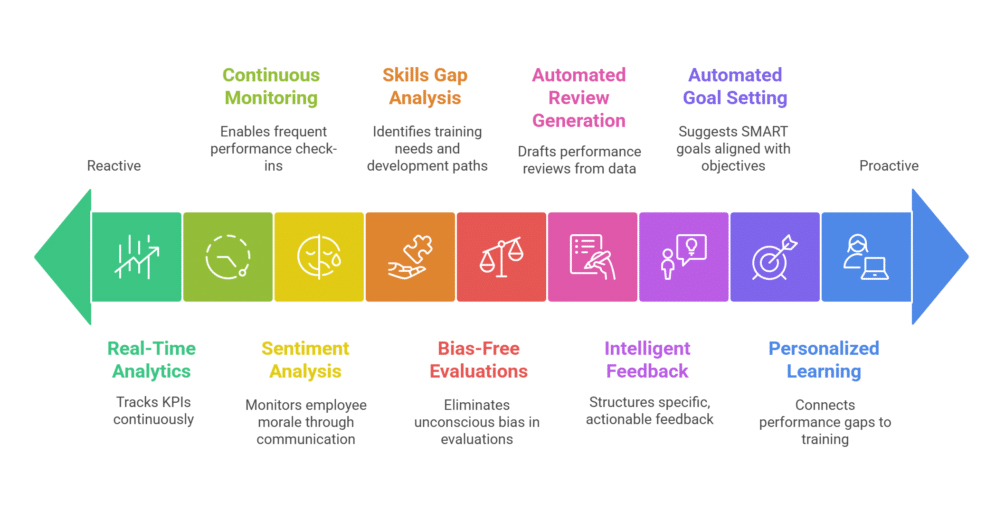
These shift in performance management trends are also affecting resource planning. Unlike focusing on if a person is doing a particular job, the managers are more focused on if a person has a particular skill suitable for the upcoming job or not. This is where the AI (artificial intelligence) comes into play, it help businesses map skills to role, and not only by the rules but a tangible performance data gathered from past. The AI also help on recommending the learning path with utmost accuracy, so it just doesn’t only track the performance based on the outcome and alignment with business goals but the AI also measures the skills and capability progression. Where the AI help managers it also help individual employees as well, for example, the AI can tell employees that you have improved your data analysis skill by 25% in Q2, you should focus on cross-functional team communication skills in Q3, and so on.

By integrating the AI in the performance management software, businesses can tremendously enhance and expand its capabilities. Thus in 2026 the modern performance management system can effectively include:

  • Integration of Advanced Skill Libraries and Taxonomies into Core Performance Management System
  • Real-time Tracking and Analysis of Skill Proficiency and ability to effectively apply that skill, through analytical data collection, assignments, task completion, and even peer feedbacks
  • Superior capabilities to identify areas of improvement and AI-powered skill gap-analysis along with informed data-driven suggestions for next skills or training resources
  • Meaningful training programs that directly translate into measurable performance improvements for both the individual employees and project teams

These tools and features will enhance the performance management system from just focusing on the current outcome to how the workforce can be lifted up and how individual employees can be groomed and improved to adopt to future needs and expectations.

See Also: Employee KPIs and Performance Management

See Also: Performance Management through OKR System
Skills Based Performance Evaluation for Modern Needs and AI Analysis

AI as a Digital Coach: Real-Time Data Collection, In-depth Analysis, and Predictive Insights

As we lean more into AI and the performance management systems, the role of data collection and analytical tools has become central. The AI is all about the data, it has much superior capabilities to collect, analyze and process the data than any traditional software solutions. Hence when the AI is integrated into a performance management system, it can offer a multitude of innovative features and digital tools which can play a pivotal role in adopting and implementing modern performance management methodologies. The biggest advantage of AI integration is that the performance management system doesn’t only collect numbers, but it become capable of performing complex analysis, producing customized insights and actionable reports and help managers in decision making process. The AI not only enhance the data collection capabilities of traditional performance management solution but it also open up many new avenues and possibilities, for example:

  • Goal completion metrics, check-in frequencies, peer recommendation metrics, feedback counts, rating scales, suggestion or recommendation by the clients or external partners, etc.
  • In-depth sentiment analysis of the comments, feedbacks, suggestions and reviews by multiple sources, such as managers, team leads, supervisor, client, suppliers, external partners, etc.
  • The AI can perform highly accurate predictive analysis, such as it can consider employee performance score, engagement score, learning and changes in scores to predict if the performance in next quarter will improve or drop
  • The AI also help improving the managers’ effectiveness by evaluating and relating how often the feedback is provided, and what impact does it had on the previous efficiency and progress

The one important aspect of AI integration is that the AI trains on data, hence organizations should have the clean and accurate data. Moreover, clear metrics and their definitions are essential for AI to interpret the raw data into actionable insights. The business leaders should also be trained to effectively utilize the AI-powered tools and data dashboards.

See Also: The Risk of Poor Performance Management and How to identify it?

The AI not only produce analytical and graphical reports, but it is very much capable of providing conclusive reports in plain language. For example, the Employee at a certain branch with fewer check-ins than 3 are more likely to miss their target. Or the employee at a branch with more than 5 peer-to-peer recognitions is most likely to exceed their goal by 12% and so on. AI has much higher capability to process data yet it doesn’t only mean that it is a calculator or analytical engine. In fact the AI is a kind of digital coach who monitor employees, observe patterns, highlight the areas of improvement, guide the development process, recommend career path, and tailor feedback for each individual employee. Here are a few examples of how it works:

  • The AI powered performance management system recognize a sudden rise in missing deadlines for an employee. It then identify the changes or reason that could trigger this, let say, the employee switched to the remote work. So the AI alert both employee and manager and offer recommendations to fix this such as time-management training course, or recommend a mentor or suggest other possible steps to prevent any drop in performance.
  • The managers, decision makers and business leaders see customized data dashboards, thanks to AI’s inherent analytical engine which enables it to collect and analyze both structured and non-structured data along with ability to process real-time data and account for historical data and offer predictive analysis. These dashboards highlight strengths, weaknesses, areas of improvements, goal alignment, project progress, etc. all at once place.
  • The AI doesn’t just process and analyze the data, in fact it empowers managers and decision makers. For example, if a high-performing employee is showing the signs of slowing down or burnout, the AI immediately alert the manager and recommend one-on-one meeting, set schedules, and even record the meeting transcripts. The AI also help identifying the decisions that negatively impacted the performance and remind managers to avoid repeating those.

The AI is a digital tools that empowers the users, the AI-powered digital coach cannot replace human, but it helps them and reduce their efforts which lead to higher accuracy and productivity. The AI never forgets, in fact it can remember everything and recall everything, it never repeats same mistakes, and it always remain available, which transform the traditional performance management system into a highly proactive and responsive tool.

See Also: 5 Performance Management Problems and How to Solve Them

AI as a Digital Coach: Real-Time Data Collection, In-depth Analysis, and Predictive Insights

AI Elevates Employee Well-Being, Psychological Aspects, and Transparency

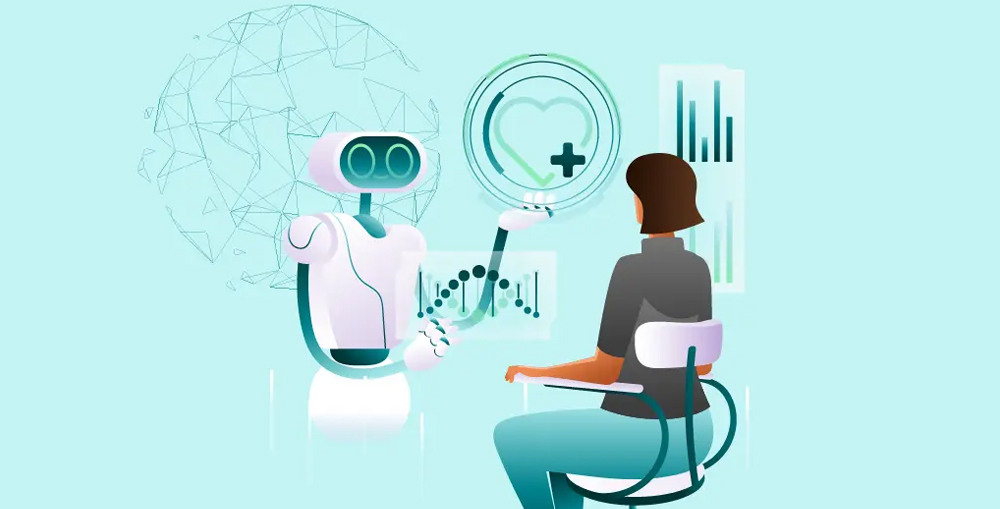
The performance management is not only about achieving the goal and objective but it strongly emphasizes on employee well-being, engagements, satisfaction, transparency, and human or psychological aspects or human side of the performance management as well. Because measuring the task completion rate is not enough, if an organization or an enterprise wants a long term performance management strategy then the employee well-being, their engagement, satisfaction development, and growth and the psychological factors also matter a lot and have huge impact on the employee performance. Usually the employee well-being and satisfaction is considered as a HR concern, however, the forward looking organizations consider it as the core performance management function. This could be a bit challenging with the traditional methodologies, but the AI has the solution to that:

  • The AI offers LLM (large language model), NLP (natural language processing), NLU (natural language understanding) and highly accurate sentiment analysis capabilities. AI can effectively analyze the check-in comments, meeting transcripts, and feedbacks to identify signs of stress, burnout or disengagement and it can identify the emotional tone of the employees to provide a much deeper psychological understanding to improve the employee well-being index
  • The modern performance management system powered by the AI can also identify the changes in employee behavior and identify patterns to trigger employee’s wellness check-ins or alerts for the managers. For example, if an employee is spending more time, or working long hours, or showing signs of distancing from peers, reduce their interaction, or delay progress reports, etc.
  • The AI can set up customized feedback loops as per individual needs for both their well-being and performance, to ensure every employee gets adequate support that they might be needing from their managers and mentors. Furthermore an integrated AI in performance management system help manager increase employee engagement and provide them in-depth insights and correlation to the behavioral and professional competencies

See Also: How to Customize Performance Management System

In 2026 and beyond the performance management systems of the future will be deeply integrated with the human side of the employees, majorly focusing on employee well-being, work-life balance, and psychological factors that can hinder the performance. When it comes to employee satisfaction, the transparency is one of the most underrated aspect. This is due to the inherent gaps and loopholes of the traditional performance management systems. The bias, lack of fairness and transparency are hurting employees’ performance. When employees feel betrayed by the managers, they think their hard work will never be recognized, hence they tend to lose the passion and enthusiasm. The AI has solution to this long-standing problem. The AI eliminate the personal bias from the performance management system, it drive fairness and transparency as it majorly focused on data rather than feelings.

Where the AI emphasize on data-driven decisions, it also has some limitation. Remember, an AI is only as good as the data fed to it. If the data provided to AI is not up-to-the-mark, the AI will surely underperform and in worst cases, it could take incorrect assessments and decisions. Integrating AI with the performance management system is easier, training it and creating or defining the data points for the AI is a difficult job to do. For example, if the AI is programmed to flag the employees who are getting less peer feedbacks or ratings, then it might also flag employees from those teams, who historically happen to have less peer feedbacks than the rest. This issue can be solved by simply telling the reference points or threshold for each employee groups. Similarly various other such problems can be eliminated from the system. Thus keeping humans in loop is also crucial to boost transparency and fairness in the system.

See Also: Measuring the ROI of Performance Management Systems
AI Elevates Employee Well-Being, Psychological Aspects, and Transparency

AI Integration with Learning, Development, Talent Mobility and Manager Enablement

Businesses and organizations all around the world are started acknowledging that the performance management system is not a standalone function, but it is deeply connected to employee learning and development programs, talent mobility and career path coaching. When the AI is integrated with a performance management system it doesn’t only share the workload of the managers but it also enable them to focus more on employees, check-ins, development programs and other productive things. This also indicates a massive trend shift, rather focusing solely on the outcomes, businesses started focusing on adopting ways and methodologies to ensure future growth by strengthening the workforce. Businesses are emphasizing more on individual development, expanding the skillset of their workforce and enhancing their productivity, rather than evaluating employees on the bases of their tasks alone.

That is why it has become crucial to ensure integration of the AI and performance management system with learning platforms, skill development programs, succession plans, career pathways, and talent mobility tracking programs. Moreover the performance management system should also be integrated or fully infused with HRMS (Human Resource Management System) or HRIS (Human Resource Information System) for better data synchronization and additional data points for the AI.

See Also: Choosing a Performance Management System A Buyer’s Guide

Hence the AI can help managers and employees in many areas, such as:

  • In case of micro-learning, after a check-in the AI recognize that the employee’s role is evolving and leaning more towards remote interaction or virtual collaboration, hence the performance management system can recommend an appropriate 15 minute learning module on “leading virtual/remote meetings”. Similarly the AI can recommend learning content that will be helpful for the employees in their future role.
  • When an employee completed a project successfully, the AI algorithms analyze their progress and performance closely and then highlight them for the next project or task. Furthermore the AI automatically linked them to the talent-pool data dashboards and highlight their relevancy and compatibility for any new need which helps managers in decision making.
  • Over the passage of time the AI enabled performance management system collect comprehensive data and track skill growth for each individual employees along with their readiness for the new challenges. This help enabling internal talent mobility, rather than relying solely on the external talent hunt or recruitment drives. Sourcing talent internally is a very cost-effective strategy.
  • The AI enabled performance management systems doesn’t only recommend right training programs and learning content, but also analyze and relate the effects of the training on the individual performance. For example, after receiving advance data analytical training an employee shows a 20% increase in successful task completion rate, etc.

The integration of AI in performance management system help driving automation and make the entire system more data-driven, however, the role of the manager still remains critical. The only difference is that the managers will now be equipped with the advanced analytical tools and more insights to strengthen their decision making. This enable managers to focus more on coaching, relationship-building and employee development rather than just rating, evaluating and administration. This is crucial as the manager enablement is a bridge that fill the gaps between the strategic goals and individual employee performance. This also lifts up employee manager interactions and make one-to-one more productive by offering customized data dashboards and performance metrics optimized for the meeting agenda. The forward looking organizations train their managers too rather than just upgrading the technology.

See Also: How the HR should select a Performance Management System?
AI Integration with Learning, Development, Talent Mobility and Manager Enablement

Conclusion

As we move forward in the modern wave of technological revolution and smart technologies, the work places are also evolving at a very rapid pace. The modern performance management system has become unrecognizable form the traditional annual review, occasional feedbacks, static appraisal practices and limited scope. In 2026 and coming years the performance management systems will be deeply integrated and infused in the organizational workflows, HR operations, and AI (artificial intelligence). The innovation and advancements of AI technology paved ways for the advance analytical tools, large-scale data gathering, real-time performance updates, intuitive data dashboards, feedback loops and continuous performance management.

This staggering shift in performance management reflects and continuously growing complexity of the modern organizational performance management needs. The rise of remote workforces, global teams, hybrid work models, skill-centric performance management, more focus on employee well-being and rising need of transparency and data-driven decision making are adding to the complexity of the performance management systems. The modern performance management systems are becoming more responsive, focused on proactive methodologies, agility, and higher adoptability. The performance management evolved from a once-a-year ritual to a continuous work in forward looking organizations and enterprises.

See Also: How Customized AI Agents Can Streamline Business Operations

The decision-making processes have completely shifted from assumptions to purely data-driven. This is where the AI comes to play, the AI has much superior capabilities in collecting, processing and analyzing data in real-time. Thus integrating AI in a modern performance management solution can greatly improve the impact and outcome. Looking ahead in 2026 and beyond the true potential of performance management have shifted form just relying on the outcomes or task completion to much more comprehensive approach of focusing on the individual development, nurturing skills & competencies, enhancing employee satisfaction and engagements, and alignment with the high-level organizational goals and objectives.

The AI is emerging as a digital coach, analyzing and understanding employee performance from 360 degree. The AI process large-scale data streams, identify areas of improvements, training needs, and empower managers with actionable insights and intuitive tools. The modern performance management systems elevate transparency, emphasize on employee’s well-being, psychological safety and needs. If you want to learn more or if you want us to develop a customized AI-powered performance management system for your organization, please feel free to get in touch with us through our Contact Us page or leave a comment.
Top 5 Trends that will Change Performance Management Forever

Top 5 Trends that will Change Performance Management Forever

The performance management system is a crucial business process. It is extremely important for a business to align all its resources with its goals and objectives. The performance management help businesses unlock the true potential of its employees, teams and departments. The performance management help businesses in establishing a high-potential workforce to ensure maximum productivity. Maximum productivity means high profitability and long-term sustainable growth. Another most important aspect of performance management is the employee retention. The businesses can’t retain an employee if the employee is unsatisfied or disengaged.

The performance management help managers motivate the employees, increase their engagements, provide them opportunities to grow and develop themselves. When employees are motivated and happy with their job they tend to perform excellent. Here in Dubai and all around the UAE the market conditions are very favorable, the government policies are supportive, and it is very easy to startup a new business. This lead to higher competition, which makes performance management even more important for business in Dubai, Sharjah, Abu Dhabi and broader UAE.

Top 5 Trends that will Change Performance Management Forever

The performance management is not a new thing, it was a very old processes and businesses are applying these methods since the early ages of modern business. However, it has been continuously evolving and improving. The modern day performance management is heavily relying on technology based software solution which help businesses improve the process and make it more efficient. The digital performance management system or software help managers easily and quickly do the reviews and evaluations, earlier this took a lot of resources, time and efforts. This also enable businesses to conduct multiple performance reviews and evaluations in a year.

Furthermore, the performance management software or PMS helps automating several steps, it provide a well-structured framework which makes it even more efficient. The performance management systems allow businesses to adopt to modern methods and trends. The performance management have become a highly advanced and sophisticated process, however, it is still evolving. Businesses might think how they could adopt to the most modern and effective performance management methods and tactics, in this blog we will discuss top 5 trends that will serve as a foundation for the modern performance management in the future.

See Also: The Impact of Performance Management on Organizational Culture

Performance Management Trends: 1. Continuous Performance Management

Businesses in Dubai and all around the UAE or in fact all around the world have realized that the traditional performance management is losing its impact and is no longer viable. Another drawback of traditional performance management is that it is a manual process, it requires a lot of resources, efforts and consume a lot of time too. Usually the traditional performance management have once a year evaluation or at most twice a year, which is not enough. The manual methods lack transparency, and cause employees to lose trust on the system as well as the business.

Then the bias and favoritism is also a very impactful factor which can completely undermine the benefits of the performance management. That is why a continuous performance management system or agile performance management has started replacing the traditional performance management. The continuous performance management have more frequent reviews, evaluations and discussions.

See Also: Linking Performance Management to Business Outcomes

Performance Management Trends: 1. Continuous Performance ManagementMost of the business in Dubai and all around the UAE prefer performance management activities once in a month. However, some businesses do it on weekly bases and some do it on project bases, which is usually less than 3 months. The modern businesses are very dynamic, fast-paced and required to respond to the continuously changing market and customer trends. Businesses need agility to grow and be competitive in the market. This require a continuous monitoring mechanisms which can provide up-to-date data.

The continuous or agile performance management also help managers to quickly identify a problem or if someone loses the focus or get off the track, etc. the manager can easily identify such issues and take actions to ensure all resources align with the high-level organizational goals and objectives. More frequent discussions, one-to-one meetings and reviews boost employee engagement. A good performance management system help boosting employee engagement which is essential for higher efficiency and productivity.

Performance Management Trends: 1. Continuous Performance Management

When employee are engaged and connected with the business they tend to perform well. It also help them align with the high-level organizational goals and objectives and it also help managers to improve communication. The continuous or agile performance management also encourage collaborative goals and objectives setting, which itself is a great method to boost employee performance. These are some of the main reasons why continuous performance management is getting popular and this trend will continue for several coming years.

The continuous performance management also provide real-time performance data to the higher management and strategy makers, it gives them a chance to correct course and remodel their objectives as per the current scenarios. In general the continuous performance management increase the readiness of the organization to deal with incidents, disruptions and unexpected scenarios.

See Also: Why Custom Performance Management System is more Effective?

Performance Management Trends: 1. Continuous Performance Management

Performance Management Trends: 2. Collaborative Goals & Objectives

For any performance management strategy the goals and objectives are the most important and crucial part of it. Traditionally the high-level organizational goals and objectives are set according to the mission and vision of the business. Then these goals are scaled down up to the individual level. The managers set the goals and objectives for the individual employees, and make plans for them. However the modern performance management system also include the say of the employee in the goal setting process. It is important to understand their point of view and let them participate in the vital decision making processes.

There are several benefits of including employees in the goal setting process. The collaborative goals and objectives are more likely to be achieved. As the employees were agreed with the managers in setting up a particular goal or objectives, they feel more responsible for completing it. These methods increase employee engagement, give them more trust and help bridging the gap between the strategy and implementation.

See Also: How Performance Management System helps in Customer Journey improvement?

Performance Management Trends: 2. Collaborative Goals & Objectives

Another great advantage of collaborative goals and objectives method is that it allow managers to acquire a deeper insight of the employee performance, their capabilities and the actual situation on the ground. When the managers and employee discuss the high-level organizational goals the employee knows what is to be expected from them in order to achieve company goals. Most of the time managers are not fully aware of the employee situation, the limitation and obstacles they might be facing, only the employee knows very well what they can achieve. But important thing here is to understand that the goals shouldn’t be too easy to achieve, they should be challenging but realistic.

If a goal is too easy, then it might not produce enough value, if it is too hard or extremely difficult, then the employee might not even attempt to complete it. That is why the collaborative goal setting process is a great feature of performance management system which help managers achieve a balance between the value and the attainability of the task. The collaborative goals and objectives tend to produce the maximum value and help achieving high performance and efficiency.

Performance Management Trends: 2. Collaborative Goals & Objectives

Performance Management Trends: 3. Employee Engagements

The employee engagement is basically the emotional attachment or connection that an employee has with the business and its goals. It is easy to understand why the employee engagements are considered to be the most important factor in performance management. When an employee is emotionally connected to the business and its goals, they will behave differently, they will take more responsibility, the will get motivated and work harder, and they will become more efficient. There are several factors that help increasing employee engagement and there are several factors that could distant employees from the business.

The employee engagement begins with communication, if there is no effective communication between them and the manager they will feel disconnected from the system. It is important to establish a healthy two-way communication channel between the employee and the managers. The best way to do is to increase the one-to-one discussions and meetings.

See Also: Choosing a Performance Management System A Buyer’s Guide

Performance Management Trends: 3. Employee Engagements

The recognition and acknowledgement of the good work is one of the best way to increase employee engagement. A positive constructive feedback can significantly boost the employee morale and encourage them to perform well. The managers should focus more on meaningful feedbacks, such as if an employee showed a great performance at some task, the managers will appreciate them. But it is also important to explain them the impact of their good performance/achievement on the high-level organizational goals, team objectives, and their personal development.

Furthermore the employee engagement can be increased by gaining their trust. The managers should communicate the high-level organizational goals and objectives with the employees, they should explain them why these goals and objectives are important, and they should allow the employees to come up with their own goals and objectives that they think will produce some value aligned with the company goals and objectives. Such activities and discussions can significantly boost the employee engagements.

See Also: How to Use Performance Management Systems for Leadership Development

Performance Management Trends: 3. Employee Engagements

Performance Management Trends: 4. Digitalization & Automation

The traditional performance management is a manual process, it requires a lot of time, efforts and resources. That is the reason the conventional performance management is done only once or twice a year. However, the modern performance management heavily rely on digitalization and automation which makes it quick, low-cost, and an easy task. The modern performance management system is based on a software. The performance management software is an AI (Artificial Intelligence) based application with smart analytical algorithms which makes it more effective and convenient.

The modern IT infrastructure is usually based on a centralized information system which is linked with almost all other digital systems. The performance management system can integrate with other systems and get valuable performance data automatically. This digitalization and automation simplify the performance management and make is easier for both the managers and the employees.

See Also: Data-Driven Decision Making in Performance Management

Performance Management Trends: 4. Digitalization & Automation

It also provide a structured framework for communication, reviews, rewards and development programs which further enhance the effectiveness of the performance management program. A well-organized performance management system not only boost the outcome but it also help dealing with several inherent performance management problems and obstacles. For example, a structured communication framework facilitate one-to-one discussions and review processes. The digital data inputs enhance the accuracy and transparency of the system.

The performance management software provides dedicated dashboards for different user groups. The senior managers can conveniently view the performance data at their dashboard, similarly the line managers, and even the individual employees can view their progress in real-time on their dedicated dashboards. Moreover some businesses also enable visibility for peers, other teams and even departments, to encourage competitiveness. The digitalization and automation make performance management more convenient and effective.

See Also: How to Customize Performance Management System

Performance Management Trends: 4. Digitalization & Automation

Performance Management Trends: 5. Project-Based & Contextual Performance

The project based performance management and evaluation is a relatively new concept. The project based performance management is s two-step process, the first step is to monitor and measure the performance in real-time which is done after the completion of a project or after achieving a milestone. The second step is almost similar to as the traditional performance management, the annual review. Thus the project based performance management includes both micro view and macro view.

Most of the time when the annual reviews are conducted it is very hard for the managers and the reviewers to remember the performance for a project that was completed a few months ago. That is why the project based feedbacks and reviews are recorded. With the modern performance management system the project-based performance management has become simpler and convenient. The project based performance is rapidly gaining popularity among all business sectors.

Performance Management Trends: 5. Project-Based & Contextual Performance

The modern performance management leverage the technology. Which makes the performance management very convenient and less expensive and it also provides businesses a chance to adopt continuous or agile performance management. The modern performance management is transforming into a more context based evaluation process. Because there are several factors that can impact the performance of the employees, especially the external factors that are not visible to the managers.

For example, if someone is having some problem at home, or if someone is having some other personal matter which is not letting them focus on their work and so on. These factors can have huge impact on the employee performance. But as soon as those problems are solved the performance resumed gradually. That is why the project based performance management include the employee performance at every milestone, project completion and also at the end of the year to improve the accuracy.

See More: 5 Challenges in implementing Performance Management System

Performance Management Trends: 5. Project-Based & Contextual Performance

Conclusion

The performance management is one of the most crucial business process. Businesses need to build a strong workforce in order to gain competitive advantages. The skilled and high-performing workforce is not only about recruitment, but it take continuous nurturing and gradual improvements which results in the brilliant and efficient workforce. The performance management is a tool that help businesses improve the employee performance. The modern day performance management system utilize technology and make the process simpler, easier, less expensive, semi-autonomous and very convenient.

The digital system is very capable and it can automatically collect valuable performance data from various other systems and central information center. In this blog we have covered top 5 trends that are most likely to shape the future of the performance management. If you want to learn more about the subject or if you want our help to implement a very cost-efficient tailor-made performance management system, please feel free to contact us through our Contact Us page or leave a comment in the comment box below and someone will get in touch with you soon.

See Also: Why customized CRM Software is better than Off-the-shelf Solution?

See Also: The Future of Performance Appraisals: 6 Innovations and Changes [Quick Guide]


Top 5 Performance Management Trends in 2022 – 2023

Top 5 Performance Management Trends in 2022 – 2023

The Dubai and in fact the entire UAE is evolving and advancing on a rapid pace. The  customer demands and market trends are also changing on a very fast pace, this requires businesses and enterprises to be more proactive and ready to adopt to those changes. The agility and operational capabilities are majorly driven by the employee performance. The skillful workforce and highly talented employees are a great asset for any business or organization. The employee performance drives profitability, stability and growth. However, the employee performance heavily depends on the performance management practices which increase employee satisfaction and employee engagement.

Here in Dubai and all around the UAE businesses and enterprises are following traditional performance management methods, which are gradually losing their effectiveness. Employee performance evaluation and reviews once or twice a year are not enough. Businesses need a more proactive approach to manage and improve employee performance. Thanks to the evolution in technology and software development platforms, now a days, a continuous performance management is possible and is proven to be very effective comparing to the traditional methods.

Top 5 Performance Management Trends in 2022 – 2023

The traditional performance management methods are not capable of eliminating the waste from the system, however, the modern performance management system (PMS) is capable of monitoring the performance in real-time and it enables managers to immediately detect any deviation and let them course correct to ensure the progress is done in right direction, towards the high-level organizational goals and objectives. Furthermore the traditional performance management processes and methods are very time-consuming and cost a lot of efforts and expense. However, the modern performance management system (PMS) makes performance management process seamless.

Thanks to the digitalization, the data collections, KPIs and OKRs management can be fully or semi-automated. Which not only save time but also resources. The performance management system provides a full-fledged framework for the performance management processes. When it comes to performance management system, one-size-fits-all is not true at all. Hence businesses need a customized performance management system that help them mitigating their unique performance challenges.

Utilizing a digital performance management system, businesses and enterprises can effectively set goals and objectives with a top-down approach to make them more realistic and achievable for the individual employees. The continuous monitoring prevent any employee from deviating the course and keep all resources aligned with the high-level organizational goals and objectives.

Top 5 Performance Management Trends in 2022 – 2023

In competitive business landscape where the competition is rising and the customer demands are skyrocketing, the performance management become the most crucial factor in success. That is not all, businesses should adopt performance management’s best practices and modern techniques to become more competitive. In order to progress and grow in such environment every business needs to maximize the performance of its human resource to achieve maximum productivity. The high efficiency and productivity drives profits and facilitate growth over the time. Here are some key benefits of a modern digital performance management system:

  • Accurate and automated (fully or partially automated) performance measurement
  • Improved employee training and personal development programs
  • Better communication and presentation of the benefits of organizational and individual goals and objectives
  • Increased employee engagement, motivation, morale and employee satisfaction
  • Transparent evaluation and fair performance acknowledgement processes
  • Encourage trust and improve relationship between employees and the managers
  • Reduced employee turnover and increased success rate of all the employees
  • Align all resources with the high-level organizational goals and strategic objectives to drive the outcomes that benefit the most
  • Improved planning, monitoring, reviewing and reward processes

The performance management system (PMS) not only ensures maximum productivity but also help to understand the employees’ strengths and weaknesses and allow the businesses to bridge the gaps with effective training programs, coaching, and mentoring. The performance management system (PMS) cultivate a culture of engagement and trust by ensuring high transparency in evaluation and reward processes which increase employee trust and minimize disputes and conflicts. The digital performance management system (PMS) also increase communication and allow managers to effectively and clearly communicate organizational goals with the employees and let employees also provide feedback which improve bidirectional communication and raise trust.

In this blog we will cover the top performance management trends that gain popularity in the late 2021 and continuously growing in 2022 and we are also hoping to see those trends continue for 2023 and even beyond.

Performance Management Trends: 1. Data-Driven Performance Management

The performance management is a process of evaluating the employee and then providing them adequate feedback in hope to improve their performance and efficiency for the next performance cycle. However, smart businesses and field experts want to transform the performance information in an analytical data which help them evaluate employee in a more personalized fashion. This enables managers to improve their training programs, employee growth and development processes and help them improve individual employee performance in a more effective and impactful way.

The data driven performance management is a process aided by digital tools which heavily relies on collecting and analyzing factual data to enable managers to take more effective and informed decision and help them build more effective employee performance management strategies. The data driven performance management process can significantly increase the transparency by reducing bias and discrepancies in the traditional performance management processes.

Data-Driven Performance Management

That is why the data driven performance management is gaining a lot of popularity since past few years, and this trend will continue for the rest of 2022 and the 2023. In fact the data driven performance management has become a new benchmark, and businesses will continue to use it until it is being replaced with another more effective method, which seems very unlikely at least for coming 4 to 5 years. A digital performance management system (PMS) is very capable tool to collect analytical performance data and it also allow managers to use this data through a very intuitive dashboard which makes performance management process simpler and more convenient.

As the technology have deeply integrated in our daily and professional lives, our daily live whether personal or professional have become nearly impossible without the technology. The same is the case with the performance management, present day’s challenges demand a more data driven approach. The performance management system help businesses setup realistic goals, collect and analyze in-depth performance data and also prepare them to effectively deal with emerging challenges, unexpected problems, and difficult situations.

Data-Driven Performance Management

Performance Management Trends: 2. Employee Satisfaction is Important

The employee satisfaction is important and even essential for performance management. Employee satisfaction depends on several factors and their experience at the organization. This also involves their work and their interaction with their managers and others. The main reason why employee satisfaction is so important is employee retention. The employee retention is a key to long term stable growth and success. A right employee performance appraisal system not only keep employee engaged but also help develop personalized training programs to ensure employee growth. Organizations with high employee turnover always face difficulties in achieving their goals.

The hiring process is expensive, new employees take time to integrate within the organizational environment, and they also need training and more focus from the management to reach to the pace of their predecessor. These all factors can seriously impact the performance of the organization. Studies have shown that the employee development programs plays a crucial role in employee retention. When employees knows their voice will be heard, they feel more connected and involved in the organization and form a bond with their employer which results increase employee loyalty.

Employee Satisfaction is Important

When the employee feel comfortable within their work space and they have trust on their superiors they tend to perform well. There are a lot of factors that impact on the employee performance. The employee always listen to their managers if they have faith in them. A manager should be a good mentor and he/she should motivate the employees to perform well. This can only be achieved if the employees have faith in them and they trust them. The traditional performance management methods lack this due to inherited bias and poor transparency.

However, digital performance management system (PMS) is very transparent, it can provide highly accurate data for evaluation and appraisal. The managers can use that data to develop employee development programs. The performance management system (PMS) also help improving the communication between the employees and the managers which help bridging the gap between them and enable them to communicate more frequently and more freely. Which builds trust.

Employee Satisfaction is Important

When the employees knows clearly what the organizational goal is and how their performance will contribute to that goal, they tend to perform better. A good training and employee development program help increasing employee retention as they know they will grow individually as well while staying at this job. The performance management system capture performance data from multiple angles, which also help building trust on the system. The employees receive more guidance and they are always rewarded and their accomplishments are always acknowledged.

These features of the performance management system (PMS) help businesses increase employee retention and reduce the employee turnover. The employee performance management with a PMS enable businesses to acquire deeper performance data and insights which improve and empower decisions. Furthermore the employee satisfaction is also crucial for productivity and performance. When the employees are happy and satisfied with what they are doing and their expectations with the employer are met, they tend to stay on their job. The long-term employees are a great asset of the business and they can significantly boost the performance as well.

Employee Satisfaction is Important

Performance Management Trends: 3. Continuous Feedback and Monitoring

The modern enterprises and businesses focus a lot on employee performance and encourage their managers, HR and leaders to support the employees in achieving their goals and objectives. A continuous performance management strategy ensures a smoother development and growth of the organization. In today’s fast moving markets, businesses can no longer rely entirely on once or twice a year appraisal and evaluations. Those kind of traditional performance management methods only evaluate past performance and fell short when it comes to linking performance management with business outcomes.

However, a business needs to enhance current and more importantly future performance. Which is only possible with a continuous performance management process which includes continuous feedback and real-time monitoring. The continuous feedback and real-time monitoring enable the managers to keep a close eye on the employee progress and enable them to sense a slight deviation without any delay. That knowledge and data provide them with enough time to discuss the matters with the employees, provide them guidance, support and resolution of the problems they might be facing.

Continuous Feedback and Monitoring

The biggest advantage of continuous feedback and monitoring is that the managers are always up to date with the ongoing progress and with the instant guidance, they can save time and reduce waste. The guidance and support from the managers are crucial for the employees it motivates them to perform better. The manager should clearly understand the problems and obstacles the employees are facing which can prevent them from meeting their targets and achieving their goals and OKRs (objective and key results). This way they can address issues and be more ready to deal with unexpected scenarios.

A digital performance management system help businesses adopt and implement continuous performance management which is ideal for fast-paced and competitive business landscapes. Regular and more frequent feedback from the managers not only motivates the employees but it also bridge the communication gap between the managers and the employees which is very common in the organizations. Better communication lead to trust and better relationships, which in itself is very crucial for the better performance.

Continuous Feedback and Monitoring

Performance Management Trends: 4. Hybrid Work Environment

The hybrid work environment is a new business model which allow its employees to work from home/remotely or work with flexible work hours, and it improves work-life balance of the employees. Majorly the hybrid work model gained popularity during the 2020’s Corona Pandemic and the resultant lockdown. However, it seems that businesses and employees have adjusted themselves very quickly for the new demand. Now a days the employees experience and employee satisfaction have become ever more important. The work-life balance and flexible work hours are the key factor to drive employee happiness and satisfaction. The hybrid work models are a very new concept and are not yet fully integrated with the performance management framework.

Businesses adopting new practices tend to face many challenges in implementing a performance management system. That is why a digital performance management system is a way forward, as they are customizable and easy to modify as per emerging needs. However, it is not as that difficult to keep track of the employee performance. There are certain employees who are performing certain duties some of the duties are not even compatible with the hybrid work models. Apart from all such job roles, the businesses can adopt to a hybrid work models. With the aid of the technology, creating a highly productive hybrid work environment is easier. The hybrid work environment offers higher productivity and ensures better performance by improving employee satisfaction and employee happiness.

Hybrid Work Environment

Performance Management Trends: 5. Impact of Gen Z’s Expectations and Behavior

What is Gen Z? Well, to simply put, the Gen Z is the most recent generation of employees entering the global workforce. Everyone who born from 1976 to early 2000 are considered from the ear of Gen Z. The corporate sector worldwide have witnessed various eras of demographics. Usually all these eras are referred to as a generation such as Millennial, Gen X, Baby boomer, etc. These are urban slangs that usually refers to almost 15 to 20 years of the time span. It is a fact that the employees are always replaced with the newer and fresher batches. Each younger generation is different form their predecessors.

Currently in the Dubai and anywhere in UAE or in fact all around the world the Gen Z is replacing or filling the positions rapidly and according to a study published in Bloomberg the global workforce would have been filled with almost 40% of the Gen Z workers by the end of 2021. You would be thinking why an enterprise or business should care about any of that? The fact is each generation is not just a demographic but it comes with a completely different ideology, values, cultural norms, needs and priorities which have significantly huge impact on the organizational environment and its performance.

See Also: Choosing a Performance Management System A Buyer’s Guide

Impact of Gen Z’s Expectations and Behavior

Each younger or newer era is vastly different from their predecessor however, the Gen Z is much more different from any of its predecessor. The Gen Z people are born in a very fast-paced, technologically advanced and an internet-centric environment. This have changed their habits, preferences, needs and even behavior too. This is only the start of the era, the oldest of the Gen Z would be around 24 years old by 2022. Sooner they will replace almost majority of the workforce globally. That is not all, the Gen Z also brings a lot of benefits to the table. It is extremely important to understand and consider them within the organizational strategy and planning processes.

The digital performance management system is one of the core strategy that can unlock the true potential of the Gen Z. There has been several studies but the most common difference witnessed all around the world among the Millennials and the Gen Z is that the Millennial generation wants more job security, while the Gen Z wants to have a more diverse job experience, where they can perform multiple roles in a single job and they can gain diverse experience. These are some modern day performance management problems and the solution lies in adopting a modern performance management system equipped with advanced tools such as AI, real-time monitoring, advanced communication tools, etc.

Impact of Gen Z’s Expectations and Behavior

There are a lot of other aspects that make Gen Z different from its predecessor such as the Gen Z prefer more collaborative workplace with tons of digital solutions and tools at their hand. In fact the Gen Z is truly embracing the technology and the automation at the workplace. The Gen Z is also much more effective at multitasking and prefer to work at jobs that allow them to multitask. The digital integration, social media, and much more adoptability towards technology the Gen Z can significantly impact the modern businesses and market trends. The Gen Z prefers more frequent communication and feedback from their managers. They prefer one on one discussion rather written or telephonic conversations.

The behavior of the Gen Z is also very different from any of the previous era. For example, the salary was is one of the most important aspect of job for any employee, however, for Gen Z the salary has become the least important aspect of their job. The also value personalization and personal development more. These are some of the main difference between Gen Z and any other previous eras. Business will have to consider these difference when it comes to performance management. Only then they will be able to fully unlock the true potential of the Gen Z.

See Also: Measuring the ROI of Performance Management Systems

Conclusion

For any business or organization its employees are its greatest asset. If the employees perform well the business grows and become more profitable. However, the performance management is not an easy feat. That is why the manual or traditional performance management and review processes are dying away. Now a days a technologically advanced digital performance management system (PMS) is considered to be an essential component of a modern data driven performance management strategy.

A performance management system is very capable of collecting performance data from within and even outside of the organizational network. It can be integrated with various other tools and system to get direct feds and it also allow manually inputting the data within the system. These features make it a perfect companion for the performance management process. In this blog we have listed 5 most popular performance management trends in 2022 and the market signals are very positive that we will be witnessing the same trends grow more in 2023 and coming years.

RSI Concepts is a leading performance management system provider in Dubai, UAE. If you want to learn more about eh subject or if you want us to help you building your next-gen, highly effective and cost-efficient performance management system, please feel free to contact us through our Contact Us page or leave a comment in the comment box below and we will get in touch with you soon.

See Also: The Risk of Poor Performance Management and How to identify it?