BLOG OF RSI CONCEPTS

world map

Step-by-step Guide to Develop Custom Enterprise Software

Step-by-step Guide to Develop Custom Enterprise Software

Managing large scale enterprises or local/small businesses is not an easy task. Whether you are a manager or business owner you will have to deal with the software solutions and digital infrastructure for your business or enterprise. The present day markets are heavily data driven, the information technology have penetrated far deeper into our professional and personal lives than we can ever imagine. Now a days’ an ordinary employee can’t efficiently fulfill their duties and daily tasks without relying on technology.

Managing a business or an enterprise require monitoring, control and efficiency in too many moving parts. Think of it like a car engine, there are too many gears, motors, electronics and technology. An engine will only run if all those moving parts move in harmony and proper synchronization. Same is the case with the businesses and enterprises. They can only function well if all of the internal business processes and employees works in a proper synchronization, harmony and supportive manner. That is too much to manage, one wrong move and everything could collapse. That is why business and enterprises needs software solutions and IT infrastructure to improve business efficiency and to operate properly.

Step-by-step Guide to Develop Custom Enterprise Software

Now when it comes to software there are two major categories to choose from. First is the commercial off-the-shelf solution or also known as COTS and the second is customized software development. The COTS were a great success in the market and still widely used, however, things have changing since past few years, and especially since 2012 to 14 the customized software market have expanded a lot. This is because the markets are moving at a rapid pace, the customer demands are skyrocketing, and the competition is getting tougher day by day. The COTS or commercial off-the-shelf software solutions are unable to keep up with the pace.

On top of that the COTS are general purpose tools, they are designed for mass users. Hence lack personalized experience which is required to meet some very specific needs. Every organizations or enterprise have a unique environment which means the business practices and internal business processes are also not the same. This is what can’t be full filed with COTS and a customized tailor-made enterprise management software solution is required which can fulfill such exclusive and unique needs.

Step-by-step Guide to Develop Custom Enterprise Software

However, custom software development is also not an easy feat, it requires intensive research, adequate technical knowledge and more expense. The custom software development initially looked expensive comparing to the COTS, however, in the long term the custom software development have proven to be more beneficial and businesses can yield higher ROIs over a long period of time. The exponential growth in market also results in great cost reduction in custom software development. In this blog we will enlist all steps that are necessary in order to produce a high quality product from a custom software development project.

Step 1. Custom Enterprise Software: Discovery Phase

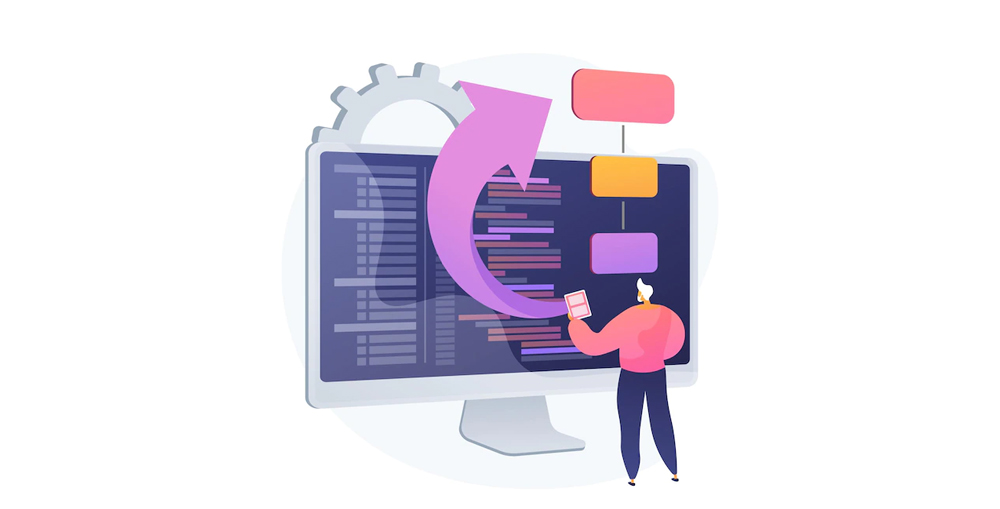
For any project whether it is customer enterprise software or any other project the discovery phase is the most important part of the project. It help businesses understand what their requirements are and what they need to fulfill those requirements. Usually the custom enterprise software development project’s discovery phase is a series of open-ended discussions, formal meetings, presentations, etc. To kick start the discovery phase the first step is to appoint a project manager or a team who will be responsible for outlining the project requirements and will take part in the project execution phases.

The project manager should conduct these discussion, meetings and presentations. The participants should be the end users, the department or team who have requested for the software, the stakeholders, technical experts, and any other relevant person who can give inputs on the subject. The best way is to enlist all the problems and challenges the users are facing for which they need a customer enterprise software. This step is a crucial part of planning your custom software development project and it could make or break your project’s success.

Discovery Phase

Divide these challenges into three groups, critical, high priority, normal and low priority. Discuss all these points with everyone and take their opinion and also request them to suggest an appropriate solution. Dividing all needs/features in three groups will help you on later stages. For any custom enterprise software development project the cost is one of the most important factor. Whenever a demand is raised by a department, team or group of employees for a new software solution, the management evaluate the solution in terms of value it will offer against the cost or financial strain it will put on the business.

That is why having three different priority level will help you optimize the budget and technical needs on the bases of importance of the features that are needed. By now the project manager would have already gathered all the required information. Now it is time to formulate a charter document or requirements document. This also happen to be the biggest advantage of custom software development as businesses can incorporate all the features they want. The custom ERP software development offers great many advantages and one of the biggest advantage is to customize each feature and function to behave or respond they way user wants. All this should be mentioned clearly in this requirement charter to avoid any confusion or misalignment.

Step 2. Custom Enterprise Software: Software Requirements Specifications (SRS)

The software requirements specifications (SRS) document is the most important document for custom enterprise software development. The software requirements specifications document provides a full roadmap to all the parties involved in the custom enterprise software development, mainly for the software developers and programmers. The verbal communication or information shared in chunks can be disastrous for the custom software development project. Such practice leads to a very incoherent communication which results in a lot of problems during the implementation of the software. A typical SRS or software requirements specifications document includes:

  • The goals and objectives of the custom enterprise software
  • A detailed description of the software from the user’s perspective
  • What problems should be solved by the custom enterprise software
  • Features and functionalities of the custom enterprise software
  • The performance and efficiency of the custom software in terms of workload, users, etc.
  • The roadmap for the integration and data sharing, if required
  • The limitations and liabilities of the custom enterprise software
  • The administrative work flow, data protection and access policy
  • Detailed Definitions, descriptions, assumptions and dependencies of the software and the limitations of the production/live environment
  • Functional and non-functional requirements and user’s needs
  • Details and design needs of user interfaces, user dashboards, administrative control panels, etc.
  • Complete details about the system users and what value it will add to the existing or new business processes for those users

The important thing to understand is that the software requirements specifications would serve as the agreement between you and the development team whether in-house or outsourced. The final outcome would be exactly like the SRS document. It is also crucial to describe each and everything in a language the software developers can understand, that is why adding descriptions, glossaries, definitions, references, etc. is important.

For example you are developing a customized CRM software and you want to personalize the customer journey, which is not available with popular off-the-shelf CRMs. The developer might be familiar with the standardized CRM functionality, but your SRS document will tell them exactly what customization is needed and what outcome users will be expecting from any process. That is why it is critical to compose your SRS document in a very simple and easy-to-understand language.

Software Requirements Specifications (SRS)

The SRS document also includes all of the user cases. A user case is what defines how the end-user will interact with the software and how the software should respond. There would be a set of users who will be performing different tasks on the intended custom enterprise software. Each user or user group would be needing different sets of functions. Even if there is only a highly focused group of users and they all need to perform same tasks, there would be a lot of tasks that can be performed. In any case all the tasks and different users will define the use cases. A use case is how the user will interact with the system for example, if they upload a file, what should happen next, if they input some data where it should go and what the software should return, etc. These all includes in a use case.

Here is how to define each use case:

  • Chose a set of users or a single user who will be performing certain task
  • Define that tasks in full details and try to add goals if necessary
  • Now enlist all use cases of that user or user group
  • Define all the user interactions and what response is required from the software
  • Include all alternative actions and their corresponding responses too
  • Repeat the same processes for all of the users or user groups

The use cases are aimed to define the custom enterprise software and its features from a user’s perspective. A detailed SRS document also gives you a chance to consider the top trends in custom software development and incorporate high-performing, market-proven features in your application. This provides the software developers a to-the-point visualization of the features and functionalities of the custom enterprise software and it also serves as a guideline for different stakeholders. That is why it is extremely important to write a detailed software requirements specifications document before starting the custom enterprise software development project.

Software Requirements Specifications (SRS)

Step 3. Custom Enterprise Software: Chose a Right Software Development Team

Choosing right vendor in Dubai or anywhere else in UAE is a very difficult task. There are so many custom software development agencies out there. It is important to choose the right vendor for the project. The best approach is to search in the local market and find a reliable company with relevant experience and good portfolio. However, outsourcing to offshore companies is also very common in UAE. Which is not a good practice. The biggest disadvantage of outsourcing to an offshore company is that it is not bound by local UAE laws which provide protection to the both the customers and the vendors.

Anyway, as for local custom enterprise software development companies, it is important to verify all the details before getting into an agreement. The best is to analyze multiple vendors, make a list of all vendors that looks good. Then check their portfolio, examine their website, view their complete company profile. After that short list at least five of them and request them to submit their proposal and select one of them. This way you can get a better vendor for your custom enterprise software development project.

See Also: How to Choose the Right Software Development Vendor for Your Business

Chose a Right Software Development Team

Step 4. Custom Enterprise Software: Chose Right Technology Platforms

When it comes to software development there are a lot of technology platforms which can be used to build those apps. The first and foremost important is the compatibility of the technology, for example, if you need a native software app which is usually installed on an operating system such as Windows, Linux, etc. Then whoever will be using that software must first have to install it in their computer. However, if you need a software that can be accessed from a web browser, then the users only need a laptop and a browser.

Similarly all other features determine the technology that you might be needing or what platform is compatible with your needs. It is better to engage the vendors at this stage. Vendors usually appoint a business analysts who work side by side during the requirement gathering stages and then help finalizing the scope of the work for the custom enterprise software development project. If the technology stack is aligned with existing digital eco-system it will make custom software development more cost-effective and beneficial in long term.

Chose Right Technology Platforms

However, here are a few popular trends of the modern technologies that enterprises are utilizing all around the world and the signs are those trends will grow in coming years:

Blockchain Technology

The Blockchain is a buzzword all around the world, especially since the BTC (Bitcoin) hit its ATH (all time high price) last year. The electronic media and social platforms start talking about BTC since, even very well reputed media outlets dedicated several shows on the technology. This has built an image of the Blockchain and most people thinks that it is some kind of digital currency that will challenge the fiat. However, that is only partially true, the Blockchain is more than just a currency. It is a technological platform that allow enterprises and individuals to develop software, applications and much more on the Blockchain.

It is a great technology to develop software with shared workflows. In the Blockchain the networks are called consortiums, it is a shared network and each connected user can track all transactions. The Blockchain is the most secure and transparent platform and can offer great features. The blockchain in custom software development offer great potential for efficiency, digital transformation, transparency and security.

Blockchain Technology

Artificial Intelligence (AI) & Machine Learning (ML)

The Artificial Intelligence or AI and the Machine Learning or ML is very commonly used all over the internet and we daily came into contact of the AI or ML without even realizing it. For example, the Google uses AI and ML to run its several algorithms which are connected to its advertisement platforms. If you are using internet on regular bases, you might have noticed that if you searched for something suddenly it start appearing on several different platforms, such as if you searched for iPhone 14, then you start browsing your Facebook or Instagram and suddenly you start getting ads related to iPhone 14. This is what is being done by AI and ML.

The AI and ML are widely used in various enterprise software and solutions such as data analysis, decision making processes, personalization, customer experience management, enterprise performance management and many more. There are endless possibilities of using AI and ML in custom enterprise software to improve their efficiency and user experience.

Artificial Intelligence (AI) & Machine Learning (ML)

Big Data

Big Data is not a new technology however, with the increasing levels of digitalization and our reliance on the data the big data is also gaining much rapid adaptation. The big data is a large amount of data coming continuously to a system or enterprise which they need to store and process efficiently. Majorly the data is coming in large volumes and it comes continuously hence the software should be able to handle the large amount of stored data as well as the large volume of continuously coming data. The biggest advantage of using big data technologies is to improve the data processing and analytical processes.

The big data is very helpful in understanding and analyzing large volume of data which otherwise is either very difficult or completely impossible for humans to process. Especially B2C enterprises, large organizations and government sector utilizes big data. However, now a days SMEs are also adopting big data technologies to improve their internal processes and capabilities. The adaptation of big data offer great improvements and efficiency in the key features of an enterprise resource planning software (ERP) and other business tools.

Big Data

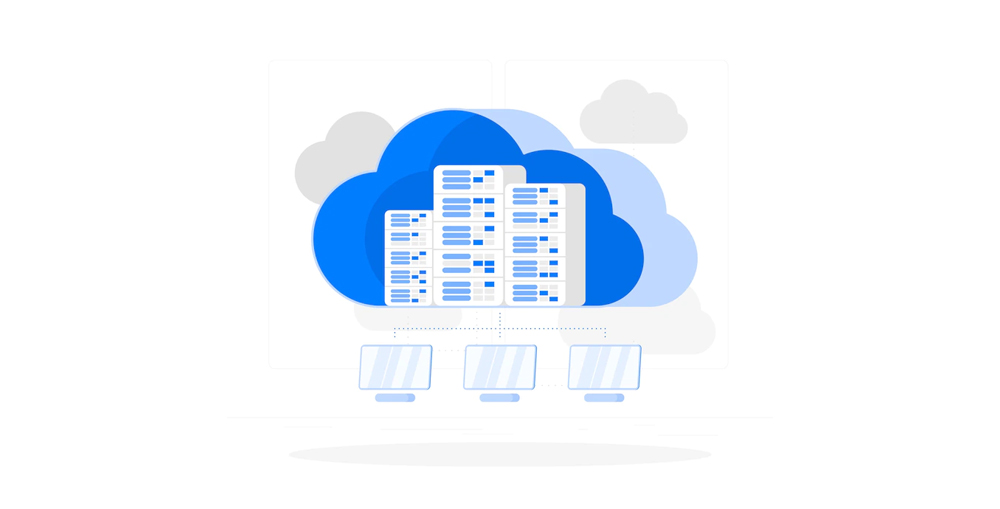
Cloud Computing

The main reason behind rapid adaptation of the cloud computing is that it offers great value, low cost, high performance and high availability. The businesses don’t have to manage the very expensive in-house IT infrastructure. The cloud offers great benefits for the system users as well. The custom enterprise software tools can offer better user experience and high availability with the help of the cloud computing. Another most useful feature of the cloud computing based custom enterprise software is that users can access the data from anywhere through the internet. The cloud service provider manages the actual infrastructure and ensures high availability.

The cloud is very flexible in terms of cost as well. The business will only have to pay for what resources they used, which can significantly reduce the cost. The system deployment is relatively easier and much faster. The high redundancy, flexible costing, easy access and ability to integrate open-source tools and frameworks make cloud more superior. The cloud computing offers unmatched security and and risk mitigation. The cloud computing is playing a crucial role in developing secure custom software in a growing cyber threats landscape. The cloud service provider have advanced monitoring and threat detection tools, security experts and professional and maintain up-to-date software stack, which helps maximizing security and minimizing threat.

Cloud Computing

These are some of the technological trends of the year and we have witnessed a steady growth in all above mentioned technology platforms. The rapid market adaptations, innovation and highly efficient products are signaling that these trends will go on for a couple of more years.

Step 5. Custom Enterprise Software: Design and Development Phase

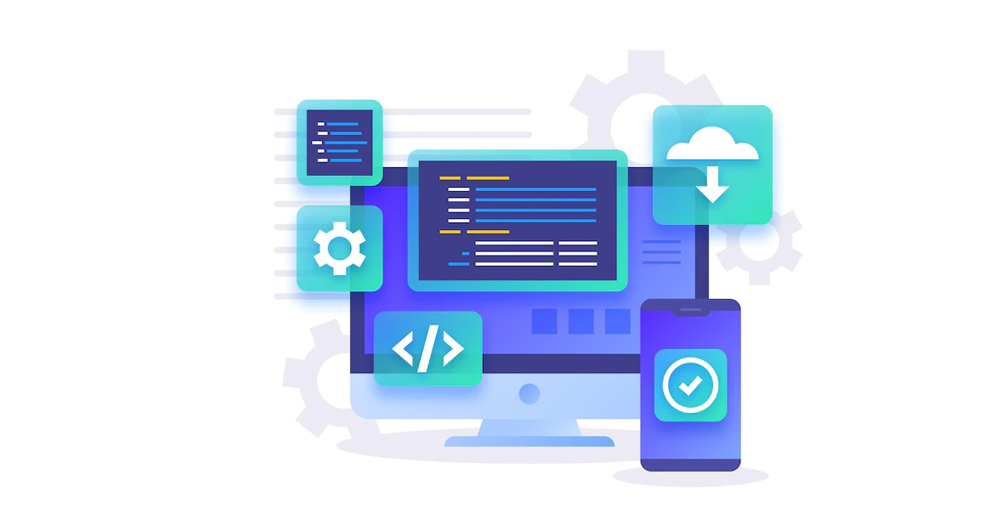
The custom enterprise software design and development phase is when the designers form the UI and UX and the developers program them by adding source code to them. The custom enterprise software design should be started with a wireframe so all the necessary changes can be done in time. Then the actual design is formed. Which also should be approved by the end-users and stakeholders. Once the software design is approved, it should be handed over to the development team.

Each custom software development company have its own project management methods, some follow agile and sum follow scrum, whatever the project execution method is it is important that the final product should align with the software requirements specifications document. The project manager and business analysts should make sure that he entire development phase is going on track. The updates and progress should be shared with all stakeholders and feedback should be collected if necessary.

See Also: Common Mistakes to Avoid in Custom Software Development Projects

Design and Development Phase

Step 6. Custom Enterprise Software: UAT, Launch and Post-launch

Technically as soon as the development phase is completed the project is completed however, there is always a testing phase. There are multiple different ways to test a custom enterprise software however, there are two major testing phases. First one is the QA testing, or quality assurance testing. The QA testing is always done by the technical teams and staff. Businesses can also hire a third part to evaluate the software in terms of security and penetration testing. The quality assurance and the security teams sometimes take a longer time.

However, whatever the case is the next step is the UAT or user acceptance test. This test is conducted by providing software to a certain numbers of users. Mostly end users, higher management and a lot others too. After the UAT, there is launch which also consists of two stages, one is beta launch and the final stage is full launch. The post launch activities are majorly related to the user feedback and the performance of the custom enterprise software.

See Also: Bespoke Web Portals and Intranet Application Designing Services

UAT, Launch and Post-launch

Conclusion

In the present day the markets are heavily relying on data and IT. The digital and IT infrastructure could be your much needed competitive advantage. Here in Dubai and all around the UAE the businesses and enterprises are adopting to customized software solutions and business tools. When it comes to custom software development the biggest concern of the managers and business owners is the time and resources needed for the project. The custom enterprise software development starts with a discovery phase or internal research to understand the audience and their needs. Then on the bases of those needs a tailor-made custom enterprise software can be developed. However, it is not as that simple as it may sounds.

The custom software development is not an easy feat. It is a very crucial process and it requires full attentions form the project manager and the relevant stakeholders. That is why in this blog we have discussed the important steps to execute a successful custom enterprise software development project. If you want to learn more about the subject or if you want us to help you with another software develop please feel free to contact us through our Contact Us page or leave a comment in the comment box below and we will get in touch with you.

See Also: Waiting Line Problems and Solutions


Waiting Line Problems and Solutions

Waiting Line Problems and Solutions

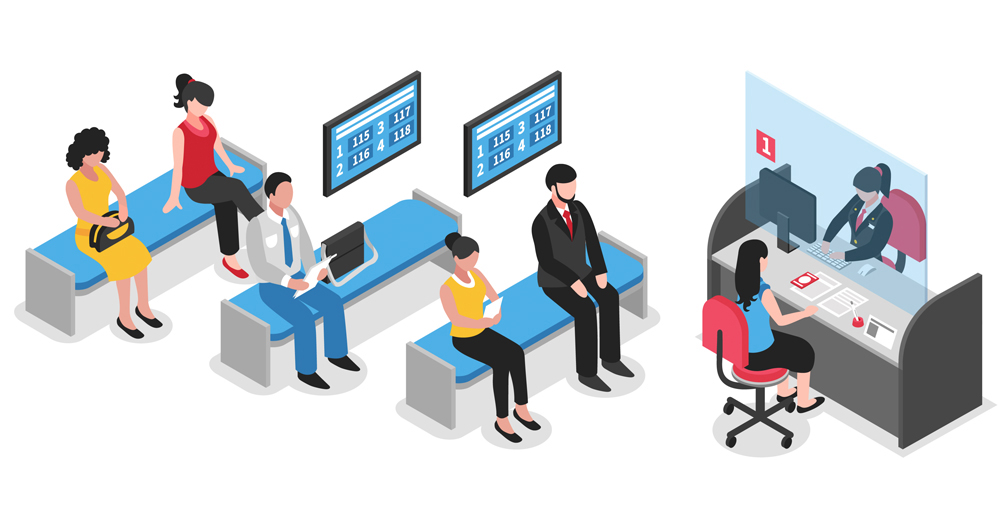
All businesses face queuing and waiting line problems. In fact here in Dubai and all around the UAE the service based industry is struggling very hard to minimize waiting line problems. This is because the market is very competitive, people usually have a busy lifestyle and no wants to stand in waiting line for hours. Let us admit, we don’t want to wait in a queue even if we have time, and in case if someone had to reach somewhere or short on time, the waiting could get more frustrated. That is why the businesses invest huge number of resources and hard-earned profits into solutions that can solve their queuing problems.

No matter what service you offer there would be a time when you will have to deal with long queues. Extended waiting time could destroy customer experience, it cause stress and frustration which later also impact on the service. It is extremely harder to satisfy an already stressed or annoyed customer. That is why we have decided to write this blog to provide our audience and customers a basic understanding of the waiting line problems and how a digital queue management system can solve them.

Waiting Line Problems and Solutions

What are common Waiting Line Problems?

The waiting lines doesn’t only impact your customers but they also cause frustration in your staff. Extended and longer wait time is one of the biggest and most harmful problem any service based business face with their waiting lines. The long waiting time cause stress and unrest among the customers and visitors, people tend to start line jumping, crossing one another, which results in verbal confrontations and dispute among the customers themselves as well as with the staff. Furthermore with poorly managed queues, people usually end up at wrong counters, which cause additional issues.

The long waiting line result in higher customer churn rate, when a customer leaves without getting service, they most likely will never return which cause business a great loss. The long waiting line put employees on their toes, everyone have to do multitasking in order to maintain the order and keep customers calm. Which put extra strain on employees and effect their efficiency and performance. Businesses will have to assign more employees to manage queues which increase their expense and further squeeze their profits.

See Also: What are the Basic Components of Queue Management System?

What are common Waiting Line Problems?

The mismanaged queues and long waiting lines can directly or indirectly impact each and everything in an organization and impact their overall growth. Here is how a digital queue management system can not only solve their problems but it can also help businesses in improving customer experience, customer satisfaction, employee efficiency and productivity.

How a Digital Queue Management System can Solve Waiting Line Problems?

A digital queue management system is a technological solution to solve waiting line problems. It consists of two parts, the software and the hardware, these two can further divided into multiple categories on the bases of features and functionalities. A basic digital queue management system consists of the following components:

Queue Management System Software:

  1. Queue Server Software/Application
  2. Agent Interface
  3. Administrative Dashboard and Control Panel
  4. Customer Interface

Queue Management System Hardware:

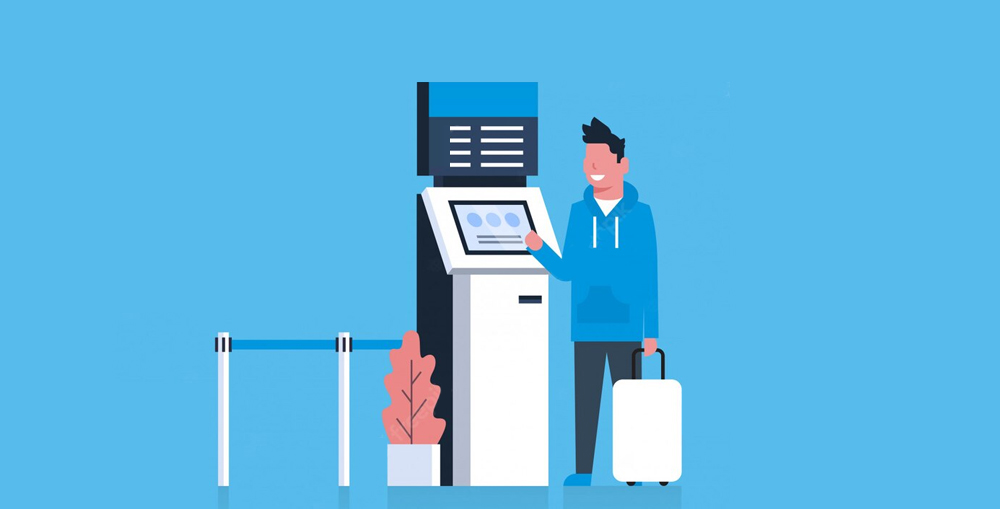
  1. Ticket Dispensing Kiosk/Printer
  2. Audio Visual Announcement Tools
  3. Digital Signage
  4. Counter Displays/Plates

The operation is fairly simple. The queue management system is installed at the business premises. The server software/application could be hosted online, or at cloud on even in local in-premises data centers. The agent dashboard could be a well-crafted intuitive web-based interface which can be accessed by any computer with a web browser on it or it could be as simple as a push button. The ticket dispensing unit is usually an interactive self-service kiosk but a simpler ticket printer can be used at the reception to issue queuing tickets to the customers and visitors.

The audio visual announcements system consists of a speaker system and a display which are installed at strategic places within the premises. The counter displays or counter plates are used to assign number/names of the counters. The counter displays also allow displaying more useful information. Since the primary language here in UAE is Arabic and there is a huge expat population so having an Arabic queue management system, which supports both Arabic and English and even more languages can greatly improve customer satisfaction.

See Also: From Chaos to Control: How Queue Management Systems Can Improve Your Business

How a Digital Queue Management System can Solve Waiting Line Problems

That is a simplest form of a digital queue management system. There is a wide range of all sorts and types of digital queue management system available in the market. Some follows a bit more traditional queue management methods and some are modernized and offer more value to customer experience. Here is how a digital queue management system can help eliminating the waiting line problems:

Queue Management System: Organizes Waiting Lines

The queue management system help organizing the waiting lines which itself can solve a lot of common waiting line problems. All the customers are required to get a ticket. Their ticket number corresponds to their turn in the queue. Moreover the queue management system can also ask customers to choose their desired service which prevent confusion and ambiguities. Since the ticket number is already assigned to everyone, so the line jumping is completely eliminated. Everyone will be served on their turn only no matter where they stand in the queue.

Usually when the customers are standing in waiting lines, they think that the line next to them might be moving quickly, which cause line jumping. However when the tickets are already given, then there is no point in jumping lines. Similarly when people are in waiting lines, they feel the staff is favoring someone, especially familiar customers, which cause unrest and stress and sometimes led to disputes between customers and the staff.

See Also: How a Queue Management System Can Transform Your Business Operations

Organizes Waiting Lines

As a queue management system is a digital system and everyone knows that all the tickets are issued by a computer program which is unable to distinguish between different persons, so they don’t have any concerns about favoritism or unfair treatment. That is why the customers trust it and knows that everyone will be treated fairly. This make waiting line more organized and also help reducing the work of the staff who usually engaged in managing waiting line and solving problems. Moreover the businesses can also utilize the queue management system to segregate different customers on the bases of their required services, their priority levels and much more.

All businesses have different services and different priority levels for the customers. For example, usually at banks the retail customers and the corporate customers are served at different counters or service windows. Similarly for expecting mothers, people with special needs, or elderly people there could be different service counters and so on. The queue management system help organizing the waiting line according to the needs of the business.

See Also: The Role of AI in Enhancing Queue Management Systems

Organizes Waiting Lines

Queue Management System: Reduce Customer Wait Time

One of the biggest advantage of a digital queue management system is that it has ability to significantly reduce the customer wait time. The customer wait time is single most influential factor in the waiting line and longer the wait time make your customers unhappy and in some cases very stressed. The longer wait time is also a major cause of the customer churn. The customers tend to leave when they feel they will have to wait for a very long time. This happens when the waiting lines are moving slowly, the queues are managed poorly, the staff is fully engaged with customers and the service agents are also busy in managing customer flow and solving other waiting line problems.

Which distract them and cause further delay in the service. All these things add up to the waiting time. Studies have shown that on an average a customer is only willing to wait for around 14 minutes, this is the maximum limit, for several other businesses the average tolerable wait time is even less than that.

Reduce Customer Wait Time

More wait time means more stress and frustration, if a customer reach to the counter in a stressed mood, it would be hard for the service agent to satisfy them. A digital queue management system can solve all these problems. It can streamline customer flow and lift unnecessary work from the service agents and other staff. Which allow them to focus on their primary tasks. Thus the service agent can have a better interaction with the customers and they can also minimize the service delivery time. Furthermore the well-organized waiting lines and queues also help reducing the wait time and improve customer flow.

Smoother customer journey means better customer experience and higher customer satisfaction. Since most of the customer journey is managed by the automated queue management system this means there would be no delays, errors or complaints from the customer. The queue management system also ensures each customer arrive at the right counter and it can also support service agents in the service delivery process which maximize their performance. All these improved processes significantly reduce customer wait time and ensure a smoother and happier customer journey.

See Also: Importance of Queue Management System for Government and Public Offices

Reduce Customer Wait Time

Queue Management System: Improves Customer Waiting Experience

Another most important aspect of customer satisfaction is their waiting experience. The human brain works in a very peculiar way. When we are waiting for something we feel like the time is passing slower than usual. When we are excited we feel like the time passes faster than usual. This phenomenon is called perceived time. In service industry the perceived time is always a problem for the managers. Even though a proper queue management system is in place, the average wait time is reduced and the service agent are performing well, still the customer complains for long wait time.

This is due to the fact that they started to get bored after just 8 to 10 minutes. For that the queue management system offers multiple solutions. There are large digital displays used with the queue management system to publish the queuing information. The same can be utilized to play multimedia content or adverts or anything interesting. This can distract them from the waiting and keep them engaged.

Improves Customer Waiting Experience

Usually a standard queue management system comes with in-built digital signage tools which allow the managers to push content on the signage screens in the waiting area. The screen can be divided into two or more sections to display the queuing information and the multimedia content side by side. Furthermore the audio announcement system also helps engaging the customers. For each ticket the audio announcement system announces the ticket number and corresponding counter number/name and this announcement is made in multiple languages, usually English and Arabic in Dubai and all around the UAE.

This also keep users distracted from waiting and increase their engagement. All these features help reducing the perceived wait time and improve customer’s waiting experience. The queue management system also comes with a smart software engine, which has capabilities to analyze the historical data and it can predict the expected wait time for each ticket based on the historic data and current queue status. Printing that time on the ticket is also helpful in reducing the perceived wait time and help improving customers’ waiting experience.

See Also: Queue Management in Banking: Enhancing Customer Experience

Improves Customer Waiting Experience

Queue Management System: Provides Valuable Business Intelligence Data

The modern businesses are heavily relying on data and information. The market trends, voice of customer, statistical data, performance data and such information are the backbone of the decision making process in the modern business environment. The waiting lines and the customer flow are one of the crucial factor for any service based business. It is extremely important to gather valuable business intelligence data from your queuing processes. A queue management system is a digital tool with an AI (Artificial Intelligence) based software. Its algorithms are programmed to collect data from each and every customer touch point and from all relevant internal business processes.

The queue management system records customer journey details such as average wait time, busy hours of the day, and busiest days of the week or month and so on. Such data helps manager to form strategies to effectively deal with the waiting line problems and help them in improving the queuing process. The queue management system can capture and provide data in real-time the branch managers, head-office or any other concerned person can have real-time access to the ongoing queuing processes from anywhere through dedicated dashboards.

Provides Valuable Business Intelligence Data

The queue management system can also capture the wait time for each service and each priority level of the customers along with the service delivery time. The in-built analytical tools can provide full details of each individual process as well as average wait time and service time. The same kind of data can be captured for the service agents. This data provides a deeper insight to the queuing process and relevant staff work performance.

The managers can easily understand the strengths and weaknesses of their staff. For example, if a service agent performs well when delivering 5 out of 12 services and he/she slows down when working on the others, which mean he/she needs more training for the remaining services. The queue management system can also capture time between one service delivery and next customer call. Along with all these details a lot of the parameters are also captured and direct KPIs can be set and monitored for the performance.

See Also: What are the Different Types of Queue Management System?

Provides Valuable Business Intelligence Data

The performance data helps the HR and the customer flow data helps the managers to build new strategies and plan resources accordingly to maximize the efficiency. Better resource planning, improved productivity and individual performance help businesses reduce the resources for the operational needs. Which help them reduce the expenses of the branch thus improve profitability. Satisfactory customer experience also help gaining their trust and drive customer loyalty which further add up to the profitability and growth.

The loyal customers are a precious asset for any business, it is 5 to 25 times less-expensive to sell to an existing customer than acquiring a new customer. The voice of customer or customer feedback collection capabilities also help businesses getting in-sight to the customers’ minds. Which help them understand customers’ liking/disliking, demands, needs, problems, and also help them in product development process. All this business intelligence data can significantly improve various internal processes and have huge impact on customer experience and customer happiness.

Queue Management System: Offers Virtual Queuing and Mobile Apps

Waiting line problems are not new for the service sector. Businesses are dealing with waiting line problems since the very beginning. However the market trends have been changed. The customer behavior and their expectations have changed drastically. Especially in the past decade, the technology have integrated far deeply to our daily lives. Now a days if you are living in Dubai or any other part of the UAE you must be utilizing some kind of technological solution to interact with businesses, organizations and even with government entities too. The UAE government specifically is very advanced comparing to other government in the region.

The UAE government is in a transition phase to replacing the traditional service practices with the modernized and digital e-Services. This is due to the advancements in the smartphones and their usability, these days the smartphones and mobile apps have become an essential part of our day-to-day activities. Whether it is communication, work or entertainment, the smartphones and mobile apps are helping us making our lives better. The queue management systems are no exception.

See Also: How to Achieve the High ROI using Queue Management System

Offers Virtual Queuing and Mobile Apps

The queue management system mobile apps allow customers to utilize modernized queuing methods, which is more commonly known as virtual queuing. The virtual queuing is a modern and most efficient queuing method. It enables the customers and visitors to sign-up for virtual queues using remote channels and it has capabilities to completely eliminate the wait time. The customers and visitors can use queue management system mobile apps or any other remote channel such as SMS, Email, Call, Online Customer Portals, Appointment Booking Portals, WhatsApp, etc. to sign-up for the queue.

An e-ticket or digital ticket has been issued which act as the queue number and allow customers to sign-up for the queue without physically arriving at the branch or standing in the waiting lines. The queue management system also allow the customer service agents and staff to communicate with the customers via digital channels such as WhatsApp, Customer Portals, SMS, Email, In-app Alerts & Notifications and much more. The customers always get updated queuing information through their preferred communication channel along with the expect wait time.

Offers Virtual Queuing and Mobile Apps

This allow them to plan their visit as per their convenience and arrive only when their turn comes. The virtual queuing and queue management system mobile apps literally reduce the wait time to zero and offer a more personalized customer experience. No wait time or very low wait time in itself is a remarkable achievement. Furthermore the queue management system mobile apps and the online appointment booking portal also help customer gaining access to the valuable information which help them plan their visit more conveniently. Customer can view live queuing information at all branches, hence they can sign-up for the branch with less customers and so on and so forth.

The queue management system mobile apps also provide branch locator which allow customers to view real-time location maps and traffic updates and let them plan their visit according to their convenience. Such features can significantly improve customer experience and help businesses obtain higher levels of customer happiness and customer satisfaction. The virtual queuing also reduce the workload of the staff and help improving their performance too.

See Also: Streamlining Customer Service: The Power of a Modern Queue Management System

Offers Virtual Queuing and Mobile Apps

Conclusion

For any service sector the customer waiting lines are always a big challenge, especially when the footfall is high the customer waiting lines could drastically impact customer experience. A bad customer experience can repel your customers. Furthermore the businesses also have to allocate more resources to deal with the waiting line and queuing problems. A digital queue management system not only help businesses is solving all waiting line problems but it also add value to customer experience and raise the levels of customer satisfaction. The queue management system also help businesses optimize and improve staff efficiency and performance which also results in better customer experience. As it is a digital tool so it can effectively capture valuable business intelligence data which can be help businesses and management in decision making and strategy building processes.

The queue management system not only solve waiting line problems but it also help improving various internal processes and overall productivity of the service center. The virtual queuing, integration with third-party tools, mobile apps and such modern features help businesses and customers in many ways. Here in Dubai and all around the UAE there are many different types of queue management systems available in the market. It is crucial to choose an appropriate queue management system with the correct set of features to maximize your service center’s performance.

RSI Concepts is a leading queue management system provider in Dubai, UAE. If you want to learn more about waiting line problems and their solutions or if you want our help to deploy an effective and cost-efficient queue management system for your business, please feel free to contact us through our Contact Us page or leave a comment in the comment box below and we will get in touch with you soon.

See Also: How Insurance Companies can Improve Customer Happiness with a Queue Management System?


How to Reduce Software Development Cost in Dubai, UAE?

How to Reduce Software Development Cost in Dubai, UAE

The businesses in Dubai and all around the UAE heavily utilize modern technologies and digital solutions to boost their operational capabilities, performance and productivity. No matter if a business is small or large, if it is a B2C or B2B business, or what industry sector it belongs to, the software solutions and tools are playing crucial role from day-to-day tasks to implementing long-term success strategies. As businesses grows their software needs also grow. There are two major types of software solutions that are available in the market, commercial off-the-shelf software (COTS) and customized software development.

The commercial off-the-shelf software or COTS are designed for mass audience and usually follow general standards, hence the COTS are generic solutions. The COTS are easier to deploy and initial cost is low, however, in longer run they might unable to fulfill the needs of the business. That is why businesses need customized software development. The customized software are tailor-made solutions designed exclusively for the business to meet their very specific needs which can’t be fulfilled by the COTS and custom software solutions offers many benefits both in terms of maintenance, control, security, and scalability.

How to Reduce Software Development Cost in Dubai, UAE

Obviously when a business needs to develop a customized software solution they also have to invest more resources, that is why the initial cost of the custom software development is relatively high, but in long term the custom software development can yield better ROIs than COTS. The markets in Dubai and all around the UAE are very dynamic, businesses will have to be more reactive and proactive in order to beat the competition. For that they require cutting-edge software solutions and technology that can provide them a competitive advantage and help them boost their capabilities and performance. This makes custom software development an essential tool for digital transformation and modernization.

The cost of custom software development is increasing day by day as more and more businesses are preferring customized solutions over COTS. Usually businesses have limited budget for such procurements hence it is very difficult to go overboard for custom software development projects. Usually due to several common mistakes by the managers and the software development team the cost can go several time more than what it can actually be. In this blog we will enlist key factors that can significantly reduce the cost of custom software development and help businesses get the best value out of their project. With inherent benefits of enhanced user experience, the custom software development offers better adaptation, integration and staff efficiency.

How to Reduce Software Development Cost in Dubai, UAE

Start with Making a Plan and Setting Goals for the Custom Software Development

Many custom software development projects cost more time and money due to poor planning or no planning at all. For any project the planning phase is crucial. If you make a proper plan before starting a customized software development project you can save a huge amount of resources, cost and time. Usually in Dubai and all around the UAE businesses tend to allocate budget first then initiate the project. The best approach is to make a project plan first and then decide the budget limit for it. If that is not possible, which in some cases isn’t possible, then the project manager should create a proper project plan to keep everything within the given budget and time limits.

Usually the customized software development projects exceed their estimates in terms of cost and time. This is because the project managers doesn’t make a proper plan and skip the research and discovery phase. In addition to that most of the time the project managers and development team disregard crucial factors to consider to optimize the custom software development cost. Any software serves a particular purpose, if you have a need for a new software then there must be a purpose and goal for that. The custom software development project plan starts with the product goals.

Start with Making a Plan and Setting Goals for the Custom Software Development

The first step of making a project plan for a custom software development is to clearly understand the business goals of the project. It means what problems the custom software will be solving in future? How it will help improving certain things or processes. The best way is to sit with the users and understand their problems, their desired solution or their expectations from the project. This will help you clearly understand the business goals of the custom software development project. Obviously the custom software will be designed to support certain work flows and processes, it would have certain features, better to list them all.

Then rearrange the list as per the priority or importance of each feature. The project manager can also engage a business analyst at this stage to further refine the list. The next step is to prepare a scope of work or software requirement specification document. The document will outline the technical details of all the features that are needed and will provide you a better understanding of the final outcome. Here is a step-by-step guide to planning your custom software development which will help you to make a better plan for your next project.

Start with Making a Plan and Setting Goals for the Custom Software Development

Prepare Requirement Documents for the Customized Software

Preparing a software requirement document is the best way to eliminate the ambiguities and confusions. It can significantly reduce the cost of the custom software development. Usually what happens is that the businesses don’t specify clearly what they need, instead they loosely asked for certain features. On later stages when the software start gaining a form and structure or in some cases after the full development, the businesses then realize that they are missing certain things, or what they got was not intended to be like that, hence they require changes, iterations and in some cases wants to add more features, which not only increase the cost but also delay the project completion.

That is why it is crucial to prepare a detailed SOW (scope of work) or SRS (software requirement specification) document. Usually the project managers or business analysts prepare this document as it have in-depth details of the specifications and functionalities. Along with the SOW or SRS the Vision, Backlog and User Story Mapping is also important. Without all these details the project execution will be extremely difficult and the chances of failure are too high.

See Also: Benefits of Investing in Custom Software Development for Your Business in Dubai

Prepare Requirement Documents for the Customized Software

Without proper documentation you can face following issues:

  • Incorrect or wrong functionalities and features
  • Problems, disputes and revisions during the custom software development process
  • The developer might get confused about the most important and least important features
  • Additional time and cost for the changes and iterations during the development phase
  • The work flow, user interface and user experience will fail to satisfy the software users
  • The software might failed to solve the problems ort to boost the performance as anticipated
  • Additional cost would be added to modify/upgrade software which will impact the ROI too

Most of the custom software development companies in Dubai, UAE faced these problems or regular bases. Sometimes the businesses failed to communicate their exact needs, sometimes the final outcome is different from their expectations, sometimes incomplete information are provided and on later stages the project manager and the business analysts realize it which disrupt the development process and cost additional time and money. That is why a proper and detailed scope of work (SOW) or software requirement specification (SRS) is absolutely essential to minimize the cost of the custom software development project.

See Also: Common Mistakes to Avoid in Custom Software Development Projects

Prepare Requirement Documents for the Customized Software

Chose the Best Technology Stack and Software Development Platforms

The technology and the development platforms plays a crucial role in the cost of the customized software. It is best to choose the right technology stack and the platforms at the beginning, even before starting the development process. This can save a lot of time and cost too. Incompatible technology or wrong technology selection could lead to large revision and improvement costs. If the integration is involved the technology should be able to support the required integration with the existing systems and tools. It is important that the technology you are selecting is also capable of delivering the required features and functionalities.

There are few major components where the technology has to be selected carefully such as front-end, server-side or core app platform, database and coding language and platforms. These key components can have huge impact on the cost of the customized software. For the technology you have selected you also need the skilled team or individuals, different technology platform have different levels of popularity and in market they have different value which determines the cost of the development.

See Also: Top Trends in Custom Software Development: What’s Shaping the Industry?

Chose the Best Technology Stack and Software Development Platforms

For example here in Dubai or anywhere else in UAE an average PHP developer will cost you at least three time less than an average Python developer. This doesn’t mean the Python is superior to the PHP or the PHP is superior to the python. It only depends on the simple rule every market follows, which is supply and demand. The PHP developers are easy to find in UAE however, the Python developers are rarer. Furthermore the businesses should also consider the long-term impact of the technology on the ROI. If a right technology is chosen which is widely used, acquiring vendors and getting support would be easier and cheaper.

Another impact of the technology is on the overall development time which also impact the cost of the project. Reliable and widely used technology and platform usually tend to offer great products with less issues, and more cost-efficient support and scalability. The right technology can significantly reduce the cost of the custom software development project.

See Also: Leveraging Big Data in Custom Software Development

Chose the Best Technology Stack and Software Development Platforms

Chose a Good Custom Software Development Team

For custom software development it is extremely important to choose a right vendor or outsourcing partner. Here in Dubai and all around the UAE there are a lot of vendors who offer custom software development services on top of that there are several offshore options are also available. The offshore companies could be 10 times cheaper but 10 time riskier too. We never recommend offshore vendors, the offshore vendors doesn’t abide by the UAE laws, they usually take advance payment, they are located in a far distanced place where usually customers don’t go and if they have to go then they will also have to bear extra travelling expense.

The offshore companies are problematic. However, here in UAE there are so many options available, some are good some are not as that good. Dealing with a local company will mitigate the risk and businesses can have the protection of law as well. However, the cost is our main agenda for the article. But the cost is not the only cost that a custom software development company quote you at first. In fact the deployment, maintenance, upgrade, scalability and service all are included in the cost of the project.

See Also: Why Off-the-Shelf Solutions Fall Short: Advantages of Custom Software Development

Chose a Good Custom Software Development Team

Here are a few steps to select a right outsourcing partner or vendor for your custom software development project in Dubai, UAE:

  • Step 1: Start with internet search, ask your friends, coworkers and other people to recommend you a software development company in Dubai or anywhere in UAE
  • Step 2: Make a list of at least 10 custom software development companies in UAE and rank them on the bases of their portfolio
  • Step 3: Check for the relevant experience and short list the top 5 companies, consider their physical location too, this would make meetings more convenient
  • Step 4: Evaluate these five on the bases of their work, partners, customers, experience in relevant field, relevant services, project execution practices, and consider other positive traits
  • Step 5: Request them to submit their quotes, short list the best 3 and negotiate with them about the timeline and budget
  • Step 6: Get into agreement with the vendor with best offer

See More: How to Choose the Right Software Development Vendor for Your Business

A good software development team with adequate knowledge and experience can make a huge difference. The biggest advantage of hiring an experienced and well organized team is that they will take less time and their work will have better quality too. Due to their experience they will be able to offer better assistance and will help you improve features and functionalities too. A good custom software development company can significantly reduce the time and cost of the project.

Start with Developing MVP First

When businesses make a plan to develop a very sophisticated and elaborate custom software they usually end up spending much more than anticipated due to the sophistication, multiple revisions and changes followed by multiple testing phases and feedback from stakeholders and users. Whenever a software concept is developed it is developed to solve certain problems. However, when it comes to drawing board, a lot of cosmetic features are also added. Which can increase the scope of work and specifications as well. That is why it is a common practice in custom software development to build an MVP or Minimum Viable Product first.

The MVP is simply a scaled-down version of the actual product. It can have all essential features or limited features of the actual product. Once the MVP is built, it is provided to all the stakeholders and the system users who evaluate the product and provide their feedback. The MVP helps businesses understand if the final product will be able to deliver the value they are expecting from it. The success or failure of the MVP will determine if the business should invest more in developing the complete customized software solution or if they will have to rework on the concept to come up with a completely different idea altogether.

See Also: Custom Software Development Progressive Web Apps – Beginner’s Guide

Start with Developing MVP First

The MVP or Minimum Viable Product have major features that allow the users to interact with the software which help them understand what they will get with the full product. This will help the businesses to understand if the product is going in the right direction or not and help them further fine tune the final product. More importantly it is very cost-efficient and prevent a lot of risks. Usually when a full-fledged custom software is developed it is difficult to make changes to it, it also take more time to make those changes which definitely impact the cost and can increase it by a lot.

However, with an MVP the businesses can start with the limited features and down the road they can add more features one by one to minimize the cost. This also help them to integrate the product more effective into the organizational environment and IT infrastructure. Here are some key advantages of developing an MVP first:

  • Highlight the core functionalities and focus on them most
  • Evaluate and assess if the product will be compatible with the vision
  • Early introduction to the end-users help integrating the software more effectively
  • Fewer changes to made and minimal work is required to build an excellent UI
  • Minimum risks and more space for course correction and upgrades in future
  • Low initial cost and with ability to control future investment in the product

The MVP or Minimum Viable Product help businesses segment all the features and specifications in three segments essential, passible, and desirable or cosmetic features. On the bases of these segments the business can decide which features they would be needing the most which help them optimize and reduce the cost.

See Also: The Role of AI in Custom Software Solutions

Start with Developing MVP First

Leverage Automation and Utilize Pre-built Features

The software development is a very time consuming task. It requires a lot of efforts and work hours to complete a single feature of a software. Obviously each custom software is different from the one another with different product goals. However, when we are using certain technologies they offer certain features and functionalities that different software developers utilize in their programs to achieve different types of goals. The programming languages that are used to build the software usually builds them in form of blocks and functions.

Each block of code serves a purpose and if the software developer utilizes these blocks it could save them a lot of time and a lot of man hours. Which definitely help reducing the cost of the product. If the developer build each code block from scratch then they will have to put a lot of time on it, which definitely raise the cost of the product. There are pre-built templates which can be used as the foundation and the customization can be done on the top of it as an additional layer, this could significantly save the development time and efforts.

See Also: Comparison between COTS and Custom Software Development

Leverage Automation and Utilize Pre-built Features

There are certain frameworks which can save a lot of time and effort, the software developer can utilize these templates and frameworks to save a lot of time. Such templates and frameworks came with in-built libraries and pre-build functions which allow the software developer to effortlessly add features in the software. Such tools and methods can reduce the custom software development cost from 10% to 80%. That is huge, and it have huge impact on the cost of the custom software as well. The custom software development team can use low-code or no-code environment and platforms to work on the development phase of the custom software which can save a lot of time and resources.

Furthermore the testing and various other steps can also be done utilizing the automatic tools. These days a huge variety of automatic testing tools are available, which can perform several tests on your custom software such as user experience, user interface, performance, load and stress test, and even security testing. The open-source platforms can help the businesses to build low-cost customized software applications. The open-source platforms offer a large variety of free libraries and support a lot of customization which gave us a great advantages.

See Also: The Impact of Cloud Computing on Custom Software Development [Full Guide]

API-First Approach can Significantly Reduce the Custom Software Development Cost

The API or Application Programing Interface is not a new term for the software developers. However, the API-first Approach is a relatively new term and it got traction since past few years. The API integration allow a software or application to utilize the database, functions and features of another software, application, operating system or services. This is what made them super-efficient and very convenient for the custom software developers. The API-first development approach can significantly reduce the development time and also efforts. Since the developers can utilize pre-built functions and features which are already tested hence the chances of errors and bugs are also reduced.

On top of that the development teams can work in parallel on multiple APIs which also help reducing the timeframe of the development phase. The APIs can be used in multiple projects simultaneously and they also help developers getting advantage of the other software and system via integration. Hence they don’t have to program a lot of features, instead they can utilize those features from the existing software and tools. This simplify the custom software development process, reduce the development team effort thus the cost is reduced.

See Also: Why custom software is more cost efficient in UAE?

API-First Approach can Significantly Reduce the Custom Software Development Cost

Better Project Management Help Reducing the Cost

The project management of a custom software development project is crucial. Usually the outsourcing partner or vendor appoints a project manager/business analysts to oversee the work. Same is done at the customer end too. The businesses usually appoints a project manager for their custom software development project. The core responsibility of the project manager at both parties is to maximize the performance and the quality of the outcome. For that the project manager or business analyst builds a project plan which include all major and minor details along with milestones and all variables that can impact the progress.

The project manager has to closely monitor the progress and performance of the custom software development team to assess if everything is on track and made course correction whenever needed. The performance management is also a crucial aspect. It ensures all team members achieve their respective goals and contribute to the completion of the project. All these aspects ensure a timely and satisfactory delivery. Moreover considering all these important points will help you optimize and minimize the cost of custom software development.

See Also: Step-by-step Guide to Develop Custom Enterprise Software

Better Project Management Help Reducing the Cost

The best approach is to segment the software and set milestones on the bases of stages and features this help both parties to align with the scope and ensure a timely project execution is made by both parties. The project manager and the methods he or she uses to execute the custom software development project matters a lot. If everything goes as plan there are very less room for errors, revisions and repetition. A professional project manager has ability to complete the project in time by boosting the morale of the software development team and by solving the problems and disputes to ensure a timely project execution.

The project manager also keep an eye on the progress and keep checking everything which help them reducing the errors and bugs from the system which costs a lot. Furthermore the project manager appoint different team members for different tasks to maximize the performance which reduce the required work hours and the cost too. The project manager also ensures that the scope of work or software requirement specification documents are followed correctly which minimize the risk and cost.

See Also: Custom Property Management System – Leading Real Estate and Property Management System

Better Project Management Help Reducing the Cost

Conclusion

In this modern time the businesses have to rely on various technological solutions in order to keep up with the fast paced markets. Here in Dubai and all around the UAE the software tools and digital solutions are very common among businesses for both internal and external use. The customized software development started gaining momentum since past few years and the market is rapidly growing. This means more and more businesses are acquiring custom software and more companies have started offering custom software development services.

When it comes to a custom software development or procurement of any such solution, usually businesses allocate a certain budget for the project, which make it very difficult for the project manager to achieve desired solution within their budget limit. Furthermore we also noticed that due to some very simple and easily avoidable mistakes, the project manager end up paying many times more than what they should pay for the custom software development.

In this blog we have highlighted those mistakes and tried to provide a road-map or guide to custom software development projects. If you want to learn more or if you want us to help you with your custom software needs, please feel free to contact us through our Contact Us page or leave a comment in the comment box below and we will get in touch with you soon.

See Also: The Risk of Poor Performance Management and How to identify it?


The Risk of Poor Performance Management and How to identify it?

The Risk of Poor Performance Management and How to identify it?

Here in Dubai and all around the UAE the performance management has become a major concern for the businesses and organizations. Businesses whether small or large have started adopting to modern performance management systems and processes. The continuous performance management help managers effectively boost the productivity and outcome of their teams and departments, which is great. But sometimes the managers are failed to obtain the desired results and sometimes the performance management system can even have negative impact on the overall productivity of the business.

It is easier to identify the negative impact of poor performance management, however, it is harder to realize if the performance management system improves the outcome but still the organization is less than the maximum performance level they can achieve with an effective performance management system in place. In this blog we will discuss what the major consequences of poor performance management are and how managers can identify them?

The Risk of Poor Performance Management and How to identify it?

Poor performance management can cause a lot of problems for the managers and for employees too. It impact the productivity and also have significant impact on your customer facing channels. In short the poor performance management impact almost each and every aspect of the business including cost, expense and sales. Here are a few key aspects which you should notice if you want to understand your current performance management system and strategy:

Poor Performance Management Risks: Lack of Employee Engagement

One of the biggest problem with any performance management system is the lack of clarity. When the employees are not clear what is the primary goal or high-level organizational goal then they lack motivation to achieve it. Another reason is the lack of communication. When managers failed to communicate the individual goals, daily tasks and responsibilities to employees they get confused and don’t know what to do or how to do. This results in lack of employee engagement and eventually employee loose interest which can have devastating impact on their performance and productivity.

When the managers failed to explain employees that how their daily tasks and individual goals will contribute in achieving the organization’s mission, they have no reason to grow or put extra effort. Furthermore if the employees feel the performance management system and evaluation methods are unfair or less-transparent they tend to loose motivation for the hard work.

See Also: Choosing a Performance Management System A Buyer’s Guide

Poor Performance Management Risks: Lack of Employee Engagement

The employee need emotional connection with the goal, which is impossible without a proper communication framework, when employees are engaged in goal setting processes, in evaluation and reviews and everything else, they feel emotionally connected with the goal and strive harder to achieve it. Furthermore the employees feel important and they feel their work is important too. The performance management system not only let them understand the importance of their own goals, but it also help them understand the weight of their efforts in the high-level organizational goals and vision.

An effective performance management system always have award and training programs, which keep employee engaged and motivated. It also emphasize on the impact of achieving their goals on their personal development and individual growth. Professional and talented individuals need feedback, the managers should be able to provide them guidance and highlight them their strengths and weaknesses.

Poor Performance Management Risks: Lack of Employee Engagement

The performance management system should include the training and personal development program to upgrade the personal and professional skills of the employees. If they don’t find options and opportunities to grow and improve, they will lose interest. In such circumstances employees usually left, which also have negative impact on the performance and productivity. The poor performance management grow your employees disengaged and make them unattached from the high-level organizational goal and vision.

Poor Performance Management Risks: Inability to Deal with Common Performance Problems

Whenever managers set a goal for the individual employee or teams or multidimensional project teams there are some very common problems that they have to deal with. Such as:

  • Identification and arrangement of the required resources that the employees might be needing to achieve the goal.
  • Evaluation of the employees on the bases of required skill set and identification of required training to make them able to achieve the required goals or to produce the expected results.
  • In-depth analysis of required job roles. This is required to understand if each component of the employee job role matches with the required task, or what is their level of compatibility with the required task/goal.
  • Reassigning of the poor performers or incompatible employees. If the employee is not compatible or if he/she is performing poorly then they should be reassigned to another role, and should be replaced with a more suitable employee with compatible skillset and knowledge.
  • The last resort is to layoff the poor performing employees. The poor performing employees also demotivate others and put extra strain on peers who have to carry them.

All the above mentioned decisions are common occurrences in any business. However, it is extremely important that all these decisions are made on the bases of in-depth and highly accurate performance data. Without an adequate performance management system the managers can find these decision very difficult and often tend to be wrong. These are very crucial decision and as such activities help boosting performance if not done correctly can have devastating effects on performance and productivity.

See Also: Why Custom Performance Management System is more Effective?

Poor Performance Management Risks: Inability to Deal with Common Performance Problems

Poor Performance Management Risks: Ineffective Reward Program

The poor performance management processes lead to poor communication, less employee engagements and unclear objectives. When the manager fails to communicate what is to be expected from the employees, what is the scale of measuring the success, and how the employee should improve themselves, the employee tend to take no interest in reward program as well. In such circumstances mostly the employees are not sure what the reward criteria is and how their work will be measured for rewards and recognition. Poor understanding of employee performance appraisal and success criteria lead to chaos and uncertainty. This make them confused and doubtful about the reward program.

Employee often not trust on reward program and instead of motivating them the rewards make them insecure and anxious. It also lead to negative perceptions of the managers and the entire performance management program. Such things discourage employees and create a sense of hopelessness in them. Which impact their performance very badly in longer run. That is why it is crucial that a perfectly clear and completely transparent reward program should be implemented by the performance management system to inspire and motivate employees for better performance.

Poor Performance Management Risks: Ineffective Reward Program

Poor Performance Management Risks: Biased Reviews and Rating

Whenever it comes to performance reviews and rating, the most common complaint every employee have is the biased reviews. Most of the time the biased is unintentional but with the poorly managed performance management the right review framework is not in place which results in inaccurate rating and reviews. This lead to distrust among the employees and also the managers. The distrust on the rating system further cause hopelessness and stress among the employee and grow them disengaged. The performance management system enables businesses to conveniently conduct 360 degree reviews and evaluation.

On top of that a good performance management system continuously monitor the performance of the employees. Traditionally the reviews are only conducted once or twice in a year which also result in inaccurate results. Most of the time in yearly or biyearly reviews the reviewer only focus on the most recent performance and incidents, which also impact the overall accuracy of evaluation process.

See Also: 5 Challenges in implementing Performance Management System

Poor Performance Management Risks:Biased Reviews and Rating

Furthermore the personal relation, morale values and other human emotion can also impact the judgment of the reviewer. However, a good performance management system includes continuous review process which increase employee engagement, reduce biased and improve transparency.

Poor Performance Management Risks: Low Job Satisfaction and High Turnover

Poor performance management, unfair/biased reviews and low or no recognition lead to employee dissatisfaction. When employees are not satisfied with their job they don’t take much interest in their work, resultantly their performance declined. They don’t feel motivated toward their work, their morale and self-esteem deteriorate and they do not see growth or personal development in their current job role. Eventually they will leave and find another job which increase employee turnover and also raise the hiring cost. The HR department should keep working to fill in the gaps by hiring new talent, which obviously is a costly process and the new employees also take some time to get integrated in the organizational environment.

This all could have further toll on the performance. That is why it is crucial to have a good performance management system in place. The performance management system increase employee engagement, communication between employees and managers, it connects employees with the company vision and high-level organizational goals which help boosting their performance.

See Also: The Future of Performance Appraisals: 6 Innovations and Changes [Quick Guide]

Poor Performance Management Risks:Low Job Satisfaction and High Turnover

The performance management system help bridging the gap between the management and the employees, it make employees more confident and expressive, it also help managers identify the problems and obstacles that employee might be facing. The performance management system help building a very productive environment which makes employee happy by solving their problems, fairly rewarding them for their achievements and allowing managers to arrange very effective training and personal development program. All these efforts encourage employees to perform well and also increase their job satisfaction. Employee satisfaction drive employee loyalty and reduce their turnover.

Poor Performance Management Risks: Unhappy Customers and Negative Impact on Brand Image

The repercussions of poor performance management are not limited to the internal environment, in fact the poor performance have more impact on the external stakeholders such as customers, business partners, suppliers, investors, etc. When the employee failed to perform and when they are unable to achieve their targets, the customers also get effected. It is not only the customer service or support department that have direct impact on the customers, in fact when a business or organization fails to perform well, each and every business function got effected. The customer don’t get satisfactory service and they don’t get high-quality products.

The entire customer journey got impacted by bad performance. Businesses will have to offer excellent service and high quality products in order to obtain a competitive advantage if they failed to do so, the customers start leaving. Which have very negative impact on the brand image and brand reputation. When customers get bad experience and a bad interaction they start talking about it too, sometimes on social media and sometimes with their peers, which promote negative popularity and badly impact brand image.

See Also: How to Set Goals for your Employees in Performance Management System?

Poor Performance Management Risks: Unhappy Customers and Negative Impact on Brand Image

How to identify Poor Performance Management?

One of the biggest and most common reason of poor performance management is following traditional and very basic performance management processes. Traditionally the performance of an employee is measured at the end of each year. And the managers tend to focus more on the recent events rather than evaluating the entire year progress. This is a big flaw, which eventually failed the annual appraisal process. Now a days, the markets are very vibrant and dynamic, the businesses have to adopt a proactive approach instead of reactive approach. That is why continuous performance monitoring has become an absolute necessity. Businesses in Dubai and all around the UAE adopt a variety of different performance management strategies however, there are some mistakes that are very common:


Unstructured Process1.       Unstructured Process: An unstructured performance management process is one of the biggest cause of the failure of performance management strategy in present day. A well-structured performance management process monitors performance continuously which help employees to understand their goals and progress more effectively and help them to move forward in right direction to achieve their goals.
Ineffective Goals2.       Ineffective Goals: One of the most accurate indicator of poor performance management system is its inability to create impactful goals and objectives. When the individual goals are selected wrongly, the employees loose interest in them. The performance management system help businesses to set up SMART goals and objectives and monitor the performance on the bases of SMART KPIs which help managers to take timely decision, fine tune goals, arrange training, solve problems and achieve higher performance.
Lack of Communication3.       Lack of Communication: With traditional performance management systems the managers are failed to communicate the goals to the employees. When the employees doesn’t fully understand what their goals are and how their performance will contribute to the high-level organizational goals and objectives, then tend to perform worst. A clear communication and understanding of what is expected from the employees and how it should be done is a key to achieve a goal.
Ineffective Employee Reviews4.       Ineffective Employee Reviews: The ineffective performance reviews can have devastating effects on the performance and productivity. Usually traditional employee reviews are biased and lack transparency, and studies have shown that due to lack of trust, the employees and managers both loose trust from the performance management process.
Inability to Course Correct5.       Inability to Course Correct: The course correction is something that plays a crucial role in optimizing and improving the employee performance. The traditional performance management lacks ability to course correct. The modern performance management system have continuous monitoring capabilities which can be leveraged by the managers to correct the course during the performance cycle and make sure every employee puts efforts in right direction.
Lack of Understanding of Employee Pain Points6.       Lack of Understanding of Employee Pain Points: The traditional performance management processes lack another important aspect of the modern performance management which is the understanding of the employee pain points. The modern performance management system with real-time monitoring can alert managers as soon as a deviation occurs, which let them a chance to discuss and analyze the problem directly with employees to understand the limitations, obstacles or issues they are facing. This help mangers to rectify such problems with a proactive approach to sustain the progress and performance.
Lack of Trust in Reward Program7.       Lack of Trust in Reward Program: The reward programs are essential to keep employees motivated and passionate about their work. The traditional performance management system lacks transparency and lacks ability to rectify bias which eventually result in mistrust on the reward programs. As employees feel the rewards were given on unfair evaluation, so they don’t trust the performance management system and doesn’t get motivated. In fact it could have reverse impact on the employees and the other employees got demotivated when they believe the rewards were not given on fair evaluation.
Less Effective Personal Development Programs8.       Less Effective Personal Development Programs: The traditional performance management systems doesn’t provide enough data or understanding to clearly understand the strengths and weaknesses of the employees. When employees feel their job is unable to contribute to their personal growth, they eventually leave and cause higher turnover which also raise cost of hiring and cause other problems which have negative impact on the performance and productivity.

If any of the above problem is present in your performance management system then you must have to revisit your performance management strategy. It is better to adopt a digital solution that can help your performance management process.

See Also: Measuring the ROI of Performance Management Systems

How to identify Poor Performance Management?

Conclusion

The Dubai and in fact the entire UAE is a very competitive market. The businesses will have to attain maximum performance in order to compete with the others. The customers always seek competitive cost, however, they are also not willing to compromise on the experience and service quality. This lead to higher competition which demand businesses to maximize their performance in order to sustain growth and progress. This is when the businesses started building and implementing performance management strategies. For that some follow traditional methods, some follow modern methods and utilize a digital performance management system. Understanding your true potential is not as that easy, sometimes when businesses implement a performance management system they witness reasonable increase in the performance, but is it the maximum limit? That is very hard to answer. In this blog we have mentioned some key aspect of the modern performance management systems along with some comparison with the traditional performance management methods.

We have also listed the key indicator which can help businesses to identify poor performance management. If you want to learn more about the subject or if you want us to help you setup a highly efficient performance management system, please feel free to contact us through our Contact Us page or leave a comment in the comment box below and we will get in touch with you soon.

See Also: Employee Performance Management Process with PMS


Employee Performance Management Process with PMS

Employee Performance Management Process with PMS

No matter what your business goals are, effective performance management process is absolutely necessary for any business to sustain and grow. The primary objective of performance management is to maximize the employee performance which drive productivity and profitability. In the modern business landscape, where the competition is tougher, the customers’ demands are skyrocketing, and hiring skillful staff is becoming more difficult, the performance management have become crucial for the business. Here in Dubai and all around the UAE, businesses tend to follow traditional performance management methods. A PMS or performance management system/software provides a modern and highly advanced framework to track, monitor and improve performance of the business. Another great advantage of the performance management is that it make businesses agile, responsive and help them deal with the rapid changes in the market and customer trends. The performance management system help businesses effectively build top-level objectives and goals and implement strategies to scale them down up to individual goals and daily tasks of the employees. This align each and every individual employee with the high-level organizational goals and objectives and ensures progress in the right direction.

Employee Performance Management Process with PMS

What is PMS?

PMS or performance management system is usually referred to a software application which help organizations to implement various performance management processes and strategies. The manual performance management requires a lot of resources and it is time consuming, however, when done with the help of a PMS it become simpler, easier, and more impactful. Usually the manual performance management processes have annual appraisal or sometimes biannual evaluation, however, the performance management system (PMS) enable businesses to monitor and manage performance in real-time, it collects data in real-time rather once or twice a year, which make it more impactful. The PMS is also referred to as performance management software, basically it is a software exclusively designed for the performance management processes. The biggest advantage of using a PMS is that it can automatically collect performance data, monitor KPIs, and it also help streamlining the reviews and other appraisal processes. The digitalization and automation reduce the effort and make process more convenient and impactful. The managers get more visibility with the real-time performance data which enable them to take actions in time to maximize the outcome for the performance cycle.

What is PMS?

The managers can view all the performance data such as Balanced Score Cards, KPIs, Reviews & Ratings, BARS data, and other performance matrices at a single dashboard. There are penalty of in-built analytical tools which allow managers to perform several analysis with just a few clicks. The intuitive UIs and simplicity of the system makes it a perfect tool for performance management needs. Furthermore it capture the data in real-time and it is also capable of performing several automated analysis, which allow management to set triggers for alerts and notifications. Every user dashboard gets real-time updates, so the managers can get the very recent performance data which help them understand the current performance, progress and it also help them easily identify the obstacles and areas of improvement. Hence the managers can take decisions in real-time and do course corrections instantly. This also help them rectify the problems and boost the performance of the employees for the performance cycle.

What is PMS?

That is the reason the modern performance management is incomplete with a highly efficient technological solution. The PMS or performance management system or performance management software is exclusively designed for the businesses to maximize its impact and to increase the convenience. The PMS supports almost all modern performance management processes and methods. Here are some of the most important and commonly used performance management processes in Dubai and all around the UAE.

The Pain Points of Traditional Performance Management Process without PMS

The markets have changed drastically in past decade, the businesses have to adopt to new practices and modern processes in order to keep up with the pace. The modern business environment is continuously evolving, the customer behavior and the employee behavior is also changing. This left traditional decades old performance management processes ineffective and prone to errors and mistakes. Businesses, large enterprises, government sector and private sector in Dubai and all across UAE have realized that the modern problems require modern solutions. The PMS or Performance Management System/Software help such businesses and organizations to leverage the technology to improve their performance management processes. Here are a few notable pain points of a traditional performance management methods that can be avoided with the modern performance management processes through a PMS:

  1. Course Correction: The traditional performance management processes such as annual or biannual evaluation doesn’t give enough time to the employees to do course correction. The PMS on the other hand ensure real-time monitoring and performance evaluation, the managers can instantly understand if an employee is deviating.
  2. Rating Mechanisms:The traditional performance management processes have poor rating mechanisms, which led both employees and the managers to not trust the rating process. The PMS makes monitoring simple, effective and highly accurate with modern KPIs and performance tracking mechanisms.
  3. Transparency: The traditional performance appraisal processes lack transparency, due to no check and balance on the employee’s actual performance and heavily rely on the reviewer’s point of view. The PMS resolve this problem effectively and provides a framework to monitor the performance and it also provides universal rules and criteria to measure the performance.
  4. Goals and Objectives:The traditional performance management processes lack ability to set achievable but challenging goals for the employees. The PMS allow businesses to setup effective goals and objectives on the bases of the employee capabilities, strengths and also ensures the employee’sgoalsand objectives align with the high-level organizational goals and objectives.
  5. Employee Engagement:The traditional performance management processes lack adequate employee engagement which make them less productive and in some cases counter-productive. The PMS encourages more frequent discussion, reviews, feedbacks and evaluation which encourages both employees and managers to improve communication and engagements.

The Pain Points of Traditional Performance Management Process without PMS

The modern performance management with PMS (Performance Management System/Software) help businesses avoid all of the above. The ability to digitalize the performance management process and automated data collection allow businesses to effectively execute their performance management strategies to achieve their high-level organizational goals and objectives.

PMS Helps Setting up Goals and Objectives

Setting up goals and objectives is one of the most important and crucial aspect of performance management process. PMS help business set up realistic goals and strategic objectives and scale them down to individual employee. This help businesses align all the resources with the high-level organizational goals and objectives. The goals and objectives are basically the criteria to measure the performance of employees, teams, departments, managers, and the overall business. Here are the three most common types of goals:

  • Purpose Oriented Goals: These goals define what performance target or success will mean for each individual employee, hence key performance indicators are set accordingly. The purpose oriented goals are monitored continuously. For example keeping customer happiness and satisfaction equal or above 80%.
  • Project Based Goals:These goals are set for a precise outcome of a particular project along with the timeline. These goals are set for the individual employees as well as for the project teams/departments. For example, the IT team should be able to launch new mobile applications within 3 months.
  • Employee Personal Development: The employee personal development or professional growth oriented goals define the performance level an employee needs to outgrow itself. Majorly these goals require employees to learn new skills & abilities and acquire new knowledge.

PMS Helps Setting up Goals and Objectives

The goal is a long term achievement, however the objective is a short term measureable action/outcome required to achieve a goal. It is important that these goals & objectives are clearly communicated to the employees so they can set target for their performance and try to outperform themselves in the next phase. That is how the performance can be improved and optimized gradually over the time.

PMS Helps Implementing SMART Framework

SMART Framework is a modernized method to set up goals and objectives. The SMART goals tend to produce maximum results. The SMART is acronym, it stands for:

  • SMART – Specific: The goals should be clear, understandable and must point to a particular outcome.
  • SMART – Measurable: The goal should be able to produce the measurable data that can be tracked in order to measure the performance and progress.
  • SMART – Achievable:The goals should be achievable, mostly businesses aim too high, which results in demotivating the employees when they know they can’t achieve them.
  • SMART – Realistic/Relevant: The goals should be realistic and relevant to the employees and teams, so they can achieve them.
  • SMART – Time-bound:Each goal should be time-bound with a clear start and end date, so the employees know when they will be evaluated and in what time they will have to achieve them.

When employees get SMART goals they can focus on a certain thing and improve their professional and intellectual skills. Most of the time when the goals are not set properly the employees doesn’t feel growing, they are performing their tasks aimlessly, and when they look back they think they have achieved nothing. This results in employee turnover which is another factor that impact the performance of a team, department or sometime the entire organization. When employees start achieving their goals which also add value to their experience, skills and capabilities, they got motivated and try to perform better.

PMS Helps Implementing SMART Framework

PMS Streamlines Performance Review Process

The employees always have concerns about the performance reviews, there are several surveys and studies which suggested that the manual performance reviews are not a good criteria to measure the performance of an employee. The manual reviews could be biased and the reviewer usually only consider the most recent performance or incidents to measure the performance of the entire year. Which is never accurate. The transparency and accuracy are some of the major causes that large enterprises have started ditching the traditional performance management and review processes since 2010. Here in UAE businesses have just started adopting PMS (Performance Management System/Software) that is why it is relatively easier for the market to embrace the change. Earlier it was just the large enterprises, organizations, government entities and multinational who had an effective performance management system in place, however, now a days, medium and small sized enterprises and private sector too is rapidly adopting performance management processes to maximize the performance and to gain a better competitive advantage.

PMS Streamlines Performance Review Process

Although the traditional performance review processes are failing, but that doesn’t mean the performance reviews are ineffective. In fact the performance reviews can help maximizing the performance by providing valuable feedback to the managers and the employees which help them boost performance and employee engagements. If done correctly with a proper performance management system the performance reviews can help businesses bridging the communication gap between the managers and the employees, it brings more transparency and produce highly accurate performance data. The main objective behind implementing a digital PMS (Performance Management System) is to improve the employee performance review process to promote constructive criticism and acknowledge the achievements of the employees. When employees are rewarded or acknowledged about their good performance and the areas of improvement are highlighted to them, they tend to get motivated to perform better. This way the employees start focusing more on their weaknesses and tend to put efforts to upgrade their skills, knowledge and even behavior.

PMS Streamlines Performance Review Process

Highly Effective 360 Degree Feedback and Reviews with PMS

The 360 degree feedback is one of the most important aspect of performance management. It is a modern method help boosting the performance by increasing employee engagement, motivation and by identifying the problems and obstacles which can impact the performance. The 360 degree feedback is a multi-dimensional feedback mainly collected from the managers, peers, customers, sub-ordinates, stakeholders and any other concerned person or manager. This provide a 360 degree view of an employee’s performance from multiple sources which reduce the inaccuracy and maximize the transparency. There are five major components of this performance management process:

  1. Managerial Feedback: The feedback and reviews from managers are the traditional method of performance management process. This review included feedback from the supervisor or manager, and it can also include feedback from line-managers or higher management.
  2. Peer to Peer Reviews: The coworkers can provide a very unique and precise prospective to the employee performance. More importantly the peer to peer reviews are a great process to evaluate the ability of an employee to perform in a team.
  3. Customer Reviews:The customer’s reviews help businesses understand the performance and behavior of customer facing employees. The customer reviews could be taken from internal and external customers, stakeholders and any other relevant person who interacts with the employee.
  4. Subordinate Feedback:The upward feedback and reviews are not common in traditional performance management processes however, they are critically important. It help evaluating and improving the performance of the supervisors, managers and senior staff.
  5. Self-Appraisals: The self-appraisals are when employees review their own performance. The PMS provide a structured feedback mechanism that let employees look back at their performance and rate it. Usually the self-appraisals are biased, but they allow employees to see their strengths and weaknesses.

Highly Effective 360 Degree Feedback and Reviews with PMS

The 360 Degree Feedbacks and Reviews are a great process to increase employee engagement and awareness. The employees can easily learn what is expected from them and how did they performed and what impact their performance have on the stakeholders. Furthermore the 360 Degree Feedback and Reviews serves as a bedrock for the training, counselling, and employee development processes. The PMS itself encourages employee engagement but the 360 Degree Feedback and Reviews are the best method to boost employee engagement. Employee engagement motivates them to perform better.

Implement Management by Objectives (MBO) Process with PMS

TheManagement by Objectives or MBO is one of the modern performance management process. The PMS enable managers and employees to make plans, set objectives, performance matrices and everything for the upcoming appraisal period. After setting up clear goals and objectives that align with the high-level organizational goals, the manager and the employees have multiple discussions or feedbacks to understand the ongoing progress. After that the manager and employees can readjust their performance goals and objectives to make sure they remain aligned with the high-level organizational goals and objectives, this is also called course correction. Furthermore the Management by Objectives (MBO) process allow the managers to constantly improve the performance and resolve any issues or problems that employees are facing to rectify them in time. This kind of performance management have higher success rate. The Management by Objectives (MBO) also increase employee engagement and raise their level of trust on the managers as well as on the employer.

Implement Management by Objectives (MBO) Process with PMS

The management by objectives or MBO is one of the best way to align the individual goals with the high-level organizational goals. The goals are set under the SMART framework so the success is rewarded and the failure is dealt as per the company policy, usually by more training and counseling or transfer, etc. The Management by Objectives (MBO) can be easily implemented all across the entire organization with the help of a PMS. This ensures the higher levels of success. When employees also got involved in the decision making process such as goal setting, evaluation, etc. they feel more emotionally connected to those goals and objectives. This raise their morale and motivates them to perform better. On top of that the frequent assessment also ensures the employees remain on track throughout the entire performance appraisal period which also amplify the success rate. The MBO is also a great process to maximize the communication and provider maximum understanding of the goals and objectives to the employees and it also tells them what is to be expected from them and how they should do it in order to achieve the goals. That is why MBO has higher success rate.

Implement Management by Objectives (MBO) Process with PMS

PMS Improves Behaviorally Anchored Rating Scales (BARS) Process

The BARS of behaviorally anchored rating scale is a very common performance management process. The management set behavior examples, and anchor them to a numeric or measureable value/rating scale. This allow businesses and organizations to effectively measure both quantitative and qualitative aspects of the performance. However, most of the performance management processes only focus on the quantitative aspects of the performance. The BARS or behaviorally anchored rating scale is linked with multiple BARS statements that are according to a specific behavior which employee exhibit during a certain situation. These BARS statements act as a measuring tape to measure the performance of the employees. Several market studies suggest that the behaviorally anchored rating is extremely important for the overall performance management. Usually the employee behavior can have 40% share in the overall performance and the rest 60% is their technical competencies and professional skills. Each employee is evaluated against the standard associated to their job role.

PMS Improves Behaviorally Anchored Rating Scales (BARS) Process

The behaviorally anchored rating scale statements are refined several times to set standards for expected behavior against every job role. The BARS is a very effective process to clearly explain and communicate the requirements from each employee. When employees clearly knows what is expected from them, they tend to perform better to achieve their individual goals. The behaviorally anchored rating scale is not like other rating mechanisms, in fact it starts from 5 up till 9, where 5 represents the worst performance, 7 moderate and 9 best performance. Another great advantage of the behaviorally anchored rating scale (BARS) is that it have different statements and rating mechanisms for different job roles, rather a universal rating or evaluation process. This can significantly increase the accuracy and effectiveness of the performance management process. The employees know exactly where they will have to improve their performance and what is expected from them in the next performance cycle. The only drawback of the BARS is that it require a lot of time and effort from the managers and executive administration.

PMS Improves Behaviorally Anchored Rating Scales (BARS) Process

PMS Allow Creating Precise KPIs to Improve the Monitoring Mechanisms

The PMS or performance management system/software is a digital tool, it has capability to integrate with any other third-party software, tool or database. Which enable businesses to effectively create KPIs or key performance indicators for each and individual employees, teams, managers, departments, and even for the entire organization. The KPIs allow the businesses to monitor the performance against strategic and high-level organizational goals and objectives. The KPIs enable businesses to implement a more effective data driven performance management process. The KPI also link the organizational goals and objectives with the individual action. The PMS or performance management system/software allow businesses to set up KPIs in a cascade format where the move from level to level until reached at the individual level. This approach is top-down and often also called pyramid KPIs structure. The SMART Framework works on KPIs too, each KPI should be specific, measurable, attainable, relevant and time-bound. The PMS allow businesses to effectively create KPIs either by customization or using the in-built templates.

PMS Allow Creating Precise KPIs to Improve the Monitoring Mechanisms

The KPIs can significantly boost performance by providing real-time monitoring capabilities. Furthermore the KPIs also help managers to explain employees about their goals and how their performance should be evaluated, this help them perform better.

Conclusion

The traditional performance management processes have proven to become ineffective in the modern business environments. Now a days’ businesses in Dubai and all around the UAE require a highly advanced technological solution for their performance management processes. The performance management system/software or PMS is a software tool that enable businesses to perform performance management tasks in a more intuitive and effective way. Rectify all pain points of the traditional performance management methods and allow businesses to include innovative and customized features to their performance management system. Moreover the PMS allow businesses to implement the modern performance management processes and methods to maximize the outcome of the performance management cycle. The PMS provide dedicated user dashboards for the employees, supervisors, line managers, senior managers, high-level management and stakeholders who can monitor and track performance of the individual employee, team, project, department or the entire enterprise at their dashboards.

The PMS ensures the management get a comprehensive view of the entire organization and each and every single resource. This provide them a better control over the progress and also enable managers to do course correction, make adjustments to ensure the high-level organizational goal is achieved at the end of the performance cycle. In this blog we have listed only a few advantages of the PMS or performance management system/software to provide our audience an overview of how the PMS can meet the performance management needs of the modern businesses. If you want to learn more or if you want us to help you building a modernized, intuitive and cost-efficient performance management system please contact us through our Contact Us page or leave a comment in the comment box below and we will get in touch with you soon.

Check out this:How Insurance Companies can Improve Customer Happiness with a Queue Management System?


How Insurance Companies can Improve Customer Happiness with a Queue Management System?

The Dubai and in fact the entire UAE is a business hub of the entire Middle East. The markets are growing rapidly attracting more businesses to the country. This raised the competition to very high and also results complete transformation of the business customer relationships. The global trends are also influencing the evolution of business practices in Dubai and all across the UAE. According to a several studies and market researches the 84% of the customers thinks the customer experience is equally important as the products/services are. The same have impacted the insurance market as well.

Here in UAE the insurance market have grown a lot which also result in high competition, more products/services which have huge impact on the customer behavior and market trends. Now a days an average insurance customers have become more sophisticated, knowledgeable and demanding. Every business knows this very well, if they failed to meet customers’ expectations, they will lose them. That is why it is important for insurance companies to make strategies and take steps to improve customer happiness and satisfaction.

How Insurance Companies can Improve Customer Happiness with a Queue Management System?

Not only the insurance companies, but every business needs customer happiness and customer satisfaction. The customer happiness drives customer loyalty, the customer loyalty helps businesses get more repeated business. It is almost 5 times to 25 times more expensive acquiring a new customer comparing to selling to an existing customer. On top of that the loyal customers are tend to be a good brand advocate, especially in the modern digital landscape businesses need good endorsements, rating and positive reviews from the customers to build stronger brand image. That is why businesses have started putting customers at the center of all their strategies and goals.

Because this is the key to long term success. Now when it comes to customer happiness at insurance companies the biggest impact is from the customer experience at the branch or office. The main factor in customer experience are customer wait time at branch, staff performance and service quality. Which is why a queue management system is the best solution to maximize customer experience and to achieve higher customer happiness. In this blog we will discuss how a queue management system can improve customer happiness and customer satisfaction.

See Also: What are the Basic Components of Queue Management System?

How Insurance Companies can Improve Customer Happiness with a Queue Management System?

How Queue Management System Improves Customer Happiness?

A queue management system consists of two parts one is software side and the other is hardware side. The software could have multiple features or accessories and the hardware side can also have multiple accessories, add-ons and features. A standard queue management system have a ticket dispensing unit, which is usually an interactive kiosk, from where the customers can sign-up for the queue. The queues are managed automatically by the queue management system (QMS). The QMS also have a digital signage and an in-built audio-visual announcement module.

All modern queue management systems comes with a large digital signage screen, which are placed strategically in the waiting areas to provide live queuing information to the customers waiting in the queue. The queuing solutions are digital tools and are very capable in collecting valuable business intelligence data which help businesses in further analyzing their current strategies and policies and let fine tune them in future. The insurance companies can significantly improve customer experience by deploying an efficient queue management system to ensure the maximum customer happiness and customer satisfaction.

See Also: From Chaos to Control: How Queue Management Systems Can Improve Your Business

How Queue Management System Improves Customer Happiness?

Insurance Companies can Improve Customer Waiting Time with a Queue Management System

For any service based business the crowded service centers and angry customers are the worst nightmare. The insurance companies and businesses are also no exception. The unmanaged queues or manual queuing, crowded waiting areas, and employees working under immense pressure are the absolute customer happiness killer. The very first thing an insurance company needs is to streamline its customer flow and to manage its queues more efficiently. This can’t be achieved with manual queuing, no matter how well trained staff you have or how many resources you allocate to manage the queues, the manual queues are prone to disputes, complaints, stress and dissatisfaction.

A queue management system digitalize the queuing process and automate queue management. It allow customers to sign-up from an interactive self-service ticket dispensing kiosk which doesn’t require any staff help or supervision. As customers knows the queues are managed by the computerized system, hence they don’t complain much as they know the staff have no control over the process. This help businesses minimizing customer complaints too.

See Also: Importance of Queue Management System for Government and Public Offices

Insurance Companies can Improve Customer Waiting Time with a Queue Management System

Furthermore the queue management system is a very capable tool, it has in-built AI (artificial intelligence) based smart algorithm which can manage the entire customer journey automatically as per the business’s policy. For example, the customers are asked to select their required service at the self-service ticket dispensing kiosk, at that time the system put them in the most relevant and quickest queue. That is not all, the queue management system can also reroute customers if needed. The customers are only given a ticket number, and the announcements are made on the large digital signage and audio announcement system. Which means that the customers are assigned the counter only when their turn came.

Hence the queue management system have full control over managing the customers and their queues. This allow the system to intelligently manage queues, and on the bases of real-time data it can take decisions which allow it to maximize the performance and minimize the customer wait time. When the customer wait time is reduced it automatically reduce the level of stress and discomfort a customer endures during the customer journey and help increasing customer happiness.

See Also: The Role of AI in Enhancing Queue Management Systems

Insurance Companies can Improve Customer Waiting Time with a Queue Management System

Insurance Companies can Improve Customer Experience with a Queue Management System

As the queue management system can streamline customer flow and ensures the minimum wait time by improving queuing process and performance, the customer experience automatically get improved. With manual queuing the customers have complaints about management, poorly organized waiting lines, line jumpers, staff favoritism, and much more. However, with the queue management system all this can be prevented, and the customers never think anything like that as they know the queues and customer flow is managed by automatic program. This significantly improve their experience and give them a sense of trust.

Furthermore a queue management system help insurance companies to improve their queuing efficiency during the busy work hours as well and provide them data which help them prepare for such scenarios. Collectively these all things help improving customer experience. Furthermore another essential component of the queue management system, the digital signage screens also help improving customer wait experience. When we wait we feel boredom, we feel stuck in the situation and this results in stress and anxiety.

See Also: How a Queue Management System Can Transform Your Business Operations

Insurance Companies can Improve Customer Experience with a Queue Management System

A queue management system on the other hand can help businesses dealing with all such problems. As it has capability to automatically manage the customer flow it reduce a lot of wait time. Furthermore a queue management system offers several features that keep customers and visitors engaged while they are waiting and reduce their stress. When we are waiting and bored at the same time, the time feels slower. It is because our brain perceived it that way. For example when we are waiting in a line the time feels more but when we are watching out favorite series on Netflix the same amount of time passes so quickly.

This is just our brain that is tricking us into feeling more or less time. This is what is called the perceived time, and it pretty much depends on our state of mind. The queue management system can significantly improve it. For example, the digital signage displays which are installed strategically on places where everyone in the waiting room can at least view one always. This means the displays will get more attentions, the queue management system allow businesses to leverage this attention by playing multimedia content, advertisements or marketing materials which keep customers busy and distracted from the wait time.

See Also: The Role of AI in Enhancing Queue Management Systems

Insurance Companies can Improve Customer Experience with a Queue Management System

The continuous announcements on the digital signage also keep customers busy, furthermore the multi-lingual audio announcement system also keep announcing upcoming tickets which also attract customers’ attentions. When there are so many things to keep the customers distracted from the wait time, they feel less bored, their stress is gone and the perceived wait time also reduced. That is significant, and it have huge impact on customer experience. Customers feel less stressed which increase their tolerance toward wait time.

When customers reach to the counter with less stress at their mind or in a comfortable state of mind, they are more understanding and it also make it easier for the service agent to satisfy them comparing to the customer who is reaching at the counter already annoyed, stressed and anxious.

Insurance Companies can Improve Interaction of Customers and the Service Agents with a Queue Management System

Since the customer sign-ups, customer flow and entire queuing operation is managed by the queue management system, the employees and staff doesn’t have to focus on any of it. They don’t have to face a lot of complaints and angry customers. That is not all, a queue management system is a very capable tool. When it is integrated with the central information center or other relevant databases it can offer innovative features to help service agents with the actual service delivery process as well. This can be achieved by several ways, for example, the self-service interactive kiosk is already taking basic information about the requirements, hence the service agents knows clearly which next service they will be dealing with.

They can prepare for it accordingly and save some time while the customer is coming to them after the announcement. Furthermore when the customer arrives at the counter, the service agent have enough time to communicate with them. As the service agents are not being dragged in the queue management process, so they have a lot of time to focus on their primary tasks, the system enable them to perform pre-service activities in-time which left them with more time with the customer, this can significantly improve customer experience and customer happiness.

See Also: Key Tips to Improve Service Quality through Queue Management System

Insurance Companies can Improve Interaction of Customers and the Service Agents with a Queue Management System

Insurance Companies can Improve Various Business Processes with a Queue Management System

One of the biggest advantage of a queue management system is that it help businesses to improve several internal processes. The queue management system improves the customer experience throughout the entire customer journey. It help improving interaction at all touch points. One of the biggest problem that insurance companies in Dubai and all around the UAE face is the wait time and crowd formation at the branches. The queue management system not only help preventing these problems but also provide features to effectively deal with such situations. The queue management system Furthermore the queue management system can be integrated with third-party enterprise tools, software and systems which let businesses leverage the automation and digitalization to improve several internal business processes.

The queue management system can fetch and push data to any other connected system in real-time which means all the relevant personas, departments will get instant update. The queue management system can also capture data from each and every touch point in the customer journey and is also a very capable of collecting customer feedback data. It help service delivery process as well and help service agents in pre-service and post-service activities as well. With integration capabilities business can also include innovative feature to further improve their internal processes.

See Also: Queue Management System Problems and Solutions in Dubai, UAE

Insurance Companies can Improve Various Business Processes with a Queue Management System

Insurance Companies can Integrate Appointment Booking System and Customer Portals with the Queue Management System

The queue management system can be integrated with a separate appointment booking system as well as it can also provide a dedicated online module for the appointment booking management features. Insurance companies in Dubai and all around the UAE usually doesn’t utilize an appointment booking system, mostly they rely on traditional appointment booking methods such as by email or phone call, etc. However, the appointment booking system can help them improve user experience as well as it also help reducing the workload of the staff. As everything is done via an online appointment booking module or customer portal and everything is automated, so no need to assign any additional staff for these tasks.

The appointment booking system or customer portal when integrated with the queue management system it can provide additional information which help the customers to book the most convenient slot for their visit. The queue management system capture data which help it to push certain information to the appointment booking system or customer portal such as current queue status, expected number of customers in any slot of time, it highlights busy hours, days, and help customers choose the most appropriate time to visit. The customers can plant their trip accordingly which means they don’t have to wait much. Such features help improving customer experience and raise their happiness and satisfaction.

See Also: Queue Management in Banking: Enhancing Customer Experience

Insurance Companies can Integrate Appointment Booking System and Customer Portals with the Queue Management System

Insurance Companies can Offer Virtual Queuing with a Modern Queue Management System

All modern queue management systems offer features for virtual queuing. The virtual queuing is not as that new, in fact it is present since many years now, however business in Dubai and all around the UAE have recently started adopting this technology. Especially during and after the pandemic in 2020. The biggest advantage of virtual queuing is that it allow businesses to manage the queues in a way that each customer can be served instantly, hence there is literally no wait time. Furthermore insurance companies can utilize virtual queuing to control the number of customers and manage the workload accordingly.

The virtual queuing offers several remote methods to allow customers and visitors to sign-up, such as smartphone applications, online appointment booking system/customer portals, SMS, email, QR Codes based links, call, etc. The customers can utilize any available channel to sign-up for the virtual queues. They don’t have to physically present in the queues, in fact all the queues are managed virtually. This means they are also not required to come earlier than their turn. Hence the customer wait time can be reduced to literally none. When the customers get instant service as they arrive, they feel happier and it is easier for the service agent to satisfy the already happy customers.

See Also: Why Small and Local Businesses Need a Queue Management System?

Insurance Companies can Offer Virtual Queuing with a Modern Queue Management System

The virtual queuing also allow the insurance companies to effectively manage the customer flow and queues as per their branch’s capacity, hence there will be no extra visitors, as all will be given a time slot in which their term is expected, hence the number of customers in the waiting areas can be reduced significantly. When there are no much customers in the waiting area, the business doesn’t have to assign much resources, and the staff also felt less workload. This motivate your staff and result in better service quality and customer experience. Furthermore the customers and visitors are always informed using multiple communication channels and some of them also allow the service agent to communicate with the customer.

This ensures no customers misses any update, alert or notification. If anything unexpected happens, the service agents can instantly inform the customers and visitors about any change to prevent any inconvenience. The virtual queuing help businesses effectively manage their footfall and customer flow with more control and convenience. The queue management system mobile app is also a very useful tool to maximize customer experience. The customers can sign-up for the queue on-the-go, they can get real-time queuing updates, notifications and alerts in the mobile app. They can also communicate with the service agents and they can submit their feedback too.

See Also: How to Implement a Queue Management System at an Airport?

Insurance Companies can Offer Virtual Queuing with a Modern Queue Management System

The mobile app can provide branch locator functionality which provide users with all available branch details along with navigation capabilities via Google Maps or any other navigation application on their smartphone. The list goes on and on. The virtual queuing is a modern form of queue management systems and it offers great features to maximize performance, customer experience, and customer happiness.

Insurance Companies can Collect Valuable Business Intelligence Data with a Queue Management System

The queue management system comes with an intelligent software which is very capable of collecting business intelligence data. It can help businesses capture the statistical and analytical data from each and every touch point and enable them to utilize that data to assess and improve their on-going strategies and to make plans for future. The queue management system can capture a variety of details about the customer journey, such as which service(s) is most popular, which day or time get the most footfall, what are the least busy hours/days, what service agent is serving most customers, what is average customer wait time, average service time and even the quality of service and experience through integrated customer feedback module.

The queue management system can accurately capture a variety of employee performance KPIs and other performance data which help the management and HR to identify the areas of improvement and rectify the problems. The queue management system is capable of capturing the complete customer persona and also behavioral data which help insurance companies understand their customers and also allow them to collect direct feedback from the customers.

See Also: Queue Management System for Trucks and Logistic Centers

Insurance Companies can Collect Valuable Business Intelligence Data with a Queue Management System

All this data is called business intelligence data and it help management in many ways, it let them make informed decisions, enable them to do better resource planning and management, help them to understand the customer’s needs, expectations, problems and market trends and much more. The modern market landscape is formed by the influence of the digital and cyber technologies. Now a days the businesses heavily rely on the data. The business intelligence data help businesses understand their internal processes and their efficacy, and also enable them to identify the problems and obstacles for both the customers and the employees. Such information is vital for strategy building and planning.

If a business is proactively collecting business intelligence data and utilizing it properly only then they could be able to achieve their goals. The ability to collect customer feedback also help insurance companies in product development and help them understand the market trends, customers’ demands and needs. A good queue management system not just collect business intelligence data but it also help businesses to analyze it and generate actionable reports in any required format so these reports can be shared with decision makers, higher management and stakeholders. Business intelligence data can provide a great competitive advantage to the insurance companies.

See Also: How Queue Management System Helps Maximizing the Efficiency?

Insurance Companies can Collect Valuable Business Intelligence Data with a Queue Management System

Conclusion

Here in Dubai and all around the UAE the competition among insurance industry is very high. The customers are also very savvy and demanding. This means that if an insurance company wants to sustain growth and profitability they must have to ensure customer satisfaction and customer happiness. The customer happiness is crucial for any business but in the current market scenarios the insurance companies need a better customer happiness strategy, as the customers also have a lot of options available. Furthermore the studies have revealed that 84% of the customers think the experience matters a lot along with the quality of the product or service. That is why the businesses should seriously invest in customer experience management strategies.

A queue management system is a perfect tool to maximize customer experience, increase customer happiness, evaluate and improve your business strategies and processes and collect other valuable business intelligence data. RSI Concepts is a leading queue management system provider in Dubai, UAE. If you want to learn more about the subject or if you want us to help you with a tailor-made queue management system, please feel free to contact us through our Contact Us page or leave a comment in the comment box below and we will get in touch with you soon.

See Also: Which one is better Standalone VS Integrated Software?

See Also: How to Achieve the High ROI using Queue Management System


Harmony Medical Center Acquire Customer Feedback Kiosk Stand from RSI Concepts

Harmony Medical Center is one of the leading dental treatment facility in Abu Dhabi aiming to offer a wide spectrum of services and treatment. The Harmony Medical Center is well-known for its modernized facility with high-tech treatments and luxury services. Over the time the Harmony Medical Center builds a reputation of excellent 5 stars standards in every aspect of service and treatments. This reputation is built over the time due to the adaptation of modern treatments by highly qualified staff, integration of technology and exceptional customer care services. The Harmony Medical Center have evolved into a highly patient-centric model by implementing customer-first policies at all their strategic decisions. The Harmony Medical Center is far superior to its peers due to its internal professional environment that is driven by technology and modern customer service practices. The Harmony Medical Center rigorously follow the social, cultural and traditional norms and put patient at the center of their every decision which make them the most popular healthcare facility in Abu Dhabi and beyond.

Harmony Medical Center Acquire Customer Feedback Kiosk Stand from RSI

The Harmony Medical Center is always eager to listen to its patient in order to align its treatment, methods and practices to ensure the best possible patient experience. For that the Harmony Medical Center have decided to improve its VOC strategy by deploying a few customer feedback kiosks in the premises. The VOC or voice of customer is considered to be the backbone of customer experience and customer satisfaction strategy. It helps healthcare facilities to understand what patients perceive of their interaction with the staff and the facility, what patients like and dislike, what are their preference and expectations and how they would want the medical facility to do in order to raise their satisfaction and to improve their experience. The customer feedback is their opinion about anything and everything, the facility, the equipment, the service, the staff and each and every touch point at which a patient interacts with the brand.

The Harmony Medical Center is one of the leading brand in its niche so they are very eager to listen to their customers in order to keep improving their services and methods as per their customers’ liking and market trends. That is why RSI Concepts were approached by the Harmony Medical Center to provide them with a customized design for the customer feedback kiosk stands. The aim was to create a design that blends in the exquisite interior yet at the same time it should be able to attract the patients. If the patient will notice it while passing by, only then it will be able to intrigue their curiosity. Attracting patient and their attendees toward the customer feedback kiosk is crucial for the success of the customer feedback campaign. The success of any customer feedback campaign is measured by the two factors the quality of the data and the quantity of the data. That is why it is very important to attract your patent towards the customer feedback kiosk. This was achieved by offering a well-crafter kiosk stand along with customized branding to attract more people.

Here are the remarks of our Sales Manager, Ms. Maheen Waheed who were responsible for the delivery of the project:

“It was truly a great experience working with Harmony Medical Center team and management. Meeting the highest standards of the management while ensuring the technical and functional requirements are met was a bit challenging tasks. However, thanks to our skilled design team we have managed to deliver an excellent product. The stands met and exceed all standards of the Harmony Medical Center and the response was great. We are always willing to go an extra mile to make our customers happy and satisfied.”

Indeed our team of highly trained and experienced professionals are always eager to support our customers with their needs and demands. We offer a multitude of services and products to offer our customers a one-stop solution for all their digital and IT needs. It is truly an honor for RSI Concepts to have Harmony Medical Center in our clientele list. We have successfully met the requirements of Harmony Medical Center and we are hoping to assist them in future with more such projects.

Check out this: Brand for Less Group Have Acquired RSI Customer Feedback System


Which one is better Standalone VS Integrated Software?

Businesses have to grow they have to compete and they have to evolve to stay relevant in the market. The market trends, customer’s needs, internal processes and a lot more factors demand businesses to keep improving their performance and efficiency. For any business the ideal situation is to maximize its productivity, performance and operational capabilities at the same time, optimize the cost and resource consumption. On top of that, with the passage of time, the businesses keep expanding and growing, which make the management and operation more complex and sophisticated.

Now a days’ in Dubai or anywhere else in UAE the businesses will have to be more efficient and productive in order to sustain growth in such a competitive environment. The business software, applications and systems help digitalizing the business processes, automate several steps and streamline communication and workflow. If all these tasks are done manually they would require a huge amount of resources and time which not only increase the cost but also delay the work and make things more sophisticated and difficult for the employees.

See Also: Enhance and elevate your Customer Experience, Internal Business Processes, and Operational Efficiency with your custom AI Agents

Which one is better Standalone VS Integrated Software

Another great benefit of using the software and digital systems is the capabilities of monitoring and capturing the data. With manual processes and paperwork it is very hard to process data and perform analysis but with the software or digital systems the reporting, problem solving, problem identification and data analysis have become a very simple and swift task. The software and application doesn’t only effect large-scale operations, in fact they can boost performance and efficiency from individual employee level to the overall performance of the entire business. There are so many different types of software a business uses such as HR & Payroll Software, ERP Systems, POS/Sales System, Inventory Management System, Internet Applications, Supply Chain Management Tools, Production Tools, etc.

There are so many different tools and software that a business might need to operate properly. There so many different types and kinds of these software and digital solutions, however all can be classified in two major groups, the standalone software and the integrated software. It could be confusing to choose a solution from any class. In this blog we will discuss both the standalone and the integrated software to provide our audience a brief understanding of both to help them choose the best software type for their business.

See Also: What is custom software development?

Which one is better Standalone VS Integrated Software

What is a Standalone Software?

The simplest definition of standalone software is the software which can work at its own and doesn’t come in a bundle software or doesn’t need any help from any other software or computer process to run. There are further several more types of standalone software such as the software or apps that doesn’t require internet, software which are not part of a bundle package, a portable software/application, USB or media based software that doesn’t need to be installed on a computer, and a software that doesn’t require support from any other software or computer, are all standalone software.

Traditionally the standalone software are installed on a local system or local network and businesses used such application to limit the access. Now a days the standalone concepts have evolved slightly, the modern day standalone software is the software or applications which is not linked to any other software, system, application or central information center of the enterprise.

See Also: The Benefits of Custom Software Development for Growing Businesses

What is a Standalone Software?

What is Integrated Software?

The integrated software is not just a single software, in fact it is a collection of software packaged in a single bundle/suit or a modular based software application which can have several modules at a time and data flow and information sharing is superfast and possible among all or desired modules. Usually all the software are deployed in an organizational network with the aim to increase data sharing and information flow. Businesses need this to connect several functions and processes and to make all information available for everyone without requiring any format conversions or such problems.

Usually integrated software used a single centralized information center, even if there is no unified central information center, each software’s data can synchronized and made available for the other instantly via several integration techniques and modes. Such software are usually hosted in a single network or interconnected networks. The software bundles such as ERP can have various tools and modules for different business functions and group of users is also an example of integrated software.

See Also: The Cost of Custom Software Development: Factors to Consider

What is Integrated Software?

Standalone Software VS Integrated Software

Now that we got a full understanding of standalone software and integrated software, we can easily compare them on the bases of pros and cons for more clarity:

Pros of Standalone Software

  • Cost-efficient and longer lifecycle
  • Customized and tailor-made solution
  • Perfectly match with business needs
  • Offer better functionality and simpler operation
  • Offer superior security
  • Simple upgrade and scalability

Cons of Standalone Software

  • Very limited scope of operation
  • Businesses need multiple standalone software
  • Integration is difficult, problematic and costly
  • Manual data transfer and conversion is prone to errors
  • Multiple solutions make daily tasks difficult
  • Decrease overall productivity of the business
  • Businesses will have to manage multiple vendors
  • Multiple solutions and multiple vendors raise the overall cost
  • Often work offline and in local network which limits the usability

See Also: Why Custom Software Development is Essential for Digital Transformation

Standalone Software VS Integrated Software

Pros of Integrated Software

  • Centralized information center and unified database
  • Multiple software and tools can be acquired as bundle or suit
  • Business can easily add more modules or add-on whenever needed
  • Low cost of the overall business management solution
  • Instant data sharing, faster operation and simpler interface
  • Intuitive and unified interface increase employee performance
  • Provide better monitoring and significantly improve management
  • Seamless, automatic and error-free data integration, no manual work
  • Instant access to information and functionality for all employees
  • Efficient workflow aid day-to-day tasks and boost productivity
  • Easy upgrade, scalability and cost efficient customization
  • Share usually same technology which reduce maintenance and operational cost

Cons of the Integrated Software

  • The biggest drawback is security, one compromised system can compromise the entire company data
  • Businesses can stuck with one vendor which can result in disputes, problems and delays over the time
  • Initial cost is high, the deployment requirements are complex need larger IT infrastructure
  • Upgrade and customization may require changes in several modules and sections of the software
  • High security requirements and complex network needs pose additional cost and expense
  • Unified database means errors and mistakes can have larger impact across multiple functions

See Also: Custom Software for Improved Business Efficiency

Standalone Software VS Integrated Software

When a Business should use Standalone Software and Solutions?

The standalone software and applications are simple, intuitive, easy-to-manage and low cost. Businesses use standalone software and application when they need to improve a particular business process or exclusively designed software for a group of people who have demand to use a customized application. Another great advantage of the standalone applications is the simplicity, cost-efficiency and security. As the standalone apps are completely disconnected from any other software or enterprise solutions, the chances of security breaches are none.

However, even if the standalone software got compromised, it will have no impact on any other part of the IT infrastructure of the business. Usually such applications are used when the security conditions are not fully manageable. Let say a business is organizing an event or a conference, for that they can acquire a self-service registration portal or an interactive kiosk. Which will be placed in a public place, and people might be able to connect media storage devices and other stuff, which can be used by cyber criminals to compromise any system. In such scenarios the standalone software provide a greater protection.

See Also: Step-by-Step Guide to Planning Your Custom Software Development Project

When a Business should use Standalone Software and Solutions?

It is easier and much more secure to extract the data from a standalone application manually and plug it in to the main information center or any other relevant software. Another best scenario for having a standalone software is when the business doesn’t want to link any tool with their internal network or central information center. Same is applicable when a business wants to process highly sensitive data within the organization but want to limit the access to only a few users. In such cases standalone software are good choice as they are not linked with the main network, and usually standalone apps are also offline, so they can provide great security.

Specially in cases if the main network is breached or compromised the sensitive data can still remain isolated and protected. However, when a business wants to integrate a software or its data with another software, the standalone software are not a good option as they don’t integrate well with other standalone or integrated software. Businesses will have to use middleware, which are small application use to bridge the integration and compatibility gaps, which also have additional cost and complications.

See Also: Custom Software Development for Enhanced User Experience

When a Business should use Standalone Software and Solutions?

When a Business should use Integrated Software and Solutions?

There are several scenarios which compel a business to seriously think replacing all its standalone software with a single and unified integrated business management software solution. When businesses start growing, their requirements also start increasing, over the time they deploy various standalone software and tools at various places. Down the road a time comes when all these standalone software become entangled with each other and the integration could become impractical. On top of that the standalone software solutions are designed to be isolated, they inherently doesn’t support integration.

That is when a business should seriously consider replacing all standalone and separate software solutions with a better integrated business management software solution. Another drawback of using standalone software or multiple software solutions is their impact on efficiency. Due to no or very low integration, the manual work is increased, the repetition, poor visibility among different business function could have devastating effects on the overall performance and efficiency of the employees in their day-to-day tasks.

See Also: The Future of Custom Software Development: Trends to Watch in 2025

When a Business should use Integrated Software and Solutions?

Poor performance and efficiency not only cost a business time but it can also slow down the growth and a time comes when a business no longer able to maintain optimum productivity and performance to sustain growth. Businesses also face another big issue when using standalone and separate software solutions, which is that their data is stored in separate databases, which are isolated and built on different structures, which cause big time compatibility issues even when data is extracted from a system and uploaded to the another software manually.

This could cause a lot of problem which can have serious financial consequences as well. For example, the data formats have to match which require conversion and manual labor. The data duplication issues are there which could have impact on the performance and productivity. Businesses usually do such format conversions manually which put extra workload on employees and make processes inefficient, time consuming and expensive.

See Also: Custom Software Development vs. Off-the-Shelf Solutions: Which is Right for You?

When a Business should use Integrated Software and Solutions?

The integrated software and business management solutions can avoid all these problems. No matter if you are a small business or a large enterprise the integrated software could be the best option to leverage automation and digitalization. Businesses management software is considered to be the backbone of any business. In present day in Dubai and all around the UAE the businesses have become more efficient and the competition in the market is rising day by day. If a business want to make sure they scale smoothly and obtain maximum performance, productivity and profitability, the integrated software are the only solution.

The standalone software can’t support in such environments. Now a days the software development companies in Dubai, UAE like RSI Concepts can provide you a great integrated software and business management solution. Mostly the customized integrated software and commercial off-the-shelf software comes in modular structure. Let say if you only require accounting tools, you can only acquire that, later you can add customer relationship management software and tools, HR & Payroll tools, and many more one by one.

See Also: Common Mistakes to Avoid in Custom Software Development Projects

When a Business should use Integrated Software and Solutions?

The integrated software are much more efficient and intuitive comparing to the standalone tools. In case of standalone software the employees will have to use multiple dashboards and UIs to perform multiple tasks, however, in integrated software the employees can access any data and perform any task utilizing in-built modules and a single intuitive dashboard. There is no additional integration problems and costs, there is no additional training requirements, and the business doesn’t need to deal with multiple vendors.

In long term the ROI of integrated software solution is much higher than the standalone apps. For all business management solutions and system the integrated software is always a superior option. For small applications, which also doesn’t require integration and are for external users with limited scope the standalone software can work well.

See Also: Why do Schools Need Queue Management?

Conclusion

In this blog we have discussed the standalone software and integrated software solutions in details. Each software category has its own advantages and drawbacks. The integrated software provide better operation, performance and more control and monitoring. The standalone software can offer customized functionalities and better security. Both are different from each other and can be used when the right need arise. For large-scale or core applications, the integrated software are the best solution as they can significantly improve workflow, data sharing and management across multiple business functions. The standalone software are usually used by a limited number of users and mostly required by a particular purpose or objective in mind.

In order to achieve better performance, security and cost-efficiency the businesses can utilize both integrated software and the standalone software to establish a high-performance IT infrastructure. RSI Concepts is a leading software development company in Dubai, UAE . If you want to learn more about the subject or if you want our help to develop any type of software solution please feel free to contact us through our Contact Us page or leave a comment in the comment box below and we will get in touch with you soon.

See Also: How to Set Goals for your Employees in Performance Management System?

See Also: Why Off-the-Shelf Solutions Fall Short: Advantages of Custom Software Development


Why do Schools Need Queue Management?

Here in Dubai and all around the UAE the schools, colleges, universities and other educational establishments are far advanced and technologically superior comparing to other regions of Gulf and MENA. The government and education ministries are proactively taking measures to improve the educational system of the country. The schools themselves are eager to improve the environment to promote education and healthy growth of the pupils. However, attending classes and working on assignments is not the only task a student will have to do at school, college or university, in fact the student might have to deal with several other matters too.

For all such matters, related to admission, accounts, sports and other offices, the students usually visit the front office of any such department, where they are served. Usually these departments and offices doesn’t have any queue management, it would be just a first come first served based service operations which means mostly the queue are not managed or managed manually. The schools and other educational establishment must use a digital queue management system to save time of the students and to improve service quality.

See Also: From Chaos to Control: How Queue Management Systems Can Improve Your Business

Why do schools need queue management?

Manual queue management or poorly managed queues not only make it complicated but also result in longer wait time. Which put extra strain on your students and the staff as well. Students have limited time in the day, if they will have to visit any office or department to avail a service or for any other matter, they might have to take permission from their teachers to skip the class or else they will have to do it in their free period or spare time, which is always very short. However, this could make them more anxious and it is hard to deliver a satisfactory service to anxious customers.

Sometimes the student might have to leave midway due to any important class or other activity, which means they will have to visit again later. On top of that due to poorly managed queues, the service staff might also have to work double, or even more to manage everything, which make them unsatisfied too and results in poor quality service. Such scenarios not only cause issues for the students but also damage school’s reputation and eventually parent and students both could get fed up and they might move to another school as well.

See Also: Custom AI Solutions: AI Agents for Schools, Colleges and Educational Institutions

Why do Schools Need Queue Management?

Let us see how a digital queue management system can solve a lot of problems and improve the service quality.

Which Departments at a School can Benefits from a Queue Management System?

Here in Dubai and all around the UAE the educational system is very advanced and modernized, it is designed to meet all international standards and it is far superior then other MENA regions. In schools, collages, and educational establishments the queues are not only common in admission offices or student offices, in fact there are several other places where queues can form. The biggest problem is overlapping schedules which made it difficult for students, teachers and faculty members to manage several activities. Here is a generic list of most common functions form a standard school in UAE which can benefit from a digital queue management system:

  1. Admission Offices
  2. Student Affairs and Sport Offices
  3. Testing Centers and Facilities
  4. Study Rooms and Libraries
  5. Accounts and Financial Aid Offices
  6. Computer and Science Labs
  7. Dining, Presentation and Conference Halls
  8. Student Success Offices

These are just the few most commonly found sections and departments of a school however, there could be several more departments where a centralized queue management system can be implemented to facilitate the visitors and to maximize the performance of the department as well.

See Also: What are the Basic Components of Queue Management System?

Which Departments at a School can Benefits from a Queue Management System?

Queue Management System Reduce Waiting Time

Whenever someone talk about a queue management system the waiting time or wait time is one of the most beneficial advantage of it. In case of schools, colleges, universities and other education institutions the students are already occupied with very busy schedule, whether it is back to back lectures, labs, home works, or any other activity the schools can be very time consuming and tiresome. The last thing any student wants is to end up in a long queue without knowing how much time it will take. On top of that the pressure of next activity/task could make student anxious and stressed out. This results in poor experience.

Furthermore, the staff also have to do additional work while manually managing the queues, which can distract them form their primary tasks and results in delays and longer time for the service delivery. However, a queue management system can streamline the student flow and automate the journey, which significantly reduce the wait time. The staff can also focus on their primary tasks and expedite the service delivery process. Overall all these benefits lead to a very quicker and smoother service delivery.

See Also: The Role of AI in Enhancing Queue Management Systems

Queue Management System Reduce Waiting Time

Queue Management System Improve Service Quality

With the aid of a queue management system the schools, colleges, universities and other educational institutes can significantly improve their service quality. The queue management system automates the student flow and various student/customer journey steps which not only reduce the overall wait time but also help staff focus more on their primary tasks. When the students are served immediately or relatively quickly the stress due to wait factor can be significantly minimized, which help students get more time to communicate with the staff.

Since the staff also don’t have to focus on queuing or any other task, they can also give more time to students and focus better on their problems. This have huge impact on service quality and help management improve service quality and student/customer experience. Furthermore the queue management systems also collect data and monitor staff performance which help management to utilize resources more effectively and help them improve the performance of the department.
See Also: Streamlining Customer Service: The Power of a Modern Queue Management System

Queue Management System Improve Service Quality

Queue Management System Improve Student Experience

Another main cause of building stress and discomfort among students is the experience they are getting. It doesn’t matter if it is student enrollment and admission department or if it is student affairs office, the student experience matters equally across all functions. Students can have a variety of different needs and quires some of them can be straightforward and some can be complex. Usually with the manual queues, the school management have appoint a main reception with one or two staff. Who are the very first interaction with the students, students will have to form queues to reach to the counter or reception. Then they ask some basic questions about their needs and direct them to the correct person to assist them further.


However, this could be a very time consuming tasks. But, with the help of a queue management system the students can be provided with a ticket dispensing kiosk which provides an intuitive UI (user interface) and allow students to interact with the system with a touch screen.

See Also: How a Queue Management System Can Transform Your Business Operations

Queue Management System Improve Student Experience

The students can choose the right options and they can also answers some questions to further clarify their need. This way the queue management system can automatically route each student to the right department. This not only improve student flow but it also help the staff to improve their service quality and offer a better solution to the student’s needs. The queue management systems can take decisions in real-time and also help school management in implementing their strategies and policies. All these feature help improving the student experience and also improve the service quality.

Queue Management System Offers Better Control and Monitoring

The biggest advantage of any digital solution is that it can capture a lot of valuable business intelligence data. Control and monitoring are the two key aspects of better management. If a school want to improve its internal business processes or any other business wants to make improvements they need to be able to identify the area of improvement and gain more control over internal processes and all the mechanics that is impacting on that particular subject. For instance if the school management wants to improve the student enrollment and admission department, they first will have to be able to gain better control and ability to move things from their organic way to according to their strategy. This can only be achieved if the school management is capable of closely monitoring each and every moving part that is involved in the targeted business process.

See Also: Key Tips to Improve Service Quality through Queue Management System

Queue Management System Offers Better Control and Monitoring

A queue management system is a very capable tool which can collect system usage stats and analytical data from each and every touch point of the student/customer journey. Which makes it a great companion for the management who wants to keep improving their performance and efficiency. The queue management collects queuing data and staff performance KPIs to provide management a deeper insight to their queuing process.

For example, average and individual waiting time, service delivery time, employee performance such as average and each service time, pre-service preparation time, post-service tasks, busy hours, busy days, etc. Such data help management understand the queuing process and identify the areas of improvements. This way the management can get highly accurate and actionable reports which can be incorporated in the policy making and strategy building process to achieve the performance goals.

See Also: How to Achieve the High ROI using Queue Management System

Queue Management System Offers Better Control and Monitoring

The management can also effectively utilize resources at their full potential with such information which help them optimize performance. The performance management enable a business to improve productivity, reduce cost, and maximize efficiency.

Mobile Queuing and Virtual Queuing can Have Huge Impact on Student Satisfaction

Schools, colleges, universities and other educational establishment can leverage the modern technologies to further improve their queuing processes. For example, the mobile queuing and virtual queuing are two modern and most effective features of a queue management system. These days the smartphones have become an essential for everyone, whether students, professionals or parents. Here in Dubai and all around the UAE almost 99% of population is using mobile phones.

People tend to spend hours on their smartphones, this is what compelled businesses to focus more on smartphone based interactions and facilitate their customers by offering them mobile phone portals, responsive websites, and smartphone applications. Schools can utilize queue management system smartphone applications, SMS, online student/parent portals, website appointment booking and such digital channels to allow the students and parents to utilize virtual queuing to save more time.

See Also: Queue Management System Problems and Solutions in Dubai, UAE

Mobile Queuing and Virtual Queuing can Have Huge Impact on Student Satisfaction

The virtual queuing allow students and parent to sign-up remotely for the queue, instead of coming at the relevant office and wait in the long queues, they can sign-up remotely and get notified when their turn come. The queue management system allow several digital channels to sign-up for the queues, it keep informing the students, parents and visitors about the on-going queuing and send them automated alerts and notifications to inform them about their turn. This help them to arrive only at the time of their turn hence the wait time can be reduced to absolutely none.

There is absolutely no need to stand in long lines, or spare hours to get a simple service or paperwork, everyone get served instantly as they arrived, so no chances of crowd, congestion or the problems inherited by a manual queuing. Furthermore it significantly improve staff performance. When the staff worked under a balanced workload their morale and motivation rise and they tend to perform better. Hence schools can significantly improve their queuing process.

How Poor Queue Management is Impacting Schools and Students in Dubai, UAE?

The long queues and frequent complaints about waiting or poor quality service will eventually push your students out of the school. Parents who are sending their kids in a school, college or university are expecting from the educational establishments to provide high quality service and a better environment where the students stay focused on their studies and healthy activities rather wasting time in waiting lines and complaining about the staff for poor service. Students might not file an official complaint to the administration, especially the youngsters, but they tend to discuss everything with their parents.

This sometimes led them to believe that the school might not be treating them well and raise concerns about the education quality as well. This could be very harmful for any school, once your reputation is damaged it take tremendous efforts to repair it and build a trusted name again. Here in Dubai and all other cities of UAE mostly the school districts are separate, where usually 5 to 10 schools are available and in some cases even more. It is a lot easier for students and parents to switch school. So, poor queue management could have long term impact on a school and its growth.

See Also: Why Small and Local Businesses Need a Queue Management System?

How Poor Queue Management is Impacting Schools and Students in Dubai, UAE?

Moreover when schools, colleges, universities and educational establishment doesn’t focus on their queuing processes and student journey. It also impact the students and their performance too. If you think from a student’s prospective the long wait time can build stress, could also cause them to skip classes or other activities which can have long lasting bad impact. Eventually the students also get tired of such things and start considering changing the school. In the modern world of social media, students tend to post about their schools and educational institutes over the social media and internet. Which is also an important aspect of branding and brand image.

Moreover the schools usually think that the admission and student enrollment is once-a-year activity, so it might not have any impact. However, that is not true, the student admission whether schools, colleges, universities or any other educational institute, it is very critical because it is the very first interaction for new comers. If a school fails to build a good first impression, then they might lose the student which can have long term impact on the business as well.

See Also: Comparison between COTS and Custom Software Development

Conclusion

Schools, colleges, universities and educational establishments tend to invest huge in improving their education quality and facilitating the students but they often neglect the queue management which is a crucial part of student experience and have huge impact on the brand image and reputation. Poor queue management can impact students and portray a bad image of the institution. Especially for the admission and parents interaction can have very negative impact on the business if the schools don’t proactively improve their queuing processes and queue management.

Let us just admit, no one likes long waiting lines, for example if you keep waiting for long time at a bank, a time will come when you will think about changing your bank just because of this inconvenience and bad service experience. Same is the case for the schools, colleges, universities and educational institutions. That is why schools must have to adopt to modern queuing processes and technologies to keep students and parents satisfied. The queue management systems also help schools to improve the staff efficiency. Smart resource management help optimizing cost and improving productivity.

A queue management system can have huge impact on your internal processes, staff productivity, student/parent experience and more importantly brand name and reputation. RSI Concepts is a leading queue management system provider in Dubai, UAE. If you want to learn more about the subject or if you want us to help you school, college, university or educational institute to improve their queuing process, please feel free to contact us through our Contact Us page or leave a comment in the comment box below and we will get in touch with you soon.

See Also: How to Reduce Queues in Banks?


Comparison between COTS and Custom Software Development

Here in Dubai and all around the UAE the markets are fairly modern and more technology savvy comparing to any other country in GCC or MENA region. The presence of multinational enterprises and corporations have helped modernizing the markets and business practices. No matter if you are in UAE or anywhere else in the world, the technology has become the essential part of a business operations. Now a days without digital solutions and systems in place a business can’t even function properly.

The growth and progress is impossible without leveraging the benefits of digital technologies and solutions. The flow of data and information is absolutely crucial for businesses. In order to speed up work flow and operations businesses need automation and digitalization. That is why several systems and solutions are utilized to improve various business processes. Digital assets and IT infrastructure of a business is vital and can have huge impact on business growth and performance.

Comparison between COTS and Custom Software Development

There was a time around 15 – 20 years ago when the commercial off-the-shelf software or COTS were absolutely dominating the market. At that time the needs were limited and the market evolution was slower, however, as time passed the custom software development gain momentum due to its abilities to offer exclusive and very specific solutions for businesses. As the market start evolving and the needs start growing the COTS due to their general purpose structure start lagging behind and the custom software industry start growing.

Both COTS and custom software development offers several advantages and also have their own downsides and limitations. This is what made it difficult to decide which software solution type will fit best for your requirements.

See Also: Why Custom Software Development is Essential for Digital Transformation

Comparison between COTS and Custom Software Development

In this blog we will discuss both COTS and customer software development in details to provide our audience a better understanding of both paths so they can easily decide which software type would be the best match for their requirements.

Let us start with COTS:

What is COTS and when you should go for it?

The COTS stands for Commercial Off-the-shelf Software, it is also referred to packaged apps, ready-made solutions and is publicly available to purchase for commercial and personal use. The popular examples of the COTS for personal use are MS Office, Antivirus and such applications. However, in this blog since our focus is on businesses so we will discuss about the business solutions only. The COTS are designed for a large audience and is publicly available for everyone. Business can quickly deploy COTS software solutions and doesn’t require to involve in designing and development process. That is the simplest definition of the COTS.

What is COTS and when you should go for it?

When a Business should go for COTS?

As the COTS software and solutions are designed for a larger audience so before going for a COTS software it is crucial to understand your requirements and the features the COTS is offering. If your requirements can be full filed by the features and functionalities of the COTS then no need to go through the hustle of developing a customized software solution. However, here are a few benefits of COTS that most businesses consider while choosing between a COTS or Customized software solutions:

  • Most of the time 70% to 80% of the needs can be met with the COTS
  • Simple and easy deployment with cloud prevent businesses to manage additional IT infrastructure
  • Cost-effective solutions with flexible payment plans (monthly, quarterly or yearly payments)
  • Excellent solution when the customization is not required or can be done internally
  • No cost of R&D, businesses can get highly researched and market proven solutions
  • Help businesses to adopt to market trends and improve internal business processes accordingly
  • A large clientele base ensures most of the businesses are satisfied with the features
  • COTS are very stable software and tend to offer flawless, smooth and bugs free operation

Basically the COTS software solutions are not designed for your exclusive needs and goals of a single business in mind. Sometimes one-fits-all is not enough for some businesses and some needs. That is why business have to look up for alternates, either they will have to acquire multiple solutions for different needs and tasks, which prolong simple processes and cause repetitive work and unnecessary delays in work flows. In such situations customized software solutions are a better choice.

See Also: Why Off-the-Shelf Solutions Fall Short: Advantages of Custom Software Development

When a Business should go for COTS?

Let us see what customized software development is and when businesses decide to go for it.

What is Custom Software Development and when you should go for it?

The customized software development is path businesses choose when they need to develop a software or solution exclusively for their very specific needs. Usually such needs can’t be fulfilled with the traditional COTS solutions. Obviously the COTS are designed for a large audience and are general purpose tools, however, each business have a very different and unique internal culture which over the time evolved into different business practices and methodologies, the COTS are unable to meet all needs, that is why businesses need a customized software which is tailor-made for their needs and offer them a 100% compatible solutions.

This makes customized software development far superior than the COTS and that is why more businesses are preferring to develop custom enterprise software solutions instead of opting for off-the-shelf software solutions.

What is Custom Software Development and when you should go for it?

When a Business should go for Custom Software Development?

The custom software development is a software that a business or organization develop at their own and doesn’t require a service provider. However, most of the time the internal IT department is limited due to the workforce and skillset that is why business outsource it to third-party software development companies in Dubai, UAE such as RSI Concepts. The main aim behind custom software development is to get a precise solution to very specific needs and the custom software solutions only serve a particular set of users or organization and it is also not available for anyone else.

Get tailor-made solution to meet all your needs

For COTS software and solutions businesses always follow an 80/20 rule. It means if the software meets 80% of the needs and doesn’t address 20% of the needs or problems it can be acquired. Each business has different structure and different business processes which are result of organic evolution and growth. However, the commercial off-the-shelf software can only meet up to 80% of the needs. The features that are offered out-of-the-box or later developed with customization are still unable to meet the 100% needs of the business.

The customized software development is exclusively done to meet all the needs of the business. It means all the features will be designed to meet the needs. Another greater advantage of this is that the businesses don’t have to modify their internal processes or work flows to achieve compatibility with the software features.

See Also: The Cost of Custom Software Development: Factors to Consider

Get tailor-made solution to meet all your needs

Get more control and customizability

The COTS software and solutions are also customizable, however, the level of customization and the cost is a major drawback. The COTS sometimes are limited due to technology or implementation or any other matter which limits the customizability of the software. In addition to that the customization with COTS is usually done by implementing small patches and modifications in different modules, however, the core can’t be modified. The custom software allow in-depth modification and customization facility.

Businesses can also freely chose the technology they want or they can acquire a consultant to help them selecting the best technology for their outsource project. Furthermore the custom software are capable of evolving at the same pace as the requirements and needs evolves. That is why the custom software development often associated with excellent user experience. The COTS also offer third-party plugins to support and improve customization and integration abilities of the software. But these plugins and customization often comes with additional cost and offer very limited scope of customization.

Get more control and customizability

However, this could lead to more cost, separate agreements and eventually business could get stuck with more vendors. However, the custom software doesn’t have any such problem and allow businesses to keep improving their software to achieve higher efficiency and performance.

Custom Software Offers Superior Security

Business often believe the commercial off-the-shelf software (COTS) have better security and as the service provider is providing services to a large clientele sometimes globally but the reality is the COTS are more prone to internet pirates. Basically the COTS are widely used and also widely available, the criminal minded people or group can easily get familiar with the COTS. However, the customized software are exclusively designed for the business and only a limited people have access to the applications.

That is why the customized software are more secure and have better protection against internet attacks. The source code is well protected as the developers and only limited people have access to its source code. Furthermore the business and the development team have full control over the software and its source code so they can also implement more techniques and include better security features.

Custom Software Offers Superior Security

Custom Software Offers Full Ownership Rights

One of the biggest problem of the COTS is that the businesses never get ownership rights, the software always remains the property of the service provider. Which could cause several issues, however, the biggest issue is that if the service provider ends the product or closed the entire business the customers will end up abandoned and helpless. Obviously that usually doesn’t happen but it happened in past and it could also happen in future.

However, the custom software development doesn’t have any such problem. As the software is exclusively designed for the business by either their internal software development team or outsourcing partner. The business have full ownership rights over the product. The business gets all core files, source codes, algorithms, integrations and each and everything.

See Also: Step-by-Step Guide to Planning Your Custom Software Development Project

Custom Software Offers Full Ownership Rights

As the software is exclusively designed for the business so it has full ownership of the entire software, no matter if the outsourcing firm got closed or the maintenance and management team got changes, the business will remain the owner of the software and there would be no harm to the data and/or application.

Custom Software Development Offers Better Cost and ROI

Here in Dubai and all around the UAE the most common belief is that the custom software development is expensive than the commercial off-the-shelf software (COTS) solutions. However that is not the case, in reality if we calculate the ROI over a period of time, it will be much better than the COTS. The commercial off-the-shelf software might have less initial cost, but the running, customization, updating the COTS is way too high.

Mostly the COTS comes with annual subscription, licensing or customization fees and such costs which raise the overall cost of the commercial off-the-shelf software. The COTS always have too much operational cost, however, the custom software doesn’t have any such costs. In fact the operational cost of the custom software is very less and in some cases there could be no operational cost at all if no third-party components are used to develop the software.

See Also: The Future of Custom Software Development: Trends to Watch in 2025

Custom Software Development Offers Better Cost and ROI

Personalization and Compatibility

One of the most important advantage of the custom software development is that it offers greater levels of personalization and offer better compatibility. The COTS are often designed for general purpose which require them to develop a universal interface which help businesses all over the world, however, one-fits-all is not true always, most of the time some users feel the lag or personalization and customization. The custom software development allow businesses to customized the UIs (User Interfaces) and UX (user experience) to make it more intuitive and also allow users to customize the interfaces and user experience as per their needs and desires.

The COTS are also rigid and most of the times businesses doesn’t have their internal processes and work flows aligned as per the features of the commercial off-the-shelf software. This means that businesses will have to make changes to internal processes and workflows to attain the full compatibility with the available features. However, the tailored software on the other hand offer much more flexible approach. These days the AI is gaining popularity and the customized software are a better option to integrate and leverage AI in your business operations.

Personalization and Compatibility

However, this is totally opposite for the custom software. The customized software are tailor-made as per the needs of the businesses, they are designed after studying all such needs and requirements, hence when a custom software is deployed it doesn’t require businesses to make adjustments or changes to any of their internal processes or workflow. This can significantly improve the efficiency of the custom software however, on the contrary when such changes are made in case of COTS those changes could also harm the performance and efficiency.

Integration and Scalability

For any business solution or tool the integration and scalability are the most important features. The COTS also offer a certain level of integration and customization. Sometimes when a business is using multiple software and tools, the direct integration between them might not be possible, hence businesses will have to develop and deploy middleware or other integration techniques to bridge the gap between two software and tools. However with the custom software development there is no such issue.

Since the entire source code and everything can be controlled and modified, the integration become seamless. No matter whatever kind of integration is required the custom software can easily do it. The COTS do support scalability but it is very expensive and it increase its operational cost. However, the custom software solutions are very flexible towards scalability and doesn’t have any licensing structure which could cost you. This makes custom software highly cost-efficient and very superior than COTS.

See Also: Common Mistakes to Avoid in Custom Software Development Projects

Integration and Scalability

Custom Software Development VS Commercial Off-the-shelf Software (COTS)

The best way to decide whether you need a custom software development or the commercial off-the-shelf software solution, you must first have to understand what you need and which solution will be able to meet your needs. Of course cost is a major factor too, so it is better to choose a software type which can meet your both technical and commercial needs. Here are some pros and cons of both of the software types, which will further help you taking a decision:

Pros of the commercial off-the-shelf software (COTS)

  • Cost-efficient and much affordable in terms of initial investment and deployment
  • Better technical and mostly larger community support is easily available
  • Require less training, simple to operate and easy to maintain
  • Save a lot of time, cost and resources on product research and development
  • A wider range of competitive products is available, and by comparing a few of them a business can get a better product with better functionality and affordable price
  • The wide user-base ensures a flawless and bug free product

Pros of the commercial off-the-shelf software (COTS)

Cons of the commercial off-the-shelf software (COTS)

  • Mostly the commercial off-the-shelf software (COTS) comes with hidden cost and additional expenses down the road
  • Furthermore the COTS comes with additional costs for upgrades, scalability and customization

  • The COTS offer limited or absolutely no customization or modification facility which could interrupt several business processes by forcing them to adopt to the new structure of the COTS

  • Doesn’t offer competitive advantages as most of your competitors might also be suing the same COTS solutions
  • Sometimes the upgradation might demand upgrading your existing IT infrastructure and other existing systems in place
  • Doesn’t offer much support for the customization and innovation hence a business could feel stuck and limited by the COTS demands
  • Always comes with unwanted features as a bundle with other required features, that is why a businesses can never fully satisfy its needs

See Also: The Impact of Cloud Computing on Custom Software Development [Full Guide]

Cons of the commercial off-the-shelf software (COTS)

Pros of the Custom Software Development

  • The biggest advantage of custom software development is that it is capable of meeting 100% needs of the business
  • The custom software allow easy and flexible modifications, upgrades and evolve and grow as the businesses evolve and grow
  • Businesses have full control and can keep modifying and upgrading the custom software over the time to improve functionality and to support growth
  • Custom software can be designed as per the needs of the users hence it can offer greater user experience and better usability of the system which results in better performance
  • The custom software development is a one-time investment and there are no hidden charges, licensing fees, and per user cost
  • As the technology grows and market demands increases the business can instantly made changes, modifications and upgrades to leverage the new circumstances
  • Integration with third-party software and systems is very easy and more flexible, businesses can align their software easily to integrate with existing software and systems
  • Since the custom software is exclusively designed for your business, it can provide a greater competitive advantages
  • Custom software can boost employee performance, internal processes and operational capabilities

Cons of the Custom Software Development

  • The biggest drawback of the custom software development is its high initial cost
  • Apart from higher initial cost, the custom software also require proper research and brainstorming to establish a roadmap of the features to achieve the desired outcome
  • In-depth testing and repeated tests are required to make the system bug free
  • Custom software development is a time consuming task and couldn’t meet very urgent needs
  • It could take a fairly longer time to bring innovation and to upgrade the software
  • Another challenge a business faces while opting for a custom software development is to choose a right partner and service provider who can understand and meet your software needs

See Also: Advantages of a Custom ERP Software Development

Conclusion

If a business wants to sustain growth and prosperity they must have to adopt the modern methods and industry trends. These days’ businesses heavily rely on IT and digital infrastructure to compete and grow in the market. The Dubai and in fact the entire UAE is a very competitive market and on top of that the customers are also very savvy and demanding. These trends and factors help evolving the society, hence the businesses will also have to evolve and upgrade to keep up the pace. When a business wants to upgrade its digital arsenals the biggest challenge is to decide among the commercial off-the-shelf solutions and customized software development.

In this blog we have described both and we also listed all important aspect so the both methods. RSI Concepts is a leading custom software development company in Dubai, UAE. If you want any more help on the subject or if you want us to develop the next performance and success oriented software solution for your exclusive needs, please feel free to contact us through our Contact Us page or leave a comment in the comment box below and we will get in touch with you soon.

See Also: How to Set Goals for your Employees in Performance Management System?