BLOG OF RSI CONCEPTS

world map

5 Challenges in implementing Performance Management System

5 Challenges in implementing Performance Management System

The performance management process have become very complex and sophisticated over the time. Often the HR and the employees both got confused with the performance management processes. Businesses use a lot of methods and tools to monitor and improve the performance. The performance management is one of the most crucial business function, it help businesses understand their strengths and weaknesses. Businesses can highlight flaws and weak points which help them grow.

A successful performance management can provide a greater competitive advantage. However, we have noticed that even some of the very large companies and businesses in Dubai and all around the UAE are not effectively utilizing the performance management. Hence, they are unable to work at the full potential which slows their growth and it also have financial repercussions too.

See Also: Choosing a Performance Management System A Buyer’s Guide

5 Challenges in implementing Performance Management System

It is not that the HR or the management doesn’t have the knowledge of the performance management, but most of the time they are not doing it right, sometimes just few minor mistakes could have larger and long term impact on the performance of the business. Here in Dubai and all around the UAE businesses usually prefer a digital performance management system/software which is far better than the traditional manual performance management and appraisal processes.

There are two major reasons of moving away from the traditional methods and adopting to technology based modern performance management practices. First is that the manual performance management is a very time and effort consuming process, the second is that the traditional annual reviews are losing their impact, as the more rapid changes in the markets, trends, customer demands and competition demands a more frequent and continuous performance management.

See Also: Employee Performance Management Process with PMS

5 Challenges in implementing Performance Management System

However, adopting to modern solutions is also not an easy task and that is the reason why most of the businesses made mistakes in implementing a modernized performance management system. In this blog we will discuss what most common challenges a business face when they implement a modern technology based performance management system and software solutions.

What is a Performance Management System?

The performance management system is basically a very powerful AI based software application that help businesses implement the modern performance management strategies to make the individual employees and the entire business more effective in achieving the high-level company goals and objectives. The performance management system help providing a complete framework which facilitates the performance management activities and processes.

The performance management is a continuous process that never stops. The continuous performance management system enables gradual and consistent improvement and make businesses more efficiency and capable. It help management lift up employees, groom them into leaders, train them to acquire better knowledge and skills, and help improving the entire workforce. This gradual improvement lead businesses to achieve their long-term and short-term high-level organizational goals, objectives and vision.

What is a Performance Management System?

Challenges in Implementing Performance Management System: Customized Software

One of the biggest challenge in implementing a performance management framework is the selection of the software. Usually there are two types of software implementation, one is commercial off-the-shelf software also known as COTS, and the second is customized software development. The customized software development is the best approach for the performance management software implementation. The COTS are designed for masses, hence are general purpose, and usually follow the industry standards.

Whereas the customized performance management software is a tailor-made solution that is exclusively designed for the business keeping in mind their needs. The customized performance management system not only fulfill all business needs but it have very low impact on the organization. It integrates seamlessly within the existing environment.

Challenges in Implementing Performance Management System: Customized Software

The performance management system tend to integrate with existing internal systems, tools, databases and central information center. This allow the performance management system to collect data automatically from the relevant sources. The automation reduce the human effort and make the performance management process simpler and convenient. Furthermore the customization also allow businesses to make the user interfaces more intuitive and customized which make system more user-friendly.

Furthermore for different businesses the performance management process is different, their needs and priorities are different, hence the customization allow them to focus more on their important things and maximize the usability of the performance management system. The customized performance management system is also cost-effective and tend to have longer lifecycle than the COTS.

See Also: How to Design a Modern Performance Management System?

Challenges in Implementing Performance Management System: Customized Software

Challenges in Implementing Performance Management System: Goals & Objectives

After deploying a customized performance management system or even a COTS app, the first and most important step in performance management is setting up the goals and objectives. The most common problems in setting up goals and objectives is the over-ambitious goals and unrealistic or extremely difficult to achieve objectives. Another common problem with the smaller and mid-size organizations is having too many goals which unfortunately distract the employees from high value goals.

Too many or too difficult goals will disconnect the employees form the goals and most of the times result in stress, lack of interest, hopelessness and frustration among the employees. The best approach is to have fewer and realistic goals, adopting SMART goal framework can greatly improve performance. The individual goals should be aligned with the team’s goals, department’s goals and the high-level organizational goals and the high-level company goals are always aligned with the company vision, mission and values which also known as VMVs.

Challenges in Implementing Performance Management System: Goals & Objectives

The performance management system provides a complete framework for the goals management. It enables businesses to implement SMART framework to set goals and KPIs. The SMART stands for:

  • Specific: Should be simple, logical and of high value
  • Measurable: Should be quantifiable, easy-to-understand and motivational
  • Achievable: Should be attainable given the availability of the resources and circumstances
  • Relevant: The goal should be relevant to the employee, his/her job role, capabilities and skills
  • Time bound: So the employee knows the timeframe to accomplish a goal

The goals and objectives both can be set using the SMART framework. The employee will understand what they have to accomplish, this will clear their mind and let them focus on the most vital goals and increase the value of their contribution. The fundamental of performance tracking is to define a goal in a way that it can be translated to a measurable and quantifiable matric. The goals and objectives should be realistic and achievable in the given environment and circumstances.

The employees’ skills, experience and knowledge should align with the goals and objectives. The employee should know when their progress will be evaluated so the goals should be time-bound. The digital performance management software leverage advanced data collection mechanisms to empower businesses with data-driven decision making in their performance management processes.

Challenges in Implementing Performance Management System: Goals & Objectives

Challenges in Implementing Performance Management System: Evaluation & Feedback

The biggest problem with the traditional performance management systems is that the employee evaluation is based on manual feedback. Traditionally the employee evaluation and feedback is done once in a year which reduce the quality of the outcome. Most of the time the reviewer tend to consider only the most recent performances and some prominent events within the year. It is because we as a human can’t remember everything, if a managers is reviewing a team then it is nearly impossible to remember everyone’s full year’s performance by the end of the year.

This results in lack of trust on the system and also on the managers. Furthermore the human emotions are also a huge factor, which results in favoritism and bias. Which further crumble the trust of the employees on the system. That are some of the main reasons the employees and most of the managers also not trust the traditional methods.

See Also: 5 Performance Management Problems and How to Solve Them

Challenges in Implementing Performance Management System: Evaluation & Feedback

However the employee performance management system provides a complete framework to collect feedback and schedule one to one meetings between the employees and the managers. This also help increasing employee engagement and fill the communication gap. Furthermore the performance management system provides dedicated dashboards which help collecting more untraditional performance data and also improve the communication.

A well-organized performance management process also eliminates several other problems. It also allow managers to easily conduct the reviews, which makes it possible to evaluate employee via this performance management system. Furthermore the performance management system also provide real-time performance data, which help managers to get instant updates and take actions if needed without any delay. These features help businesses significantly improve the effectiveness of the performance management system.

See Also: How the HR should select a Performance Management System?

Challenges in Implementing Performance Management System: Evaluation & Feedback

Challenges in Implementing Performance Management System: Rewards & Development

Reward and employees’ personal development is one of the most important part of the performance management system. These two are the major contributor of the employee turnover. Employees who don’t find reasonable personal development program and adequate acknowledgment they tend to lose interest in their job and are most likely to leave. It is very frustrating for the employees to not to achieve something and keep working on.

No or very less appreciation will detach employees form the business, which have very bad effects on the employee performance. No employee development plan will give them an impression of getting stuck at a job which doesn’t add value to their career or personal skills and knowledge. The traditional performance management methods lacks transparency and accuracy, which reduce the impact of such efforts made by the management and demoralize employees. The digital performance management system offers specialized features to deal with such challenges.

Challenges in Implementing Performance Management System: Rewards & Development

A digital performance management system can effectively eliminate the poor accuracy and increase employees trust. However, it is not easier to achieve, that is why the performance management system provides a full framework to appreciate the employees in form of rewards, acknowledgments, bonuses, incentives and other perks. Due to autonomy and a better employee review and evaluation process, the employee start trusting it and get more engaged and attached with the business.

Employee happiness and engagement can boost the performance. The performance data also help management in planning different training and employee development programs. The semi-autonomous mechanisms for reward and compensations also help increasing employee trust over the management and the system. That is why it is important to setup employee development and reward programs in the system. A well crafted reward and recognition program can greatly increase employee engagements which is crucial for boosting employees’ morale and efficiency.

Challenges in Implementing Performance Management System: Rewards & Development

Challenges in Implementing Performance Management System: System Integration

Most of the time a business implements a modern performance management system and thinks that is it and it will somehow dramatically boost their performance and progress. However, that is not the case at all. A performance management system is a software tool, from the technical prospective it require a server environment to host its all AI based algorithms and source code. That is it.

However, from the users’ point of view, the general trend among the world is that people tend to oppose any new major change in their routines. That mindset could cause a lot of problems. That is why it is crucial to implement a modern performance management system with a comprehensive user training program. Furthermore the performance management system should be fully integrated within your core business applications and the workflows as well.

Challenges in Implementing Performance Management System: System Integration

The performance management system offer a ton of customization facilities. Which can be very helpful, it is ideal that the business follow another popular tool as a reference for the UI (user interface) and UX (user experience). When the performance dashboard looks familiar it is much easier to train the employees and the managers to use it. The managers also require a lot of training before they become able to utilize the performance management system at its full potential. The performance management system must be integrated with the HR system/department. Only then the HR can ensure the business have a decent talent pool all the time.

The technology itself will not going to improve the performance, in fact it is how you utilize the technology can make a bigger difference. That is why it is important that the business integrate the system within existing IT environment as well as it trains its managers and employees to be able to use it. This will increase the effectiveness of the performance management system and will help you reach your high-level organization goals and objectives.

See Also: The Impact of Performance Management on Organizational Culture

Challenges in Implementing Performance Management System: System Integration

Conclusion

A modern day performance management system is basically a very powerful software tool which help business in improving their performance management process and enable them to utilize it at its full potential. There is no doubt that the performance management system have become a necessity after the traditional performance management and review methods have failed the businesses and the employees too. The business can have a customized performance management system which could eliminate several implementation challenges. The integration and adequate employee training could also be very helpful in eliminating the issues normally associated with the implementation of a digital performance management system/software.

RSI Concepts is a leading performance management system provider in Dubai, UAE. We are expert in offering very cost-effective tailor-made and customized performance management systems/software. If you want to learn more about the subject or if you want us to help you implementing your next performance management system. Please feel free to contact us through our Contact Us page or leave a comment in the comment box below and we will get in touch with you soon.

See Also: Why customized CRM Software is better than Off-the-shelf Solution?


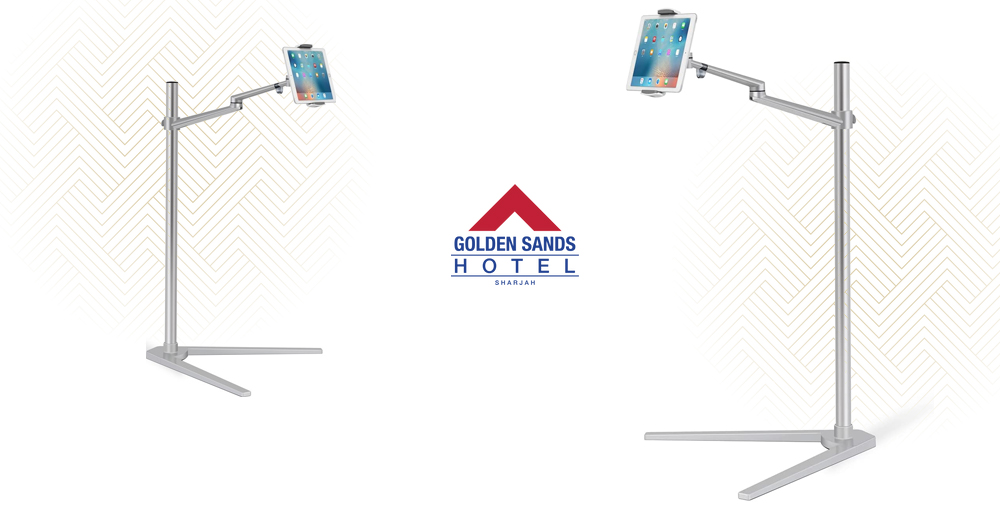
Golden Sands Hotel Acquired RSI Concepts iPad Stands

The Golden Sands Hotel Apartments was established 35 years ago and since then it has established a well-reputed brand name. The Golden Sands Hotel offers a variety of hospitality services to cater families, tourists, individuals and business travelers. The Golden Sands Hotel is located in a centralized location where the entire city can be reached easily. It offers both long term and short term stays for families, tourists, individuals and business travelers. The Golden Sands Apartments is very popular among local and international travelers and tourists. The reason behind this is the high standards and excellent services the hotel offers. For any hospitality business it is crucial to ensure customer satisfaction. In today’s modern world the customer trends and market standards keep changing on a rapid pace. For that businesses keep improving their services, deploying new solutions, technologies and applying innovative methods. The customer satisfaction plays a crucial role in any business’s success.

Golden Sands Hotel Acquired RSI Concepts iPad Stands

The Golden Sands Hotel is a customer-centric enterprise, where customers are prioritized over everything, their goal is to obtain maximum levels of customer satisfaction and customer happiness. The Golden Sands Hotel Apartment offers a variety of services to maximize customer satisfaction, such as fitness gym, cafes, pools, spa, etc. Recently they management decided to further enhance the customer experience at one of their spa. While in a spa a customer might have to sit there for an extended period of time. The management wanted to enhance customer experience while they are getting service in the spa. For that the management decided to offer iPads which can be used for both entertainment and work purposes. Watching your favorite podcast, videos, or listening to delightful music while the staff is working on your pedicure/manicure could have huge impact on customer experience.

However, when your customers are holding an iPad in their hand during the service, it could interrupt the service staff which had counter effects on customer experience and also create problems for the staff. That is why the Golden Sands Hotel approached RSI Concepts and asked us to provide a customized iPad stand which not only enables the customers to easily access and operate the iPads/tablets in a hands-free mode and also ensures that the staff have no problem with it. For that RSI Concepts offered customized iPad stands with adjustable height and rotatable holder arm. This stand allow users to use the iPads while relaxing on a chair at any position, the flexible arm and the adjustable height allow the users to use iPad in both portrait and landscape mode with fully hands free operation. The stand ensures no one getsdisturbed by it, the staff can perform their activities without the stand or iPad getting into their way and the customers can have a joyful experience during the service.

Here are the remarks of our Sales Manager, Ms. Maheen Waheed:

“The Golden Sands Hotel Apartment is a well-known and well-reputed hospitality brand in UAE. It was amazing working with the team and the management. The biggest challenge was to offer a product that can fully satisfy the needs. Thankfully we have successfully achieved the project goals and the customer experience was drastically improved. As we start receiving positive remarks from the customers from the day one of the deployment.”

We always feel proud of receiving positive feedback from our customers. The Golden Sands Hotel is a prestigious enterprise in UAE. It was truly an honor for us to serve them to their satisfaction and we will look forward to extend our services to support them for their future needs.

Check out this: RSI Concepts Designed the BMW iVision Circular Exhibition Stand for Dubai Design Week


Benefits of Using Modern Queue Management Software

Benefits of Using Modern Queue Management Software

Here in Dubai and all around the UAE the businesses are transitioning towards a more customer-centric business model. This is due to the paramount importance of the customer happiness and customer satisfaction. Now a days the customer simply have too many options, if you failed to delight them they will immediately shift to a competitor. That is what makes customer happiness even more crucial for a long term success. The customer waiting lines are not avoidable, no matter what businesses do they will have to deal with the queuing issues. The customer waiting lines frustrates your customers as well as your employees.

The employees too will have to do more work, they get distracted from their primary tasks. Most of the times businesses will have to hire more staff to deal with large flux of customers and visitors. Which also raise the operational expenses. The manual queue management also have a lot of problems that can completely ruin the customer experience. That is why a digital queue management system is used, it not only help reducing the customer wait time, it also streamline customer flow, automates customer journey and enhance their experience.

See Also: From Chaos to Control: How Queue Management Systems Can Improve Your Business

Benefits of Using Modern Queue Management Software

What is a Modern Queue Management Software?

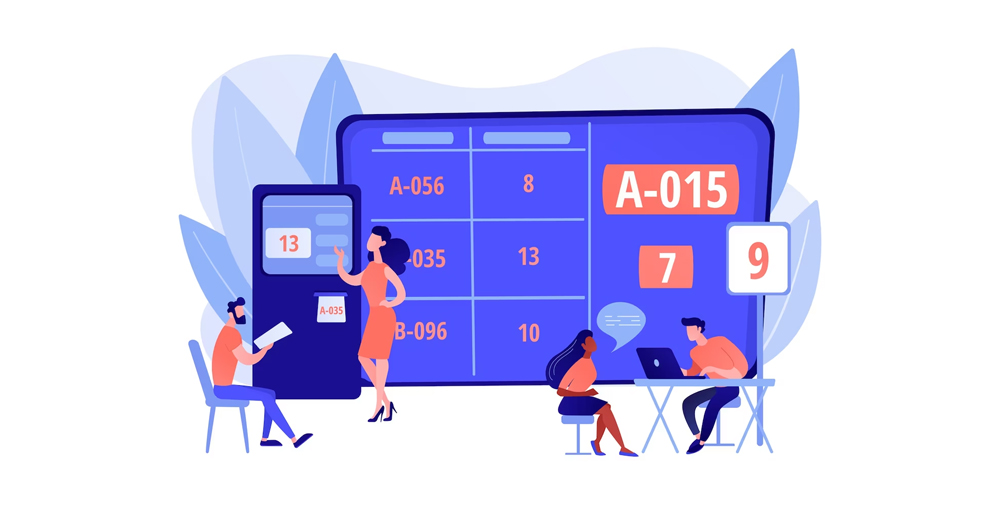
A modern queue management system is a combination of software and hardware components. The queue management software is a server side application which is hosted on an online server, in-premises data center, or in a cloud. The hardware is majorly different devices which are connected with the software. The key hardware components include digital interactive self-service kiosk or ticket dispensing unit, the digital signage displays and the audio announcement system. The software included a server based application which have all the algorithms used to perform decision making tasks in real-time.

The software also provides a service agent dashboard, which help service agents in interacting with the queue management system and it can also help them performing service delivery tasks. The queue management software also comes with an administrative dashboard, which is a control panel for the entire system. The head office and the branch managers or any other relevant staff have access to these dashboards. Some advanced queue management systems also offer virtual queuing and queue management system smartphone applications.

See Also: How a Queue Management System Can Transform Your Business Operations

What is a Modern Queue Management Software?

The customers and visitors can sign-up for the queues using the interactive self-service kiosks, where they are asked to choose the desired service, then a ticket is issued with their queue number. They got signed-up for the virtual queues, which means they don’t have to wait in physical waiting lines, and allow them freedom to wait in the waiting areas and lobbies or anywhere they want. The queue management software is capable of automatically routing the customers to the relevant counter. Even if the service structure is very complex, the queue management system can accurately divert the customers to the required counter.

In some businesses some counters are exclusive for some services, some offer a certain set of services only and so on, and this make queuing more complex. However, with a queue management system the customer flow is fully autonomous. The queue management system also help improving customer waiting experience and simplify customer journey. The queue management software can be integrated with other enterprise systems, databases and central information center which help adding innovative features to further enhance customer experience and efficiency. Here are some key benefits of a modern queue management software.

See Also: The Role of AI in Enhancing Queue Management Systems

What is a Modern Queue Management Software?

Benefits of Queue Management Software: Automates Queuing Process

One of the biggest benefit of a modern queue management software is that it has capabilities to fully or partially automate the entire queuing process. The customer sign-up for the queues is automated via a self-service interactive kiosk. The customer flow management is automated with the help of the AI (artificial intelligence) based algorithms. The queue management system can implement the entire queuing policy with more efficiency and efficacy. The queue management software can understand which all services are offered by the businesses, it can also learn which counters are exclusive for which services, this information help the algorithms to automatically divert customers to their relevant counter.

On top of that there is no need for physical queues, all customers and visitors are signed-up for a virtual queue, which allow them to wait freely inside the premises. Even the queue management software can notify the customers via SMS and allow them more freedom to wait outside the premises as well if they want. The queue management system can also shift the customers form one queue to another based on the data it fetched in real-time from the system to achieve maximum efficiency. All this process is fully automatic and managed by the AI based in-built algorithms of the queue management software.

See Also: What are the Different Types of Queue Management System?

Benefits of Queue Management Software: Automates Queuing Process

Benefits of Queue Management Software: Significantly Reduce the Wait Time

There many problems with the traditional, manual queuing process. The waiting lines are long, there are line jumpers, people always complaint and the staff found it very difficult to manage crowds. All these factors keep staff distracted from their primary tasks which further reduce the efficiency of the branch. However, with a digital queuing system the customer waiting time can be reduced. A modern queue management software is a very powerful tool, it is capable of monitoring the queues and customer flow in real-time and its AI based smart algorithms enable it to take autonomous decisions in real-time.

The queue management software can monitor, control and improve each and every step of the entire customer journey from welcoming customers to taking them to the right counter and even requesting them for their feedback afterwards. The automation eliminate all human management related problems, the customers and visitors don’t complaint as they know everything is managed by automatic system and there is no favoritism, line jumping or any other influence of the staff on the customer flow. This also let employees and the service staff to focus on their primary tasks, which further improve customer flow and reduce the overall customer wait time.

See Also: What are the Basic Components of Queue Management System?

Benefits of Queue Management Software: Significantly Reduce the Wait Time

Benefits of Queue Management Software: Improve Customer Experience

The reduction in wait time have very pleasant impact on customer experience. No one wants waiting, however, there will still remain some wait time which will vary on the bases of footfall at a certain hour in a day. A queue management software allow you to enhance customers experience during their journey at your business or branch. When a customer enters he/she is greeted by a self-service interactive kiosk machine, where they can acquire some information, provide some details and chose the service they need. Then the system issues them a ticket bearing their turn number in their respective waiting line.

The queue management software comes with in-built digital signage tools, which enable businesses to play multimedia content on the large displays that are used to display queuing information. This media can keep customers engaged and reduce the stress of waiting. The queue management system can also estimate the wait time as soon as someone signs-up, based on the previous data and current customer flow rate. Knowing how much more you have to wait also help calming the stress of waiting.

See Also: Queue Management in Banking: Enhancing Customer Experience

Benefits of Queue Management Software: Improve Customer Experience

The queue management software can also help employees in service delivery steps, which maximize their efficiency and reduce the time a customer will have to spend on a service counter. This also help improving customer experience. Since the customers don’t have to wait much thanks to the seamless customer flow, they reach to the counter in a much better state of mind. Which is very helpful for service agent to improve their interaction with the customers. The queue management software can also be integrated with other systems, which can be very helpful for the service agents in delivering a quicker and satisfactory customer experience.

The queue management software can also utilize digital communication channels to alert and update the customers, which could be very helpful for the customers. Moreover there is always a multi-lingual audio announcement system, which keep announcing the next ticket number and its designated counter number/name. This also keep customers distracted and keep them busy, which reduces the sensation of waiting. There are several other features that can be utilized to maximize the customer engagements and reduce the stress of waiting. All these features help improving customer experience and ensures a higher level of customer satisfaction.

See Also: Queue Management System for Trucks and Logistic Centers

Benefits of Queue Management Software: Improve Customer Experience

Benefits of Queue Management Software: Increase Customer Loyalty

The customer loyalty is one of the key factor which can ensure a long term sustainable growth of a business. The loyal customers tend to be a good brand advocate, they spread good words about the business which might also encourage others to make a purchase. The social media and digital channels have a great influence on the brand reputation and brand image, loyal customers tend to post good about the brand on their favorite channels with help improving online presence. Studies have shown that it is 5 to 25 times more expensive to acquire a new customer than selling to an existing customers. That is how the customer loyalty can impact a business.

A queue management software help businesses improve the entire customer journey and every interaction. It can also collect data from each touch point which also help businesses to understand the customer journey and customer experience, on the bases of this understanding and the analytical data collected by the queue management software, the businesses can build more effective strategies and plans to ensure maximum customer satisfaction. Only happy and satisfied customers tend to be loyal, unhappy customers might never return.

See Also: Why Small and Local Businesses Need a Queue Management System?

Benefits of Queue Management Software: Increase Customer Loyalty

Benefits of Queue Management Software: Improve Employee Efficiency

Managing customers, solving their problems, organizing physical queues, and avoiding crowed is a very time consuming task and requires a lot of efforts from the staff. This also keep distracting employees from their primary tasks and badly impact their efficiency and productivity. A queue management software not only lift a lot of workload from the employees but it is also capable of helping them with their routine tasks. The customer sign-up, virtual queues, automatic customer flow management, and a lot many more processes are managed by the queue management software automatically. When employees worked under balanced workload they tend to perform well.

Furthermore the queue management system also provide in-depth employee performance data and KPIs. For example, the queue management software measures how much on an average an employee spend on one customer, how they performed while delivering different services, how many customers they served in a single shift, how much time they spend in pre and post service tasks, etc. All these details help managers develop effective training programs and let them make informed decisions for better resource management which can significantly improve employee efficiency.

See Also: What Is Virtual Queuing? A Guide to Virtual Queues

Benefits of Queue Management Software: Improve Employee Efficiency

Benefits of Queue Management Software: Collects Business Intelligence Data

The modern day business are heavily relying on information technology and data driven solutions. The data provides the information that are required to make better strategic decision that put a business on the success path. A queue management software is also a digital solution and it can offer a great wealth of the business intelligence data. The business intelligence data help businesses understand its customers, their persona, preferences, needs, expectations, and their voice too. The queue management software can capture analytical data form each touch point which help businesses to understand and evaluate the customer experience and customer journey.

The queue management system’s analytical data also help businesses evaluate their internal processes, polices and strategies and help them highlight the areas of improvements. Moreover businesses can also collect direct customer feedback with the help of the queue management software. A modern queue management software comes with in-built customer feedback collection module. Usually businesses keep touch screens, tablets and interactive kiosks to collect the customer feedback data. Which further help them understand the needs and expectations of the customers. Hence businesses can utilize this data in their decision making processes to make more informed and effective decisions.

See Also: How to Set Up SMS based Queue Management System?

Benefits of Queue Management Software: Collects Business Intelligence Data

Conclusion

The queue management is a very crucial aspect of customer satisfaction and customer happiness. The customer satisfaction drives customer loyalty and the loyal customers provide a foundation at which a business can plan and achieve a sustainable growth and long term success. The queue management software is a very powerful tool with AI based smart algorithms that enables it to collect analytical and system usage data in real-time and make instant decisions to improve the customer experience. The queue management software track and monitor employee performance and KPIs, which also help businesses in resource management and planning. The queue management systems collect valuable business intelligence data which help businesses take informed decisions.

The queue management software offer a central management system which enables the head office to monitor all connected branches in real-time and effectively implement their policies. RSI Concepts is a leading queue management system provider in Dubai, UAE if you want to learn more about the subject or if you want our help to implement a very cost-effective tailor-made queue management system, please feel free to contact us through our Contact Us page or leave a comment in the comment box below and we will get in touch with you soon.

See Also: 6 Performance Management Problems and How to Solve Them?

See Also: Qualities of a Good Mobile App for Queue Management System


RSI Concepts Designed the BMW iVision Circular Exhibition Stand for Dubai Design Week

The corporations and large enterprises are taking huge steps these days to minimize the impact on the environment and to reduce the carbon emission. Especially in the automobile sector, the key market leaders around the world are seriously considering options to build fully electrical vehicles. BMW Group is one of the major stakeholder in the automobile market all around the world. The BMW vehicles are known for their luxury, class, beauty, longevity and comfort. The BMW iVision Circular is basically their vision for 2040, they have introduced a few concepts last year. The BMW wants to achieve carbon neutrality, they are aiming to reduce the CO2 emission during the entire lifecycle of a vehicle. For that the BMW is adopting green energy technologies and changing its businesses practices to minimize the carbon footprint. The renewable energy, reduction in carbon emission and using recycled materials is the idea that lead to the new iVision Circular concepts.

BMW iVision Circular Exhibit Stand for Dubai Design Week

Basically the BMW Group is focusing a lot on circular economy and is eager to utilize the recycled materials. The biggest advantage is that there is very less carbon emission and the secondary materials are produced by processing the waste, which also have positive impact on the environment. The Dubai Design Week is one of the region’s largest creative festival which host visitors and participants all around the world. The Dubai Design Week offers a glimpse into the future, and offer exhibitions and stands for the businesses and the visitors to allow them to express themselves and interact with each other. Such events are great for promotional campaigns. Different businesses occupy different spaces and showcase their abilities. This year’s theme is ‘Design with Impact’. Which focused on innovative ideas, eco-friendly materials, low carbon emission, sustainability and low impact on the environment. The BMW is currently focused secondary-first policy. They widely use recycled and reused materials which have far less impact on the environment.

These are the reasons the BMW is participating in the Dubai Design Week. The exhibition is known for attracting both professionals and technology enthusiasts from all around the world. Which help promoting the idea and concepts and raise awareness. The BMW Group decided to acquire an exhibition space where they can present their BMW iVIsion Circular car concept. The exhibition stand design should align with the brand image and should also be able to communicate the right message. RSI Concepts was approached to design and install an exhibition stand at Dubai Design Week. Several other interior designing companies allied, but only RSI Concepts’ idea got the approval of the higher management at BMW. Here are the remarks of our project manager, Ms. Maheen Waheed:

“It was an excellent experience. We had a great interaction with the management and team. In fact we both had a wonderful experience, and I believe that was the reason we successfully managed to deliver the exhibition stand in merely a week time. The schedules were very tight, but thanks to our teams who worked round the clock to make sure the timely delivery. That is the reason the customer response was more than satisfactory.”

Indeed the customer happiness is our primary goal at RSI Concepts. We always prioritize customer happiness over anything. It was a great experience working with the BMW team and we will look forward to have more such collaborations in future.

Check out this: Harmony Medical Center Acquire Customer Feedback Kiosk Stand from RSI Concepts


Why customized CRM Software is better than Off-the-shelf Solution?

Why customized CRM Software is better than Off-the-shelf Solution?

The businesses in Dubai and all around the UAE are very adoptive towards the modern technologies and software solutions. Basically the software and digital tools are used to improve the business management. The enterprise software solutions are designed to improve internal processes and business functions. When a business have software solutions and digital tools in place, they can produce more outcome with less input. The input here is workforce, resources, etc. and the outcome is better performance, good quality products & services, customer satisfaction and business growth.

A present day work environment is very much dependent on software solutions and digital tools. Whether you are a startup, a small business, a large enterprise or a government or private organization, you must require a combination of software, customer journey management solutions and digital tools that will support your daily operations. That is why businesses keep investing in their IT infrastructure and digital assets. When it comes to acquiring a new software, the managers always have to choose carefully because their decision could have long lasting impact on the business and the relevant business processes.

See Also: Why Custom Software Development is Essential for Digital Transformation

Why customized CRM Software is better than Off-the-shelf Solution?

What is the difference between off-the-shelf and customized software?

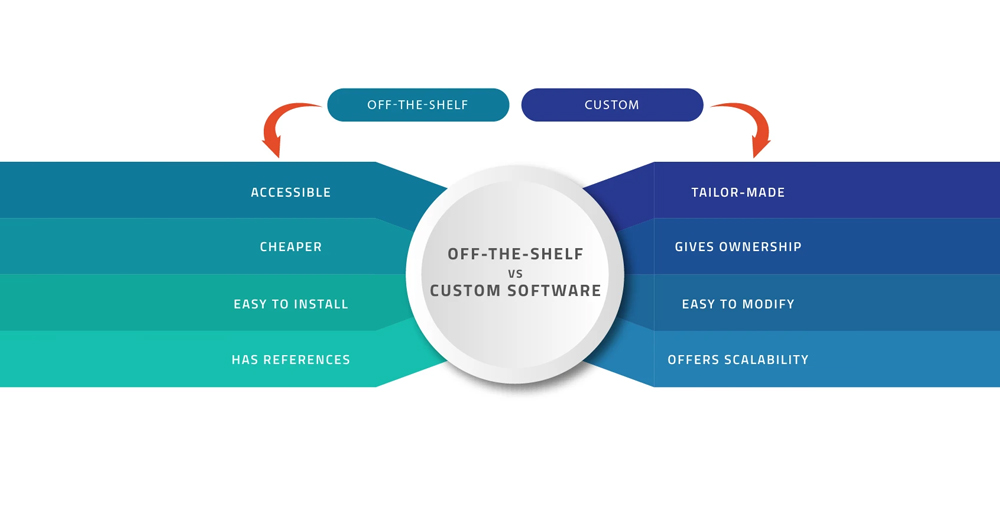
We have asked several business representatives (including managers and owners) about how do they decide which software solution is best from them. Everyone had a lot of different opinions, but one thing that was common among them all was that the software must have to meet their all needs and it should be able to satisfy its users. Another most important aspect that these people consider is the initial deployment and long term operational cost of the software solutions. There are two major classifications of the software, one is commercial off-the-shelf (COTS) and the second is the customized software solutions. Both are completely different from each other, the COTS are the software that are designed for mass users and are universal for all the businesses. It means many businesses use them.

However, the custom software development means a tailor-made software solution that is built and designed exclusively for a particular user group and is used by only a single business. Another major difference is that the commercial off-the-shelf software are owned by the software development company or service provider, however, the custom software are exclusively designed for a business and owned by the business as well. The custom software development company doesn’t own them. In this blog we will discuss how a customized CRM software is better than the commercial off-the-shelf CRM solution.

See Also: Why Off-the-Shelf Solutions Fall Short: Advantages of Custom Software Development

What is the difference between off-the-shelf and customized software?

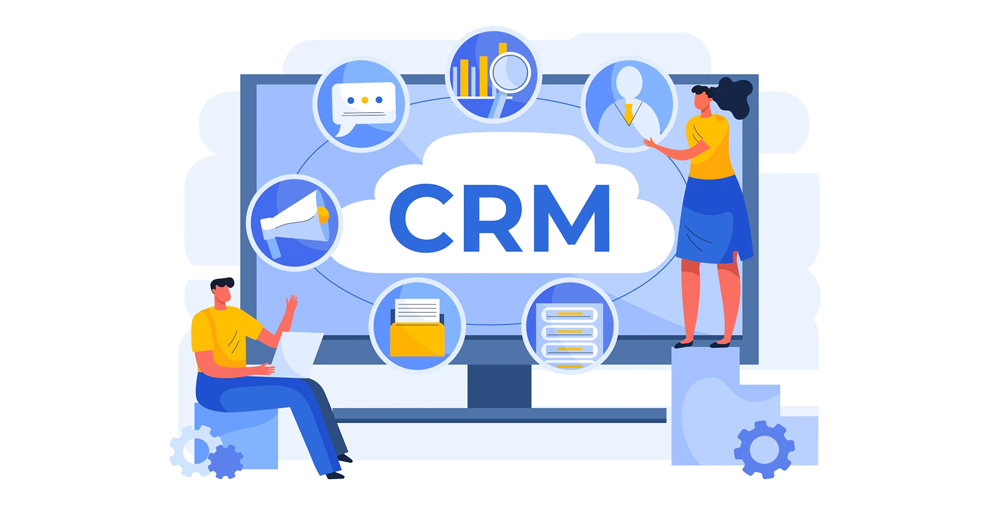
What is a CRM Software?

The CRM stands for customer relationship management. Traditionally the customer relationship management is a strategy and methodology to organize and manage customer data which can help customer relationship agents or service staff to build a good relationship with the customers and serve them better with a satisfactory customer experience. Earlier this was started as a manual process, the customer data is stored on papers and organized in offices manually. But later with the development of the digital solutions and implementation of IT infrastructure the CRM or customer relationship management have also transformed.

The CRM software or customer relationship management software is a digital tool that help businesses to improve their customer relationship management processes, strategies and methodologies. Another important thing to understand is that the customer relationship management itself have evolved a lot, and now a days the process have become very sophisticated and complex, that is why a proper software framework is much needed to improve the customer relationship management processes.

See Also: Integrating Customer Feedback Systems with CRM for Enhanced Customer Relationships

What is a CRM Software?

Why customized CRM software solutions are better than the commercial off-the-shelf (COTS) solutions?

The custom software development and the commercial off-the-shelf software solutions both have their own pros and cons. It is not that the commercial off-the-shelf software are just bad and can’t offer any value. In fact the commercial off-the-shelf software are quicker to deploy, have low initial cost and can offer great usability in certain areas. However, a CRM or customer relationship management is a very dynamic and business function. It has to be up-to-date to meet the ever changing customer needs.

Businesses also keep changing their customer relationship management policies and strategies and the CRM software should be able to cater to their needs. The customized CRM software are very flexible and can be designed exclusively to meet the very specific business needs. Here is a quick comparison of the commercial off-the-shelf CRM software and a customized customer relationship management software. It will help you understand the additional benefits of a custom CRM which make it superior from the COTS.

See Also: Benefits of Investing in Custom Software Development for Your Business in Dubai

Why customized CRM software solutions are better than the commercial off-the-shelf (COTS) solutions?

Custom CRM Software Development Thoroughly Meets the Needs of the Business

The commercial off-the-shelf software or COTS are designed for a wider range of audience, they follow the general industry standards and market trends. Whereas each business is different from the others, no matter if two businesses belongs to same industry niche, still the internal environment, organizational culture and various business processes would be different form the others. The COTS usually came in various packages or subscription plans, each plan have a certain number and type of features, if you want more features you will have to pay more.

Sometimes businesses found themselves in a position where they will have to purchase an upgraded plan just for a few features. The costing structure varies from one to another service provider, however, it is always very difficult to find a perfect match of all the requirements. The custom CRM software on the other hand offer full compatibility with the business needs. No matter what features business wants they will only have to pay for what they will be needing and nothing else. This also means that the payment and costing structure is always more flexible with the custom software development.

See Also: Step-by-Step Guide to Planning Your Custom Software Development Project

Custom CRM Software Development Thoroughly Meets the Needs of the Business

Customized CRM Software Improves and Aligns with Internal Workflows

Another great advantage of the customer software development is that it help improving the internal processes and workflows. Most of the time the commercial off-the-shelf software are designed for the mass audiences hence they are designed with certain features and follow standard workflows. However, in reality every business have different internal processes and environment that is also what makes a brand unique and it can provide a great competitive advantage too. When a business deploy a commercial off-the-shelf software they also have to follow the workflows and processes of that CRM software. Which requires them to rearrange and modify their internal processes.

The customer relationship management software (CRM) have huge impact on how the business deals with its customers, and how they serve them. If you start following the very same way your competitors are following, then what unique value will you offer them to attract them toward your business? Nothing! That is one of the biggest drawback of using a commercial off-the-shelf CRM.

See Also: The Cost of Custom Software Development: Factors to Consider

Customized CRM Software Improves and Aligns with Internal Workflows

That is why the customized customer relationship management software (CRM) is far superior in this regard and can offer a great competitive advantage. The customized CRMs doesn’t require businesses to later or modify their internal processes, methodologies and workflows. In fact the customized software are designed as per the internal processes and workflows. That is why the businesses usually witness a significant rise in efficiency and productivity after implementing a customized customer relationship management software (CRM).

The customized CRM aligns with internal environment, doesn’t push employees to follow certain methods, but help them improve their efficiency and productivity with their existing methods and workflows. It help refining the internal processes and brings automation which reduce employees’ workload and maximize their administrative capabilities. The customized customer relationship management software (CRM) provides a great competitive advantage as what software and features you are using are not being used by any other.

See Also: What are the Key Features of an Enterprise Resource Planning Software (ERP)?

Customized CRM Software Improves and Aligns with Internal Workflows

Custom CRM Software Offers Customized UIs and Excellent UX

The commercial off-the-shelf software solutions often offer a universal UI (user interface) and UX (user experience) and CXM (customer experience management) tools to all of the businesses who are using their CRM software. If businesses want to customize the user interface or want to make changes to improve user experience as per their users’ preferences and needs, most of the time they can’t do it. And even if the commercial off-the-shelf software vendor offer them the customization, it is very limited and it is way too expensive. That is what can limit the efficiency of the system. However, with the custom CRM software development businesses can have whatever type of UI they want and they also have full control over the UX.

Which can significantly improve the user-friendliness of the CRM software and maximizes its efficiency. Furthermore the businesses also want to minimize the training efforts when they deploy a new system. For that they try to align the new UIs and UXs with their existing systems. This not only help them reducing the training cost but it also help them integrating the system within the existing environment very quickly. Sometimes businesses also have multiple different user groups, and each one of them need a slightly different UI. Only the customized CRM development can offer such level of customization and control over UI and Ux. The custom software development is ideal to enhance and elevate user experience.

See Also: Why You Need a Customer Flow Management Software?

Custom CRM Software Offers Customized UIs and Excellent UX

Customized CRM Software Offers Better Adoptability and Future Readiness

These days the customer relationship management have become more dynamic. The customer behavior, market trends and several other factors can quickly change a lot of things, which will force a business to adopt to the new changes to ensure excellent customer experience and better customer interaction. A commercial off-the-shelf CRM software requires a lot of time to adopt to new changes, the upgrades and updates are fewer and costly. Sometimes the new upgrades completely discard certain features and replace them with the new ones, which also force the businesses to implement new processes and workflows.

However the customized CRM software are completely in your control, businesses can upgrade them whenever they want and however they want. If they want to add a feature, they don’t have to effect any other existing process, if they want to upgrade only a certain features that is doable too. In short the custom software development allow businesses to have full control over their customized CRM software. Hence the future readiness of customized CRM and adoptability to the new changes is much higher comparing to the commercial off-the-shelf CRM software.

See Also: Key Features of an Enterprise Application Software (EAS)

Customized CRM Software Offers Better Adoptability and Future Readiness

Customized CRM Software Offers Easier Integration with Third-Party Software and Tools

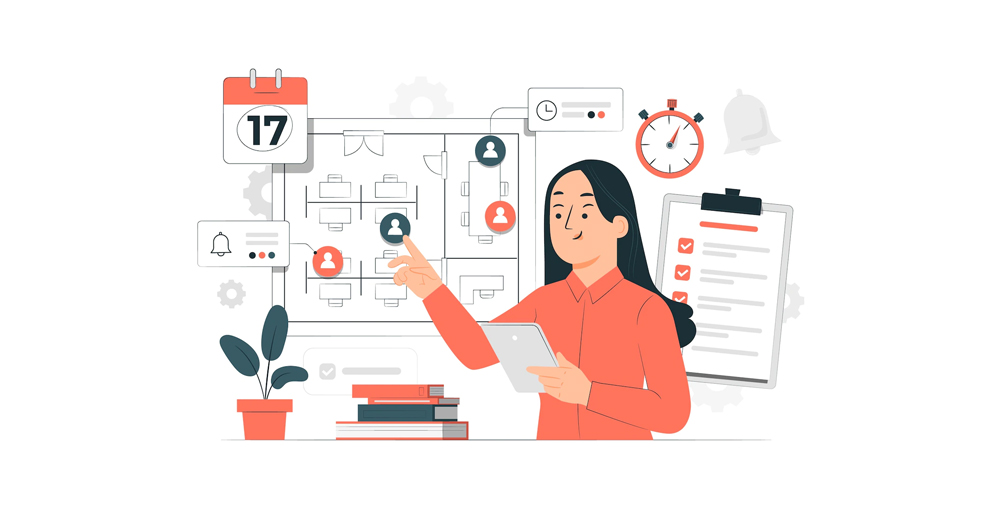
The modern business are heavily relying on data and information technology. The daily tasks and workflows are relying on sharing information between several employees and departments on very frequent bases. That requires the digital and IT infrastructure to be integrated with each other. A business usually uses several software solutions, enterprise tools, and databases. Some of them are linked with each other and some are isolated.

For example, the sales system data and the customer information data must be linked to understand the sales properly. However, the manufacturing management system doesn’t require any inputs from the digital marketing team and so on. The CRM or customer relationship management software may also not require any input from the manufacturing management system, but it must be linked with the customer data base, sales database and also with the marketing department.

See Also: Custom Software for Improved Business Efficiency
Customized CRM Software Offers Easier Integration with Third-Party Software and Tools

That is done either by integrating the CRM with the central information center which holds all the data, or either this can be achieved by integrating it with all relevant systems one by one. With the commercial off-the-shelf solutions the business usually doesn’t have any control over its programing or source code, or even if they have they have very limited control. Which could complicate the integration process and in some cases due to such barriers the integration is not possible at all.

However, that is not the case with the custom software development. The customized CRMs are very flexible towards the integration and provide full control over the core of the software, which enable the businesses to easily integrate the CRM with other internal software and databases. The integration can be done to access the data or it can also be done to store the data in another database or central information center. The integration with and from custom software is also very less expensive.

See Also: Leveraging Big Data in Custom Software Development

Customized CRM Software Offers Easier Integration with Third-Party Software and Tools

Custom CRM Software Development Offers Better Scalability

The custom CRM software development provides businesses with full ownership right to the software and its source code. This means that the software is exclusively designed for the businesses and will also remain unique to that business. There would be no other copy sold to any other business. However, the COTS are totally opposite, the same commercial off-the-shelf software can be sold to hundreds and even thousands of businesses all around the world. Most of the time the vendor or service provider sell the software in form of different packages or plans with different level of usability, features and even restricted number of users.

A business always keep growing, in fact the prime goal of a business is to grow. As a business progress its users will increase, its needs will increase and it might require a lot of customization and upgrades to handle more work. The commercial off-the-shelf software also offer the same but with limited scope and much higher cost. A customized CRM doesn’t have a lot of such costs attached to it, it is a one-time cost. If a business needs upgrades, or want to add more users or features they can do that without any additional cost or a very little customization cost. Hence the customized CRM are more scalable then the COTS.

See Also: The Role of AI in Custom Software Solutions

Custom CRM Software Development Offers Better Scalability

Custom CRM Software Offers Better Security

A customer relationship management software or CRM holds very sensitive and important data. That data has to be protected at all cost. It is not just about the data privacy it is about the reputation of the brand. We have witnessed several businesses who got destroyed by data breaches and data leaks. Because if a customer knows that their personal data is not protected with an enterprise, they stop doing business with them. It also destroy the reputation of the business as people will think if a business is unable to protect their data that mean it doesn’t care about its customers much.

The commercial off-the-shelf CRM software are produced for masses and distributed all around the world. Which make their structure more accessible for the internet pirates. However, the customized CRM software is designed by a software development agency such as RSI Concepts  and the software is only provided to one client.

See Also: Custom Software Development Progressive Web Apps – Beginner’s Guide

Custom CRM Software Offers Better Security

This means that no one else knows about the structure of the software, and very few people can have access to the server. Only that alone is enough to ensure good security. The customized CRM software are completely hidden from internet pirates and such people which means it is harder to track and attack your CRM system. With added security features the customized CRM become far more protected than the commercial off-the-shelf CRM software. The security features are usually added on the server, and in case of the customized CRM software, only very few people can have access to that server.

Furthermore the customer data and any other valuable data that is stored or linked with the custom CRM software is also stored on the local databases or servers. Even if you deploy the custom CRM software on an online hosting or cloud, the data will still remain under your authority. No one can have access to the server other than the authorized people. Hence the custom CRM software provides higher level of security and data privacy.

See Also: Step-by-step Guide to Develop Custom Enterprise Software

Custom Software Development Elevates Security and Compliance


Custom CRM Software Offers Full Ownership

The commercial off-the-self software are developed by a vendor or service provider. The COTS are developed for large-scale distribution and are not exclusively built for a single business. This means that the business doesn’t own their CRM, in fact they either rent it out or subscribe to it. As soon as they stop paying, they will lose the software or they will lose the ability to get support, upgrades, etc. However, the customized customer relationship management software (CRM) are exclusively designed for a particular business, and that means the software will never be given to any other business. The customized CRM or any other product of custom software development is owned by the user (business) and not by the software development agency or vendor.

Usually businesses outsource custom software development or hire an internal team to develop the customized CRM software for them. Either way the business will get full ownership rights to the custom CRM software. That have several benefits such as the business will have to bear only one-time cost, they system can be customized and maintained by any outsourcing partner or in-house team, there is no dependency on a particular software developer. Usually the customized CRM software are made using open-source technologies, how developers are easily available all the time, and almost any software development agency can offer service and customization of the product, which makes custom CRM software very cost-efficient too.

See More: How to Leverage Automation to Improve Employee Performance Appraisal Process?

Custom CRM Software Offers Full Ownership

Conclusion

The customer relationship management (CRM) software is one of the most important part of any business’s success strategy. The customer relationships define the level of satisfaction your customer have. The customer relationship management is a strategy, method or technique to improve relationship with your customers and raise their happiness and satisfaction. Strong bond with your customer means higher customer loyalty and the loyal customers are considered to be a precious asset of any business. The loyal customers tend to be a good brand advocate and help building positive brand image.

The loyal customers also tend to do repeated purchases and help businesses generate more revenue. According to several studies and market research it is 5 to 25 times more expensive acquiring a new customer than selling to an existing customers. That is why the customer loyalty can make a huge difference and that is the reason why customer relationship management is so important for any business. When it comes to customer relationship management, the CRM software is the backbone of any customer relationship strategy.

Businesses can acquire two types of customer relationship management software (CRM), the commercial off-the-shelf solution and the customized CRM software. Either types or classes are completely different from each other. In this blog we have discussed the key benefits of going for a customized CRM software development. If a business wants a long term and cost-effective solution to meet their customer relationship management needs, then the customized CRM software is the best way to go forward.

RSI Concepts is a leading custom software development company in Dubai, UAE. If you want to learn more about the customized CRM software and solutions or if you want us to help you with building a highly effective, user-friendly, tailor-made and customized CRM software for you, please feel free to contact us through our Contact Us page or leave a comment in the comment box below and we will get in touch with you soon.

See Also: Advantages of Hybrid Mobile Applications


How to Leverage Automation to Improve Employee Performance Appraisal Process?

How to Leverage Automation to Improve Employee Performance Appraisal Process

The UAE is among the world’s most developed nations. The government is always encouraging ministries, departments, public offices, and even private sector to adopt to modern technologies. The government also facilitates the technology industry and IT sector with very supportive policies. The economy of the country has proven to be very strong even during the global outbreak, and now that phase is over already, the economy is booming. Here in Dubai and all around the UAE the rate of new startups per month is higher than any other neighboring nation. This is raising the competition and making the markets more diverse, dynamic and customer-friendly.

As the simplest way to beat the competition is to delight your customers and make them loyal. The customer’ dominance is evident by the rapid adaptation to customer-centric strategies and business models. The tough competition, high customer demands, and ever changing market trends demand businesses to be more proactive with their strategies and policies. This led businesses to start implementing modern technologies and digital solutions to add value and efficiency to internal business processes. The performance management and employee appraisal systems are among those core processes that need an upgrade.

How to Leverage Automation to Improve Employee Performance Appraisal Process

A well-crafted performance management system help businesses maximize their productivity and efficiency and enable them to grow gradually over the time. However, in this modern age of IT and digital the traditional performance management processes have become ineffective, and now a days the modern performance management is heavily relying on performance data. The annual appraisal practice have lost its effectiveness since a long time ago, however, there are still some businesses who rely on that method but most are now implementing modern and continuous performance monitoring methods.

It is important to continuously monitor the performance of the employees and keep a track of their progress throughout the entire year. Whether you follow a traditional method or implement a modern digital performance management system, the performance management was never easy. Employees and managers always dread it due to time-consuming processes, unreliable evaluations and appraisals and high cost.

See Also: Unlocking Business Potential with AI-Powered Advanced Analytics

How to Leverage Automation to Improve Employee Performance Appraisal Process

However, all these problems can be solved by implementing the modern technologies. The employee performance appraisal practices got changed with improved and innovative digital solutions. In this blog we will discuss how businesses can leverage modern technologies to drive automation which can significantly improve the employee performance appraisal process.

What is Employee Performance Appraisal Process?

By definition an employee performance appraisal process is a systematic and periodic approach to measure the performance of the employee against their job roles, pre-set goals, the value they add to the company goals and strategic objectives, their worth for the business, their strengths and weaknesses and the future potential. The businesses use performance appraisal systems to acquire valuable performance data which they can use to make strategic decisions such as employee promotion, bonuses, transfer, and termination, etc. The employee development programs and training programs are also set on the bases of that data.

Furthermore the modern methods of employee performance appraisal also help improving communication between the employees and the managers. This is necessary to provide employees with a better understanding of the company goals and objectives and let employee understand how their individual goals and objectives will help business achieving its high-level goals and objectives. The employee performance appraisal data is also helpful in identifying future leaders and help businesses and organizations to gradually improve their talent pool and workforce which is a key to long term success and sustainable growth.

What is Employee Performance Appraisal Process?

How Automation can improve the Employee Performance Appraisal Process?

There are two major problems that traditional employee performance appraisal process have, first is the bias or favoritism and the second is its limited scope which is once or twice a year performance reviews. However, in the present day the psyche of a common employee have completely changed, the deep integration of technology, fast-paced lifestyle and evolving market landscape demand businesses to act swiftly and be more vigilant. Only a good performance appraisal system enhanced and customized to align with business needs can produce desired results. The yearly appraisals have become very ineffective. It is not just the employees, the managers, the HR and even the higher management is also unsatisfied with this yearly or biyearly chore. It is because the time, efforts and cost it takes and in return add very less value to employees’ and overall organization’s performance.

Another major aspect of the modern performance management is that it not just focus on the past performance, but it help identifying the strength and weaknesses of the employees, various internal processes and other factors that are impacting the performance. The modern digital employee performance appraisal system depends on a software application, which automates several performance appraisal tasks, and it also improve the data collection capabilities and the data quality. I personally recommend a bespoke performance management system because businesses can face many challenges if their employee performance appraisal system is not customized as per organization’s polices.

How Automation can improve the Employee Performance Appraisal Process

Businesses also want to align their employees and all resources with the company goals and strategic objectives. Which is not possible with the traditional employee performance appraisal processes. So the modern employee performance appraisal process is focused on the past performance, current performance and learn the ways to improve the performance in future. A digital employee performance appraisal system/software can help automating several aspects of the performance management and employee appraisal processes. Here is how businesses can leverage the automation to improve employee performance appraisal process:

Quicker and More Frequent Feedbacks

The employees don’t like waiting for one year to know how they are performing, in fact they need instant feedback. The yearly performance reviews take a lot of time, employees don’t have much trust on them and the reviews are also not capable of evaluating the entire year’s performance. In fact most of the time the annual reviews are based on just the most recent performances, and they might include some significant instances where the employee either performed well or poorly. That is why the employee wants more frequent feedbacks from their managers as they know this feedback will help them stay on the course, and will keep them from deviating or losing the focus from the primary objectives.

The digital employee performance appraisal system provides an automated and structured communication framework for the HR department, which includes more frequent interactions with the managers. It help facilitating the one on one discussions/interviews, and more frequent performance reviews. Hence the employee can get more guidance from the managers and tend to perform well.

Quicker and More Frequent Feedbacks

Streamline Employee Performance Appraisal Processes

The digital employee performance appraisal system is capable of automating several HR workflows, internal performance appraisal processes and performance management tasks. For example, the managers can easily utilize dynamic and customized feedback forms and questionnaires for each job role. The system can understand the workflow and it can automatically take the participants and managers from one stage to the next. Furthermore the system also have in-built features to control the access to the system and various processes and it is also capable of passing the employees or the feedback process to the next level without any human interventions.

Thus it saves a lot of manual work. The digital review forms are also a great help, they keep the managers from doing hours and hours of manual work. The digital employee performance appraisal system also help processing the data and offer a variety of in-built analytical tools. It can share the data with all relevant managers, senior management, and even with the employees if needed. All this can be done automatically which save a lot time and effort.

Streamline Employee Performance Appraisal Processes

Real-time Monitoring and Visibility to Performance

Processing manual reviews and generating reports is a time consuming task. The managers will have to wait a lot to get the report. This is because the traditional employee performance appraisal system was designed to generate such reports once a year or maximum twice. However, the modern employee performance appraisal system can completely automates the process. As the employee reviews and questionnaires can be digitalized, the system can collect the feedback automatically and instantly generate report in the system. The managers and senior management can easily access those reports from their administrative dashboards.

Furthermore the automation enables the digital employee performance appraisal system to provide up-to-date performance data in real-time which can be very handy in data-driven decision making and strategy building processes and provide senior management greater visibility and monitoring capabilities. These features also help businesses to quickly adopt to continuous performance management which is tend to be a great and most effective employee performance management and employee performance appraisal strategy.

Real-time Monitoring and Visibility to Performance

Save Time, Efforts and Cost on Employee Performance Appraisal Process

The traditional employee performance appraisal process includes a lots of administrative tasks that kept HR and Managers very busy during the evaluation process. AS different job roles have different forms, each employee might have to fill-in more than one form, the businesses tend to evaluate employees, managers, and also collect feedback from teammates and peers, the creation and distribution of all these forms  could be very time consuming. Then the HR or the managers will also have to follow up with the employees to get them the form done within the time. Even then it is very less common for the HR to complete the employee performance appraisal process within the due time. It usually gets late and that is due to these time consuming administrative tasks.

However, with the help of a digital employee performance appraisal system all these tasks can be fully or partially automated, which means the system will do the work and it can significantly reduce the time and efforts required to complete the process. Furthermore the system doesn’t only save time and efforts but a lot of cost too. The employee performance appraisal system is mostly a web-based application which is very cost efficient. Businesses tend to implement a an employee performance appraisal system under the umbrella of performance management system, both are crucial for optimizing performance and driving growth.

Save Time, Efforts and Cost on Employee Performance Appraisal Process

Align Employees with Company Goals and Objectives

Employees need to be more engaged in their work, they should be happy and satisfied and the communication should be excellent. This will help achieving businesses better performance. A digital employee performance appraisal system not only automates the employee appraisal and performance management processes but it also provide a structured framework which eliminates a lots of traditional problems and obstacles that can hinder the performance.  When the employees are constantly provided with valuable feedback, guidance and mentorship from the managers, they inspired to perform better.

The digital employee performance appraisal system also provide businesses with highly accurate performance data that help them understand the strengths and weaknesses of the employees and help them plan better employee development and training programs which itself is a great tool to maximize the employee performance. Furthermore the transparency and proper acknowledgement of all of their efforts help employees to get more emotionally connected with the business and its goals, which also inspire better performance and employee produce more outcome with less inputs.

Align Employees with Company Goals and Objectives

Well-organized Historical Performance Data

It is difficult to remember the previous performances, milestones or achievements. Especially with manual data management and traditional performance management strategy it is extremely hard to pull out historical data and perform comparative analysis. However, with the digital employee performance appraisal system all the historical data and previous achievements are well-organized and stored in a data repository. It just requires a few clicks in the administrative dashboard to pull up the previous historical performance data. Especially in case of disputes, the historical data help managers and employees to resolve disagreements very quickly and save time.

This also help managers pass a fair judgment and increase the transparency of the reviews. Employees are feel more confident and trust when they know the evaluation is fair and on bases of their actual performance. This also eliminates the chances of typical bias and favoritism that is common in traditional employee appraisal methods. The managers can also get the historical data to compare the weekly, monthly, quarterly or yearly performance of the employees, teams, departments and even the entire business. The performance management and employee appraisals are equally beneficial for small businesses as well. SMEs can leverage these tools to support their rapid growth and emerging needs.

See Also: Beginners’ Guide to Appraisal System

Well-organized Historical Performance Data

Compatible with Multiple Employee Performance Appraisal Methods

The employee performance appraisal is not a simple method, in fact it have a lot of sub-methods or multiple different approaches to evaluate the performance on the bases of different reference points. A digital employee performance appraisal system can support almost all modern and traditional performance appraisal methods including:

  • 360O Degree Reviews and Feedback
  • 720O Degree Reviews and Feedback
  • Checklist Method
  • Critical Incident Method
  • General Performance Appraisals
  • Field Reviews
  • Forced Choice Method
  • Management By Objectives (MBO)
  • Behaviorally Anchored Rating Scale (BARS)
  • Assessment Center Method
  • HR Accounting Method
  • Customer/Client Feedback & Reviews
  • Performance Tests and Observations
  • Performance Rating Scale
  • Project based Performance Evaluation Method

Businesses can utilize any or all of the above mentioned employee performance appraisal methods using a digital employee performance appraisal system. The modern day digital performance management systems help adopting modern appraisal methods by providing in-built templates and tools to quickly create performance monitoring mechanisms such as KPIs, OKRs, and other measuring matrices. The HR or the managers can also build customized performance appraisal methods using the in-built tools and features of a digital employee performance appraisal system/software.

Compatible with Multiple Employee Performance Appraisal Methods

See Also: 6 Performance Management Problems and How to Solve Them?

Conclusion

For any business or organization monitoring and measuring the performance of their employees and assessing the value they are adding to achieve the company goals and objectives is crucial. It helps them understand the strengths and weaknesses of the employees, let them plan better training and personal development programs for them and help them achieve better productivity and performance which translates to higher profitability and steady growth. However, in this modern fast-paced world, the annual employee performance appraisals are not enough to meet those needs.

The ever changing trend, skyrocketing customer demands, and evolving markets demand more proactive strategy from the businesses. The modern digital employee performance appraisal system/software is equipped with tools and features that help automating the appraisal processes and facilitate communication which enable businesses to get higher visibility and align the employees and resources with the high-level business goals and objectives. When the managers clearly communicate the company goals and objectives and provide understanding of how the individual goals, objectives, tasks and performance will impact them, the employee tend to perform better.

When the employees are more emotionally connected with the company goals, their voice is heard, they have trust on the appraisal process and the communication between the managers and the employees is convenient, frequent and clear, the business can easily achieve higher performance. RSI Concepts is a leading performance management system provider in Dubai, UAE we provide tailor-made employee performance appraisal system/software. If you want to learn more about the subject of if you want us to help you deploying a digital employee performance appraisal system, please feel free to contact us through our Contact Us page or leave a comment in the comment box below and we will get in touch with you soon.

See Also: Advantages of Hybrid Mobile Applications


6 Performance Management Problems and How to Solve Them?

6 Performance Management Problems and How to Solve Them?

The performance management success can be closely related to the business’s success as higher performance results in higher productivity and higher customer satisfaction. No matter how modern or advanced IT infrastructure you have, or how efficiency your production facility is, if your workforce is not performing at their best then you can never achieve your goals. That is why the performance management have become so important in present day workplace. Having a great talent and high performing workforce doesn’t only mean good hiring methods and HR practices.

In order to retain employees a business must have to nurture its workforce, it must have to increase employee engagement and satisfaction to achieve the higher performance. That is why the performance management is becoming very difficult day by day. The products and services you deliver to your customers will determine your success and failure. And that heavily depends on the employee performance. That is why the performance management is crucial for business success.

6 Performance Management Problems and How to Solve Them?

What is Performance Management?

In the modern business landscape the performance management is a combination of methods, approaches, processes, technologies and tools a business used to monitor, track, enhance and improve the employee productivity, efficiency and value they are adding to the high-level organization’s goals and objectives. The traditional performance management methods and approaches are not effective anymore, that is why business have to adopt to modern practices and methodologies of performance management. The modern performance management rely on a software tool referred to as enterprise performance management system/software. Here are some of the most common goals of a modern performance management system:

  • Increase employee efficiency, engagement and enhance their individual skills
  • Maximize the operational efficiency and productivity of the entire organization
  • Maximize the profits by reducing the input and generating more revenue
  • Improve employee experience, increase their satisfaction and reduce employee turnover
  • Provide a better reliable framework to track and monitor the performance

The enterprise performance management software have completely transformed the traditional performance management. Businesses in Dubai and all around the UAE are also adopting to the modern technological solutions and tools to make their performance management more impactful. However, I still feel that the performance management software is at the place where the internet was in the late 90s. The internet technology have completely revolutionized everything today but at that time it faced skepticisms and a lot of uncertainty was around. The performance management software is also at the same stage. Sooner it will become an absolute necessary for all modern businesses and enterprises.

What is Performance Management?

In this blog we will discuss 6 most common performance management problems and their solution with the help of a modern performance management software.

Performance Management Problems: 1. Unclear Goals and Objectives

The lack of clarity in goals and objectives is the most common and most impactful problem with performance management. Vaguely defined goals and objectives lead to confusion among the employees. Employees can’t understand what exactly is expected from them to achieve, and how their goals and objectives will contribute to the high-level organizational goals and objectives. In fact in such situation most of the time the managers also failed to develop a right mechanism to measure the performance.

Ambiguity and confusion can kill the performance, it not only lead to a failure in achieving your performance goals but it will eventually cause a lot more problems. When the goals and objectives are not clear the managers and employees fail to develop right business processes to achieve those goals. The lack of clarity and uncertainty led to frustration and stress, which itself is very bad for productivity. This also have long term consequences such as increased employee turnover.

See Also: How to Set Goals for your Employees in Performance Management System?

Performance Management Problems: 1. Unclear Goals and Objectives

How to clarify the Goals and Objectives?

The businesses should clearly define their vision and mission. In the modern fast paced world, it is absolutely fine having dynamic vision and goals. Usually the vision and mission statements also keep changing with the time, hence the goals and objectives too. But it is very important that a business should have a clear and understandable vision and long term goals. The short term goals and objectives should be aligned with the long term goals and objectives and this relation should be logical and understandable.

For that the business need to define clear and specific goals and objectives. In today’s fast paced markets, the business should clearly define the role of each individual employee, team, department and business functions so every employee know what is expected from them and how they should do it. Hence the managers should guide the teams and employees on how to move forward by setting up internal benchmarks and milestones.

See Also: How Performance Management System helps in Customer Journey improvement?

How to clarify the Goals and Objectives?

The managers should involve employees in goal setting and strategy making processes, this will motivate them and give them a sense of connection with their goals and objectives. Employee engagement is one of the best advantage of using a performance management software. The performance management software facilitates flow of information and help managers and employees in understanding the high-level organizational goals and objectives. When the employee have clear and understandable vision, organizational goals and objectives, they have a vantage point to set their individual goals and objectives aligned to high-level goals and objectives.

This usually tend to yield excellent performance. When the employees knows what the scale of measuring the success is and what success will look like, they get motivated and work harder to achieve their goals and objectives. That is why the clarity in company vision, high-level organizational goals and objectives is important to set valuable individual goals and objectives and to derive the internal processes and mechanisms to achieve those goals and objectives.

See Also: The Future of Performance Appraisals: 6 Innovations and Changes [Quick Guide]

How to clarify the Goals and Objectives?

Performance Management Problems: 2. Poor Communication

The communication is the lifeblood of any business. Without effective communication a business can never achieve its goals. In fact poor communication led to several problems and have long term repercussions. The poor communication can deteriorate the performance as the employees can’t fully understand what the business is expecting from them to do. The communication is an essential component of each performance management process.

Whether it is the goal setting and strategy making process, if everything is not communicated effectively the employees will remain confused about several things, which led them to work without a clear purpose or motive. When employee don’t have a clear objective or motive and they are not communicated how valuable their contribution is they tend to work aimlessly and perform poorly. There are several reasons of poor communication, such as:

  • Unclear and ambiguous language of written communication, such as emails or any other format
  • Poor communication practices failed to deliver right information to the right person at the right time which results in incorrect actions or no action taken at all
  • Unproductive discussions and meetings, due to personal relationship and behavior of managers and employees, which usually distract them from the topic and the result in very little progress
  • Managers failed to communicate the goals, objectives and plans, and employee failed to express their problems which cause delayed/incorrect action or no action at all

The poor communication also lead to deteriorate the relationship between the managers and the employees which could have serious consequences in the long term. That is why the poor communication is a huge problem within the modern business environments.

See Also: The Impact of Performance Management on Organizational Culture

Performance Management Problems: 2. Poor Communication

How to Improve Communication?

A modern performance management software provides a complete communication framework to maximize the communication, information flow and employee engagements. A multi-channel communication framework enable flow of information via multiple channels and it also help facilitating personal conversation and one on one meetings. Whether you are a small company or a large enterprise, whether your employee works at a single location or at multiple locations, whether you are following traditional work practices or hybrid work environment, an effective communication is a key to success. Here are some of the benefits of a multi-channel communication framework offered by the performance management software/system:

  • Ensure employee receive the right information at right time, prevent delays
  • Offer features to make sure the message has been delivered, read and understood
  • Facilitate one to one meetings and create more opportunities for frequent dialogues
  • Provide multiple remote communication channels to enable employee reach even if they are off-campus or working at remote sites
  • Facilitate personalized communications which build relationship between managers and employees and help them align with company goals and objectives
  • Automate information sharing processes, and set priorities and alerts for urgent communications

The performance management software also keep record of all previous interactions and can also capture the communication details from supported channels which help managers and employees to access the information on later stages if needed. The effective communication is a key to success.

See Also: Employee Performance Management Process with PMS

How to Improve Communication?

Performance Management Problems: 3. Lack of Trust

The employee performance and their trust on the managers and at the business is mandatory for the performance. If employee don’t trust their managers or the enterprise they will eventually end up performing poor, it will also increase employee turnover rate. There are several factor that could hurt the trust of the employees, the most important is the lack of transparency. Usually without a performance management software the performance management processes are done manually. The human factor alone can harm the quality of the data. Furthermore when the managers do the employee evaluation they might only focus on certain things, without considering their other performances, this cause distrust and reduce the transparency of the system.

The poor communication and lack of understanding of the evaluation matrices also ruin the employee trust on the managers and the enterprise also. Unfair reward and recognition, biased in feedback and managers’ personal liking and disliking also impact the process very badly and it can completely kill the trust. When the employee don’t trust on the managers and the enterprise or corporates, they tend to perform poorly and have no motivation with low morale.

See Also: Employee KPIs and Performance Management

Performance Management Problems: 3. Lack of Trust

How to Enhance Employee Trust?

The performance management system/software offers a variety of features that can help managers to set up several processes to enhance the employee trust. On top of everything the employee performance management software help improving communication between employees and the managers and it also help employee to participate and contribute in decision making processes which gives them confidence and help building the trust. The employee performance management software also help businesses bring transparency and fair accountability practices to their performance management processes.

When the employee start feeling that the system is completely fair and there is no room for personal bias or favoritism they feel more comfortable with the performance management process and this help managers gaining more trust of the employees. Here are a few key features of the performance management software which help building employee trust:

  • The performance management software add transparency and data driven processes which add value to employees’ daily work flow and enhance their trust
  • The managers can have better communication with the employees which ensures they can easily understand the employee’s point of view and their problems
  • The performance management software also offer a dedicated employee feedback collection module which let them express themselves freely and openly and increase their confidence on the system
  • The employee performance management software streamline reward and recognitions processes and bring transparency and accuracy to the processes which help gaining employee trust
  • Managers can use employee performance management software data to develop employee development and training program which can meet their needs and help them build the trust
  • The performance management software offers real-time feedback monitoring which enables managers to proactively guide employees and make them more successful in achieving their goals

The employee performance management software help managers develop a culture and environment of understanding the importance of trust and employee satisfaction which can significantly raise the productivity and performance.

See Also: Linking Performance Management to Business Outcomes

How to Enhance Employee Trust?

Performance Management Problems: 4. Micromanagement

The micromanagement is one of the most common problem businesses face. The micromanagers might think they are doing right thing by excessively controlling the employees and their daily tasks, however, in reality the micromanagement is very counter-productive. When a manager or supervisor manages your each and every move in a day, you will definitely feel powerless, incompetent and demotivated towards your daily tasks. As the micromanagement unknowingly gives employee an impression that they are incompetent and a supervisor or manager has to control their each and every move in order to get the work done.

Eventually the employee start thinking they are incompetent or they are doing something wrong, this develop a sense of reliance and dependency. The employee become more dependent on the managers and they can’t work autonomously as they require constant monitoring and instructions from the supervisor or manager.

See Also: How to Customize Performance Management System

Performance Management Problems: 4. Micromanagement

The micromanagement also kills innovation and creativity, it also hinder the ability of employee to work in a team as they neither have their own opinion or nor they can take their teammates opinion, as everything is managed by the manager. When employees are not given any control or their opinion is not valued, they feel distant form their goals and objectives. This can have a great toll on the performance, on top of that the micromanagers also don’t trust on the abilities and competencies of their sub-ordinates which is why they are always unhappy and unsatisfied with the employee’s work and keep forcing them to do better while not giving them any room to grow or evolve.

As the manager or supervisor is deeply involved in each and everything which makes employee think that the manager might not trust them, and eventually they will also loose trust on the managers. The micromanagement can account for up to 70% of employee turnover in some industries. That is why micromanagement is very bad for the performance and poses a great threat to the overall organization’s performance.

See Also: Data-Driven Decision Making in Performance Management

Performance Management Problems: 4. Micromanagement

How to Avoid Micromanagement?

Well it is obvious the businesses can’t simply replace all micromanagers, however, the performance management software provides a digital framework which can be very effective to reduce the impact of the micromanagement on the employees and on their performance. One of the biggest problem of micromanagers is their need to constantly monitor the progress on the projects or tasks which cause them to interrupt employees many times in a day which keep them distracted from their work and make it difficult to focus on things they are doing. The performance management software can offer a performance dashboard where the micromanagers can monitor the employee performance in real-time.

This let them focus on the employees who are lacking and they don’t bother the employee who are on schedule or progressing in the right direction. Another great feature of the performance management software is that it provide a structured framework for the discussion and meeting schedules which prevent micromanagers to interfering with the employees while they are working. This also restrict the micromanagers to meet or have discussion with the employees as per already planned schedules. Hence the negative impact of the micromanagers can be reduced by 60% to 90%.

See Also: How the HR should select a Performance Management System?

How to Avoid Micromanagement?

Performance Management Problems: 5. Poor Strategy and Lack of Focus

The primary goal of performance management is to support and guide the employees to succeed them in achieving their goals and objectives which add value to the high-level organizational goals and objectives. The biggest problem with performance management strategy is that the businesses often think it will going to solve their all problems, however that is not true. A performance management system can’t just solve every problem in a business environment, at best it can bring autonomy and higher productivity to various processes and empower employees to be able produce quality work with limited supervision. The performance management keeps them motivated and encourage them to give their best.

Another big mistake that most businesses made while implementing a new performance management strategy is putting too much burden on the managers. As the managers are majorly responsible for implementing the performance management practices so they will have to work a lot. This requires proper training programs which makes the managers able to understand and implement the performance management system effectively.

See Also: Choosing a Performance Management System A Buyer’s Guide

Performance Management Problems: 5. Poor Strategy and Lack of Focus

How to Improve Performance Management Strategy?

The first and most important thing that a performance management strategy should have is limited goals and objectives, too many goals and objectives keep your employees distracted and often confuse them. But when the employees are properly communicated about the importance of each goal, they tend to perform well. It is important to clearly identify the critical key goals which add most of the value to high-level organizational goals and objectives. The performance management software is very helpful in setting up and communicating goals and objectives to the employees. It help bridging the gap between high-level goals and the individual goals and help businesses align all resources with the most valuable goals and objectives.

Setting up goals and objectives is crucial for the success, sometimes focus on wrong things could significantly harm the performance. For example, a branch manager have the goal to keep their employees 100% utilized, this led them to form an environment and a work pace (slower) at which all the employees remain 100% utilized all the time, because they feared that if the employee started working on the fast pace, then they might ran out of the work, which will eventually affect manager’s KPIs.

See Also: Measuring the ROI of Performance Management Systems

How to Improve Performance Management Strategy?

The goal setting is crucial for the success of the performance management process that is why it is important that the goals and objectives remains flexible and the managers have room to incorporate employee’s feedback. This will give employees more control and will enable a better communication between the employees and the managers. The performance management software can also help making all goals visible to everyone that is important as when an objective is complete or a goal is achieved, everyone know it is done. Furthermore the biggest advantage of the performance management software is that it utilizes the digital components to automate the performance data collection methods. Which provide real-time overview to the employees, managers and higher management.

These features help managers understand employees’ problems and help them identify the areas of improvements. The performance management software also brings transparency and fairness to the employee evaluation and appraisal processes. When the employees know they will be praised for their good performance they tend to perform well. And when the employees knows that they will be held accountable for their poor performance and they tend to seek ways to improve their skills, and performance.

See Also: Bespoke Customer Journey Management Solutions

How to Improve Performance Management Strategy?

The performance management software doesn’t have a switch which you will turn on and the performance will magically goes up. In fact the performance management software helps implementing a long term performance management strategy which gradually improves everything. It help businesses understand the obstacles, limitations, strengths and weaknesses of their employees and internal business processes. The performance data plays a crucial role in building strategies, making plans and taking decisions. Businesses can utilize the performance management data to improve their training and personal development programs.

The reward and recognition is also crucial to achieve higher performance. The performance management software help increasing employee engagement and satisfaction which can significantly reduce the employee turnover. Furthermore the performance data portrays a very clear picture of what talent the business have and what they might be needing, hence help HR hire the best talent which can add most value to the organizational goals and objectives and help the business in achieving maximum productivity and performance.

See Also: Customized Content Management System (CMS) for Superior Efficiency

How to Improve Performance Management Strategy?

Performance Management Problems: 6. Performance Data Quality

Another big problem with performance management is the quality of the performance data. Traditionally everything was manual, hence the data collection was manual too. In the modern performance management practices the data collection is still manual, the reviews, feedbacks, performance measurements and even KPIs are calculated manually. The manual data entry is a big problem, the human errors at data entry time, human bias, and several other factors deteriorate the quality of the data. The performance management data is utilized in decision making process.

The managers make their plans and strategies on the bases of the performance management data, the employee development programs, training and coaching programs all are designed on the bases of data gathered during the performance management. That is why this data is very crucial for the success of the performance management. However, manual data collection and manual data analysis can cause several problems. When a business implement a modern performance management strategy the biggest problem they face is the manual performance data collection.

See Also: Advanced Property Management System for Real Estate and Facility Management Companies

Performance Management Problems: 6. Performance Data Quality

Verified Data Fetching from other Systems

The performance management software is capable of integrating with other enterprise solutions and systems which let it automatically fetch verified data from other systems. Usually this integration is done via APIs, which enable both systems to share data with each other, the performance management software can fetch highly accurate and verified data which significantly improves the performance data quality. For example, the performance management software can fetch highly accurate stats from the customer data base and it can link it to the KPIs of the individual salesman as well as the overall performance of the sales department or even a particular branch.

All the internal systems and databases can be on either centralized information center or keeping data separately. The performance management software have ability to fetch data from both scenarios without any hurdle or problem. The automatic data fetching techniques enables the performance management software to produce the best results. The high-quality performance data help the management make more effective decision based on the data they collected. Hence overall performance can be significantly improved with a digital performance management system.

See More: How Queue Management System Helps Maximizing the Efficiency?

Verified Data Fetching from other Systems

Conclusion

The performance management is crucial for a business’s success. It help engaging employees, ensures maximum employee satisfaction, it reduces the input and maximize the outcome, ensuring maximum profitability and growth. Here in Dubai and all around the UAE the businesses are rapidly adopting to modern performance management practices and methods, however, sometimes it could be very overwhelming for the management and the employees too. That is why many businesses made many mistakes, in this blog we have discussed 6 most common and most crucial problems that businesses usually face when implementing a performance management strategy.

A modern performance management software/system help businesses create effective strategies and implement them to achieve higher results. The performance management software automates various processes, collects data automatically and manually and let the management analyze the data instantly with in-built AI based analytical and data processing tools. This not only simplify the performance management process but also took out the extra workload that a performance management process traditionally puts on the managers.

See Also: Advantages of Hybrid Mobile Applications

That is why in present day the performance management software is the best solution to solve all performance management problems. In this blog we have discussed most common problems that businesses face while transitioning from the traditional annual and manual performance management to more effective modern performance management methods or continuous performance management methods. RSI Concepts is a leading performance management software/solution providers in Dubai, UAE. If you want to learn more about the subject of if you want us to implement a performance management solution for your business, please feel free to contact us through our Contact Us page or leave a comment in the comment box below and we will get in touch with you soon.


How Queue Management System Helps Maximizing the Efficiency?

How Queue Management System Helps Maximizing the Efficiency?

Business in Dubai and all around the UAE are struggling with their customer flow management. The service industry is literally investing billions on customer satisfaction solutions all around the world. The customer satisfaction and customer happiness is crucial for the survival of service based businesses. Here in UAE, the competition is high, customers have a lot of choices to choose from. If a business failed to deliver a delighted experience the customers will explore other possibilities. The waiting experience will impact the customers’ perception about your business.

A modern queue management system help you transition your service center from pure chaos to a streamlined and well-controlled customer journey. However, if the queues are too long, waiting time is high and the queues are not managed effectively, the customers will have a very bad experience. The customer experience drives customer happiness and satisfaction. The customer satisfaction is considered to be a key to customer loyalty. Every business needs loyal customers, acquiring a new customer is 5 to 25 times more expensive then selling to an existing customers. That is why the customer loyalty is a key to long term sustainable growth and profitability.

How Queue Management System Helps Maximizing the Efficiency?

In this blog we will discuss how a queue management system facilitates queuing process and improve customer journey by helping in maximizing the efficiency of the processes and performance of the employees.

Queue Management System Automates the Virtual Queues

One of the biggest advantage of a queue management system is that it automates the customer flow through virtual queuing. Actually it creates virtual queue, which means the customers don’t have to be physically present in a line. They can wait anywhere in the waiting area while their turn will come like they are standing in the waiting line. The customers are served on the bases of their queue number, which is also managed virtually. When a customer or visitor arrived at the business, they are asked to sign-up to the queue. Usually this is done via an interactive self-service kiosk. The AI (artificial intelligence) is playing a crucial role in enhancing digital queue management systems for better efficiency and performance.

In a digital queuing scenario a customer is provided with an intuitive user interface which support multiple languages and allow customers to choose the service they need. Then the queue management system automatically issue them a ticket as per their number, and sign them up for the relevant queue virtually. They don’t have to stand in a waiting line, they can wait in the waiting areas or designated spaces. When their turn comes, the queue management system make announcement on the large display screens in the premises, and also on the audio announcement system. These features help streamlining customer service while elevating their experience and driving superior efficiency in the branch operations.

See Also: Importance of Queue Management System for Government and Public Offices

Queue Management System Automates the Virtual Queues

The customers are only required to opt for the service they need, rest of the entire queuing process is managed by the queue management system automatically. This can significantly improve the efficiency of the branch. Without the queue management system the customers and visitors have to wait in long queues, which cause a lot of problems and management issues. The business will have to assign more staff for queue management, even the service agent will have to work harder to manage the manual queues and to solve the problems. This can be fixed by adopting an appropriate queue management system, there are many types of queue management system optimized for different industry sectors.

With traditional manual queuing, the customers and visitors keep complaining about several issues such as line jumpers, slow moving queues, poor management by staff, or biased or favoritism of staff, etc. Another common problem is that people don’t know which queue they should stand, and most of the time due to lack of knowledge they end up in wrong queues, sometimes people tend to jump into the line which they think is moving fast and cause problems. All these issues can significantly deteriorate the performance and efficiency of the entire branch. Businesses can easily overcome these challenges by implementing virtual queuing to deliver a robust contactless customer experience.

See Also: Queue Management in Banking: Enhancing Customer Experience

Queue Management System Automates the Virtual Queues

Queue Management System Reduce Staff’s Workload

When the staff is distracted in managing queues, or listening to customers complaints they can’t focus on their primary tasks hence their performance and efficiency declined. Especially during the peak hours, the staff gets engaged in unnecessary work, which further deteriorate their performance and efficiency. There are a lot of factors that also impact the efficiency, such as the customers’ waiting experience, the resources management strategy, the staff behavior, and even the conditions in the waiting areas will directly or indirectly impact the efficiency. When staff is working heavy workload their behavior, their performance and service quality got impacted negatively.

A queue management system automates almost all steps of customer journey, it lift all unnecessary work from the employees and offer advanced crowd control and prevention features which means the employee have only the most important tasks to do and very less things to worry about. This let them focus more on their primary tasks. On top of that when customer reach to the counter while they had a good waiting experience they are more cooperative and understanding which also help service agents to improve customer experience and ensures maximum performance and efficiency.

See Also: The Future of Queue Management Systems: Trends to Watch in 2025

Queue Management System Reduce Staff’s Workload

Queue Management System Automates the Entire Customer Journey

The automation is a great way to improve efficiency and productivity. A queue management system is a very capable tool, it has ability to completely automate the entire customer journey while improving customer experience and reducing employee workload which helps maximizing the efficiency. Usually businesses offer multiple services and have multiple service counters. Some counters and agents are exclusive for certain services, and there are some priority customers too. Some businesses also have stepped services which require a customer to go to several counters to complete a single service delivery. A queue management system can be integrated with employee performance management system to improve resource management and planning.

All these variables make queue management a bit more complex and difficult for the human staff. However, a queue management system comes with a powerful software engine which allow businesses to customize a lot of configurations and help them effectively implement their strategies. A queue management system can effectively automates the entire customer journey, which means from checking it to reaching to the service counter, all steps are automatically managed. This improves the customers flow and maximize the operational efficiency of the branch.

See Also: Why Small and Local Businesses Need a Queue Management System?

Queue Management System Automates the Entire Customer Journey

Queue Management System Improves Customer Satisfaction and Reduces Customer Churn

The customer churn is one of the biggest problem for any service based business. The customer churn means a customer arrived at the business, but left without making a transaction/purchase. This is majorly due to long queues and longer waiting time. The customer satisfaction is also declined when your customers will have to wait longer and they have bad waiting experience. In order to solve all those queuing problems, the queue management system automates the customer journey, which significantly reduce the customer wait time. It keep customer engaged with in-built tools such as audio-announcements, live queuing information and facilitating communication among customers and the business by mobile apps, SMS, WhatsApp, customer portals and online channels.

The reduction is waiting time have direct impact on customer churn, less wait time, very less customer churn rate. Furthermore the in-built feature of predictive wait time analysis also help in resource planning to avoid bottlenecks at service centers. Enhanced waiting experience not only help reducing churn rate, but it also help obtaining customer satisfaction. Happy and satisfied customers are a great asset to any business. They tend to be a good brand advocate and usually much more tolerance to the bad experiences. They do repeated business and can significantly boost the profitability. Efficiency is not just a quantitative aspect of queuing but it is also a measure of qualitative aspects.

See Also: What are the Basic Components of Queue Management System?

Queue Management System Improves Customer Satisfaction and Reduces Customer Churn

Queue Management System Provides Real-time Performance Monitoring and Management

The queue management system consists of a core application which is a server side software. This enable the queue management system to update all the data on the server in real-time. The queue management system comes with several interfaces and dashboards, such as customer interface (kiosk, mobile apps, online portals, WhatsApp, etc.) and different dashboards for different users from the business, such as agent dashboard, administrative dashboard, etc. These dashboards allow the business to build a complete administrative hierarchy as per their internal processes. That is not all the administrative dashboards also provide real-time queuing updates and performance data.

The branch managers can monitor the complete queuing process in real-time. This enables them to quickly respond to unexpected situations, help them identify the bottlenecks, and let them take action in time to quickly solve problems and it also provide them full information about the workload of each employee which let them evenly distribute work in case of unexpected increased flux of customers. If more branches are connected to the queue management system then the head office can have same control and monitoring capabilities over all connected branches. Which help boosting the performance and efficiency.

See Also: Top 8 Benefits of Using Queue Management System

Queue Management System Provides Real-time Performance Monitoring and Management

Queue Management System Provide Valuable Business Intelligence Data

The business intelligence data is a very vague term, it include a wide spectrum of statistical and analytical data long with VoC (voice of customer) or customer feedback data. That data help businesses understand various aspect of their queuing and several other internal processes and help them identify the areas of improvement. The business intelligence data can also be used to evaluate and measure the effectiveness of the strategies and polices. A queue management system have capability to capture data at each and every touch point during the customer journey.

For example, the queue management system is capable of monitoring and recording the time a customer spent at each stage or step of customer journey, regardless of the complexity of the customer journey. It records analytical data of customer flow and help businesses understand various trends such as peak hours, peak days, daily footfall, customer churn, etc.

The queue management system can also effectively monitor and measure several employee performance KPIs (key performance indicators). Which help managers understand the strengths and weaknesses of the employee, the same data can also help HR and it can also be used to setup training programs.

See Also: Queue Management System for Trucks and Logistic Companies

Queue Management System Provide Valuable Business Intelligence Data

The VoC or customer feedback is also a very valuable data. A queue management system have in-built tools to collect customer feedback data. There are several benefits of linking the customer feedback system and the queue management system. The biggest advantage is that it help facilitating the feedback processes, it minimize the customer efforts in providing customer feedback and can identify them using internal integration with customer database and service delivery tools. Which not only make the customer feedback quicker for the customer but also provide valuable customer details along with their feedback.

The customer feedback data help businesses understand the liking, disliking, preferences, desires, and needs of the customers and it also help understanding various market trends. On the bases of customer feedback data and other business intelligence data businesses can easily draw new customer centric policies and build strategies to maximize the efficiency and performance. The business intelligence data also help businesses in evaluating their policies and strategies and provide complete historical data which help them in comparing efficiency and several other analysis. Ultimately this help businesses gradually maximize the efficiency and performance of the branch.

See Also: 5 Challenges and Solutions of Queue Management System in Banks

Queue Management System Provide Valuable Business Intelligence Data

Conclusion

The service industry’s biggest problem is the effective queue management and satisfactory customer experience. The customer satisfaction is always a top priority, which is impossible without effective queue management. A queue management system can help businesses dealing with these problems. It improve the queuing processes and also help improving the productivity and efficiency of the staff and relevant business processes. Queue management system can completely automate the customer journey which streamline customer flow. It significantly reduce the customer wait time and allow them to wait comfortably without physically standing in the waiting lines. It also eliminates all traditional queuing problems and reduce the employee workload.

When employee work under balanced workload their performance improved and the quality of service is also improved. This also help maximizing the efficiency and customer satisfaction. The customer satisfaction is crucial for business growth and profitability. It is 5 to 25 times less expensive to sell to an existing customer than acquiring a new customer. The queue management system help effectively implement strategies and polices. It also collect valuable business intelligence data which help businesses understand the customers’ needs, desires, and trends.

Businesses can also use analytical data to evaluate their internal processes and strategies which help them built more effective queuing strategies. RSI Concepts is a leading queue management system provider in Dubai, UAE. If you want to learn more about the subject, or if you want us to help you deploying a cost-effective tailor-made queue management system to maximize the efficiency. Please feel free to contact us through our Contact Us page or leave a comment in the comment box below and we will get in touch with you soon.

See Also: Top 5 Performance Management Trends in 2022 – 2023


Advantages of Hybrid Mobile Applications

Advantages of Hybrid Mobile Applications

Mobile applications are very common these days. Especially since the past few years we have witnessed a huge rise in smartphone apps. The smartphones and mobile devices are becoming more powerful day by day, the technology itself is improving a lot and the people are spending more time on their mobile phones than ever before. All these factors along with the changing customer behavior and market trend have compelled businesses to offer mobile applications to their customers.

Here in Dubai and all around the UAE the 99% of the population have access to high-speed internet and almost the same percentage of population owns a mobile phone. This means the mobile apps can offer a great brand visibility. Businesses can offer more personalized customer experience via mobile applications which help them increase customer engagement too. The mobile apps are also a great source of valuable business intelligence data which help businesses gathering deeper insight to customers’ minds.

Advantages of Hybrid Mobile Applications

The mobile apps are not just helpful in enhancing customer experience, but they can also support a business in generating more revenue. Businesses can utilize mobile applications to offer e-Commerce features to allow their customers to make purchases directly from the smartphone apps. Businesses who are not selling online, or can’t sell online, can offer a variety of services via mobile applications. That not only help businesses gain customer loyalty but also help them to improve their internal processes and operational capabilities.

The digital services or mobile applications help businesses digitalize several internal processes and the digitalization drives autonomy and efficiency. That is why mobile applications are extremely crucial for a businesses.

What is Hybrid Mobile Application Development?

Hybrid mobile application development is building a single application which can run on multiple platforms/OS such as Android, Apple iOS, and Windows. The native mobile application development is building a tailor-made application only for a specific platform/OS. If a native app is developed for Android it won’t be able to run on Windows or iOS and vice versa. The hybrid apps are developed using web-based technologies such as JavaScript, HTML and CSS then the application is integrated or wrapped in a framework such as React, Xamarin or Iconic which makes it a hybrid mobile application.

The application developer will have to write a single code, which works in all supportive platforms or operating systems. The hybrid mobile applications utilizes the embedded browser of each platform instead of the regular web browser, which enables users to install them on any supportive platform, same like the native mobile applications. The hybrid mobile applications can offer great functionalities and user experience by leveraging the advantages of web apps and the native apps.

See Also: What Is Cross-Platform App Development?

What is Hybrid Mobile Application Development?

The hybrid mobile applications can also utilize the device’s hardware such as camera, GPS, storage or any other available/compatible hardware component. The application developers can also use the framework to build the native UIs to further enhance the user experience. This means that the hybrid mobile applications can have the appearance and look and feel of a native application. Differentiating between hybrid mobile application and the native mobile apps is very difficult for a common user, so mostly they won’t notice it at all.

Only in a certain cases when the business wants to utilize the very unique hardware and software features of a platform, they tend to build native apps such as Google Maps, Tesla, Spotify, WhatsApp, etc. Most of the time businesses prefer building hybrid mobile apps. The hybrid mobile applications can also be submitted to native application stores such as Google App Store or Apple App Store. From a user’s perspective there is no noticeable difference between the native apps and hybrid mobile applications.

See Also: Custom Software Development Progressive Web Apps – Beginner’s Guide

What is Hybrid Mobile Application Development?

Advantages of Hybrid Mobile Applications

The ability to combine the features of web apps with the native apps’ features offers a multitude of advantages. The native application development is slowly fading away, sooner the hybrid mobile applications will dominate the mobile apps market. The gap between the native apps and hybrid apps is squeezing day by day and the technology is also evolving on a very rapid pace. Which means sooner or later we might not need native applications at all, or even if we need that would be for a very limited scope. Here are some key advantages of the hybrid mobile applications:

Hybrid Mobile Applications offer a Great UI/UX

The hybrid mobile applications are good at offering intuitive user interfaces (UI) and exceptional user experience (UX).The hybrid mobile applications can leverage the features from both native apps and web apps which provide them this superiority. Another great advantage of hybrid mobile applications is that they offer universal UI and UX on all supportive platforms. No matter if the user switch the platform the experience and interface will remain consistent. The hybrid mobile application can also easily adopt different screen sizes and offer a smooth experience at all supported devices. The usage of web based technologies make UI light and super-fast to load which is another great advantage of hybrid mobile applications.

Hybrid Mobile Applications offer a Great UI/UX

Hybrid Mobile Applications Work Offline

One of the greatest problem with the mobile apps is the capability to work offline. The hybrid mobile applications provide offline support. It means that the app data is stored on the local device, all the necessary resources are also stored in the local device. This allow the users to access the app data while offline. The businesses who offer services in ruler areas or with the limited connectivity must require this feature. Almost 70% of the users ditch an application if it showed glitches or limit their access due to limited connectivity. The capability to offer accessibility offline help businesses overcome this problem and ensures the users will get a smooth uninterrupted customer experience even when they are offline.

Hybrid Mobile Applications Work Offline

Hybrid Mobile Applications offer Wider Audience Reach

Since the hybrid mobile applications can be launched on multiple platforms, they can offer a wider audience reach. Some of your customers might be using Google Android or some might be using Apple iOS based smartphones and mobile devices. Once a hybrid mobile application is built for a platform, let say, iOS it is easier to import it to other platforms such as Android and Windows. It is also a lot easier to publish your hybrid mobile applications at the Google and Apple app stores. This provide a great advantage and enable businesses to reaching out to a larger audience across various platforms.

Hybrid Mobile Applications offer Wider Audience Reach

Hybrid Mobile Applications are Easy and Quick to Develop

For the hybrid mobile application development the software developers will have to write only one codebase which works on all required platforms. However, for the native mobile apps the developers will have to write separate codes for all required platforms. Each platform also require coding in a particular (supportive) programming language which make it more time consuming. But with the hybrid mobile application development the businesses can even utilize their existing web tools, to build the mobile application on them. For example, a website CMS can be used to publish the content on the hybrid mobile application which makes the development process way too shorter than the native app building.

Hybrid Mobile Applications are Easy and Quick to Develop

Hybrid Mobile Applications are Easy to Maintain

As the hybrid mobile applications are built using web-based technologies, so it is a lot easier to maintain and update them. There is only one codebase which is working on all platforms which makes it easier for the businesses to retain less resources to maintain it. For the native apps usually there are separate teams maintaining the separate platforms. The hybrid mobile applications are as easier to update as a website, there is no versioning involved, and most of the updates are controlled from the backend or a CMS software. Which makes it even more convenient for the businesses to maintain them. This also reduce the need of the technical staff or outsourcing to manage and maintain the hybrid mobile applications.

Hybrid Mobile Applications are Easy to Maintain

Hybrid Mobile Applications are Cost-effective

The cost of a mobile application depends on multiple factors, however, if we assume that we need a certain number and nature of features we can easily compare it with the native app development. As for the native app development the business will have to have separate teams and experts for each platform, hence the cost arises a lot. Furthermore there is a lot of back and forth in approvals from Google and Apple which take time and a lot of amendments in the code. However, for the hybrid mobile application development the business only needs one team who can program the app once and then optimize it according to each supported platform.

See Also: Step-by-Step Guide to Planning Your Custom Software Development Project

Hybrid Mobile Applications are Cost-effective

The hybrid mobile applications are also built on open-source platforms which reduce the amount of coding that is required to build a certain functionality in the app. It is a lot easier to publish a hybrid mobile application on Google and Apple stores than the native app. Hence the overall cost is way too low than the native mobile apps. For example, if a native mobile app costs you around AED 100,000/- the hybrid mobile app with similar features and user experience would cost you around AED 25,000/- only. That is why the hybrid application development is very cost-effective.

Hybrid Mobile Applications are Cost-effective

Hybrid Mobile Applications can Offer Better Performance

Traditionally the native apps are considered to be faster than the hybrid mobile applications. However, this barrier is fading away. By leveraging the web components and advanced frameworks, mostly the hybrid mobile applications match the performance of a native app, and sometimes even surpass it. The hybrid mobile applications are much faster than the progressive web apps and the responsive apps. On top of that they hybrid mobile applications also support offline operation which also make them faster. If we consider the numbers of users the hybrid mobile applications tend to perform much better with huge amount of users comparing to the native mobile apps.

See Also: Custom Software Development vs. Off-the-Shelf Solutions: Which is Right for You?

Hybrid Mobile Applications can Offer Better Performance

Hybrid Mobile Applications are the Future

The markets are getting very competitive. The user experience is one of the most impactful factor in the present day. The hybrid mobile application development is a much faster, efficient and less expensive approach to develop mobile applications and they also have much lower maintenance and operational cost. The upgrade and scalability is also much more convenient and cost-efficient. Large-scale retail businesses such as Amazon, Nike, Etsy and Target are using hybrid mobile applications with exceptional performance and great user experience. Due to the rapid advancements in the frameworks and platforms used to build hybrid mobile applications the gap between the hybrid and native apps is quickly fading away.

Hybrid Mobile Applications are the Future

The SMEs and startups are more inclined towards the hybrid mobile applications due to their cost-effectiveness. Large-scale businesses adopt them to avoid managing separate infrastructures for their websites/web apps and the mobile apps. Since the hybrid mobile applications are largely using web components, so the developers and coders are easily available which also impact the cost and help bringing innovation and stability to the project. The scalability, upgrades and the performance is also excellent. All these advantages make hybrid mobile applications more future ready then the native mobile apps. The rapid adaptation all around the world is an evidence that the hybrid mobile applications will soon dominate the mobile app market.

See Also: Benefits of Using Modern Queue Management Software

Hybrid Mobile Applications are the Future

Conclusion

The mobile apps have become a completely new frontier for the businesses. Whether you are a startup or SME or a large-scale enterprise, you must have to offer a great customer experience. The mobile apps are a great tool to offer a personalized and pleasing experience to your customers. Here in UAE the governments are also offering a variety of e-services through the smartphone applications. It makes it much easier to interact with the customers. When it comes to develop a mobile app the question arises whether you should go for native apps or hybrid mobile applications. The native apps require much more time, efforts along with higher expenses and cost. However, the hybrid mobile applications are considerably cost-efficient, require much less resources to build and maintain. Furthermore the hybrid mobile applications now a days can offer almost all the features that any native mobile app can offer. Which also make them a better choice.

The hybrid mobile applications offer more consistent and exceptional user experience on all supportive platforms and also tend to perform well under heavy user load as well. The hybrid mobile applications will cost you even less than the 1/3 of the native app and can be completed in less than half of the time required to build a native mobile app. Which make them superior from the native mobile apps. If you want to learn more about the subject or if you want us to help you build a bespoke cost-effective hybrid mobile app, please feel free to contact us through our Contact Us page or leave a comment in the comment box below and we will get in touch with you soon.

See Also: How Custom Software can Help Digital Transformation in Educational Sector


How to Implement a Queue Management System at an Airport?

How to Implement a Queue Management System at an Airport

Airports all around the world are famous for busy terminals, queue congestions, and longer wait times. Which is why passengers usually arrive hours earlier to their departure time. Another bigger problem is that the airports are expecting more passengers every passing month, especially during the peak seasons an airport is usually operating at more than its capacity. This requires the management to effectively utilize the given space and manage passenger flow more efficiently. However, the passenger satisfaction is also a biggest concern of the airport management. On top of that the airports are also responsible to ensure a smooth operations, disputes among the passengers, airlines, service staffs and other entities could impact the rating of the airport. The one thing that every passenger will have to go through is the security lines, boarding lines, and queues at different stages. Everything comes in between, if a passenger gets bad experience at a queue, then most probably they will end up having another bad interaction with another entity.

It is because of human nature, once we are annoyed, the same feelings could remain for some time, during that time if we interact with another service agent, we might not be more accepting and forgiving, and even some very small things could easily ruin our experience. One thing led to another, it is a kind of dominos effect, and one bad experience could impact all other interactions as well. That is why it is crucial for airports to have a proper queue management system and people counting tools to ensure a mother passenger flow. Furthermore the queue management system is a great tools to gather valuable business intelligence data. The data can provide insight to passenger flow and their behavior. Which will help the airport management to come up with better strategies and solutions to manage the passengers.

See Also: From Chaos to Control: How Queue Management Systems Can Improve Your Business

In this blog we will discuss how an airport should implement a modern queue management system solution to maximize their operational capabilities and while ensuring an exceptional customer experience for the passengers.

Queue Management System for the Airports

Typically a queue management system is a combination of software and hardware components. The software played a major part, however, the hardware needs depend on the situation and circumstances. The airports are not like any other ordinary service sector business. Unlike banks and hospitals, the airports doesn’t want passengers to go to a self-service kiosk or ticket dispensing unit to draw a ticket and then wait in the waiting areas or lobbies, as this could further complicate the management. However, for airports a virtual queue management system is an ideal option. The passengers can be provided remote communication channels such as mobile apps, SMS, WhatsApp and even online passenger portals. All the queuing information can be shared via these remote channels and the passengers can easily plan their visit to the airport.

Moreover the management also need to analyze the crowed flow and chock points during all processes. For that an integrated people counting tool can significantly enhance the capabilities of a queue management system. Along with people counting module, the queue management system for airport also require an old-fashioned manual queuing solution to ensure maximum efficiency.

See Also: What are the Different Types of Queue Management System?

Queue Management System for the Airports

How to Implement an Efficient Queue Management System at Airport

For the airport the queuing management process is slightly different than the ordinary, there would be hardly any other business who will be receiving such a large footfall on daily bases. On top of that there are too many variables and things can get out of hand very quickly. Such as a few flights get delayed, a weather crises or any other reason which could cause huge crowd in lobbies, waiting areas and other parts of the airport. That is why it is crucial for the management to keep an eye on all such scenarios and learn from the past. The traditional people counting and queue management solutions are not capable of providing data intensive analytics which can help management get a better understanding of the passenger flow. Usually the passengers face long queues, at entrances, security check points, custom/immigration counters, and baggage drop or reclaim points, retail areas, and waiting lobbies, etc.

See Also: How a Queue Management System Can Transform Your Business Operations

How to Implement an Efficient Queue Management System at Airport

At such places and during the peak hours, it become very difficult for the management to ensure a smooth passenger flow. For that usually more staff is deployed and some airports also use self-service interactive information kiosks. A queue management system with people counting module can accurately identify the crowd formation, and it can also provide detailed information about how many more passengers are expected in a particular area in near future, and which areas can be made available to balance the passenger load in a certain section of the airport. All such features help management effectively manage the peak hours, and it also make them more read for unexpected situations.

Apart from the queue management system and people counting, the physical queuing is also crucial. The airports should be equipped with the barriers, signs, belt barriers, guide pols, and queue management tools to manage and route the crowd manually to ensure smoother passenger flow even in crowded situations.

See Also: The Role of AI in Enhancing Queue Management Systems

How to Implement an Efficient Queue Management System at Airport

Virtual Queue Management System for Passengers

The virtual queue management system is a great tool to enhance customer experience. Airports can provide the queuing data along with the estimated time at each point to keep the passengers informed and updated. This allow passengers more freedom and flexibility to plan their visit. Hence there is no need to wait in the airport for hours. When all passengers start arriving closer to their flights, the crowd and congestion will automatically reduce. The passenger flow will become more efficient and there would be less passengers in the waiting areas. The airports can also issue e-tickets to passengers which can further reduce their wait time. The e-ticket allow passengers to arrive at the check-in counters at the very time their number comes, so there would be literally no queue at the counters.

The people counting module is powered by AI (artificial intelligence) algorithms which enable queue management system to accurately measure the people at any location, and even it can also provide the heat map based on the people’s movement across different areas in the airports.

See Also: Streamlining Customer Service: The Power of a Modern Queue Management System

Virtual Queue Management System for Passengers

The queue management system software can related the people counting data with the queuing data from the past which enables it to accurately predict the wait time each passengers will have to face. The same information can be conveyed to the passengers as well. The queue management system for the airports comes with dedicated smartphone applications. The mobile apps allow passengers to monitor the queuing information in real-time and also enable a bidirectional communication channel between the passengers and the service staff. All the updates, notifications and alerts can be pushed through mobile apps, push-notifications and alerts at the mobile phone. Which ensures no passenger misses any important update. The SMS and email alerts can also be very helpful for passengers.

These features help airports to effectively prevent any crowd formation or physical queues at the check-in counters. The queue management system can also be linked with the digital signage at the airport to provide live queuing details and any other data/information that can help passengers to move through the airport.

See Also: Queue Management in Banking: Enhancing Customer Experience

Virtual Queue Management System for Passengers

The airport management have two major problems, flight delays and unpleasant passenger experience at the airports. These two factors can have swear impact on the airport’s rating and it also repel passengers from the airport. If a passenger have at least two bad experiences at any particular airport they will try to avoid it at all costs. In fact passengers are willing to pay slightly more fair just to avoid the airports where they had bad experience. The flight delays happens, mostly due to slow moving passengers. Usually during peak hours, when a few flights arrived at the same time and a few are intended to depart during the same time slot, there could be huge flux of passengers at the airports.

The virtual queuing features allow passengers to wait in the retail areas, entertainment areas, or anywhere else rather than standing in the long queues. Which can significantly enhance passenger experience. Smaller queues at the counters also help maximizing the performance of that staff as they can focus more on their primary tasks and there is no distraction usually common in manual queues.

See Also: Importance of Queue Management System for Government and Public Offices

Virtual Queue Management System for Passengers

Queue Management System Gather Valuable Business Intelligence Data

It is the business intelligence data that really makes a difference. The airport management need comprehensive analytical data to understand various trends and matrices of the passenger flow and it also help them understand and evaluate their performance. The queue management system and its AI based people counting tool gather valuable business intelligence data. It can accurately measure the number of passengers entering and leaving the airport along with their time spent in the airport. The system can also accurately measure the average time spent at each counter or process and provide all these details in a simple and easy-to-understand reporting format. The business intelligence data also help analyzing the staff performance. The passenger data can be used to estimate the expected passengers, and the airports can effectively implement various strategies to improve the passenger flow.

See Also: Queue Management System Problems and Solutions in Dubai, UAE

Queue Management System Gather Valuable Business Intelligence Data

The queue management system data help management in decision making and strategy building processes with the ability to accurately predict the number of passengers at every check point or stop during the process and it can also monitor the average time spend at any passenger at any counter or process in the service. The queue management system also allow the staff and contractors to move through all counters without any delay to ensure a smooth operation. Furthermore the queue management system also provide management with in-built analytical tools and capabilities to configure automatic alerts and notification to alert the authorities and concerned staff to react to a possible crowd formation scenario.

All these features are only possible due to the data collection and business intelligence gathering features of the queue management system. The airport management can integrate this data in their decision making and policy making processes to further improve the effectiveness of their strategies and policies over the time.

See Also: Queue Management System for Banks in 2022

Queue Management System Gather Valuable Business Intelligence Data

Conclusion

The airports are one of the busiest establishments with huge customer flux throughout the day and even night also. The world’s top ranking airports are all operating at more than their maximum capacity, however, even if an airport is operating at its limits, the peak hours and even peak seasons could be a problem for the airport management. That is why a queue management system can be a great help to ensure a smooth passenger flow. The airports also face difficulties in providing satisfactory passenger experience and frequent flight delays due to slow moving passengers is also very common. A queue management system equipped with right tools can be a great help for the airport management.

The airport queue management systems are slightly different from the traditional digital queue management systems. Usually the virtual queuing is the preferred choice for the airports all around the world. The virtual queuing enable airports to significantly reduce the passenger waiting time and it can also be very helpful to establish an easy communication channel between the passengers and the airport staff.

Apart from virtual queuing the people counting features and the mobile apps can also increase the effectiveness and efficiency of the queue management system. RSI Concepts is a leading queue management system providers in Dubai, UAE. If you want to learn more about the subject or if you want us to help you building a tailor-made cost-efficient queue management solution, please feel free to contact us through our Contact Us page or leave a comment in the comment box below and we will get in touch with you soon.

See Also: How to Reduce Software Development Cost in Dubai, UAE?