BLOG OF RSI CONCEPTS

world map

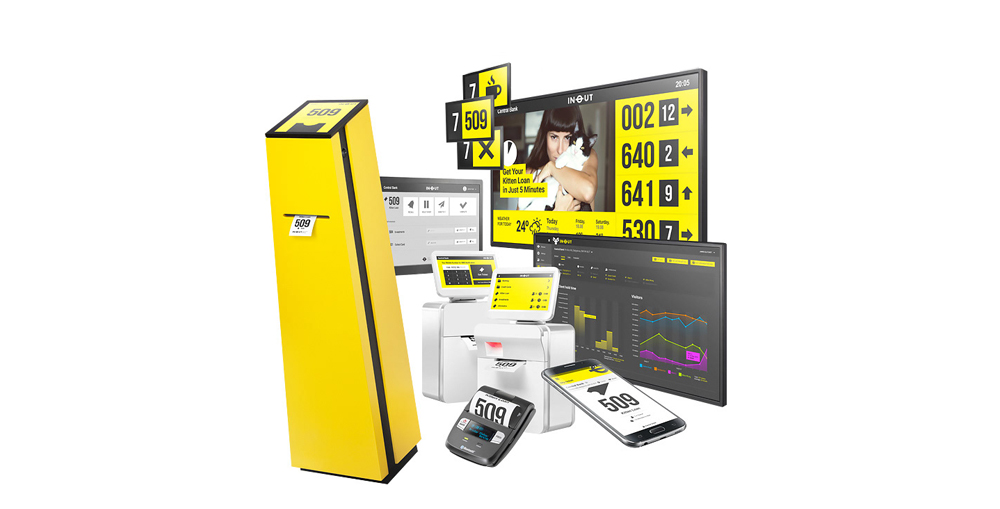
Queue Management System for Banks in 2025

Queue Management System for Banks in 2022

[Updated Jun 2025]

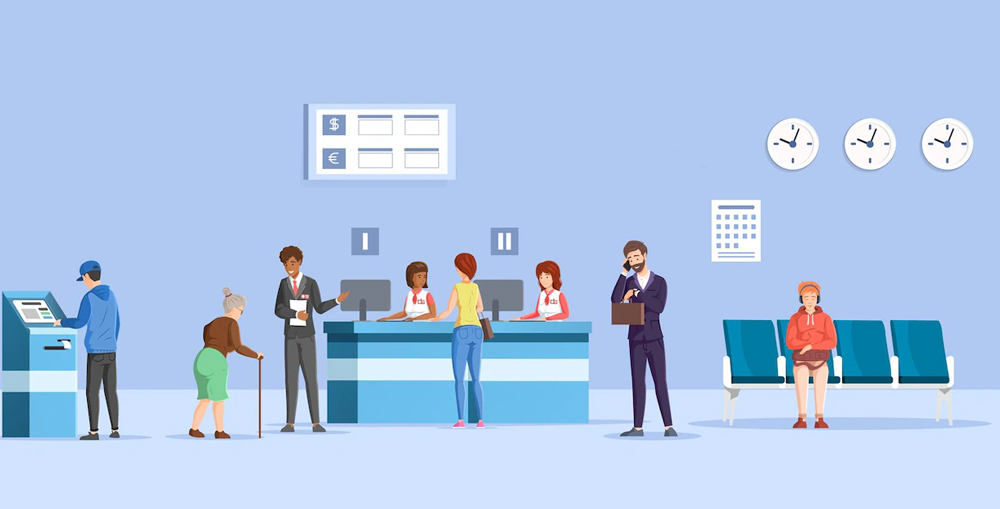
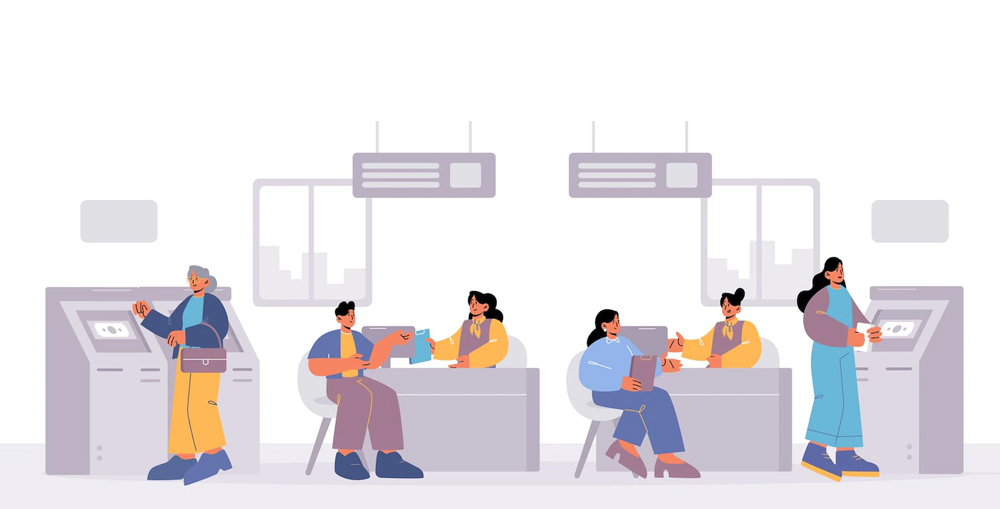
Managing guests and customers at a bank branch is always challenging. Apart from other service sectors the banks have certain challenges that other businesses might not have. Here in Dubai and all around the UAE there are several banks which offer great value products for businesses and individuals. However, when it comes to services, every bank is different. That is why the customer values experience the most. The customers love to be treated like a VIP. Although offering VIP protocol to each customers is neither practical nor necessary. But a good branch experience could be a turning point for the customers.

The way they got treated and the experience they had at a bank branch can influence their decision very heavily. If a customer had a bad experience then they will immediately switch to a competitor. These days it is lot easier, in fact almost every other bank is offering registration via online or from the mobile apps and then their representative will meet you at your office or home to do the formalities. That is why customer retention has become a huge challenge for customer experience management team. And dealing with long waiting lines, unhappy customers and crowded waiting areas could be a nightmare for the branch management.

See Also: What can a Queue Management System do for you?

Queue Management System for Banks in 2022

A queue management system is a key to digital branch transformation. The customer’s experience in the branch will impact on their relationship with the bank. The customer retention for financial institutions is a very sophisticated work. Here in Dubai and all around the UAE the market trends are slightly different from the rest of the world. The UAE as a country is a leading economy in the Middle East with a very attractive market, favorable government policies and great infrastructure for the businesses. This resulted in a huge growth in the banking sector as well. The customers here are from all around the world. The overall living standards are very high and the market is extremely competitive which leads to even higher expectations from the banks.

A queue management system provides excellent customer experience and more control and visibility of the customer flow process and customer journey. A queuing system can provide a greater competitive advantage and let your bank stand out of the crowed. A bank needs a flawless customer journey, smooth customer flow, great customer experience and very comprehensive intelligence data in order to monitor and keep improving everything.

See Also: 5 Challenges and Solutions of Queue Management System in Banks

Here is how a queue management system can solve all those problems:

Queue Management System Reduce Wait Time at Banks

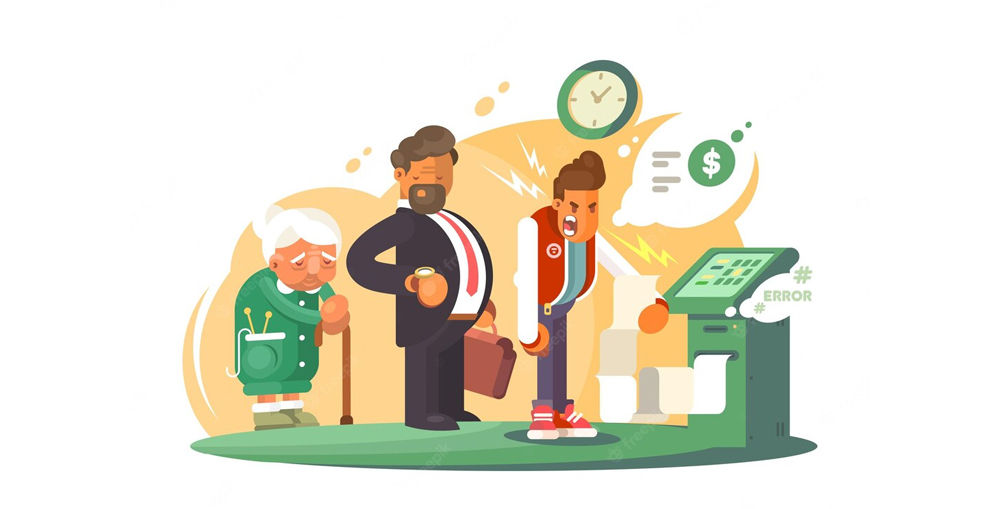
Let us admit, no one likes to wait in the long queues or congested waiting areas. People just don’t like waiting. As much as their waiting time increases their stress level also increases. Which leads to further inconvenience for both the customer and the staff as well. Think a customer had to wait for almost 45 minutes to reach to a service counter, where a service agent had already dealt with 2 out of 5 angry customers who were also annoyed by the long waiting time, what will happen next? It is no brainer that the chances of a satisfactory experience for this customer with this server are slim to none.

No matter how hard you trained your staff or how experienced they are, one can only suppress a limited emotional pressure and stress, eventually it will start reflecting on their behavior. The waiting time for banks or any other business is way too damaging than usually businesses anticipate. That is why the waiting time is considered to be the most important aspect of any customer journey. A queue management system is a great tool to reduce waiting time from somewhere 30% to even 80% in some cases.

See Also: How to Reduce Queues in Banks?

Queue Management System Reduce Wait Time at Banks

A queue management system digitalize many steps of customer journey. It streamline customer flow with in-built features that enable banks to automate various processes and utilize resources more efficiently. This alone can reduce the burden of your staff by up to 60%. Imagine you have manual queues where people are waiting in lines, the least your staff would want to deal would be the line jumpers and disputes among the customers. In order to improve customer flow the bank will have to deploy more resources, which is also expensive.

Even then if more staff members are deployed in the waiting areas, the service agents will still have to deal with a lot of irrelevant stuff. For example, there are several counters, some are dedicated for certain services, in manual queuing the chances are a few customers will always end up in wrong queues. Which will result in delay, and the agent will have to do extra efforts to adjust them in the right queue. There are tons of other things that both the customers and the staff will have to deal with if there is no proper queue management system in place.

See Also: Best Features of a Digital Queue Management System for Banks

Queue Management System Reduce Wait Time at Banks

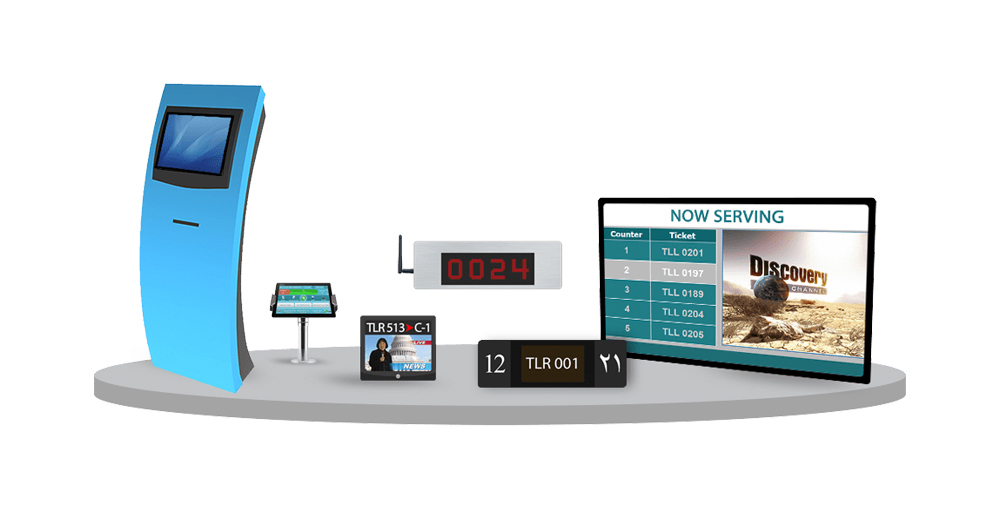
A queue management system automates the ticket issuing process. Usually it comes with an interactive kiosk machine which dispense the tickets. The customers and visitors can be asked to choose which service they are intended to use. This prevent any confusion among the customers and also save prevent a lot of unexpected delays in customer flow. Furthermore it frees the service agent from additional work and let them focus on the service delivery instead. Which improves their efficiency and productivity and results in quicker service delivery. The quicker service delivery means less waiting time for each customer.

As the queue management system is a digital system so every customer will know that their ticket numbers, the customer flow and everything is controlled by the computer, hence no one will have any complaint and no one will cause any interruption. Which significantly reduce waiting time as well. If a single customer had a complaint, it will take more time at the counter while debating with the server, hence the waiting time will add up to all of the remaining customers. A queue management system prevent all such problems and reduce the customer wait time.

See Also: What are the Different Types of Queue Management System?

Queue Management System Reduce Wait Time at Banks

Queue Management System Automates Customer Journey

For a service based business such as banks it is crucial to manage the customer flow and customer journey in a well-organized manner. There are several services that a bank can offers, some of them are pretty straight forward and some are not. There are two major classifications of the services, some services can be delivered through a single counter, and some require the customers to go to more than one counters. Such scenarios can add up to the complexity of the customer journey and it can also result in disturbances and mismanagement in the customer flow.

A queue management system is a digital tool powered by a very intelligent and capable software. The queue management system comes with several customer flow management tools such as AI powered smart software engine, signs and stanchions, line dividers and barriers, floor stickers, physical signs, digital signs and much more. Which not only automates customer flow but also effectively manages customer journey without any intervention of the staff. In case of stepped services the queue management system can automatically direct customers to the right counter.

See Also: Enhancing Banking Services with Queue Management Systems

Queue Management System Automates Customer Journey

In the banking sector the customers are of different value, priority and importance. Some customers are more important and are entitled to special treatment and exclusive customer journey. A queue management system can effectively manages all those customer segments with different priority levels with 100% accuracy. Furthermore there are usually exclusive counters for such customers which are used to improve the customer journey of the priority customers without disturbing the regular customers. A queue management system can also handle all these needs with 100% accuracy.

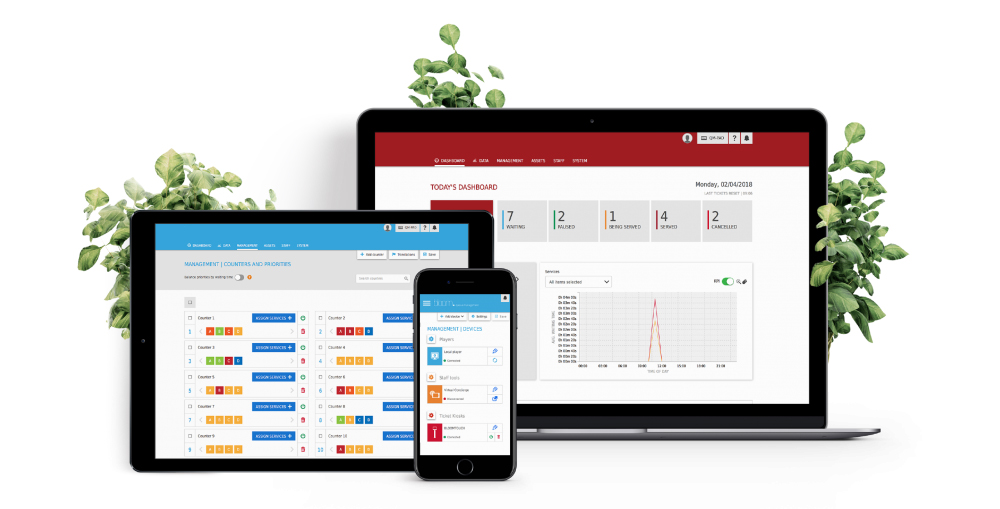
A modern queue management system is powered by AI and advance smart technologies which enables it to automatically analyze the historic and current data and on the bases of these analysis the queue management system can make decisions in real-time which further help improving the customer journey and customer experience. All this is done by the smart algorithms of the queue management system and doesn’t require any human assistance. Although the management can program a variety of flows in the back-office or administrative control panel of the queue management system software.

See Also: Key Tips to Improve Service Quality through Queue Management System

Queue Management System Automates Customer Journey

Queue Management System Enhances Customer Experience

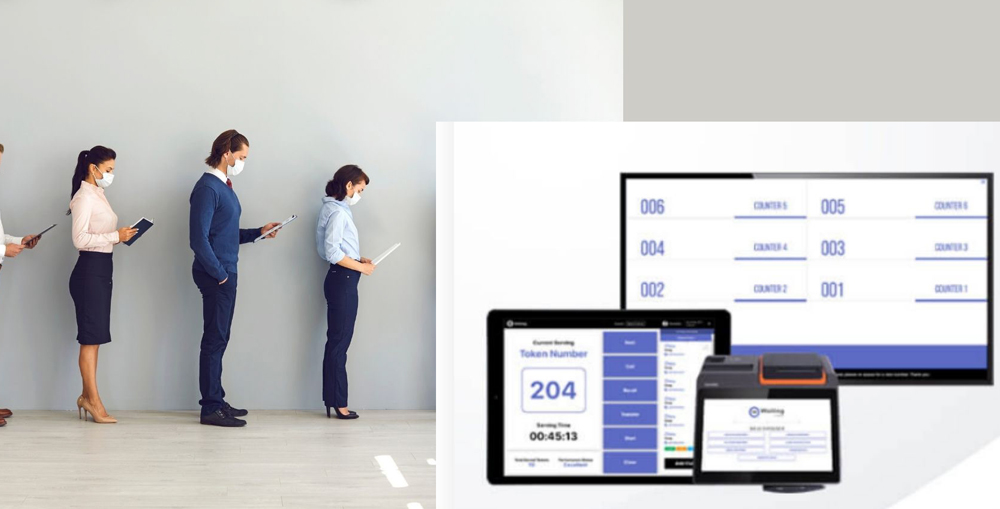
Reducing customer wait time and automating customer journey in itself is a significant improvement in customer experience. However, a queue management system is capable of much more. A standard modern queue management system can offer a variety of engagement features to the bank customers which keep their interest and reduce their boredom of waiting. The most important is the usage of digital signage. A queue management system includes digital signage which run entertaining content, marketing materials or any other eye-catchy multimedia content which keeps customer busy during their waiting time and it reduces their stress as well.

Furthermore these days in Dubai, UAE the audio announcements are also considered to be an industry standard now. The audio announcements comes with a very attractive tone or small ring which immediately capture customers’ attention. It announces the next ticket number and the designated counter number, which keep customer distracted from the waiting and improve their waiting experience.

See Also: Queue Management in Banking: Enhancing Customer Experience
Queue Management System Enhances Customer Experience

One of the most important feature of a queue management system is that it intensively gather business intelligence data and it can also perform analysis on the data in real-time. Usually these analysis are done on a server which makes the system super-efficient and eliminate any latency. On the bases of these analysis the queue management system can predict the estimated time of turn for any customer. Usually that time is printed on their ticket and it can also be displayed on the digital signage screen. The estimated time to turn might looks like a small feature but it has a huge psychological effect on the customer.

The studies have revealed that our brain is programmed to fear the unknown. That is something which is embedded in our DNA. You must be thinking what does a harmless queue management system has to do with the fear of unknown. Well, it is the human psychology. No matter if it is dangerous or not if something is unknown to us it will make us uncomfortable. In case of waiting time, when the time is not known, one can only speculate, which add more to their stress and discomfort. That is why it is very important to provide estimated time to turn and it can significantly improve customer experience.

See Also: What are the Basic Components of Queue Management System?

Queue Management System Enhances Customer Experience

Virtual Queuing Offers Ultimate Customer Satisfaction

The primary goal of improving customer experience is to achieve the maximum customer satisfaction. A happy and satisfied customer is most likely to spread good words about the bank and it could also attract more customers. Furthermore the loyal customers are tend to tolerate several bad experiences before they decided to switch to a competitor. The loyal customers are a great asset for a bank and they can generate a huge revenue as well. That is why it is crucial to keep your customer happy and satisfied.

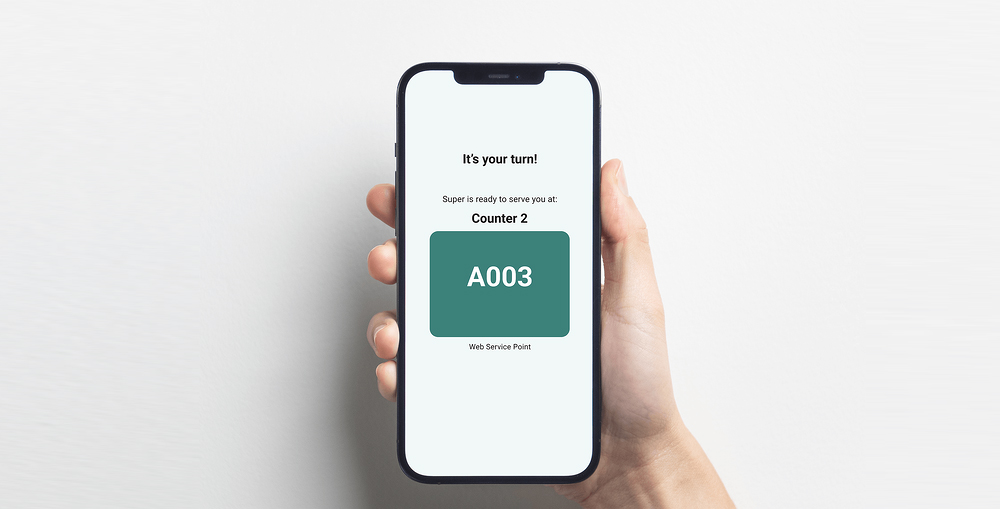
One of the most modern form of queuing is the virtual queuing. The virtual queue management system integrate modern technologies to further enhance the customer experience. The main aim here is to reduce the wait time and customer journey. The virtual queuing uses a variety of mobile mediums to allow the customers and visitors to sign-up remotely for virtual queues. That mean the customer can sign-up for a queue without even physically arriving at the bank.

See Also: Why Virtual Queuing is the Next Big Thing in Queue Management

Virtual Queuing Offers Ultimate Customer Satisfaction

The queue management system offers WhatsApp, QR code, websites, mobile applications, customer portals and a variety of other digital channels which enable a customer to sign-up without even physically arriving at the bank branch. Hence they have freedom to arrive only when their turn will come. This literally eliminates the wait time completely. There is no customer wait time at all. The virtual queuing also provide more flexibility and control to the service agents by enabling multiple communication channels between them and the customers.

For example, the WhatsApp can be used for communication where the customers can also respond or ask questions to the assigned service agent. Similarly the agents can send SMS to notify the customers about any change and the virtual queue management system can also send alerts via SMS, Email, Online Customer Portal, Mobile App – Push Notifications, etc. The virtual queuing can offer a great value to customer experience.

See Also: The Role of AI in Enhancing Queue Management Systems

Virtual Queuing Offers Ultimate Customer Satisfaction

Queue Management System Integration with Third-Party Systems

A queue management system can offer a variety of innovative features if it can be integrated with other existing software and systems. Usually banks have a centralized information center. The queue management system can be linked with customer database, customer relationship management tools, centralized information center, sales data, performance management system, etc. The third-party integration is not only limited to the software, in fact a modern queue management system includes an interactive self-service kiosk machine. Banks can have additional peripherals and hardware devices linked to this kiosk to further improve the customer experience and customer journey.

For example, banks can link Emirates ID card reader, or a document scanner for self-service registration process or it can linked a fingerprint scanner, etc. The customer identification can help improving the service quality and it can also push customer data and required service at the agent’s computer beforehand which can significantly reduce the customer wait time. The queue management system supports all API based integrations and automatic data synchronization.

See Also: Must have features of a Queue Management System

Queue Management System Integration with Third-Party Systems

Queue Management System Mobile Apps & Appoint Booking Modules

The same way a queue management system can be integrated with other software and hardware tools, it can also be integrated with a mobile app and online appointment booing module. The mobile app allow users to perform all basic queue management system related tasks as well as some additional features which make customer experience more convenient and satisfactory. For example the most widely used queue management system mobile app feature is its bank branch finder. The bank branch finder in a feature that is integrated with maps and queue management system of the bank and when a user searches for a nearest branch, it can show them all branches that are located in the searched area.

That is not all, the queue management system mobile app can also display the queuing data in real-time from each branch with estimated time to turn at each nearby branch. This help the customer decide where they should go. Furthermore the appointment booking module can be integrated in the customer portal as well as the smartphone application. The appointment booking module also provide additional details about the expected traffic at the selected time and day based on the historic data and analysis.

See Also: Mobile Queue Management: The Rise of App-Based Solutions

Queue Management System Mobile Apps & Appoint Booking Modules

Queue Management System can Collect Customer Feedback Data

The customer feedback data collection is very important for customer experience management. Banks have multiple channels to collect customer feedback, these days mostly the digital channels are used as the traditional and manual feedback collection is difficult, require a lot of resources, the data collection and processing is difficult and the response rate is also low. However, the queue management system can not only collect customer feedback but it can deliver both high quality and quantity data as well. Furthermore the queue management system also facilitate the customer feedback campaigns by making them super-easy for the customers.

Hence huge data can be accumulated easily. Usually banks use small touch screens, tablets or iPads to collect customer feedback data from inside the branch. Majorly this feedback is related to their experience, overall journey, the service agent, or the product they are using. The queue management system have ability to link customer profile with their feedback without asking them to enter their name, phone number, email or any other detail. For the customers, it is just one or two taps on the touch screen and their feedback is submitted. That is why the queue management system is a great tool to collect customer feedback data from customers and visitors.

See Also: From Chaos to Control: How Queue Management Systems Can Improve Your Business

Queue Management System can Collect Customer Feedback Data

Queue Management System Collects Valuable Business Intelligence and Performance Data

Modern day businesses are heavily relying on the IT (information technology). Banks and every other business collects a huge amount of data, which is processed, analyzed and then utilized in their decision making and strategy building process. This data is called business intelligence data. A queue management system can capture data from all touch points at the entire customer journey. For example, the number of customers signed-up for the queue, what services got most requests, what was the customer churn rate, individual and average wait time, individual and average service delivery time, the service agent performance and much more.

The beauty of a digital solution is that such type of data collection is a very simple tasks, however, the data processing and analysis could be trickier. A queue management system collects a huge amount of data on daily bases, it automatically stores it in relevant segments or data repositories and made it available for the bank management. The queue management systems are built on a very smart and intelligent software engine which has capabilities to automatically analyze the data, derive results and then take decisions in the real time to impact the queuing process.

See Also: The Importance of Actionable Data in Queue Management System

Queue Management System Collects Valuable Business Intelligence and Performance Data

Furthermore all that data that is collected directly from the queue management system and all other data that is collected by other systems is combined and made available for the management. This data can be accessed in the system, various types of analysis can be performed within just a few clicks, and reports can be generated. There is no chance of mistake or error in automatic data collection and processing. The queue management system can monitor and measure the employee performance with great precision.

For example, how much time a service agent spent on the counter, their complete activity record, how many customers they served with each individual service time and average performance of the day. The queue management system’ performance data can also provide information about employee performance such as which employee is good at what service? Which services take more time for them and so on. All this data can be channeled to the HR for the HR purposes as well and it can be used to initiate training and employee development programs as well.

See Also: How a Queue Management System Can Transform Your Business Operations

Queue Management System Collects Valuable Business Intelligence and Performance Data

Banks can also configure the queue management system so it automatically direct the customers to the counters where the chances are they will get quicker service delivery. The business intelligence data and the performance data a queue management system collects can be automatically channeled to the relevant departments for their perusal. Management can incorporate the queue management system data in their policy making and strategy building process to efficiently utilize resources and to ensure the maximum outcome can be obtained with the limited resources. Furthermore this data can be used to highlight the areas of improvement which can be addressed to boot the customer experience.

Conclusion

A queue management system is not just a customer flow management tool for the banks, in fact it is a full-fledged bank branch transformation tool. It has ability to digitalize and automate several internal processes which not only help reducing the resources but at the same time these features can enhance the customer experience and customer journey. The queue management system can significantly reduce the customer wait time, improve churn rate, reduce employee workload, it keeps the customers engaged and happy throughout their entire journey. The queue management system can be easily integrated with other enterprise tools and bank’s internal systems to further introduce innovative features.

A queue management system is a great source of valuable business intelligence and performance data. The data quality and accuracy is exceptional. The queue management system can also be customized to match the bank’s needs and offer them a tailor-made solution which aligns completely with their internal business processes and help them improve the overall productivity, profitability and growth. RSI Concepts is a leading queue management system brand in Dubai, UAE. If you want to learn more about the subject or if you want us to help you with a completely customized or ready-made queue management system for your business please feel free to contact us through our Contact Us page or leave a comment in the comment box below and we will get in touch with you soon.

See Also: 5 Advantages of Custom Software Development

See Also: Queue Management System Problems and Solutions in Dubai, UAE


5 Advantages of Custom Software Development

5 Advantages of Custom Software Development

In Dubai or anywhere else in UAE businesses need to offer an excellent experience to its customers and they will have to establish their brand very well. In competitive markets businesses will have to offer something special which makes them unique and genuine. Over the time businesses establish their internal processes, methods and unique approaches to handle things differently, which gives them a great competitive advantage. It is this unique experience that distinguishes them attract more customers. Businesses these days heavily rely on the software and digital solutions.

Furthermore the businesses grow over the time and their internal needs for the IT infrastructure and software solutions also grow. The UAE market is very vibrant, the market trends are changing rapidly. This requires businesses to keep up with the market as well as manage scalability and in addition to that they also have to maintain a balanced productivity and efficiency. That is why businesses in Dubai and all around the UAE are always seeking software and solutions to support their journey.

See Also: Why the Custom Software Development is Good for Your Business?

5 Advantages of Custom Software Development

Whenever a business decide to acquire a new tool or software solution, the biggest challenge the management faces is to decide between the commercial off-the-shelf software (COTS) and the custom software development. These software and solution can have a huge impact on a business’s performance, growth, productivity and profitability. The commercial off-the-shelf software (COTS) might seem fairly reasonable in terms of initial cost, however, in long term they cost more than the customized software.

The biggest disadvantage of commercial off-the-shelf solutions is that it is designed for masses hence it is built to be a general purpose tool. That means it would never fit in as per the expectations. The custom software development on the other hand offers a fully customized and tailor-made solution for your problems. Hence custom software tend to greatly improve business efficiency and productivity. Here are some key advantages of custom software development:

1. Custom Software are Developed Exactly as per the Needs of the Business

The biggest problem with COTS is that they are designed for a mass audience. However, the biggest advantage of the customer software development is that it is exclusively designed as per the requirements, needs and specifications of the business. The solution is designed precisely to address the issues of the business and it is not a general purpose, one fit for all kind of application. The customized software are extremely efficient as they are tailor-made to solve certain problem for a business only. There is no unnecessary or unwanted component, which makes employee’s user experience very pleasant and satisfactory.

In fact the user interfaces are also exclusively designed to meet the needs of the users which results in great improvements in the performance and usability of the software. The biggest problem with the commercial off-the-shelf software (COTS) is that it is designed for a wide range of audience hence business usually don’t found all the features they need.

See Also: Why Off-the-Shelf Solutions Fall Short: Advantages of Custom Software Development

Custom Software are Developed Exactly as per the Needs of the Business

Talking about features, it is worth mentioning that the custom software development offer full freedom to include as many and whatever features a business wants and needs. This approach is very supportive for innovation and modernization. Business can gain a great competitive edge by including features which enhances their business process, produce better results and optimize the expenses. This makes tailored software solution more beneficial for growing businesses and help them mitigating rapidly emerging challenges.

Whereas the commercial off-the-shelf software doesn’t provide this freedom. In fact they usually comes in pre-packaged format, different versions or plan type have different sets of features. The upgrading and modernization process is very slow and mostly it costs additional fees and charges. Most of the time it is very difficult to get all the needed features. Businesses always have to make compromises in order to keep the cost under control.

Custom Software are Developed Exactly as per the Needs of the Business

2. Custom Software Development offers Full Ownership Rights to the Business

The commercial off-the-shelf software (COTS) are still owned by the vendor or service provider, the business doesn’t have any right or authority over it. The policies and protocols are not managed by the business who uses the COTS. So the business is just paying fees and using a product which is owned and controlled by someone else. Obviously the commercial off-the-shelf software does offer some value and control to their customers but the ultimate control is not in business’s hands. The custom software development on the other hand offers complete ownership rights, the software a business built for themselves is fully owned by them as well.

Unlike COTS there is no monthly or rental fees. The business have to pay one-time to build the software and then there is just the running or operational cost. There is no additional cost. On top of that the ownership allow businesses to manage, update and scale the software as per their needs and requirements. Which provides them more freedom and control.

See Also: Custom Software Development for Enhanced User Experience

Custom Software Development offers Full Ownership Rights to the Business

Here I would like to give an analogy of a rental and owned house. The difference between the commercial off-the-shelf software (COTS) and the custom software development is the same. Businesses hire a customer software development company in Dubai, UAE who build the software and deliver it to the business. The business is not even dependent on the same software development company for the maintenance, further customization and scalability of the software. Business in Dubai and elsewhere in UAE also kept in-house teams to manage their customized software, which significantly reduces the maintenance cost and allow them to keep updating and upgrading the software without any additional cost.

For those who don’t or can’t manage in-house software development teams, they can always hire a third-party or the same vendor to manage and improve their software at a very reasonable cost. The ownership of the custom software also enables businesses to allow their partners, customers, and subsidiaries without any additional licensing or any other cost.

See Also: Leveraging Big Data in Custom Software Development

Custom Software Development offers Full Ownership Rights to the Business

3. Customer Software Development Offers Higher Security

For any business the data protection and security is a matter of life and death. In the modern data driven world the data security and protection is at the at most priority. If a data breach happens, the first thing a business will lose is its reputation and credibility. It will can have a long lasting impact on your customers and reputation. Mostly businesses couldn’t fully recover from such incidents. The data threats are very abundant and there has been millions of attacks at corporate and other sectors each year.

The commercial off-the-shelf software (COTS) are not inherently insecure or less capable, it is the fact that they are widely available all around the world and their structure and technology is also well-known. The fact that thousands if not millions of people are already using the COTS solution which makes them easy target for these data pirates and internet hackers. These people usually target COTS to gain access to their customers, employees, and financial data which they can use for their own agenda.

See Also: Security Best Practices in Custom Software Development

Customer Software Development Offers Higher Security

However in case of custom software development, someone will only attach it if they want to attach a specific company or business which significantly reduces the threat level. However in case of custom software development, someone will only attach it if they want to attach a specific company or business which significantly reduces the threat level. Mostly the software structure, backend programing and various other technical details are concealed which makes it even more difficult to attack and breach it.

On top of that it is only the business who have access to their data, there is vendor, technical team or anyone else can possible access your data. Your data will be stored on the servers of your choice, and only the business and its designated employees can gain access to the data. This makes customer software development more desirable for businesses. Businesses can always higher a cyber-security professional in-house or they can do cyber-security testing and analysis from a third-party company to further improve the security and safety of their precious data.

See Also: Common Mistakes to Avoid in Custom Software Development Projects

Customer Software Development Offers Higher Security

4. Customer Software Development Offers Flexible Integration with Third-Party Tools

Every business has multiple layers of digital and IT infrastructures. The accounts must be running a financial software, the production must be running their tools, and the marketing department would be using different sets of software and tools, and so on. There is always an ERP or a centralized information center which converges all these tools and software to a single unified data base which is utilized by the decision makers and the senior management. All these tools are linked to each other at some extent.

This link is established using integration techniques and technologies. A commercial off-the-shelf software (COTS) also provide data synchronization and integration, however, with a very limited scope. Usually it is very difficult and expensive to link the COTS with other systems. As they are built on a pre-defined structure which the business can’t alter and it means the desired or optimum level of integration can rarely be achieved.

See Also: Step-by-Step Guide to Planning Your Custom Software Development Project

Customer Software Development Offers Flexible Integration with Third-Party Tools

Businesses always have to alter other tools too, which add up to the cost and make the integration a very costly and difficult task. Sometimes in order to achieve the optimum level of integration businesses might have to introduce intermediary tools which are commonly known as middleware. These tools took the data from one software or database and make it workable for the other and vice versa. That is also a costly endeavor and even then the desired level of integration is very difficult to achieve.

However, with the custom software development businesses have a chance to build the application as per the requirements and limitations of the existing IT infrastructure to achieve the maximum level of integration. Furthermore it is very cost-efficient to modify the custom software and upgrade them to improve their compatibility. This provides businesses with a greater advantage and allow them to introduce innovative features to maximize the efficiency and effectiveness of the custom software without worrying about the cost.

See Also: Why customized CRM Software is better than Off-the-shelf Solution?

Customer Software Development Offers Flexible Integration with Third-Party Tools

5. Custom Software are Easy to Scale with Ability to Extend Lifecycle

The custom software are far superior then the commercial off-the-shelf software (COTS) in terms of scalability and longevity. It is all about the ownership of the software. The off-the-shelf software are developed by the service provider and the business have almost no control over it, if the service provider decided to pull the plug, business have no choice but to move on with an alternate. For example, Office 365 is a popular Microsoft tool for businesses, let say in coming 5 years, the Microsoft decided to replace it with a new one and within another couple of years they stopped support for the tool, the businesses who are using it, can’t do anything. They must have to switch.

However, in case of custom software development the business owns the software, it have full control and authority over it. If the business wants to modify it or upgrade it they can do it and if they want to use for extended period of time, they can do that too. There is no barrier, limit or restriction.

See Also: The Future of Custom Software Development: Trends to Watch in 2025

Custom Software are Easy to Scale with Ability to Extend Lifecycle

The commercial off-the-shelf software (COTS) offers good scalability but with a very hefty price tag. The custom software doesn’t require any additional cost and offer excellent scalability support. Each business is growing, for example, last year the business had 250 employees and now they reached to 300, they will have to acquire the licenses for the new employees which will cost them a lot. However with the customized software there is no such limitation, businesses can add as many users they want without worrying about additional fees or any such thing. Furthermore the customized software can be used for as long as the business wants.

The biggest reason of changing a software is due to its limited features and over the time the usefulness of a tool also decreases. The COTS doesn’t address this issue seriously and eventually businesses will have to make a shift from one solution to another. But the custom software offers great value and businesses can easily upgrade and modernize them by modifying existing features and introducing new features which increase the lifecycle of the software to several more years and save a lot of cost and effort of switching to another software.

See Also: The Role of AI in Custom Software Solutions

Custom Software are Easy to Scale with Ability to Extend Lifecycle

Customer Software and COTS Cost Comparison

Apart from advantages and features the custom software have excellent ROI (returns over investments) in the long term. It is a common misperception in Dubai, UAE markets that the custom software are expensive. However, that is not correct. The commercial off-the-shelf software’s initial cost is low and businesses can deploy them very quickly however, in long term the COTS are way too expensive, the scaling is very expensive, the integration is difficult which increase its time and cost. Sometimes intermediary tools or middleware are used to bridge the gap between the commercial off-the-shelf software (COTS) and other tools to improve the integration process which is fairly expensive and time taking task.

It is very difficult to find all the required features, as the needs grow business will have to upgrade them. In some cases businesses hit the road block where the software can no longer support the needs and eventually they will have to move to another comer off-the-shelf software or customized software solution to meet the needs. This all have additional cost, efforts and even disruption in regular work flow which also tend to cost money and time.

See Also: The Cost of Custom Software Development: Factors to Consider

Customer Software and COTS Cost Comparison

The custom software development is a very flexible solution, it provides full control and allow much higher levels of customization, integration and scalability. Scaling doesn’t require package upgrade or additional licensing fees. The business have full control over the customizations and modifications in the software. The business owns the software, hence it is not dependent on any vendor. The businesses can even manage in-house software management and maintenance team which enables them to unlimited changes and modifications in the custom software. Businesses can also expand the software implementation to their subsidiaries, partners and even customers without any expense.

The custom software have longer lifecycle and can be modernized and upgrade to meet the growing needs and changing trends which eliminate the need of migrating to a totally different software solution and save a lot of efforts, resources and money as well. Hence in the long term the custom software is much more reliable, cost efficient and useful comparing to the COTS and that is the reason it yields far better ROIs.

See Also: Why custom software is more cost efficient in UAE?

Customer Software and COTS Cost Comparison

Conclusion

The Dubai and all around the UAE businesses are facing many challenges, one of them is related to their IT needs. The markets are doing well, the overall economy of the country is growing at a smooth pace, which attract more investors. Hence the competition is also getting tough day by day. Businesses need to perform very well in order to stay relevant in the market. The modern day businesses are heavily relying on the IT and digital solution for their regular operations. This is where it could make a huge difference and provide businesses with a great competitive edge which help them stand out among the rest of the competition. Growth and progress is the primary goal of any business.

With growth the internal and external needs also grow, businesses have to scale at a much faster rate than that of their growth if they want to sustain a long term success. That is why businesses deploy different types of software and continuously upgrading their digital arsenal in order to boost productivity, performance and profitability. Whenever a new need arose or a business wants to replace an existing old system with a new one to boost the efficiency and to support the modernization and innovation, the biggest challenge for the management is to decide between commercial off-the-shelf software (COTS) and the tailor-made custom software solution.

There is no doubt the custom software are far superior then the commercial off-the-shelf software in terms of productivity, adoptability, integration, performance and ROI. In this blog we have mentioned five biggest advantages of the custom software while comparing them with the counterpart COTS software solutions. If you need any more help about the subject or if you want us to help you build your next game changing customized software solution, please feel free to contact us through our Contact Us page or leave a comment in the comment box below and we will get in touch with you soon.

See Also: What is CXM (Customer Experience Management)?


What is CXM (Customer Experience Management)?

What is CXM (Customer Experience Management)

[Updated 10 Jun 25]

The prime goal of any business is to satisfy its customers and establish a long term relationship with them. Every business’s success is based on its customers. Satisfied and happy customers are considered to be the backbone of any business. There are two major reasons for that, one the satisfied customers become loyal and do repeated business and the second they help promoting the brand’s positive image which attracts more customers. Here in Dubai and all around the UAE the markets are very competitive which also made customer more demanding.

Furthermore the technology is heavily integrated in our society with almost everyone (99%) of the population have access to the internet and social media. This makes market more vibrant and digitally dominated. The market trends also keep changing all the times so does customer’s needs and demands. Customers expect excellent experience form their favorite brands. That is why businesses are diverting their attentions to the customer experience management solutions. In 2025 businesses are rapidly turning towards customized software solution to enhance customer experience and to drive superior efficiency.

What is CXM (Customer Experience Management)

Now a day’s the customer satisfaction matters the most, there have been several studies and worldwide surveys which indicated that the customers are happy to pay extra if they are getting good experience. This makes customer experience even more important. The most common mistake businesses made is that they think only the customer service or customer care departments are responsible for the customer experience. However, in this modern world, that is not correct. The customer experience includes customer engagements, satisfaction, experience and communication at all touch points throughout the customer journey.

The customer experience management framework is a bit more customer-centric or customer-first approach to build and nurture a mutually beneficial relationship with your customers. The customer experience management help businesses to understand customer interaction more effectively and enable them to enhance customer experience to boost loyalty and generate more revenue. That is why more businesses are leaning towards custom enterprise software development in order to personalize customer interaction for higher customer satisfaction.

What is the Difference between Customer Experience Management (CXM) and Customer Relationship Management (CRM)

Although the customer experience management and the customer relationship management both look fairly similar, but both are completely different. Despite there are several basic elements and similarities the primary objectives of CXM and CRM are totally different. The customer relationship management or CRM solution is used to learn what the customer look like to the business and customer experience management or CXM/CEM solution is what a company looks like to its customers.

The customer relationship management (CRM) is optimizing and improving internal processes by collecting data from manual, semi-automated or in few cases fully automated channels. However, the customer experience management (CXM/CEM) takes this to one step further and allow businesses to collect data in real-time and offer a much deeper understanding of the customer experience.

What is the Difference between Customer Experience Management (CXM) and Customer Relationship Management (CRM)

The customer experience management (CXM) focuses more on utilizing technologies and modern communication methods to enable a cross-channel engagement and managing customer experience across all touch points and in all departments. Which makes customer relationship management just a component of the customer experience management. These days businesses are heavily utilizing AI in custom software solutions to boost efficiency, accuracy and impact of their customer experience management solutions.

Here are some most obvious differences between the customer experience management (CXM) and the customer relationship management (CRM):

Customer Experience Management (CXM)Customer Relationship Management (CRM)
Provides both qualitative and quantitative data insight across all touch pointsProvides quantitative data insight across certain touch points
Prioritize customer experience and unify the data across the entire customer lifecycleTraditional analytical approaches for impersonal statistical data and trends
Prioritize customer engagement to drive sales and revenuePrioritize operational capabilities and improvements to maximize the profitability
Enable businesses to respond faster to the market trends and changes with intelligent real-time data analysis and its impact on customersIdentification of market trends and response time is much slower and it focuses heavily on customer service to improve customer happiness
It utilizes automation and modern technologies  to focus on the entire organization and all its functions and it covers the entire customer journey which includes, sales, marketing, support, web, social media, in-branch experience, etc.It mainly focuses only on the sales team while enabling the businesses to nurture their relationship with customers by leveraging the automation and modern technologies

What is the Difference between Customer Experience Management (CXM) and Customer Relationship Management (CRM)

The customer experience management is a combination of technologies, enterprise application software (EAS), processes, methods and strategies a business utilizes to monitor, organize and improve each and every interaction with its customer across all channels and throughout the entire customer lifecycle. Acquiring a new customer is very expensive, it could cost around 5 times to 25 times more than selling to an existing customer.

That is why customer satisfaction is extremely important for growth and profitability. Studies have revealed that only a small portion of the loyal customers could be responsible for a huge portion of the entire revenue a business generates.

Why you Need a Customer Experience Management (CXM/CEM) Framework?

The customer experience management (CXM/CEM) is not just another branding campaign, it is a very powerful data driven framework. Which help both businesses and customers equally and strengthen the relationship between business and the customers. The Dubai and in fact the entire UAE is a very well connected and competitive market. An effective customer experience management could provide your business the much needed advantage which will not only ensure customer satisfaction but also distinguish you from the rest of the market.

It is a win-win scenario for both the customers and the businesses. The customer get an excellent personalized experience with satisfactory interactions and the business gets more leads, conversions and it also help businesses obtain a good reputation in the long term. The businesses can also acquire a wealth of valuable business intelligence data utilizing common types of customized software and enterprise tools which provides them a much deeper understanding of customer persona and help them optimize well as per the customers’ needs.

Why you Need a Customer Experience Management (CXM/CEM)?

Customer all over the world appreciate personalized experience. When their favorite brands offers them a personalized experience they feel more connected and valued which helps businesses gain their trust and drive customer loyalty. Here are the key benefits of the customer experience management (CXM/CEM):

Significant Improvement in Customer Retention:

Studies have shown that up to 5% increase in customer retention can increase your profit from 10% to 25%. That is because it is 5 to 15 times less expensive to sell to an existing customer than acquiring a new customer.

Happy Customers Need Less Attentions:

One of the biggest advantage of happy and satisfied customers is that they require less attentions. It requires less resources to serve them with satisfaction hence the service cost can be significantly reduced in the long term.

Improve Brand Reputation:

Happy and satisfied customers are more likely to promote your brand and products/services. According to several studies almost 80% of the customers make a purchase on the bases of their past experience or words of mouth.

Significant Reduction in Marketing Cost:

Loyal customers are tend to promote the brand with not only words of mouth but also on social media and digital platforms. Which can help improving your brand awareness and it can attract more customers without any marketing cost. Furthermore a good brand reputation also attracts more customers and reduce marketing cost and efforts too.

Improved Product Development:

Better understanding of the customer persona, their preferences and the market trends help businesses improve their existing products and provide excellent data for the product/service development process. Businesses can develop new and innovative products/services with features their customers and market is craving for which also boosts sales and conversions.

Great Competitive Advantage:

Improvements in all business functions such as operations, productions, supply chain, customer care, sales & marketing, etc. help boosting the overall performance of the business and also raise the quality of the work which can provide a greater competitive advantage and increase overall profitability.

Provides Huge Volumes of Crucial Data:

The business intelligence data gathered under CXM program can be a game changer for the businesses. It can accurately evaluate the impact of various customer engagement and customer satisfaction campaigns and it can also help in building future strategy as it provides a highly accurate statistical and analytical data which aids decision making processes as well.

See Also: Why You Need a Customer Flow Management Software?

Why you Need a Customer Experience Management (CXM/CEM)?

Despite being so advantageous and useful the customer experience management (CXM) is still underrated in many regions and industry sectors. Studies have revealed that almost 70% of the businesses who are running an active customer experience management (CXM) campaign still don’t integrate the CXM data with their financial data.

The customer experience management in itself is a very impactful framework however businesses can leverage its full potential only if it is linked with their financial data. Customer experience management (CXM) software integration with the financial data can boost its performance to several folds.

What is the Primary Goal of Customer Experience Management (CXM)?

The primary goal of the customer experience management (CXM/CEM) is to generate more revenue for the business. However, this can only be achieved by accomplishing the following most important tasks:

  • Link CXM to Financial Data: It is crucial that the CXM data is linked with your financial data. As the primary goal is to boost the revenue so without linking it to your financial data you will be flying blind.
  • Understand Your Customer Persona: The CXM collects data and provides a deeper understanding to the customer persona which helps businesses in setting up strategies and making plans.
  • Identify the 20%: According to several studies and researches all around the world. The 20% of the happiest customers are usually responsible for the 80% of a business’s revenue. It is crucial to identify those 20% and allocate more resources to keep them happy and satisfied.
  • Learn More about Your Brand’s Promoters: The brand promoters are only a small portion of your customers who are satisfied enough to promote your brand. Such customers are tend to be the best brand advocate and this data can be utilized to boost referral campaigns and acquire low-cost customers in a short period of time.
  • Understand Customer Journey: The customer journey plays the key role in customer satisfaction. The CXM provides a highly accurate and comprehensive view of the customer journey and make customer journey mapping and improvement more simple and effective.

See Also: Leveraging Tailored AI Agents to Elevate Customer Support Experiences

What is the Primary Goal of Customer Experience Management (CXM)?

The primary goal of any customer experience management (CXM/CEM) program is to boost the revenue and growth of the business. A CXM helps businesses to invest their resources in the most profitable areas. It can maximize the ROI of almost each and every business function. If a business wants to transit from a sales-oriented to a more successful customer-oriented brand, then the CXM program is the only solution.

How to Create a Good Customer Experience Management Strategy?

Any customer experience management starts with a 360 degree view of the customers. The business should start collecting statistical and customer data and converge it to a single centralized information center. Usually the customer data is scattered across different business functions such as sales, marketing, customer service, and operations. The first step is to consolidate the data streams form all touch points.

Here are the essential of creating a good customer experience management strategy:

  • Combine and consolidate the data streams from all customer touch points into a single database.
  • Build customer personas – understand their needs, expectations and problems and segment customers into groups based on demographics (age, gender), geographic (location), customer behaviors and purchase habits.
  • Map the customer journey. The customer journey mapping help identifying customer touch points and their expected behavior on all those touch points. Customer journey mapping helps businesses to understand how customer will interact with their product and service and help the CX team to create a customer vision.
  • Build a strong and impactful brand image or brand personality to strengthen the bond between customers and the business. The unique brand personality help businesses establishing a strong emotional connection with its clientele.
  • Collect customer feedback in real-time and channel it to the CX team and other stakeholders to improve their visibility. It will help them understand the impact and effectiveness of the strategy.

See Also: How Customized AI Agents are Revolutionizing Business Automation

How to Create a Good Customer Experience Management Strategy?

Large businesses and enterprises can easily assemble a customer experience management team and appoint a CX manager who will be responsible for the creation and implementation of the customer experience management strategy. For SMEs and local businesses it is easier to appoint a single person to oversee the customer experience management tasks. Usually there is a chief customer experience office or CXO and a few customer experience managers (CEMs) and then the relevant teams.

The data analysis and reports are generated by the CX team or executive and shared with the CXO and stakeholders and all relevant departments. This way the management can get a clear picture of the customer experience across all touch points which makes it easier for them to revise the strategy by making improvements to it and set a plan of action to further enhance the customer experience to obtain maximum customer retention.

How to Create an Effective Customer Experience Journey Map?

The customer experience management team or the manager is responsible for the customer experience at each touch point. That is why it is extremely important to map the ‘customer experience journey’ or ‘customer journey’ in order to effectively build and execute the customer experience management strategy. The customer experience journey map will identify all the touch points and let the team build a better strategy to optimize customer experience at all those touch points.

See Also: The Cost of Custom Software Development: Factors to Consider

Each touch point will reveal how the customer will interact and what customer behavior should be anticipated. Furthermore the team can improve the customer experience by optimizing those touch points as per the strategy. Here are the key touch points of the customer experience journey map:

1. Discovery Phase:

The discovery phase or reach phase is the phase where a customer or prospect discovers the business. Usually it could be from digital marketing or traditional marketing channels. These days the websites, social media and digital advertisements are the main players. However, customers also tend to consult with their friends, family and coworkers a lot.

2. Evaluation & Comparison:

In this phase the customers and prospects compare all available options in the market. They list down the competitor products/services and compare their different attributes, features, and costing, etc. Furthermore the customers also evaluate the business on the bases of its brand personality and they also try to find social proofs, recommendations, customer reviews and even references. If a brand succeed in gaining the trust of the customer at this stage the chances are they will get the businesses.

3. Decision (Purchase):

This is the phase where the customers finally came to a conclusion and make a purchase decision. Businesses consider this stage as a big win, however, it is just the beginning of the customer loyalty, retention and relationship building. Offering a flawless purchase experience is absolutely essential. Furthermore the business can capture transactional feedback at this stage which can be very useful later.

4. Support:

After sale support and services are considered to be the backbone of any loyalty program. It is crucial for the business to offer a great customer experience at this stage and make offering which can strengthen their relationship. If a customer got dissatisfied at this stage they will eventually leave the business and move on with a competitor.

See Also: Customized AI Agents in Real Estate: Enhancing Property Management and Client Engagement

How to Create an Effective Customer Experience Journey Map?

These are just the minimum touch points of the customer journey. However, in the modern digital landscape business in Dubai and all around the UAE use several communication channels and offer several different types of digital and in-office/on-store interactions. Considering them all in the customer journey map is crucial to improve the accuracy and efficacy of the customer experience management (CXM/CEM) system.

One of the most important component of the customer experience journey mapping is the customer persona. It is extremely important to segment your customer base into several groups and then it is easier to plug-in the typical persona into the customer experience journey map to enhance the customer experience at each touch point.

What are the Best Customer Experience Management Techniques?

Managing the customer experience throughout the entire customer journey is not an easy task. It requires a great strategy and excellent work to capture customers’ attention and keep them loyal. However, here are a few modern customer experience management techniques which can help businesses to achieve the desired goals and results of the program:

  • Content Creation: The customer experience management team must have to understand that at each touch point and stage of the customer journey they will have to prove value to the customers. That means for each relevant stage or touch point the business must have to create excellent customer-facing content. The ideal way is to offer personalized content such as emails, messages, web content, social media posts and online communication. The social media, websites, mobile apps, and other digital channel are an excellent solution to increase customer engagement by offering them personalized and most relevant content.
  • Evaluate All Touch Points: It is extremely important for a customer experience management team to continuously evaluate each and every customer touch point. The continuous evaluation can provide valuable business intelligence data which can tell what are the most popular touch points, at which stage the customers are making purchase decision and at which stage the customer are leaving for a competitor. This will help identify the problems which can be rectified to boost customer engagement and to improve their experience.
  • Collect VOC Data: The VOC or voice of the customer is the customer feedback data which should be collected on all customer experience journey phases. Collecting the customer feedback data is not enough the customer experience management team or manager should also be able to analyze the data to understand the customers’ sentiments. The emotional attachment with a brand is one of the key factor of customer loyalty and if effectively used it can be a game changer.
  • Great Customer Loyalty Program: The customer who keeps a brand dear also wants the brand to acknowledge their loyalty. The customer who do repeated business with a brand expect some kind of reward or acknowledgement from the brand. A well-designed customer loyalty program can not only make your customer happy but it could also drive upselling and increase revenue.

See Also: Which one is better Standalone VS Integrated Software?

What are the Best Customer Experience Management Techniques?

The customer experience management team or the manager must continuously analyze the customer data. This will help them effectively improve their strategies and yield better results. Another great advantage of continuous monitoring and analysis is that it provides brands adequate time to make changes and do course corrections. Which can prevent more customers from leaving and reduce your churn rate and it will also help to prevent such happenings in future.

What is a Customer Experience Management (CXM) Software?

The customer experience management (CXM/CEM) is a very challenging task. The sheer volume of the data alone could be a great challenge. Furthermore analyzing the data, categorizing it and generating reports poses additional challenges down the road. That is why the customer experience management requires an appropriate technology to support it. For that the customer experience management software are used. The customer experience management (CXM) software is a tool that collects data from each customer touch point and provides in-built analytical tools to generate actionable reports.

These software are exclusively designed to support customer experience management tasks. Hence the interfaces are very simple and several operations are fully automated which makes the CXM software’s operation completely seamless. All good customer experience management (CXM) software comes with in-built CRM (customer relationship management) component/module along with marketing automation components and mostly an omnichannel customer support service module to provide support team with several convenient communication channels.

See Also: Why the Custom Software Development is Good for Your Business?

What is a Customer Experience Management (CXM) Software?

Here are the key features of a good customer experience management software:

  • Personalization Engine (to enable personalized communication)
  • Digitalization and Automation Tools
  • Customer Service Center/Call Center Tools
  • Customer Feedback Collection or VOC Tools
  • Knowledge Base Management Tools
  • Emotions or Sentiment Analysis Tools
  • Statistical and User Data Collection Tools
  • Customized Reporting Tools
  • Alerts and Notification Center
  • Flexible Third-Party System Integration Tools
  • Support for Cloud, Online Hosting and In-Premises Data Centers
  • Simple and Cost-efficient Scalability Features

These are some of the key components of the customer experience management (CXM) software. There are several off-the-shelf software and tools that can be utilized however in terms of user experience and data integration most businesses uses customized customer experience management software. The customized customer experience management software are tailor-made solutions which are exclusively designed as per the needs of the business and provide great value in terms of user experience.

Furthermore the customized customer experience management software are also very cost efficient as they are very flexible towards integration and doesn’t require business to made any major change in its current business processes. The customized solution is far superior then commercial off-the-shelf (COTS) customer experience management software available in Dubai, UAE. A customized software development company in Dubai, UAE such as RSI Concepts can offer a-to-z solution for your customer experience management software needs.

See Also: Comparison between COTS and Custom Software Development

What is a Customer Experience Management (CXM) Software?

Conclusion

Customer experience management has become absolute necessity these days. In the very competitive market businesses can utilize customer experience management tools and framework to boost their revenue and to build a long lasting successful track for their journey. Here in Dubai and all around the UAE businesses usually mistaken customer experience management as customer relationship management however, it is important to understand that the customer relationship management is merely a component of the customer experience management framework. The customer experience management is a highly data drive framework which is a combination of software, data collection processing tools, strategies and processes.

The primary goal of the customer experience management is to generate more revenue for a business by improving customer experience at all touch points and at all stages of customer experience journey. The customer experience management covers all business functions and all touch points, which help collecting a huge volumes of data in real-time which can make businesses more robust and agile.

There are several commercial off-the-shelf customer experience management software however, the customized customer experience management software is far superior to that. RSI Concepts is a leading customized software development company in Dubai, UAE. If you want to learn more about the subject or if you want us to help you with your customer experience management software needs, please feel free to contact us through our Contact Us page or leave a comment in the comment box below and we will get in touch with you soon.

See Also: Guide to Custom Software Development


Guide to Custom Software Development

Guide to Custom Software Development

The custom software development is a relatively new term for most of the small and medium sized businesses however, large companies and enterprises are rapidly adopting to this new innovative way of leveraging the IT. Earlier the physical store or office was enough to satisfy the customers. Large businesses were used to open several branches in a single city. However, things have changed rapidly in this part of the world. Especially the Dubai and the matter of fact is the entire UAE have witnessed a great transformation over the past two decades.

The UAE mainly become the business hub for the entire Middle East, Africa and Asia as well. It also become a very attractive spot for the multinational businesses who want to expand in above mentioned regions. This results in huge growth in various business sectors. Hundreds of new businesses are registering on monthly bases in the different parts of the country. From having the busiest airport to largest sea port and some of the world’s largest and most famous shopping malls, the country is full of opportunities for new investors.

See Also: Custom Software for Improved Business Efficiency

Guide to Custom Software Development

Millions of visitors and tourist are flooding the country every year. Whether it is IT, construction, real estate, eCommerce, multinationals, oil & gas industry, or whatever else, every market is growing on a rapid pace. Where this trend boosted the economy it also make the market a bit more challenging too. Businesses are facing a lot of challenges and the tougher competition is at the top. This requires from any business whether small or large to ensure customer satisfaction, highest efficiency and productivity. Higher efficiency, resource optimization, productivity and superior performance is a key to long term success.

The world is getting more digital day by day. The modern economies, markets, and even our personal lives are heavily dependent on the IT (information technology). A business needs to have a great IT infrastructure if it wants to survive in the heavily data driven markets. For that businesses needs several software, tools and applications. In this blog we will discuss how a customized software development can help a business in achieving superior efficiency and greater competitive advantage which can ensure their long term success and continuous growth.

See Also: The Benefits of Custom Software Development for Growing Businesses

Guide to Custom Software Development

What is a Custom Software Development?

In simple words a custom software development is a tailor-made solution and the customized software are designed exclusively for a certain group of users or business. The difference between the custom software development and traditional software is that, the traditional software are off-the-shelf ready-made solution usually designed for generic use and are intended to be available for masses. The commercial off-the-shelf software or also known as COTS are designed for a large number of businesses, the chances are you and almost all of your competitor would be using a similar kind of software or even the same software supplied by the same company.

This means all the features and advantages you can get from it are also available for your competitors too. However, the custom software development brings innovation and exclusivity which can provide you a great competitive advantage. There are several other benefits of the customized software development such as:

  • Great competitive advantage
  • Superior efficiency and productivity
  • Unique and innovative product
  • Intuitive user interface (UI) and user experience (UX)
  • Higher efficiency and great productivity
  • Easy integration with third-party software and tools
  • Simple and cost-efficient scalability
  • Proprietary and ownership rights
  • High return over investment (ROI)

See Also: Step-by-Step Guide to Planning Your Custom Software Development Project

What is a Custom Software Development?

The off-the-shelf software solutions are quick to deploy, in fact a business can start using the software immediately after acquiring it. However, there are so many advantages of the custom software development which is making it popular all over the world. Businesses are making transition from the COTS (commercial off-the-shelf) software to custom software development to leverage the information technology more effectively and efficiently.

When you Need Custom Software Development?

The custom software development is a bit more expensive than the commercial off-the-shelf solutions. That is why most of the time businesses are reluctant to go for custom software development. Sometimes businesses also need an instant solution. There could be many reasons however, here is a check list of all the important point that will help you decide if you should take the custom software development route or the off-the-shelf solution.

See Also: Step-by-step Guide to Develop Custom Enterprise Software

Go for Custom Software Development: If you need high-level security

Custom software development is considered to be the best for the high-level security. Most of the time the problem with the off-the-shelf software tools is that they are widely available and anyone can access them. Hence it is easier for internet pirates to exploit the flaws gain access to your valuable data. According to several market researches and studies the most affected software from hackers are the off-the-shelf software. As they are easily available and it easier to understand the structure of the software by using it.

However, the custom software development is much secure as the software is not available for anyone other than the authorized users hence it is hidden from internet pirates or hackers. Furthermore the business can ask the custom software development company to include several security features which can make it more protected and secure against most of the threats. The data security and protection is extremely important for a business’s reputation. Any data breach could ruin the customer relationship and cause serious damage to brand’s reputation.

See Also: The Cost of Custom Software Development: Factors to Consider

Go for Custom Software Development: If you need high-level security

Go for Custom Software Development: If you need quick adoptability and modernization

The market changes very rapidly, this requires businesses to adopt to those changes more quickly and be more responsive. With commercial off-the-shelf software (COTS) this is very difficult as usually the software vendor or service provider take a lot of time to push new features and upgrades. However, with the custom software development a businesses can make quick changes and update or upgrade it as and when needed. This not only help businesses to quickly respond to the ever changing market trends but it also provide them a greater competitive advantage.

Furthermore the modernization is also a somewhat similar trait. Every business have to evolve with the market changes. The modernization is a must to have feature with your software tools and systems. Using outdated or older software and solution can prevent a business from adopting modern trends and full filling its user’s and customers’ needs.

See Also: The Role of AI in Custom Software Solutions

Go for Custom Software Development: If you need quick adoptability and modernization

Go for Custom Software Development: If you need high scalability

No matter if you are a startup or SME or a large enterprise, every business’s prime goal is to grow and expand to generate more revenue. Business keep growing and their needs also keep growing, the software or any other IT solution they are deploying has to be able to keep up with the growth. Rather being obstacle to it, the software should support and facilitate growth. This means that the software should be able to deal with the foreseen and expected growth scenarios. The commercial off-the-shelf software also support scalability but the process is complicated and expensive.

As such software are meant to be used by a mass audience over different industries and regions, so it is hard to get the desired changes in it. Despite that fact the scalability comes with additional cost. However, a custom software development is more future-ready and provide flexible and easy solutions for scalability. Businesses can also plan for expected scenarios in future and it is easy to handle unexpected situations as well. The scalability and upgrades are also very cost-efficient with the custom software development which makes them superior to off-the-shelf solutions.

See Also: Leveraging Big Data in Custom Software Development

Go for Custom Software Development: If you need high scalability

Go for Custom Software Development: If you want easy integration with other systems

A successful modern business requires quick businesses processes, highly integrated business functions and rapid fast data communication. That is why businesses tend to integrate different software and systems. Usually businesses have a centralized information center which serves as a mainframe or the common database for the entire business. Integration with commercial off-the-shelf (COTS) is relatively difficult. As the software are design for a variety of different users, its structure is also generic, hence it is difficult to achieve very specific functionalities or features with the integration.

Most of the times the COTS only allow a basic level of integration which is not always sufficient to obtain the desired features. However, the customized software development is done exclusively for a particular group of user and business, thus it doesn’t have any such barrier and it provide full support for high-level integration. Which not only improve business processes but also prevent common problems such as lack of information sharing between different departments, repeated work and difficult UIs for the users.

See Also: Why Off-the-Shelf Solutions Fall Short: Advantages of Custom Software Development

Go for Custom Software Development:If you want easy integration with other systems

Go for Custom Software Development: If you want to Improve Internal Workflow

Each business evolves differently, businesses in the same industry could have completely different internal processes, workflow and operations. Each business develops a unique culture and have different situations than the other. In order to maximize the efficiency of each business function the business develops a very unique and distinct operations and internal processes. Each business develop those practices differently however, the off-the-shelf software are standardized and have a pre-defined structure, which requires businesses to make amendments and changes to their internal processes and work flow to align with the software.

Thus such changes cause disturbance and result in low performance and efficiency. In some cases a business might have to develop some intermediate solution to be able to utilize the features of the COTS software which also comes with additional cost. However, the customized software development is designed to fully meet the needs of the customer, hence it not only boost the work flow but it also simplify internal processes and optimize resources. Furthermore the customized software can also evolve with the business and offer cost-effective updates and upgrades.

See Also: How to Choose the Right Software Development Vendor for Your Business
Go for Custom Software Development: If you want to Improve Internal Workflow

Go for Custom Software Development: If you want to achieve maximum ROI

The custom software development might seem costly and the initial cost is also higher comparing to the commercial off-the-shelf software (COTS) however, the operational or long term running cost is very less. The custom software is tailor-made for your needs and is also ready and very supportive for future development. The integration cost, scalability and compatibility with existing systems and tools make it even more cost-efficient. The custom software are also more flexible with unplanned or unexpected changes that might cost you huge amount in case of commercial off-the-shelf software.

Even despite paying huge charges for off-the-shelf solutions, most of the time business failed to achieve the desired functionalities. The customized software doesn’t have any such issue. It provide more flexibility and control. The business can have the ownership of the software, hence they don’t remain dependent on a single vendor either. They can have their in-house team to manage the maintenance and changes of the software or they can chose any other third-party vendor to do the same for them which can make a huge difference in terms of cost. That is why the customized software are far better in terms of cost-efficiency comparing to the commercial off-the-shelf software and produce much higher ROI.

See Also: Comparison between COTS and Custom Software Development

Go for Custom Software Development: If you want to achieve maximum ROI

How to Develop a Customized Software?

The custom software development have two key components which can make is successful. First is the research and software plan the second component is the customized software development company. Whenever a business needs a software solution and they consider customized software development the biggest challenge they face is the selection of a good customized software development company. Here are some steps that can help you finding and selecting a good customized software development company in Dubai, UAE:

  • Step 1: Search in the internet, ask colleagues, friends and anyone who can suggest a customized software development company
  • Step 2: Make a list of at least 10 companies and start scrutinizing them one by one
  • Step 3: Contact these companies, send them the NDA (non-disclosure agreement), consider the response time and talk with sales representative and explain them your problem
  • Step 4:Go through the websites of each short listed company, check their partners, portfolio, client’s testimonials, case studies on their website, and blog sections
  • Step 5: A good software development company in Dubai or anywhere else in UAE always manages their website very well, check how well organized the content is and arrange the list as per the quality, information, trust markers and attractiveness of their website
  • Step 6:Make a list of the top five and ask them to arrange a requirement gathering meeting
  • Step 7: Carefully analyze them during the meeting and see which company offers you a good solution to your problem and provide you suggestions and recommendations as per their experience in the relevant solutions
  • Step 8: Rearrange the list as per the performance of the company in the meeting and ask them to share the proposals and quotations
  • Step 9: Compare the solution’s technical features and the pricing, here the criteria shouldn’t be only the pricing but you will have to make a balance between what you are getting and how cost-efficient it is
  • Step 10:Short list at least three companies at this stage and start negotiation rounds
  • Step 11: By this time you would have already got several different solutions, try to add more features to the solution while negotiate for reducing the cost. Ask them to provide you detailed costing of managing, maintenance, upgrades and scaling in future
  • Step 12: Now you can easily judge which customized software development company is best for you, signup with them and initiate the project
  • Step 13: During the initial phase of custom software development the vendor will share wireframe and basic UIs with you, carefully go through each screen, understand workflow, make changes if you want and finalize the best UI as per your needs
  • Step 14: After finalizing the design and the UI the vendor will start developing your custom software, at this stage they will do the programming and develop algorithms, there is not much you can do at this stage, but it is better to ask the vendor to share the each module when it is completed so you can have an idea of the progress
  • Step 15:Conduct a brief UAT (user acceptance test), then go for beta launch or soft launch and gather as much feedback as you can and make changes if needed to make your custom software more user-friendly
  • Step 16: Hire a third-party digital security firm to do the security testing of the software and ask the development company to do the changes they recommend, once the software is passed through the security testing stage, it is ready for the launch
  • Step 17: Prepare to go live and arrange training sessions, provide user manuals and share support mechanisms with relevant users
  • Step 18: Go live, make the software available for every user
  • Step 19: Collect user feedback and prepare a plan for upgrade or changes in future
  • Step 20:Closely analyze the impact of your new customized software on relevant business processes and try to identify the area of improvement and keep it for the future upgrades

See Also: Developing Secure Custom Software in a Cyber Threat Landscape

How to Develop a Customized Software?

If you will follow the above mentioned step you can not only easily identify a best custom software development company for you but you can also make strategies for the future based on the impact of the software on your existing business processes and work flow. The annual maintenance contracts and the SLAs (service level agreements) are always beneficial and provide support to further refine the software.

Conclusion

In this modern age it is absolutely necessary for any business to utilize digital and IT technologies to boost their operational capabilities, productivity and to enhance their customer experience. When any such need arises the biggest challenge is to decide if you should go for a commercial off-the-shelf software (COTS) or a custom software development. In this blog we have covered all the important points and key features of customer software development. If you are interested in any of these then you should go for the customized software development.

Initially it looks slightly expensive than the COTS however, in long term the custom software development can yield excellent ROIs. Furthermore the custom software are exclusively designed for the business so the user experience and performance is remarkable. The scalability, future development and expansion is also the key traits of customized software development.

In this blog we have also included a step by step guide on how to develop a custom software from searching up for the vendor to executing the project and even after launch steps too. Hope this will you through the process. In case you want to learn more on the subject or want our help to develop a custom software solution for you which can boost your performance and operational capabilities to generate more revenue and optimize the cost, please feel free to contact us through our Contact Us page or leave a comment in the comment box below and we will get in touch with you soon.

See Also: Building the Customer Experience of the Future

See Also: Why customized CRM Software is better than Off-the-shelf Solution?


Beginners’ Guide to Appraisal System

Beginners' Guide to Appraisal System

The employee appraisals and performance evaluation is a challenging task. The businesses owner, stakeholders or high-level management always wants to improve employee performance, engagements and management. The modern world is heavily data driven. The digital technologies and IT is deeply integrated in our society and also in businesses. In Dubai or anywhere in UAE the markets are very competitive and customers are also very demanding. This means it is much harder for a business to stand out of the crowed.

Businesses invest a huge amount in their assets, infrastructure, production facilities, customer care and workforce. But it doesn’t mean they can obtain a competitive advantage and attract more customers. That can only be achieved if whatever resources a business have, perform at the maximum levels. Businesses and organizations strive to maximize this performance by optimizing internal businesses processes, improving the HR, actively managing employee performance and making their organizational culture more productive.

See Also: Characteristics of a Good Employee Appraisal System

Beginners' Guide to Appraisal System

The goal of every business is to offer high quality products and services to satisfy their customers. Businesses invest a lot of resources in establishing their facilities, infrastructure, workforce and IT. However, the one key aspect of growth is the employee and their performance. Because at the end of the day it would be these employees who will be utilizing those systems and facilities. Without proper optimization of the employee performance a business cannot achieve its goals and objectives.

That is why businesses use enterprise performance management and employee appraisal systems. The performance appraisal system not only help monitoring the employee performance but it also help businesses in making policies and setting up strategies for future on the bases of performance data to gradually increase the employee performance and overall productivity of the business.

See Also: Unlocking Business Potential with AI-Powered Advanced Analytics

What is Appraisal System?

The appraisal system is a digital tool that helps businesses in measuring the employee performance against their goals for a pre-determined time period. These goals are previously set as per the employee job roles and the high-level organizational goals and objectives. The appraisal system also helps setting up future goals and objectives and it also helps in identifying the needs of improvements, training and employee development. The appraisal system provides businesses and organizations a very comprehensive framework to manage their employees’ performance which includes both their achievements and shortfalls.

The appraisal system is a strategic framework which enables businesses to easily align their high-level organizational goals and objectives with individual level employee goals and objectives to make sure all resources worked in a same direction in achieving the high-level organizational goals and objectives.

See Also: The Future of Performance Appraisals: 6 Innovations and Changes [Quick Guide]

What is Appraisal System?

Why a Business should use an Appraisal System?

The main function of an employee performance appraisal system is to build a good relationship between the business and the employees. It enhances two-way communication and provides a platform for the employees to easily communicate with their managers. The appraisal system provides a framework which not only built confidence and improve communication but it also increase clarity and help businesses and employees to set clear expectations from each other. In addition to that it motivates employee to perform better and help businesses and employees to effectively plan for future growth. It provides regular reviews and improved communication and relationship by enabling two-way feedback.

Furthermore the feedback and surveys can be conducted to get top-down, bottom-up and peer-to-peer feedback. The businesses have to understand that the appraisal system is not a monitoring tool only. In fact it is a system which helps establishing and nurturing a strong relationship between employees and their management and keep them motivated and excited about their work to achieve the higher performance. That is why the appraisal system is absolutely necessary for the businesses to grow and improve profits.

See Also: Employee Performance Appraisal System for Small Businesses

Why a Business should use an Appraisal System?

Different Types of Appraisal System

The employee performance appraisal system is a very crucial tool for a sustainable growth. The appraisal system not only provides data for the HR purposes, but it also provides data which helps managers understand the strengths and weaknesses of their teams and individual employees. The appraisal process is usually an annual process but the performance or progress of the employees can be evaluated against a pre-determined time period.

Here in Dubai or anywhere else in UAE the business owners and managers often don’t put much attention to the appraisal system. However, it can be very beneficial for any business to effectively optimize their performance by adopting some of the following appraisal systems:

1. 360 Degree Feedback

The 360 degree feedback is one of the most popular and very effective appraisal system. Every employee appraisal system have features to support 360 degree feedback. There are several components of 360 degree feedback which provide different point of views and is known for most accurate non-biased performance assessments. The feedback is mainly collected from the managers, supervisors, performance reports, peers, customers and any other relevant personal to the employee.

See Also: Why do businesses need both the performance management and performance appraisal?

These reviews can be designed to measure several competencies and overall performance as well as performance in a particular trait either professional, personal or behavioral competency. Here are some key components of the 360 degree feedback:

Self-AppraisalSelf-Appraisal: Enables employees to evaluate themselves and give them a chance to understand their strengths and weaknesses. The appraisal system provides a mechanism to collected structured data which reduce the bias and increase the accuracy.


Top-down AppraisalTop-down Appraisal: The top-down appraisal is a managerial feedback which allow managers and supervisors to evaluate their sub-ordinates and provide their feedback about their performance in various traits in both personal and professional capacity.


Bottom-up AppraisalBottom-up Appraisal: The good appraisal systems also include a bottom-up appraisal or subordinate appraising the manager features as well. The subordinates sometimes can have a very unique and prospective which can help improving the management. Such feedback can have a huge impact on the performance and employee satisfaction.


Peer-to-peer AppraisalPeer-to-peer Appraisal: The co-worker could sometime be the best evaluators. They have a very comprehensive and detailed feedback especially on skills and behavioral competencies. The peer to peer reviews are a great tool to accurately evaluate behavioral competencies as well as professional competencies and skills.


Manager ReviewsManager Reviews:The performance reviews and feedback by the managers is the most traditional appraisal system. These reviews include feedback from the supervisor, line manager, or senior manager for an individual employees. The performance of teams, departments and groups is also evaluated by managerial reviews.


Customer ReviewsCustomer Reviews: Mostly the customer reviews are feedback from the customers regarding an employee who is interacting with them. The appraisal system enables businesses to manage internal (users of product/system/IT, etc.) and external customers (your customers) separately.

See Also: How the HR should select a Performance Management System?

360 Degree Feedback

The 360 degree feedback is one of the most important key factor in performance management and appraisals. It provide individual employees a clear picture of their performance and how their performance is impacting other stakeholders. Furthermore it encourages employees to focus on self-development and let them make improvements in the right direction.

The 360 degree feedback also enable management to arrange and improve counselling, employee development, training and coaching programs. The 360 degree feedback increase engagement across the entire organization increase employee loyalty. A large number of local businesses, large enterprises and multinational companies are using 360 degree feedback to evaluate their employees in Dubai, UAE.

2. Management by Objectives (MBO) Appraisals

The Management by Objectives (MBO) is one of the best appraisal type to boost employee engagements. It involves individual employees in the planning process, it gives them value and make them feel important. This way employees feel more connected to the business and they focus more on self-development and improvement which boost their performance. The Management by Objectives (MBO) appraisals involves employees in the decision making and goal setting process.

Which gives them confidence and a sense of responsibility hence they perform well with passion and happiness. That is why the management by objectives is an excellent way to increase employee engagement. The managers and the subordinates make plans, set objectives and make strategy to achieve those objectives which are highly aligned with the high-level organizational goals and objectives.

See Also: How to Leverage Automation to Improve Employee Performance Appraisal Process?

Management by Objectives (MBO) Appraisals

The objectives are validated using the SMART criteria. The SMART stands for Specific, Measurable, Achievable, Realistic, and Time bound. All the objectives should be very specific and time bound so the employees know exactly what is to be expected from them and when it should be delivered. The progress towards objectives should be quantifiable so at the end of the appraisal period both the employees and the managers can measure the performance. Most importantly the objectives should be achievable. There are many factors which can make an objective unachievable or very difficult to achieve, such as limited resources, insufficient technical capabilities, insufficient time, etc.

The objective should be realistic too, because non-realistic objectives negatively impact employee performance. For example, the business wants to reduce the delivery time by 50% which is not realistic with the current logistics strength. Such objectives will result in poor interest from employees and most of the time the employees don’t even make any attempt to achieve such objectives as the know no matter what they do they can’t achieve it.

See Also: The Role of Performance Management in Employee Engagement

Management by Objectives (MBO) Appraisals

On the contrary if the objective is to reduce the delivery time by 5% in the 3rd quarter of the year or even by the end of the year. It will motivate the employees to perform well. As they would know this is achievable and realistic and with just a little more effort the objective can be achieved. That is why when the employees are involved in the process they can also provide their input and the management and employee both can agree to achieve a common goal by the end of the appraisal period. The managers and employees make plans, set milestones, and define timelines.

Furthermore the employees and managers both monitor the progress and are free provide feedback, suggestion and even reevaluation can be done and the objectives can be revised accordingly to stay on course towards the high-level organizational goals and objectives. The frequent discussion about the outcome and the current progress allow managers and employees to take timely action and course correction to make sure at the end of the appraisal period the desired objectives can be achieved.

See Also: Data-Driven Decision Making in Performance Management

Management by Objectives (MBO) Appraisals

3. Behaviorally Anchored Rating Scale (BARS)

Behaviorally anchored rating scale or BARS is a non-traditional appraisal system. However, it is massively popular among all types and sizes of businesses. It help businesses understand the employees in terms of their behavior and help them quantify the impact of different behaviors on the outcome. The behaviorally anchored rating scale (BARS) is very effective in improving qualitative and quantitative performance and is very popular appraisal system. The most important thing here is that there is no rule book for this system, each BARS scale can be anchored with multiple behaviors or statement describing different behaviors that are very common among the employees.

These statements are used as the measuring scale for the individual employees against their performance which is evaluated on the bases of pre-defined sets of standards that are also anchored with their individual job role. It is a relatively complicated system and the managers and the appraisal experts should be very careful when creating different incidents and associating behavior to those incidents.

See Also: Why Custom Performance Management System is more Effective?

Behaviorally Anchored Rating Scale (BARS)

Furthermore the BARS is relatively difficult and time-consuming to create and implement. For each organization or business the BARS standards could be different which makes it very hard to take promotion and compensation decisions solely on BARS appraisal results. It also requires a lot of work and research to be done by the executives and senior managers. The behaviorally anchored rating scale appraisal system starts with identifying and creating most common incidents, which trigger a particular behavior of the employee. Then it requires a lot of efforts and testing to refine and fine tune those incidents and the associated behavior.

Then the final standards and incidents can be formulate. However, the BARS is highly accurate in terms of performance analysis and it also provide a consistent evaluation which further help optimizing and improving the employee performance. The behaviorally anchored rating scare (BARS) appraisal system is used to improve the accuracy of the appraisal by focusing in most important and observable behaviors. It also help minimizing the bias and increase the fairness in the appraisal process which gain employee trust and also encourage them to perform well.

See Also: Benefits of Implementing a Modern Performance Management System

Behaviorally Anchored Rating Scale (BARS)

4. Human Resource Accounting or Cost Accounting Appraisals

The human resource accounting or cost accounting appraisal is a very simple appraisal system solely based on the monetary gains an employee yields for the business or organization against the cost to retain the employee. It is very straightforward system but it can overlook a lot of other performance indicators. That is why the human resource accounting or cost accounting appraisals are always used to improve the overall evaluation process rather being used as a sole appraisal system.

The modern form of human resource accounting or cost accounting appraisal not just include the monetary gains VS cost of retention but it also includes several other benefits an employee is offering such as average service value, quality of the service, interpersonal relationships, and the skills of the employees and many more. The main reason to use human resource cost accounting appraisals is to accurately measure the cost and value an employee brings to the business and the financial implications of their poor performance.

See Also: Why Organizations need Performance Appraisal System in UAE in 2024

Human Resource Accounting or Cost Accounting Appraisals

The human resource accounting or cost accounting appraisals are very popular and effective among the small businesses and startups where the performance of a single employee could have huge impact on the overall business’s success. It is also a very effective appraisal system to identify the gaps between the current package of the employee and the market while also accurately measuring the monetary and non-monetary value an employee is bringing to the organization.

Furthermore the businesses can utilize the human resource accounting or cost accounting appraisal for certain functions or group of employees where the progress and performance is easy to quantify in terms of revenue or financial gains. Actually it is very difficult for the HR to accurately measure the value an employee is bringing to the organization and the impact of their poor performance. However, for certain job roles such as sales, marketing, supply chain and a few other can be easy to assess with human resource cost accounting appraisal system.

See Also: Appraisal Methods in Performance Management System

Human Resource Accounting or Cost Accounting Appraisals

5. Psychological Appraisals

The psychological appraisal system is a future-focused appraisal method used to identify the hidden potential of an employee. That is why the psychological appraisal system is very unique because it measures the employee’s future performance rather than their current or past performance. Although the psychological appraisal system is only used by big businesses, large organizations and multinational corporations, because it is expensive, time-consuming and slightly complicated. That is why the psychological appraisals are always done by a qualified psychologists.

These psychologists conduct a variety of tests and could have several discussion sessions with the employees to understand their cognitive abilities, intellectual and personality traits, emotional quotient, interpersonal and leadership skills and a variety of other skills. The findings are then shared with the experts and senior management identify the potential of the employees and make plans for their future growth and leadership roles.

See Also: Linking Performance Management to Business Outcomes

Psychological Appraisals

Appraisal Systems You should Avoid

We have mentioned only most popular and effective appraisal systems this far however, there are certain appraisal methods that a business should avoid. Mostly these appraisal systems were popular in the past, however, now they have been proven to be counter-productive and can have serious negative effects on the employee performance.

Stack Ranking AppraisalsStack Ranking Appraisals: This is most controversial but still commonly used performance appraisal system. When ranking employees against each other and forcing managers to stack them in performance tiers, it could have negative impact on the employees, especially the employees placed in poor performance group got demotivated.


Forced Choice MethodForced Choice Method: The forced choice appraisal system provide the reviewer with only a limited number of options, usually just binary – true or false. The reviewer is forced to make a choice, which completely discard the discussion about circumstantial evidences or exclusivity of the situation during the appraisal period.


Essay AppraisalsEssay Appraisals: In this system the reviewers/managers are provided with open-ended questions or asked to write down a performance analysis in form of an essay. This system doesn’t provide quantifiable reporting data which make it extremely difficult for the HR to make comparisons or use it in their decision making process. Furthermore the writing abilities of the reviewer and the personal bias can also reduce the accuracy and in fact it can harm employees too.


Field Review AppraisalsField Review Appraisals: This is a very old appraisal system and it requires someone from the outside of the employee’s department, usually from the corporate head office or the HR who observe employee for a certain time period to evaluate their performance in terms of professional and behavioral competencies. However, it is very obvious that employee’s behavior gets changed under the knowledge of observation and it is also very difficult for the reviewer to completely understand the context, and actual behavior of the employees.

Rating Scale Based AppraisalsRating Scale Based Appraisals: A simple or graphical rating scale is used to review the performance on a scale of 1 to 5. The reviewer is asked to rate the employee against pre-defined traits such as capability, timeliness, leadership, and various abilities. The biggest drawback of this system is that it only measures performance at the time of the rating and doesn’t completely neglect previous performances and sometime even context too which cause dissatisfaction amongst the employees and demoralize them instead of improving their performance.

See Also: How Performance Management Systems Enhance Employee Engagement

Appraisal Systems You should Avoid

The employee appraisals and performance management is very tricky and reviewers and managers could easily get it wrong. Sometimes despite the reviewers excellent ability to implement the appraisal system correctly doesn’t also produce desired results and that is because the system itself is incapable. These are some employee appraisal systems that each business should avoid. However, the stack ranking is somewhat applicable for the modern consultancy firms, law firms and such business models.

Conclusion

Employees are a most valuable asset of any business. It is absolutely necessary for business to establish and nurture their relationship with their employees to ensure a long term success. Every business have a vision and that vision helps them lay down the goals and strategies to achieve their vision. The high-level organizational goals and objectives later scaled down to the individual goals and objectives. Each employee is hired for a particular job role. Their job role defined the expectations from them.

Similarly their goals and objectives are also relevant to their job role, skills and capabilities. It is extremely important to keep your employees motivated and ambitious. The employee performance can make a huge difference, whether it is your customer care, your sales team, production department, HR or strategic planning department and higher management. Everyone has to be driven to perform well in the direction of long term organizational goals and objectives.

However this is not an easy task. That is why businesses use a performance appraisal system. The system help them track and monitor performance, provide business intelligence data and a better understanding of the employees’ strengths, weaknesses and obstacles that might be preventing them to perform better. This information is vital to improve the workforce and achieve higher efficiency, performance and productivity which drive profitability and help generating more revenue for the business.

RSI Concepts is a leading customized employee performance appraisal system development company in Dubai, UAE. If you want to learn more about the subject or want our help to build you a high-quality appraisal system? Please feel free to contact us through our Contact Us page or leave a comment in the comment box below and we will get in touch with you soon.

See Also: Building the Customer Experience of the Future

See Also: Measuring the ROI of Performance Management Systems


Building the Customer Experience of the Future

Building the Customer Experience of the Future

The customer experience or often referred to as CX is one of the key factor in any business’s long term success. By definition the customer experience (CX) is the interactions and experiences a customer have with a business throughout the customer journey. It starts from the introduction or first interaction and it continues till after sale services and a customer becoming a loyal customer of the brand. Here in Dubai and all around the UAE most of the businesses owners and senior managers think that they should increase their investments in customer experience and keep doing it for at least 5 to 7 years in future.

The customer experience improvement can significantly increase the revenue by up to 70% over the course of three to five years. That is huge and what makes it even more important is that only 40% to 45% of businesses and enterprises are planning to invest in customer experience in the next year. It could provide you a great competitive edge. Mostly only big businesses, enterprises and large companies consider investing in the customer experience, however, it is equally important for SMEs and local businesses to offer a great customer experience which can help them obtain customer loyalty and increase their revenue over the time.

See Also: Leveraging Tailored AI Agents to Elevate Customer Support Experiences

Building the Customer Experience of the Future

Furthermore in Dubai and all around the UAE the competition is very tough and the customer demands and market trend also demand a business to think out of the box and implement innovative technologies to improve customer satisfaction. Every business strives for customer loyalty and good feedback from them. However, it is the customer experience that will make them happy, encourage them to recommend your brand to others and make them loyal. The customer loyalty means more business from them.

Most of the time businesses don’t realize how crucial it is to obtain customer loyalty. Studies have revealed that it is 5 to 25 time more expensive to acquire a new customer comparing to selling to an existing customer. That could make a huge difference in the long term. If you keep selling to existing customers and also acquiring new on a steady pace, you can boost your profitability and revenue by ten folds in the next five years. Here are key points that can help businesses in improving customer experience.

See Also: Understanding Customer Sentiments by Implementing a Modern Customer Feedback System

Building the Customer Experience of the Future

Understand the Impact of Customer Experience on Customer Loyalty

The customer experience (CX) is the most important part of customer relationship management (CRM). Only the customer who have positive experience with the brand become loyal customers and do repeated business. The customer with the bad experience are more likely to switch. The customer experience have huge impact on customer loyalty. Around five years ago, the customer experience was just a thing for the multinational companies and large enterprises. Now a days a customer weight their experience (CX) far higher than ever before. Even customers are willing to pay extra if they know they will get a better customer experience.

This means if a business succeed in delivering satisfactory customer experience they will going to get a loyal customer else the customer will move to another business. Customer satisfaction doesn’t mean low price, discounts, promotions, etc. But it means excellent service too. The customer experience is a collective measure of various different factors that make your customer happy. Let say you have arranged a free parking for them, there is a free smartphone charging station in the waiting area, which could make them happy.

See Also: Integrating Customer Feedback Systems with CRM for Enhanced Customer Relationships

Understand the Impact of Customer Experience on Customer Loyalty

For the digital customer interaction it is extremely important to be proactive in digital communication. The customer support emails should be responded as quickly as possible. Their issues has to be solved in a timely manner. Your business website should be able to satisfy your customers. Your mobile application meet their needs and expectations. Offer them interactive solutions, self-service and multiple channels to communicate with you. Be active in social media and quickly respond to private messages or comments that you are receiving from your customers of audience. This will improve their digital experience.

When their experience is improved they start trusting the brand. Once the trust is established the account managers or customer care teams can easily establish a long term relationship which can generate a huge repeated business. Furthermore the loyal customers are always good brand advocate. They not only defend your brand but also help promoting it through their friends, family, colleague and social media. This is great for your brand image and brand reputation. It attracts more customers as well. Businesses with a loyal customer base can easily accomplish their long term goals and objectives.

See Also: What are the Benefits of Improving Customer Journey?

Understand the Impact of Customer Experience on Customer Loyalty

Understand Customer Experience and Customer Service

Most businesses often confuse customer service with customer experience. However, both are not the same. Usually here in Dubai and al around the UAE a company staff or customer service agent is the first contact of the customer with the business. Hence the first impression very much depends on that interaction. However, the customer experience is not just customer service, in fact the customer service is just a small part of the customer experience. The customer experience consists of all touch points where a potential customer or existing customer can interact with the business.

The customer experience starts from the very first interaction which not only include visits at a physical store but it also includes interaction in the digital via online. The customer experience is far more than a person-to-person interaction. It includes customer relationship management and with the help of modern tools and technology it become easier and more effective.

See Also: Redefining Queue Management: How to Enhance the Customer Experience

Understand Customer Experience and Customer Service

Software tools like CRM (Customer Relationship Management) have capabilities to collect and process data. For example if a business wants to see the past purchase history of a customer then they can understand the customer behavior, their preferences and they can also predict what the customer could need next. Furthermore the businesses can understand various market trends and streamline data in their product development process to develop the products their customer will most likely to admire. Businesses can further utilize this data to personalize customer experience.

These days customer love personalized experience. That doesn’t mean the customer service is not as that important. In fact the customer service is as much important as it could ever get. A small bad experience at customer service could completely ruin your all other efforts. That is why the customer service is also extremely important but the businesses should have to understand the difference between the customer service and the customer experience and treat them as two separate process or functions.

See Also: The Role of Self-Service Kiosks in Enhancing Customer Experience

Understand Customer Experience and Customer Service

The Customer Experience Become the Top Strategic Goal for the Market Leaders

Several studies have been done which revealed that the customer experience has become the top strategic objective of the businesses. No matter which industry or market sector we take, whether it is B2B (Business to Business) or B2C (Business to Consumers) business, for all market leader in their respective industry are aiming to improve their customer experience by making it the top priority strategic objective. There are four key component of the customer experience which these market leaders are categorically prioritizing from anything else, and these factors are convenience, relevance, reliability and responsiveness. It means that a business must provide products and services that are relevant to the customer’s problems and their needs.

The products and services must provide a reliable solution. The solution should be convenience, it means from acquiring information to interacting with business and making a purchase the entire customer journey process should be very convenience. The forth and even more important component is responsiveness.

See Also: How an Arabic Version of Queue System can Help Improving Customer Experience?

The Customer Experience Become the Top Strategic Goal for the Market Leaders

When a customer decides to purchase a product or acquire a service, they need the vendor or service provider to respond to them immediately. Making improvements to all these four factors can enhance customer experience and boost your sales. Remember the customer experience is not just a reactive approach but it is a completely proactive approach. The customer experience is mostly driven by the feelings. It is crucial to understand what your customers are feeling and the steps or actions you are taking, how they could affect their feelings in future.

The customer experience is a collective measure of the overall performance of the entire business including all its functions. The common matric for the measuring the customer experience is NPS Score and NPS surveys. The NPS means Net Promoter Score. A customer will promote your business only if they are satisfied with each and every interaction with the business.

See Also: 5 Techniques to Integrate Customer Satisfaction Survey with Queue Management System

The Customer Experience Become the Top Strategic Goal for the Market Leaders

Understand Customer Persona and Create a Clear Customer-Focused Vision

It is extremely important to understand your customers. Here in Dubai and all around the UAE businesses use various different tools and CRM to gather valuable business intelligence data. Furthermore the business can also build customer profiles on the bases of geographic and demographic data it have. Furthermore the modern digital tools are very capable in collecting and processing data. Businesses can also analyze the data to determine popular purchase trends and patterns and on the bases of those trends along with additional demographic and geographic data a business can easily create customer personas.

Usually the marketing and communication department utilize customer personas to improve the marketing ROI. However, the same with added information can be utilize to create customer personas and profiles which help management to understand customers in a better way and help them making customer-friendly strategies.

See Also: How a KPI Software can help provide better Customer Journey?

Understand Customer Persona and Create a Clear Customer-Focused Vision

Businesses can utilize the data and these customer profiles to create a highly customer-focused vision for the future and according to that vision strategies can be formed and strategic goals can be established. This will help improving customer experience and also performance of the business and various relevant internal processes.

Create a Strong Emotional Connection with Your Customers

Emotions shape the attitude and the attitude drives decisions. According to several studies almost 50% of the customer experience is based on emotions. The customer loyalty based on the emotional attachment a customer have had with the brand. Customers do care about the features and value proposition of the products or services but at the end of the day it is their emotion which drives their decision. The customer acquire and purchase what they feel is a right choice and it could be based on comparison, the strong USP or value proposition or brand message that you are offering them. But the decision is heavily influenced by their emotions. That feeling and emotional driver is the experience they had with your business.

In the long run it is the customer loyalty that matters the most for the business’s success and growth. The customer loyalty is also driven by the emotional attachment and the feeling a customer have about the brand. The customer service or customer support team plays a crucial role in customer satisfaction and help business obtaining customer loyalty.

See Also: Customer Software Development: Why React JS is The Future of Frontend Development

Create a Strong Emotional Connection with Your Customers

If a customer develops an emotional connection with the business due to the exceptional service they will most likely to stick with the brand for a long time. Businesses have to be a little bit of creative and innovative at this stage in order to establish a strong emotional bond with its customers. This happens only when the business is capable of understanding its customers. When a customer thinks the business understands them and is trying to meet their expectations they start liking it. Thus it is easier to gain their trust and make them loyal to your brand.

Collect Customer Feedback on Regular Bases

The customer feedback is a great tool to add in your customer experience strategy. It can provide very detailed information about customer’s liking/disliking and their preferences. Businesses can use multiple channels and survey types to collect customer feedback data. The online surveys via emails or website along with in-store survey are the great medium to collect high quality and quantity data. For customer feedback it is important to collect as much data as possible. For example, only 1% of the product users can’t provide enough data to accurately understand the opinion of the rest of the customers.

In-store customer feedback collection is also a great way to collect customer feedback data in bulk quantity. Businesses usually install small touch screens or interactive kiosks to execute customer feedback campaigns. Furthermore the businesses can segment that data on bases of various variables to understand and patterns and trends.

See Also: How Web Development can Help Enhancing Customer Experience

Collect Customer Feedback on Regular Bases

For example, the data be divided as age group 20 to 25, gender female, and location Sharjah branch, feedback about a particular aspect of the products or service. This way businesses can understand a lot about various business processes, employees, quality of the products and services and much more. This data can be utilized in the policy making, strategy building and product/service development process. Businesses can make more informed decisions and they can also evaluate the impact of those decisions on the customer happiness and customer satisfaction.

Conclusion

The customer experience is getting more important with each passing year. Here in Dubai and all around the UAE the market is becoming more competitive and the customers are becoming more demanding with higher expectations. Several studies have revealed that a modern day customer put experience (CX) almost equal if not higher to the quality of the product or service they are acquiring. More customers are willing to pay extra if they are sure they will get a better service and experience. The customer loyalty is almost totally dependent on the customer experience. If the customer experience is good the customer will become loyal and they will do repeated business. If their experience is bad they will simply move on to the next business.

In this blog we have discussed a few key points that can help businesses in building the customer experience of the future. RSI Concepts is a well-known brand for customer satisfaction solutions in Dubai, UAE. If you want to learn more about the subject or if you need our help to build you customer satisfaction and business intelligence tools, please feel free to contact us through our Contact Us page or leave a comment in the comment box below and we will get in touch with you soon.

See Also: How to Improve Queue Management at Your Restaurant?

See Also: How Customized AI Agents are Revolutionizing Business Automation


Day to Day Acquired RSI Queue Management System for their Head Office

The Day to Day is a well-known shopping brand in UAE. It was established in 1998 and since then it has built a strong brand reputation and is dominating the retail sector, particularly among discount shopping centers and retail stores the unique shopping experience by Day to Day is quite remarkable. The Day to Day is popular for huge discounts, value packages and shopper-friendly offers. The Day to Day brand built its reputation by providing superior quality products at a very affordable and competitive price. The Day to Day is not just a shopping brand but it is also well known for its contribution in the community and society. The Day to Day discount stores deal in all types of products, as the name suggest, from food and dairy products to household items, electronics and cosmetics, each and everything is available under one roof and at a very competitive price. The brand is also popular due to its active social media presence, all the offers and deals are regularly announced with live coverage on social media as well. That is why the Day to Day is very popular among the consumers in the UAE.

Day to Day Acquired RSI Queue Management System for their Head Office

The Day to Day is gaining huge popularity as a brand, since its inception it is continuously growing. When a business grew its business processes become more complex and sophisticated even the ordinary daily tasks start becoming complex. In order to avoid all these problems businesses deploy digital solutions and systems. These digital solutions and systems not only help the management to solve a variety of problems but those systems can also be used to collect business intelligence data which can help businesses in decision making and building future strategy. Recently the Day to Day management felt the same and requested us to help them with their queue management related problems at the head office. Our team immediately responded, we went there, we analyzed the situation and offered an appropriate queue management system. The competition was tough but finally we were awarded the project.

The queue management system that we have installed at the Day to Day is equipped with intelligent software server module, digital display screen and ticket dispensing self-service kiosk. The in-built data collection mechanisms can capture valuable business intelligence data which can help the business in long term. Here is what our Project Manager, Mr. Shehzad Asghar said about the project:

“It was a great experience with Day to Day team. The team was very cooperative and supportive. We have completed the project within time and the customer was very happy with the outcome. We always strive for our customer satisfaction. I will look forward for more collaboration in future.”

At RSI Concepts, our top priority is always to deliver the superior quality products and services. Our Queue Management System is a result of more than a decade long progress, learning and continuous development. Thanks to our hardworking team, we have completed the project a few days earlier than the committed timeline. The senior management and the team at Day to Day were pleased with the performance of our RSI Queue Management System and we will look forward to get more such opportunities which help both of us to grow and progress.

Check out this: Al Shams Media City Freezone acquired UAE’s leading QMS & Feedback System from RSI Concepts


Common Types of Customized Software

Common Types of Customized Software

A customized software is exclusively built and tailor-made for a particular business or a set of users. However, the COTS or Commercial Off-the-shelf Software are the software that are designed for the mass market. The commercial off-the-shelf software solutions are initially cost effective but eventually become more expensive. One of the biggest disadvantage of COTS is that sometimes making changes or customization is not possible at all and even if it is possible it is very expensive. The commercial off-the-shelf software are also difficult to integrate with other third-party tools and databases.

The COTS has a rigid structure and its hard to customize them so the integration is almost always very challenging. The COTS are designed for mass markets, hence they provide generic solutions which sometimes is not fully compatible with the internal business processes. The businesses have to make changes in their internal processes or they will have to build intermediary applications to bridge the gap between their internal business process and the features & functionalities of the commercial off-the-shelf software tools. However the customized software doesn’t have any of such issue which make them far superior than COTS.

See Also: Why Off-the-Shelf Solutions Fall Short: Advantages of Custom Software Development

Common Types of Customized Software

The customized software are exclusively developed for the business hence the business have full control and proprietary rights over the tool. However, in case of COTS the business doesn’t have any such control. The customized software are tailor-made for the business and are designed to meet their requirement hence the fully harmonize with the internal business processes and boost the work efficiency and productivity of relevant business functions. The customized software provide a personalized experience and can evolve as per the needs and demands.

In the current market scenarios in Dubai and all around the UAE when the competition is getting tougher and the customer demands are continuously changing the future scalability and transformation is a key component of the customized software development which is absolutely necessary for sustainable growth. In this blog we will discuss a few common types of the customized software which can help businesses in enhancing and optimizing their productivity and performance to achieve their short term and long term organizational goals and objectives.

Customized ERP (Enterprise Resource Planning) Software Development

The ERP or Enterprise Resource Planning software is the most important software in any business or organization. The customized ERP software development provide a tailor-made, industry-specific and intuitive solution to maximize the work efficiency, data flow, connectivity and integration between different business functions and simplified data management tools. The customized ERP software are usually developed in a modular approach which allow the businesses to only develop the modules they need and it also provide them freedom to add more modules in future if demand arises.

Commonly an ERP software have Finance & Accounting, HR, Operations, Productions, Sales & Marketing, Supply Chain Management, Project Management, Data Collection & Analytical modules. The customized ERP software provide businesses more freedom and allow them to hand-pick any of the module they need along with facility to add more customized modules as well. All the modules are designed as per the needs of the users hence a businesses doesn’t have to worry about making changes or updating its processes to align with the ERP software.

See Also: The Role of AI in Custom Software Solutions

Customized ERP (Enterprise Resource Planning) Software Development

The commercial off-the-shelf software are also expensive to scale, however a customized ERP software can be scaled easily without any additional cost. Furthermore the customized ERP software is easy to integrate with other systems and tools which allow businesses to manage and maintain a single database hence there is no data redundancy. It also ensures instant information sharing which improves communications. Although the initial cost might be higher comparing to the commercial off-the-shelf software (COTS) but the long term ROI is much higher.

Since the business has full control over customized ERP software they can expand it to several other regions without paying anything extra. Furthermore the business can also have full control over UX (user experience) / UI (user interface) which allow them to custom design each and everything as per their own needs and demands. This can boost the efficiency and have positive impact on the overall performance.

Customized Customer Relationship Management (CRM) Software Development

The Customer Relationship Management (CRM) Software is a tool designed to improve customer experience and facilitate the sale process by optimizing all the touch points and interactions to establish a long term relationship with the customers. The biggest advantage of the customer relationship management (CRM) is that it capture business intelligence data throughout the customer lifecycle. This data is very helpful in decision making and strategy building processes. For any business having a good relationship with its customers is crucial for success.

This help gaining customer trust and loyalty. Loyal customers are tend to stick with the business and provide repeated business which is excellent for profitability and growth. Studies have shown that acquiring a new customer could be 5 to 25 times more expensive than selling to an existing customer. That is why it could have huge impact on the overall profitability and growth. This makes CRM software one of the most important asset for the business.

See Also: The Benefits of Custom Software Development for Growing Businesses

Customized Customer Relationship Management (CRM) Software Development

Each business have its own unique value and brand identity which distinguishes it from the others. This uniqueness also reflects in customer interactions and customer experience. A standardized customer relationship management software which is designed for mass market would not support your unique methods and techniques to make your customers happy. That is why most businesses in Dubai and all around the UAE are now turning towards customized customer relationship management (CRM) software.

The customized CRM software not only help businesses to effectively implement their unique methods and strategies to improve their relationship with customers. The customized CRM software also provide more freedom, flexibility and control which help businesses to easily implement their evolved strategies and methods without worrying of any obstacle or additional cost.

Enterprise Content Management System (CMS) Development

Now a day’s for any enterprise it is extremely important to utilize online and digital channels to communicate with its customers and targeted audience. Here in Dubai and all around the UAE the businesses are progressively adopting digital mediums and channels to enhance their brand exposure. A content management system or CMS is a software tool that allow businesses and enterprises to manage their websites. However, an enterprise content management system have already evolved into a very sophisticated and complex tool which allow enterprises to not only manage the website content but it also enable them to effectively manage customer engagement, customer journey and help them to establish a positive brand identity.

The enterprise content management system (CMS) must also provide features that can help you optimizing various relevant business processes. For example, a document management module or data publishing modules are almost necessary for all enterprises. The customer portals, supplier portals, job portals and various other such portals can improve various internal business processes.

See Also: The Cost of Custom Software Development: Factors to Consider

Enterprise Content Management System (CMS) Development

Corporate and enterprise website are very different from an ordinary business website. The enterprises and large businesses have to provide a lot more information which could include, financial statements, presentations, portfolio, case studies, press releases and much more. And there are usually several different departments and teams working on different sections of the website. That is what makes enterprise content management systems more complex.

Furthermore there could be several registration processes, forms, document processing needs, and other publishing tools. Each enterprise have its own unique requirement and needs, a COTS or commercial off-the-shelf software solution is not enough. Only a customized enterprise content management system can help enterprises to truly unlock the potential of their website and online publishing platform.

Customized SaaS Software Development

The SaaS stands for Software as a Service. With the rise of cloud and its ability to provide excellent cost-efficiency with unmatched performance, businesses start aggressively moving on cloud based solutions and systems. The SaaS (Software as a Service) provides superior security, flexibility, mobility and save huge expenses of managing in-house software and hardware infrastructure management. The SaaS is one of the most popular and rapidly growing cloud computing platform, the service provider hosts an application, put it online and make it available for a group of users or business.

Basically the cloud computing if currently offering three major models, SaaS (Software as a Service), PaaS (Platform as a Service) and IaaS (Infrastructure as a Service). The SaaS is a full-fledge software application that is hosted by the service provider in online and the businesses and their users can easily access it through a web browser.

See Also: Custom Software for Improved Business Efficiency

Customized SaaS Software Development

The biggest advantage is that the software itself, the data, the integration, middleware, and each and everything is located at the service provider’s servers who is not only responsible for ensuring the smooth operation but also the management and any expense of upgrading the hardware or OS related upgrades and security patches, etc. This means the enterprises and businesses doesn’t have to hire IT professional for all these tasks and they are free from managing and upgrading the infrastructure.

Businesses and enterprises can hire a well reputed SaaS developer such as RSI Concepts. Who can build a customized software that can be integrated with existing and third-party tools with simple and secure API based integration methods. For example, ERP, Accounting Software, HRMS and CRM can be integrated via APIs.

Customized SaaS Software Development

Moreover the customized SaaS software can be used as an extension to any of the existing software to maximize its efficiency and usability without completely replacing the system or bearing huge customization cost. These benefits along with easy scalability and pay-per-demand types of business models the customized SaaS software development is gaining huge popularity in Dubai and all around the UAE.

Customized Self-service Software& POS Technology

Customers want instant gratification, they want freedom, more control and flexibility in their business transactions and interactions. This give rise to the self-service software and technology. The POS technology has also evolved side by side with the self-service solutions. Customers can make a purchase from their smartphones, they can send remittance all across the globe from mobile apps, and they can purchase from simple household to sophisticated business solution through online and e-Commerce platform.

This all is possible with the self-service technologies. People want businesses to be available at any time of their convenience, they want to have a very convenient and quick interaction with their favorite brands, which is not possible without the self-service software and POS technologies. The self-service software and POS technologies make it possible to interact with your business at any time and the customers can also make a purchase at any time without even requiring any human interaction. This could significantly increase your sales and revenue.

See Also: Step-by-Step Guide to Planning Your Custom Software Development Project

Customized Self-service Software& POS Technology

Each business has its own unique business identity and a very unique way of dealing with its customers. Which can only be guaranteed with the customized self-service software. The self-service not only help you satisfying your customers and full filling their modern demands, but it also help you reducing expenses and expanding quickly. Whether you are a B2B or B2C model, the self-service software and the POS technologies can help you enhancing your customer’s experience, reducing operational cost while at the same time maximizing your sales and revenue.

Most of the businesses opt for a customized self-service software and POS solution as it allow them to incorporate innovative features and exclusive customer experience which make them unique and help them stand out of the crowed. The customized self-service software and POS technologies are cost-efficient and produce higher ROIs in the long term. Furthermore the customized software are easy to scale and upgrade for the future.

Customized Mobile Apps, Web Apps and Dashboards Development

The smartphones and mobile applications are getting smarter and more important than ever before. In Dubai and all around the UAE almost 99% of the population owns a smartphone and almost the same amount of internet users have been registered too. My current smartphone is more powerful than my laptop of a few years ago. This hardware and software power of the smartphone have completely changed the landscape. People love to use them, they do internet surfing, make purchases, watch videos, and connect through social media networks all by using their smartphones.

On an average a user spends almost 2 to 5 hours daily on their smartphone. That is why businesses have starting using the smartphones to improve their customer experience and customer journey. If you are living in Dubai or any other part of UAE you can access to almost any government service via dedicated mobile app. All banks offer mobile applications, web apps, and online dashboards. Even shopping malls, grocery stores and schools are encouraging people to engage with them via smartphone applications, web apps or dashboards.

See Also: Custom Software Development for Enhanced User Experience

Customized Mobile Apps, Web Apps and Dashboards Development

Businesses can build the mobile apps, web apps, and exclusive dashboards to improve customer interaction and communication. For example a utility company can offer a mobile app, web app or an online customer dashboard that can provide all previous records and their current energy consumption and payment features. Without that a customer might have to call the help center or they might have to visit a customer center to enquire about these information which can now be provided to them within a few taps on the mobile screen or at their laptops/computers.

Such features can literally transform the customer experience and boost their happiness. The dedicated dashboards and web apps can be built for the employees, suppliers, contractors too. No matter if you are a B2B or a B2C business model, the customized mobile apps, web apps, and dashboards can help improving user experience and several internal business processes while saving a lot of resources and minimizing the operational costs.

See Also: Leveraging Big Data in Custom Software Development

Conclusion

Businesses need digital solutions all the time. The IT is considered to be the backbone of any modern business today. Especially in Dubai and all around UAE businesses are heavily relying on digital tools, and solutions to boost their productivity, innovation and performance. Whenever a business needs a software solution, it has two choices, either it goes with a COTS (commercial off-the-shelf software) or a customized software solution. The pre-packaged or off-the-shelf software are quicker to deploy and initial cost is also comparatively lower.

However, in the long run the COTS are not flexible and cost-effective. The off-the-shelf solutions are expensive to scale and difficult to customize or integrate with other tools. Furthermore the COTS software are designed for mass market, hence they doesn’t always fully comply with your needs. They could be industry-specific but still generic, hence the business will have to made several changes in its internal processes and methods to fully adopt the new software.

However, the customized software are tailor-made and 100% compliant with the user needs. Which makes them superior from COTS software. The customized software solutions help improving existing business processes without changing them and doesn’t require any change in the existing business process or workflow. That is why we always encourage our customers to go with a customized software development.

The custom software solutions are also better future optimized, they can scale easily without additional costs, and they provide full control and even ownership to the businesses. In this blog we have listed some most common and most popular customized software types. If you need to learn more about those types or want us to help you with your customized software development needs, please feel free to contact us through our Contact Us page or leave a comment in the comment box below and we will get in touch with you soon.

See Also: How to Improve Queue Management at Your Restaurant?


How to Improve Queue Management at Your Restaurant?

How to Improve Queue Management at Your Restaurant?

Restaurants are always eager to improve queue management. Being a restaurant owner or manager you should know that no one like to wait in a queue when they are hungry, the hungrier customers get the more annoyed they become. Here in Dubai and all around the UAE the market is very dynamic and competitive, mostly people live in high-rise buildings and the mostly the cities are very congested. This results in so many similar businesses in a close proximity. Especially in Dubai and all around the UAE mostly a common consumer can find multiple restaurant and eating options in a close proximity.

Another bigger difference between restaurant customer and a common retail customer is that the retail customer wants to leave as quickly as possible after making a purchase, however, for restaurant customers they want to sit for longer, to have a meal, to socialize and to spend time with friends or companions. That is why queue management for the restaurants is even more important. If a customer enters in a restaurants or fast food outlet or café, and they found it is fully packed, most probably they will consider going somewhere else where they can easily get a table.

How to Improve Queue Management at Your Restaurant?

Furthermore the customer experience is equally important. A restaurant owner or manager might think if people are waiting in queues to have their dinner they are successful however, that is not the case, the people who are getting bad experiences are tend to leave the business. Let say you a restaurant customer is hungry and they have to wait for at least 10 minutes, they will become annoyed and most probably they will sit with a negative mindset, in such customers are more likely to post a negative comment or opinion online, and sometimes if a customer starts with a negative interaction and at the end the food is failed to satisfy them.

In this modern era of digital dominance, your customers might post a negative review in social media or Google or they might tell other about their bad experience, which will not only harm your brand identity but it will also repel them. This could have a very negative impact on the business in long term. It will increase customer churn rate, and it will also harm your reputation. For a restaurant whose customers are mostly from the surrounding areas, having a negative brand reputation could be catastrophic. In this blog we will tell you how you can improve your customers experience by improving your queue management.

See Also: From Chaos to Control: How Queue Management Systems Can Improve Your Business
How to Improve Queue Management at Your Restaurant?

Improve Customer’s Waiting Experience

A standard queue management system comes with a digital signage or HD TVs. These displays are used to provide queuing information and to run multimedia content. Restaurants can utilize this these large displays for multiple purposes such as they can provide estimated time for the waiting customers and they can run adverts, promotional content or even entertainment media just to keep the customers busy and distracted from the waiting.

Studies have shown that more than 85% of the customers would be happy to pay extra if they are getting a good customer experience. Keeping customer engaged and entertaining them improves their waiting experience. Furthermore the restaurants can play sports, news and music channels to distract their customers. If the customers get engaged with the TV they will going to feel less stress of the waiting time. Hence their experience will improve. Restaurants can offer small eateries, appetizers, etc. to further keep customers happy and engaged.

Improve Customer’s Waiting Experience

The restaurant staff always know the habits of regular customers and over the time they also become able to estimate how much time someone will going to take hence they can tell the waiting customers how much more time they might have to wait. The problem is when the staff lied to keep the customer waiting, it is important to be truthful. First thing you are just telling them estimated time as no one can know if the customer will leave after finishing the meal or will they order some drinks or maybe tea or something.

See Also: The Role of AI in Enhancing Queue Management Systems

So, the customers will also understand that fact. Second thing is if a customer know how much more they will have to wait, they will remain more calm and understanding. Without any clear indication of how much time one have to wait, they easily get stressed. So, providing your customers with an estimated wait time can also improve their experience.

Improve Customer’s Waiting Experience

Queue Management System Provides SMS Alerts

Restaurant in Dubai and all across the UAE uses token systems, these tokens are physical devices which are being provided to the customers when they place an order. The restaurant staff have control to notify the customers. When their turn came, the electronic device starts beeping or ringing and alert the customers hence no customer misses their turn. The problem with these devices are that they have limited range, and usually the customer will have to physically present at the restaurant all the time.

However, the queue management system have in-built SMS alert system. Which offers more freedom and convenient to the customers and allow them to roam wherever they want whether it is window shopping, or they are going to buy something, they can do so without any fear. Whenever their turn will come they will receive an SMS. A queue management system can also be programmed to send multiple SMS and reminders as well rather just a single SMS. Such features and convenience improve customer experience and increase their loyalty.

See Also: Must have features of a Queue Management System

Queue Management System Provides SMS Alerts

Integrate Virtual Queuing and Pre-Orders

The virtual queuing is one of the most modern form of queue management. A virtual queue management system comes with features that allow users to sign-up for virtual queues through remote channels which means the customer or visitor is not required to be physically present in the waiting lines. However, the restaurant can utilize the features of a virtual queue management system to further facilitate their customers and to minimize the wait time. Almost all restaurants take reservations and bookings.

When the customer reserve their table they don’t have to wait at the restaurant and they can get the table immediately as soon as they arrived no matter if the rest of the restaurant is full or empty. Usually people reserve tables and then arrive at their time of reservation hence they don’t have to wait. However, the virtual queue management system can enable restaurants to offer pre-order facility through the connected channels. Restaurant can utilize their website, mobile application, email, SMS and call center to take reservations and pre-orders.

See Also: How to Set Up SMS based Queue Management System?

Integrate Virtual Queuing and Pre-Orders

Restaurant can encourage their customers to utilize online mediums such as website and mobile application which are very convenient and also doesn’t put extra work on the employees. The restaurant can publish their entire menu on their website and mobile application and they can also update it on daily bases. This allows the customers to not only reserve a table but also order their meal. Such orders can automatically sent to the relevant staff with the time of the reservation and as soon as the customer arrives at the restaurants, they immediately get their food. The customer don’t even have to wait on the table.

Another upside is that the average customer service time decreased significantly. Because usually customers can take somewhere from two to fifteen minutes to place the order and if it is a big family or a group of friend, they usually take more time to place an order. This time eventually adds up to the waiting time.

See Also: Mobile Queue Management: The Rise of App-Based Solutions

Integrate Virtual Queuing and Pre-Orders

But with the help of virtual queuing all this time can be utilized to serve other customers, this also increase productivity of the restaurant and increase their capability to serve more customers in a single day at the same number of tables. The virtual queue management systems help improving customer experience as well as it also help generating more revenue while ensuring a great ROI in long term.

Queue Management System for Walk-in-only Restaurants

Allowing your customers to reserve a table online and pre-order facility offers great user experience however, not every restaurant wants to do that. In Dubai and all around the UAE there are certain restaurants especially the fast food restaurants which always have long queues during the busy hours. For such restaurants and fast food businesses a queue management system can be a great help, by issuing tickets the restaurant can turn tables more quickly by reducing the delay between first customer and the next customer.

The queue management system can keep announcing the next in line ticket number and also inform them about their table, which provide them enough time to get ready as soon as their turn came. Furthermore these restaurant can also apply first-come first-serve policy which also help next customer to quickly find their table and prevent unnecessary disputes and management issues which impact customer experience.

See Also: How a Queue Management System Can Transform Your Business Operations

Queue Management System for Walk-in-only Restaurants

Queue Management System can Collect Valuable Business Intelligence Data

The modern businesses are data driven. The technology is integrated deeply in our daily lives. Not only in Dubai, UAE but all around the world the information technology has become an essential part of a business. Restaurant owners or managers know very well about their peak hours. However, sometime they face unexpected scenarios, it is because without a quantifiable data all they are doing is just making assumptions.

However, a queue management system can record each and every customer and relevant statistical data. Which provide restaurant owners and managers with a very accurate and quantifiable business intelligence data. The restaurant owners and managers can easily learn various trends form this data which can help them in making strategies and plans and make them ready for all situations.

Queue Management System can Collect Valuable Business Intelligence Data

Furthermore a queue management system can easily get integrated with other business tools and systems which enables it to improve the data quality. For example, if the orders can be relate to the time and number of customers a restaurant can easily understand the ordering pattern and trends. There are so many other possibilities which make queue management system a great tool for collecting valuable business intelligence data.

See Also: What are the Basic Components of Queue Management System?

Conclusion

Restaurants and fast food businesses in Dubai and all around the UAE have started realizing the importance of the queue management system and its impact on customer experience. For any business the customer experience is very crucial. A bad customer experience will repel your customers and it will also harm your brand reputation. A good customer experience on the other hand can not only increase customer loyalty but it also help improving brand reputation. Here in Dubai and in fact in the entire UAE the market is very competitive. The customers always have multiple options available. On top of that now a day’s customer put experience almost equal to the service or product quality. That is why restaurants are adopting digital queue management systems.
A queue management system helps reducing the customer wait time and it ensures a smooth customer flow. Furthermore a queue management system can also improve customer’s waiting experience by offering them a variety of engaging features. Restaurants can also adopt virtual queue management system and utilize its features to increase their sales and revenue. The virtual queue management also offer remote sign-up, pre-order and multiple other features which enhance customer experience, reduce wait time and increase overall productivity.

With the help of a queue management system the restaurant and fast food businesses can serve more customer in a single day which increase their sales and improve their operational capabilities. RSI Concepts is a leading queue management system provider in Dubai, UAE. If you want to learn more about the subject or want us to help you with your queuing problems, please feel free to contact us through our Contact Us page or leave a comment in the comment box below and we will get in touch with you soon.

See Also: Trends in custom software development in 2022

See Also: Why Small and Local Businesses Need a Queue Management System?


Trends in Custom Software Development in 2024-2025

Trends in custom software development in 2022

[Updated June 2025]

In the modern world the businesses have become more dependent on the IT technology and digital systems. The businesses are more data driven than ever before. This puts software and IT at the center point of any business. In Dubai and all around the UAE the markets are very competitive, the industries are very advanced and modernized. The customer trends are also changing abruptly and frequently. For any business with a long term goals and vision it is crucial to be prepared and responsive to all those changes.
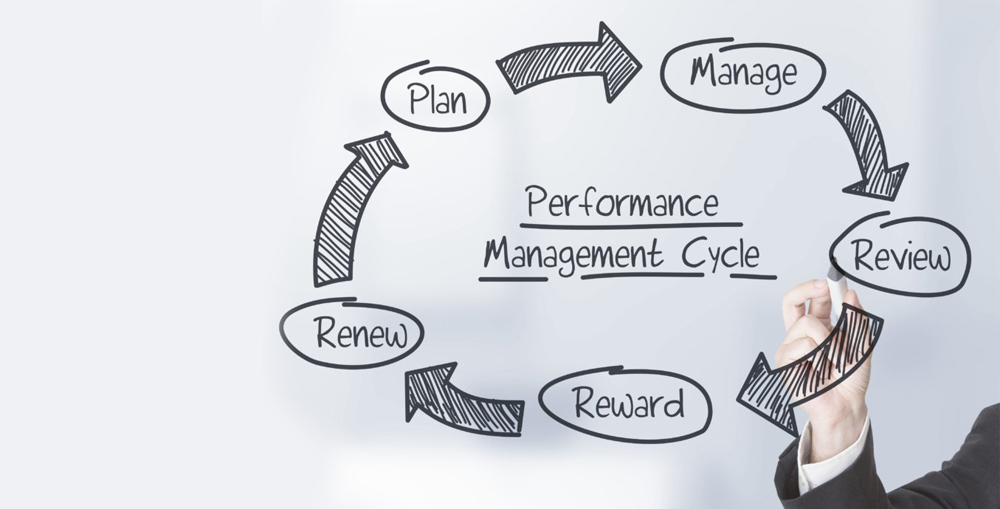
That is why businesses use a variety of software solutions to help them keep up with the ever-changing market trends. These software have revolutionized the businesses and their day-to-day operations. Whether it is off-the-shelf software or a customized software solution, it offers great many benefits for growing businesses. The automation is taking over gradually and the software and IT infrastructure have become a very valuable asset for any business. That is why the software development industry have also witnessed unprecedented growth across all fields.

Trends in custom software development in 2022

From the HR department to strategy making, from manufacturing to supply chain management and from marketing to customer relationship management, all business functions require a software based IT infrastructure to support their daily operations and to maximize the output of the business processes. No matter how big or small your operations is or to which industry or sector you belongs to, the software based solutions are absolutely essential to compete in the market. All software can be classified as COTS (commercial off-the-shelf or ready-made software), MOTS (modifiable or modified off-the-shelf software), GOTS (Government off-the-shelf software solutions) and custom software development.
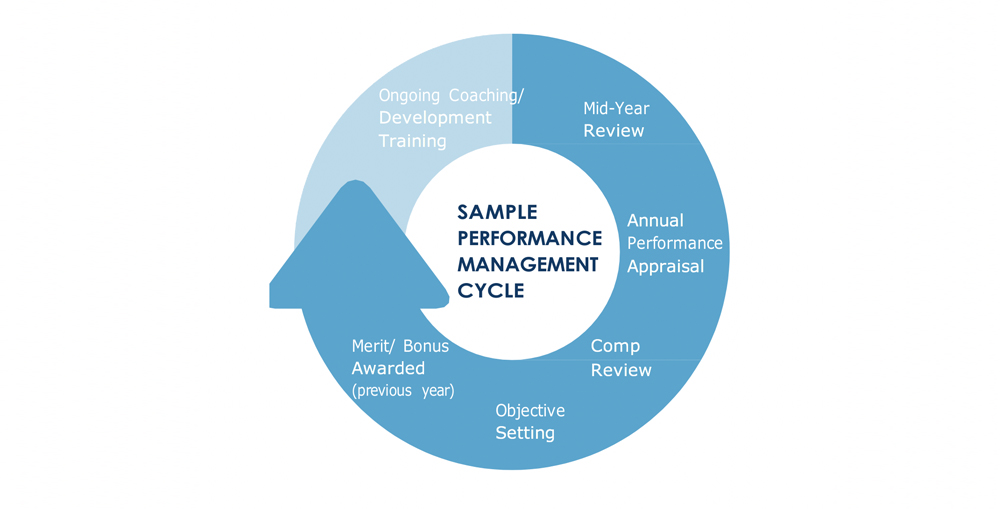
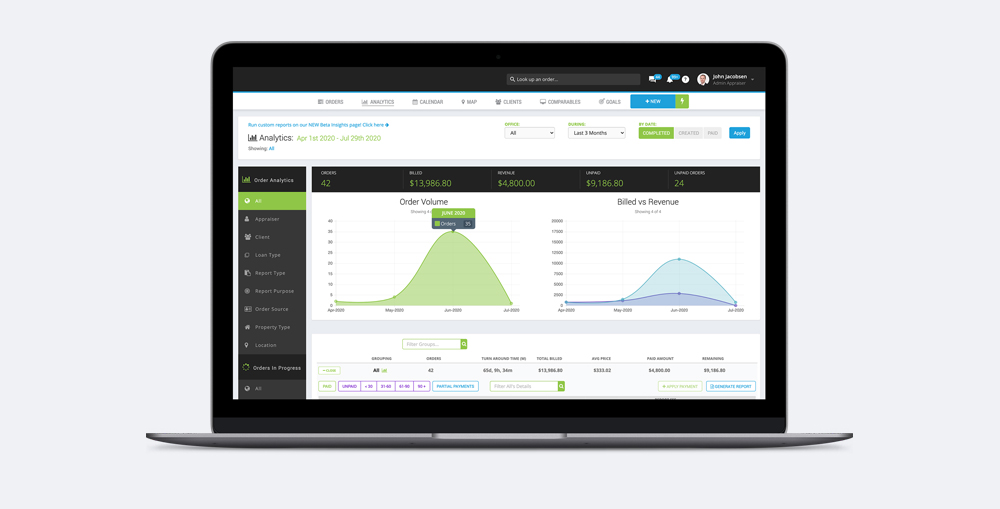

For COTS, MOTS, and GOTS the software infrastructure is built for general purpose, however, it can be modified to meet specific needs of the customer in some cases. Whereas the customized software development is totally tailor-made software solution which is exclusively developed and designed to meet the needs of a specific group of users or a business.

See Also: Why Off-the-Shelf Solutions Fall Short: Advantages of Custom Software Development

Trends in custom software development in 2022

Each software development type have its own merits and demerits however, the flexibility, control and excellent long-term ROI makes customized software development far superior than the others. That is why businesses in Dubai, UAE and all around the world are realizing the effectiveness and convenience of the customized software development resulting in huge growth in the market. When it comes to customized software development most of the time the businesses outsource them due to the limitation of the in-house IT department.

That is why businesses need to acquire knowledge about customized software and the latest market trends to be able to build a great high-performance software solution. Here are the latest trends and most disruptive technologies in customized software development in 2022 and most likely these all trends& technologies will remain relevant for the 2023 as well as for several more years in future.

See Also: The Cost of Custom Software Development: Factors to Consider

Cloud Technology

The cloud computing or virtual computing has proven to be one of the most disruptive technology which restructuring the IT landscape all around the world. According to a press release by Gartner the worldwide cloud market is expected to reach to USD 480 Billion by the end of 2022 which is almost 22% growth from the USD 396 Billion in previous year. With the increasing deployments of 5G technology all around the world, the cloud computing market is set to explode in coming years.

The main reason for cloud adaptation is the rising needs of computing power, rising expense of traditional data centers and flexible and cost-efficient plans for the cloud computing. The biggest advantage of cloud computing is on-demand based services. Businesses can get the infrastructure as per their needs, and they have to pay only for what they need, no more bundles and packages or rented servers. Which makes cloud technology more cost-efficient and an ideal solution to improve business efficiency and productivity.

See Also: Leveraging Big Data in Custom Software Development

Cloud Technology

Furthermore it provide huge storage capacities at a very cheap rates and the computing resources are also far superior then the traditional hosting.

Software Integration

There was a time when businesses were demanding only standalone systems and software. The integration was not as that popular because the standalone systems were enough. However, since past decade the markets have become more dynamic and changes are more abrupt. This requires excellent communication and quicker data processing. The market trends and the growing demand from the customers pushed businesses to develop inter-connected systems and more robust IT infrastructure. As a well connected IT infrastructure ensures seamless flow of information and empower data-driven decisions.

The integration enables different software to communicate with each other that also includes real-time data synchronization. Which makes customized software development an essential tool for digital transformation and growth in a competitive market landscape. The modern customer experience and customer expectations also demand interconnectivity at the user touch points. This compelled businesses to innovate more integrated and connected software solutions. The data that was previously stored on multiple isolated databases, is now available for all business functions instantly.

See Also: Step-by-Step Guide to Planning Your Custom Software Development Project

Software Integration

Some businesses use a centralized information system which gathers data from all connected systems and make it available whenever needed and wherever needed. This all is only possible with software integration. This trend is gaining more popularity since 2021-2022 and in fact in some cases multiple organizations also integrate their software to enable automated and instant data communication across different organizational networks. The software integration has evolved from a popular trend to a benchmark and industry standard in 2025.

Progressive Web Apps (PWAs)

The progressive web apps are a based on certain technologies that can utilize both the website and the native app features. It can be viewed in a web browser like a simple web app or website and it can also be installed on the supported operating system and can also work offline. Furthermore the Progressive Web Apps are built on advanced software platforms that can enhance user experience by providing them both an app and a website like experience.

The Progressive Web Apps can support push notifications, alerts and they can access the device hardware too which enable businesses to offer advanced features that add value and convenience to the user experience. Studies have revealed that the modern day consumers put user experience equal to the quality of the product. This makes customer experience a crucial aspect of the customer satisfaction strategy.

See Also: Custom Software Development Progressive Web Apps – Beginner’s Guide

Progressive Web Apps (PWAs)

The PWAs are created using multiple technologies that allow them to provide excellent cross-platform compatibility without any trade-off or losing user experience. The progressive web apps are software that are designed to enhance the efficiency and user experience but this doesn’t make them expensive and sophisticated, in fact with just a small investment a business can gain huge advantages for its customers and employees which eventually translates to higher productivity and profitability.

Artificial Intelligence Based Software

The rise in cloud computing and super-fast and efficient hardware development and need to process huge data is encouraging businesses and corporations to adopt to Artificial Intelligence (AI). That is why businesses all over the world are funding research and development in the field of artificial intelligence. The role of AI in custom software solutions can’t be denied anymore. In fact the use of Al (artificial intelligence), Smart Algorithms, Artificial Neural Network (ANN), customized AI Agents, LLM (Large Language Models), NLP (Natural Language Processing), and ML (Machine Learning) is increasing all around the world across all industries.

But unfortunately in Dubai and other parts of UAE or in fact all around the world there is a common perception about the Artificial Intelligence (AI),which is that it is a very expensive technology. The matter of the fact is it is somewhat expensive indeed, but still software developer can utilize them within their apps. The businesses who uses Artificial Intelligence (AI) as per their needs most commonly the AI based solutions are witnessing greatly enhanced user experience and acquire capabilities to analyze large volume of business intelligence data with extreme accuracy and efficiency.

See Also: How Customized AI Agents are Revolutionizing Business Automation
Artificial Intelligence Based Software

The AI and algorithms can be programed to help businesses understanding trends, patterns and even making future projections on the bases of historical data. The latest hardware is capable of delivering lightning-speed data transfer rates, which makes it possible for the AI based software to work efficiently. The artificial intelligence has become essential part of the search engines, social media, communication and digital marketing platforms. Businesses can now develop intelligent software on very economical costs and with greater efficiency.

IoT Based Industrial Software

The IoT or internet of things is a network of things, which are physical objects. These objects are also referred to as smart things or smart equipment. These things can be connected to a mainframe where pre-programed algorithms control them and take decisions, the smart devices have ability to communicate with other devices as well as to work on their own or by the instructions from the mainframe or server. These devices are usually equipped with smart software, sensors and other mechanical features.

The IoT is also known as smart home or office automation but its industrial application is rapidly increasing since 2022. We will see rise in IoT compatible software applications for both public and industrial sectors in the coming years. The use of IoT based devices in the industrial software and tools increase the work efficiency by automating data collection, processing and data analysis. Without the help of software these tasks require a lot of human resources with lesser accuracy.

See Also: The Future of ERP: Leveraging AI for Smarter Enterprise Management

IoT Based Industrial Software

Since upgrading an entire industry is a very expensive task and businesses often don’t do that. This compelled big technology manufacturers to develop intermediary devices which can act like a bridge between the older technologies and the newer ones. That is why the IoT based industrial software development has raised in 2022 and we are anticipating that the trend will increase in the coming years.

Blockchain and Web3 Based Software

The Blockchain and web3 is offering an alternate to the classical technology with more agility, transparency and security. Although the technology has been introduced in 2008 but in past few years it gain rapid adaptation by financial sector and many industries. It provide a de-centralized, secure and completely transparent platform which businesses have started using to upgrade their internal echo systems.

Obviously when we read or hear Blockchain the first thing that came to our mind is Bitcoin, however, the Bitcoin, Ethereum or any other crypto currency cannot exist without the Blockchain. Especially the application in the cyber-security and commerce are endless. Furthermore the financial sector, logistics, corporate sector and research institutions are heavily utilizing the potential of the Blockchain and web3 based custom software development.

See Also: Custom Software Development for Enhanced User Experience

Blockchain and Web3 Based Software

Regardless of the industry the Blockchain and web3 are used to transform the business models and offering decentralized solutions with added benefits of security, transparency and ability to create more revenue streams. The technology is still in its infancy however, since the beginning of 2022 we are witnessing a huge increase in demand and the trend could continue for many coming years in future.

Low-code or No-code Custom Software Development Platforms

The low-code or no-code custom software development platform are gaining huge popularity since past few years and since the beginning of 2022 these tools are becoming more popular as the awareness about such tools has also increased all across the cyber world. The biggest advantage of utilizing a low-code of no-code custom software development platform is the independence and cost-efficacy.

As hiring an in-house software development team or hiring a custom software development company is a very expensive feat. Businesses are diverting their attentions to the low-code or no-code customer software development methods and technologies. Again thanks to the advancements in the cloud computing and the artificial intelligence (AI) the low-code or no-code custom software development platforms become a possibility and also available for anyone worldwide.

See Also: The Role of AI Agents in Transforming Core Business Application Functions
Low-code or No-code Custom Software Development Platforms

Rather building a custom software from scratch and doing programing and source code the businesses can chose an appropriate platform that allow them to create customized software with the help of a very intuitive UI (user interface), mostly the drag and drop is enough to create a basic level web app or mobile application.

The process is extremely quick and cost-efficient which is another reason of the increasing popularity of low-code or no-code custom software development platforms. When it comes to custom software development, businesses often chose to get them done by inhouse teams. Both the in-house and outsourcing have its own benefits, but it is better to engage with a professional software development agency, such as RSI Concepts to ensure good quality and better ROI.
Conclusion

The custom software development provides much more flexibility, control and freedom comparing to the commercial off-the-shelf software solutions. That is why more and more businesses are now investing into customized software development instead of acquiring an off-the-shelf solution. However, many businesses and organizations in Dubai, UAE are not as that familiar of the potential of the customized software development. In this blog we have mentioned a few popular trends in the customized software development.

These all trends are most likely to remain popular throughout the 2022 and for many more coming years in future. With the ability to tailor-made a solution 100% as per your needs can boost its efficiency and impact. That is why businesses can utilize the customized software development to bring in innovative solutions and ideas that can provide them much needed competitive edge. Competitive advantage and exclusivity could be a game changer for any business.

RSI Concepts is a leading brand name in customized software development in Dubai, UAE. If you want to learn more or if you want us to help you with your next customized software development project, please feel free to contact us through our Contact Us page or leave a comment in the comment box below and we will get in touch with you soon.

See Also: How to Develop Customized Enterprise Performance Management Software?