BLOG OF RSI CONCEPTS

world map

Types of Cloud Computing Services

Types of Cloud Computing Services

There would be only a few businesses that could survive without technology in the modern day and age. Here in Dubai or anywhere else in UAE even if you are a small grocery store you would still be needing a POS any business bigger than that can’t even perform their day-to-day operations without utilizing some kind of technology. For example, the modern retail industry, healthcare sector, education sector, manufacturing industries, financial institutions, private and public offices, government departments and any other business sector that one can think of is impossible without utilizing technology.

The technology has become the foundation of a modern business, whether it is a simple digital/computerized sales system for a small grocery store or a sophisticated AI (artificial intelligence) based software solutions for the manufacturing industry, every business needs some kind of technology to operate effectively and efficiently. This is because the complete marketplaces have evolved, everything become quicker and the need of information and data has risen greatly. The digitalization and automation has become the backbone of the businesses and offers great advantages.

See Also: Software vs Web Development – what is the difference?

Types of Cloud Computing Services

It is not that the demand and need of integration of the technology have increased but the technology have also evolved over the time. Earlier what was done using paper and pencils is now been done through computers, the bulky files and ledgers have been replaced by the computer files and online data networks. The time that was required to search from manual registers and files could be from a few minutes to a few hours, or even longer for large scale organizations. This time has now been reduced to a few seconds, the efforts that required to go through tons of paper files have been reduced to a few buttons on a keyboard and a few clicks. This is what motivated businesses to replace old paper-pen processes with digital and more convenient processes.

Over the time the technology have evolved from an advantage to need and now it has become an essential for a business. Without implementing adequate technological solutions a business can’t sustain its operations anymore. The cloud computing is one of the most modern and highly efficient solution to the modern day’s needs and problems. In this blog we will discuss how it works and the different types of cloud computing to help our audience chose the right solution for their needs.

See Also: Comparison between COTS and Custom Software Development

Types of Cloud Computing Services

What is Cloud Computing?

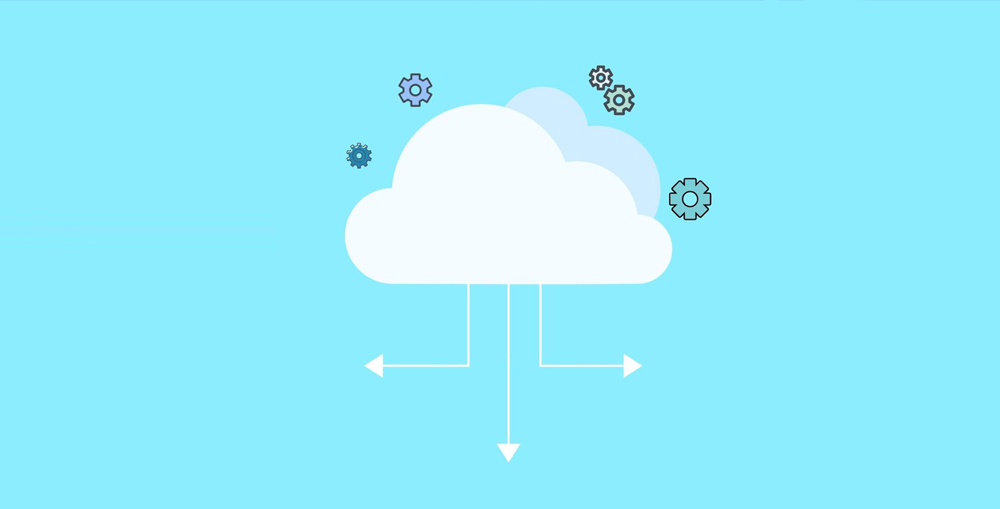
A cloud computing is an on-demand based service that offers computing resources, storage capacity and databases and doesn’t require any direct user management. The on-demand availability also offers a pay-as-you-go business model which is very beneficial for the businesses hence they don’t have to deploy and manage physical data centers, servers or networks. Basically the cloud computing enables businesses to consume IT resources as a utility, hence they will only have to pay for what they are using without any worry about any limitations or technology barriers which are present in all other hosted services’ business models.

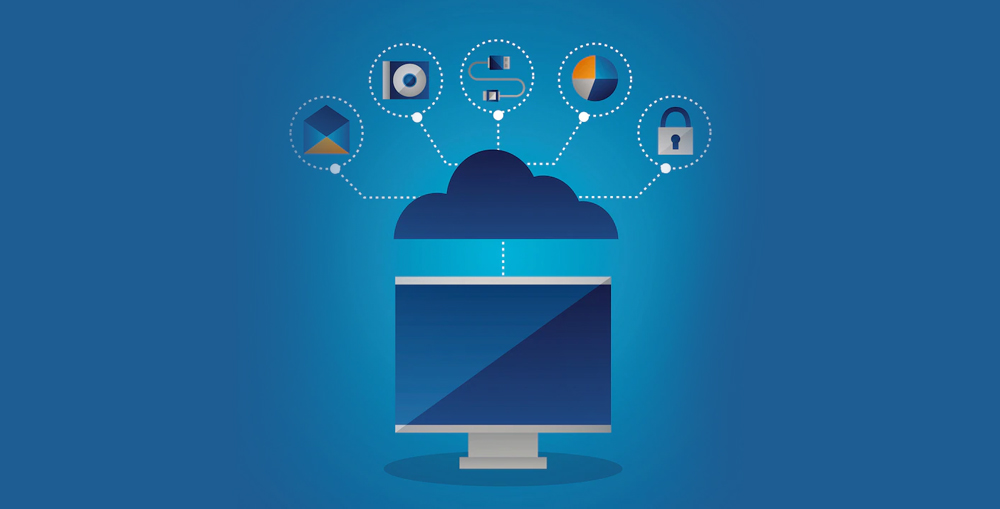
The cloud computing allow the client devices to access the data center and all its resources such as computing power, storage or databases from a remote location while the physical data center is located at a different location. The cloud computing is used by individuals and businesses to store their data, or set a backup or disaster recovery, access computing resources, test and implement software and customer facing applications.

In a nutshell the cloud computing allow you to access high-end computer resources and data centers which are not physically located at your location. Above all the cost of a cloud computing solution is far less than managing your own data centers and physical servers.

See Also: The Impact of Cloud Computing on Custom Software Development [Full Guide]

What is Cloud Computing?

How Cloud Computing Works?

There are two parts of the cloud computing system, the frontend and the backend, the frontend is the client who use browsers, internet or other tools to access the backend which is the computer resources, network, storage and databases at a remotely located physical data center. Hence the backend not only serve as a storage that can be accessed by the client through frontend but the backend also provide additional features which allow the client to deploy different software and applications as per their needs. The communication between the backend and frontend is automatically managed by a mainframe or central physical computer server which is also located in the actual physical data center.

This central server follows pre-set protocols, software and specialized tools to facilitate the data transfer between the client and the physical server. The cloud computing heavily rely on automation and virtualization which enables it to offer intuitive self-service features for the users. It is the automation and virtualization that make cloud computing the most convenient and appealing service model for all types and sizes of the businesses. The cloud computing also offer easy access to a large variety of technology and platform which is extremely expensive and nearly impossible in case of a traditional data-center environment.

See Also: Which Software Development Trends Yield Success in 2024?

How Cloud Computing Works?

Different Types of Cloud Computing Services

The cloud computing is a highly advanced technology and due to overwhelming global adaptation the research and development processes has greatly improved and now the cloud computing is becoming more reliable, improved, fast and convenient day-by-day. The rapid and large-scale adaptation also make the technology accessible for small and medium size businesses and in Dubai and all around the UAE the cloud computing is getting popular among all types and sizes of the businesses.

The market signals are showing that this trend will continue for 2023 and even beyond. When it comes to the types of the cloud computing there are different aspects that differentiate one cloud computing platform from the other. There are two distinct classifications based on the deployment models and the service models. Here are different types of cloud computing based on these two classifications:

See Also: Custom Software Development for Enhanced User Experience

Types of Cloud Computing on the Bases of Deployment Models

The cloud deployment model is basically what defines the services you will be able to use and who should be responsible for managing them and it also dictates the terms for the relationship between the cloud architecture and the users. Most of the times when we think about cloud we think that it is about utilizing the computer resources, storage, databases and network which are managed by the service provider and the business who uses them has nothing to do with the management and responsibilities of the actual data center.

However, that is just one type of the deployment model, there are several other types of cloud computing deployment models. Here are the most widely used cloud computing deployment models:

Cloud Computing Deployment Models: Public Cloud

The public cloud deployment method is one of the most widely used in Dubai and all around the UAE in fact all around the world, it is easiest to manage and it is also the most cost-efficient cloud computing deployment model. The public cloud deployment model means that you will be using all the computing resources that you need without managing the physical hardware, network or data centers and these will be managed solely by the service provider. The public clouds are available for general public, it means that anyone can use it and there will be other businesses who will also be using the same physical hardware and resources. That is why it is also referred to as multitenant or multitenancy model. The biggest advantages of a public cloud is its flexibility to resource utilization, efficiency and low cost.

Usually businesses opt for a public cloud for their heavy-load applications and software. However, in any real scenario the peak load occurs only for a limited time during the day or any other time interval. In order to effectively deal with the peak load a business will have to equip its servers, networks, etc. with the capacity to bear the peak load. It also means that for most of the time your infrastructure and resources will be unutilized, and in order to handle the peak load effectively you will have to invest a lot in the infrastructure which can raise the cost to several time.

The public cloud on the other hand will only cost you just a fraction of that and will effectively handle your peak load with ability to automatically scale up or down the resources you need.

See Also: The Cost of Custom Software Development: Factors to Consider

Cloud Computing Deployment Models: Public Cloud

Cloud Computing Deployment Models: Private Cloud

As the name suggests, the private cloud is totally different form the public cloud as in case of a private cloud only one organization or enterprise will be using a dedicated cloud computing environment and no hardware or resources will be shared with any other business or enterprise. It might looks like the private cloud is similar to the local/in-premises data center however, the key difference between a data center and a private cloud is the methods and technologies used for the management and resource provisioning. Furthermore the private cloud also offer high-level security as the only tenant of the environment will be your organization so the chances of exposing the sensitive data are slim to none.

The private cloud also offer more control and authority over the environment and it is far more cost-efficient than the traditional in-premises data centers. Although the cost is higher comparing to a public cloud but the private cloud offers highest levels of security and data protection along with added benefits of a public cloud environment and easy access to resources for scalability and other needs. The private cloud will allow you to utilize resources like a public cloud, but it will offer exclusivity of tenancy, and dedicated hardware resources which are isolated from other tenants.

Usually a public cloud provider can also offer you a private cloud service by isolating your hardware and resources from the rest of the cloud. The biggest advantage is that you don’t have to acquire any hardware and you don’t have to worry about the management of the hardware but you will still get the dedicated hardware for your needs.

See Also: Step-by-step Guide to Develop Custom Enterprise Software

Cloud Computing Deployment Models: Private Cloud

Cloud Computing Deployment Models: Hybrid Cloud

The hybrid cloud deployment is a combination of both public and private cloud models. As businesses in Dubai and all around the UAE have already done considerable investments in their in-premises data centers, it is nearly impossible to discard all that immediately and move on to a purely cloud computing environment. Apart from the cost factor there are other limitation too, such as some businesses are using customized software and application which are not always compatible with the cloud computing environment, some businesses are still using outdated tools in their local networks, which might not be able to migrate to a cloud and so on.

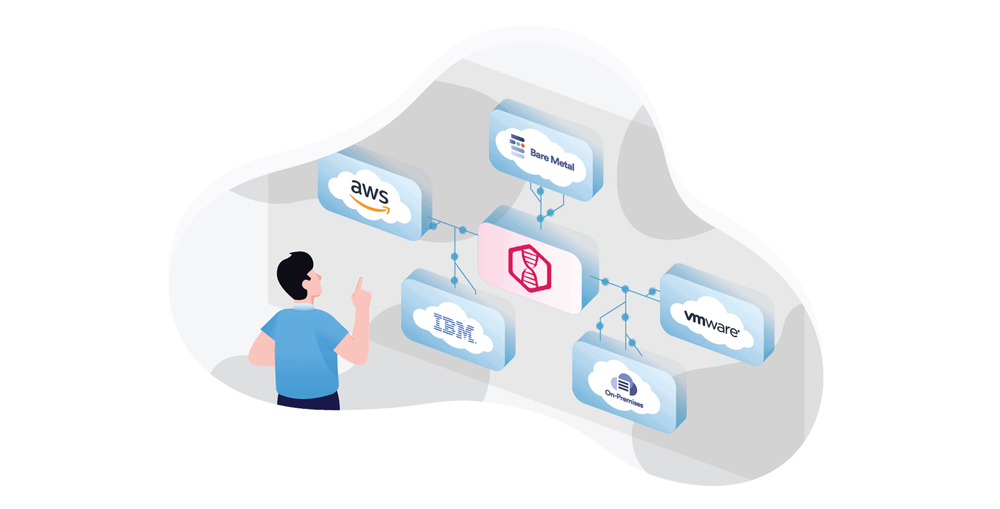
The hybrid cloud deployment model allow businesses to utilize a public cloud alongside with their in-premises hardware and establish a strong connection between their public cloud and in-premises data center so the both works as a single system. Businesses also adopt to a hybrid cloud model to slowly transition from the in-premises data center to a cloud computing environment. This transition can be slow and gradual and businesses can slowly move their entire environment over the years to cloud.

Another very common reason to opt for a hybrid cloud computing environment is due to the security requirements, some businesses and organizations can never operate in public cloud due to their strict data protection needs and policies that is why they chose a hybrid cloud computing environment to leverage the benefits of the both cloud and the in-premises data centers.

See Also: Why the Custom Software Development is Good for Your Business?

Cloud Computing Deployment Models: Hybrid Cloud

Cloud Computing Deployment Models: Multi-Cloud

The multi-cloud deployment method is somewhat similar to the hybrid cloud deployment method. As the name suggests, the multi-cloud deployment means a business is using multiple cloud services from multiple vendors and there is an established connection between these cloud environments. Majorly there are only two reasons a business opts for a multi-cloud deployment, first is if they need one service from one cloud service provider and another service from another cloud service provider. Another reason to opt for a multi-cloud deployment method is to maximize the redundancy of the software and applications you are hosting in the cloud environment.

In 2023 there has been several technological advancements and the cloud service providers have significantly improved the availability of their public clouds however, there are certain sensitive applications and software which require more redundancy and higher availability that is why the multi-cloud is a better option to maximize the redundancy of the hosted software or application. Furthermore different cloud computing platform have different pricing model and offer different cost-to-value ratios.

For example, the Microsoft SQL server could be much more cost-efficient with the Microsoft Azure than with any other cloud service provider and so on. Similarly different cloud service providers offer different services which is why a business opts for multiple cloud service providers to optimize the cost and the benefits of their cloud environment.

See Also: Custom Software for Improved Business Efficiency

Cloud Computing Deployment Models: Multi-Cloud

Cloud Computing Deployment Models: Community Cloud

The community cloud is a slightly less common type of cloud computing deployment method. In community cloud there are multiple businesses who uses same cloud, but the number of users is limited. As there are multiple businesses who can use this cloud hence it is not a private cloud, but as it is not available for public but only for a limited number of businesses or organizations so it is not a public cloud either. The community cloud deployment is something in between public cloud and private cloud deployment methods. The community cloud deployment is used by the businesses with almost similar concerns and interests, all businesses who are member of the community follow same set of security protocols.

The community cloud is usually owned and managed by a member of the community or multiple members of the community. It can also be owned and operated by a third-party or it can be managed and operated by a combination of both third-party and community members. The community cloud can be on-premises or at a remote location as well. The hardware and all resources are shared by the community members and the community cloud is set as per the requirements of the members, although in a realistic scenario there could be a few tradeoffs for the community member in order to optimize the environment’s features and cost.

Some cloud service provider also utilize virtualization and automation to design a software-based communities by isolating certain hardware infrastructure and making it exclusive for the community members.

See Also: Why Laravel Framework is gaining popularity in Software Development?

Cloud Computing Deployment Models: Community Cloud

Types of Cloud Computing on the Bases of Service Models

The cloud deployment models are about the cloud architecture and resource management, regardless of what deployment method you opt for there are several cloud services that a business will be needing to utilize the cloud, these services are based on the needs and requirements. For example let say you need to use Apache and MySQL, you can acquire a cloud VM machine which will allow you to install both Apache and MySQL in the server, in that case you will be responsible for managing these two services, such as optimizing them, updating them and upgrading them, etc.

However, you can also acquire a cloud where the Apache and MySQL are offered as services, in that case the cloud service provider will be responsible for optimizing, managing, updating or upgrading the Apache and MySQL for you. There are several other different methods of utilizing the cloud computing resources. Here are the most popular cloud service models:

See Also: Developing Secure Custom Software in a Cyber Threat Landscape

Cloud Computing Service Models: Infrastructure as a Service or IaaS

The infrastructure as a service or IaaS is one of the most popular service model. As the name suggests you will acquire a cloud where all the hardware, servers, networks and storage is managed by the cloud service provider or vendor and you will have to do the rest. The infrastructure as a service or IaaS model will offer you full control even the ability to install the operating system of your choice on the servers and will allow you to manage each and every installation, software or services you want to implement on the servers without being worrying about managing the hardware, servers, networks or storage.

If you need high-level access and full control to the servers and their operating system, then the infrastructure as a service or IaaS is much more cost-efficient comparing to having an in-premises data center. Under infrastructure as a service or IaaS service model the vendor or cloud service provider is responsible for managing the hardware and ensuring a high-availability infrastructure to the users/businesses who are opting for IaaS service model. All popular cloud service providers offers great tools to install any operating system of your choice within minutes and you can also have a VM up and running in minutes without worrying about additional resources or upfront cost for the machine.

The infrastructure as a service or IaaS service models are ideal for deploying software and application that usually require an on-premises like control and configurations, as the IaaS will provide you full control over everything. The IaaS are also very popular for building high redundancy environment, setting up backup and recovery solutions or creating clone or test environments.

See Also: The Role of AI in Custom Software Solutions

Cloud Computing Service Models: Infrastructure as a Service or IaaS

Cloud Computing Service Models: Platform as a Service or PaaS

The platform as a service or PaaS cloud service model is one of the most commonly used service model and is fairly popular among small and medium sized enterprises in Dubai and all around the UAE. The platform as a service or PaaS service model offer a cloud platform where the hardware, network, servers, storage, operating systems and the software installed on the servers are controlled, managed and maintained by the cloud service provider or vendor. The businesses can utilize the platform as a service with added advantages of the dynamic scaling at a low cost billing plans.

The greatest strength of the platform as a service or PaaS is that it offer a highly efficient, optimized and well-managed platform however, the biggest drawback of the platform as a service or PaaS is that it limits you to one platform. However, you can install whatever you want to install in that platform or you can deploy you required software and applications that runs on that platform. The maintenance, updates, upgrades, hardware, network and even the security is managed by the cloud service provider which makes it much easier for smaller and medium sized enterprises to utilize a platform with seamless performance and highly flexible scalability features.

The platform as a service or PaaS support only one development environment or programming method and offer great performance along with automated backup and recovery services. The platform as a service or PaaS is a highly cost-effective cloud computing service.

See Also: Advantages of a Custom ERP Software Development

Cloud Computing Service Models: Platform as a Service or PaaS

Cloud Computing Service Models: Software as a Service of SaaS

The software as a service or SaaS is a cloud service model with which all layers of the cloud are managed by the cloud service provider or the vendor, a business or user has to do nothing in order to make prepare, manage or control the environment, in fact they can use it right way without doing anything. All of the hardware infrastructure, networks, servers, storages, and everything is managed by the cloud service provider, they also manages the operating system and any other software that you might be needing to install on the servers. The backup, security patches, upgrades, updates, data protection, backups, redundancy, recovery, etc. everything is the cloud service provider’s responsibility.

The biggest advantage of the software as a service or SaaS service model is that it completely set you free from any technical management task, everything is managed by the vendor itself. For example if you need a Microsoft SQL or MySQL server, all you need to acquire it, there is no need to setup, install or configure anything, you can start storing data right away. However, the biggest disadvantage of software as a service or SaaS is that it is difficult to migrate to other servers from one server or from one service provider to another service provider.

The software as a service or SaaS offers high level of security and data protection, it offers more convenient experience and it is very easy to operate. Usually the cloud service providers use software as a service or SaaS to offer specific applications or software on subscription bases, which makes it cost-efficient but the scalability and upgrades depends on the service provider.

See Also: Key Features of an Enterprise Application Software (EAS)

Cloud Computing Service Models: Software as a Service of SaaS

Cloud Computing Service Models: Function as a Service or FaaS

The function as a service or FaaS is also knows as server-less cloud computing service model. The function as a service or FaaS is usually utilized by the software and application development teams. It allow development teams to develop, test, run and manage software application in a cloud computing environment. The development team doesn’t have to worry about the minute details of the server management, or its operating system or anything else. The fully-managed cloud computing servers are provided hence the complexity associated to server logistics is eliminated from the software development, operation and management processes.

The function as a service is a relatively newer cloud computing platform but it offers great value. It allow application developers and architects to deploy any individual function without getting involve into the server and network management tasks or anything of that sort. Hence the web servers, operating system, networks and all hardware is managed by the cloud computing service provider the software or app developers can focus on more important things that are needed for the development process.

That is also why it is called Serverless cloud computing platform. The function as a service or FaaS also offer dynamic scaling and allow automatic upscale and downscale which means that the businesses will only have to pay for the resources which they used at one point or another.

See Also: How to Develop a Custom Property Management Software?

Cloud Computing Service Models: Function as a Service or FaaS

Key Advantages of Cloud Computing Services

The cloud computing services have gain huge popularity in past decade in Dubai and all around the UAE. Businesses in the country are utilizing several modern technologies however, the hosting and cloud computing is something that was mostly not available in the country, however, now the cloud services are available within the UAE and the service providers also have data centers located within UAE. The modern cloud computing platforms are offering great advantages for local and multi-national businesses in the country. Here are some key advantages of the cloud computing:

  • The cloud computing services offer the software development teams to quickly test their innovative ideas and quickly market their products without being worried about the lengthy hardware procurement processes or time consuming tasks such as setting up the environment for their new applications.
  • Another great advantage of cloud computing is its flexible approach towards scalability, a business can easily upscale or downscale their resources, computing power, storage or network without worrying about the hardware management or any such problem.
  • The cloud computing services also offer high-level security and data protection and make your data available to you or your employees from anywhere in the world. The ability to offer almost all on-premises datacenter’s features via online can help businesses drive agility to their processes and methods.
  • The cloud computing services are much more cost-efficient than a local or in-premises data center. Above all the upgrades, server management, and the hardware management and maintenance, everything is taken care by the cloud service provider.
  • The cloud computing services offer advanced levels of security as they have access to the highly-skilled security staff, and they keep the hardware, software, operating systems, networks and everything in between up-to-date all the time.
  • The cloud computing services offers great data recovery, backup and disaster management policies and processes. The data is stored carefully on multiple locations, the recovery process is much faster and great features to deal with hardware failures to prevent data loss.
  • The cloud computing services can offer full control at your applications, sensitive data, hardware, operating system, security features and other relevant features. Above all it can also offer any level of control as per your needs and availability of the technical skills. If you don’t want to manage the infrastructure you can get fully-managed cloud computing environments.

Businesses in Dubai and all around the UAE in 2023 will keep on adopting cloud computing solutions due to its excellent flexibility, management, control and highly cost-efficient payment plans.

See Also: Benefits of Investing in Custom Software Development for Your Business in Dubai

Key Advantages of Cloud Computing Services

Conclusion

The technology and IT solutions have become an essential part of a modern business’s operations. No business can properly function without aiding from digital and technological solutions. Every business needs a robust, reliable and cost-efficient IT infrastructure, however, building and maintain in-premises data centers is a very expensive and complex ordeal. The technology is rapidly advancing, the IT infrastructure also has to be updated and upgraded over the time. The cloud is one of the best solution for modern needs and fast-paced advancements in the IT industry. Furthermore it is very expensive to operate an in-premises data center, the online hosting platforms are inefficient and have certain limitations.

However, the cloud is a highly user-friendly and most flexible platform, if you don’t want to get engaged in hardware, server, network and storage management, you will get it done by the cloud service provider, if you need only a software as a service, you can get it with cloud. If you want to gain control of the operating system of your server or any layer of the infrastructure, it can be done easily with the cloud-computing platforms.

The cloud computing platform also allow businesses to use IT resources as a utility and only pay for what you need and use. These benefits make it far more superior than traditional hosting and in-house data center management practices. The purpose of this blog was to help our audience understand the cloud computing platforms and difference between different types of cloud computing. If you want to learn more about the subject or if you want our help to support you in acquiring a cloud computing solution for your business, please feel free to contact us through our Contact Us page or leave a comment in the comment box below and we will get in touch with you soon.

See Also: Security Challenges and Solutions in Payment Kiosk Systems

See Also: Why a Virtual Queuing System Is Better Than Clipboard and Pen


Must have features of a Queue Management System

Businesses who deals with daily footfall understand the importance of waiting line management. In any given day there would be a time when the footfall would be very high, this time period is also known as peak hours, which would indicate the maximum footfall. It is those peak hours when the influx is high the crowd forms. The crowd formation lead to a nightmarish situation for the staff and the management. Managing large influx could be a very challenging task. For that business hire new staff, allocate more resources and might also adopt technological solutions. This also makes queuing very expensive.

However, a business must have a queuing process to manage the waiting line and to organize the customers and visitors. A digital queue management system is a very effective tool to manage waiting areas, transitioning from chaos to control, businesses can greatly elevate efficiency and customer experience. Managing waiting line will help businesses to improve customer flow and reduce customer wait time. The queue management is also essential for customer experience. The customer experience is the most important part of any business’s strategy.

It is extremely important to ensure a happy and satisfactory customer experience. A satisfied customers turns into loyal one and customer loyalty is essential for long term sustainable growth and profitability.

See Also: How a Queue Management System Can Transform Your Business Operations

Must have features of Queue Management System

When it comes to queue management, the earliest form of queue management systems were just making line which were usually served as first come first served bases. Later on the clipboard and pen method was introduced all around the world, in fact many businesses from all around the world are still using this method. However, it turns out to be very inefficient, especially for the modern digital world the manual waiting line management is too outdated. That is when paperless or the digital queue management systems were introduced. The digital queue management systems have also evolved a lot over the past two decades.

Here in Dubai and all around the UAE the markets are slightly different, it is actually due to rapid growth, tougher competition and savvy customers with sky-high demands and expectations. This encouraged both businesses and vendors to come up with more advanced, innovative and efficient queue management systems. When you seek to acquire a queue management system in Dubai or anywhere in UAE you will find tons of options. One can easily get overwhelmed with the sheer number of designs and models advertised all over the market. That is why in this blog we will list all essential and important features of a queue management system that you must consider while acquiring a new queuing solution.

See Also: What are the Basic Components of Queue Management System?

Must have features of Queue Management System

Important Features of a Queue Management System

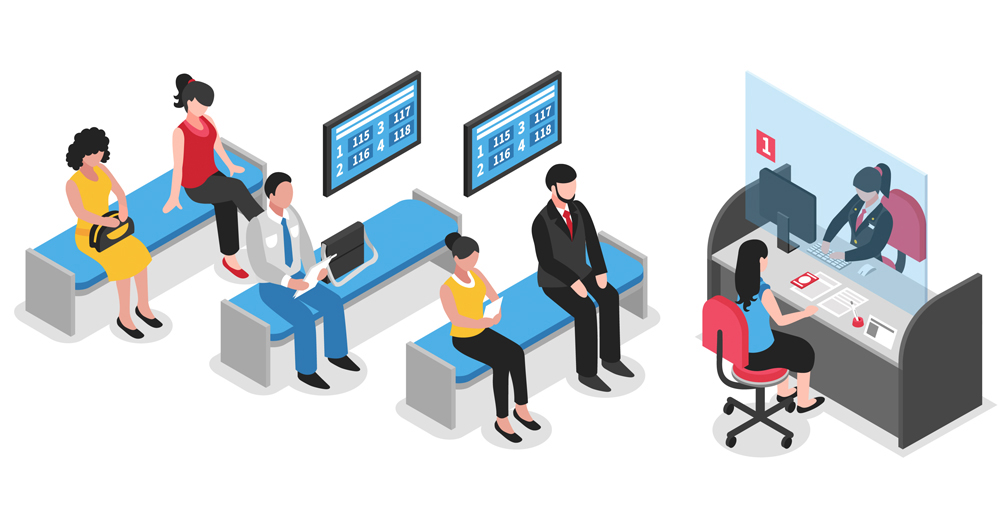
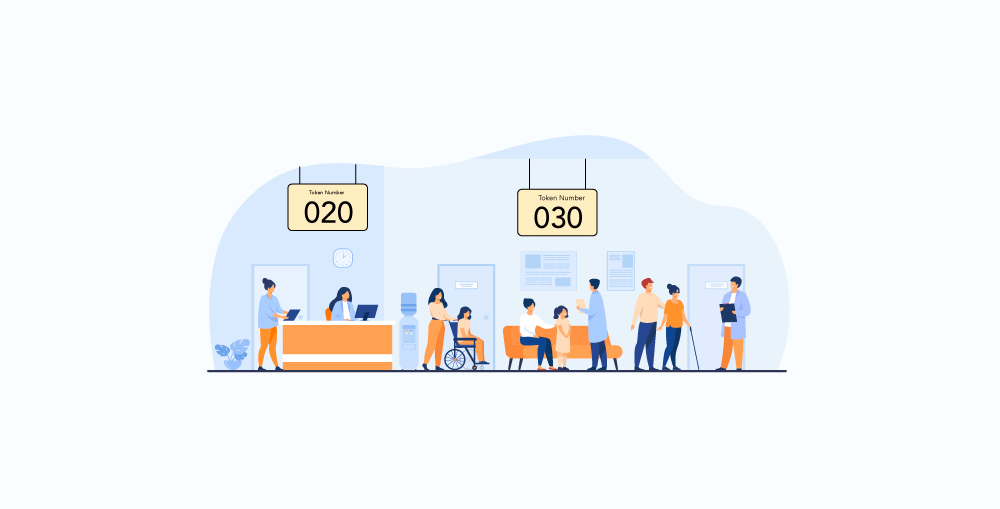
Before we discuss the important features of a queue management system it is important to understand what a basic digital queue management system is. A digital queue management system consists of two parts, one is the software and the other is the hardware. The queuing process starts with the customer or visitor signing up for the queue via ticket dispensing self-service interactive kiosk and they system issued them a ticket containing their position in the queue and the estimated time to their turn. The system also have audio-visual announcement module which makes announcements at each customer calling and also provide basic queuing details at a large signage screen.

When the customer’s number is called they reach to the designated counter, get served and leave. Some queue management system also provide a customer feedback collection module which request customers to submit feedback before leaving. Furthermore the queue management system automates several steps of the customer journey and have ability to collect valuable business intelligence data which help management analyze and improve relevant processes and work flows.

See Also: What are the Different Types of Queue Management System?Important Features of a Queue Management System

When a business decides to acquire a modern digital queue management system they can easily get overwhelmed with the sheer number of options and vendors available in the UAE. This could be confusing and very challenging for the management, here are the key features that you should consider while selecting a queue management system for your business to ensure maximum performance and impact.

Features of Queue Management System: 1. Essential Hardware Components

The queue management system is built on very effective and efficient technology platforms. There is no maximum limit of hardware component but there is a minimum limit. The queue management system technology is widely available and utilized hence it makes it easier to find a tons of hardware accessories which enable businesses to offer more innovative and convenient features. Here is a list of basic hardware components that are essential to operate a digital queue management system:

  • Ticket Dispensing Unit or Ticket Dispensing Interactive Self-Service Kiosk
  • Digital Signage Screens and Displays
  • Announcement System
  • Counter Plates or Counter Displays

The quantity of the hardware depends on the size of the service center and other details. Such as if the waiting area is small then only 1 digital signage is fine, it waiting area is larger than we might need 2, furthermore if the digital signage is not visible from every part of waiting area then we will also require to install 2 of them and so on. Similarly the interactive self-service ticket dispensing kiosk, counter plates and/or any other hardware quantity is determined.

See Also: Queue Management in Banking: Enhancing Customer Experience

Essential Hardware Components

Apart from essential hardware components there are several other factors that also cause businesses to have a different hardware configurations. There are several other hardware components and accessories that can also be installed. For example if you want to fetch the customer identification details at the sign-up process than you might require an Emirate ID Card Reader, an RFID or passport scanner, barcode reader, document scanner, etc. All those hardware accessories can be integrated with the interactive self-service ticket dispensing kiosk. Similarly business could have different needs and processes hence they might need different types of hardware which they can integrate in the system to maximize its usability and functionality.

Business also frequently use customer feedback collection for that they can integrate separate hardware devices in the system such as touch screen tablets, interactive kiosks, etc. The touch screen and tablets are usually used at the counters or near the service counters, the kiosks are usually placed at the exits or in easy-to-reach place where most of the customers and visitors can see them. These hardware can also be integrated with the queue management system if needed.

See Also: Touch Less Customer Experience, Use the RSI Queue Management System

Essential Hardware Components

Features of Queue Management System:2. Essential Software Components

The queue management system software is the core application which process all the data, take instructions and perform the queuing tasks. The queue management system software is a server-side application which contains all the source codes, algorithms and processes required for the system. The core application can be accessed by multiple interfaces which are exclusively designed for different user groups.

  • Customer UI
  • Service Agent Dashboard
  • Administrative Dashboard

The customer user interface (UI) is accessible from the interactive self-service kiosk which is used for sign-up process and it also dispense the tickets. Furthermore the customers can be provided with additional features via this UI which are available. The service agents also got their dedicated dashboard which is designed for them. The service agent dashboard offer several useful options via an intuitive UI. The service agent’s dashboard is designed to help and facilitate several agent’s tasks such as pre-sale, post-sale tasks, customer calling, queuing information, customer rerouting features, etc.

Then there is an administrative dashboard which is the back office of the system and is designed for the IT and the management. The management can get live queuing data, historical data, performance data, analytical tools, and features to manage the content, configurations and processes of the queue management system. These all are basic software components but businesses can have more features as per their needs.

See Also: Importance of Queue Management System for Government and Public Offices

Essential Software Components

Features of Queue Management System:3. Automated Customer Flow Management

The biggest advantage of a digital queue management system is that it helps automating the customer flow and improve customer experience by reducing customer wait time and improving the efficiency of the employees. However, many businesses doesn’t realize that this automation can be extremely useful if it also allow them to customize the processes as per their needs or situation. Usually a digital queue management system have basic configuration which allow businesses to implement their queuing policy and the smart algorithms automates the entire process. A good queue management system will also provide you customization features which will enable you to configure a lot many details of the process.

It also gives businesses more control over their queuing policies and make it easier to implement a customized queuing policy. This also involved special need scenarios, for example at an event or occasion when you are expecting massive footfall you can implement an entirely different queuing policy for a limited time period and later resume to regular procedures. Similarly the queue management system software is based on AI (artificial intelligence) and smart algorithms which enables it to analyze queuing data in real-time and take decisions in real-time to reroute customers to ensure maximum efficiency and to optimize the wait time and performance. All such features are an indicator of a good high-performance queue management system.

See Also: Queue Management System for Trucks and Logistic Centers

Automated Customer Flow Management

Features of Queue Management System:4. Virtual Queuing

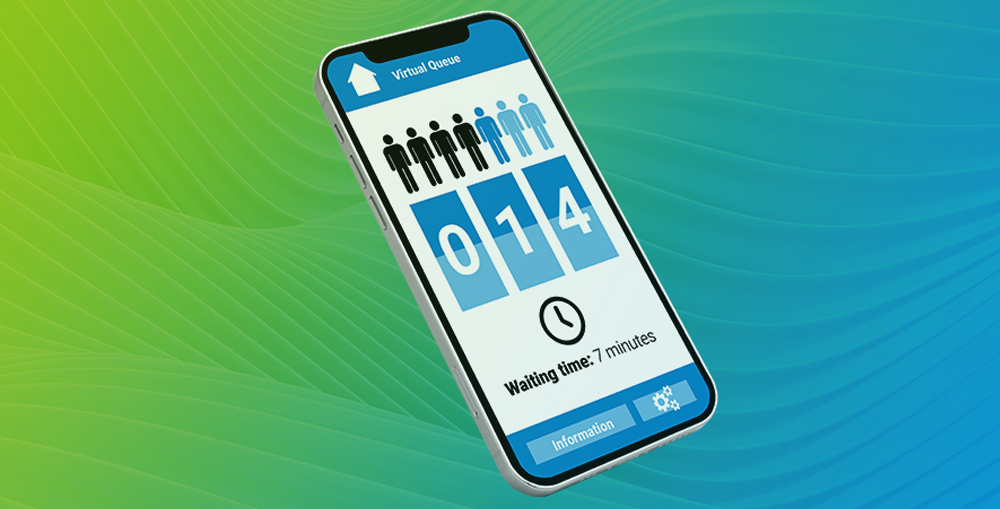
The virtual queuing is one of the modern form of queue management process. The virtual queuing gain huge popularity in Dubai and all around the UAE in past few years. Businesses and customers both are admiring it because of its great benefits and excellent efficiency. The virtual queuing involves integrating digital channels and remote mediums which allow customers and visitors to interact with the queue management system without being physically present at the business premises. That is the major difference between the traditional queue management systems and virtual queue management systems.

Customers and visitors are allowed to sign-up for virtual queues using remote channels such as website, QR code, customer portals, mobile phone applications, SMS, Email, Call, etc. The customers are issued an e-ticket which contains their position in the queue and estimated time to their turn. This means that a customer or visitor can sign-up for the queue while sitting at their home or office. Then they can plan their travel accordingly to spend least time at the waiting areas. That is why the waiting time for the virtual queue management system is very short and in fact in some cases it is literally none.

There are several other benefits of virtual queuing such as live queuing updates via website, customer portals, SMS, WhatsApp, mobile apps, etc. Alerts and notifications are also very useful and the customers and agents can communicate as well. In general the virtual queuing offers an excellent customer experience and much higher customer satisfaction than any traditional digital queue management system.

See Also: Queue Management System and Predictive Waiting Time

Virtual Queuing

Features of Queue Management System:5. Third-Party System Integration

Whenever a business acquires a new software based solution they always consider the capabilities and limitations of the third-party integration feature. Similarly when you are acquiring a digital queue management system you should also make sure that it will offer adequate support for third-party system integration. The third-party system integration is basically a technological solution to enable two separate and standalone systems to communicate with each other. Both systems can share data and synchronize instructions to maximize the efficiency, performance and capabilities of the systems. The third-party system integration depends on the technology, programing techniques and the structure of the software.

Some closed-source software doesn’t allow integration outside of their ecosystem which can be a great problem for system integration. Some technologies fully support third-party integration but are not compatible with the other systems. Hence it is important to understand your existing IT infrastructure and digital environment before deciding which queue management system you want to implement. With the help of system integration you can maximize the efficiency of the system and relevant processes, you can minimize repeated work and efforts required to perform a task and you can save time and resources of data conversion and manual upload.

For example the integration of the queue management system with the customer database allow it to identify the customer, if you are also collecting customer feedback and it is integrated with your queuing system you can improve the response rate and data quality and the third-party system integration also help you facilitate service agent and maximize their work quality and efficiency. That is why the third-party system integration is a must to have feature for a queuing system.

See Also: How to Set Up SMS based Queue Management System?

Third-Party System Integration

Features of Queue Management System:6. Centralized Administration

For service sector it is common to have multiple offices, branches and service centers. This means that most of the businesses have one central location or head office where the most senior management resides and then they have several branches or regional offices. A good queue management system provide you great features to support a centralized management structure. The administrative dashboard comes with ability to allow creating multiple user groups with different access and administration authority which should align with your internal hierarchal structure. Such features will help you to integrate your work flows and management practices within the queue management process.

Furthermore it will also allow head office and senior management to monitor and manage each and every connected branch. The system allow appointing a branch manager at each location, even one manager can have multiple locations as well and then there could be several other access levels such as assistants, supervisors, etc. The agents could also have different access and administration levels such as ordinary service agent, team lead, supervisor, and manager, etc. All these features will help businesses manage and monitor their queuing processes from head office and also help supporting the on-site staff and management in their tasks and activities.

See Also: How to Implement a Queue Management System at an Airport?

Centralized Administration

Features of Queue Management System:7. Maintenance, Scalability and Customization

Most of the time when businesses acquire a new software solution they usually don’t pay much attention to the future scalability, maintenance, customization, upgrades, etc. However it is crucial to understand and agree with the vendor on these points. Most of the queue management systems in the market offers great support in all these areas however, the trickier part is that every vendor has its own payment and costing structure hence all these things could be very costly. There are two different types of software, one is COTS or commercial off-the-shelf software which are ready-to-use and are designed by a vendor or service provider according to the market standards. The up-scaling, customization and modifications could cost you a lot down the road which impact the overall ROI of the system.

There is another type of software solution which is called customized software development, in that case the vendor design and develop a tailor-made queue management system solution exclusively for your business and you will get full ownership rights of the product. In that case all such costs can be eliminated or significantly reduced which improve your ROI over the time. No matter which system development approach you take it is important to clearly understand, define and agree upon all these aspects as in future you will be needing all those services. Any obstacle or difficulty could compromise your growth, progress and productivity as well.

See Also: Why Small and Local Businesses Need a Queue Management System?

Maintenance, Scalability and Customization

Features of Queue Management System:8. Business Intelligence Data Gathering

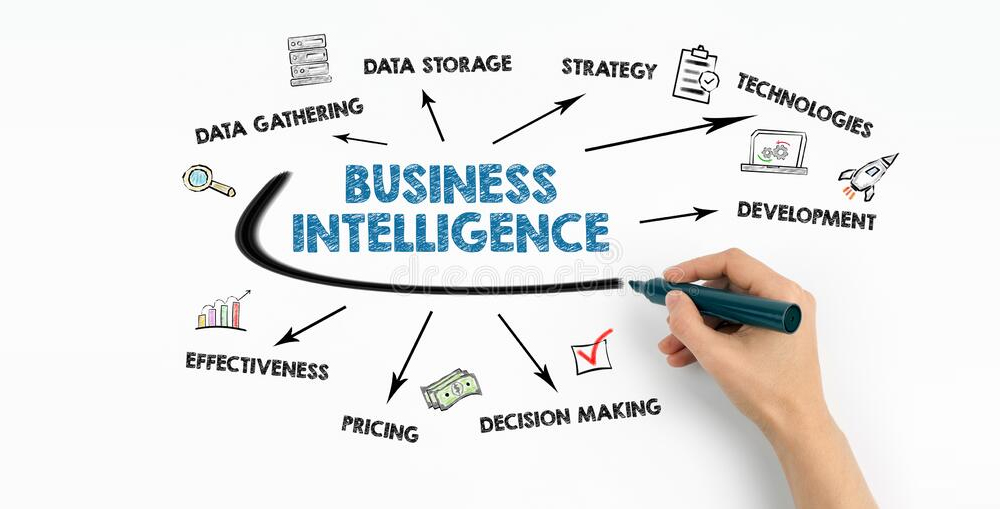
In the present day and age the modern businesses are heavily relying on the data, in fact the most successful business strategies are completely data driven. Business decisions, policy making, strategies and product development functions heavily rely on the business intelligence data. The business intelligence data is basically the insight to your internal and external processes including employees, customers, communication, and much more. A good queue management system always capture valuable business intelligence data. It can capture system usage and analytical data from each and every customer touch-point throughout the customer journey. It monitor and evaluate the entire queuing process, customer journey, customer experience, happiness and overall efficiency of the queuing process.

Furthermore the queue management system is also capable of monitoring several employee performance KPIs and it can integrate with other systems to further improve the quality of the business intelligence data. The customer feedback is one of the most important part of business intelligence data, a good queue management system offers you integrated customer feedback tools, or it can also provide in-built customer feedback management features which help you to gather feedback data long with other insights.

A queue management system also provide in-built analytical tools and data sharing capabilities which allow managers to extract actionable reports and share data with stakeholders to address the problems and take actions for future improvements.

See Also: Queue Management System Features you Need for Modern Queuing

Business Intelligence Data Gathering

Conclusion

The Dubai and in fact the entire UAE is a very dynamic marketplace, the customer trends are changing rapidly the market competition is growing steadily and the technology is evolving on a rapid pace. All these factors need a business to adopt to the technologies and practices that can respond to the sudden changes and also support business growth. When it comes to the modern marketplace the businesses have started transitioning from a sales-oriented business model to a more customer-centric business model since more than a decade now. This transition was not sudden but gradually it have completely changed the way businesses were operating around a decade ago.

For any customer-centric business the customers are its top priority, especially in highly competitive markets the businesses need to pay more attention to their customers’ needs, desires and interests. According to several studies and researches all around the globe, a modern day customer puts experience equal to the quality of the product or service they acquire from a business. These studies have also indicated that a majority of the customers are willing to pay extra if they are ensured that they will get a better experience. This makes customer experience one of the most important success factor. Businesses all around the UAE are actively seeking new methods, practices, technologies and solutions which can help them improve customer experience.

A queue management system is the solution to all major problems that a service-based business could face. It help businesses improve customer experience and it also increase their operational capabilities and performance. That is why a when it comes to acquire a new queue management system there is a lot on the stake. Businesses need to be very careful when selecting a new queue management system. However, in Dubai and all around the UAE the sheer number of vendors and different types of queue management systems can make it very confusing for a manager to decide which solution they should choose.

That is why in this blog we have listed the basic details about the software and hardware of the queue management system along with several other features that can help you achieve your current goals and a good queue management system with all these features will make you able to deal with unexpected and uncertain future market conditions. If you want to learn more about the subject or if you want our help to design and develop a custom tailor-made and highly cost-efficient queue management system for your business please feel free to contact us through our Contact Us page or leave a comment in the comment box below and we will get in touch with you soon.

See Also:  How to Customize Performance Management System


Increase Customer Engagements to Boost Sales

The markets are rapidly changing and we are entering into a highly customer-centric world. Similarly in Dubai and all around the UAE businesses have transitioned from sales or business oriented to customer-oriented business models. This orientation was inevitable, as the market is changing, the customer demands are increasing and here in UAE the customers are more aware and powerful. The UAE is a financial hub for the region, there are many businesses who are operating in UAE there are countless multination enterprises who are not only managing UAE operations but the entire middle-east and Africa operations from UAE.

This is what makes the market more competitive and this is also the reason the customers are so strong as they have a lot many choices available to them all the time, if you failed to please them they can find hundreds of other vendors or service provider who will offer them what they want. This is what makes customer engagement, customer experience, communication and customer satisfaction the most important factors of a modern day success strategy.

See Also: Which one is better Standalone VS Integrated Software?

Increase Customer Engagements to Boost Sales

Businesses usually focus on improving their customer service centers, their internal and external processes and emphasize on their products/services. However, the customer engagement is mostly overlooked which is due to the lack of awareness about it. The customer engagement is a very strong factor in converting prospects into customers and retaining them. The customer engagement have huge impact on sales and customer retention. Every business knows that the sale is just one part, the second part is to retain your customers, make them loyal and have repeated business.

Many businesses in Dubai and all around the UAE have significantly boost their sales by adopting modern customer engagement practices. According to several studies businesses increased customer engagement can witness an increase of up to 85% in direct sales, furthermore it also help increasing upselling and cross-sell incomes. In this blog we will discuss what customer engagement is and how businesses can increase their customer engagement which will result in significant boost in their sales and conversions.

See Also: What are the Different Types of Queue Management System?

Increase Customer Engagements to Boost Sales

What is Customer Engagement and Why it is so Important?

Traditionally the term customer engagement means the relationship between the customers and a business. However, the more modernized definition of customer engagement includes the entire customer lifecycle form acquiring customer to onboarding, providing them services, nurturing your relationship with them, gathering their feedback, gaining their trust, ensuring their happiness and converting them into loyal customers. So the customer engagement means the complete process of communication, customer interaction and experience, customer loyalty and customer retention, etc.

The customer engagement plays an important role in generating revenue, retaining customers and customer loyalty. These factors form the foundation of success and enable businesses to achieve for their long-term goals and objectives. Well-established businesses in Dubai and all around the UAE use customer engagement metrics as high-value indicators of their business development, sales and profitability, and the overall success. This is what makes customer engagement so important.

See Also: Waiting Line Problems and Solutions

What is Customer Engagement and Why it is so Important?

What is Customer Engagement Strategy?

The customer engagement strategy can be narrow down to two important factors, the customer needs and their interests. The customer engagement is often confused with customer satisfaction and customer experience, although these three are inter-connected and inter-dependent however, they all are distinct phenomenon and should be treated separately. The customer engagement strategy is basically how the customers will interact with your business and brand and the core objectives of customer engagement strategy is to offer value to the customers, solve their problems, address their concerns, and encourage them to interact with your business more.

The customer experience is how the customer perceive your brand based on their interaction and the customer satisfaction is how happy or unhappy they are with that experience or interaction. That is why the customer engagement strategy have profound impact on customer experience and customer satisfaction as well which makes it a crucial component of your overall business strategy. The customer engagement strategy is also formed like any other strategy you need to consider key factors and then set goals, make a plan, assign resources and take appropriate actions to achieve those strategic goals and objectives.

See Also: The Impact of Performance Management on Organizational Culture

What is Customer Engagement Strategy?

How to Build a Successful Customer Engagement Strategy to Boost Sales?

The customer engagement strategy is not as that complicated as it may sound. It is a simple process which starts with a little bit of research and need basic expertise to form a plan of action. Here are the key steps to consider while setting up your next customer engagement strategy:

  1. Start with research work, discuss with stakeholders, analyze business intelligence& feedback data
  2. Identify and segment your ideal customer groups, this is crucial as your top-priority customer group will be your high-value target audience and will dictate the course of the rest of the path
  3. Build a brand voice and create valuable content that aligns with your targeted audience groups
  4. Enhance customer interaction and offer them personalized experience
  5. Streamline your customer engagement process by utilizing specialized tools such as CRM
  6. Build a loyalty program that offers value and exclusive offers for loyal customers
  7. Integrate and align customer feedback management process with customer engagement strategy
  8. Leverage the potential of social media, modern digital channels and other technologies
  9. Implement customer success center technologies and self-service solutions
  10. Evaluate the success of your customer engagement strategy after a pre-set time and make improvements to boost the impact and outcome for the next cycle

Setting up customer engagement strategy is very important it will help you increase the success rate and it will provide your teams a guideline to follow which is also very helpful for improving the performance. While setting up a customer engagement strategy it is also important to define the success metrics and monitor them throughout the process. Usually business revise their customer engagement strategies after an year or so but in such a dynamic and fast-paced markets like UAE it is important to evaluate your strategy twice an year or quarterly.

See Also: Pros and Cons of Queue Management System

How to Build a Successful Customer Engagement Strategy to Boost Sales?

Key Customer Engagement Strategies to Increase Customer Engagements and Boost Sales?

Now that we have already discussed what customer engagement is, why it is so important, what customer engagement strategy is and how to set up a successful customer engagement strategy, let us discuss the market proven and most commonly used customer engagement strategies to increase your customer engagements which will definitely help you boosting your sales and conversions.

Utilize Multiple Channels to Increase Customer Engagements and Boost Sales

The customer engagement heavily rely on frequent communication. Today we have multiple communication channels. Especially with the rise of mobile phones, social media platforms and online platforms it is extremely important that your reach out to your customers in a way which is most convenient for them. Here in Dubai and all around the UAE the internet penetration is 99%, which is far more than any other nation in the region. And the same is true for the smartphone usage as well. This means that people have access to internet and they also use smartphone. In fact the smartphones usage has significantly increased all around the world.

In fact the smartphone usage has exceed the regular laptop and desktop computers. Here in UAE people on an average spend almost 8 to 9 hours daily on the internet for work and personal needs. Out of that time 3 to 4 hours are only for social media and communication. Which makes digital communication far more significant than ever before. That is why identifying the popular social media and digital platforms that are used by your target audience is crucial and you should have a strong presence on all those channels and platforms.

See Also: Why Restaurants Should Follow McDonald’s Self-Service Queue Management Strategy?

Utilize Multiple Channels to Increase Customer Engagements and Boost Sales

Each social media channel is slightly different from the other. This means each social media users’ demographics could be different too. For example, the Snapchat is more popular among youngsters and Gen Z the LinkedIn is more popular among professionals and so on. You have to identify which social media or digital communication channel is more popular among your targeted audience and then focus on them to maximize the customer engagement. When you reach out to your customers through their preferred medium they feel more connected with your brand.

Integrating multiple channels in your communication and marketing process is a great customer engagement strategy. It not only help you streamline your communication but it is also very helpful in generating more leads and sales. If you keep reaching out to your customers through their most used platforms and channels they will never forget about your brand. This will also help you nurturing your relationship and establishing a strong bond between you and your customers.

See Also: 5 Challenges in implementing Performance Management System

Utilize Multiple Channels to Increase Customer Engagements and Boost Sales

Personalize Content and Experience will Increase Engagement and Boost Sales

Personalized content/communication and personalized customer experience are the two most important factors in customer engagement. When you personalize your content/communication and customer experience you treat every customer as an individual this is what have profound impact on every customer, whether they notice it or not but when you are treated as an individual your subconscious mind perceive a very positive image about the business or brand. It make them feel like you are talking to them or you have prepared your systems and processes to exclusively serve them, this sense of exclusivity is great for a satisfactory experience and it also help gaining customers’ loyalty.

Furthermore the personalized communication help businesses build a persona or a personality which is much easier to interact and engage with. The brand persona can also help businesses gain a great competitive advantage and help them build a unique brand identity. The existing customer data can be a great source of information to utilize in building personalize experience and content/communication. Personalized customer experience and content is great way to increase customer engagements and boost sales.

See Also: Queue Management System for Trucks and Logistic Centers

Personalize Content and Experience will Increase Engagement and Boost Sales

Offering Self-Service Solutions can Increase Engagements and Boost Sales

Several worldwide studies and market analysts have suggested that almost 70% of the customers try to solve a problem by themselves before contacting the service rep or support team. It is important to understand that a majority of people who will be coming to your business would not be seeking specifically your product or service but in fact they are seeking a solution to their problem. Whether you are a B2B or B2C business your customers will be seeking a product or service that can offer them a solution to the problem they are facing. Similarly when the customers need to contact a business they first try to solve the problem by themselves rather going through the process of filing a complaint, claiming warrantee anything like that.

That is why the self-service solutions have gained huge momentum over the last decade. Whether it is your corporate website providing useful information, your blogs offering guides and tutorials, your FAQs or user manuals, social e media pages, self-service kiosks, customer portals or anything, the customers will appreciate utilizing a self-service channel to solve their problem. This will significantly increase their engagements and help you gaining more sales and conversions.

See Also: The Role of AI in Enhancing Queue Management Systems

Offering Self-Service Solutions can Increase Engagements and Boost Sales

Attractive Loyalty Programs Increase Customer Engagements and Boost Sales

The loyalty programs are a great gifts which keep on giving back to your customers. It is not just to please them and make them come again and again and do repeated business but it is to give them value, importance and establish a bond between the business and the customers. The loyalty programs are a great tool to inspire the prospects who haven’t yet done any business with your brand. The loyalty programs build credibility and trust among the customers which also attract more customers. The loyalty program also indicates that you value each interaction with your customers and they will always get a small little treat whenever they will do business with you.

The loyalty programs can be designed as per your best interests, for example the point base loyalty program is the most common in Dubai and all around the UAE however, you can also offer benefits on other important things such as leaving appositive feedback online or in Google will give your customers a discount voucher, you can issue your customers loyalty coupons which they can share with others to support increase your referrals, etc. No matter what you offer to your customers or how you offer to them having a loyalty program is always helpful in increasing customer engagement and boosting your sales.

See Also: What are the Basic Components of Queue Management System?

Attractive Loyalty Programs Increase Customer Engagements and Boost Sales

Implementing Closed-Loop Customer Feedback Increase Engagements and Boost Sales

Every business knows the importance of the customer feedback. Businesses in Dubai and all around the UAE are proactively collecting customer feedback and business intelligence data as this data is extremely vital for understanding customers, markets and your internal and external processes. The customer feedback data help businesses identify the areas of improvements and help them in the product development process. It also help businesses in aligning their products/services, processes, resources, and communication as per customers’ needs and interests.

That is why gathering the customer feedback is so important. However, most of the businesses overlooked the fact that gathering customer feedback data, analyzing it and then taking action on it is just one part, the other most important part is to follow up with the customers and letting them know that their feedback was taken very seriously and appropriate actions were taken. Obviously the customer feedback has different kinds, sometimes it is just an NPS score, sometimes it is suggestions or complaints and sometimes you are surveying for product development.

Whatever the case is a closed-loop feedback campaign is many time more engaging than an open-loop feedback campaign and it significantly increase customer engagement and help boosting the sales.

See Also: Queue Management in Banking: Enhancing Customer Experience

Implementing Closed-Loop Customer Feedback Increase Engagements and Boost Sales

Brand Awareness and Email Campaigns Increase Customer Engagements and Boost Sales

The brand awareness campaign is extremely important for any business. If your targeted audience group is not aware of what you are offering then how they would be able to buy it? That is why businesses regularly and more frequently launch brand awareness campaigns. Similarly the email is also a great communication and marketing tool. According to several studies all around the world the email which is among the earliest digital communication channel is still one of the most beneficial marketing channel for businesses with having the highest ROI rate comparing to any other digital marketing channel as of this day.

On top of that the digital marketing have already dominated the marketing industry. As I mentioned earlier that the mobile phone usage and internet penetration in UAE is higher than any other country in the region and people tend to spend hours on the internet on daily bases for both work and personal needs. It means that the digital marketing have very high potential in Dubai and all around the world. Both the brand awareness and email can significantly boost the customer engagement and can produce great number of sales for a business.

However, the important thing to understand is that both your social media ads, posts, videos, PPCs or emails should be used to remember your customers about your business and not to bother them. Businesses who failed to gain the full benefits of their digital brand awareness and email campaigns either overdo it or either doesn’t pay much attentions. A balanced brand awareness and email campaign can significantly increase customer engagement and boost your sales.

See Also: 6 Performance Management Problems and How to Solve Them?

Brand Awareness and Email Campaigns Increase Customer Engagements and Boost Sales

Evaluate and Improve Customer Engagement Strategy

Businesses usually utilize multiple customer engagement strategies and use a blend of multiple strategies which suits fit to help them achieving their business goals. Obviously any strategic decision is driven by a goal and objective in mind. And for customer engagement the prime objective is growth, furthermore the goals of your customer engagement strategy are also influenced by your high-level organizational goals and objectives. Traditionally the customer engagement is used to boost sales by achieving several other goals such as improving your brand image and brand perception, increasing your customer retention and attaining higher customer loyalty.

The customer loyalty and customer retention can be taken as the foundation for growth and progress. Without a loyal customer base a business can hardly operate. Think of a bucket and water analogy, your customers are the water in the bucket, and your goal is to full the bucket. If your bucket had a hole at the bottom you will never be able to fill it, unless you start pouring more water in it. As soon as you will stop pouring more water you will start losing the level in the bucket. If you don’t have loyal customers you will have to invest more in marketing, brand awareness, and brand image building campaigns which will squeeze your profitability.

That is why it is important to evaluate your customer engagement campaign against the goals you set at the beginning. This can be done by collecting data and analyzing outcome, such as increase in sales, customer feedback, revenue and much more. This will help you identifying the loopholes in your campaign which you can rectify and make your campaign more effective over the time.

See Also: What is a Bill Payment Kiosk: Everything You Need to Know

Evaluate and Improve Customer Engagement Strategy

Conclusion

Over the time the markets have become more customer-centric, now a days’ if a business failed to satisfy its customers they will immediately lose them to the competition. Especially in Dubai and all around the UAE where the markets are growing at a rapid speed, the competition is very high and increasing steadily and the customer demands are skyrocketed. A business who needs to survive and grow must have to obey the unspoken market rules. The customer is a king now, a business should be able to fulfill their needs, desires and expectations.

This is when the customer engagement can be a great tool for a business, no matter what industry you operates in or whether you are a B2B or a B2C business, you should develop a highly customer-centric strategy in order to be able to survive and grow in the market. The customer engagement is often confused with customer satisfaction and customer experience which is why most of the businesses failed to invest adequate amount or time, resources and efforts in it.

That is why in this blog we have discussed what customer engagement is, why it is important, how different and interconnected it is with other business strategies and how a business should develop its customer engagement strategy.

We have also listed a few highly popular and effective customer engagement strategies. If you want to learn more about customer engagement of if you have any query or if you want us to help you building and executing your customer engagement strategy, please feel free to contact us through our Contact Us page or leave a comment in the comment box below and we will get in touch with you soon.

See Also: How to Customize Performance Management System


Why a Virtual Queuing System Is Better Than Clipboard and Pen

Why a Virtual Queuing System Is Better Than Clipboard and Pen

The businesses in Dubai and all around the UAE are well-aware of the queuing difficulties and problems. Especially the retail and service-based industry suffers the most. The businesses who require their customers to arrive at their location or branch in order to make a transaction are the ones with more intense queuing and crowd management problems. Traditionally the queuing process is managed via clipboard and pen. Businesses doesn’t use any tool or complex software solution for their queuing and crowd management needs. This caused very serious problems and businesses have started noticing higher walk-out rates.

Furthermore the market conditions, customer behavior and other factors also started transforming the queuing industry. We have witnessed the rapid and in-depth integration of smartphones and other digital technologies in our both work and private lives. The customer experience has become much more important than ever before in recent times. In fact there are several studies and market researches which suggest that an ordinary customer place experience equal to the quality of the product or service they are acquiring. The clipboard and pen based conventional queue management methods are unable to offer a better customer experience.

See Also: Virtual Queuing Systems: Redefining Waiting Experience

Why a Virtual Queuing System Is Better Than Clipboard and Pen

Furthermore the modern workplaces are heavily data driven the businesses need a tons of data in order to function properly hence there are several technological solutions and software that are considered to be absolute necessity for the modern businesses. Here in Dubai and all around the UAE in fact anywhere in the world, the cost of the labor and retaining employees is very expensive. In order to improve operational capabilities a business might have to hire more employees. First of all more employees doesn’t necessarily means optimized and improved productivity, you must also have to have management mechanisms in place in order to maximize the outcome of the teams and individual employees.

That is the reason businesses implement digital solutions and software. The digitalization and IT help businesses in achieving maximum performance with far less employees and far less sophisticated management. In fact a single employee can produce an outcome worth of a team’s work if proper technology and digital tools are in place. Same is applicable to queuing process as well. Businesses need a proper technology to maximize the success rate and in order to achieve their strategic and long-term business goals.

See Also: What Is Virtual Queuing? A Guide to Virtual Queues

Why a Virtual Queuing System Is Better Than Clipboard and Pen

What is Virtual Queuing?

The virtual queuing is a modern form of digital queue management systems. The traditional digital queue management systems have greatly improved the queuing process however, the virtual queuing have completely revolutionized it. The traditional queuing significantly improve customer flow, reduce their wait time, improve management and enhance customer experience. But the virtual queuing have amplified all those advantages with innovative features and integration of modern technologies and digital platforms. The virtual queuing not only allow your customers and visitors to sign-up remotely for virtual queues but it also provide them freedom doing so without being physically present at the premises.

This means that the customers and visitors can sign-up for a virtual queue while they are at their home or work and their wait time starts right away, they will be served on time as per their ticket or e-ticket number without being physically waiting or standing in queues at the business’s premises. This is the major difference between a traditional digital queue management system and virtual queue management system. The virtual queuing further enhance customer experience by providing facility to sign-up using multiple remote channels and other useful features. This is what make virtual queuing more superior than the traditional digital queue management systems.

See Also: Why Virtual Queuing Has become an Essential Part of Modern Queue Management Systems?

What is Virtual Queuing?

Why a Virtual Queuing System is better than a Traditional Clipboard and Pen Method?

The virtual queuing system can completely eliminate all pain points that cause a lot of problems in the traditional clipboard and pen line management methods. That is the main reason of implementing a digital virtual queuing system. Furthermore the virtual queuing system also offers a tons of benefits and can help businesses effectively compete in the modern marketplace. Here are the common problems that a traditional clipboard and pen method has along with key advantages of using a virtual queuing system:

Common Problems with Traditional Clipboard and Pen Waiting Line Management

The traditional manual queuing management with clipboard and pen is an outdated process. It is not effective anymore and the businesses need a better management tool to ensure a smooth customer experience. Here are some very common problems that businesses and customers face with a traditional clipboard and pen based queuing management methods:

  • Unclear Wait Time: The wait time is one of the most important factor in queue management and it have profound impact on the customer experience. The manual clipboard and pen based queuing management can’t estimate wait time or provide a clear information to the customer which is also the cause of most of the complaints.
  • Higher Customer Churn Rate: The manual clipboard and pen based queuing management always have higher walk-out rate which is called customer churn rate. The customer churn rate is represent a great loos of the sales, not only that it results in unhappy and unsatisfied customers who will share their experience with others which will harm your business’s brand image.
  • Inconvenient for Employees: The biggest problem with the clipboard and pen based queuing system is that only one employee at a time can have it. But that is not practical, usually more than one staff will have to manage the waiting lines hence they will have to constantly pass the clipboard and pen to the next employee. Furthermore the handwriting and typo also cause more problems.
  • Poor Customer Experience: The customers can never be provided with the accurate estimated time to their turn, usually it crosses the value the staff estimates due to several factors. However, another critical problem is that the clipboard and pen based queue management requires customers and visitors to stand nearby or in waiting lines, hence they have less freedom and could feel bound which results in frustration and unhappiness.
  • No Data Collection: The business intelligence data is vital for strategy making and decision taking processes. A clipboard and pen based queuing system cannot gather any kind of business intelligence data. It is nearly impossible to understand customer behavior, their experience, the waiting time and employee performance, etc. using clipboard and pen queuing management method. Without clear information decisions and strategies have too much guessing work which reduce the success rate and can undermine the profitability and productivity of a business.

The waiting line management can be very challenging for businesses. There are several factors that contribute to long waiting lines and their repercussions on customer experience. The clipboard and pen queuing is a very old waiting line management method. Due to its inherent disadvantages and flaws businesses started adopting more modern and technologically advanced queuing methods such as implementing a digital queue management system. Here are some key advantages of virtual queuing that will help you significantly improve customer experience, and drive efficiency and productivity in the internal business processes.

See Also: The Role of AI in Enhancing Queue Management Systems

Common Problems with Traditional Clipboard and Pen Waiting Line Management

Advantages of a Virtual Queuing System

Any digital queue management system can offer a great efficiency comparing to traditional clipboard and pen methods. However, the virtual queuing is considered to be the most modern and advanced form of queue management systems. The virtual queuing system help businesses achieve a better customer flow and improve customer journey and experience. The customer experience drives customer loyalty, and the customer loyalty is a key to long term success. Furthermore the virtual queuing system is also a great tool to collect highly valuable business intelligence data which help businesses understand and evaluate their internal processes, customer experience and much more.

The virtual queuing system utilizes the most commonly used communication channels and mediums to make it more convenient for an average customer or visitor to access to the system. The virtual queuing also help reducing the customer wait time and provide better control over the customer flow. The crowd prevention features help management dealing with any unexpected scenario and large influx of the customer and visitors. The virtual queuing system is based on an AI (artificial intelligence) based smart software engine which also facilitate communication and improve customer engagements. Here are the key advantages of a virtual queuing system which make it far more superior than the conventional clipboard and pen methods.

See Also: Queue Management System Features you Need for Modern Queuing

Advantages of a Virtual Queuing System

Advantages of Virtual Queuing System: Easy Remote Sign-up Features

One of the biggest advantage of a virtual queuing system is that it offers multiple remote sign-up methods. Which makes it more convenient and easier for the customers and visitors to sign-up remotely without being physically present at the business premises. There are multiple channels that can be integrated with virtual queuing system such as SMS, Call Center, Online Booking, Customer Portals, Corporate Website, Queue Management System Mobile Apps, WhatsApp, QR Code, etc. All these channels help customers sign-up easily without any need of physically appearing at the business.

The customers are signed-up remotely for virtual queues, no matter if they are present at the business premises or not they will remain on their designated positions in the queue and will be called upon their turn. This means that if a customer plans to visit a bank branch or a customer service center they can sign-up while they are at home or work, and they will be issued an e-ticket which will contain their token number and the estimated time to their turn. Hence they can plan their visit with more freedom and convenience which definitely enhance their experience and raise their happiness and satisfaction.

See Also: How a Queue Management System Can Transform Your Business Operations

Advantages of Virtual Queuing System: Easy Remote Sign-up Features

Advantages of Virtual Queuing System: Significantly Low Wait Time

The wait time is one of the most impactful aspect of queuing process. Longer wait time will always hurt your customer experience and it will also cause increase in customer churn rate. Furthermore the longer customer wait time also causes unsatisfied service experience and it creates other management related problems such as it will impact your employee efficiency and resource management strategy. Furthermore there are two different types of wait time that we consider in queuing process. One is the actual wait time and the other most important phenomenon is the perceived wait time. The perceived wait time is just the imagination of human brain. The human brain works in very peculiar ways, if the waiting experience is not so good, the actual wait time could be 1 minute but we will feel it like 5 minutes or so.

That is why the perceived wait time is very important for customer experience. The biggest advantage of virtual queuing system is that it not only reduce the actual wait time but it also help minimizing the perceived wait time as well. As the customers and visitors can sign-up remotely and only required to arrive at the time of their turn so the wait time can be reduced to literally none. Even if a customer arrive before some time it would be marginal and they will have to wait very little which is why the virtual queuing system is one of the best in terms of managing customer wait time.

See Also: Importance of Queue Management System for Government and Public Offices

Advantages of Virtual Queuing System: Significantly Low Wait Time

Advantages of Virtual Queuing System: Increase Customer Engagements

Customer engagement is another important factor of queuing management process. Engaged customers are tend to tolerate more wait time comparing to less engaged customers. For that different queue management systems use different techniques, for example a traditional digital queue management system offers digital signage screens and audio/visual announcement system which help engaging customers and keep them distracted from the waiting and reduce their stress. The digital signage are used to display the live queuing information along with multimedia content which keep users busy. Furthermore the audio/visual announcement system also keep announcing ticket number upon each customer call in multiple languages which also keep user distracted from the waiting and help reducing their stress and boredom.

The virtual queuing system offers all these features and on top of that it also offers a bi-directional communication channel. Since most of the customers and visitors who are using virtual queuing would spend very less time in waiting areas so the communication channels help businesses provide queuing information, updates, notification, alerts and also a chatting facility via dedicated chat boxes or WhatsApp, etc. The service agents can also update customers in case of any urgent update or change in their turn, etc. These all features help businesses increase the customer engagement which is essential for reducing the wait time stress. It greatly help improving customers’ waiting experience and increase their satisfaction.

See Also: Touch Less Customer Experience, Use the RSI Queue Management System

Advantages of Virtual Queuing System: Increase Customer Engagements

Advantages of Virtual Queuing System: Improved and Automated Customer Flow

The customer flow management always have huge impact on the overall performance and efficiency of the queuing process. Each business offers multiple services, these services are offered through multiple counters. Sometimes businesses also multi-stepped services or stepped services which require a customer to visit at least two or more counters in order to avail a full service. Then there are different customer segmentations on the bases of the customers and visitors demographics and service type. For example, businesses could have dedicated counters for elderly visitors, people with special needs, VIP or Premium customers and service-bound segregation. All these segregations means that each customer group will be treated differently or could have different customer experience expectations.

On top of that in a real-life queuing scenario there are several other variables that can impact your customer flow such as longer service delivery time than expected, unwanted delay due to disputes, additional requirements or any such thing, all these factors can disrupt a regular customer flow. Hence the businesses need a mechanism in place which can order the customer flow by monitoring real-time queuing data and taking automated decision in order to ensure maximum customer flow is sustained. The dedicated administrative dashboard and smart software engine of the virtual queuing system will help businesses define and implement their queuing policy in a fully automated manner.

Hence the virtual queuing system monitors system usage stats and data from touch points to take real-time decisions which help improving the customer flow and improve customer experience by reducing their wait time and solving such problems.

See Also: How to Set Up SMS based Queue Management System?

Advantages of Virtual Queuing System: Improved and Automated Customer Flow

Advantages of Virtual Queuing System: Improve Productivity and Employee Performance

For any business the productivity and performance are essential needs. Without achieving higher productivity and performance a business can never achieve higher profitability which is crucial for long term success and growth. The clipboard and pen based queuing system is slow, restricted and outdated. It cannot meet the needs of the modern market requirements. A digital queue management system on the other hand is very advanced, it improves productivity and performance and help businesses in resource management. A virtual queuing system can collect a variety of employee performance data which is also very helpful in improving employee performance. It can track all employee activities and their progress of the day.

On top of that it provides various performance KPIs and analytical tools which help management in evaluating employee performance and help them taking actions in right direction to improve performance and productivity. Furthermore in any queuing management scenarios the employees who are serving customers need to perform several pre and post-service tasks. These tasks can be time consuming, however, with the help of the virtual queuing system and its ability to integrate it with other internal systems and central information center can help reducing employee efforts and maximize their performance. It also keep employee free from any task related to customer flow and line management as all that is done automatically. Hence the employee performance and productivity if significantly improved.

See Also: Streamlining Customer Service: The Power of a Modern Queue Management System

Advantages of Virtual Queuing System: Improve Productivity and Employee Performance

Advantages of Virtual Queuing System: Collect Valuable Business Intelligence Data

The modern day and age is completely dominated by technology and data. The AI (artificial intelligence), big data, cloud, electric cars, smartphones and such technologies are so popular that every day we are reading something about them. The technology have completely revolutionized our daily work and personal lifestyle. The modern businesses are heavily relying on IT and data for their day-to-day tasks as well as for basing their strategies and policies upon it. The term business intelligence is self-explanatory. The business intelligence data is insight about the matters relate to your business. It could and should include both internal and external factors. The data gathering is crucial for any modern business as their most of the policies and strategic decisions will be solely based on the reports and inputs of their data analysts.

The traditional clipboard and pen queuing method is unable to collect the required data in fact it is nearly impossible to collect any business intelligence data with that method. The virtual queuing system on the contrary can provide a wealth of valuable business intelligence data. The virtual queuing system is capable of collecting system usage and analytical data from each and every touch point of the customer journey and it can also capture insight from other connected systems and tools. Furthermore the virtual queuing system also provide enriched analytical tools and customized reporting features which also help businesses getting the full advantage of the precious business intelligence data.

See Also: What to Consider When Choosing a Queue Management System

Advantages of Virtual Queuing System: Collect Valuable Business Intelligence Data

Advantages of Virtual Queuing System: Effectively Collect High-Quality Customer Feedback Data

Customer feedback data is vital for a healthy business growth. It help businesses acquire a deeper and better understanding of the customers, their behavior and market trends. Businesses in Dubai and all around the UAE actively work on their customer feedback management campaigns. For that usually businesses use a dedicated customer feedback management tool. The virtual queuing system offer two different method to implement customer feedback management tools. You can integrate your CRM or existing customer feedback management tool with the virtual queuing system or you can utilize the in-built customer feedback management module of the virtual queue management system to collect customer feedback data.

It is far more convenient to conduct customer feedback campaign using the in-built customer feedback tool of the virtual queuing system. As the queue management system is already taking information about the customer and the service they need. Hence no need to input that data again during the survey. Which will make your survey small and it will definitely increase the response rate. Furthermore the customer feedback data can easily be analyzed with in-built analytical tools or it can be relayed to a third party system, CRM or any other customer feedback system or it can be integrated with the central information center for better data analysis and data sharing tasks.

See Also: Government Digital Transformation: Implementation of Queue Management System

Advantages of Virtual Queuing System: Effectively Collect High-Quality Customer Feedback Data

See More: 5 Ways to Manage your Customer Service Queues

Conclusion

For any business managing queues and large influx could be a challenging task. For that businesses hire additional staff adopt modern practices and implement technologies. The queue management process is a very complicated process. Especially in Dubai and all around the UAE where the markets are very advanced, the customers are savvy and the competition is tough. Furthermore the customer experience has become a phenomenally important factor in any business’s success. It is not just in UAE but all over the world, the customers are willing to pay extra if they are provided with a better experience. That is why businesses need to focus more on customer experience and customer satisfaction.

When it comes to queuing management system the clipboard and pen queuing method is very old and outdated. It is limited, have several restriction, and this method doesn’t collect any business intelligence data. These are the reasons businesses decided to implement more advanced and technology based digital queue management systems. The virtual queuing system is the most modern and highly advanced form of a traditional digital queue management system. It not just only offers all advantages of a tradition queue management system but it also help boosting system efficiency and enhancing customer experience.

The virtual queuing system is a great tool to maximize the efficiency of your queuing process. It also help enhancing customer experience and it is a great tool to capture valuable business intelligence data. In this blog we have discussed why a virtual queuing system is better than clipboard and pen. We have listed the common problems and drawbacks of clipboard and pen based queuing process and we have enlisted the key advantages of the virtual queuing system. If you want to learn more about the subject or if you want our help to implement a highly customized and tailor-made virtual queuing system for your business please feel free to contact us through our Contact Us page or leave a comment in the comment box below and we will get in touch with you soon.

See Also: 5 Challenges to face if Performance Appraisal is not customized as per Organization’s Policies


How to Customize Performance Management System

How to Customize Performance Management System

The performance management is an integral part of a business’s growth strategy. The performance management help improving the operational capabilities, improve resource management, align employees and resources with high-level goals and objectives, maximize the productivity and profitability of the business and make them ready to be reactive and responsive to the abrupt changes in the market and customer trends. The modern businesses face modern problems, the markets are evolving on a rapid pace, the customer demands are skyrocketing, the workplaces become more dynamic, the employee’s demands and needs are also continuously changing.

Above all the Dubai and in fact the entire UAE is a very competitive market. The human resource management have evolved a lot over the past decade, with the introduction of Gen Z in worldwide marketplaces the values, norms and standards have transformed a lot. Several surveys are market research proved that the managers and even the employees felt difficult to share an honest opinion in a fear or harming the relationship with their employees, managers or peers. It is not that this bias is new, however, it got amplified in the recent years.

See Also: Why Custom Performance Management System is more Effective?

How to Customize Performance Management System

Similarly there are several other variables, such as intense integration of the technology, which have completely transformed the work environment and digital ecosystem. The communication channels have been changed, the digital customer experience is paving its way, the customers are more focused on having a good experience, the competition is becoming tougher day by day, and the customer retention needs more focused efforts than ever before and so on. We can discuss hundreds of different factors that have completely changed the work environment, culture, customer behavior and marketplaces over the years.

However, the important thing is to understand that a performance management system is an absolute necessity for a high-performing business. When a business or organization will have to choose a right performance management system they can easily get overwhelmed with the variety of available solution in Dubai and all around the UAE. A good one-fit-for-all type of performance management system or solution doesn’t exists, otherwise it wouldn’t be so difficult for many enterprises to implement a best performance management system. That is why the customization is the only way to implement a good performance management system/software which can full-fill all your business needs.

See Also: How Performance Management Impact on Organization’s Culture?

What is a Performance Management Software?

The modern performance management system is software application which is exclusively designed to support a business’s performance management processes. It is like any other software tool that a business might use to improve any other work flow or process. For example, a document processing tools or a complaint center tool is a digital solution to improve the efficiency and performance of the document processing and complaint management processes. Traditionally the performance management was done manually, where the evaluation is majorly based on the reviews by the managers.

However the digital performance management system or performance management software is a modern digital solution that help businesses to increase the efficiency and efficacy of their performance management process. By leveraging the performance management software businesses can easily adopt to:

  • Agile Performance Management
  • Continuous Performance Management
  • Contextual-based Performance Management
  • Project-based Performance Management
  • KPIs, OKRs, Balanced Score Cards
  • Performance Management by Objectives
  • Modern Performance Metrics

And much more. The performance management software help businesses adopt to modern practices and methodologies to maximize the outcome of their performance management campaign. Furthermore the performance management software is a great tool to digitalize the performance management processes which brings automation, accuracy and transparency to the system.

See Also: Choosing a Performance Management System A Buyer’s Guide

What is a Performance Management Software?

How to Customize a Performance Management System that fits all your Performance Needs

Every business and organization have its own very unique culture, work environment, practices, business processes, management structure, strategies, plan, goals, work flows, etc. which make it significantly different from others. The organic evolution, natural growth and the leaders are responsible for this uniqueness and it is considered to be one of the best competitive advantage one can have in highly dynamic markets. This uniqueness also means that every business and organization have different needs hence they need a different performance management solution. There are two major categories of software solutions, whether you are acquiring a software solution for any internal or external business processes, these two categories remain same.

The first one if the commercial off-the-shelf solutions (COTS) and the second category is customized, tailor-made or bespoke software. The customized software are exclusively designed to meet the very unique demands of a business hence are more reliable, perform well, integrate within organization easily, and produce much higher and better quality outcome. In this blog we will discuss how a business can customize their performance management system software to unlock the true potential of their workforce and achieve higher goals and objectives.

See Also: How to Design a Modern Performance Management System?

How to Customize a Performance Management System that fits all your Performance Needs

Customize Performance Management System: Engage Employees in Discovery Phase

Like any other software the performance management system also require a comprehensive discovery phase. Since you are aiming to develop a customized performance management software you need to do proper research before making a plan for the software. Usually business pay adequate amount of efforts in the research and discovery phase however, the most important thing that most of the businesses undermine the importance of engaging employee in the discovery phase. Most of the times businesses doesn’t include employees in the discovery phase or any other phase of the performance management system development.

However, engaging employees in the early stages of the performance management system development will help you build a better and more compatible system which will align with the needs and expectations of the employees as well as the business goals. This will help you define the metrics, incentives, goals, objectives, critical success factors, and much more in a way which make sense for the employees. This also help businesses in implementing the new customized performance management system and enable them to adopt it with a more positive attitude and help you achieve better efficiency and efficacy of the system.

See Also: How Performance Management Systems Enhance Employee Engagement

Customize Performance Management System: Engage Employees in Discovery Phase

Customize Performance Management System: Make a List of all Required Features and Performance Metrics

One of the biggest advantage of a customized software is that you can add all the features you want. Every business have different performance objectives and even goals also. The performance management process and practices also differs from case to case, that is why each business requirement is different from the other. It is important that you include all the features that you need. Such as goal setting features, communication framework, performance metrics and data analytical tools. Whatever you want you can include in the system at this stage. The best is always to consult with the external consultant or the performance management software development company.

As they would have more experience with the performance management system and their feedback can be very vital. It is important that all the performance measurement metrics are also discussed internally with all stakeholders and relevant personals. You can also engage employees at this stage and consolidate all the feedbacks in one document then refine that document and for a charter document or scope of the work. This charter document or scope of the work will include all the features that you will be getting in your customized performance management system. It is important to invest as much time and effort as you could in this stage as it is the most crucial aspect of the customized performance management software development.

See Also: Performance Management System: Best Practices

Customize Performance Management System: Make a List of all Required Features and Performance Metrics

Customize Performance Management System: Intuitive UI (User Interface)

For any software the UI or user interface is a key to success. Studies have revealed that people tend to avoid complex software and their efficiency declined with complex UIs and difficult user experience. Same is applicable for your customized performance management software. If the UIs are simple and easy-to-navigate the user response will be good. Furthermore it is important to customize your UIs look and feel to match with your company branding. The navigation of your customized performance management software should be simple enough to let user access the tools/features or information within a few clicks.

Performing different tasks should be simple, such as defining KPIs, setting up goals and objectives, viewing performance data or any such feature should be easily accessible for all the users. Furthermore several features can be added in UIs to make them more intuitive and user-friendly such as adding tool tips, mouse hover functions, dialog boxes to share instant help materials, a dedicated help and FAQs section and guidance for the users to understand each feature of the customized performance management system.

Offer simple options to save the work and continue it on the next day/session. That is a very useful feature. The textual content should be simple, avoid using complex and technical terminologies and use plain and simple language to make the system more understandable.

See Also: The Impact of Performance Management on Organizational Culture

Customize Performance Management System: Intuitive UI (User Interface)

Customize Performance Management System: Digitalization and Automation

One of the biggest advantage of implementing software based solution for manual processes is the digitalization and the automation. The digitalization means that the performance management software will convert manual processes in digital which are more convenient. It also allow several dashboards for different users with different level of access and according to their job roles. The administration or higher management and power users will get maximum system access. This enable businesses to make a process simpler and convenient. For example, if a manager want to schedule a one-to-one discussion or meeting with an employee, they can schedule it in the system.

If reviews are to be conducted this can be scheduled, and the management will get full overview of what is happening. If a review is pending they will immediately know, if they want to get the information that who conducted the review and what were the findings, etc. and all that can be done with a few clicks. Furthermore the automation help managers collect the performance data automatically which can save a lot of time and efforts and make the processes even more convenient. These are the advantages which enable businesses to easily adopt to continuous and agile performance management practices and other more frequent performance reviews.

See Also: 5 Performance Management Problems and How to Solve Them

Customize Performance Management System:Digitalization and Automation

Customize Performance Management System: Third-Party Integration

In today’s modern work environment the organizational software, tools, and databases work in harmony with each other where a well-connected network and data sharing mechanism is development to increase collaboration and communication between different software and tools a business is using. The performance management software is not different, it also support different levels of integration.

However, most of the time the HR managers or the decision makers doesn’t realize that certain technological platform are better in integration than the others, furthermore it also depends on the existing network and digital ecosystem. So, the technology that you are selecting to develop your customize performance management system should be able to integrate with your existing business tools, enterprise solutions, databases and central information center.

The central information center is a digital hub which hosts the data of all connected software and tools. Your new customized performance management software should be able to integrate. It doesn’t matter if you need integration or not, but the compatibility should be there. As organizations and businesses keep growing and high-performing enterprises need support from their IT infrastructure. That is why it is important to ensure your new customized performance management software will support the required third-party system integration.

See Also: Linking Performance Management to Business Outcomes

Customize Performance Management System: Third-Party Integration

Customize Performance Management System: System Administration and Configuration

Usually the HR managers or other decision makers doesn’t emphasize on the customization features and abilities of the system’s administrative panel. Most of the time when the word customization comes, people often think it is having a change in the source-code of the program or layout, which is only done by skilled professionals. However, every software also have an administrative control panel which allow certain level of customization which help system administrators and power users to manage and modify the system’s features and certain aspects. That control panel is very vital for a performance management software. Obviously it depends on the vendor, but on your part you can think of different scenarios that you could face in future which might require to make certain changes in the system.

For example, currently you are conducting employee performance evaluation twice in a year, you might want to ramp up the frequency by conducting performance evaluation after each quarter. You might want to set up on-demand based reviews and assessments such as project-based performance evaluation, etc. Similarly there could be so many different scenarios and practices which you are not needing today but maybe in the distant future you might going to need them. Similarly you might want to control the alerts, notification, or even the data access for different users, etc. All these features will be available on the administrative control panel which will allow you to change or customize the system configuration to suit your needs and requirements.

See Also: How the HR should select a Performance Management System?

Customize Performance Management System: System Administration and Configuration

Customize Performance Management System: Mobile Compatibility

The performance management system is a very important tool, the key to better performance management is always communication, in case of a performance management software you will always want your employees to interact with it more often. However, usually businesses keep the access to such systems restricted within their networks, or even the access is not the issue such software and tools come with desktop version only. The administrative and user access panels and dashboards are mostly web-based interfaces. Which means that an employee will have to login to a web-page in order to interact with such systems and software.

The modern performance management system is also a similar software, it offer multiple web-based UIs (user interfaces) which can be accessed through a web browsers. However, these days the smartphone and mobile technology have completely transformed our work and personal behavior. People tend to spend more time on their smartphones and mobile devices. Above all there would be a lot of employees who will be always on the go or who will be working off-campus. For all such employees interacting with performance management software could be a big problem.

That is why offering mobile compatibility can significantly increase their interactions and engagements which also have positive impact on the performance. The mobile compatibility can be achieved by two methods, one is making your UIs responsive and the other is offering a dedicated smartphone application. Both methods are good, but the dedicated smartphone applications tend to offer a better user experience.

See Also: What is Continuous Performance Management? Complete Guide!

Customize Performance Management System: Mobile Compatibility

Customize Performance Management System: Scalability, Upgrades and Maintenance

The scalability, upgrades and the maintenance are the most important components of any custom software development project. Similarly your customized performance management system should also have a crystal clear strategy, plans and mechanisms for the scalability, upgrades and maintenance. Another great advantage of the customized software application is that they are exclusively designed for a particular business and the ownership belongs to that business and not the vendor or outsourcing contractor who is developing the software. This completely solve all commonly associated problems with the scalability, as the customized performance management software is completely owned by the business itself, hence they can expand it as much as they want, they can have unlimited numbers of the users without paying anything extra.

There would be no monthly or annually fees or subscription charges or associated licensing fees. The upgrade policy can be mutually worked out with the vendor or outsourcing contractor. Since you will own the customized performance management system software hence you are not bound to the same vendor, you can have in-house team to keep the system up to date or upgrade it whenever needed or you can sign an agreement with the vendor or any other third-party software development company who is familiar with the technology and can support your with further customizations in future. Same is the case with the maintenance too.

See Also: Employee Performance Management Process with PMS

Customize Performance Management System: Scalability, Upgrades and Maintenance

Conclusion

In the present day’s dynamic marketplace and skyrocketing customer demands, it is crucial for a business to efficiently and effectively utilize its resources. For that every business have some kind of performance management strategy. Usually businesses follow traditional by-book methods to execute a performance management strategy. However, the marketplace have changed very rapidly and the performance management is also not the same as it was a decade ago. This require businesses to be more proactive and reactive towards abrupt market changes which is why businesses adopt and implement technological solutions to increase their capabilities, productivity and readiness to respond to the market changes.

A performance management system is one of the most important part of any business’s success strategy. However, recently businesses in Dubai and all around the UAE have started adopting customized software and application instead of going for COTS or commercial off-the-shelf solutions. The biggest advantage of the customized performance management system software is that business can design is exclusively to meet their specific and unique needs. Unlike COTS the customized software doesn’t require you to adopt the new system and make changes to your existing processes, practices and methods.

The customized performance management system can easily integrate in the existing digital ecosystem and it can be designed as per the user’s demands hence very less or no training is required. Furthermore the businesses own their customized performance management system which means that their data will be more secure and they can customize the system the way they want in future as well. There are several other advantages of the customized software which make this method far superior than acquiring a commercial off-the-shelf software solution.

That is why reason we wrote this blog to help our audience understand how they can customize their performance management system software to maximize its efficiency, impact and efficacy. If you have any question or if you want to learn more about the subject or if you want us to help you design and develop your new customized and cost-efficient performance management system software, please feel free to contact us through our Contact Us page or leave a comment in the comment box below and we will get in touch with you soon.

See Also: Data-Driven Decision Making in Performance Management

See Also: The Key Elements of Efficient Software Development Project Management


5 Challenges to face if Performance Appraisal is not customized as per Organization’s Policies

5 Challenges to face if Performance Appraisal is not customized as per Organization's Policies

The performance appraisal is a very important part of performance management system. Traditionally the performance appraisal is an annual process managed by the HR department. The HR team creates the employee performance appraisal forms which are provided to all the managers they fill them and return them to the HR then the HR evaluate employee’s performance on the bases of the data they collected from these forms. Usually these are very long forms with tons of questions and other details which require a lot of time and the managers will have to fill it for each individual employee.

Studies have shown that most of the leader think about traditional performance appraisal as a waste of resources and time, however, every business and organization conduct a performance appraisals and that is because of its importance. The performance appraisal process is not to award employee with increments and bonuses, in fact the performance appraisal process help businesses align their resources to their organizational goals and objectives. The performance appraisal system provides a complete framework to help management monitor and track employee performance.

See Also: The Future of Performance Appraisals: 6 Innovations and Changes [Quick Guide]

5 Challenges to face if Performance Appraisal is not customized as per Organization's Policies

The traditional performance appraisal methods have started failing businesses as both managers and employees lost faith on these methods. So the businesses and organizations started adopting more advanced, technology-based digital performance management systems and software to fulfill their performance appraisal needs. The modern performance management system is basically an intuitive software which not only help businesses reduce the resources required for the performance appraisal process but also make the process more efficient and effective and enable businesses to conduct performance appraisal more frequently such as after each quarter.

The performance management systems also give rise to the agile and continuous performance management which was a great leap in performance appraisal methods. These practices have helped organizations to support their fast-paced and rapid growth as well as help them maintain a steady growth rate over the years. The modern performance management systems were also welcomed by the employees and the managers as they offer more flexibility, agility, transparency and convenience.

See Also: Characteristics of a Good Employee Appraisal System

5 Challenges Businesses face if their Performance Appraisal is not customized as Per Organization’s Polices and Strategy

Businesses and organizations all around the world are utilizing digital performance management systems for their performance appraisal processes. When it comes to acquire a performance management system software the HR managers could easily overwhelmed by sheer volume of companies and service provider offering all sorts and types of performance management systems. Generally we can categorize all different types of performance management systems in two main categories, the COTS or commercial off-the-shelf solutions and the customized or bespoke solutions.

Furthermore there could be more sub-categories and classes of different performance management system. However, it is important to understand the difference between these two major categories. The COTS are the software solutions that are offered by a service provider and businesses acquire them as subscription plan or rental bases. They have to pay monthly or annually whatever method they prefer and the actual performance management software remains the property of the developer/vendor or the service provider, it means the business who uses the COTS software doesn’t have ownership rights over it.

See Also: Appraisal Methods in Performance Management System

5 Challenges Businesses face if their Performance Appraisal is not customized as Per Organization’s Polices and Strategy

The customized performance management system software are exclusively designed for the business. Usually either in-house team develop them or business outsource it to a contractor who develop the software. This also means that the business have full ownership rights of the software hence they don’t have to pay any monthly or annual fee or subscription charges. Furthermore the customized software are much better in terms of user experience, as they are designed exclusively for a particular user group hence they are tailor-made for their needs and requirements. This can have huge impact on the efficiency and efficacy of the system.

Another thing which make customized software superior is that they are exclusive and no other business will be using them hence they can offer a great competitive advantage. Whereas the COTS are designed for a mass audience and somewhere from hundreds to several thousand businesses could be using the same software application, which minimize the competitive advantage of the technology. The customized software also integrate very well with the business environment and culture, they are specifically designed to support and improve the internal processes and workflows.

See Also: Performance Appraisal System for the HR Department

5 Challenges Businesses face if their Performance Appraisal is not customized as Per Organization’s Polices and Strategy

However the COTS on the other hand might require businesses to make changes to their internal processes and to align with the system’s processes and workflows. This could significantly undermine the efficiency of the system. That is why the customized software are considered to be superior then the COTS. Here are key disadvantages of using a performance management system which doesn’t resonate with the organization’s policies and internal processes.

1. The Performance Appraisal System will Not Resonate with the Internal Performance Management Processes

If the performance appraisal system is not customized as per organization’s policies then it will never resonate with the existing internal processes. Every business is unique, over the time each business develop a unique culture and environment. It is that culture and environment that is a major distinguishing factor between the business and its competitors. Not only the customers but the employees are also attracted to this uniqueness. If a business wants to implement a new technological solution which doesn’t align with the internal processes, then they can never achieve the desired performance, efficiency or results they are expecting from that technology.

Similarly if the employee performance appraisal system is not aligned with the internal processes and policies of the business, then the business can never achieve the targeted goals of deploying a digital performance appraisal system. Instead it will create more problems. Employees, management and the HR everyone will have to make changes to adjust with the new system, they will have to change their internal processes, work flows and they will have to adopt new methods and processes which in itself undermine the performance and efficiency.

See Also: Why do businesses need both the performance management and performance appraisal?

The Performance Appraisal System will Not Resonate with the Internal Performance Management Processes

2. The Performance Appraisal System will Not Integrate with Other Internal Tools and Systems Properly

The core strength of digital solutions is their ability to drive automation and efficiency by simplifying the processes and reducing the efforts of the employees or users who are using those systems. Whenever a new system is deployed in an enterprise environment it have impact on other systems which will reflect on day-to-day tasks, work flows and other internal and external processes. That is why it is important that the new system that a business is acquiring should be able to integrate properly with other systems. Now when it comes to performance management and performance appraisal system, every business already have an established IT infrastructure and digital ecosystem which formed the organizational culture and help businesses implement their strategies.

Hence the performance management and performance appraisal system that a business is implementing should also be able to synchronize and integrate within the existing digital ecosystem. This is crucial because the performance appraisal policy a business has is already formed on the bases of their existing digital resources and ecosystem. If the new performance appraisal or performance management system is not compatible with the performance appraisal policy then the perfect synchronization with other systems can never be achieved, which results in several changes in internal system, workflows and processes and will come with a hefty price tag.

See Also: Employee Performance Appraisal System for Small Businesses

The Performance Appraisal System will Not Integrate with Other Internal Tools and Systems Properly

3. The Performance Appraisal System will Fail to Execute the Performance Appraisal Strategy

The performance appraisal system is not meant to only determine the incentives, bonuses, increments and perks for the employees. It is designed to boost the performance of the entire organization. This requires a strong performance management strategy which is derived from performance management goals and objectives. On the bases of these goals and objectives a performance management strategy and plan of action is designed which help executing the strategy effectively and ensure the business will achieve its performance goals by the end of the performance appraisal cycle.

Each business is different form the other, regardless of the industry, even if two businesses are working in same market and same sector they could have entirely different goals and objectives. These goals and objectives have huge influence over the organizational culture, their methodologies, processes and operations. This means that each business have different performance goals and objectives too. If we take an example of a construction business, some businesses might focus on annual performance and doesn’t focus much on certain competencies.

Another construction business with a slightly different business model might focus more on the project-based performance rather than annual performance and so on. The performance appraisal system should be aligned with the business model and their goals and objectives, if it is not aligned with that the business will never be able to achieve their performance goal and they will fail to effectively execute their performance appraisal strategy.

See Also: How the HR should select a Performance Management System?

The Performance Appraisal System will Fail to Execute the Performance Appraisal Strategy

4. The Performance Appraisal System will Fail to Collect the Desired Metrics and Performance Data

It the performance appraisal system is not customized as per the organization’s policies and performance management strategy then it could cause huge problems in collection of performance data. For any performance appraisal and performance management system the performance data is the backbone of the system. The entire performance appraisal process depends on the quality of the performance data. Every business is different form the other, some businesses could have entirely different objectives for a particular job role than the others. This difference is due to the dynamic organizational culture and the growth path they take over the time. And these difference will eventually form the policies, strategies and methodologies a business or organization adopt.

That is why it is crucial for a performance appraisal system to perfectly align with these policies and internal organizational culture. Otherwise it is impossible to achieve the desired performance objectives. For example there are two businesses both are in same industry, let say, manufacturing. Both business manufacture auto spare parts, one is utilizing entirely different production line than the other. Thus the requirements from a particular job role would be entirely different form the other, obviously there would be a lot of similarities but mostly the differences would dominate.

Same is applicable when it comes to performance appraisal, due to different job roles the performance metric would be different and along with that difference the weight assigned to a particular KPI could be different in both organizations. That is why the performance appraisal system should be customized as per the organization’s policies.

See Also: Employee Performance Management Process with PMS

The Performance Appraisal System will Fail to Collect the Desired Metrics and Performance Data

5. The Performance Appraisal System will Cause Mistrust and Require Additional Training

The HR and the management knows very well that people are very complex, this complexity make management even more complex and require a very sophisticated framework to manage the performance within the organization. Managing performance and executing performance appraisal campaign is inherently a very complex task. When a business deploy a performance appraisal and performance management system which is not customized as per the organization’s policies it can become this task even more complex and difficult. Furthermore a new performance appraisal system that doesn’t resonate with the organization’s policies it could cause mistrust and confusion among both the managers and the employees.

As the managers and the employees are already used to of the organization’s policies it become harder for them to immediately adopt to the new changes that are required by new appraisal system. This they lose trust on the system and start questioning the transparency, capability and accuracy of the appraisal process. In order to prevent this the business must require a highly effective training program which is difficult hence businesses end up conducting multiple training program to finally implement the new appraisal system. And that is only possible if the business too transform their policies and performance management system as per the new appraisal system which is not customized as per their existing policies.

And that is a very time and resource consuming feat, and it will definitely undermine the impact of their performance management strategy and it could take them several appraisal cycles to finally start getting the benefits of the new system. However, if the business adopt to a performance appraisal system which is fully customized as per the organization’s policies the business can immediately start witnessing the benefits of implementing a performance appraisal system.

See Also: The Role of Performance Management in Employee Engagement

The Performance Appraisal System will Cause Mistrust and Require Additional Training

Conclusion

The performance appraisal is a crucial part of performance management system. The performance management strategy plays an important role in improving a business’s operational capabilities, efficiency, productivity and outcome. Businesses in Dubai and all around the UAE are rapidly adopting modern performance management system and performance appraisal methods in order to be able to respond to the fast-paced market changes, every growing customer demands and competitive challenges. The HR department in any organization is not just responsible for hiring new talent, but it also make sure that all the employees work at their best and remain happy and satisfied of whatever they are doing. This is not a simple task, it requires HR to adopt to highly sophisticated systems and adopt to modern methodologies such as performance appraisal and performance management system.

The performance appraisal is essential to boost the productivity of the employees and a strong performance management policy help minimizing the employee turnover. When it comes to acquiring a new performance appraisal system the HR managers could easily overwhelmed with the sheer number of options available in the market. In this blog we have compare two major categories of the performance appraisal and performance management system software and we briefly discuss some challenges that a business could face if the new performance appraisal system is not customized as per organization’s policy.

RSI Concepts is a leading performance appraisal and performance management system developer in Dubai, UAE. If you want to learn more about the subject or if you want us to design and develop a fully customized and tailor-made performance appraisal system that perfectly align with your organization’s policies to let you take the full advantage of the modern performance management practices and methodologies. Please feel free to contact us through our Contact Us page or leave a comment in the comment box below and we will get in touch with you soon.

See Also: Beginners’ Guide to Appraisal System

See Also: 5 Ways to Manage your Customer Service Queues

See Also: How to Develop Custom Performance Appraisal System in UAE?


The Key Elements of Efficient Software Development Project Management

The Key Elements of Efficient Software Development Project Management

The present day markets are very dynamic and heavily relying on the digital and IT technologies. A normal business environment have multiple software and IT solutions which help the employees to perform their day to day tasks and improve the organization’s operational efficiency. There are two major categories of the software that businesses use, one is COTS or commercial off-the-shelf solutions and the second is customized software. Here in Dubai and all around the UAE we have witnessed that the COTS are slowly fading, businesses are more aggressively adopting to customized, tailor-made or bespoke software solutions.

The biggest advantage of a custom software development project is that it allow businesses full control over the features, functionalities, UI (user interface), UX (user experience), and each and every bit of the software. On top of that the custom software development also offer full ownership rights to the business who will be using it. These are the reasons the custom software development is gaining huge momentum all around the world.

See Also: Why Off-the-Shelf Solutions Fall Short: Advantages of Custom Software Development

The Key Elements of Efficient Software Development Project Management

When it comes to custom software development the initial cost is relatively high however, the custom software solutions offer much higher ROIs in the long term. Anyway, the custom software development is a time and effort consuming project. It is important that a business execute the custom software development project with great accuracy and efficiency. The final outcome of the custom software development project could affect employees/users for years. Which is why it is important to follow the best practices to ensure an efficient software development project management. Unlike any other industry the project management in software development also follows the same fundamental principles.

However, for any customized software development project the project manager must have to carry out an intense cost-benefits analysis along with the optimization and timeline problems that can reduce the value of the project for the business. In this blog we will list key elements of efficient software development project management which will help our audience improve the outcome of their projects.

See Also: The Cost of Custom Software Development: Factors to Consider

The Key Elements of Efficient Software Development Project Management

Why Software Development Project Management is Important

The project managers are skilled professional who got expertise in getting something done efficiently and effectively. Usually the project managers are given a goal to achieve something from others and they do the research, make plans, select teams, and execute the development phase in timely manner. Usually the project management referred to a framework and set of tools or techniques to ensure the project’s outcome matches with the project goals. These frameworks, techniques and tools enable managers to monitor everything from the day one to the final delivery and while monitoring everything and keeping everything on track and aligned with the final goals.

For any custom software development project there is always a goal and a timeline. The project managers oversee the entire process, allocate sufficient resources both human and non-human resources to make sure the project is completed in the given timelines and budget limitations. The efficient software development project management ensures the final outcome on-time and within the budget while justifying the value it is adding to organization against the cost, time and resources it took to build the software product.

See Also: Step-by-Step Guide to Planning Your Custom Software Development Project

Why Software Development Project Management is Important

Efficient Software Development Project Management: Tasks of a Project Manager

The project manager for software development project or the matter of fact is for any project is responsible for effectively executing each step of the project development cycle while ensuring all the milestones and goals are achieved till completion and final testing phase. The project manager closely monitor each phase of the software development cycle and make sure that the maximum efficiency is achieved.

The project manager is also responsible for ensuring smooth and easy communication between the teams and the stakeholders while allocating resources, assigning tasks and managing timelines to achieve each milestone. This will ensure the maximum user satisfaction. Here are some key tasks that a project manager is responsible for efficient software development project management:

See Also: Emerging Trends in Custom Software Development
  1. Project Scope: The software development project scope or the scope of the work is a technical document that enlists all features and functionalities of the software application. It is basically a roadmap or blueprint of the final outcome and should be done with mutual understanding with the project manager and the customer/users of the software application.
  2. Project Estimation: The project estimation is the most important task that a project manager should do. The project estimation based on three projections, the estimated time to complete it, an estimation of the cost and estimations of the efforts that are required to complete the project.
  3. Scheduling: After the project estimation the next step is to assign the required resources including both human and non-human resources that are required to smoothly execute the project. The resource optimization is a key to save cost.
  4. Staffing and Resource Allocation: This step involves the staff planning and building teams to work on the software development project. It is important to take feedback from the staff and understand their current workload and engagement in other projects and make a project plan.
  5. Risk Evaluation and Management: The risk evaluation is done on the bases of any unexpected scenarios and obstacles that the project manager or team could face during the project execution and make efficient plans to minimize the risks and eliminate the obstacles.
  6. Miscellaneous: The project manager also have to make other plans and strategies which are based on the project nature and demands such as quality assurance and testing, software deployment and implementation plans, integration and collaboration with other teams, etc.

The project manager have to be very vigilant and proactive to ensure the risks are minimized, the obstacles and unexpected scenarios are handled successfully and the final objectives are achieved. Above mentioned tasks can help project managers improve the efficiency of the software development project.

See Also: Leveraging Big Data in Custom Software Development

Efficient Software Development Project Management: Tasks of a Project Manager

Efficient Software Development Project Management: Improve Efficiency

A project manager is not just an ordinary person-in-charge, in fact he/she has to be a key team player, caption and leader of the team. The project manager can greatly influence the performance of the team and help businesses achieve their goals. The project managers also keep the team satisfied by carefully listening to them, leading and guiding them and solving problems down the road. Here are some key elements of effective software development project management which can help project managers to maximize the outcome of the project:

  1. Strong Leadership: Every manager have leadership skills, but a strong leadership attitude will make the difference. A software development project manager leads their team, guide them, coach them, listen to them and solve their problems to maximize their success.
  2. Performance Management: Technically every team member is aware of their role and what is to be done at their end, however, setting up realistic goals, measurement metrics and deriving a mechanisms to integrate bidirectional feedback can significantly enhance a team’s performance.
  3. Communication: The project manager should focus on the communication. Because a strong communication help them bonding with their team and build a relationship which help them communicating technical and non-technical needs to the team and help them solving problems.
  4. Effective Time Management: The time management is not just identifying the milestones and setting up dates and making project plans. In fact the effective time management is making sure all teammates are on track and will complete their tasks on time by solving their problems and guiding them throughout the development phase.
  5. Task Mapping: The project manager should be able to see the project in macro level and then breaking it down to individual tasks, and milestones and should be able to map these tasks with the bigger picture to allow team members understand their role and the impact of their tasks on the overall progress or success of the software development project.
  6. Critical Thinking/Crisis Management: A project manager should be a critical thinker, usually the project manager is the first responder to the crises, problems, obstacles, bottlenecks and other show stoppers, which demand critical thinking and superior problem solving skills and abilities.

The project manager is responsible for successful software development project execution. All of the above mentioned abilities require a strong and experienced person with strong communication and interpersonal skills and a proactive attitude which help improving the efficiency and efficacy of the custom software development project management and execution process.

See Also: Why the Custom Software Development is Good for Your Business?

Efficient Software Development Project Management: Improve Efficiency

Efficient Software Development Project Management: Execution Methodologies

The custom software development project execution methodologies is a set of tools, techniques and principles which provide a complete framework to manage, monitor and deliver a software project. The main objectives of implementing a project management methodology is to improve efficiency, collaboration and quality of the outcome. There are so many different software development project management methodologies, each have its own strength and weakness, for example, some of the project execution methodologies work well with certain industries or project types while they are completely inefficient for certain industries and so on.

Here are the most commonly used software development project management and execution methodologies:

  1. Waterfall: The waterfall method is one of the simplest project management and execution method. It is the most linear method and the project development is done in phases, but you will only move to next phase if the previous phase is completed. It is great for highly structured projects, but the waterfall method is also popular in software development projects as well.
  2. Scrum: The scrum method is majorly used as two-week cycles including a short daily meeting. The daily meeting is also referred to as ‘daily scrum’ and the meeting is headed by a ‘scrum master’. The scrum method is effective only with a team of not more than 10 members. The scrum is very popular in custom software development project management in Dubai and all around UAE.
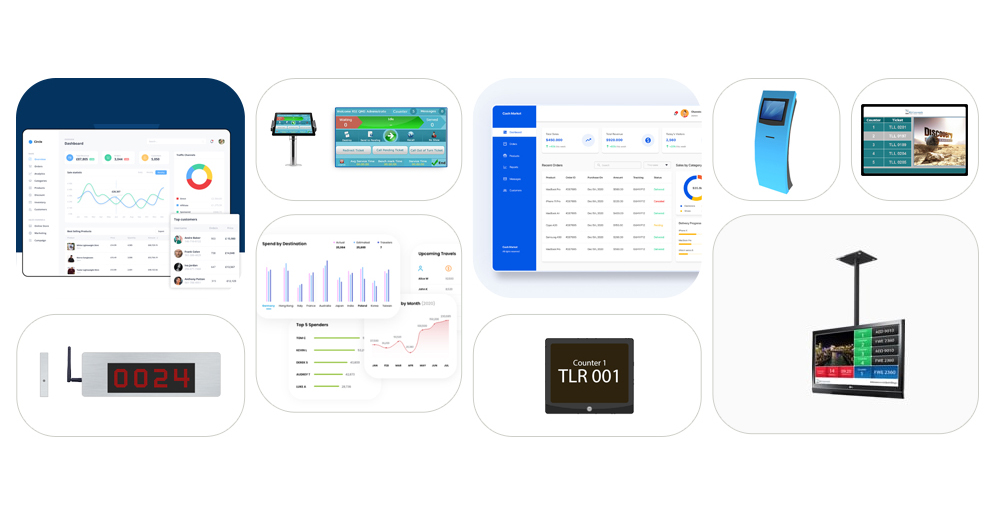
  3. Agile: The agile project management method is used where the timeline is right or you want to complete the project as quickly as possible, even before the timeline. The agile is highly collaborative, evolutionary, adaptive and self-organize method of project development. It offers great flexibility and open to changes if these changes can improve the performance and progress.
  4. CPM: The CPM or critical path method requires to build a model of the project which includes all tasks, duration of each task, dependencies, risks and liabilities, and clear milestones and then identifying the longest sequences of activities to complete the project. It is suitable for small and medium size projects as it is hard to keep track of large sets of activities under this framework.
  5. CCPM: The CCPM or critical chain project management method majorly focus on the resources that are required to develop and complete the project. It is a very flexible approach to project management and it doesn’t emphasize much on tasks and schedules. It is equally effective for any size of project and improve resource planning and management.
  6. Kanban Method: The kanban project management and execution method allow managers to put all the workflows, tasks and progress visually on a board or publishing platform where all employees can access and view it. The visual planning boards are great to motivate teams and improve performance. It equally effective in manufacturing and software development projects.
  7. Extreme Programming: The extreme programing method or XP is another branch of agile project management. However, it has shorter software development cycles with multiple releases. The project management take the course of customer requirements and as the requirements changes the project plan and timeline also get changed. It is suitable when the user doesn’t know the full requirements or doesn’t have a clear goal or keep changing requirements more frequently.
  8. Lean Method: The lean project development method is used to reduce the waste in a project execution process to maximize the outcome or deliver maximum value. It is widely used for rapid product deliver in software development projects while removing the waste of processes on continuous bases. Equally suitable for software development and manufacturing projects.
  9. PMBOK: The PMBOK or project management body of knowledge is basically a great framework which allow project managers to use the guidelines and definition of project planning, execution, schedules, monitoring and controlling. The framework dictates various pre-defined stages of a project which makes management easier in custom software development projects.
  10. Six Sigma: The six sigma is a very unusual method of custom software development project management and execution as it majorly focus on what is not working in the project which includes quality of the outcome, progress of the team and the evaluation of the team members. It is only effective at large scale projects where a few hundred to a few thousand employees are involved. This most software development teams avoid this method.

These are widely used project management and execution methodologies. You can easily compare different methods and decide which custom software development project management and execution methodology can fulfill your needs.

See Also: Security Best Practices in Custom Software Development

Efficient Software Development Project Management: Execution Methodologies

Efficient Software Development Project Management: Project Management Stages

The project manager should improve the software development lifecycle (SDLC). Every project manager should have a solid SDLC strategy in order to ensure the efficiency and productivity in the custom software development project. The software development life cycle means breaking down the software development in multiple phases. The SDLC or software development life cycle includes planning, designing & developing or coding, testing, and deploying phases.

This help project managers set milestones for all stages and give them more control and grip over the custom software development process. The efficient software development project management usually utilize a simple SDLC templates which involves following generic stages or phases:

  1. Project Initiation: The project initiation phase is the very first step of developing a software or application. In this stage the project manager transform an abstract idea of the project in actionable and meaningful goals. The goals and objectives of a custom software development project will dictate the course of the next stages. The project manager can initiate the project charter which is usually a document that gives them authority to utilize organization’s resources for the mentioned project and gives it a legitimate status as a project. The charter document includes, project goals, objectives, timelines, deliverables, budget, limitations and liabilities and a project feasibility study. The project manager also creates a stakeholders’ register which includes all team members or project contributors that might be needed in future to execute the project.
  2. Project Planning: The project planning stage is the most crucial stage it involves identifying all the technical requirements with in-depth explanation and deliverables. The custom software development project management planning stage also includes project schedule and development of communication mechanisms to ensure maximum communication between the stakeholders. This stage can also include collecting feedback from the stakeholders and research about the project and its technical aspects.
  3. Project Execution: The custom software development project execution is a stage where all the actual development, designing of the software and programing is done. This stage accomplishes all the task and activities that are highlighted in the project plans along with the deliverables. The effective communication is crucial at this stage it will ensure the quality of the outcome. The project manager should ensure the communication between all stakeholders and team members.
  4. Project Monitoring: The project monitoring is not a simple phase or stage of custom software development project but in fact it is a continuous process that enable project managers to track, monitor, manage and control the performance and progress of the team members at all stages. It involves developing the KPIs (key performance indicators) and CSFs (critical success factors). The project manager should also track cost of the project and resources consumed by it to further ensure the long term sustainability to meet the budget and timeline requirements.
  5. Project Closure: The project closure is the last stage of the custom software development project management process. It includes deployment of the software application in the production environment and delivering or handing over to the end users. The project manager should also have to prepare a complete report that includes the performance of the team and complete review of the entire project and activities from start to finish. This report can be very helpful for future reference and can help improving the project management process.

A well organized and structured strategy to execute a software development project can save a lot of efforts, resources and risks. The communication and tracking performance is a key to optimize the custom software development project’s cost. These five stages are a generic template to work with. The project managers can also create more stages or sub-stages to further break down the project and set milestones for each stage and sub-stage to further increase the performance and efficiency.

See Also: The Role of AI in Custom Software Solutions

Efficient Software Development Project Management: Project Management Stages

Efficient Software Development Project Management: Project Manager

The efficient software development project management is entirely based on the competencies, capabilities and skills of the project manager. The project manager for a project is the like a pillar, which should be able to hold the entire building on it. A weak project manager will cause several problems and result in poor project execution. It is crucial to have a highly skilled and efficient project manager. Here are some key traits that a successful manager have:

  • Leadership: The strong leadership capabilities are must for a successful project manager. The project manager should have to lead the team which comprises of different individuals from different backgrounds and technical skills. That is why a strong leadership is a must to have trait for a successful project manager in order to make everyone deliver their best in the project.
  • Mentorship: A mentor is someone to whom you look up to. A project manager should not only be a great leader but a great mentor who can motivate its team and keep them at high spirit to ensure everyone performs at their best. The encouragement and understanding plays crucial role in improving team members’ morale and keeping them motivated.
  • Documentation: The documentation is a key to effective software development project management. The project manager is entirely responsible for preparing various documents which will have huge influence over the team performance and the final outcome of the project such as project charter, scope, plans, feasibility reports and final documentation. So, the project manager should have strong documentation skills to avoid any ambiguity or confusion during the process.
  • Performance Management: The performance management is extremely important. The project manager should have comprehensive knowledge and experience of project performance management. This will help them drive KPIs, CSFs and other monitoring metrics to monitor and improve the performance of the team members which is absolutely essential in achieving goals and objectives of the project.
  • Communication: Communication is like the blood in the body, without effective communication no business can perform well. For custom software development project management the project manager should have excellent communication and interpersonal skills to make sure everyone is aligned with the goals and objectives. It also help reducing the risks, preventing obstacles and solving problems during the process.

Traditionally businesses only appoint one project manager to a project but due to complexity and size of the project there could be multiple project managers too. In such situation there should always be a leading project manager to whom all other project managers should report. There should be hierarchal structure between different project manages to ensure efficient software development project execution.

See Also: Software Development: In-house vs Outsourcing

Efficient Software Development Project Management: Project Manager

Conclusion

In the modern work environment business have very complex IT infrastructure and they require a tons of IT resources, various different software and systems, and business tools to perform their day to day tasks and to maximize the operational efficiency. The operational efficiency and performance are a key to long term sustainable success and growth. The technology world evolves very rapidly, the software and systems keep changing and upgrading, the markets are changing and the customer needs are growing. In such circumstances the need of a new software solution is very obvious, in fact business keep upgrading and changing their software after a few years in order to ensure maximum efficiency and productivity.

Furthermore the technology is also evolving on a greater pace which also compel businesses to adopt to modern and more innovative software which can help them achieving their organizational goals and strategic objectives. The custom software development industry is growing at a rapid pace, especially in Dubai and all around the UAE the businesses are proactive seeking custom software solutions due to its various perks and higher ROIs. When a new demand arise a business will seek to develop a new customized software solution. Either they will utilize their internal resources or either they will contact a software development agency in Dubai such as RSI Concepts , to assist them with their customized software needs.
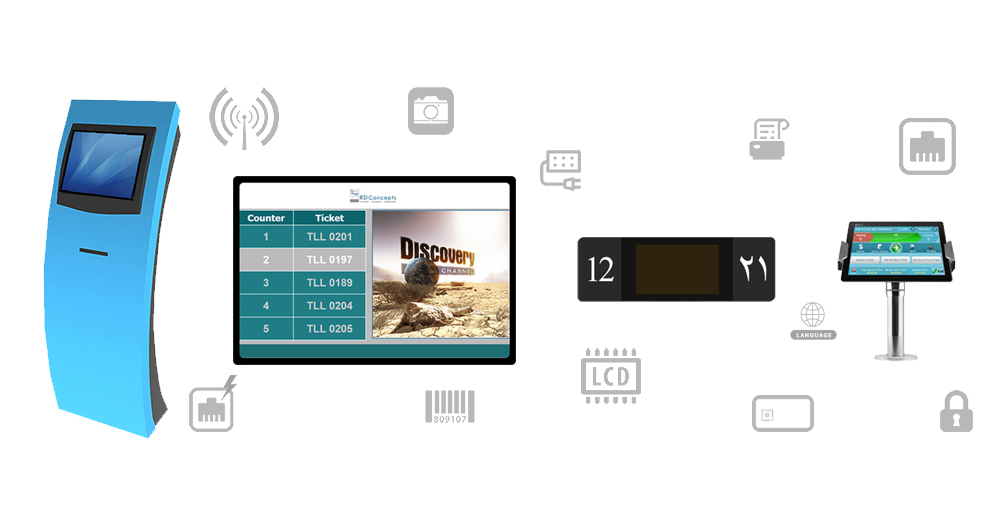
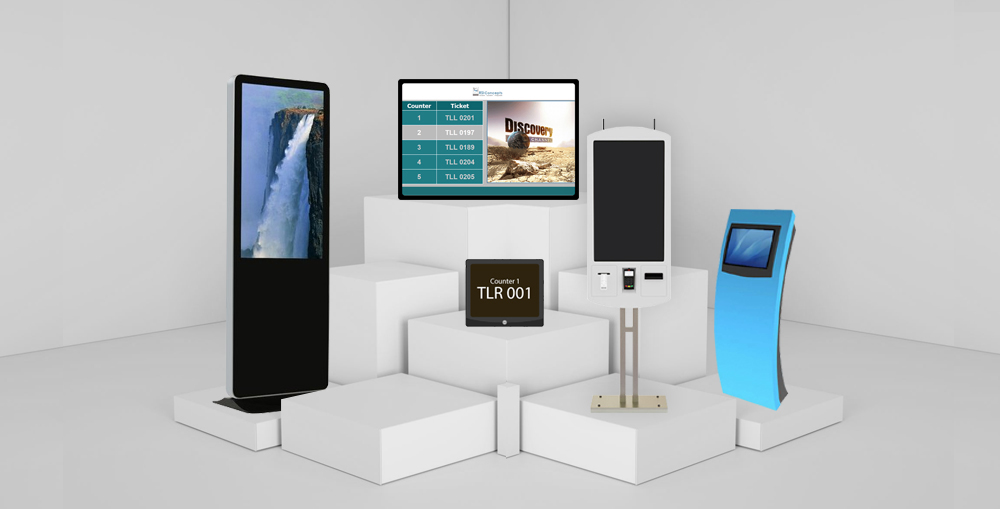
The project management plays a crucial role in success or failure of a custom software development project. In this blog we have covered the key elements of efficient software development project management. If you want to learn more about the subject of if you want us to help you developing a new highly cost-efficiency and tailor-made software solution for your business, please feel free to contact us through our Contact Us page or leave a comment in the comment box below and we will get in touch with you soon.

See Also: Effective Ways to Manage Customers Queue and Service Delays


5 Ways to Manage your Customer Service Queues

5 Ways to Manage your Customer Service Queues

Businesses in Dubai and all around the UAE are very active in adopting to modern solutions and leveraging technology to improve their operational performance. Tough competition and abundance of options available to customers can have huge impact over businesses’ approach and strategy. For service sector the biggest challenge is extended waiting time long customer service queues. Understanding the queues and the customers is absolutely crucial for a service-based business. The poorly managed queues and long wait time not only impact the customers but it also have huge impact on the employee performance.
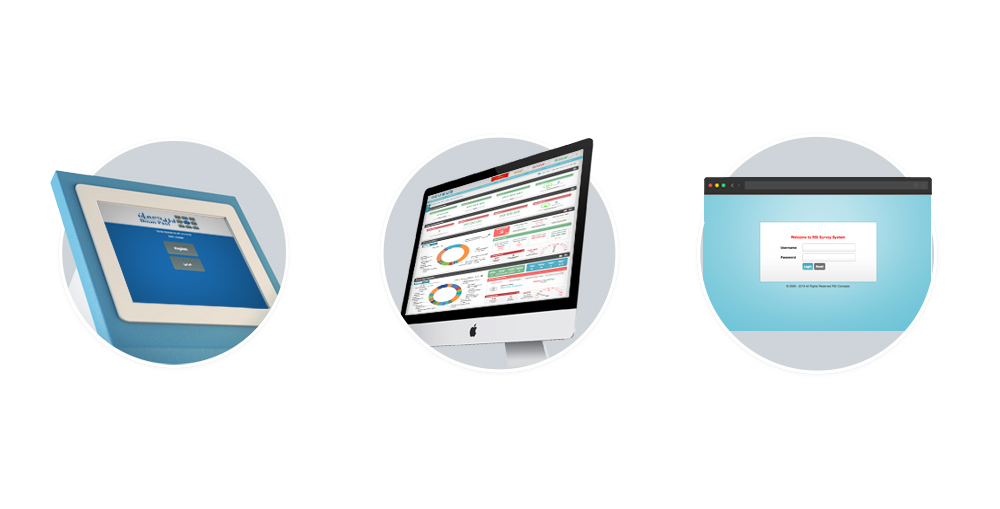
Which in return cause double effect and ruin customer experience. In today’s modern world, the customers will never have a second thought before moving to another service provider. Especially in Dubai or anywhere else in UAE where the customers usually have a lot of options available in the same area they will usually not give you a second chance. That is why managing queues and improving customer experience is crucial for a business’s success.
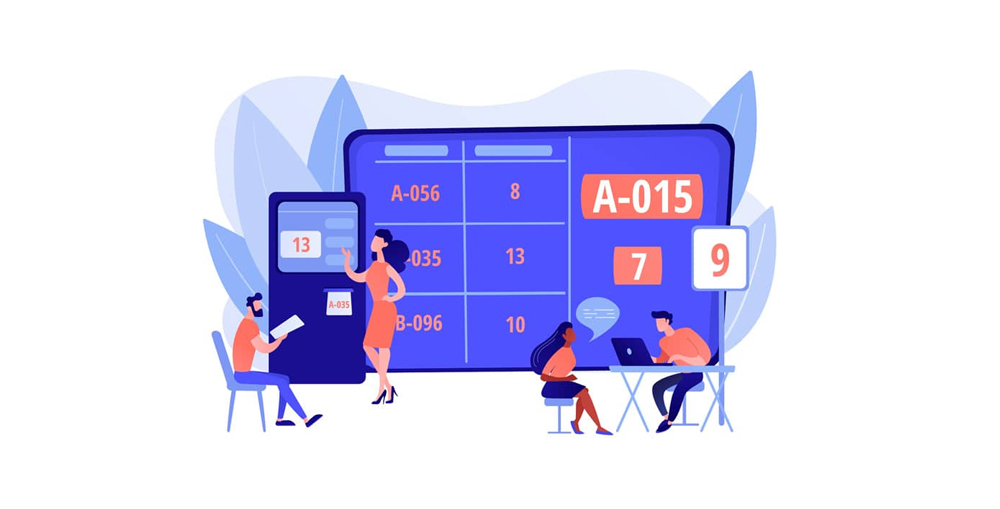
See Also: 5 Signs Your Business Requires a Queue Management System

5 Ways to Manage your Customer Service Queues

Regardless of industry, the long waiting time and customer service queues can have devastating effects on your repute and brand image, no matter how large or small your business is, no matter how cost-efficient your products/services are, if your customers are leaving unhappy, you can never sustain growth and success. The unhappy customers will talk to other people about their bad experience which will ruin your brand’s image, furthermore your marketing campaigns will become costly and the return will become smaller, which will rise the cost of onboarding a single customer. Eventually it could be catastrophic for your business.

In this blog we will discuss how businesses can easily manage their queuing and reduce customer wait time using a smart queue management system solution. The queue management system will also help you improving your customers’ waiting experience and will help you improve your brand image and customer satisfaction. The queue management system have offers many perks which can help a business to monitor and improve the performance of their service centers.

See Also: What are the Basic Components of Queue Management System?

5 Ways to Manage your Customer Service Queues

1. Automate Customer Flow

The automation drives efficiency in any system. Similarly the automation of customer flow with a queue management system improve the queuing process and make it more efficient. Traditionally the customers wait in long waiting lines, which cause stress and several other problems. The customers tend to complain a lot about manual queues. The queue management system is a digital tool which can automate the customer flow by allowing them to use automated customer signup and flow processes. The customers can utilize the interactive self-service ticket dispensing kiosk to sign-up. The interactive self-service ticket dispensing kiosk can also collect basic information if needed such as what service the customer is interested in, or customer identification can be done at this stage, etc.

Such information help the queue management system to implement the company policy and priority protocols if needed. Furthermore the queue management system sing-up the customers for a virtual queue, which means they don’t have to wait in physical customer service queues, in fact the can relax in the waiting areas and wait comfortably. This help improving customer experience and increase their satisfaction.

See Also: What are the Different Types of Queue Management System?

Automate Customer Flow

2. Reduce Customer Wait Time

The customer wait time is the single most important metric in the queuing systems. The customer wait time have significant impact on customer’s mind, experience and service quality. Longer wait time cause stress and frustration and also cause in increase in employee workload. The queue management system is based on an AI (artificial intelligence) based highly efficiency and smart software application which can collect business intelligence data and it is also capable of analyzing the data in real-time. This ability also allow the queue management software to take decisions in real-time which improve the customer experience and help reducing the average customer wait time which in return cause reduction in customer service queues.

The queue management system can analyze the historic data of the system and it can accurately estimate the customer wait time. Which help it to take customer through the route where they have to wait less. The automation plays very well here, due to automation the employees are highly focused on the service delivery which expedite the customer flow and the highly managed queues help reducing the customer wait time.

See Also: Queue Management System and Predictive Waiting Time

Reduce Customer Wait Time

The biggest problem with manual or poorly managed queues is the longer wait time. In traditional queuing management the customers will have to wait in the physical lines, which itself cause a lot of stress, furthermore there are line jumpers, and some customers who think other are prioritized by the staff and there are several other issues which cause frequent disputes. This require businesses to deploy more employees and it also keep the customer service agents engaged in non-productive activities such as managing the queues, answering to customers’ quires and solving disputes, etc.

All this hustle slow down the customer flow, during the peak hours the staff can easily get overwhelmed which further deteriorate their efficiency and result in extended wait time for the customers which means longer customer service queues. The digital queue management system not only prevent all these problems but it also help speeding up customer flow and reducing wait time by automatically routing customers to the fastest path, reducing the customer stress and workload of the employee which also result in quicker service delivery.

See Also: 5 Challenges and Solutions of Queue Management System in Banks

Reduce Customer Wait Time

3. Prioritize Different Customer Groups

Another important thing to consider while managing queues is to organize and arrange different customer groups on the bases of their priority. In any service center a business usually offers multiple services, furthermore the businesses also have different policies and protocols for different types of customers or customer groups. For example in the banking sector the corporate customers will have different services than the individual customers, same as the saving account is different from the current account, etc. All these different services and different customer groups need to be organized and treated differently, which can cause issues and disrupt customer flow. Therefore the queue management system software offers an intuitive administrative dashboard which allow the businesses to configure all these protocols and perimeters.

Thus the queue management system can automatically segregate different audience groups and take them through their designated route. Furthermore there are customers with special needs, there could be a different process for the elderly customers, and the VIP or premium customers need different level of attention and services, all this can be managed automatically with the digital queue management system which definitely reduce customer wait time and improve their experience.

See Also: Touch Less Customer Experience, Use the RSI Queue Management System

 Prioritize Different Customer Groups

4. Improve Employee Efficiency

Employee efficiency plays crucial role in customer experience and customer flow. No matter how effective your queuing strategy is, if your employees are not working at a good efficiency then the customer experience and satisfaction goals can’t be achieved. There are several factors that impact employee performance, especially during the peak hours, when the customer influx is high, the poor queue management cause a lot of problems which keep the employee distracted from their primary tasks. The crowd formation and complaining customers can greatly reduce the efficiency of the employees. The digital queue management system can significantly boost the employee efficiency by reducing their efforts and automating several processes of the customer journey.

Furthermore the queue management system can be integrated with internal databases and other enterprise tools which enables it to help service agents in pre-service and post-service activities to reduce their efforts. The queue management system can automatically reroute customers to less busy counters to maximize the customer flow and to balance the employee workload. It also keep track of various performance metrics and employee KPIs, which is also helpful in improving employee efficiency and productivity.

See Also: Paperless Queue Management System

Improve Employee Efficiency

5. Virtual Queuing and Online Booking

The virtual queuing is another remarkable feature of a modern digital queue management system. The virtual queuing allows businesses to integrate several remote channels in their queuing processes and help them further reduce the customer wait time. In fact the virtual queuing can literally reduce the wait time to none. The virtual queuing allow customers to sign-up virtually via remote channels and mediums such as Email, SMS, Queue Management System Smartphone Apps, QR Code, Website, Customer Portals, WhatsApp, etc. All these channels offer freedom and flexibility to the customer which can greatly enhance customer experience. The virtual queuing allow customers to sign-up without physically being present at the business and allow them to arrive only when their turn came, hence they can get immediately served and they don’t have to wait.

The online booking feature allow customers and visitors to utilize an online channel such as website, customer portal or queue management system mobile apps to book a time slot for their visit. It also provide them previous queuing data, current status and expected future footfall which help them to book the most suitable slot with less expectancy of delays. These features can greatly reduce the customer service queues and help improving customer experience.

See Also: What Is Virtual Queuing? A Guide to Virtual Queues

Virtual Queuing and Online Booking

Conclusion

The customer service queues can be a great challenge for service-based industry. The businesses who are in service industry they have to deal with queues at all customer facing channels, especially when it comes to customer service centers this challenge become a serious liability. Poor queue management or longer customer wait time can not only make your customers unhappy but it can completely ruin your business’s reputation and image. According to several studies the unhappy and unsatisfied customers are most likely to never return to the same business, on top of that the unhappy customers tend to share their bad experiences with other people which could be even more damaging to the business. That is why a great queuing strategy is needed. A queue management system is a very powerful tool it help businesses effectively implement their queuing strategy and it also help them to make changes in the processes.

The queue management system can completely automate the customer journey, queuing process, customer routing, and customer flow which can greatly increase the efficiency and efficacy of the process. Furthermore the queue management systems are a great source of collecting valuable business intelligence data. It can also help businesses significantly improving employee performance and improve the resource management of the business. In fact a queue management system can reduce the number of employees by half to handle same customer footfall. Which in itself is a very significant for long term strategy and profitability.

RSI Concepts is a leading queue management system provider in Dubai, UAE. If you want to learn anything about the subject or if you want our help to setup a highly cost-efficient and customized queue management system to boost the performance and quality of your service center, please feel free to contact us through our Contact Us page or leave a comment in the comment box below and we will get in touch with you soon.

See Also: Choosing a Performance Management System A Buyer’s Guide

See Also: Queue Management System for Trucks and Logistic Centers

See Also: Complete guide to Queue Management Systems in Dubai, UAE

See Also: Queue Management in Banking: Enhancing Customer Experience

See Also: Importance of Queue Management System for Government and Public Offices


The St. Regis Saadiyat Island Resort Abu Dhabi Acquires RSI Mobile Charging Lockers

The St. Regis Saadiyat Island Resort Abu Dhabi is a luxurious 5 star hotel which offers unmatched services and is located at a very captivating location with beach front. It is located at a beautiful natural island at the Arabian Gulf and offer travelers a great chance to relax and explore the wonderful nature of the area or reach the city center in just 20 minutes. The St. Regis Saadiyat Island Resort is well known for its unique cuisine and tons of other services. The Abu Dhabi is a hotspot for the local and international travelers and is said to be the financial hub of the region as well. There are so many other hotels and resorts which makes the market very competitive however, even in such a competitive market the St. Regis Saadiyat Hotel Island Resort made a reputation and established a well-known brand over the time. It is known for its unmatched taste, comforting experience and a huge variety of other lifestyle activities. The management is eager to evolve guest experience by adding innovative services and leveraging the high-tech solutions.

The St. Regis Saadiyat Island Resort Abu Dhabi Acquires RSI Mobile Charging Lockers

Recently the St. Regis Saadiyat Island Resort management decided to offer guests and visitors a mobile charging solution. That was because more and more guests were asking for power outlet or charger for their phones. As we know the smartphones have become more powerful than ever before. The brighter the smartphone screens get the more battery they consumed and above all the average usage of smartphone has also increased. This means that the average smartphone battery lasts less and we need chargers more frequently. Especially if someone is traveling from overseas, the might have already consumed most of their battery, so the first thing that comes to people’s mind is to immediately get a charger so they can remain in touch with their family, work and friends, etc. That is why the St. Regis Saadiyat Island Resort decided to provide its guests and visitors with a mobile phone charging station. Since these mobile charging stations are placed in public places, they also required some mechanisms to protect the user’s phones.

RSI Concepts is a leading mobile charging station provider in Dubai, UAE. We offer a variety of different products along with customized solutions. The St. Regis Saadiyat Island Resort’s requirements were pretty straight forward, we have offered them a couple of base-models along with options for customization as well. The management had decided to go with our standard 8 compartment multi-charge mobile charging station with digital passcode enabled lockers. The charging station is designed at a strong frame with elegant design and nifty finishing. The digital passcode makes it easier for any ordinary user to put their phone and lock the compartment in few simple steps which doesn’t take more than 20 seconds. The charging compartment is compatible with all smartphones (99%) with Micro USB, C-Type and Lightning cables available. The power management circuit is built on modern smart technologies which is capable of delivering high power for the compatible devices and support a multitude of charging protocols which are common among modern smartphones from Samsung, Huawei, Apple, Oppo, Lenovo, LG, Sony, and other popular brands.

Here are the remarks of our sales manager, Ms. Maheen Waheed who was assigned for this project:

“The St. Regis Saadiyat Resort Island, Abu Dhabi is a well-reputed name, the team is highly professional and the management is very supportive. We have proposed to them some of our finest models with great functional and esthetic features. The design was loved by the management and the features were proven to be very satisfactory. It was a great experience dealing with the team.”

Indeed the customer satisfaction is our top priority. Thanks to our experienced design team and technical department which enabled us to deliver such great products. We always support our customers regardless of their needs that is why we have established a great reputation in customized solutions in UAE. We are very happy to know that the customer was satisfy with our 8 compartment mobile charging station with digital lockers and we will look forward to support St. Regis Saadiyat Island Resort with their future needs.

Check out this: RSI Concepts Designed the BMW iVision Circular Exhibition Stand for Dubai Design Week
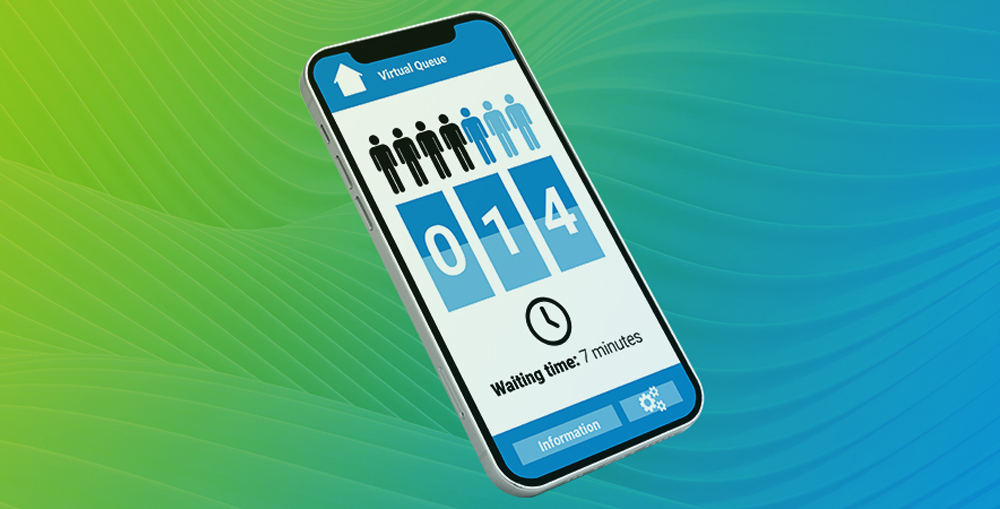

Effective Ways to Manage Customers Queue and Service Delays

Effective Ways to Manage Customers Queue and Service Delays

In the modern day and age the customer behavior have changed a lot, now a days customers tend to consider experience more important than ever before. In fact there are several studies and researches conducted all across the world which suggest that a majority of the customer is willing to pay extra if they are assured they will get a better experience. This customer behavior compelled businesses to seriously think about the ways they are offering services to the customers. The service industry in Dubai and all around the UAE is a very competitive market.
There are so many options available to the customers which also lead to high market standards and high customer expectations. This means that the business will have to beat the competition as well as they will have to meet and exceed the customers’ expectations. The biggest challenge any business faces is long customer queues and unwanted service delays. These are the things that can ruin the customer experience and make them very unhappy.

See Also: Paperless Queue Management System

Effective Ways to Manage Customers Queue and Service Delays

Unhappy customers tend to stop doing business with the brand and on top of that such customers also share their negative experience with their friends, colleagues and in social media which could be extremely bad for a business reputation and brand image. According to several studies if a customer is happy with a business they tend to share their positive feedback to up to 9 persons, if they are unhappy they tend to tell up to 15. Which means you can lost 15 possible prospects and the damage done to the brand image is topping on the cake.

Businesses often don’t realize the importance of words of mouth, most of the businesses think that is a thing of past, however, that is not the case, in fact in the modern day and age the word of mouth have become even more impact full, thanks to the social media and online channels, the impact of a positive or negative review/comment about the business can have much stronger impact on the business’s reputation than anticipated. That is why business adopt various modern technologies to improve their customer experience and to increase customer happiness. The queue management system is one of those and it is very helpful in dealing with the modern problems.

See Also: Why do you need a queue management system?

Effective Ways to Manage Customers Queue and Service Delays

What is the Most Effective way to Manage Customer Queue and Service Delays?

The customer queues, service delays and long waiting times are not new problems, in fact in the present day these problems become a more difficult challenge. So, businesses are using several methods and strategies to deal with these problems in the past. We have all witnessed the incredible development in technology and communication in the past two decade. The businesses and organizations have also adopted to modernized IT infrastructure and implemented several technologies over the time. The service based industry was proven to be more innovative and creative. The service sector have introduced several new customer relationship management technologies in the past two decades.

These technologies have completely transform the market. When it comes to queue management and customer experience at service centers, we have noticed that most of the business are still relying on relatively older technologies, or one can say the innovation and creativity was relatively slower in this particular area. However, things are changing rapidly and now more and more businesses in Dubai and all around the UAE are embracing modern technologies based solution for their queuing needs.
See Also: 5 Challenges and Solutions of Queue Management System in Banks

What is the Most Effective way to Manage Customer Queue and Service Delays?

The digital queue management systems have completely taken over the market like a storm. We have witnessed very rapid adaptation all across the market in last decade and now businesses are more emphasizing on their queuing strategies. Because the queuing experience is the most influencing factor on overall customer experience at the branch and it can significantly impact the service delivery process and customer satisfaction. A digital queue management system have proven to be the most effective way to manage customer queues and to prevent unwanted service delays.

It because its ability to automate several customer journey processes and useful features for service agents which also help them speed up the service delivery process. Furthermore a modern queue management system comes with various other features that increase customer engagement, reduce their waiting stress, and improve their experience. The digital queue management system also comes with a powerful software which can be integrated with other enterprise tools, systems and central information center which enable businesses to include several innovative features to improve the system efficiency and efficacy.

See Also: How a Queue Management System Can Transform Your Business Operations

What is the Most Effective way to Manage Customer Queue and Service Delays?

When it comes to acquiring a queue management system there are tons of different options available in the market which could make it very confusing for the managers and decision makers to choose the right queuing solution. Here are some features of a modern queue management system which will help you effectively managing customer queues and the service delays.

Features of Queue Management System

In Dubai and all around the UAE there are several companies who are offering queue management systems with different labels and branding. There are vendors who are also offering customized queue management system to meet your exclusive needs. No matter which solution or vendor you choose, here is a list of some most important features and advantages of a queue management system that you should consider while selecting a right queue management system for your business.
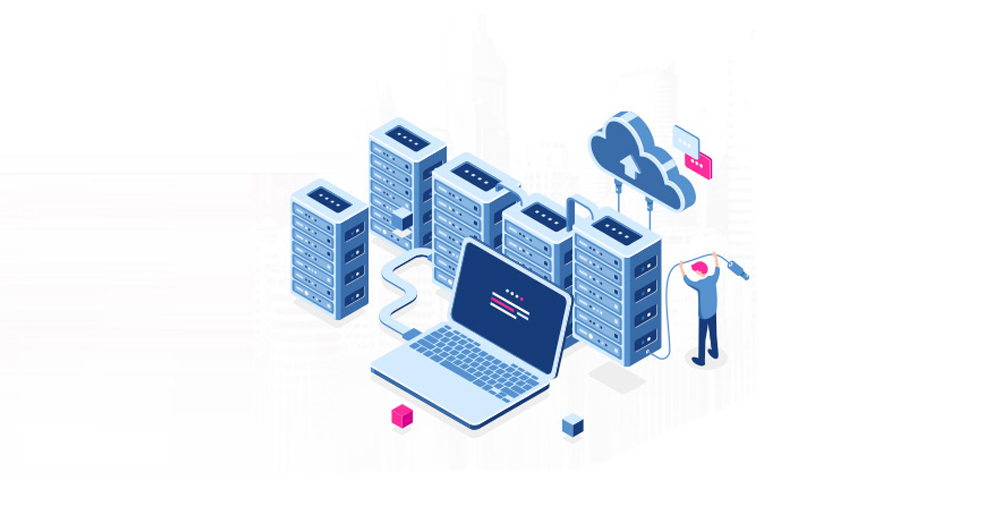
See Also: What to Consider When Choosing a Queue Management System

Features to Automate Customer Sign-Up Process

Traditionally the customer signup process is the first part of customer interaction at your service centers. It should be welcoming, simpler and shorter. A modern queue management system offers a variety of sign-up methods, the most commonly used methods is a use of interactive kiosk. This interactive kiosk dispense tickets and it can also capture basic information which help queue management system improve the customer flow. The queue management system sign-up customers and visitors for the virtual queues, which allow them to wait freely and comfortably in the wait areas, lobbies and anywhere they want, hence the customers and visitors don’t have to stand in physical lines.

Since everyone get their ticket number there is no dispute or complaint by the customers. Everyone knows the customer flow is managed by the automated software system so no one complaint about staff favoritism, line jumpers, delays in their queues, etc. Furthermore the interactive ticket dispensing kiosk also allow businesses to integrate various software and hardware accessories to capture customer information such as Emirates ID card reader, passport scanner, Barcode/QR Code reader, RFID, etc. which makes it easier and more convenient for customers to provide their information.

See Also: What are the Different Types of Queue Management System?

Features to Automate Customer Sign-Up Process

Features to Increase Customer Engagement

Customer engagement is very important in order to improve their experience. The human brain works in a strange way, when we stressed, frustrated, unhappy, bored, or waiting the brain perceives the time is passing slower. This phenomenon is applicable to the customer waiting time at the service centers. When customers are waiting in the waiting area, there is not much activity and they are bound to sit there they tend to feel the wait time is longer, this is called the perceived wait time. The perceived wait time is always higher than the actual wait time in traditional waiting environments.

However, a queue management system can help reducing it significantly. The queue management system collects historical data including both system usage and analytical data which enables it to estimate the wait time on the bases of historical and analytical data. The queue management system can print the estimated wait time on the ticket, which can be a great relief for the customers. As no knowledge of total wait time also add up to the customer’s stress.

See Also: What are the Basic Components of Queue Management System?

Features to Increase Customer Engagement

Furthermore the queue management system also offer large displays or digital signage. These digital signage are used to display the queuing information. They show what is happening inside the branch and what are the active tickets and counters. It also make announcements of the upcoming ticket and their respective counter and it can also use to make announcements. The digital signage module is integrated within the queue management system as a simple add-on or in-built feature. It not only display the queuing information but it can also display multimedia content. The multimedia content can be adverts, information about the processes, company achievements or it can run media for entertainment.

These digital signage are placed on strategic position to maximize the visibility for the customers and visitors in the waiting area, moreover more than one digital signage can be used if needed. There is multi-lingual audio announcement system which also keep distracting customers from the waiting and help reducing the stress of the waiting. These features increase customer engagement and make their waiting experience more comfortable and relaxing.

See Also: Complete guide to Queue Management Systems in Dubai, UAE

Features to Increase Customer Engagement

Features to Automatically Categorize Customers and Automatically Control Customer Flow

The customer categorization is an important part of any queuing environment. Businesses always have different policies for different user groups. For example, if take an example of a public office, there might be people coming with some disability, there might be expecting mothers, there might be senior citizens, there might be VIP customers or premium customers, etc. All these scenarios require different response and expect different experience from the organization. Furthermore a business offers a variety of services usually different counters offer different set of services for example, if we take an example of a bank account there is a counter which offer services to the individual customers, another is to offer services to corporate customers, maybe another counter for premium customers and so on.

This requires the queue management system to be able to identify and categorize customers in different categories and groups. Which can be done easily by taking customer’s inputs during the sign-up process and the queue management system software can perfectly implement the queuing policy automatically.

See Also: The Role of AI in Enhancing Queue Management Systems

Features to Automatically Categorize Customers and Automatically Control Customer Flow

Features to Support Popular Queuing Methods

Now a day’s all modern queue management systems support almost all queuing methods. There was a time when the vendors were designing different queue management system for different queuing methods, however, that is not the case. Now a day’s all modern queue management systems come with an administrative control panel which allow businesses to control every aspect of the queuing including the queuing methods. Here are some commonly used queuing methods:

  • FIFO: The FIFO stands for First in First out, this queuing method means that the customers who arrived first will be served first. The customers who arrived later will have to wait longer as per their turn based on their arrival.
  • Priority Queues: The priority queues are not for all industries usually these queuing models are used by special industries where the longer wait time could have negative impact such as healthcare, where the customers/patients are prioritized on the bases of the severity of their health condition.
  • SPT: The SPT stands for Shortest Processing Time, this method is usually used by the businesses who have different processing times for different customer needs. The queue management system automatically controls the customer flow to prevent crowd formation.
  • SIRO: The SIRO stands for Service in Random Order, in this method the customers are selected randomly from the queue. This method is not liked by most of the customers and it could cause additional problems for the service staff as well.

Different queuing methods are followed by different industry sectors. However, now a day’s businesses are using mixed or hybrid queuing methods as well. The queue management system allow businesses to configure the customer flow policies easily which allow them to implement a particular queuing method at any time as per the needs.

See Also: Why Small and Local Businesses Need a Queue Management System?

Features to Support Popular Queuing Methods

Features to Support Virtual Queuing

Virtual queuing is not a new form of queuing but it recently gain huge popularity all across the UAE. The biggest advantage of virtual queuing is that it can significantly reduce the wait time, in fact it can reduce it to literally none. This is because the customers are allowed to sign-up remotely. The customers are not required to be physically present at the business to sign-up for the queue. The virtual queuing offers a variety of very convenient channels to let customers and visitors sign-up for the queues and it issues them virtual tickets or e-tickets. The customers can sign-up remotely by using any supportive channel such as SMS, Call, Email, Online Booking, Website, Queue Management System Mobile Apps, WhatsApp, Customer Portals, QR Codes, etc.

All these channels are easy to access and allow customers to plan their visit in a way that they arrived only when their turn comes. This way they don’t even have to spend any time in the waiting areas, they will instantly get served when they will arrive. Furthermore the virtual queuing also enable businesses to enable a direct communication channels between the service agent and the customer and it can provide live queuing information through the supportive channels along with reminders and alerts which can significantly enhance customer experience.

See Also: What Is Virtual Queuing? A Guide to Virtual Queues

Features to Support Virtual Queuing

Features to Boost Employee Performance and Productivity

A queue management system itself is a great support for the employees and service agents. Manual queue management requires a lot of resources, it have several problems and it can keep both customers and employees stressed all the time. When queues are management manually the employees will have to spend a lot time and effort on unnecessary tasks such as regulating the queues, listening to customer’s complaints, resolving disputes, etc. Which keep them distracted from their primary tasks and reduce their performance and productivity. A queue management system manages all these things automatically thence the employees can focus on their primary tasks.

Furthermore the queue management system also controls the customer flow automatically which ensures every employee works under a balanced workload which also improve employee performance and productivity. The queue management system can also support service agents in pre-service and post-service tasks which also help improving their performance. The queue management system can monitor and track various employee KPIs which help the management in resource management and training programs which eventually boost employee performance.

See Also: Queue Management System and Predictive Waiting Time

Features to Boost Employee Performance and Productivity

Features to Integrate with Third-Party Tools and Other Databases

This is one of the most important feature of a queue management system in the modern highly integrated business environments. The system integration ability allow queue management system to push or pull data from the connected system or database. Usually the queue management system is integrated with the customer database which help the businesses to identify the customers during the sign-up process and it also help businesses to capture the customer feedback after service delivery. The service agents will have to perform several pre-service and post-service tasks, which usually require them to pull information from certain data repositories and increase their readiness for the service delivery.

A queue management system can also help if it is integrated with the relevant systems, similarly for the post-service activities the queue management system can save a lot of time and efforts which not only improve employee efficiency but it also help reducing the service delivery time and reduce service delays. The queue management system can also capture a wealth of analytical and performance data which can be synchronized with other enterprise tools and systems and help management in various decision making tasks.

See Also: Streamlining Customer Service: The Power of a Modern Queue Management System

Features to Integrate with Third-Party Tools and Other Databases

Ability to Capture Valuable Business Intelligence Data

The modern business strategies are heavily relying on data inputs and feeds. A queue management system software is a very powerful tool, it can capture the analytical and system usage data from each and every step of the customer journey. Which help the management acquire a deeper understanding of the customer journey, it helps them identifying the bottlenecks and hurdles in the customer journey and provide them business intelligence data to take more informed decision to sort out those problems. A queue management system is not just a queuing management tool in fact it is a complete digital transformation package for a service center.

The queue management system can also capture customer feedback with its in-built feedback tool or it can also be integrated with the third-party customer feedback systems. This allow businesses to capture more user information along with their feedback which can significantly improve the quality of the feedback data.

See Also: The Concept of Queue Management and Crowd Control

Ability to Capture Valuable Business Intelligence Data

The queue management system also capture several employee KPIs and other performance data which help management in resource planning, designing employee development and training programs and can be used for other HR activities. The business intelligence data captured by a queue management system can be very helpful in decision making and strategy building processes. Furthermore the businesses can also evaluate the impact of the changes they made which is a great help. Businesses can also utilize this business intelligence data to improve various internal processes. A queue management system software is a server application which is deployed on a server either online or at cloud on at local network.

This allow businesses to connect all branches and enable the main branch or head office to monitor and track the queuing processes from all connected branches in real-time. In a multi-branch scenario the businesses can also restrict the access of a branch data to its manager while the head office can receive all updates from all connected branches.

See Also: From Chaos to Control: How Queue Management Systems Can Improve Your Business

Ability to Capture Valuable Business Intelligence Data

Low-cost Scalability and Maintenance

The queue management systems are digital solution consists of various software and hardware components. The hardware that is usually used within a queue management system is easily available in the market, which is why it is inexpensive and easy to maintain. In fact once a queue management system is deployed the hardware barely needs any maintenance or replacement for years. Which is why the maintenance is relatively low-cost. Low-cost maintenance also reduce the operational cost and results in a better ROI over the longer period of time. The queue management system software is a server side application with multiple dashboard such as User Interface, Agent Dashboard, Management Dashboard and Administrative control panel.

Furthermore the software is deployed on a server hence doesn’t require much maintenance. If it is hosted online or at a cloud the server maintenance is the responsibility of the service provider which also reduce the maintenance cost. Furthermore the system can be easily expanded to multiple branches with relatively low licensing fees and cost of the additional hardware. All these features significantly prolong the lifecycle of a digital queue management system adding value to ROI.

See Also: Queue Management System Features you Need for Modern Queuing

Low-cost Scalability and Maintenance

Conclusion

For any service based business the long queues, crowd formation and service delays are inevitable. One time or another the business will have to face such problems. However the growing businesses and businesses with high influx these problems are more common. Any business would want to avoid such problems as they not only harm the customer experience but also the brand perception which is very bad for the long term growth and sustainability. That is why businesses always seek ways to introduce efficiency and productivity to their internal processes to maximize the performance. In order to solve the problems of having long queues and service delays a digital queue management system is the best solution.

It help automating several customer journey steps, it manages the queues and customer flow automatically, it have in-built crowd prevention features, it help balancing the workload of the employees and significantly improve their efficiency and it simultaneously reduce the operational cost of a branch while improving the branch efficiency, productivity and customer experience. Which is why a digital queue management system is the best solution to solve queuing problems and to prevent service delays.

RSI Concepts is a leading queue management system provider in Dubai, UAE. If you want to learn more about the subject or if you want us to help you implementing a highly cost-efficient and effective queue management system at your business, please feel free to contact us through our Contact Us page or leave a comment in the comment box below and we will get in touch with you soon.

See Also: Why Automating Performance Management is Important for Businesses?